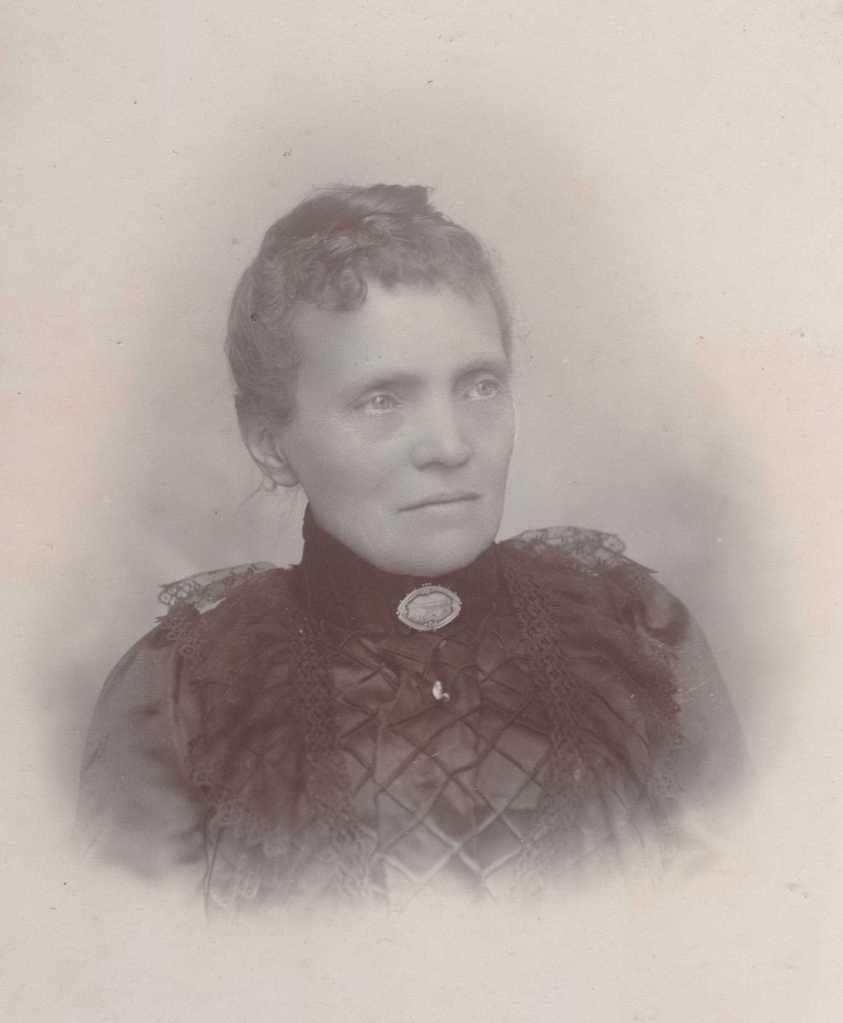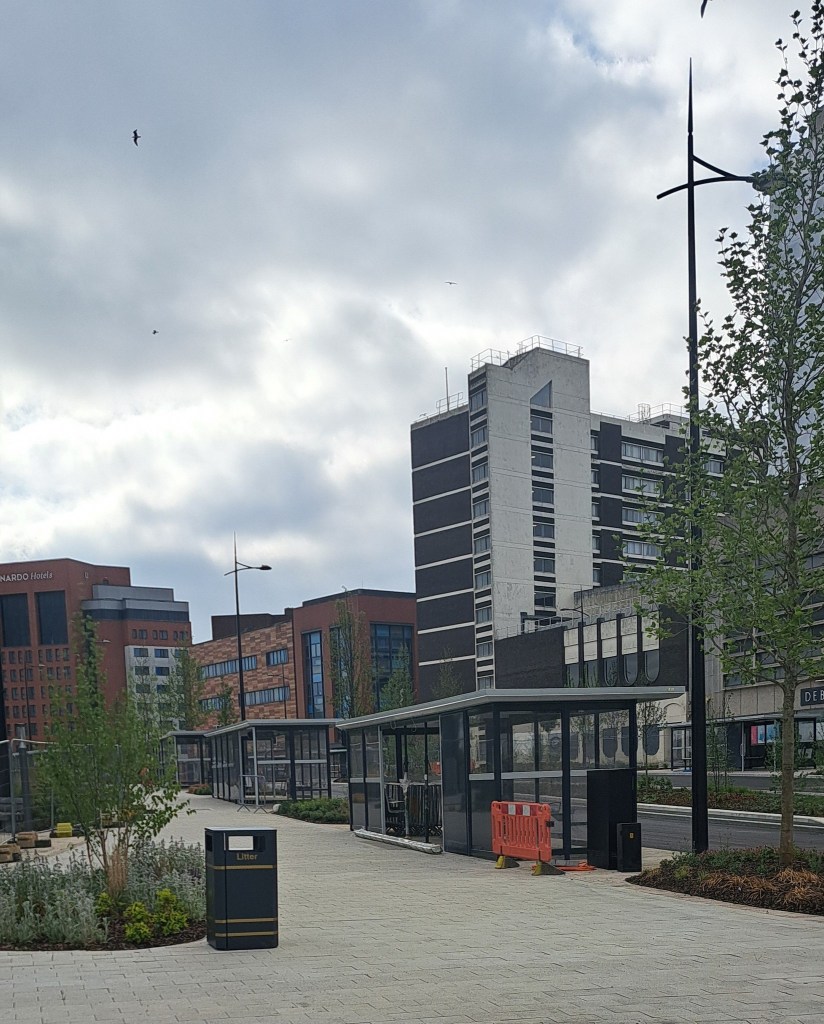
George Kinch, Carfax Street and the bus boulevard

Image courtesy of Diane Everett

As Swindon’s long awaited bus boulevard nears completion, what lies in wait for the area that backs on to it?

In the 19th century this was recognised as a prime town centre location when the Oxford Building and Investment Co Ltd built 108 houses on the site. The Oxford Building Society was a relatively short-lived organisation registered in February 1866 and going into liquidation 17 years later.

When the company folded in 1883 it had an interest in 225 properties in Oxford and more than 100 Swindon.

The New Swindon properties were built on a parcel of land called Brierly Close, between the canal and Lower Eastcott Farm orchard, part of the extensive Rolleston Estate.

Named after Oxford City Centre locations, construction began on Merton Street in 1873 followed by Turl Street in 1874, Carfax Street in 1875 and Oriel Street in 1876 – an area that is unrecognisable now.

In 1881 the census enumerator who travelled from door to door collecting information seems to have struggled with the 34 households in Carfax Street. The census returns are covered in scrawled amendments and crossings out and could the details about No 21 actually be accurate? It would appear that 15 adults and four children occupied this small, terrace property, which can’t possibly be correct!

Head of the household was George Kinch aged 61. His occupation is given as Miller and he was born in Shrivenham in about 1820. At home with him in 21 Carfax Street on census night 1881 were his wife Sarah, his sister Charlotte, his stepdaughter Elizabeth, his 3 year old grandson William and his brother John. A pretty busy household – but then if the census is to be reckoned with there was also Albert Cove and his wife Lydia, John Williams and his wife Elizabeth, William Hibberd and William Watkins, his wife Ellen and their children William 4, Mary A. 3 and one year old Charles.

The terrace houses in Carfax Street were demolished in the 1970s and few photographs survive. It is, therefore, impossible to assess whether No 21 was actually a very large property or if 15 adults and four children actually squeezed into a more modest terrace house. Or perhaps the census enumerator recorded facts we cannot now unravel.

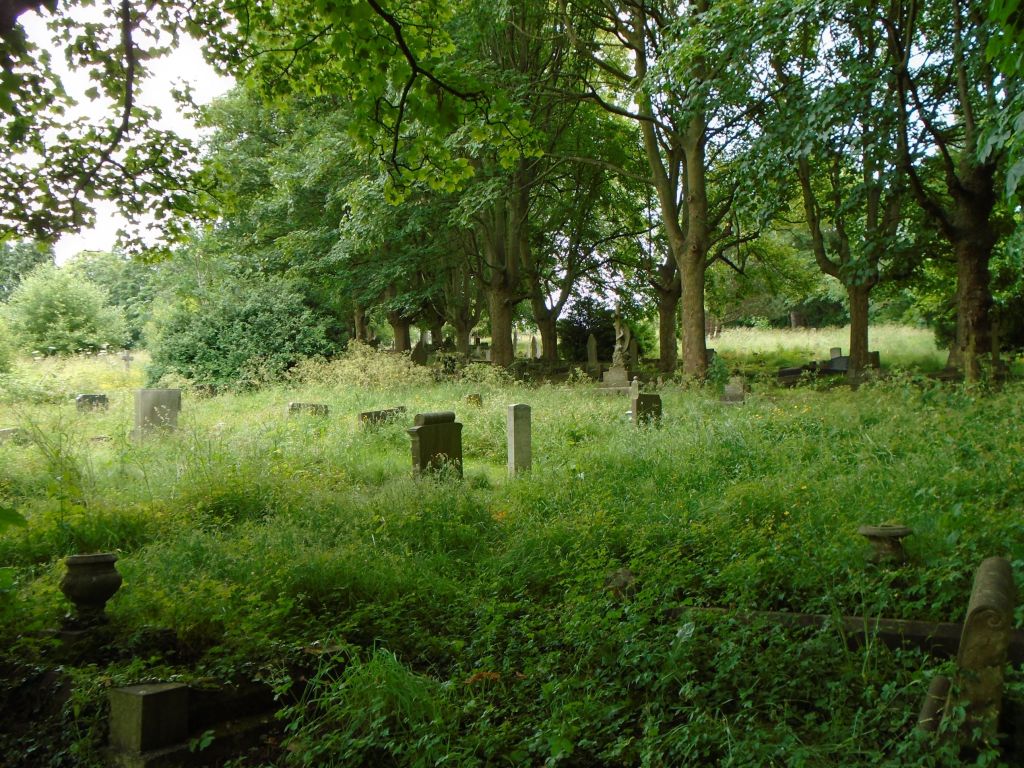
George’s wife Sarah died at No 21 shortly after the census was taken. She was buried in Radnor Street Cemetery on May 11, 1881 in a public grave plot A228. George died ten years later while still living at No. 21. He was buried with his wife on June 11, 1891. As in life so in death the couple shared their final resting place with a number of others. Hannah Scarrot who died in 1901, Frederick Boulton who died in 1918 and his wife Eliza Ann who died in 1944.
Sarah A. Witcomb – Head Mistress

When I begin my research I never know how much I can actually find out about any given person. This time I found an obituary, a career profile and several family photographs, although unfortunately none of Sarah Annie Witcomb.

Sarah Annie Witcomb was born in Trevethin, Monmouthshire in about 1863. She was the second of Alfred and Sarah Witcomb’s seven children. By 1864 the family had moved to Swindon and in 1871 they were living at 3 Brunel Street where Alfred worked as a Forgeman in the Works. By 1881 they had moved to 31 Carfax Street where they would remain for more than 35 years until Alfred’s death in 1916.

As you can read in the obituary, Sarah became a teacher and eventually moved away from Swindon. She was one of four siblings who all entered the teaching profession.

The Late Miss Witcomb – The remains of Miss Sarah A. Witcomb, eldest daughter of the late Mr Alfred Witcomb, were laid to rest in Swindon Cemetery on Wednesday. Miss Witcomb’s end came with unexpected suddenness. She felt very deeply the recent death of her father, and an attack of influenza, resulting in heart failure, caused her death. As a young teacher in Swindon, there are many who will remember her, from when a pupil teacher she worked under Mrs Watson at College Street School. After leaving Southlands Training College she worked for a few years at Peckham, leaving there to take up a headship at Barking, Essex. Here the last 26 years of her active life have been spent as head mistress of a girls’ school of over 500 scholars.

The first portion of the burial service was held in the Wesleyan Chapel, Faringdon Street of which in her early days the deceased had been a member. The Rev. John Hall and Mr Godber were the officiating ministers. As the mourners entered the building the hymn, “Now the labourer’s task is o’er,” was sung. The hymn during the service was “Rock of Ages,” and as the procession left the chapel “O Rest in the Lord” was played by the Organist (Mr. H.C. Reynolds). The committal at the graveside was impressively performed by the Rev. John Hall.

Amongst those who attended to pay a last tribute to Miss Witcomb were Mr. G. Jackson (Essex County Council), representing the Barking Education Committee, and Mr W. Weston, an old and esteemed associate in former Sunday School work in Swindon.

Extract from the North Wilts Herald, Friday, October 13, 1916.

Family historians on Ancestry have shared photographs of Alfred, Sarah and another daughter Mary Jane.

Alfred Witcomb

Sarah Witcomb

Mary Jane (teacher)

Alfred died in July 1916 aged 75 years and was buried in grave plot E8161. Sarah Anne died just three months later, aged 53 and was buried with her father. Alfred’s wife Sarah died in April 1918 aged 77 years and was buried with her husband and daughter.

Emily Lovelock and her two husbands

One of the first guided cemetery walks I went on was at Arnos Vale in Bristol where the guide introduced us to a ‘husband sandwich’; a man buried with his two wives. As an inexperienced ‘apprentice’ I was slightly shocked (especially by the term), but since then I have come across numerous ‘sandwiches.’ People are ever pragmatic and burials were expensive, making for some unlikely grave companions. Death is a great conciliator.

Emily was born in 1869 in the parish of Lydiard Tregoze, the daughter of George and Martha Lovelock. George was an agricultural labourer and the family lived at Flaxlands Cottages. George most probably worked at Flaxlands Farm, then owned by Viscount Bolingbroke of Lydiard House.

Emily’s childhood was a rural one; Lydiard Tregoze was then out in the sticks, four miles from the industrial town centre of New Swindon. She married Albert James Fry on June 8, 1889 at the ancient parish church of St. Mary’s situated in the parkland next to Lydiard House.

But by 1891 Emily was living in busy Swindon at 22 Carfax Street with her husband James and baby daughter Florence. In 1901 James and Emily were living at 25 Turner Street. James worked as a rivetter in the GWR Works and the couple had five children ranging in age between 9 months and 11 years.

In 1911 the family were still at 25 Turner Street. On the 1911 census returns women were required to include details of their marriage and we can see that James and Emily had been married for 21 years and they had 7 children of whom two had sadly died. We also know more about the accommodation in which they lived – 5 rooms, not counting the scullery, landing, lobby, closet or bathroom.

As we can see from this headstone, Albert James Fry died in 1915, by which time the couple had been married 26 years.

Two years later Emily married her recently widowed near neighbour James William Covey and moved down the road to live with him at number 21 Turner Street. Emily had a long second marriage as well. When James Covey died in 1942 they had been married for 25 years.

Emily’s two husbands were buried together and when she died in 1951 aged 81 years she joined them in grave plot B3321, to spend eternity together, amicably.