The enterprising Westall and Lafford families

Shirley and her friend have been joining our cemetery walks for several years but it wasn’t until we all met at a recent Swindon Society Open Day that Shirley elaborated on her family history, telling us about her hard working parents Maud and Stanley and their Westall and Lafford families. And at our subsequent cemetery walk Shirley brought along some precious family photos.

Maud and Stanley Lafford ran a shop in County Road on the corner of Gambia Street, with their front room at 142 Clifton Street doubling as a storeroom. Here is a photo of Maud standing outside the shop. The couple are both pictured with their delivery van, which was actually a chassis built over a motor bike. Stanley used this vehicle to deliver to the surrounding villages. He also collected slabs of ice in this vehicle which Maud used to make ice cream. Stanley then had deliver it pretty smartish to the ice cream parlour in Old Town.

Shirley’s grandparents David Lafford and Susan Clara Page were married in Barnsley, Gloucestershire in 1902. Sadly, their first child Clara born in Durrington, Glos on February 6, 1905 died just 2 days later. By 1907 the couple had arrived in Swindon where David worked as a carpenter and the family lived at 126 Clifton Street where their children Stanley, Alfred and Ivy grew up.

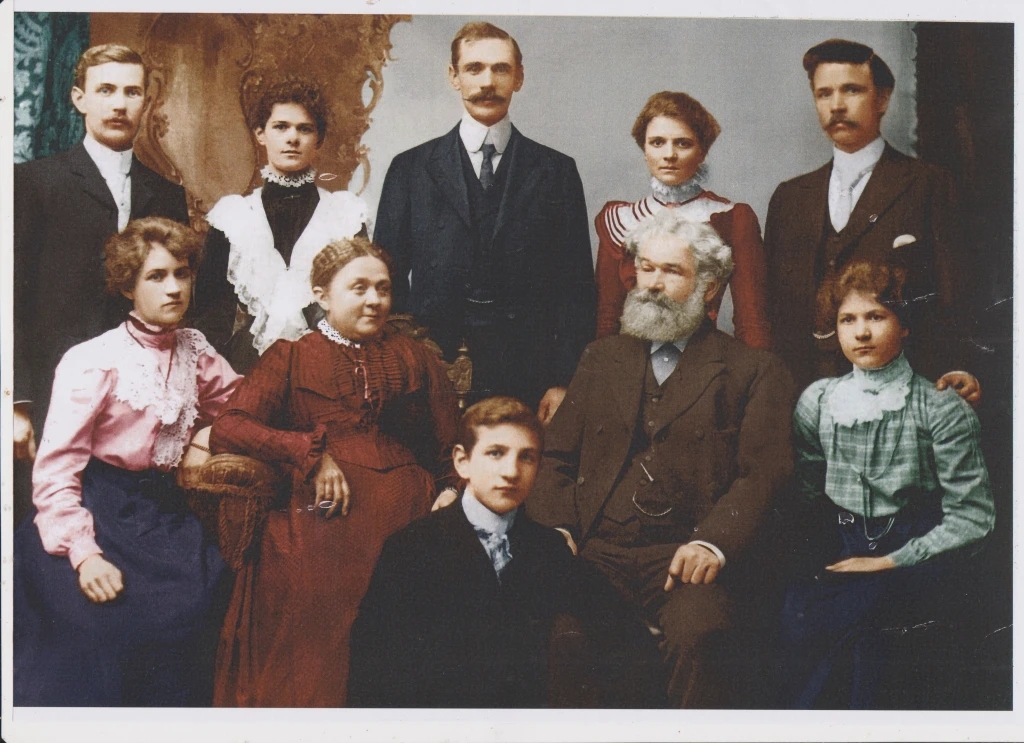
Among the family photos is a tiny image of Shirley’s other grandparents, James Westall and Annie Day.* In about 1911 they moved from Hereford to Swindon with their daughter Maud. In 1912 they were living at 22 Omdurman Street when they had their 2nd daughter Edna Muriel baptised at St. Barnabas Church, Gorse Hill.

There is another precious photo of James and Annie Westall with their three young daughters -Maud standing, baby Mavis on her mother’s lap and Edna Muriel seated on the left of the photograph. Edna died aged 6 not long after this family photograph was taken. Shirley remembered her grandmother had an enlargement made of the section with the pretty little girl with bows in her hair. In amongst the family photographs there is also one of the elegant Annie Westall.

Young mother Susan Lafford is pictured with her baby son Stanley on her lap while a much later photograph shows David and Susan Lafford, possibly on a seaside promenade. There are even photographs where Shirley herself makes an appearance in the back garden at 126 Clifton Street.

Shop corner of Gambia Street
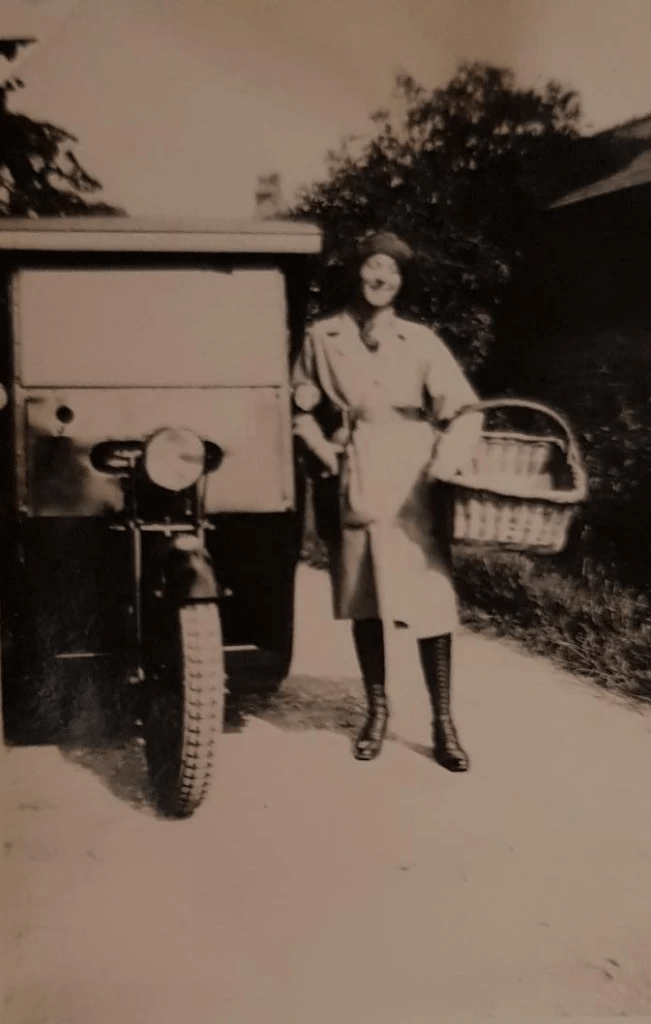
Maud Lafford nee Westall pictured in 1932
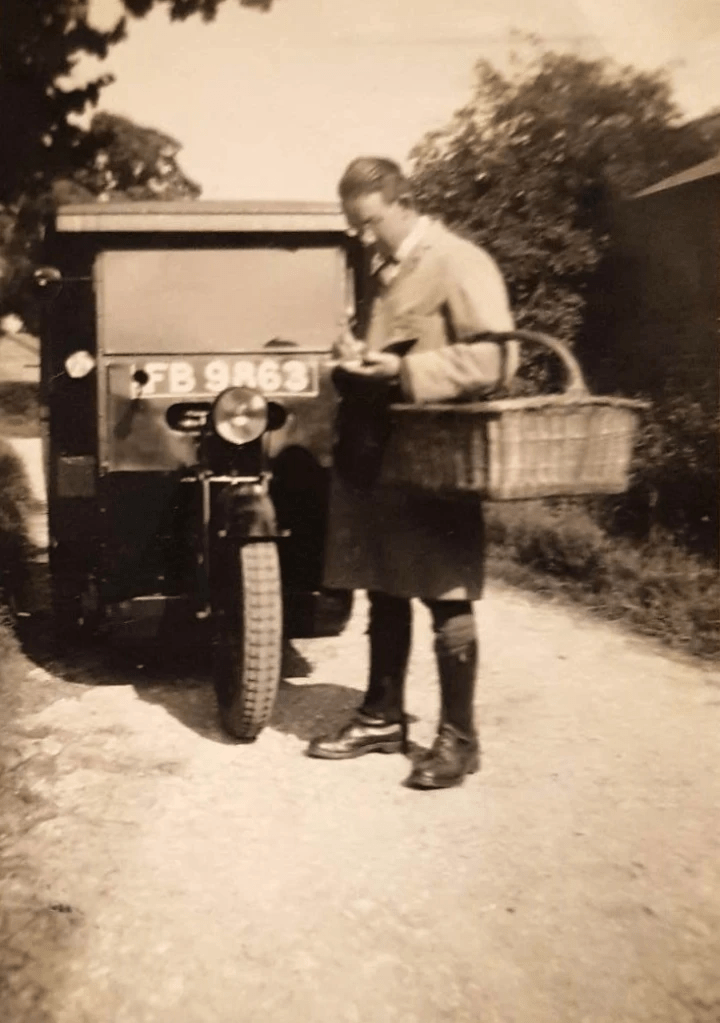
Stanley Lafford

Stanley Lafford

James and Annie Westall nee Day*

James and Annie with their three daughters, Maud standing, baby Mavis and Edna seated
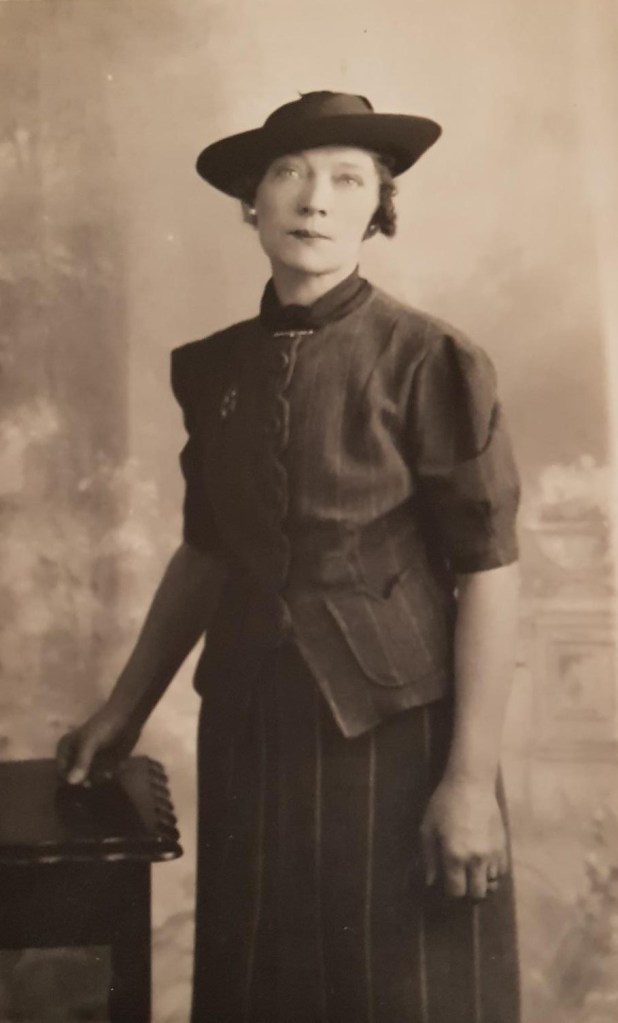
Annie Westall

Susan Lafford with baby Stanley – 126 Clifton Street
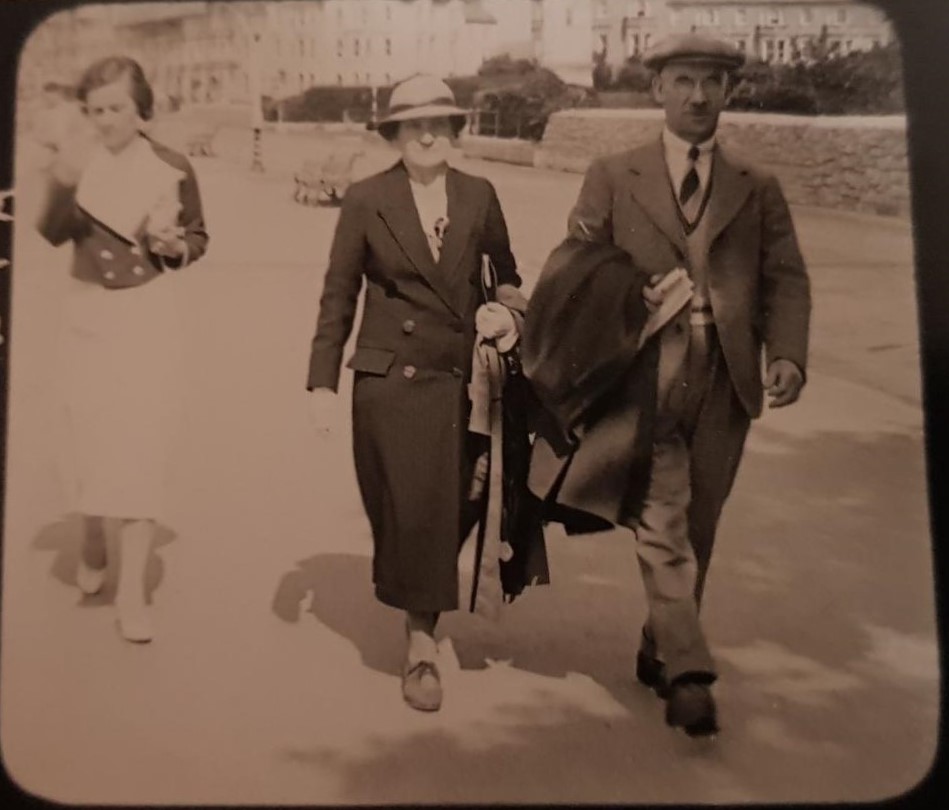
Susan and David Lafford

Susan and David Lafford with Shirley
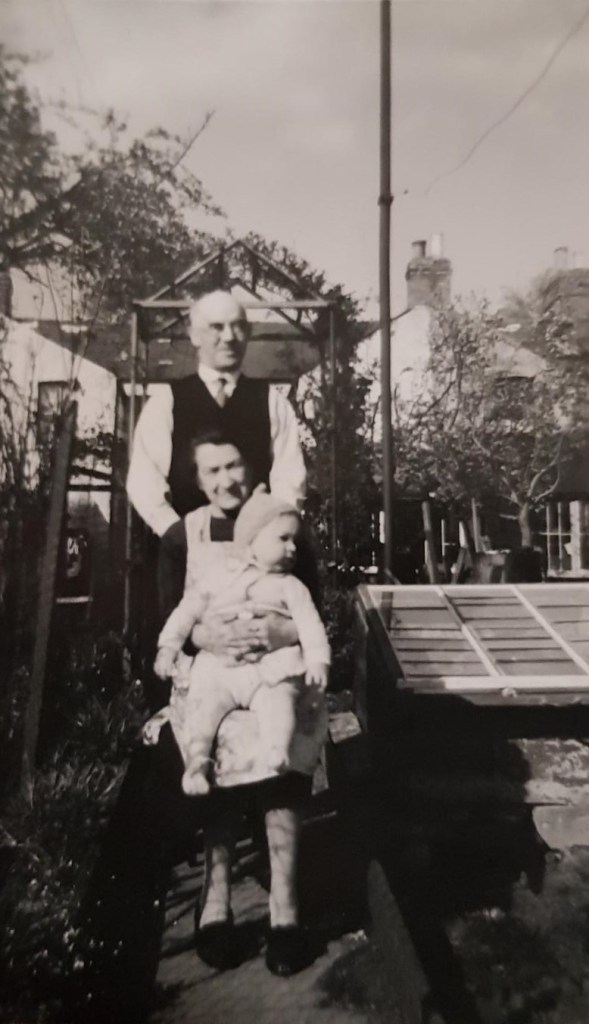
Susan and David Lafford with Shirley

Both sets of Shirley’s grandparents are buried in Radnor Street Cemetery. Shirley remembers as a child visiting the cemetery with her aunt and seeing the grave of James Westall where a wooden cross once stood.

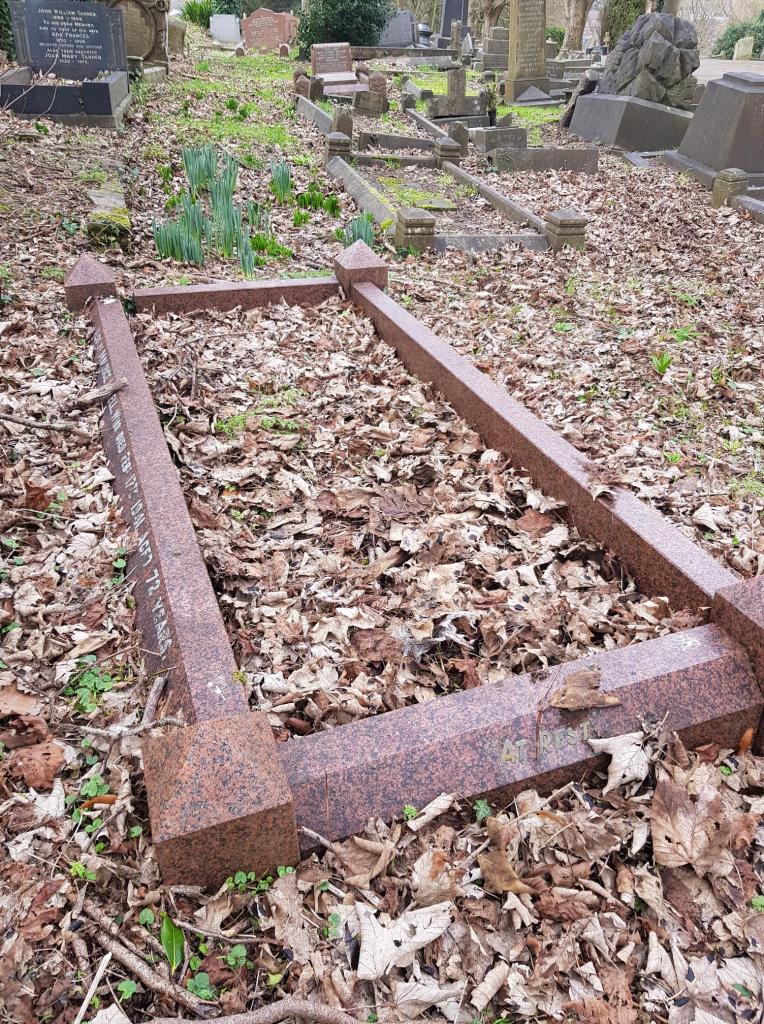
James Westall died aged 49 years in the Isolation Hospital. He was buried on May 26, 1934 in graveplot C3553 with his little daughter Edna Muriel who died in 1918. The glamorous Annie died in 2002 aged 91 and is buried in the same plot.

Susan Clara Lafford died aged 73 in 1951 and was buried in grave plot E7850 where David joined her in 1955.

*This small format portrait looks to be an example of a so-called “stickyback” photograph produced c1915 at a studio at 15 Regent Street. These photographs had a gummed back and were cheaper than others available at the time. Swindon Photographers & Postcard Publishers by Darryl Moody and Paul A. Williams.
Jesse Eagles – boilersmith

Jesse Eagles woke early and asked his wife if it was time to get up. On being told not yet, he turned over and went back to sleep – “a sleep from which he never awoke” as the Swindon Advertiser reported on July 17, 1909.

When the time comes this is how I would like to go. Peacefully, in my sleep with no prior warning, no lengthy, debilitating illness. But not yet, of course.

Sudden Death in Swindon

Mr J. Eagles of Clifton Street

Inquest and Verdict

The death occurred yesterday with painful suddenness, of Mr. Jesse Eagles, of 118 Clifton Street, Swindon. Deceased, who was a well known resident of the town, was a boilersmith by trade, and had been employed in the GWR Works for the past forty years. He was at work as usual on Wednesday until 5.30 p.m., and returned home and had his tea. In the evening he went out in his garden till nine o’clock, and later he retired to rest at the usual time. He awoke yesterday at four o’clock, and was then quite well, apparently. He remarked to his wife, “It is not time to get up yet, is it?” She replied in the affirmative, and deceased then went to sleep again – a sleep from which he never awoke. When his wife called him at five o’clock, there was no response, and she was alarmed. Medical aid was summoned, and Dr. Mason, from the GWR Surgery, attended, but he could only pronounce life extinct, death being attributed to heart failure.

Deceased, who was 60 years of age, leaves a widow and grown up family, for whom the deepest sympathy will be felt.

By the Foreman:- Deceased had no supper on Wednesday night. He was lying on his right side when witness found him.

By the Doctor:- He had not complained of shortness of breath when going up hill.

Dr. Woodgate Mason said he was called to the deceased about 5.15 that morning, and on arrival found him dead. In his opinion death was due to heart failure. He made an examination of the body, and found no marks of violence.

Extracts from the Swindon Advertiser, Friday, July 16, 1909

Jesse Eagles aged 60 years of 118 Clifton Street was buried on July 17, 1909 in grave plot E7453. His wife remained living at 118 Clifton Street where she died in 1921 and was buried with her husband.

Cemetery conveniences

Having read my story about John and Florence Sterry, Elaine Maloney was prompted to write to me about her recollections of the cemetery conveniences. Elaine grew up in Clifton Street and writes of her childhood memories, extracts of which I share here with you.

I remember the gent’s urinal very well. I used to live in nearby Clifton Street, just across from the pub. My Mum, Joan Maloney, used to run the Clifton Street Playgroup in the Methodist Church Hall opposite the Post Office and next to the Clifton Street entrance to the cemetery. I was often hanging about in that area waiting for my Mum to lock the Playgroup hall up and come home. During these times my Clifton Street pals and I would often climb up the quite steep path to the chapel and we would dare each other to quickly dash in and out of the urinals. Hardly surprising I suppose but the urinal always smelled strongly of stale urine, which added to the fun of the dare.

With your back to the chapel and facing the urinal straight ahead you entered from an opening in the bottom right area and went down a couple of broad steps in keeping will the slope it was built into. At the bottom of the steps you turned left into the one room toilet. A long trough was situated on the southern wall and ran all along that wall only stopping at the edge the steps began at so from your starting point you would have turned 180 degrees to use the urinal so would now be facing south or thereabouts. It wasn’t very interesting architecture just utility concrete probably covering brick. At the bottom of the walls there was moss or lichen growing up the wall. If I remember correctly I believe the floor was tiled but with quite a few of them broken. Also I believe the roof was like corrugated iron but with possibly a layer of what looked like a layer of asbestos on top of the iron.

From outside the urinal at times you could have blinked and missed it as it was often overgrown with some kind of vegetation which would cover the whole roof and hang down the side walls. Just before it was due to be trimmed back it always covered the whole building so from other areas of the cemetery you could easily miss it and I can never recall any signs about the cemetery announcing it was even there.

Of course there were also a gents and a ladies toilet located to the left of the Radnor Street entrance if you were heading out of the gates there. I cannot remember inspecting the gents but you could cram maybe six people into the ladies. It contained one of those sanitary towel burners where you would pull the handle and a wedge shaped box section, hinged at the bottom, would come into view revealing a hollow section where you could place what needed burning, supposed to be sanitary towels ONLY and when you closed this part again you could hear the furnace flash up and whatever you had placed inside would be turned to ash.

Nobody could tell you were in there and if you ran down the path back onto the pavement quickly enough you lessened the chances of a parent driving by and seeing you come out. I can never remember anybody asking us to vacate the toilet for them to use so when we decided to spend time in there we were pretty much left alone.

It’s a shame but as I take an interest in public toilets when browsing online as often they have been built in a multitude of styles depending on the era they were commissioned and I find them fascinating. Many toilet blocks were sold off and later transformed into magical looking homes. I even saw some right on a seafront which an enterprising couple turned into a neat little home with the best views you could ever hope for.

I noticed a while back after looking through some old Victorian maps of Swindon that we used to have lots of urinals dotted around Swindon with them marked clearly on the corner of every third or fourth street. This must have been fantastic for the men as they were well catered for. I have noticed though that this is far from the case for women who had to trek much further to find a lavatory suitable for them to use, which seemed to be few and far between.

Today I have found the situation is no better in fact it is several times worse and even if you can find a public toilet marked on a map you would be extremely lucky to find it is still open and serviceable which is a crying shame as once you begin to age you may find you have need of them more often than previously yet you will find yourself disappointed and will be unlikely to find any toilets today.

From Swindonian Elaine Maloney

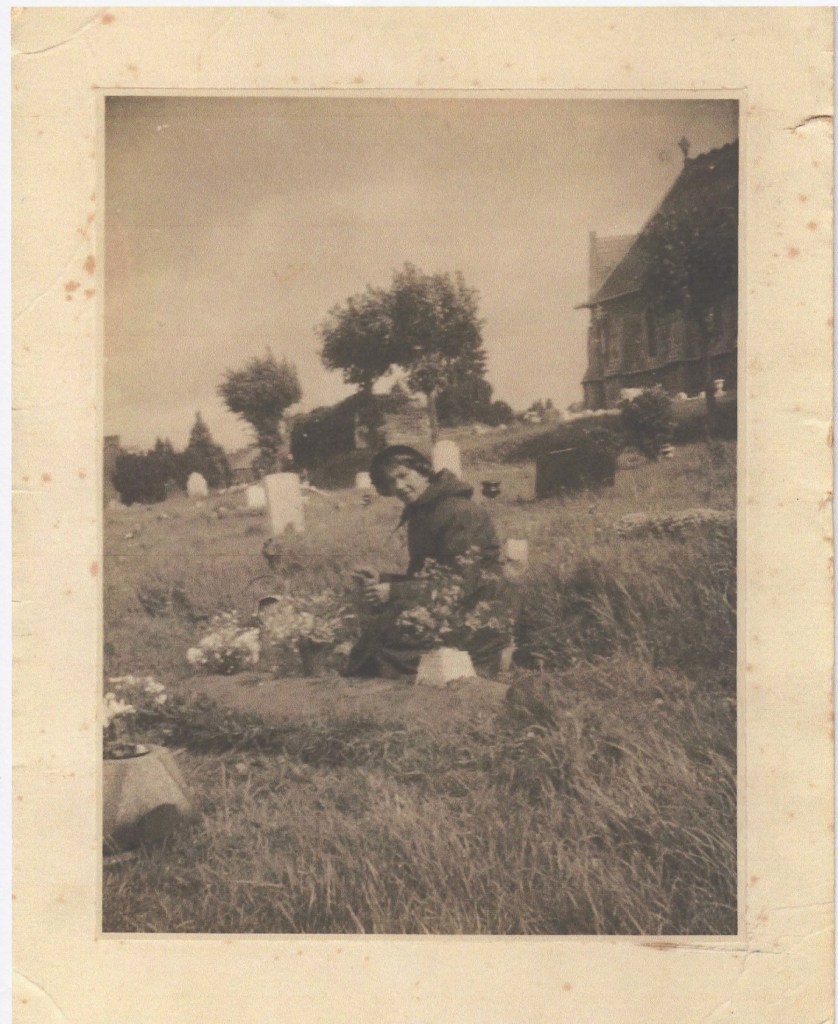
Florence Skerry pictured at her husband’s grave (with the urinals in the background).

Cemetery map with the site of the urnials

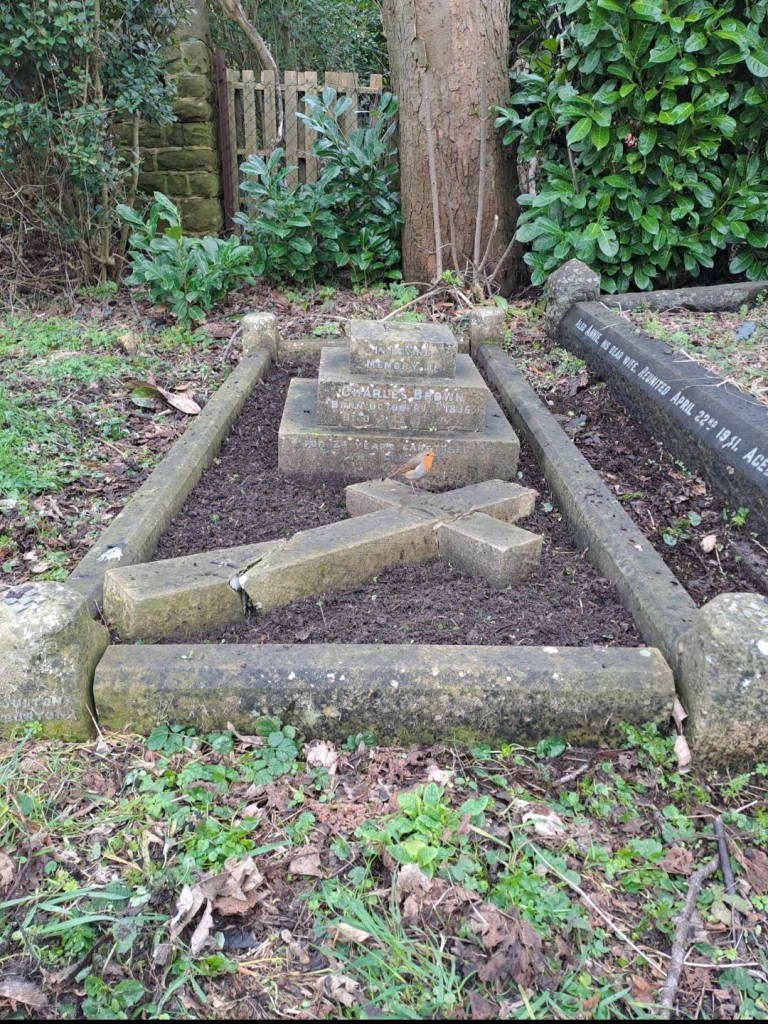
First caretaker – Charles Brown

Radnor Street entrance

The re-imagined story …

It’s a long trek back home from the market to Clifton Street. I usually walk up Deacon Street and cut through the cemetery. Of course, in the old days you weren’t allowed to and if Mr Brown caught us kids, we were in for a right telling off.

Mr Brown was the caretaker who lived in the lodge at the Radnor Street gates. He used to keep all the other gates locked so the only way in and out was past his front door.

Us kids used to climb the railings, but woe betide you if he caught you scratching the paintwork.

He and his team kept that cemetery in a beautiful condition. The grass edges were always neat and tidy and come Autumn the paths were all kept clear of leaves. We reckoned he polished the gravestones as well, they were so clean.

He was very proud of the place. Well, he’d been caretaker from the day it opened. Funny to think he’d known the cemetery in its empty state. Strange thing was he died on July 31, 1905 the anniversary of the date he began work in 1881.

People say he’ll be missed. I’m sure he will, but my generation will always remember him as the scary man who used to chase us out the cemetery.

cemetery-lodge-front-door-2

The facts …

With the opening of the cemetery imminent the Cemetery Committee advertised for a caretaker and sexton, at a Salary of £1 a Week, and House-Rent Free. The successful applicant was 44-year-old Charles Brown who in 1881 was working as a Coachman in Wroughton.  Charles worked as caretaker for 24 years.  He died at home in the Cemetery Lodge on July 31, 1905 and is buried in the cemetery in plot E8661.

Death of Mr C. Brown. The death of Mr C. Brown, the caretaker at the Swindon Cemetery, took place on Monday afternoon. Deceased was born at Lambourne Berks 68 years ago, and after living at Burderop for some time, he removed to Swindon, and became the first caretaker of the Cemetery, being appointed just 24 years ago, his death occurring on the anniversary day. Deceased had been failing in health for the last twelvemonths, and went away a short time ago for the benefit of his health. He was taken seriously ill about a fortnight ago, and passed away on Monday, as already stated. Deceased was always most unobtrusive and courteous in the discharge of his duties – On Thursday afternoon, at 2.30, the mortal remains of the late Mr Brown were laid to rest in the Swindon Cemetery, over which he had had charge for so many years. The remains were enclosed in a polished elm coffin, with brass furniture, and the breast place bore the inscription: “Charles Brown, died July 31, 1905, aged 68 years.”

Extracts from the Swindon Advertiser, Friday, August 4, 1905.

A return visit to Clifton Street

Victorian Swindon was the product of some daring speculative building.  Streets grew up in rows of terraces as local builders bought up small plots of land.  Sadly, today there are few remaining examples of the early names these builders gave their rows of terraces.

Built in 1883 by James Hinton, number 141 Clifton Street began life as 5 Graham Terrace.  The first owner was Alfred Reynolds, a coach builder obviously keen to invest in the Swindon property boom, who bought the property from James Hinton in 1884 and speedily sold it on.

On May 13, 1884 schoolmaster Samuel Snell paid £200 for No 5 Graham Terrace.  The deeds provide some fascinating details of the property and a glimpse of the Kingshill area in the middle of development.

The house at 5 Graham Terrace, Clifton Street is described as being ‘lately erected.’  The parcel of land on which the property was built had “a frontage to the said Street and being of the width throughout of fourteen feet eight inches.”  It was bounded “on the South Western end by a back road ten feet wide as the same is made or intended to be made parallel with Clifton Street.”

Samuel Snell didn’t live long in the house on Clifton Street before moving into the school building at The Willows, The Sands with his family, two assistant masters, three domestic servants and nine boarders.

John T. Mayell, a 24 year old boilermaker from Brierly Hill in Staffordshire was the next owner and moved into 141 Clifton Street with his wife and baby daughter.  In 1889 he took out a second mortgage on the property with Swindon solicitor Walter H. Kinneir, which he had repaid by 1901.  John lived in the house for more than ten years. 

By 1899 the street was built up along its entire length saving a few empty plots on the bend of the road opposite the Clifton Hotel.  The new road mentioned in the 1884 deeds is Exmouth Street.

In 1911 the property came on the market again.  Jabez Bull was the owner occupier and he sold the house to Charles Frederick Farr, an engine erector who lived just up the road at number 159.  Although now commonly known as Clifton Street, prospective buyers were reminded that the property had once been known as 5 Graham Terrace. 

James Hinton, New Swindon Local Board member, had land laid out between Dixon, Stafford and Clifton Streets by 1879.  In 1883 he built numbers 136-145 Clifton Street and the following year he built numbers 70-81 on the same street.

In 1880 James Hinton sold an 11½ acre plot in the middle of the Kingshill estate to Swindon’s two Local Boards for the building of the town’s much needed new cemetery.

He later served as Vice Chairman of New Swindon Local Board and became Mayor of Swindon in 1903-1904. Hinton Street in Gorse Hill was named after him. James Hinton died in 1907 and was buried in Radnor Street Cemetery.

Down Your Way – Clifton Street

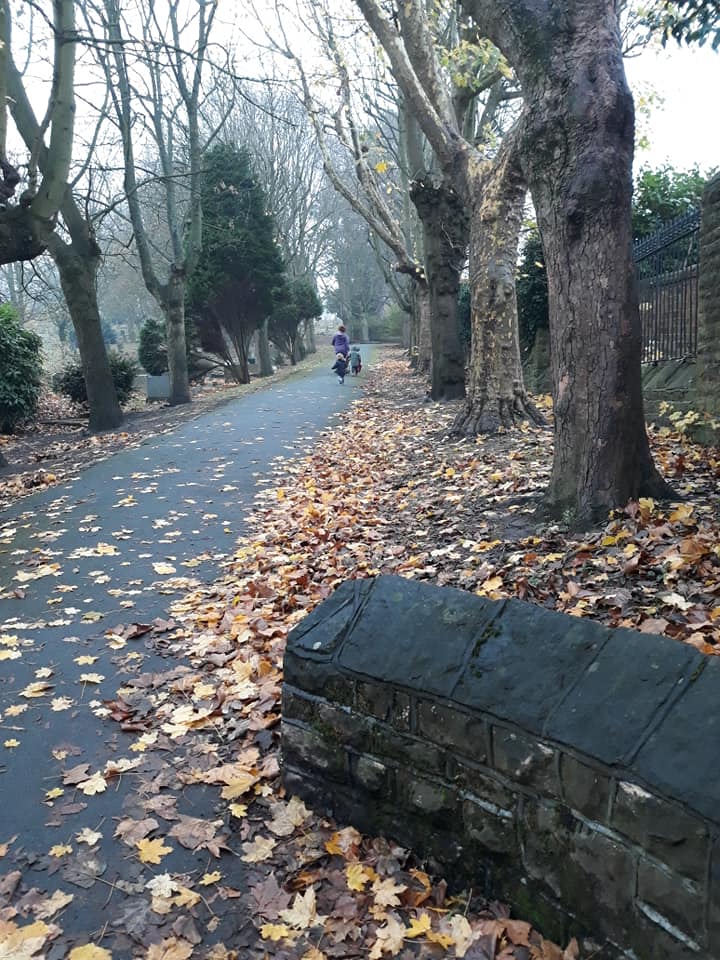
Building began in Clifton Street in about 1879. There were a lot of builders involved, Job Day, James Hinton, Richard Leighfield, which is why the houses all look a little different. There is the Clifton Hotel and 180 houses in Clifton Street; some detached, semi detached, some terraced. Some of them have extensions and loft conversions or porches and some have a name incised in the stonework above the front door, a remnant of a bygone era. There’s a blue house and another with a pink front door and a pink gate and artificial flowers and a heart in the window. The Clifton Stores, still there, stood opposite the the Primitive Methodist Chapel, long gone. There were probably other shops along this long street that stretches from the top of Kingshill to Radnor Street. And tucked away behind is the cemetery.

In the 19th century Clifton Street was home to a lot of railwaymen and their families, now all gone as well.

You might like to read about some of the former residents of Clifton Street who now reside in the cemetery.

Miss Beatrice Wall

Henry Smith – undertaker and monumental mason

The Griffin family – another Swindon Story

Fred Tegg – a well known Swindonian

Maurice Uzzell, Louisa and little Lily

Maurice Uzzell, who was buried in grave plot D64A, has been relatively easy to research. He has a pretty unusual surname and his branch of the family kept in close contact, which all helps the researcher.

Born in 1868 in Christian Malford, Wiltshire, Maurice was the fourth child of Henry and Hannah Uzzell. In 1871 aged 2 years old he is living in the village with his parents and two elder brothers. By 1881 the family was complete – a daughter and two more sons – and they all lived at 35 Leigh Cottages, Christian Malford. The two elder sons Charles 17 and Stephen 15 were working as agricultural labourers, Maurice 13, was still at school.

Drawn to the bright lights of Swindon, by 1891 Charles 27, Maurice 22 and Fred 19 were boarding with Jesse & Mary Scott (formerly Uzzell and their elder sister) at 67 Jennings Street, Rodbourne. Charles and Maurice worked as labourers and Fred as a blacksmith’s labourer, so probably fair to assume they were all employed in the GWR Works.

In 1896 Maurice married Louisa Worts – so let’s have a look at Louisa. Born in 1855 in Leyton, Essex by 1891 Louisa was living with her widowed mother and her sister and brother-in-law in Colebrook Road, Walthamstow where she worked as a laundrymaid.

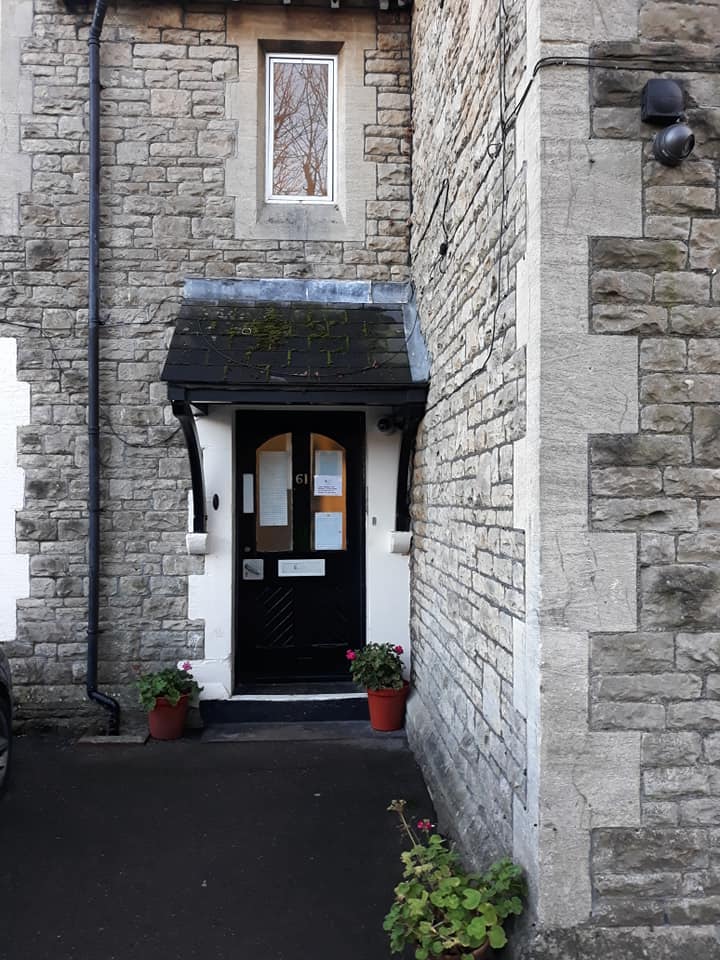
In the 1901 census Maurice is living at 61 Clifton Street where he works as a Wood Turner in the GWR Works. Living with him are Louisa, his brother Fred and – hello – a niece – Lily Uzzell aged 10 born in Walthamstow.

An Uzzell family search found all his brothers (and Ellen) and it seemed none of them had ever lived in Walthamstow. Only Louisa (nee Worts) had lived in Walthamstow. Was young Lily her daughter, born before her marriage to Maurice?

In 1911 Maurice and Louisa lived alone at 61 Clifton Street. Louisa declared they had been married for 14 years and had no children.

But what happened to little Lily? Did she die in childhood? If so she is not buried with Louisa and Maurice. Did she marry? I can’t find a name or place that matches.

Louisa died in 1931 and is buried in the area close to the cemetery chapel with this discreet pink memorial. Maurice died in 1941. Probate of his estate was awarded to William Scott, railway clerk, most probably the son of Jesse and Mary Scott who Maurice lodged with in Jennings Street as a young man. Maurice is buried here with Louisa.

Fred Uzzell, Maurice’s younger brother who lived with him in 1901 and then moved to Kingshill Road, was buried close to him in the cemetery in grave plot D234.

This branch of the Uzzell family has been relatively straightforward to trace. But what happened to little Lily? I’d love to know.

You may also like to read:

David Uzzell – a bit of a country rogue

Miss Beatrice Wall

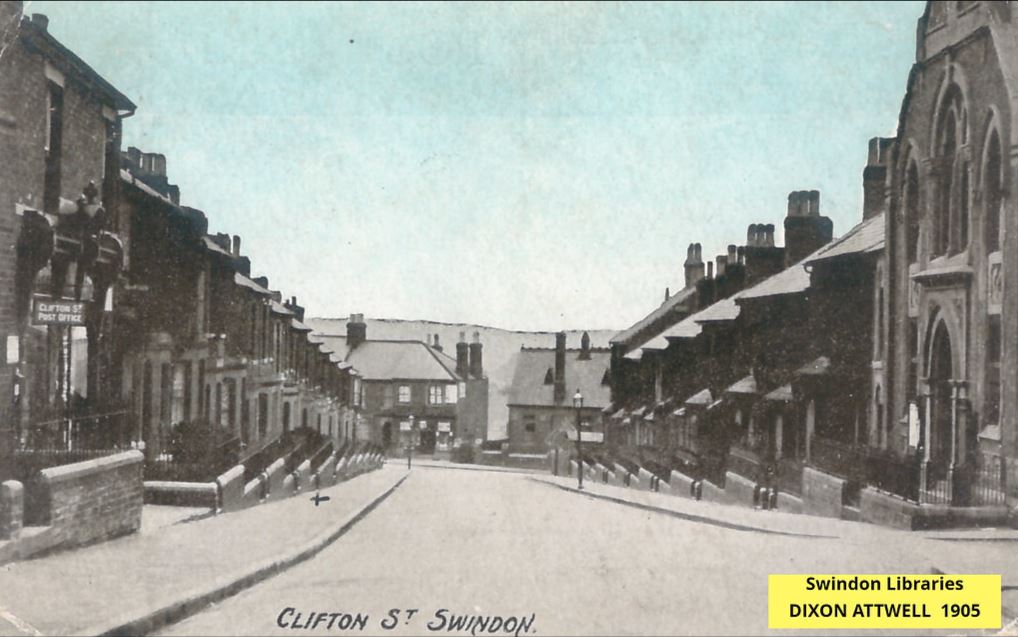
The shop in Clifton Street has had many different owners and many different shop fronts. In 1905 when Sarah Jane Wall was the Grocer and Subpostmistress it looked like this.

Swindon streets built in the 19th century grew piecemeal with each terrace built by a different builder. In 1883 E. Harvey was busy constructing eleven houses and a cottage in Clifton Street. James Hinton was also busy in this area of Swindon and in 1884 father and son firm, C. & G. Pettifer built a house and shop in Clifton Street. Could this be the premises the Wall family were living in at the time of the 1891 census?

Across the road once stood the Clifton Street Primitive Methodist Chapel. The original chapel was built in 1882 on land given by James Hinton. A much larger chapel was built in front of this in 1900, which can be seen in this photo. The chapel was still open in 1970 but was demolished soon after. Next to this are the Clifton Street gates to the cemetery.

This image has an empty alt attribute; its file name is clifton-street.jpg

Published courtesy of Local Studies, Swindon Central Library.

John Wall, Grocer and Dairyman moved to Swindon to run the General Shop in Clifton Street with his wife Sarah Jane and four of their six children. He died in 1899 and was buried in the cemetery just across the road from his shop. Sarah Jane carried on running the business with her two sons George and Charles and her daughter Beatrice.

Beatrice died in 1914 and was buried with her father in grave plot E8596. Sarah Jane died in 1935 and was buried with John and Beatrice.

The late Miss Wall – Residents in that district will miss the familiar figure of Miss Wall, of the Clifton Street Post Office, who has passed away after a long and painful illness.

The deceased lady was the daughter of the late Mr John Wall, who came to Swindon 30 years ago, and for a very considerable period she has been prominently identified with the business connected with the oldest sub-office in the town.

The funeral took place on Monday, the service at St. Saviour’s Church and the last rites at the Cemetery being conducted by the Rev. H.C. Brocklehurst.

A large number of friends assembled, and the principal mourners were: Mr and Mrs Loxwell Wall (Exmouth), Mr and Mrs Frank Wall (Swindon), Mr and Mrs Charles Wall (Swindon), Mr and Mrs Arthur Wall (London), Mr George Wall (Swindon), Mr W. Davis (Stonehouse), Mr V. Broadsmith (Cirencester), Miss E.J. Wall (Exmouth), Miss H.G. Wall (Swindon), Nurse Butcher and Mr. E. Higgins (Swindon).

Mrs Wall and family are very grateful for the loving sympathy extended during Miss Wall’s long and painful illness, and the kindness of neighbours is especially recognised.

Extracts from the North Wilts Herald, Friday, February 27, 1914.

The Clifton Street shop in 2023