The re-imagined story …
I’m not sure about central heating – not that we’re going to be able to put ours on this winter! Personally, I don’t think you can beat an open fire. I can remember sitting in my nan’s house, all of us clustered around the coal fire, our faces red hot while up in the bedrooms the temperature was sub-zero. Nan often had ice on the inside of the bedroom windows, no double-glazing in those days.
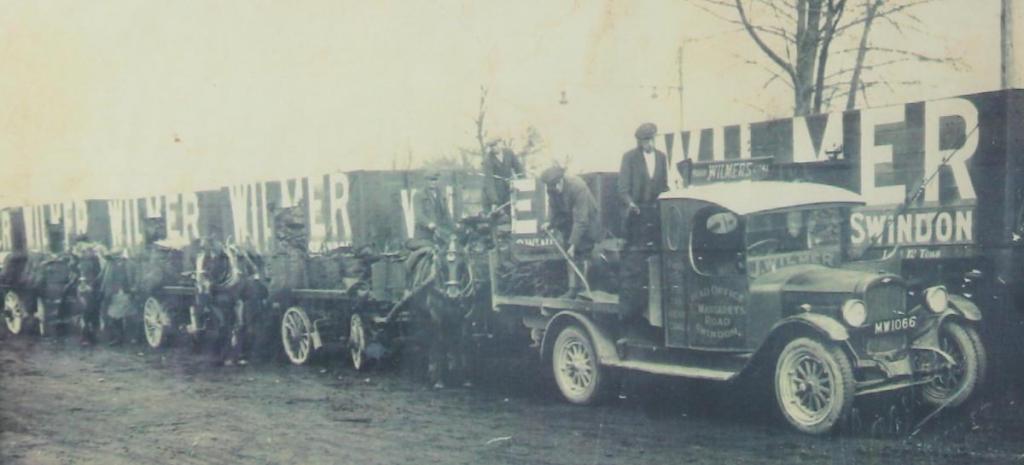
I remember the coalman delivering by horse and cart. He used to stop outside our house and put a nosebag on the old horse. I never saw him clean, the coalman not the horse – infact, I think the horse might have been cleaner.
Nan used to complain about the mess the coal fire created and I suppose we have to blame climate change on all that muck belching out into the atmosphere. She eventually invested in a two bar electric heater with a coal effect. All the warmth and none of the dirt, except she couldn’t afford to use that in the end. A bit like us with the central heating. We won’t be able to have ours on this winter.
The facts …
Death of Mr W.B. Wilmer
The death took place on Saturday at his residence, 96, Goddard Avenue, Swindon, of Mr. Wilmer Bradford Wilmer. The deceased, who was 59 years of age, came to Swindon from Paignton, Devon, 14 years ago, and started business as a coal merchant. For the scene of his operations Mr Wilmer chose a field at the end of St. Margaret’s Road, and commenced business in a small way. At this time Mr. Wilmer was a perfect stranger to the town, but by dint of hard work and careful trading he slowly but surely built up a sound and extensive business. It was not long before he was appointed agent for the Midland and South Western Junction Railway Company, whose lines his wharf adjoins and in this way he became one of the best known men in the town.
Mr Wilmer had been ailing for a considerable time, but his illness, due to an internal complaint, did not become serious until a month ago, and that it would have a fatal termination was not contemplated by his family until four days before his death.
The funeral took place on Wednesday at the Cemetery, where the burial service was conducted by the Rev. C.A. Mayall. The chief mourners were. Mr J.P. Wilmer (son), Mr and Mrs C. Love (sister and brother-in-law) Mr G. Ashworth, Mr. W. Beer, Mr. W.B. Armitage, and Mr E. Mackelden.
Mr Wilmer and family 96 Goddard Avenue, wish to thank all those friends who so kindly sent letters of sympathy during their sad bereavement.
Extract from North Wilts Herald, Friday, January 21, 1916.
Wilmer Bradford Wilmer was born in about 1857 the youngest son of Benjamin and Jane Wilmer. Benjamin was the publican at the Cross Keys Public House in Caxton, Cambs.
It would appear that the move to Swindon got off to a bit of a rocky start for Wilmer. In 1902 Wilmer was declared bankrupt with liabilities of over £1,000. He declared to the bankruptcy court that he was “absolutely without any estate, and admitted being a bankrupt before, in the year 1889.” – Wilts & Gloucestershire Standard Saturday 31st May 1902.
The family had arrived in Swindon sometime between 1891 and 1901 when Wilmer is recorded as a Stock Broker Agent living at 96 Goddard Avenue with his wife Jane and their two children, John P. 16 an architect’s apprentice and two year old Lilian. Their home in 1891 was in Batley, Yorks where Wilmer and Jane had married in the September quarter of 1883. He describes himself on the census of that year as “Living on own means.” They then spent some time in Paignton, Devon where daughter Lilian was born, before coming to Swindon.
Whatever had happened in Wilmer’s past, he soon managed to get his act together and established a business that would survive beyond his death and through several generations of the Wilmer family, until in 2015 when cousins Ken and John Wilmer made the difficult decision to sell the family business.
John told the Swindon Advertiser: “We were coming to the yard as toddlers but when we were teenagers we started helping out a bit more. Once we got our driving licences I think we were a bit more useful and we went all over the county delivering. Life was simpler back then,” he said.
Swindon Advertiser 20th April 2015
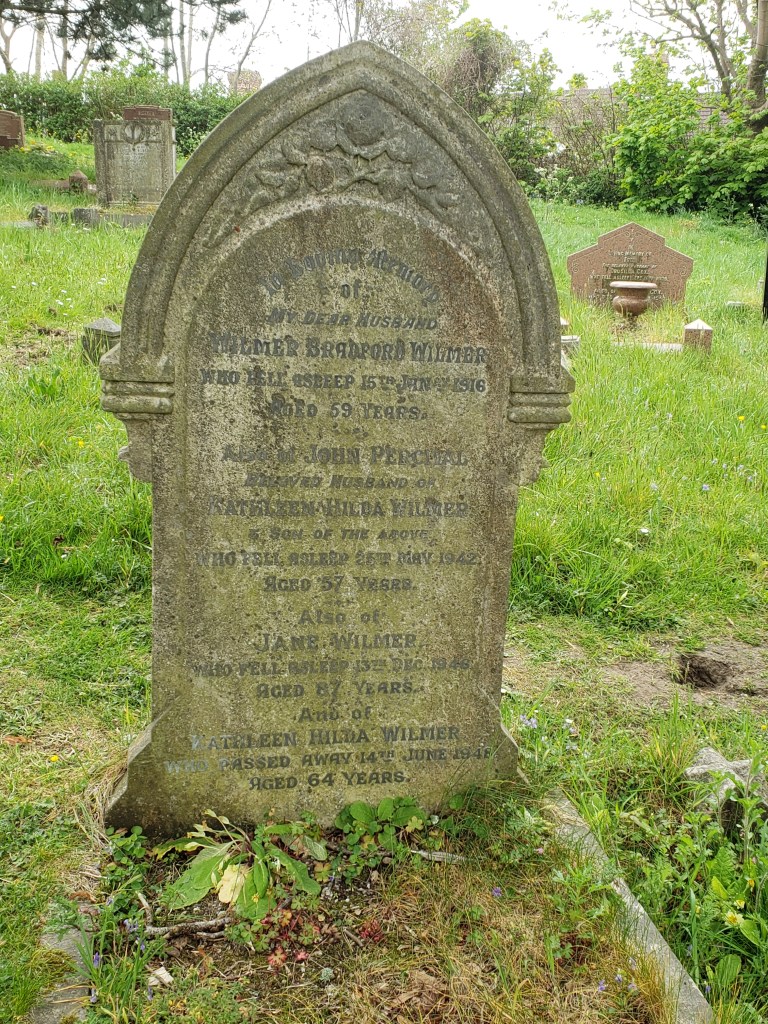

 Radnor Street Cemetery