Ernest Hayball – dairyman

One of our regular cemetery followers has a wealth of family history knowledge, a vast archive of photographs and ephemera, more than one family grave in Radnor Street Cemetery plus a photograph taken at the time of his grandmother’s funeral in 1937. How lucky are we to be given access to all this material and the story of Ernest Hayball!

Ernest Edwin Hayball was baptised on April 1, 1872 in the parish church of Donyatt, Somerset, the son of Mathias Hayball, a tailor and his wife Emma.

By 1891 he had moved to Swindon and was living in Commercial Road and working as a dairyman with his brother-in-law George Parkhouse.

Ernest Edwin Hayball married Theresa Georgina Meads at St. Mark’s Church on July 19, 1899. Paul has a copy of the wedding photograph with an index of the pictured guests compiled by his mother (see below). The couple went on to have five children, Leonard, Ernest, George, Doris and Gladys (Paul’s mother).

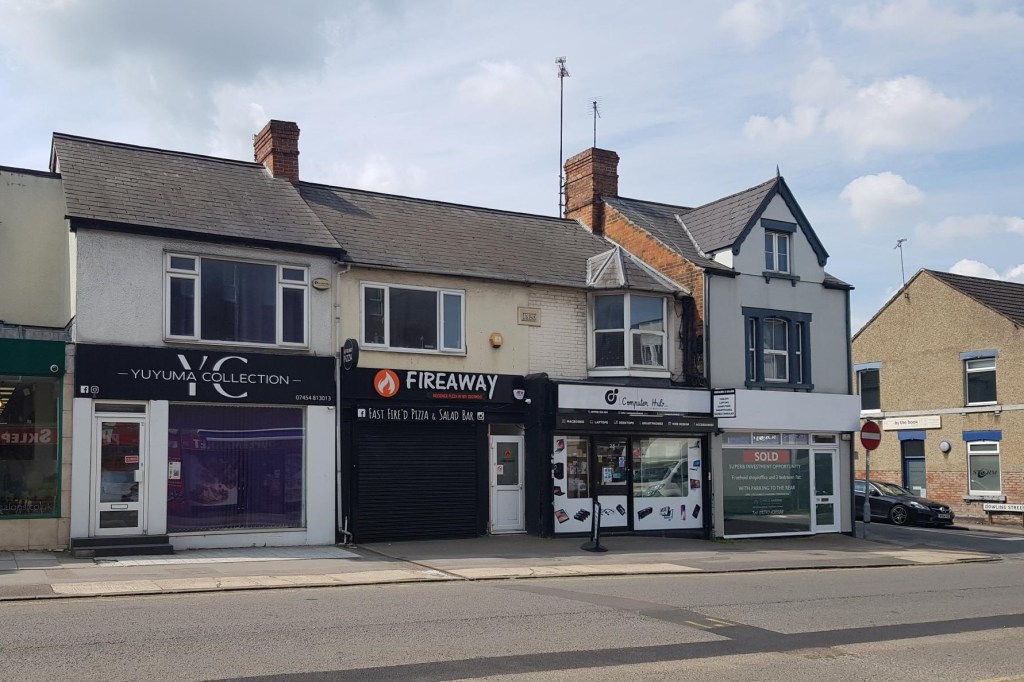
Ernest established his own dairy business in Hythe Road, later moving to 32 Bath Terrace, which became 71 Faringdon Road after renumbering and renaming in the early 1920s.

In 1932 the local press reported on yet another successful Children’s Fete where 35,000 people had celebrated in the GWR Park opposite the Hayball business. Organised by the Mechanics’ Institute, catering for the thousands of adults in attendance was undertaken by the Swindon Town F.C. Supporters’ Club with “40lbs of tea, nearly 4 cwt of sugar, and 40 gallons of milk, the latter being supplied by Messrs E. Hayball and Sons, of Faringdon road, Swindon.”

A brief obituary in the local press following Ernest’s death in 1952 encapsulated his busy life.

Was dairyman for 50 years

Swindon Death

A former member of the committee of the Swindon Town F.C. Supporters’ Club, Mr E.E. Hayball (79), 71 Faringdon Road, Swindon, has died.

He had been in business as a dairyman for 50 years. Starting at 1 Hythe Road, he bought Mr H.J. Hulme’s business, and after staying there for nine years went into partnership with the late Mr G. Parkhouse in Commercial Road.

In 1914 he started on his own account at 71 Faringdon Road, where he continued until his death.

At one time he played skittles for Ashford Road and the Central Clubs.

He leaves three sons and two daughters.

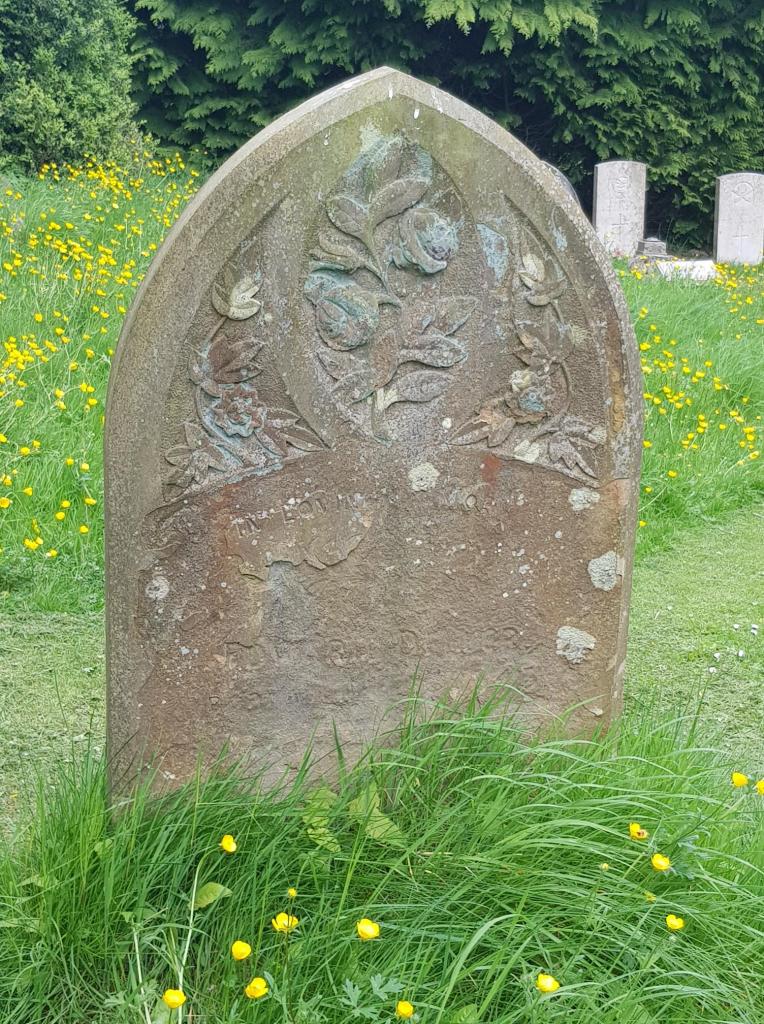
Ernest died at his home on January 13, 1952. He was buried in grave plot E7749 with his mother Emma who was living with them at 32 Bath Terrace at the time of her death in 1918; his wife Theresa who died in 1937 and his daughter Gladys and son-in-law (Paul’s parents).

Here is a selection of Hayball family photographs published courtesy of Paul.
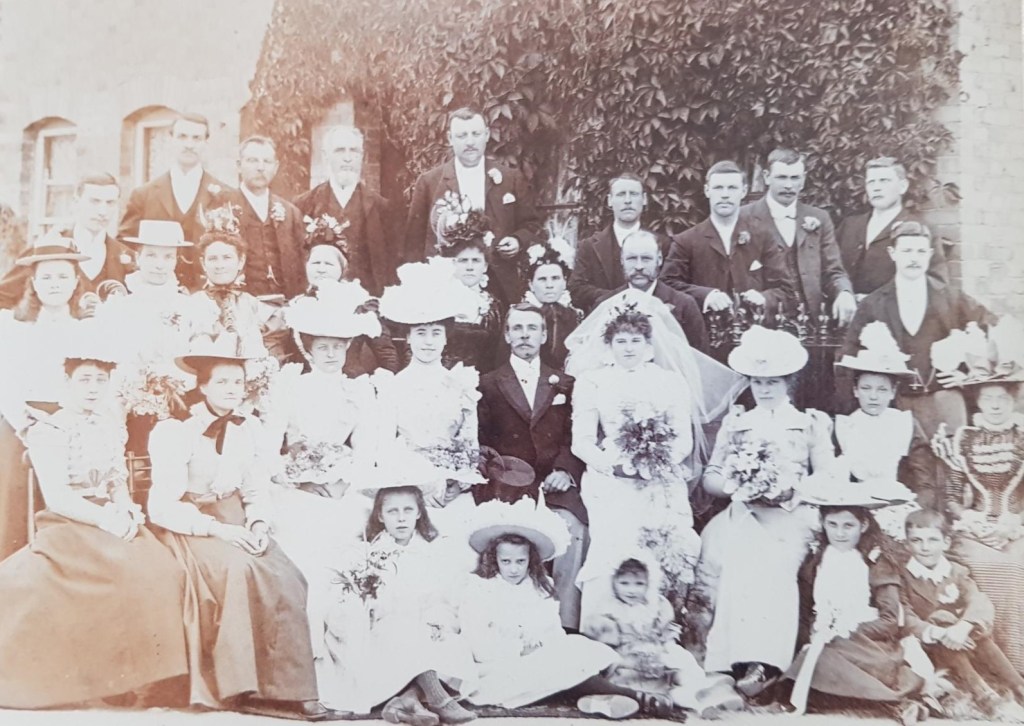
Ernest and Theresa’s wedding photo.

Back row 4th from left is Mathias William Beazley Hayball (father of the groom).

Middle row 6th from left standing behind the bride and groom is Emma Hayball (mother of the groom).

A family photograph celebrating Ernest and Theresa’s Silver Wedding Anniversary.

Left to right standing:- Doris, Leonard, Ernest and George

Gladys stands between her seated parents Theresa and Ernest
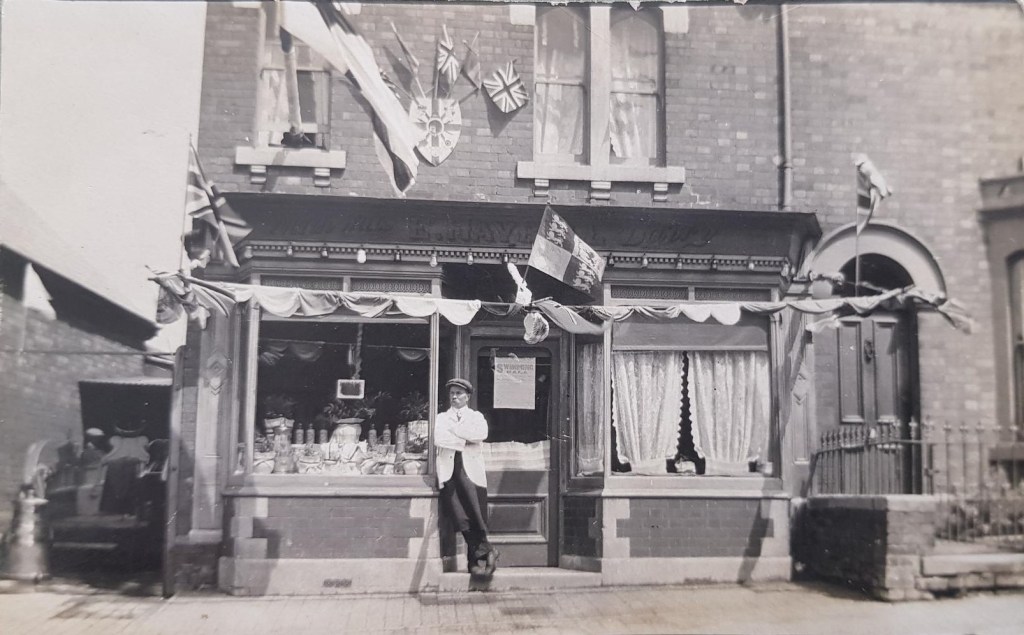
Ernest standing outside the shop in Hythe Road.
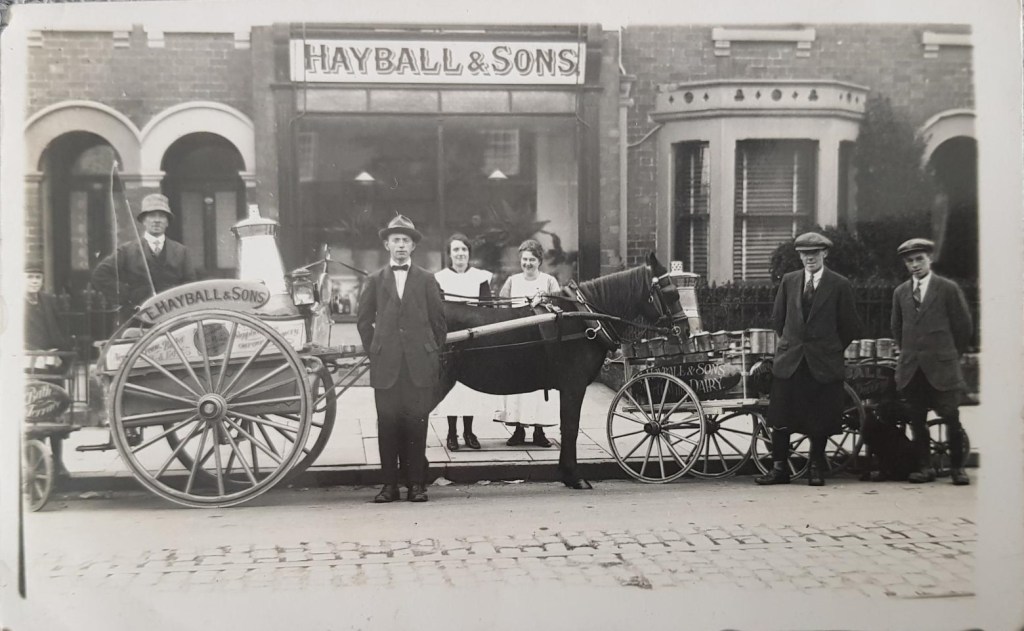
71 Faringdon Road

Ernest and Theresa Hayball

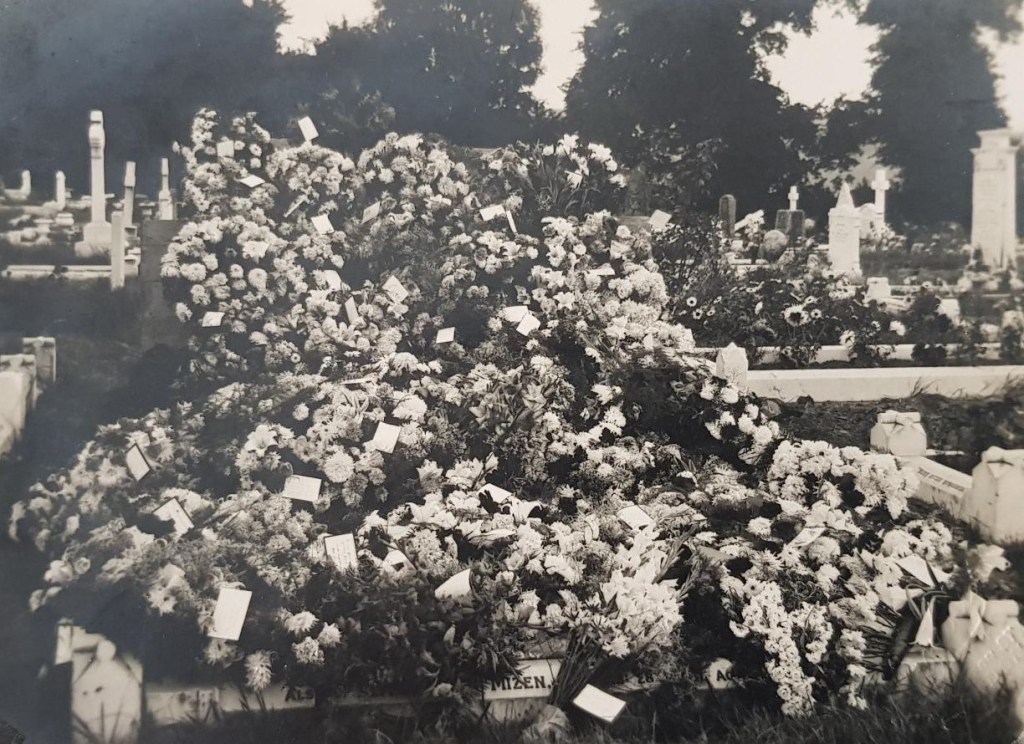
The Hayball family grave in Radnor Street Cemetery following the funeral of Theresa Georgina Hayball in 1937.

Sydney Albert Eyles

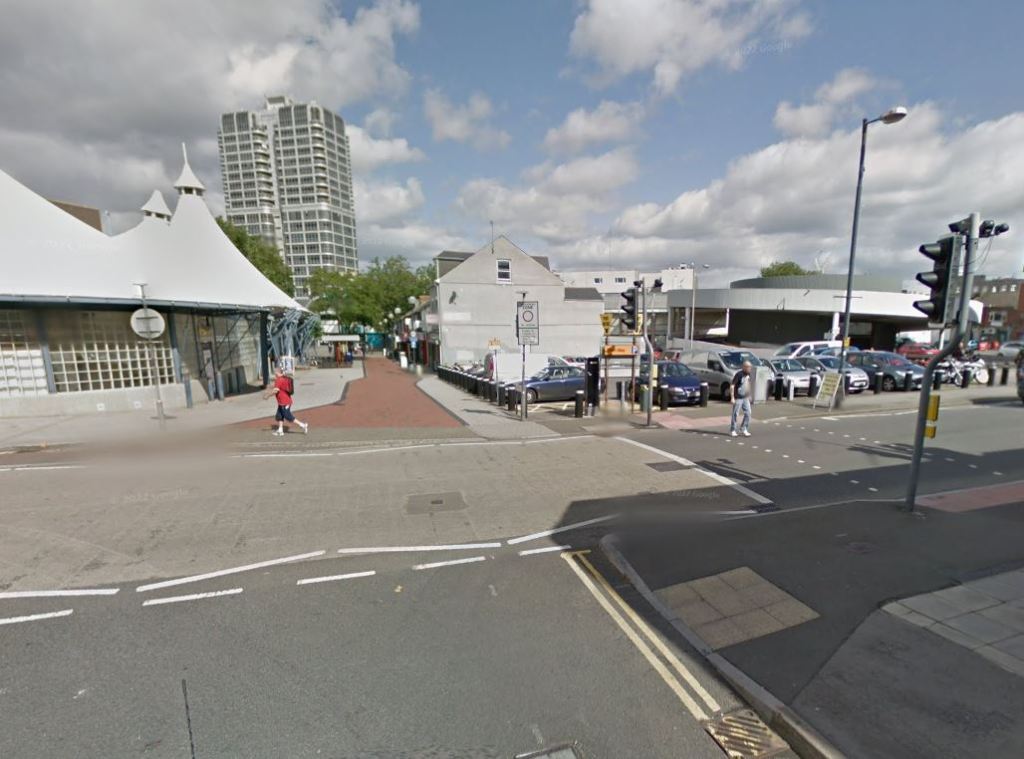
Sometimes the layout of the streets of Swindon has changed so little you can easily visualise a description in the newspaper. I regularly walk down Deacon Street from the cemetery, crossing at the traffic lights on Commercial Road close to the derelict Tented Market building. It does not take a lot of imagination to recreate this location as it was in 1905. Today the busy flow of traffic is one way coming up Farnsby Street and along Commercial Road. And more than 100 years ago it appears it was equally busy on one Saturday in 1905.

Image of Deacon Street published courtesy of Local Studies, Swindon Central Library.

Fatal Accident in Swindon

A Boy Killed

On Saturday about noon a shocking accident happened in Commercial Road, Swindon. A boy named Eyles, whose parents live in Dixon Street, was passing down Deacon Street. When at the corner near the Market Hall, a heavy vehicle drove down Commercial Road. The boy, who is slightly deaf, did not hear the approach of the vehicle, and was knocked down. The wheel went over his chest, and the injuries were so severe that he died shortly afterwards. He received treatment at the GWR Medical Fund Hospital. An inquest was held on Monday at the Mechanics’ Institute, before Mr J.W. Pridham, Deputy Coroner.

The following evidence was taken:

Arthur James Eyles, clerk in the GWR Works, father of the deceased, was the first witness called. He stated that he last saw his son alive at about nine o’clock on Saturday evening.

Benjamin Robert Dixon, 72, Deacon Street, Swindon, a fitter, said he was in Commercial Road when the accident occurred on Saturday about 12 o’clock. He first saw the child running across the road in front of a horse and dray. The horse was going at a jog-trot, and the driver appeared to be driving carefully. The dray was a brewer’s four-wheeled dray, and there were some empty barrels in it. It was going towards Faringdon Street, and was almost in the centre of the road. The child ran off the kerb just as the dray was passing and went under the horse’s head, and was knocked down, the wheels passing over the child’s chest. In witness’s opinion, it would have been impossible to have pulled up the horse in time to save the boy.

Albert Whitbread Fox, labourer in the GWR Works, said he was also in Commercial Road at the time of the accident, and saw the child run in front of the horse. The driver appeared to have control over his horse. Witness ran and picked the child up after the dray went over him, and helped to take deceased to the Medical Fund Hospital. He did not think the child had any reason to run in front of the horse.

Thomas Hunt, carter, in the employ of Messrs Horsell and Marson, of Wootton Bassett, said that on Saturday last about noon he was driving a dray down Commercial Road. The accident occurred at the corner of Deacon Street. The street was rather crowded at the time. The boy rushed across from the kerb and got knocked down by the horse. It was impossible for him to pull up the horse in time.

Dr. G. Rodway Swinhoe stated that he had a telephone message from hospital at about 12.8. He went to the hospital as soon as possible and found the child was dying. Another doctor was present a few minutes before him. On examining the body, he found that wheels had passed over the lower part of the chest, and death was due to shock caused by the accident. No limbs were broken.

A verdict of accidental death was returned.

The Evening Swindon Advertiser, Tuesday, February 14, 1905.

Deacon Street/Commercial Road pictured in 2009.

Seven year old Sydney Albert Eyles, Dixon Street was buried on February 17,1905 in grave plot E7318. Sydney is buried with his parents in a privately purchased grave plot. His mother Margaret Louisa died in January 1913 and his father Arthur James in 1951.

A name to grow into

The re-imagined story …

William John Josiah Fellowes Thomas. What a long name for such a small person. It was a name to grow into. Sadly, he never had that opportunity.

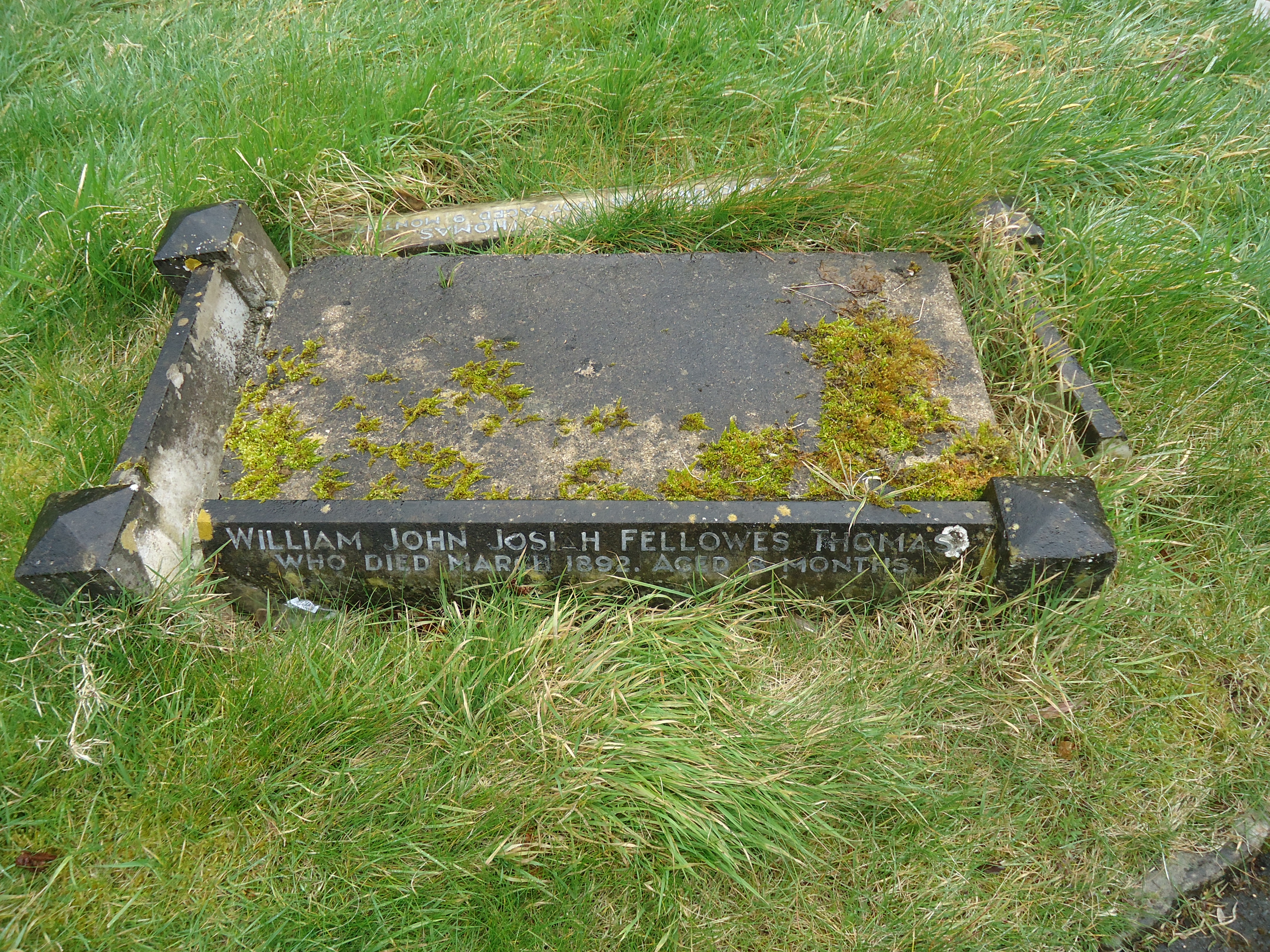
The inscription stretched the length of the small kerbstone memorial. ‘William John Josiah Fellowes Thomas who died March 1892 Aged 8 months.’ They had lived at No 4 Albion Street then, their first home together. Such a happy time, waiting for the birth of their first child.

She had prayed she would never have to bury another child in the cold earth and for several years it seemed as if God had heard her; spared her. Two daughters survived and thrived and then another son; a small, sickly baby.

‘Also of Cyril Thomas who died Feb 1907 aged 9 months.’

Why had they named him Cyril; she couldn’t remember now. Why hadn’t they given him a more impressive name. Cyril; not much of a name. She didn’t even care for it now. Cyril.

The little grave was the size of a cot. She wished John hadn’t chosen this plot in the lower half of the cemetery. She wished they had buried the babies up on the higher ground, near the other family graves, where the early morning sun peeped through the trees. The boys always woke early. She remembered that, watching the sunrise at the bedroom window, rocking them, trying to soothe them.

She looked across the cemetery. Some of the mourners were still standing at the graveside. This was where she would be laid to rest when the time came, buried with John, next to her parents, close to her brothers. She wished she could have her sons with her.

She left a spray of flowers on the small grave. Two daughters survived and thrived, two sons died.

William John Josiah Fellowes Thomas 1892

The facts …

During the 1870s William Fellowes, an iron moulder, brought his family down to Swindon from Wolverhampton. By the time of the 1881 census William and his wife were living at 22 Albion Street. His sons William and Josiah had followed their father into the railway works while their sister Adelaide is working as a dressmaker.

On July 9, 1890 Adelaide married John Thomas, a widower with two young daughters. Her first child, a son named William John Josiah Fellowes Thomas, named after her father and three brothers, was born in 1891 and baptised on November 3. A daughter named Adelaide Fellowes Thomas was born in 1896; Gwendoline was born in 1900 a second son Cyril  in 1906.

By the end of the 19th century William and Sarah were running a grocer’s shop at 35 Commercial Road, a property that would remain in the Fellowes/Thomas family for more than forty years.

William died at his home in Commercial Road in May 1905 and was buried in plot E7812. The burial registers include the following information – ‘Exhumed 14th March 1906 Re-interred in 7741E.’ His wife Sarah died nine years later and was buried in the same plot on October 22, 1914.

Adelaide and John were buried next to William and Sarah in plot E7740 and brother William and his wife Mary were buried in plot E7742.

Josiah died in 1902 aged just 37. He is buried in plot E7955 with his brother John who died in 1910 aged 50. Their grave is just two plots away from their sister Adelaide. 

The Fellowes family remained close in life and death, except for the two little babies buried together on the other side of the cemetery.

DSC08999

Section E 1 of 3

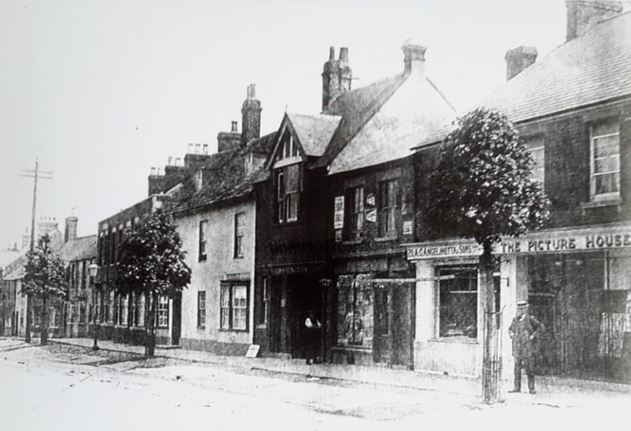
Walter J. Spear and The Picture House

Walter J. Spear was a dairyman and then in 1913 he opened a picture house in Wootton Bassett – not an obvious career progression.

Walter Spear came from a railway family, as most people did in Swindon in the latter half of the 19th century. In 1901 the family lived at 81 Radnor Street where Walter’s father Charles and his three brothers Charles, Henry and William, all worked as Steam Engine Makers & Fitters. Even 14 year old younger brother Frederick claimed to be working as a fitter although at such a young age it was highly unlikely he had such a skilled occupation, but you can appreciate his aspirations.

However, Walter aged 17 had bucked the familial trend by becoming a milkman. In 1911 he married Edith Frances Mary Elms and the couple set up in a dairy business at 37 Commercial Road.

Walter’s involvement in The Picture House was over by 1920 and just five years later he died.

Opening of Picture House

On Monday evening the new Picture House of which Mr W. Spear is the proprietor, was successfully opened, and Mr Spear is to be congratulated on his new enterprise.

Beyond local efforts, little has been done in Wootton Bassett in the past to cater for the amusement of the public. This new venture will not only add to the amusement of the public, but may also be made an educative help to the public. The Hall, which has been fitted with all the latest improvements, will seat over 200 people, and the whole arrangements are excellent.

The cinematograph is housed in an iron room, and the light provided by a petrol dynamo. The operator is Mr W. Hicks, and the pianist Mr Lewis.

The opening ceremony was performed by Mr H. Horsell supported by most of the Parish Council. Mr Horsell said that no doubt they would appreciate the enterprise and public spirit of Mr. W. Spear in embarking on that enterprise. He sincerely hoped it would turn out a success for him. He thought this and similar agencies tended to make the people more sober, and, personally, he believed more in counter-attraction than in legislation as a means to promote sobriety. He hoped that it would be such a success that it would have to be enlarged so as to permit of other meetings being held there, which would be a boon to the town. He heartily wished Mr Spear every success.

The exhibition was then proceeded with, and was heartily appreciated by the crowded audience. The programme was as follows:- “The Cattle Ranchers,” “The Redskin Raiders,” “The Adventures of a Timid Young Man,” “The Clifton Zoo,” etc. There will be exhibitions every evening.

Extracts from The Swindon Advertiser, Friday, March 7, 1913.

Walter Spear aged 43 years died at his home 37 Commercial Road. He was buried on December 18, 1925 in grave plot E7843 where he lies alone.

Ella Saunders

I am grateful for a lot of things, and like most of us I sometimes need to be reminded to stop moaning and reflect upon them.

Two of my children suffered an appendicitis in their early teens. It was a painful experience for them and an anxious time for me, but thanks to modern medicine and our marvellous NHS they both recovered.

Little Ella Saunders was not so fortunate.

Ella’s father was a Pork Butcher. The family business was a shop next to the Rolleston Arms pictured in this postcard view of Commercial Road. The 1911 census tells us that William and Maria had been married for 12 years and had four children, Ethel 10, Edna 8, Ella 5 and two year old Erica. The four girls were baptised together on May 1, 1911 at St. Mark’s Church.

Obituary – Much sympathy will be felt with Mr and Mrs W.T. Saunders, of 72 Commercial Road, Swindon, in the loss which they have sustained by the death of their six years old daughter, Ella. The child was operated upon for appendicitis at the Victoria Hospital, but died after a only six days’ illness. The interment took place at Swindon Cemetery on Good Friday amid many manifestations of sorrow, a very touching feature being the presence of a number of the deceased child’s fellow scholars.

The service was conducted by the Rev. E.F. Winnington-Ingram. There were a large number of beautiful floral tributes including one “With deepest sympathy from the staff, College Street Infant School” and “In loving memory to Ella from teachers and scholars, St. Mark’s Sunday School ‘Jesus called little children to Him’”.

North Wilts Herald April 12, 1912.

Image published courtesy of Local Studies, Swindon Central Library

Ella was buried on April 9, 1912 in grave plot B2938. William died in 1928 and Maria in 1953 and were both buried with her.

In the footsteps of the Evans family

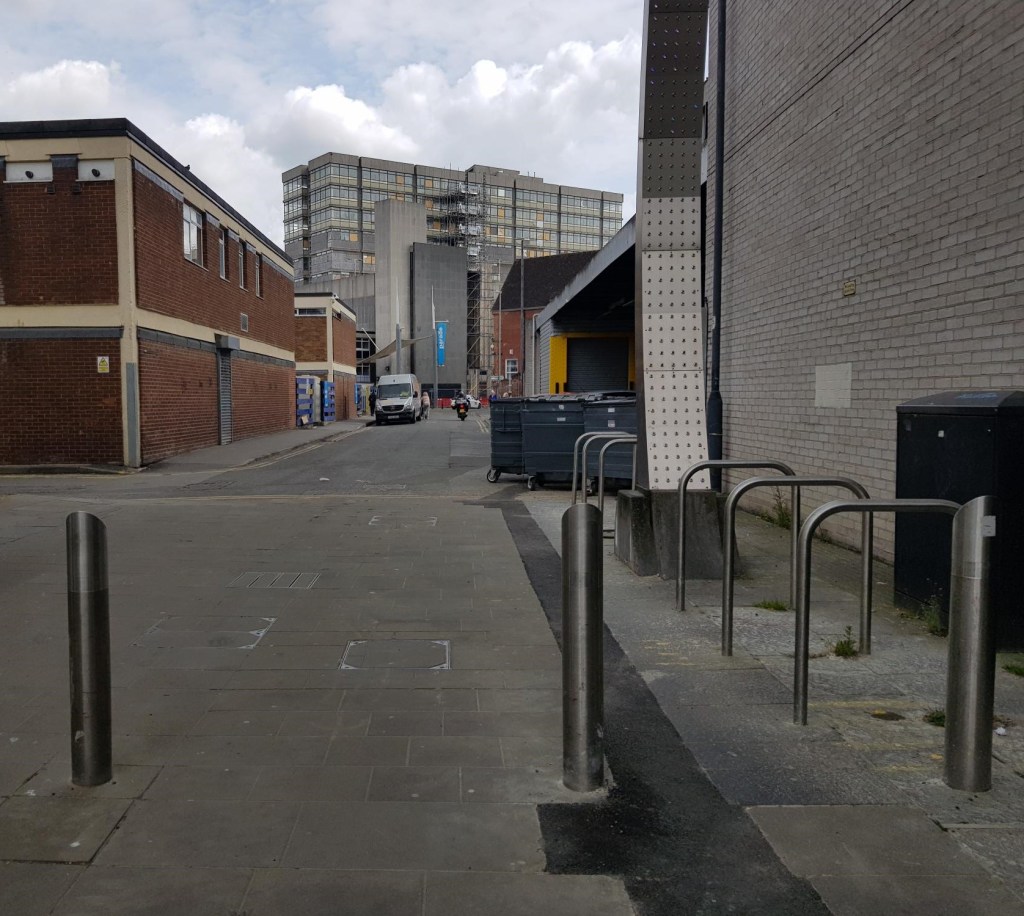
The house in College Street where Alfred Ernest Evans died is gone. The town centre street where the prestigious College Street School once stood is now no more than an access road for shops.

The family home at 23 Commercial Road where William and Salome lived in 1928 looks a little different these days too.

And Princes Street where Salome died in 1936 was redeveloped in the 1970s.

Image published courtesy of Local Studies, Swindon Central Library.

Meanwhile, the inscription on the family’s headstone has all but disappeared.

But it is still possible to piece together the details of the Evans family life.

William Evans and Salome Purnell married in the December quarter of 1879 in Paulton, Somerset. Paulton was a coal mining village where William worked in the iron foundry there. The 1881 census sees the couple living in the Paulton Engine Houses – William aged 26, an iron turner, Salome 25 and their sixth month old daughter Florence with William’s mother Sarah 69, who states that her husband is ‘in asylum’.

By 1891 the family had moved to Swindon and were living at 7 Stafford Street. At the time of the 1901 census they were living in 49 Dixon Street and by 1911 they were at College Street. Salome states that the couple had been married 31 years and that they had 6 children still living (one had already died). Still living at home were Ethel 20 a tailoress, Alfred Ernest 17 a boot repairer and 15 year old Arthur Algernon who was still at school.

Alfred Ernest Evans died in 1916 at 4 College Street. He was 22 years old. He was buried in grave plot C3360 on April 22. William George Evans, a retired fitter, died aged 73 in 1928 when he and Salome were living at 23 Commercial Road. He was buried in grave plot C3360 on August 1. Salome was living at 47 Princes Street at the time of her death in September 1936. She was buried with her son and her husband on September 17.

From this unpromising start with a disintegrating headstone and Swindon streets altered beyond recognition, town centre homes demolished and properties repurposed, it has still been possible to recover the lives of one ordinary Swindon family.