Charlotte Andrews – Crimea War

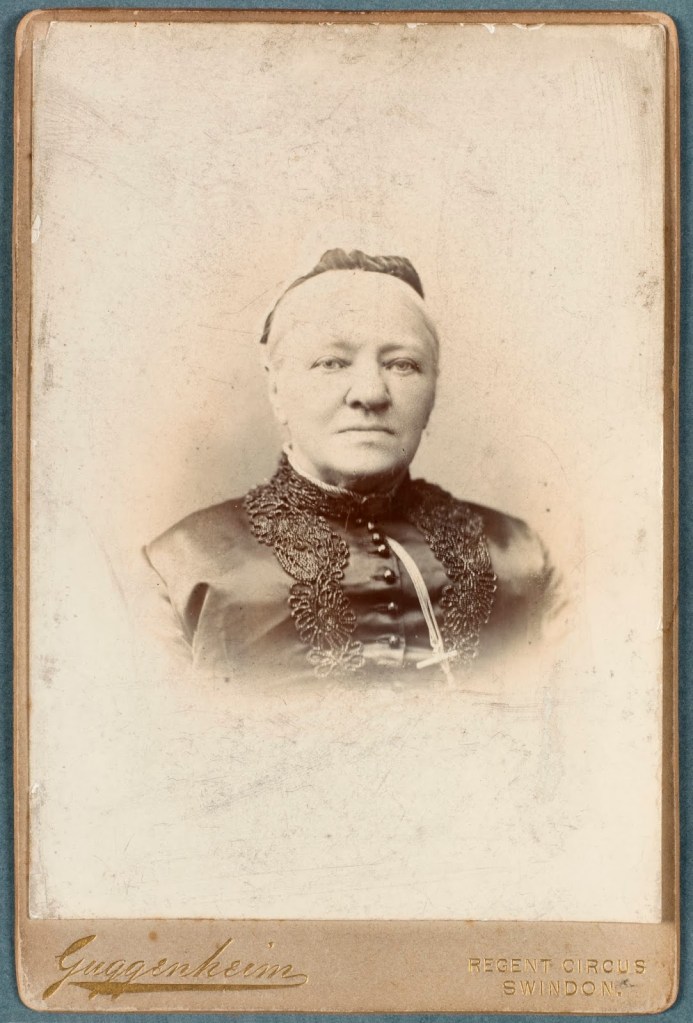
Portrait of Charlotte Wilsdon by Guggenheim, Regent Circus, Swindon


The re-imagined story …

When dad took ill last January, Mrs Andrews sat with him through the night to give mum a break. She hadn’t lived in Spring Gardens for very long, but already we had a lot to thank her for.

She moved in with her daughter a few months ago and quickly became one of those women neighbours called upon in an emergency; although not many people could boast that they had a nurse who had served in Scutari Hospital under Florence Nightingale.

There were some who didn’t believe the stories, but I did, especially after she nursed dad through the deliriums of his illness. She was methodical and well organised and scrupulously clean, all habits she had learned from Miss Nightingale, she said. She told me about the awful conditions in the Scutari Hospital when the nurses first arrived and how more soldiers were dying on the wards there than on the battlefields during fighting in the Crimea War.

Listening to her talk I thought that somebody should be recording her stories. Surely we should be celebrating the life of this extraordinary woman.

Mrs Andrews was for me an inspirational character. I didn’t become a nurse, that was not to be my vocation, but I studied history and now I write and record the lives of amazing women like Charlotte Andrews.

The facts …

In June to August 1854 20% of the British Expeditionary Force in the Crimea fell sick with cholera, diarrhoea and dysentery. Almost 1,000 men died before a shot was fired in what was then called the Russian War.

On September 30, 1854 The Times correspondent in Constantinople reported that there were not enough surgeons and nurses; not enough linen for bandages; that wounded soldiers often waited a week before being seen by a doctor on board ship from Balaclava to Constantinople.

It was news reports such as these that galvanised Florence Nightingale into applying her nursing skills where they were so desperately needed. 

Together with a group of 38 women volunteers Florence left London Bridge Station early on October 23, 1854. From Folkestone the women boarded the Boulogne packet; then they travelled via Paris and Lyons to Marseilles where they took the mail steamer Vectis to Scutari. The journey lasted 13 days. Among these women was Charlotte Wilsdon, a woman born in Abingdon, who would end her days living in Spring Gardens, Swindon.

At the outbreak of war in 1854 Charlotte was living in Oxford with her two young daughters. She had been married and widowed twice and was then working as a tailoress, taking in lodgers to make ends meet. In October of that year Charlotte responded to Florence Nightingale’s appeal for nursing volunteers. Charlotte was recommended by Dr Henry Wentworth Acland, and it is likely she gained her nursing experience during the cholera epidemic that had swept through Oxford earlier that year.

Florence Nightingale and her corps of nurses arrived in Turkey on November 4, on the eve of a major Russian attack at Inkerman.

Following the battle the Rev Sidney Godolphin Osborne described conditions at Scutari, a former military building where those wounded at Inkerman were brought, as being totally unfit to serve as a hospital. Patients were lined up along the corridors, their beds mere thin stuffed sacking mattresses and rotten wooden divans. There was a shortage of medicines and food. Charlotte and the other newly arrived nurses began work immediately, attending to hundreds of casualties where deaths numbered 20-30 a day.

Florence Nightingale’s nurses were paid 12–14 shillings (60-70p) a week, which included their keep and a uniform, rising to 18-20 shillings (90p-£1) following a year’s good conduct. Drunkenness proved a big problem among the unqualified women and several were dismissed. However, it was with regret that Florence had to send the invalided Charlotte back to England. 

In a letter to Lady Cranworth, a member of the management committee, dated June 7, 1856 she writes:

‘Charlotte Wilsdon, I regret to say, I was obliged to invalid home 23 May by the advice of the medical officers. She is a kind, active and useful nurse, a strictly sober woman. And, I consider, well entitled to the gratuity of the month’s wages, promised by the War Office, and which I venture to solicit you grant her. I have directed her to apply to you.’

After more than a year of working in such dangerous and challenging conditions, her health compromised, Charlotte returned home to Abingdon. 

Charlotte was born in Abingdon in 1817, the daughter of Stephen Cox, a carpet weaver, and his wife Ann.  She married and outlived three husbands.  Her first was William Higgins, a carpet weaver, who died leaving Charlotte a widow at the age of 26 with two young daughters, Harriet and Selina, to support.  She married William Wilsdon two years later but by the age of thirty-three Charlotte was widowed for a second time. In 1859 Charlotte married William Andrews.  Widowed for the third time in 1869, Charlotte lived independently for many years until old age and infirmity caught up with her.  Sometime during the early 1890s she moved to Swindon to live with her daughter.

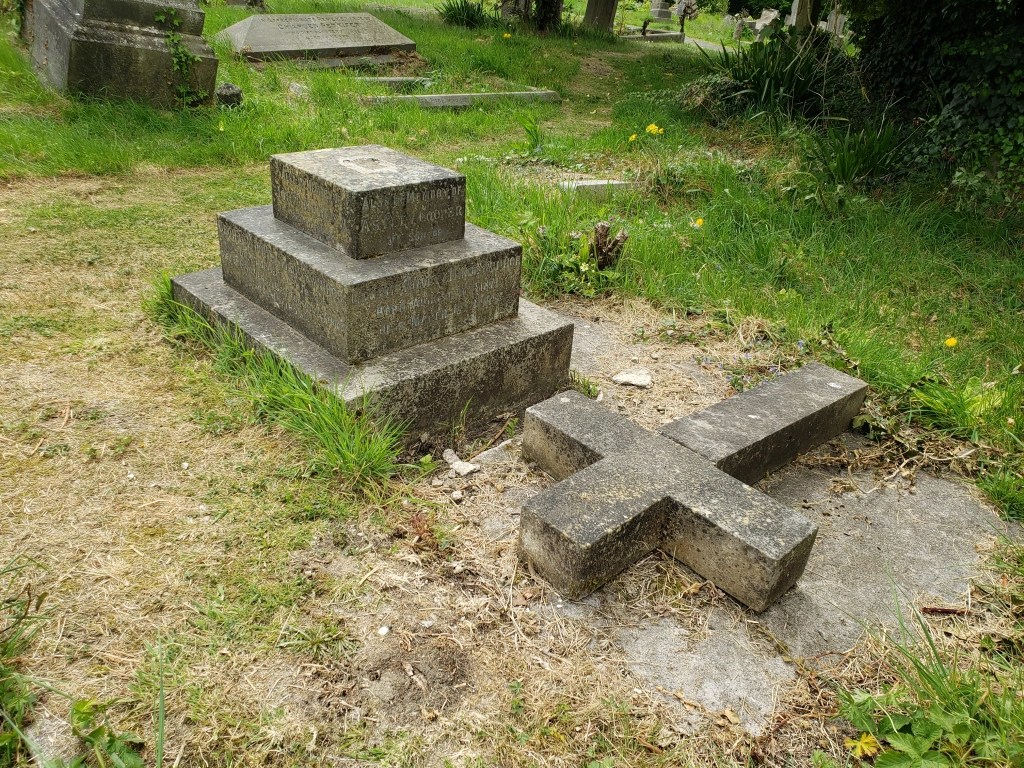
She died on March 22, 1896 at her daughter Harriet’s home, 3 Spring Gardens, Swindon. She was buried on March 27 in Radnor Street Cemetery in plot C772 which she shares with Hannah Richards who died in 1944 and is probably a family member.


Crimean War Diary – Part Six

This is the final entry in the Crimean War Diary written by John Harris and published in the Swindon Advertiser after his death in 1902.

Jan. 1 (1856) – Very cold, with much snow. Firing from the north side continues during the day. At night rockets are observed on the heights.

Jan 2. – The troops are comfortable in huts – several of the outpost sentries have been found frozen to death at their posts. The Russians continue to throw shot and shell into the town. The rations are, generally, of a better quality than have been hitherto served out to the troops.

Jan. 3. – Received orders yesterday to hold ourselves in readiness to proceed to Kertch, as the Russians are collecting in force in that district. It will be a difficult march at this time of the year, although the distance is not great. But the mountain passes are covered with snow, and very deep.

Jan. 4. – Marched to-day at 10 a.m. for Kertch and encamped at Bidar for the night, caught a violent cold, which I thought would prove my death. We had to keep our watch fires going the whole of the night, as wolves came down in great numbers. We lost one man during the night, and it was supposed that he was taken away whilst on sentry duty, as his carbine and much blood was found near his outpost.

Jan. 5. – Awoke this morning before daylight. It was bitter cold, and my limbs nearly contracted with the damp and cold. I was nearly ready to give up. We are to remain at Bidar until the river is going down, and we shall be able to ford it to-morrow.

Jan. 7. – Marched over the Bidar bridge this morning and reached Kertch at 9 p.m. much fatigued. Have the damp wet ground and the dreary tent once more.

Jan. 12. – All the Russian outworks round Kertch were destroyed by our men yesterday and to-day. Fresh butter was offered to-day by the Tartans and the country people at 3s per pound.

Jan. 25. – The Russians are very quiet in their batteries, and fresh supplies are coming in great abundance from the out villages. The English and French mail arrived with the intelligence of an armistice between all the powers for the space of six weeks.

Having between Jan. 25th, and Feb. 6th, gone to Balaclava, the writer of the diary continues:

Feb. 7. – The Russians hoisted a flag of truce from the heights, and from the staff fort in Sebastopol. They have received the news of an armistice. The Russian General and the generals of the French, English and Sardinians will meet to-morrow at 11 o’clock, half-way on the traction bridge, to sign the articles of the armistice. No firing or any other warfare to be carried on for six weeks.

Feb. 8. – All hands employed raising the dock gates. Great rejoicing among the Russians on account of the Armistice. Salutes were fired for the occasion.

Feb. 9. – A holiday was given all the troops, and all Government offices closed for the day.

Feb. 10. – Wind bitter cold; several men frost-bitten in their fingers, ears, noses and above the ankles. Others have had their fingers and toes amputated. One man was obliged to have both his feet taken of just above the ankle. Other have had their fingers taken off, and another had his ear off. My nose was frost-bitten, and as white as a lily, but I got it round by rubbing plenty of snow into it.

Feb. 14. – Escorted prisoners to Balaclava. One got away on the road, but was recaptured.

Feb. 16. – Stores and men arriving from England, and in the course of other two months Camp to Balaclava; distance, nine weary miles. We shall be able to take the field with a fine and powerful army.

Feb. 23.- Two Greeks shot on the Heights for killing a French soldier.

Feb. 27. – Snow fell very heavy during the night. A Greek sailor was hanged from the yard-arm of the Black Eagle, for attempting to set fire to an English vessel laden with powder.

Feb. 28. – Wind bitter cold; many cattle found frozen on the plains. Two French soldiers shot for killing and robbing an English soldier on the road from Balaclava to the camp. A Greek spy was caught in the English camp and shot.

Feb. 29.- Two English officers suffocated in their huts by using charcoal to keep them warm.

March 7. – The English mail has arrived with good news. Peace is proclaimed. All men paraded for a field-day. Salutes fired from all the forts, fires lighted on all the hills, and fireworks displayed.

From this date to the 18th July the old soldier records the various incidents which lead up to the close of the war and the return home. On the 18th of July he records as follows:-

Entered the chops of the English Channel, and passed the island of Jersey at 4 p.m. We then caught a glimpse of the white cliffs of old England, and all the crew and the troops gave hearty cheers, which seemed to echo back to the good old ship the news of our welcome home.

July 19. – Landed at Portsmouth at 9 a.m., and marched to the Railway Station with several bands playing “Cheer, Boys, Cheer,” “Auld Lang Syne,” and “See, the Conquering Heroes come.” We are now safely landed in England after twelve months hard toil on the battle field.

The diary is concluded with the following statistics in relation to the death roll:-

English loss                         30,301

French loss                          45,284

Sardinians loss                      9,112

                                             84,697

Russian loss                    174,989

Swindon Advertiser, Friday, August 8, 1902.

John returned to England and in 1859 married Sarah Coleman at St. Mary’s Bathwick. By 1861 they were living in Swindon at the appropriately named 5 Alma Terrace* with their year old son John Frederick Mark. John was employed as an accounts clerk in the GWR Works, a job he would retain until his retirement.

Subsequent census returns record him living at 19 Bridge Street (1871); 2 Queen Street (1881) and finally at 24 Sanford Street (1891 & 1901) where he died in 1902.

He was buried on August 2, 1902 in grave plot E8002, which he shares with his wife Sarah who died in January 1908.

*The Battle of Alma took place in Crimea on September 20, 1854

George Money Swinhoe – Swindon doctor

The re-imagined story …

I remember wondering why Dr Swinhoe had a sword on the top of his coffin. I kept pulling on my mother’s coat and asking – ma, ma until in exasperation she hissed at me ‘because he served in the Crimea War.’

Well, of course, I was none the wiser.

It was only years later that I learned about that bloody war where some 500,000 lost their lives due to the incompetence of commanding officers and the appalling conditions in the hospital in the converted barracks at Scutari. This was the war in which Florence Nightingale transformed nursing practices in the battlefield hospitals and back home here in England.

The Crimea War was the greatest military horror in a generation, that is until millions were sent to their death in the Great War.

Dr Swinhoe served as a medical officer in the Crimea War and I served as one in the Second World War. I didn’t get a sword though, shame about that!

Dr George Money Swinhoe

The facts …

Impressive Funeral Ceremony

Marked Expression of Public Esteem and Sympathy

The large crowds of people which followed the remains of the late Mr G.M. Swinhoe to their last resting place in the Swindon Cemetery on Saturday afternoon bore eloquent testimony to the very high and general esteem in which the deceased gentleman was held by all classes, for in these crowds were to be seen those of the very poorest circumstances mingling with those occupying important positions in connection with the public life of the town. It was a raw cold afternoon, and yet this did not deter these people from turning out in their hundreds to pay a last tribute of respect to the dead – to the memory of one who in his life time had been to so very many “a guide, philosopher, and friend.”

The solemn cortege was timed to leave the deceased gentleman’s late residence, Park House, Church Place, at two o’clock, but some time before this hour arrived, a very large number of people took up their position at a respectful distance from the house and patiently awaited the appearance of the coffin, which punctually at two o’clock, was borne out of the house. It was entirely covered with the Union Jack, and upon it, resting among a wealth of lovely flowers, was to be seen the trusty sword which the dead Crimean veteran carried with him during that eventful period in English history when he was attached to the medical staff. Within an area of but a few yards four Union Jacks could be observed flying at half mast – that at the GWR Medical Fund Hospital; that at the GWR Mechanics’ Institution; that at the Swimming Baths, and that in the Park over which Park House commands such an extensive view.

A minute or two after the hour had struck, the solemn procession moved slowly towards St Mark’s Church, where Mr Swinhoe was a regular worshipper, and where he for many years discharged the duties of Churchwarden. At the entrance to the Church the crowd was even greater than at Park House. Everyone wanted to gain admission to the sacred building, but accommodation was limited, and the police, of whom there were many on duty, firmly but gently had to stem the tide of those who sought to be present at the service. As it was, the Church was full almost to suffocation, but at no time was there any unseemly rushing, so well was the crowd controlled.

The service, conducted by the Rev. A.G.G. Ross MA Vicar of St Mark’s was of a most quiet and impressive character. As the coffin was borne into the Church, followed by the mourners, “Rock of ages” was sung as the processional hymn. Then the 90th Psalm, “Lord, Thou has been our dwelling place in all generations,” was chanted, the full Choir being present, after which Canon Ponsonby, formerly Vicar, read the Lesson from I. Cor., 15th chapter, from 20th verse. “But now is Christ risen from the dead.” The hymn, “Peace, perfect peace,” was then sung, after which, while the congregation stood, and as the funeral procession moved out of the Church, Mr E. Miles, the organist, played the “Dead March” in Saul.

All along the route to the Cemetery hundreds of people followed, and pedestrians going about their ordinary business stood and uncovered as the procession passed. At the Cemetery between three hundred and four hundred people had assembled. The grave, the same in which the remains of Mrs Swinhoe were interred some fourteen years ago, not far from the Cemetery Chapel, was within a roped enclosure outside which the people were kept back by the police, under the Deputy Chief Constable (Supt. Robinson) and Inspector Moore. The police, however, had not the slightest difficulty in controlling the crowd, no attempt being made to in any way break through the barrier.  As the funeral procession approached the grave the 130th Psalm, “Out of the depths have I cried unto Thee, O Lord,” was chanted. At the graveside the Rev. A.G.G. Ross performed the last portion of the solemn rite; then the hymn, “Now the labourer’s task is o’er,” was sung, and the impressive ceremony concluded.

The following members of the Committee of the GWR Medical fund Society acted as bearers: Messrs H. Morris (Chairman), William Humphries, W. Sansum, A Watson, B. Wheel, and Z. Peskett.

The grave is a brick one, and had been very beautifully lined with moss, snowdrops, violets primroses, crocuses, and auriculas. The remains were enclosed in an unpolished oak coffin, with a brass Latin cross down the full length of the lid, and at the foot was a brass plate bearing the following inscription: George Money Swinhoe, Died Feb 27th, 1908, Aged 77 years.

List of mourners and floral tributes …

Many of the officials connected with the Medical Fund Society carried wreaths.

In the procession of vehicles, it should be added, was to be noticed the deceased gentleman’s carriage in which he covered so many of his no doubt fatiguing rounds.

Extracts from the Swindon Advertiser, Friday March 6, 1908.

George Money Swinhoe 77 years of Park House was buried on February 29, 1908 in a large grave plot numbered E8228/29/30 which he shares with his wife and four sons.

You may also like to read:

Maurice Carew Swinhoe – banana planter and exporter

The Death of Mrs Swinhoe