Crimean War Diary – Part Five

Battle of Inkerman

Continuing …

Extracts from the diary of Crimea War Veteran – John Harris.

Nov. 1. – In Sebastopol on fatigue. The Russians keep up a very heavy fire on the town. A man was riding a donkey after firewood near the dockyard wall when a shell came over and passed right through the donkey without scarring the man in the least.

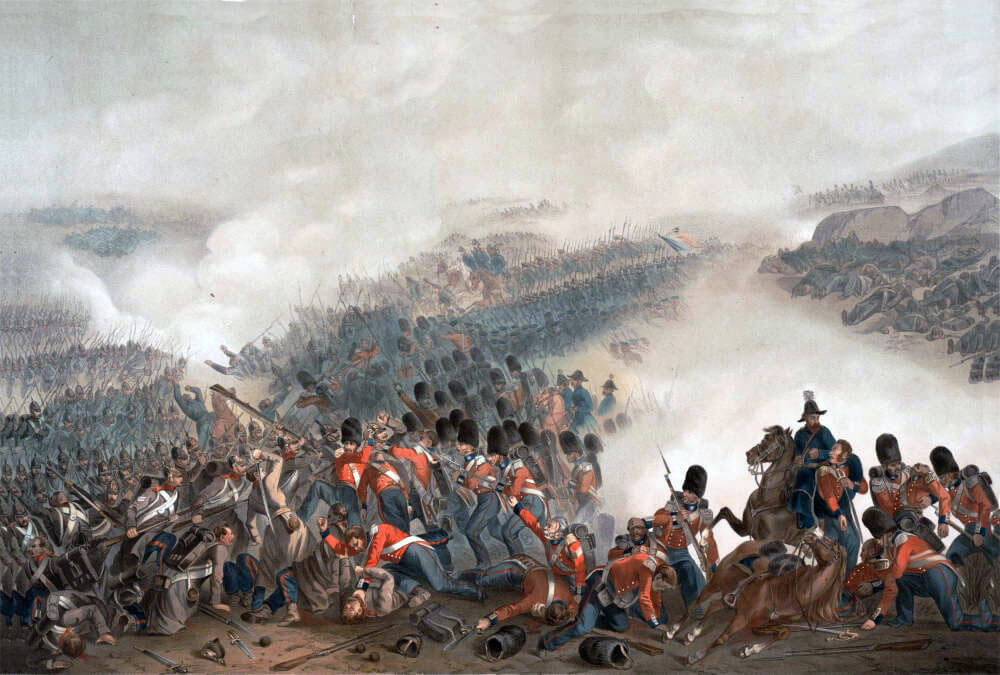
Nov. 5. – Took a walk over to look at Inkerman, twelve months after the battle. The skulls and bones of the dead are still lying about in thousands. The eagles and the ravens have eaten the flesh. The Russian loss must have been very great that day. It is called Gotha, the place of skulls, to this day.

Nov. 7. – Under orders to march for Balaclava.

Nov. 8. – Arrived at Balaclava yesterday, rained in torrents during the whole of the march, wind cold, no fire, no food, clothes all wet, and had to let them dry on our backs.

Nov. 9. – Fever broke out in the Company. Our Company sergeant died this morning; great many on the sick list.

Nov. 12. – Cold winter wind is approaching. The Russians made a sortie, and were repulsed with heavy loss by the Sardinians.

Nov. 7. – Sickness on the decrease; one gunner died during the night. A tremendous explosion took place on the French Right Attack Gun Park, and spread into our gun park. A large quantity of powder and stores were destroyed, and a large number of English and French killed.

Nov. 18. – An attack expected from the Russians from the heights; firing towards Simperpool.

Nov. 25. – Snow fell heavy during the night. All hands are engaged hutting for the winter.

Nov. 29. – Firing very heavy all day. It is too cold for the Turks to work, but the Armenians are very good workmen.

Dec. 1. – Snow very deep and wind very very cold. The firing from the north side continues frequent during the day. The cattle exposed to the weather drop off; a great many found dead this morning on the plains.

Dec. 3. – The huts are nearly completed, although the men cannot get them brought up to the front on account of the severity of the weather.

Dec. 7. – Marched to Sebastopol to see the explosion of the docks.

Dec. 9. – The fire from the Russians very rapid, but little damage done to the town, excepting to break down the roofs of the of the houses, enabling our men to get wood without the trouble of sawing and cutting.

Dec. 20. – A heavy fall of snow occurred during the night. A Russian magazine blew up.

Dec. 21. – Rations very bad. Men are getting very sick, and scurvey is making its appearance amongst the men. The hospitals are all full, and the winds are still cold, with much rain.

Dec. 23. – The Russians are destroying the brushwood on the heights in order to get clear view of our encampment. Lime juice is being served out to the troops to prevent scurvy.

Dec. 25. – Christmas Day – holiday for most of the troops. Arrival of fresh supplies of warm underclothing. A hut burnt down and eight men of the Army Working Corps suffocated by the smoke.

Dec. 31. – Wrote a letter home to England. Snow fell very thick during the night; wind very cold. This day finishes out the old year, and I hope through the blessing of God, who has hitherto protected us through trials, we will be supported further.

The final instalment of this Crimean War Diary will be published tomorrow, concluding the life and times of John Harris, buried in Radnor Street Cemetery.

Crimean War Diary – Part Four

The death toll from disease rises as John writes in his diary – Oct 8. – Sickness dreadful. Sixty men in hospital; twenty men have to do the work of 100. If we stay here much longer we shall lose all our company. We came here a few days ago 126 strong, and we have only 58 left.

Continuing …

Extracts from the diary of Crimean War Veteran John Harris.

Sebastopol storming of the Great Redan

Oct. 1. – Ordered to march from the Windmill miles after much rain.

Oct. 2. – Arrived last night at the heights and encamped.

Oct. 3. – Went to Balaclava on “fatigue” after rations, but could not get any, biscuits all we have had for two days.

Oct. 4. – Two gunners fell sick and died. This evening one corporal and a bombardier died. Several more men sick.

Oct. 5. – Two more men died this morning.

Oct. 6. – Four men of our company died during the night. Two men died this evening; sickness on the increase.

Oct. 7. – Two sergeants and one lieutenant died this morning.

Oct. 8. – Sickness dreadful. Sixty men in hospital; twenty men have to do the work of 100. If we stay here much longer we shall lose all our company. We came here a few days ago 126 strong, and we have only 58 left.

Oct. 9. Orders came yesterday to remove to Kamara from this valley of death on account of sickness.

Oct. 10. – Marched to Kamara this morning. A great number of men fell out on the way from weakness.

Oct. 15. – Order to march to the right attack, so as to be employed in Sebastopol getting out the stores, and mounting guns.

Oct. 16. – Arrived at the Windmill Camp, right attack, yesterday evening, very much fatigued.

Oct. 17. – Employed in Sebastopol in raising the iron lock gates of the docks. The Russians fire at us from the Staff Fort, but very little damage, as all their shot and shell fired at short range.

Oct. 21. – In Sebastopol raising the ribs of the dock gate. Two of our men injured by a shell from the enemy.

Oct. 22. – The Russians are throwing up Battery on the left of the Staff Fort so as to prevent our men working.

Oct. 22. – The English destroyed the new battery yesterday by shelling the men out of it.

Oct. 24. – The Russians continued to fire all over the town with very little damage to anyone.

Oct. 25. – Two men blown up by a shell near the Creek battery.

Oct. 26. – The sappers are at work at the docks, sinking shafts in order to blow them up.

Oct. 27. – Rain fell in torrents the whole night; our tent nearly blown away. Heavy fire from the left.

Oct. 28. – Sun very warm; washed our dirty linen, which was very verminous.

Oct. 30. – Mounting guns in the Redan to be forwarded home to England.

Continued tomorrow …

Crimean War Diary – Part 5

Crimean War Diary – Part Three

This week I am publishing seven daily blog posts dedicated to John Harris – Crimean War Veteran, who is buried in Radnor Street Cemetery.

Florence Nightingale

Continuing …

Extracts from the diary of Crimean War Veteran – John Harris.

Sept. 13. – Wrote a letter to England. Cholera has made its appearance in our camp.

Sept. 14. – Heavy firing heard from the rear of General Tuder’s army.

Sept. 15. – Sickness very prevalent in the camp, and deaths numerous. The Russians fire at anything they see in Sebastopol; firing from the north side.

Sept. 16. – The French and English are constructing a battery for mortars and heavy metal to shell the north side.

Sept. 17. – Very warm; obliged to keep out of the sun during the day.

Sept. 18. – Several French and English killed in Sebastopol by the shot and shell from the north side.

Sept. 19. – Sickness on the increase. One of our sergeants and a gunner died, and were buried to-day. Several of our men very sick.

Sept. 20. – The Russians are making an inward journey towards the fortified camp at Simpherpool.

Sept. 21. – Very wet; the rain is coming in torrents.

Sept. 22. – Not a gun has been heard during the whole night or day.

Sept. 23. – Heavy thunder and lightning; accompanied by violent storms.

Sept. 24. – The Russians opened a tremendous fire on the town at daybreak to-day.

Sept. 25. – The fire yesterday did little or no damage. Two French sappers killed by the ruins of an old Russian house falling in on them.

Sept. 26. – The English opened a mortar battery opposite Fort Constantine – greatly to the annoyance of John O’Rush.

Sept. 27. – The Russians are occupied erecting a new battery on Sugar Loaf Hill.

Sept. 28. – Firing very heavy during the night from the Mackensie’s heights. Expecting an assault on our right from the traction bridge.

Sept. 29. – The whole army under arms ready for an attack.

Sept. 30. – Very heavy rain during the night; my kit is wet through, and my clothes have not been changed for the last 14 days.

Continued tomorrow …

Crimean War Diary Part Four

Crimean War Diary Part Two

This week I am publishing seven daily blog posts dedicated to John Harris – Crimean War Veteran, who is buried in Radnor Street Cemetery.

Embarkation of the Sick at Balaklava

Continuing …

Extracts from the diary of Crimean War Veteran – John Harris.

Fire!

The recorder, in his account of the voyage out to the Crimea, has a startling incident to note under date August 11, 1855. It is as follows:-

Sea very high, wind the same. Ship caught fire below, fire bell rang, boats were lowered, men looked wild and pale. Water in being poured in by tons, and about 2,000 blankets wetted and thrown on the fire. The men begin to look for a watery grave – there is no ship in sight, no land. The fire is gaining upon us.

Then after a break he goes on:-

We got the fire under by night. The damage done is considerable.

In The Trenches

And now we come to the campaign proper. The men reached the scene of action on August 31, for the record in the diary is as follows:-

August 31 – Arrived at Balaclava harbour, and for the first time heard the guns from Sebastopol. One man fell overboard and was drowned. Disembarked. On shore many curious sights, Jews, Turks, Greeks, Armenians, Tartars, Maltese, Spaniards, French. All ordered to march to the right attack, distance about nine miles. Dreadful sights on the way. Men exhausted, and worn out by fatigue. Pitch our tens. All hands for the trenches at 10 o’clock that night. Only had my clothes off once since I left England – that is 37 days. I laid down and went to sleep. Sun next day very warm, and I fell sick; two days without eating or drinking. Several men taken with the cramp and two died from the cholera. The firing is very heavy on our right. Several wounded brought up from the trenches. A powder magazine exploded in the French works.

Sept. 1. – Went into the trenches last night. Lost two men of our company. Firing was very heavy, and shot and shell thrown into the town in a great quantity. The town on fire in several parts, but extinguished towards morning.

Sept. 2 – Firing continues very heavy. A Russian man-of-war on fire. She went down at day break this morning.

Sept. 3 -Paraded for the trenches at 9 p.m. Lost two men and one sergeant in the advance trench on the right attack.

Sept. 4 – Firing continues to be very rapid. It must be impossible for them to withstand our fire which is from right to left.

Sept. 5. – Rapid firing night and day. Several explosions in Sebastopol, but cannot hear much for the thundering of our guns.

Sept. 6 – Paraded for the trenches at 9 a.m. Tremendous firing from our right and left. The Russians feebly reply to our fire.

Sept. 7. – The firing from our right is dreadful, also from the mortar battery in the quarries. The whole heavens illuminated by our fire.

Sept. 8. – Firing heavy. The very heavens and earth seem coming together. Explosions seen in Sebastopol; they reply to our fire but feebly; our loss was rather heavy yesterday.

Sept. 9. – Paraded last night at 10 p.m. for the trenches. Lost four men going in the advance trench, eight men wounded during the night, one corporal, one bombardier, and five gunners killed in our company. At 12-30 last night the Russians could not reply to our fire, when Capt. Vernon ordered us to cease firing as Sebastopol was in flames and the enemy retreating. We went on the parapet of the Battery, and saw our men going in over the Redan works. All firing ceased for a time, when a most dreadful explosion was heard. It was St. Nicholas which had been blown into the air by the Russians as they retreated. Just before daylight a shell was thrown from the staff fort on the north side into our battery, and exploding, killed four men, one lieutenant, one bombardier. Three men, one sergeant, wounded. A piece of the shell struck me on the right leg, below the knee, cutting my thigh. I was taken away to the front to have my wound dressed, and sent into camp to rest as the hospitals were full.

Sept. 10. – I attended hospital at 9 a.m. and had to wait there some time to have my wound dressed. I saw nearly a wagon load of arms and legs which had been taken off that morning by the doctors. The groans of the dying were dreadful, and I was very glad to get away from the place. Towards the afternoon I went down into Sebastopol by the Redan. The sight of the Redan ditch was awful to relate, for it was filled with our poor English dead bodies. I went further down into the town and met with several dreadful sights. Russian, men, women, children, horses, dogs, cats, cattle, were all lying in the streets in all directions, dead and dying. Hundreds of Russian soldiers were lying dead in all parts of the town. God forbid that I should witness such a dreadful view again.

Sept. 11. – My wound is better to-day. I rambled into Sebastopol, and brought out a cat and dog. The town is still burning in parts, and forts and magazines are occasionally being blown up. At night the burning town illuminates the heavens. The French and English fired rockets to two Russian steamers that have run ashore. They burnt with great fury all day. The Russians hoisted a flag to come over and bury their dead. They buried hundreds, and thousands were thrown into the water. Many corpses were floating in the harbour for weeks after.

Sept. 12. – Heavy firing from the north side of the town. The Russians do not appear satisfied at our being in the town.

Sept. 13. – Wrote a letter to England. Cholera has made its appearance in our camp.

Continued tomorrow …

Crimean War Diary Part Three

Crimean War Diary – Part One

Read the first installment of the Crimean War Diary written by John Harris and published in the Swindon Advertiser following his death in 1902.

Veterans of the Royal Artillery

The Crimean War Day by Day

(Special to the “Swindon Advertiser.”)

The death took place last week, as we have already announced, of a Crimean Veteran, in the person of Mr John Harris, of Sanford Street, Swindon, who passed away on Tuesday, July 29, at the age of 74 years.

As we announced the other day, we have, through the kindness of the deceased Mr Harris’ son, been granted a perusal of a diary kept by the veteran during the Crimean war, and from the diary we take the following, feeling confident that this unique history of that arduous campaign will contain records abounding with interest to the majority of our readers.

The writer opens his account with some very sentimental passages provoked by the scenes of farewell he witnessed when, as a sergeant in the K Battery of the Royal Artillery, he took leave of England for the seat of war. He opens as follows:-

Sailed 26th. – It was on one of those beautiful summer mornings very often seen on our shores in the latter end of July, 1855, at about 4 o’clock a.m., that her Majesty’s steamship, “the Atlanta,” weighed anchor, and steamed out of the harbour of Sheerness, with about 800 of the Royal Artillery, 185 horses, 60 officers and a crew of 150 men, bound for the Crimea. And there was many a sad and heavy heart partook of the hard and scanty meal of a breakfast, whilst others of a more noble mind were singing and whistling away as the vessel parted the foaming sea from her stately bows. I was on deck with several others pacing to and fro, smoking my pipe, whilst others were lounging and talking in various parts of the ships. Several of them were talking of home, and wondering whether they would ever behold their dear native place again. How many of those brave men left those shores on that bright sunny morning never to behold them again, and now rest on those ironbound and snowy hills of the Crimean shore, where there is no mark of respect to denote to the passer by or the stranger that beneath lie sons of England waiting to receive their Heavenly reward; those who went forth in the hour of need to share in the toils and hardships of a campaign, leaving those who were dear to them at home.

Continued tomorrow …

Crimean War Diary – Part Two