We had torrential rain, thunder and eventually beautiful sunshine on our guided cemetery walk yesterday, during which we welcomed regular and new cemetery followers.
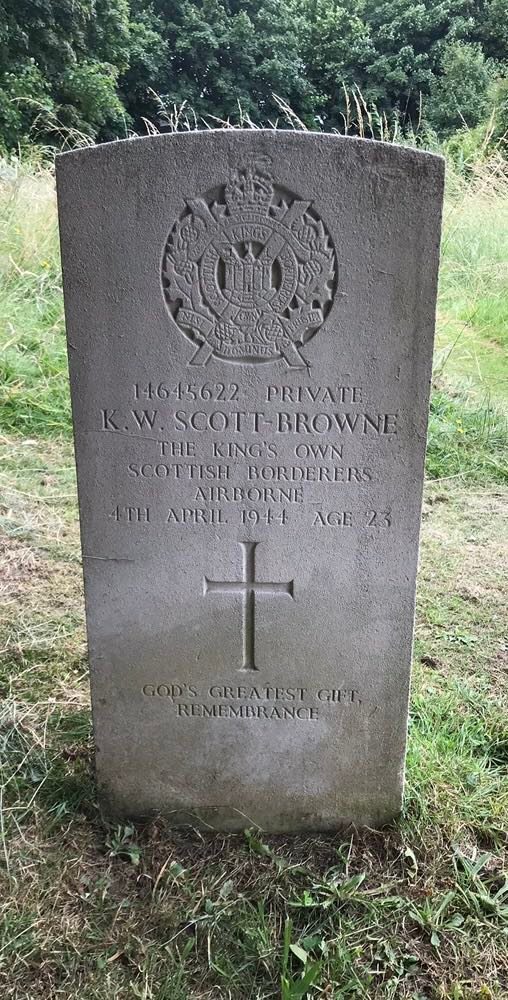
Kevin updated us on the work of the CWGC Eyes On Hands On team and in honour of the forthcoming 80th anniversary he spoke about Private Kenneth William Scott-Browne, killed in an air accident during D Day training.
Mary Elizabeth Hutchings and Percy Harold Comley are pictured (middle row right) at a family wedding in 1914.
Saturday May 11 sees the launch of the annual CWGC War Graves Week 2024. Radnor Street Cemetery friend and colleague Mark Sutton spent a lifetime devoted to remembering those who served in WWI.
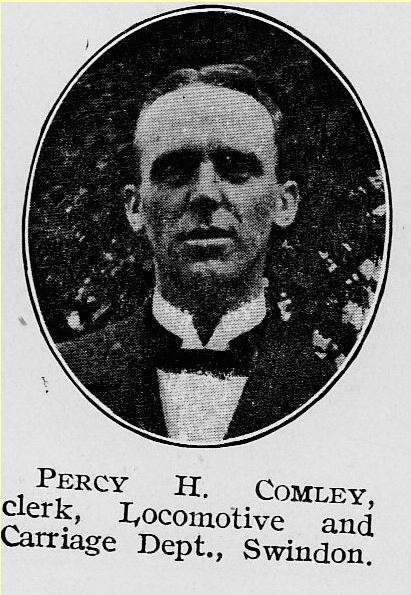
Our thoughts today go out to those parents who lost a son, and in many tragic cases, more than one. But, Albert and Mary Ann Comley were not to know their youngest son had been killed in action.
Percy Harold Comley was born on August 12, 1889 and began work as a 14 year old clerk in the GWR Works. He enlisted on November 24, 1915 and was put in the Army Reserve. He was mobilized on January 5, 1917, a Sapper in the Royal Engineers serving with the 2nd Light Railway Operating Coy.
He had married Mary Elizabeth Hutchings on October 26, 1916 at Christ Church. Less than a year later he was dead.
The charred remains of a telegram survive with his military records. It reads:
“Regret to inform you Officer Commanding 2 Canadian Casualty Clearing Station France reports 1st October 218815 PH Comley RE 1st October shell wound abdomen.”
Percy Harold Comley is buried in Lijssenthoek Military Cemetery Poperinge, Belgium. Mary Elizabeth never remarried. She died on February 4, 1947 at Weston-super-Mare.
Today our volunteers continue Mark’s work, caring for the Commonwealth War Graves headstones and recognising those remembered on private, family graves. To date they have noted 50 such fallen heroes. For more information about the War Graves Week visit the Commonwealth War Graves Commission website.
Mary Ann Comley died at her home 8 Ashford Road and was buried on May 21, 1915 in grave plot E8044. Her husband, Albert Comley, a watchman, died at Guys Hospital, London and was buried with her on August 15, 1916.
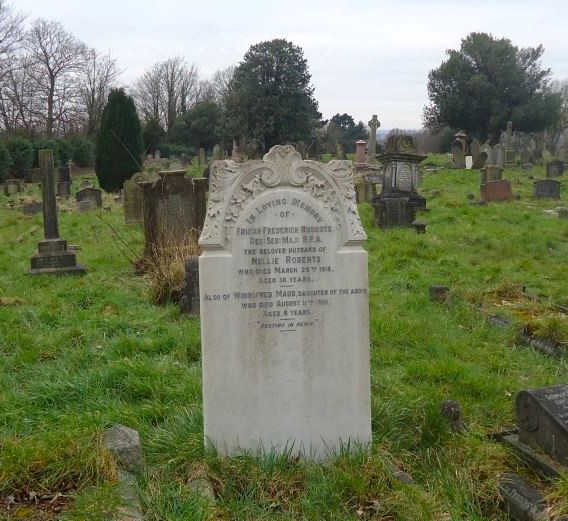
Friday Roberts joined the army in 1893. He was a little over 14 years old. His comprehensive records reveal he had a military career of almost 17 years spanning the South African war andthe Great War, the effects of which eventually killed him.
Friday enlisted with the Royal Field Artillery for a period of 12 years on December 27, 1893. He was 14 years and 4 months old and stood 5ft 2½ inches. He weighed 93lbs and had a chest measurement of 29 inches – smaller than the average modern day 14 year old. He had a fresh complexion, grey eyes, brown hair and indistinct tattoo marks on both forearms.
Friday served as a gunner before passing professional examinations and promotion to bombardier (corporal) rank. However in November 1898 he reverted back to a gunner at his own request. Promotion to Sergeant followed in 1902.
Friday was posted to South Africa in 1897 where he served more than 4 years. He received the Queen’s South Africa Medal with clasps for Talana, Laing’s Nek, Relief of Ladysmith and Transvaal. He was then posted to India where he served a further 5 years.
In 1904 Friday re-engaged to complete 21 years service. It can only be assumed he liked the military lifestyle. But then everything changed. In 1907 Friday was discharged from the army at his own request after nearly 14 years service. Perhaps he’d had enough of the army life after all, seen enough of the world to last him a lifetime. Perhaps he just wanted to settle down to civilian life with Alice, the women he married on February 23, 1907 at St. John’s Church, Woolwich. Their daughter Winifred Maud was born a year later, but sadly Alice died soon after her birth.
In 1910 he was living in Oldham, Lancashire where he married Nellie Vaughan and where their daughter Aileen Vera was born in 1912.
By 1914 Friday had a job as an Officer for the RSPCA and was living with his wife and two daughters at 81 Stafford Street. He probably hoped that his days as a soldier were over, but he was still on the reservist list and so with the outbreak of war in 1914 he re-enlisted with his old regiment and joined the BEF in France.
He was wounded within weeks of his arrival and was invalided back to England, but not for long. He soon returned to France and served two more years.
RSM Friday Frederick Wright Roberts was discharged on October 6, 1917 as physically unfit for military service, suffering from Tuberculosis of the Larynx.
The Medical Board confirmed his illness was a result of active service and exposure to infection during November 1916 while fighting near Vimy Ridge. His condition was described as permanent and requiring further treatment.
He was awarded a pension; 48 weeks at 42/6 from October 24, 1917. Five months later he was dead.
Friday is buried in plot E7368 with his little daughter Winifred who died in 1916 aged 9. His details appear on the Commonwealth War Graves website.
In 1913 the Swindon Ratepayers’ Association met to discuss how the local authority was handling some major projects, including the Swindon (Radnor Street) Cemetery.
Generally speaking things seemed fairly satisfactory. Thirty years after the opening of the cemetery they were happy to reveal it was ‘practically’ free from debt.
There was one last comment in reference to the amount originally paid for the 11 acres of land purchased on which to lay out the cemetery. In 1881 the land was owned by entrepreneurial local businessman (and Local Board Member) James Hinton who was always quick to recognise a profit making opportunity.
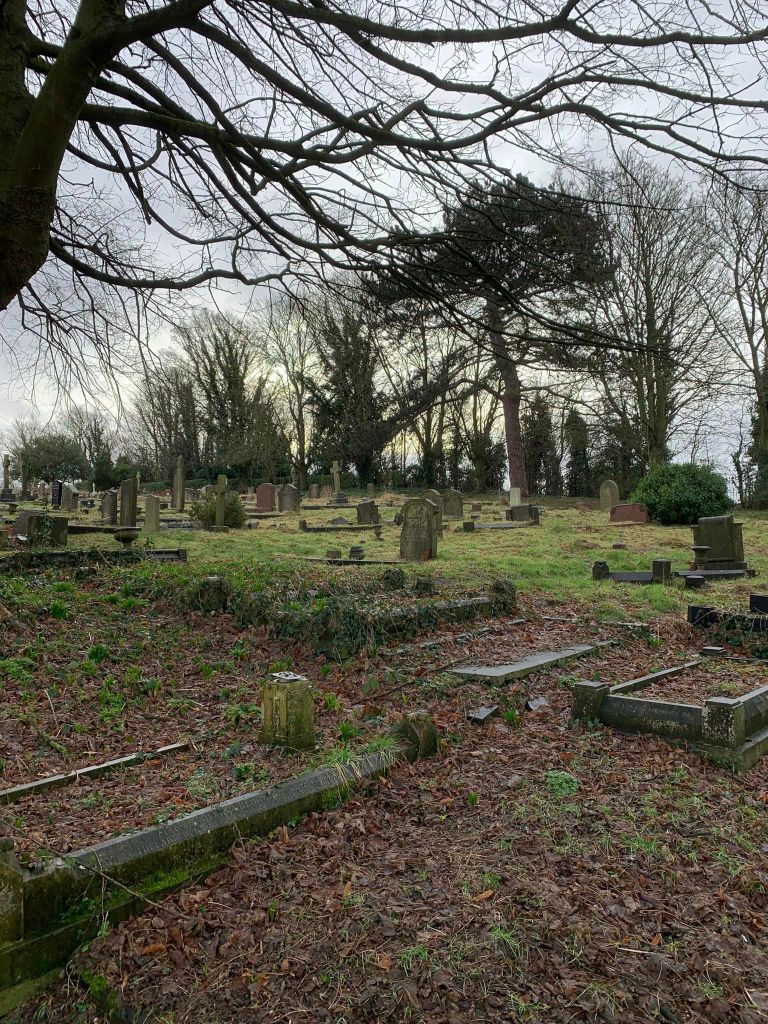
A ‘working’ cemetery is one thing, a closed one quite another. A working cemetery has expenses but it also has an income. Unfortunately, Radnor Street Cemetery, closed to new burials for some 50 years, generates no income and in these straightened financial times there is little public money left for maintenance.
There is a lot of excitement within Swindon Borough Council about the imminent opening of the ‘new’ museum in the Civic Offices, Euclid Street. In this new (and very welcome) climate of heritage appreciation perhaps Radnor Street Cemetery will soon bask in the glory too.
Municipal Matters
Meeting of the Swindon Ratepayers’ Association
A meeting of the Swindon Ratepayers’ Association, convened to discuss three questions of absorbing interest to those concerned in the government of the town – the Poor Law administration, the derelict canal, and the various undertakings of the Council – was held at the Town Hall on Wednesday evening. Major F.G. Wright presided…
As regards the Swindon Cemetery, it is now practically free from debt, the annual charges for interest and sinking fund on a small out-standing loan only amounting to about £27 per annum.
As you are aware, we have purchased land for a new cemetery at Whitworth Road, which is now being laid out, and which will be ready for use probably by next spring. Before the new cemetery was purchased, the loss on the Swindon Cemetery every year used to amount to something a ½d rate. Last year, nothwithstanding the increased charges arising out of the purchase of the new cemetery at Rodbourne, instead of being a loss, there was a slight profit after paying all working expenses and interest and sinking fund charges. This was brought about by a revision on the scale of charges in the Swindon Cemetery, etc., the income for the past year on the Swindon Cemetery being no less than £923, as against £621 in 1910, £638 in 1911 and £856 in 1912. Of course, this will not continue in future years, as there will be additional working expenses when the new cemetery is opened.
Only 10 acres of land are at present being laid out at the Whitworth Road Cemetery, but this is expected, will last at least 20 or 30 years. The total area of land purchased in 35 acres, and theremainder will be let out and will produce an income. The Swindon Cemetery will also last for a great many years yet. The purchase money paid for the 35 acres of land at Whitworth Road was £3,016, while the purchase money for the 11 acres at Swindon Cemetery was £3,970. I leave you to form your own opinion on the favourable nature of these transactions…
Extracts from the North Wilts Herald, Friday, October 31, 1913.
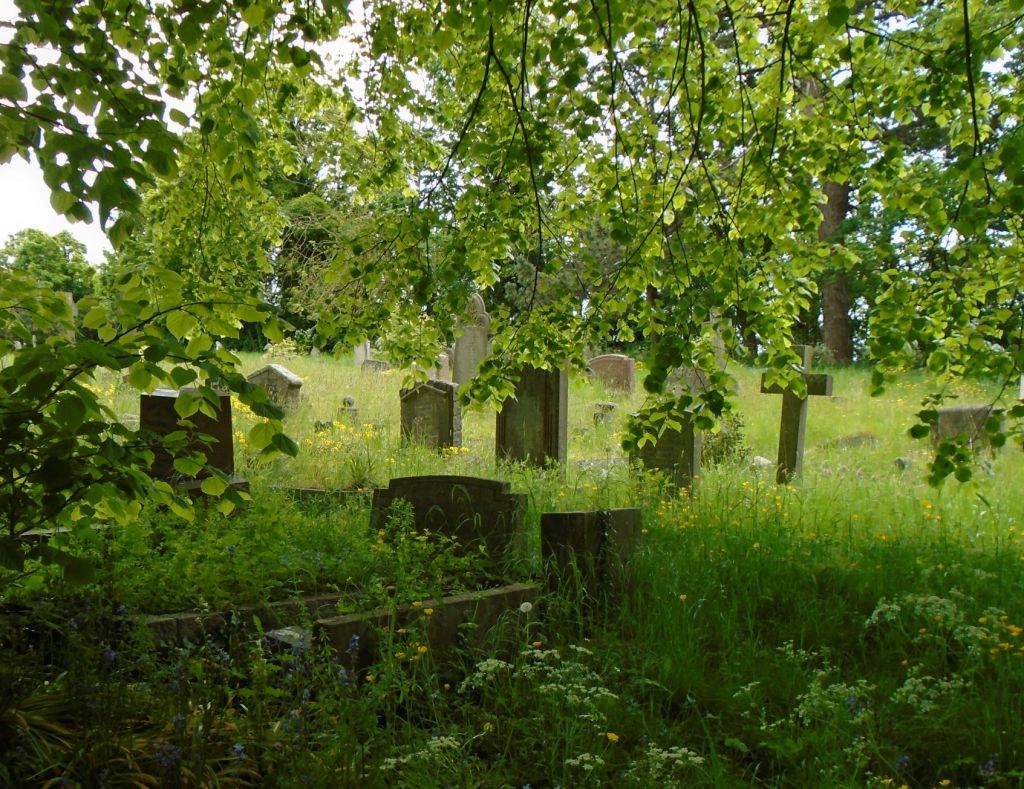
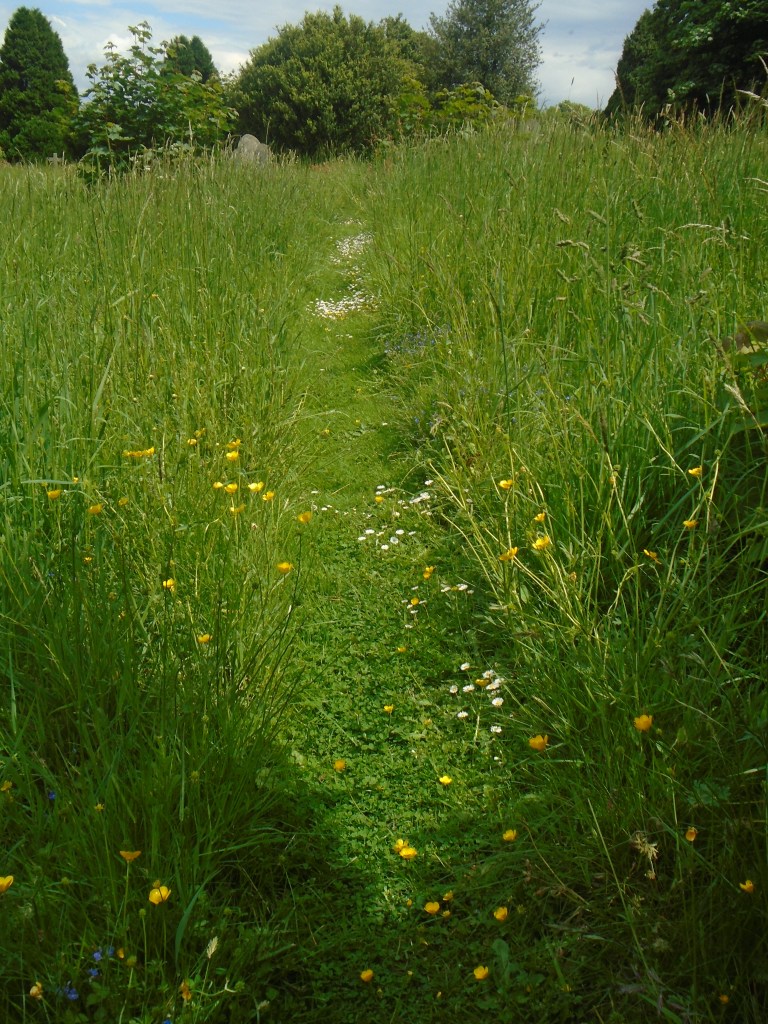
Cemetery volunteers at work clearing the paths
Cemetery volunteers maintain mown paths creating access to the Commonwealth War Graves Commission graves.
If, like me, you enjoy walking through old cemeteries and reading the inscriptions on the headstones you will find the views of this ‘Spectator’ thought provoking. At the beginning of 1881 the cemetery question was upper most in the thoughts of many Swindonians.
A cemetery should be a wooded garden, with walks and avenues and glades according to its size, and not, as in most villages now, a stonemason’s yard, studded with squat temples and tombs, or with tall, meaningless headstones so mouldy that it would be nearly impossible to read the inscriptions, even if the undertakers did not have them made as illegible as possible, in order to “make business” of the work of cleaning them out. These headstones are the destruction of all beauty or solemnity in a graveyard. Nothing uglier or more meaningless in form has ever been conceived by man, and nothing worse adapted for exhibiting an inscription. If they are upright, they gradually sway out of the perpendicular with their own weight; and if they are flat, they destroy the reverential vegetation which else, without means, watchfulness or exertion, would, but for the stones, clothe the surface of the grave. They are, besides, utterly needless. What is required by each grave is a number cut in granite – cut solid, we mean, not out of granite – a number distinguishable for centuries, and referring to a granite tablet, which need not be more than six inches by a foot, with an inscription identifying, describing, and, if you will, praising the dead. – Spectator
The SwindonAdvertiser, Monday, January 3, 1881
Swindon Borough Council workers have recently done a grand job at the cemetery. I am sharing here some photographs taken by Kevin a CWGC and dedicated Radnor Street Cemetery volunteer.
This path clearing project is a work in progress by our own dedicated volunteers
On January 9, 1919 the SS Northumbria sank in the North Sea. Only two members of the crew survived; among those lost was Thomas Poole.
Thomas Poole was born in 1882, the son of William and Elizabeth Poole. He enlisted with the Royal Marine Light Infantry on April 9, 1901. In 1919 he had been drafted to the SS Northumbria, a Defensively Armed Merchant Ship carrying wheat from Baltimore to the UK, to man the ship’s gun. The ship sank off the coast of Coatham, County Durham, after striking two mines.
Thomas’s younger brother Henry John joined the Royal Navy in January 1907. He served on HMS Empress of India, Argyll and Leviathan before being transferred to the Royal Fleet Reserve in 1912. Able Seaman Henry Poole ended his naval career in 1921 on Vivid I, a shore based ship.
And along with a patriotic love of their country, the two brothers shared the love of a woman.
On February 16, 1916 Thomas Poole, a Royal Marine aged 34, married Beatrice Fanny Dixon aged 26 at Christ Church. The couple’s son Derrick Thomas Poole was born on October 20, 1918. Less than three months later Thomas was killed on the SS Northumbria.
Did he ever get to see his son? What was Beatrice to do now?
We can’t begin to imagine what life was like for those women in the immediate aftermath of the war. The 1921 census figures revealed that there were in excess of 1.7 million more females than males in the population – known collectively as the ‘Surplus Women.’ The prospect of marriage and a family unlikely for so many. But what about the women like Beatrice, widowed aged 30 and with a child to support. What kind of future could she expect?
In the December quarter of 1919 Beatrice married Henry John Poole, Thomas’s younger brother. They went on to have two children of their own – Gordon Henry John born in 1920 and Doreen Elsa born in 1930.
In 1939 the family lived at 138 Broad Street. Henry John Poole was working as a Rivetter’s Holder Up in the railway factory, Derrick was a Motor Mechanic and Gordon a Metal Machinist also in the railway works. Nine year old Doreen was still at school.
A happy ending for one war torn family.
Henry John Poole died in 1965 and Beatrice Fanny in 1977. Neither of them are buried in Radnor Street Cemetery.
Thomas Poole was buried on January 16, 1919 in grave plot D1023 where he lies alone. The CWGC Eyes On Hands On team of volunteers care for his grave.
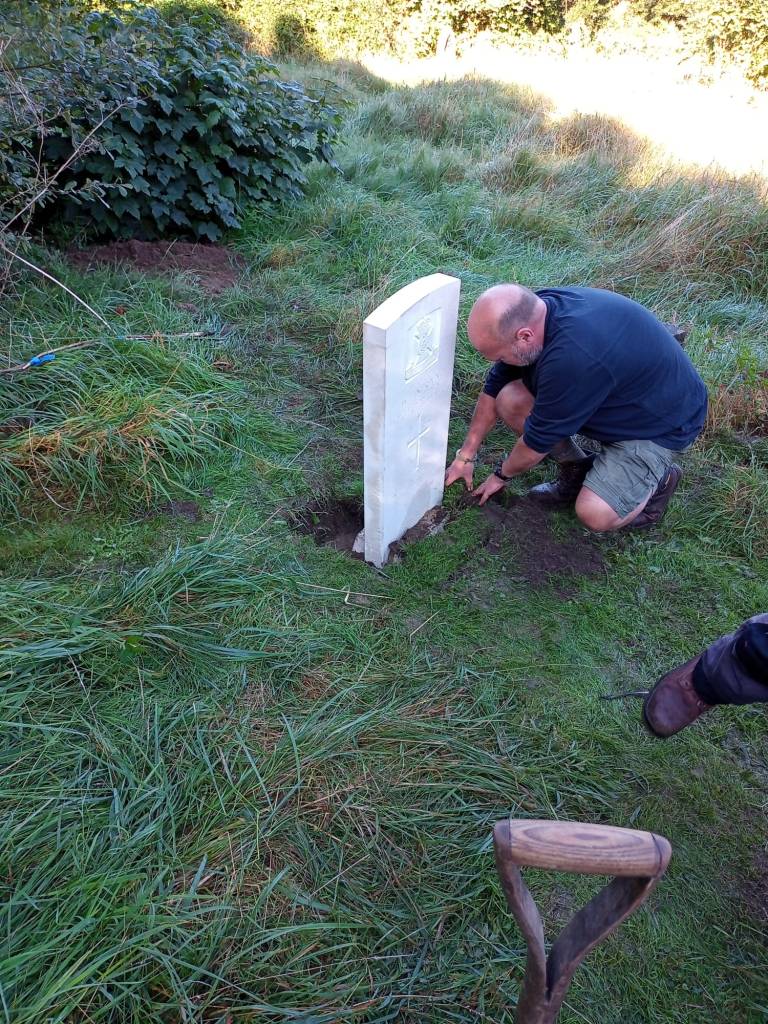
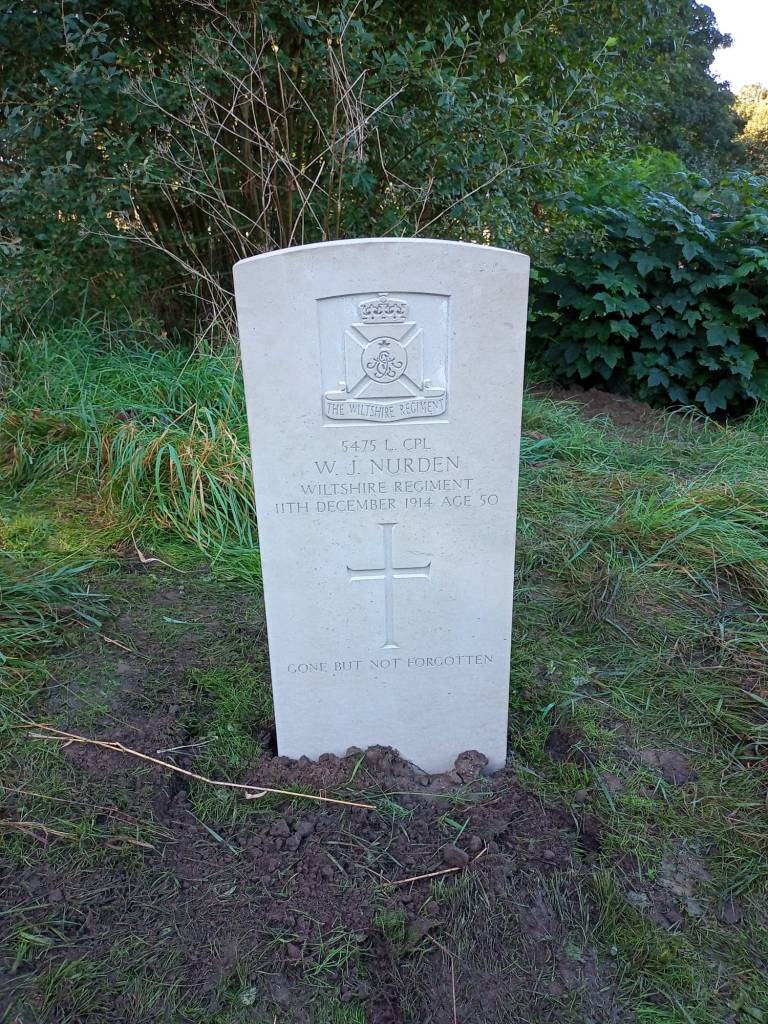
It was our pride and pleasure to mark the installation of the 104th CWGC official headstone in Radnor Street Cemetery in September 2021.
The headstone marks the grave of William John Nurden, a former blacksmith’s striker in the Great Western Railway Works, Swindon. On December 11, 1914 he was killed whilst serving as a Lance Corporal in the Wiltshire Regiment. He was working on the Amesbury and Military Camp Light Railway (also known as the Bulford Camp Railway) at Newton Tony when he was killed crossing the railway line whilst on duty.
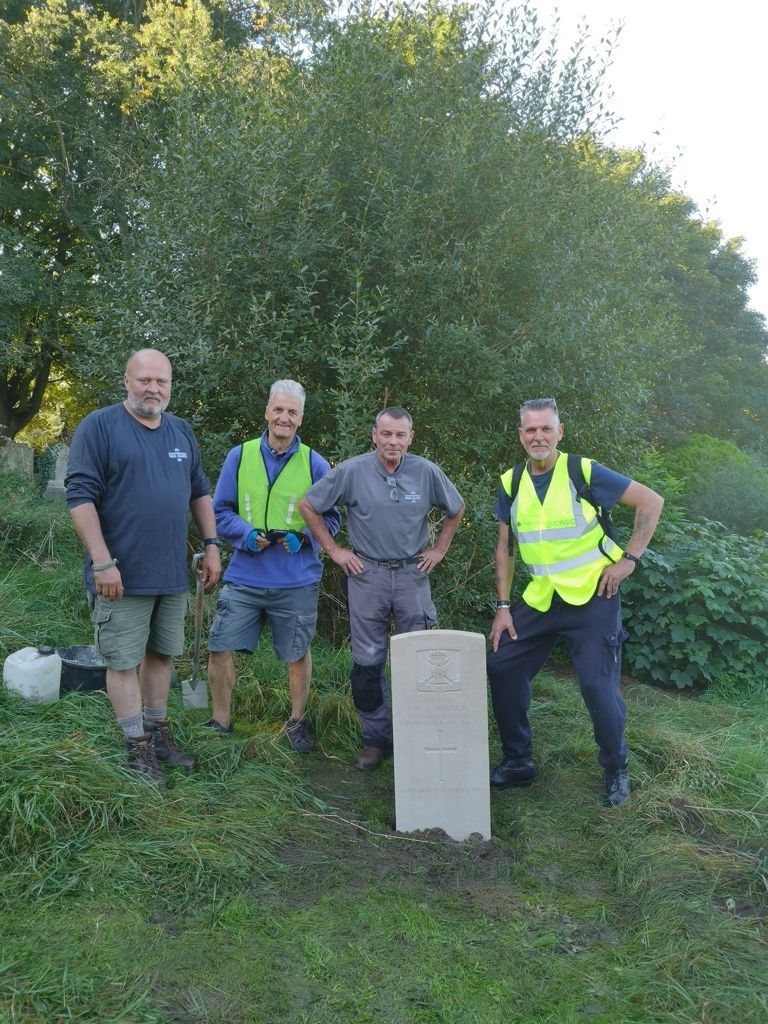
A team from the Commonwealth War Graves Commission installed an official headstone on the unmarked grave of William John Nurden, more than 105 years after his death.
Members of his extended family joined us at the Service of Remembrance in November 2021. We hope you will join us for the Remembrance Service this year during which a plaque dedicated to Mark Sutton will be unveiled. The service takes place around the Cross of Sacrifice at 2 pm Sunday November 12.
Radnor Street Cemetery volunteers with the CWGC team and the newly installed official headstone
Tuberculosis was one of the main causes of death in the early 20th century and the most common cause for medical discharge from the armed services during the Great War.
Living in unhygienic close quarters, suffering from exposure and exhaustion, servicemen were prime candidates; becoming newly infected or suffering the resurgence of a disease lying dormant after a previous attack.
One set of records describe the death of Ordinary Seaman Charles Edwyn Jones as caused by pleurisy and pneumonia, another says empyaemia, which probably come down to the same thing – tuberculosis.
Charles was born on October 8, 1878 at 37 Reading Street, the son of Edwin Jones, a fitter in the Works, and his wife Mary.
Edwin had moved to Swindon from Bristol, but blinded in an accident in the railway factory, Edwin could no longer work at the job he was trained for. However, he went on to lead a full and active life and became Mayor of Swindon in 1920-21.
Charles Edwyn, the second of five children and the only son, chose not to follow his father into the railway factory but worked as a buyer of ladies clothing. At the time of the 1911 census he was working in London and boarding at 53 Eardley Crescent, Kensington. In 1915 he married Ethel Elizabeth Brown.
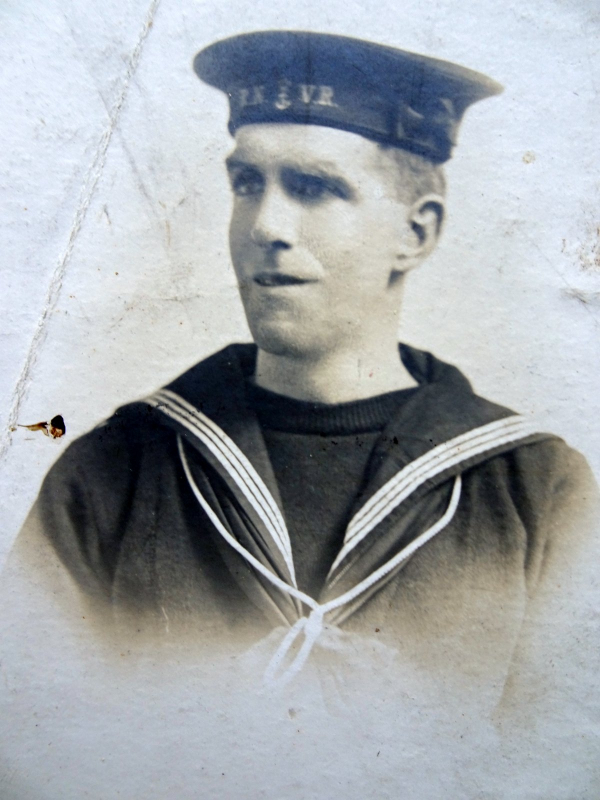
A Royal Naval Volunteer, Charles was based at the RN Depot Crystal Palace. He died at the Norwood Cottage Hospital on March 17, 1918 aged 39 years. Charles’s wife Ethel was pregnant at the time of his death and a daughter named Edwyna was born that summer.
Charles’s body was returned to Swindon where he was buried on March 21 in grave plot D1575, next to two other Jones family graves.
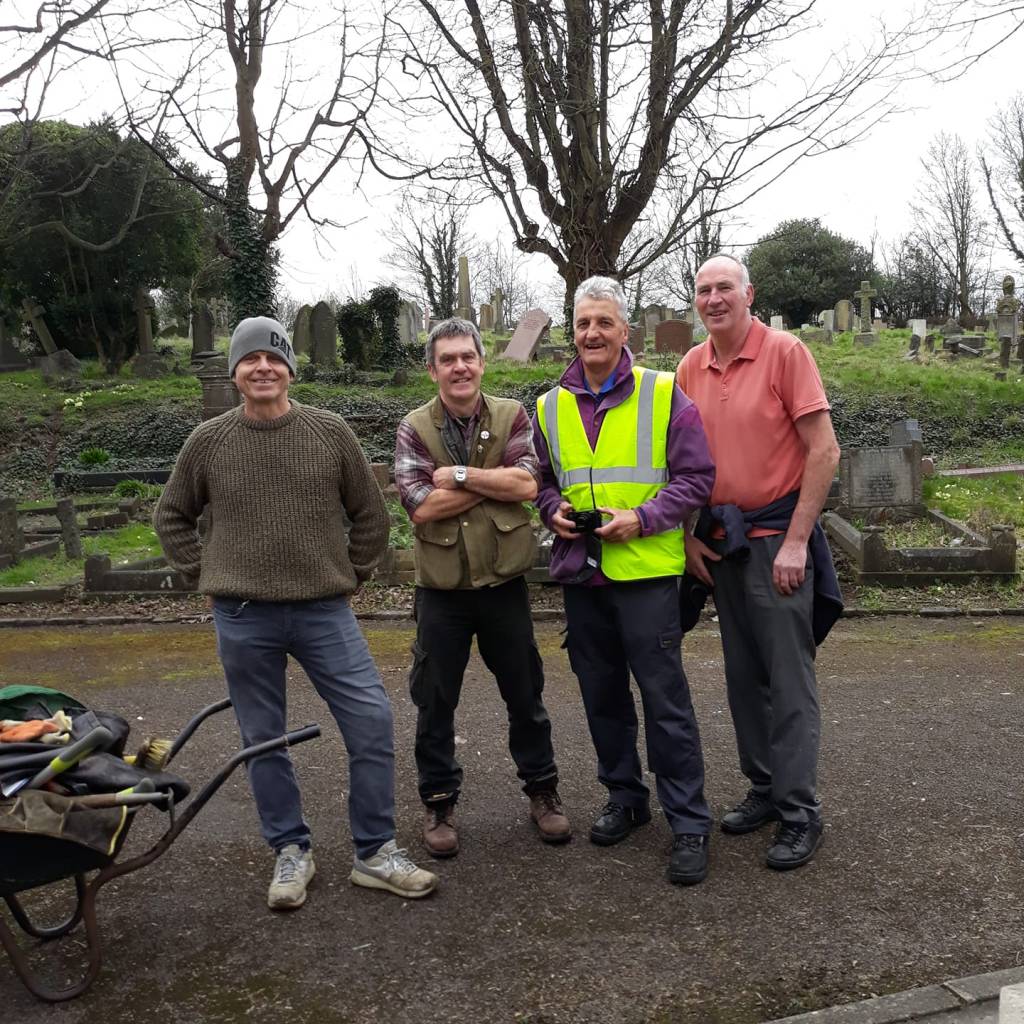
In the beginning there were just two members of the Radnor Street Cemetery volunteers. Pictured below with Andy are Jon and David shortly after appointing Brian as their new apprentice. More than six years on and the group is considerably larger and Brian has ‘done his time.’*
The original objective of the group was to care for the Commonwealth War Graves. Today the volunteers are members of the CWGC Eyes On Hands On initiative, keeping the area around the war graves clear and reporting any concerns over safety or damage to the headstones. They are also recording family memorials that mention service personnel lost or missing in war. Their latest project is an attempt to secure recognition by the CWGC for a soldier who died in the Victoria Hospital, Swindon in 1918 from broncho pneumonia having recently been discharged from the army as unfit for service. We believe that his death may have been as a result of his military service. If successful this will be the second WWI soldier to be so recognised in the past two years.
But this is only part of the volunteers work, as you can see from the photos below.
Would you like to join them?
You can contact us in a number of ways. You can leave a message here on this blog or on our Radnor Street Cemetery Facebook page and we also have a Twitter (now known as X) feed @StreetRadnor.
Why not come along to our next guided cemetery walk when Jon will be able to tell you more and answer your questions?
Our last walk of this season will be on Sunday October 29, meet at the cemetery chapel for 2 pm.
*finished his apprenticeship
Before and after … Kent Road gate
Read about Bob Menham, Swindon Town FC goal keeper.
This Thursday morning you are likely to find members of the Radnor Street Cemetery volunteers busy in the cemetery. Here are a few words from Kevin explaining some of the work the volunteers undertake.
‘There are currently seven volunteers working in Radnor Street Cemetery. These include Jon, Jonathan, Brian, Pauline, Val, Jo and myself.
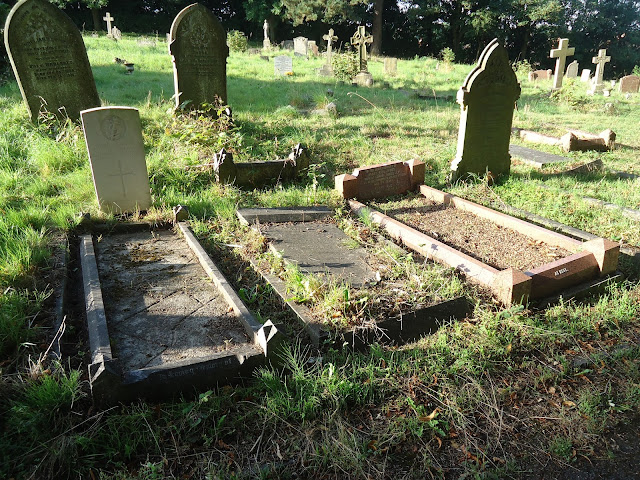
We are volunteering in an official capacity for the CWGC as part of their Eyes On Hands On project. The Commission is responsible for 103 plots at the cemetery, 90 WWI and 13 WWII, of these there are 101 Commonwealth and 12 private. Basically, it is up to us to look after these plots and feedback any concerns to the Commission such as illegibility, damage, unsafe leaning etc.
We are authorised to softly clean the Commonwealth headstones, using just water and brushes, and carry out light weeding, grass trimming etc. For the private memorials we should only carry out only light weeding and not clean the headstones, but feed back to the Commission.
Of the casualties at the cemetery a lot of them died from illness, but there are also those who died in accidents or more sadly those who took their own lives often following the horrors they had experienced.
We have recently been photographing all of the headstones and memorials for the Commission website. The Commission now try and include photographs on their casualty database, which people can search.
Outside of the Commission’s responsibility there are also many private family plots at the cemetery that we have come across that make reference to loved family members lost during the two wars.
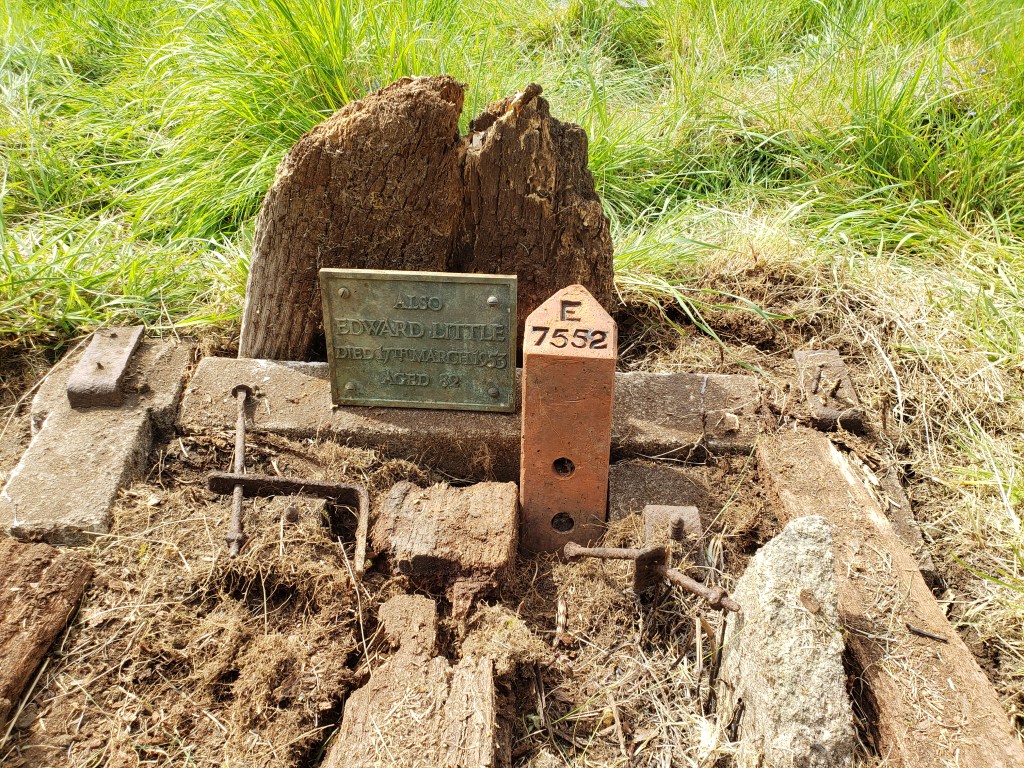
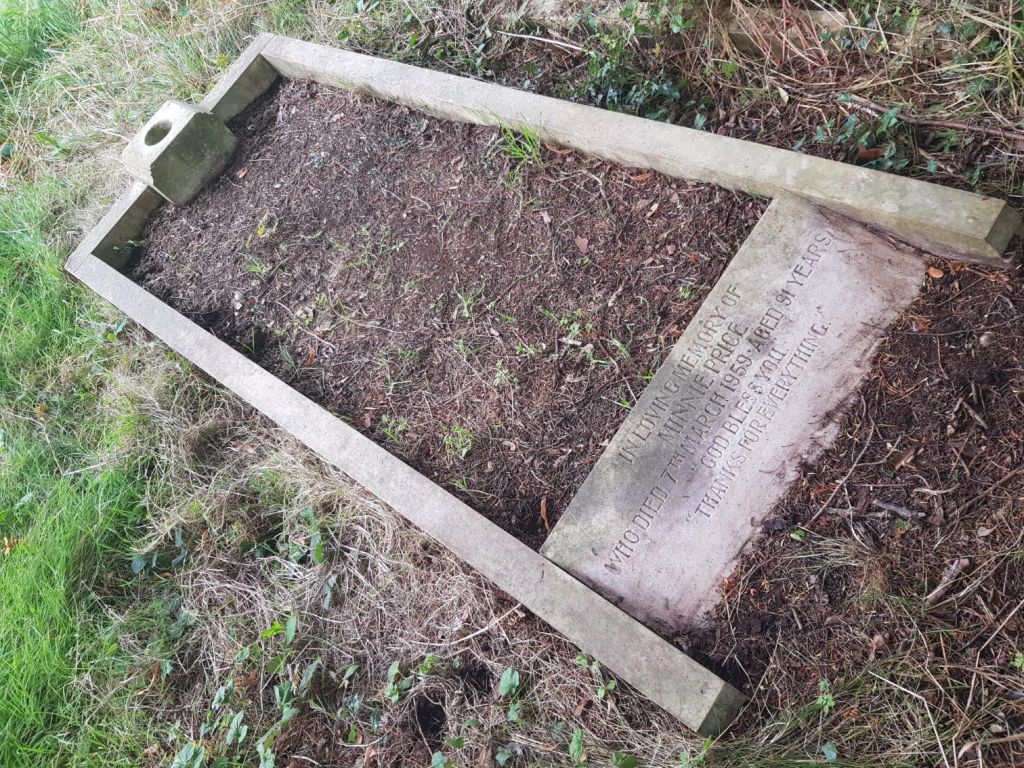
The first two images show a little bit about the Eyes On Hands On project. The next photo is a private plot commemorating 2nd Lt W.S. Hunter, Royal West Kent Regiment. The second photo is a Commonwealth headstone marking the grave of Pte K.W. Scott-Browne, sadly killed in a flying accident whilst training for D Day. The last photo is a family grave for Mildred Cook, commemorating her husband Hubert James Cook, killed in action during WWI.’
Read more about the work of the Commonwealth War Graves Commission here.














 Radnor Street Cemetery