Harry James Davis – Swindon Veteran of Industry

In December 1930 more than 200 men retired from the Great Western Railway Works, an event of such importance to warrant a detailed article in the first January edition of the North Wilts Herald published in 1931.

The names and addresses of those men forced to retire under the introduction of the 66 years age limit were recorded in appreciation of their long years employed in the Works. Men who had joined the company in the 1880s and 90s; men like Harry James Davis.

Harry James Davis was born in 1869, the eldest of Harry Edward and Louisa Elizabeth Davis’s 13 children. The family moved to Swindon when Harry was a baby and he grew up in the railway village.

Harry began a 7 year engine turning apprenticeship on his 14th birthday, October 16, 1883. Like all the apprentices at that time he started on a daily rate of 10d rising to 3/- in 1890 at the end of his apprenticeship.

He married Rose Ann Gibson at St. Mark’s Church on July 16, 1894 and the couple had two sons, Harry John and Cyril George. By the time of the 1901 census they were living at 118 Dean Street, which would remain their home until Harry’s retirement in 1931. By 1939 he was living at 94 Manchester Road and at the time of his death in 1954 he was living at 64 Beckhampton Street.

Mr Harry James Davis: Chargeman fitter of 118, Dean Street, served practically the whole of his 48 years in G Shop. He had charge of the work in connection with Didcot Provender Stores, and also hydraulic work from Swansea and Cardiff Docks.

For the last seven years he was in charge of the Central Boiler Station, and during that period he saw the whole of the loco type boilers for stationary purposes done away with and the latest mechanical chain grates and pulverised coal plants substituted.

Mr Davis belongs to a well known musical family and in his young days helped to start the Blue Band, now defunct. He began his schooling in one of the GWR cottages in Bath street. The central boiler staff presented him with a wallet of notes and a box of cigars.

Swindon Veterans of Industry – North Wilts Herald, Friday, January 2, 1931.

The grave of Harry James Davis and his wife, son and daughter-in-law.

Harry James Davis’s grave in the foreground. His parents are buried in the plot with the pink granite kerbstone surround close to the path.

Harry James Davis died in 1954 and was buried in grave plot D75A, just a stone’s throw from his parents. He is buried with his wife Rose Ann who died in 1930, his son Harry John Davis who died in 1961 and his wife Gwendoline Sarah Katherine Davis who died in 1972.

You may also like to read:

Harry Edward Davis – 115 Dean Street
George Albert Hallard – Swindon Veteran of Industry

Swindon Veterans of Industry

Harry Edward Davis -115 Dean Street

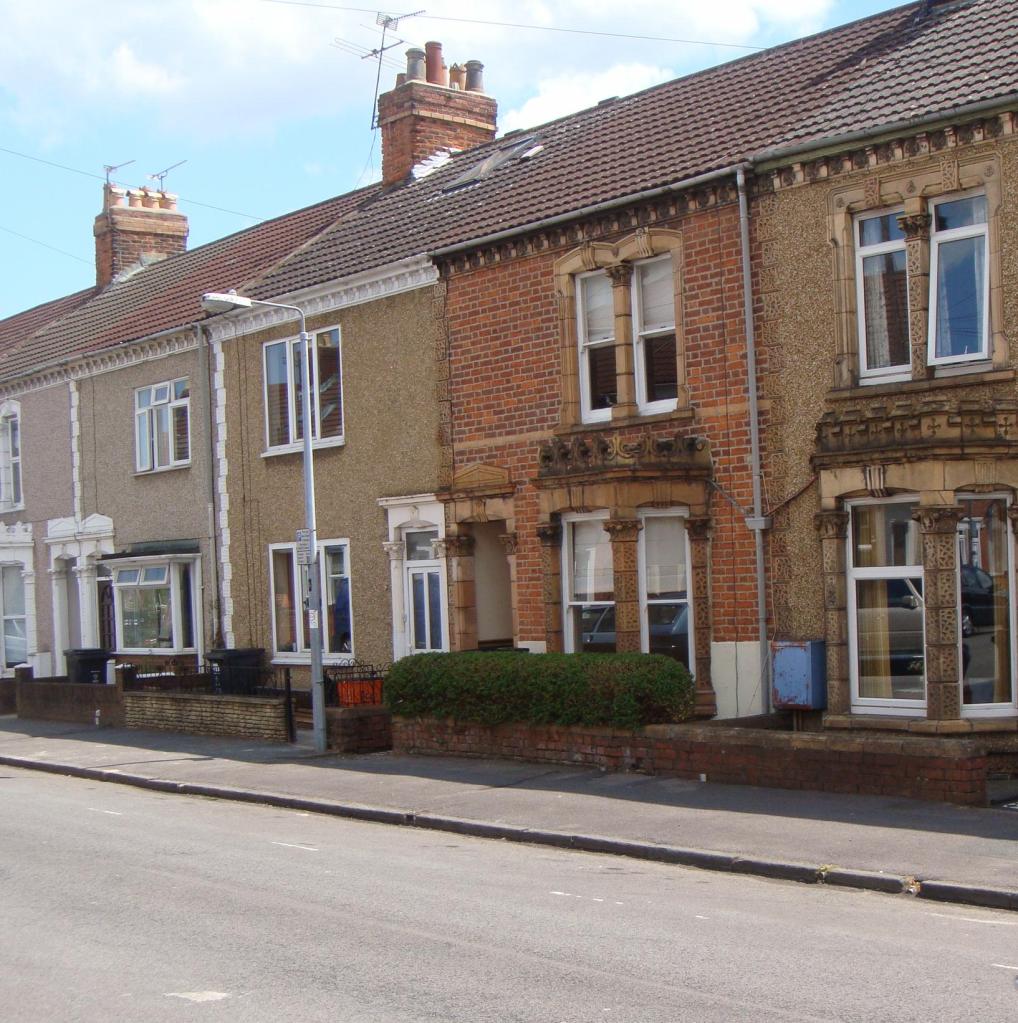
The architectural details on houses in Dean Street differ considerably even though it is basically another long road of red brick terrace houses – a familiar sight in Swindon. Building began in about 1890 with a number of Swindon builders working there, the first of them Thomas George in 1890 who was later joined by his brother John on further work in 1892 and 1894.

One Swindon family obviously enjoyed living there, within easy reach of the railway factory – and each other.

Harry Edward Davis was born in 1850 when his parents were living at New Bread Street, Bristol. He married Louisa Miller in 1868 and they soon moved to Swindon where their son Harry James Davis was born, the eldest of their 13 children. They first made their home in the railway village living in Taunton Street and Exeter Street between 1871 and 1881. In 1891 they were living at 15 Cambria Place, a small cottage built in the 1860s, with 10 of their children aged 8 months to 20 years old.

Sometime before 1901 they moved to 115 Dean Street where Harry was working as a Railway Storekeeper. They still had 6 children living at home aged between 12 and 25 years and Louisa’s widowed father James Miller – oh, and a lodger.

Three doors down their son Harry James Davis lived at No 118 with his wife Rose Ann and their two sons Harry John and Cyril George.

And when the family took up residence in Radnor Street Cemetery they were near neighbours again.

Harry Edward Davis died at his home in 1922 and was buried in grave plot D25A where he joined his daughter Louisa Maud who died in 1920. Harry’s wife Louisa Elizabeth died in 1924 and was buried with them.

Eldest son Harry James Davis died in 1954 and was buried in grave plot D75A, just a stone’s throw from his parents. He is buried with his wife Rose Ann who died in 1930, his son Harry John Davis who died in 1961 and his wife Gwendoline Sarah Katherine Davis who died in 1972.

Then just towards the back of this section alongside the chapel, Hard Edward’s son Wilfred Charles Davis lies in grave plot D45A. Wilfred died in 1964 and is buried with his wife Kathleen who died in 1968.

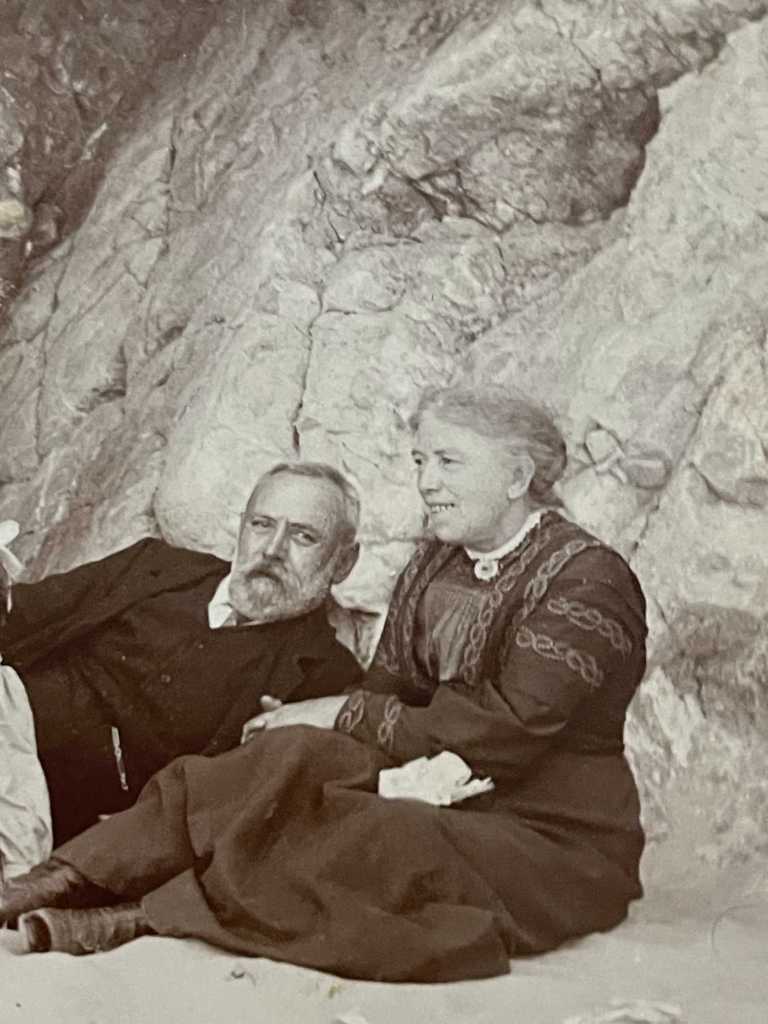
Harry Edward and Louisa Elizabeth. I rather think this family photograph was taken on TRIPwhat do you think?

Two views of Dean Street named after William Dean Chief Locomotive Engineer at the GWR Swindon Works 1877-1902.

The grave of Harry Edward Davis, his wife and daughter.

Harry Edward Davis’s grave to the bottom of the photo and behind it that of his son Harry James Davis and his family.

Henry Chatten – verdict ’caused his own death’

The jury delivered a verdict of ‘Accidental death’ while the Coroner added that Chatten had evidently been too zealous in attempting to unload the wagon himself, and thus caused his own death. Behind this tragic story is a further one of sorrow and loss.

Fatal Accident in the GWR Works, Swindon

A Labourer Killed

Inquest and Verdict

A fatal accident occurred on Tuesday morning last to a man named Henry Chatten, widower, aged 36 years and recently employed in the GWR Works. Deceased was killed by the falling of a log of wood, weight 16 cwt from a truck on which it was stacked. The log in its fall dashed Chatten against the sleepers of the line, breaking both his legs and killing him on the spot.

The Inquest was held on Thursday morning, in the Lecture Hall of the Mechanics’ Institute, New Swindon, before Mr W.E.N. Browne, County Coroner, and a jury of whom Mr Thomas Pearse was chosen foreman. The following evidence was taken:-

George Keen said deceased lodged with him at Dean-street, New Swindon. He was a sober, steady man and appeared in the best of health when he went to work at six o’clock on Tuesday morning. Witness heard no more of him until he was informed that he was dead.

William Mason, steam crane driver, then, stated that he was on duty on Tuesday morning, and whilst passing the truck of timber in question, he saw deceased laid down by the truck. He stopped his engine and cried out to some men of the staff, but when they reached Chatten he was dead. In answer to the Coroner, witness said he did not see the timber fall. He was about forty yards away when he first saw the deceased. There was no indication as to how the timber fell off the truck.

William Yeo, foreman of the timber gang, said there were 17 men working under him, and on Tuesday morning they were unloading the timber trucks. Deceased’s duty was to sweep up the yard and clear away the ropes, etc. He had no need to touch the trucks at all. In his opinion deceased had loosened the ropes of the truck and thus let the timber fall on him. The weight of the log was 16 cwt. Cross examined by the Inspector: The timber would not fall off the truck without a little jerk.

Dr. Grant, assistant to Dr. Swinhoe and Howse, stated that he was called about half-past seven o’clock on Tuesday morning. He saw deceased lying upon his back, and evidently a log had fallen from the truck and dashed the man against the sleepers, breaking both legs and fracturing the skull. He was quite dead. This was about twelve minutes after the accident, and death must have been instantaneous. A verdict of “Accidental death,” was returned by the jury, the coroner remarking that Chatten had evidently been too zealous in attempting to unload the wagon himself, and thus caused his own death.

Mr T.O. Hogarth watched the case on behalf of the GWR Company, whilst Mr. J.S. Maitland, of Bristol, Inspector of Factories and Workshops, was also in attendance.

Swindon Advertiser, Saturday, June 12, 1897.

Henry Chatten was born in Norwich, Norfolk in 1862, the son of John and Rachel Chatten.

By 1891 he had moved to Swindon and was working as a labourer in the GWR Works. At that time he was boarding with George Keen (the witness at the inquest) in Iffley Road.

The intervening years between 1891 and his death in 1897 are difficult to navigate.* There is a marriage of a Henry Chatten to Elizabeth Siney at St Stephen’s Church, Norwich in 1894 but this Henry Chatten describes himself as a greengrocer living at 73 King Street, Crooks Place, Norwich.

The details given at the inquest indicate that Henry was a widower and I have discovered the death of Elizabeth Chatten during the March quarter of 1897 – was this Henry’s wife? She does not appear to have been buried in Radnor Street Cemetery.

Henry was buried on June 12, 1897 in grave plot C853. He is buried in a public grave with four others. His address at the time of his death was 37 Dean Street.

And then another entry in the registers caught my eye. John E. Chatton, a 7 week old baby, was buried in plot C721 on February 20, 1897. The baby’s address was 37 Dean Street.

It would seem, therefore, that Henry lost both his wife and baby within a period of three months.

*spelling of name in transcriptions vary from Chatten to Chatton and Challen