Albert Cook – a little boy crushed to death

This is the unbearably tragic story of three year old Albert Cook who hitched a ride home from school on the axle of a brewer’s cart. It is the story of two young boys who witnessed the accident but were too frightened to alert the carter, and were later called to give their evidence at the inquest. A story of unbelievable horror, which anyone at the scene would surely never be able to forget.
A Little Boy Crushed to Death

On Tuesday evening a most sad and painful accident happened to a little fellow named Albert George Stephen Cook, living with his parents at 10, Swindon Road, New Swindon.

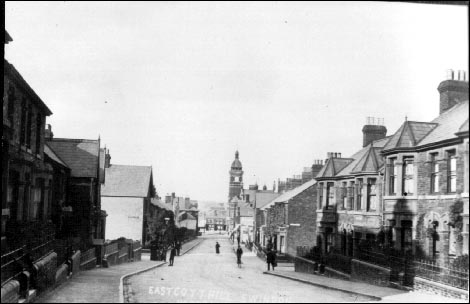
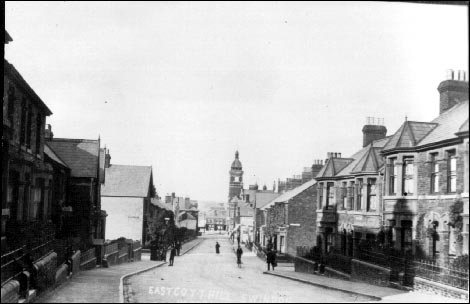
It seems that a light covered wagon belonging to Col. Luce, brewer, of Malmesbury, was proceeding down Eastcott Hill on Tuesday evening, when a Mrs. Tyler living at 114, heard a scream, and running to the door saw a child entangled in the wheel. She immediately apprized the driver of the fact, and he stopped his horse, and with the help of P.S. Peplar, who was soon on the spot, started to extricate the poor little child from its awful position.

The body was so tightly fixed between the wheel and the axle that a “jack” had to be obtained from Messrs. Affleck, Bros., Prospect Works, and the wheel taken off before the child could be removed. This taking about one hour. Dr. Fox assistant to Drs. Rattray and Lavery, was sent for, but life was extinct.

It is evident that the child was doing what hundreds of them do every day, viz., swinging or riding on the backs of wagons, one of the most dangerous practices for a child, and after this frightful accident, we should think mothers would warn their children against it.

The Coroner was communicated with, and an inquest was held on Wednesday evening, at the “Globe” Inn, Eastcott Hill, before Mr Amos Barns, deputy coroner, and a jury of whom Mr Charles Fox was chosen foreman.

William Cook, living at 10, Swindon Road, said he was father of the boy, whose age was three years and two months, and his name was Albert George Stephen Cook. Harold Matthews, a boy of six summers, said he with others, including the deceased, were returning from school. When they got to Eastcott Hill, they saw a wagon, and they ran behind to get a ride. Deceased sat on the axle, and he (witness) thought he was looking out between the bed of the cart and the wheel to see if the carter was coming after them, when he caught his head in the wheel and springs. Witness was frightened, and did not call to the driver, but went away.

Jesse Goldsmith, aged nine years, said he saw deceased sitting on what appeared to him to be the drag chain, and he went to rise himself up, and in doing so, fell into the spokes of the wheel, which drew deceased up to the top, and then deceased body stopped the wheel. The driver of the wagon stopped at the top of the hill and the children were round the wagon then, and the driver drove them away, but they waited until he got up into the wagon again, when they ran to the back of the wagon as before.

Emma Tyler said she lived at 114 Eastcott Hill, and on the day in question, about 4.15 p.m., she heard a scream and ran to her front door and there saw deceased in between the wheel and the wagon, his head being drawn nearly up top of the wheel, whilst his body was twisted under the bed of the wagon. She called to the driver, who stopped the horse immediately, and got down.

Charles Warner, of Malmesbury, said he was a drayman in the employ of Col. Luce, of the Malmesbury Brewery, and he was the driver of the wagon on which the little child met its death. He said when he got to the top of Eastcott Hill he stopped, and put the drag and safety chain on. The vehicle was empty, but he thought it would be easier for the horse. There were several children waiting to get a ride, he supposed, when he got back into the wagon. He ran after them and told them to run away. When he started he had no children on the back, and he was not aware any came there until the woman called out to him. He found the child in between the off hind wheel and the bed of the wagon, with its body twisted round through the springs. He helped take the wheel off and the pins out of the springs before they could get the child out. From the position it was in, it must have been sitting on the axles or day-chain, and fallen into the wheel.

Dr William Monds Fox said he examined deceased and found very few external marks of injury, but the neck was dislocated, which caused death.

The deputy coroner said the main point the jury had to decide, was whether or not the driver of the wagon had shown any negligence or was to blame in any way in the matter. The foreman said the jury returned a verdict of “Accidental death,” and wished to exonerate the driver Warner from all blame.

The Swindon Advertiser, Saturday, August 24, 1895.

Albert G. Cook 3 years old of 10 Swindon Road was buried on August 23, 1895 in grave B2339 an unmarked, public plot, with three babies – 14 days old Henry Trappel who was buried on August 19, 1895; Stanley William Herbert Hayes, 8 months old, who was buried on September 22, 1921 and Leonard George Scott, 11 months old, who was buried on September 24, 1921.
William Thomas Long – boilersmith

Death Notice – Swindon Advertiser Friday, December 31, 1909.

Long, Dec 24, at the residence of his daughter, 16 Curtis St. Swindon, William Thomas Long, aged 73 years.

When William Thomas Long died in 1909 his personal effects were valued at more than £900 – worth around £100k today. He had spent a lifetime working as a boilersmith, most of that in the Great Western Railway Swindon Works.

William Thomas Long was baptised at Holy Rood, the old parish church in Swindon, on July 31, 1836, the son of baker John Long and his wife Louisa. He grew up in Newport Street where his mother took over the business as Pastry Cook following the death of his father.

By 1861 William was a married man with two young daughters living in Newton Abbot where he worked as a boilersmith. William and Ann would complete their family with another five daughters plus Margaret born in 1879 who is first described as ‘granddaughter’ and later as ‘daughter.’

Yet, there is still so much we don’t know about Ann and William.

Looking down Eastcott Hill

For more than 20 years they lived at No. 8 Eastcott Hill – they may even have owned the property; Swindonians were renowned for investing in bricks and mortar.

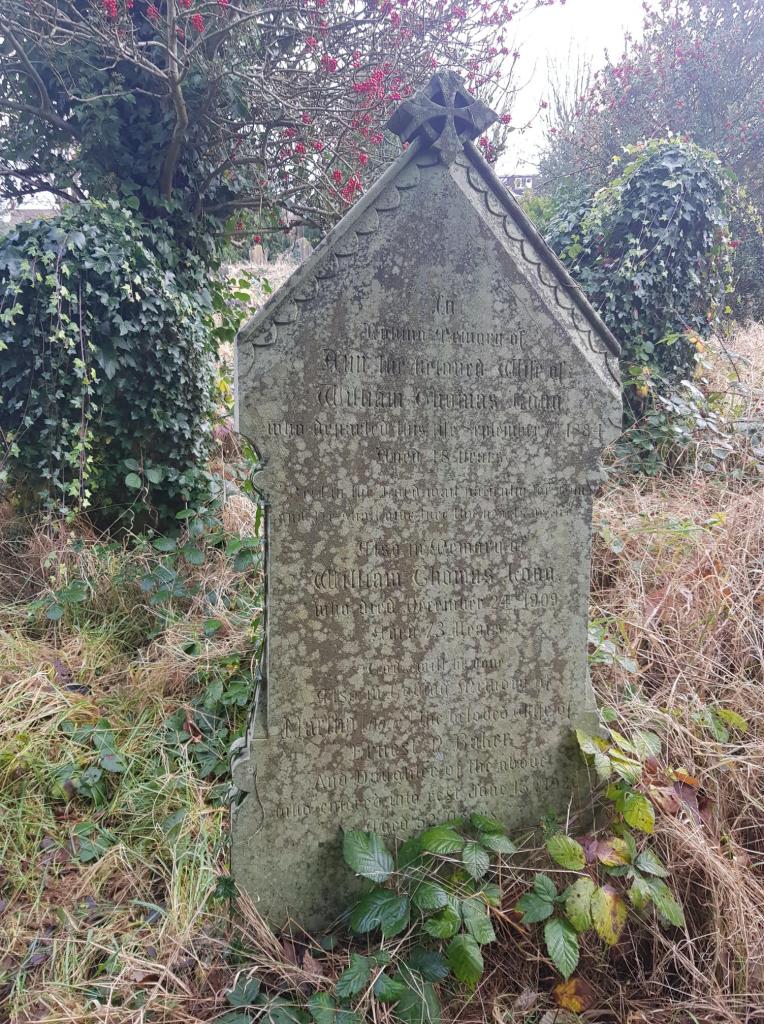
Ann died in September 1884 aged 48. When his wife died William had been able to purchase a grave plot in Radnor Street Cemetery where an impressive headstone was later installed; not everyone could afford to do this. He didn’t remarry after Ann’s death, which was is also quite unusual. He still had young daughters at home but presumably the elder ones took over the household duties and childcare; perhaps he could afford to employ a maid-of-all-work.

Ann was buried in grave plot E8306 on September 12, 1884 where William joined her in 1909. The cremated remains of their grandson William Clarence Heath and his wife Alice Ruth were interred in the same plot some 60 years later.

Remembering the ordinary people of Swindon.

Gabriel Morrell – well known licensed victualler

New Year’s Eve 1915 and a ferocious fire swept through an out building in Eastcott Hill. A local businessman, Gabriel Morrell lost his life. Neighbours and six police officers fought the blaze, passing buckets of water hand to hand. Despite numerous calls to the Fire Station in Cromwell Street, no help arrived. The newspaper account stated that “the system of fire calls in the borough appears to be antiquated.”

Eastcott Hill

Tragedy

Swindon Tradesman Burnt to Death

A Mass of Fire

Fire Brigade Hear Nothing of Calls

New Year’s Eve in Swindon was marked by a shocking tragedy in which a well-known licensed victualler lost his life, and in connection with which the public will demand an enquiry into the system of Fire Brigade calls in vogue in the borough.

The victim of the tragedy was Gabriel Morrell, living in Eastcott Hill, where he had carried on a grocery and off-licensed business for four and twenty years. At half-past ten on Friday night the police were informed that Mr Morrell’s premises were on fire whereupon P.S. Molden, with P.C.’s Harris, Cowley, Mitchell and Stoper, at once hurried to the scene, where they were quickly joined by other members of the force. They were taken to the back of the premises, where they found a shed, used for storing lumber, on fire. The seat of the outbreak was evidently inside the building, and P.C. Harris proceeded to force open the door. The moment he succeeded a huge mass of flames burst forth, forcing him and the other officers standing near to retire for some distance. The policemen, setting to work with a will, seized buckets and such other vessels as they could lay hands upon, and began to dash the water they found in the soft water butts upon the flames. When that supply was exhausted they turned to the slower method of filling the pails from the taps on the premises and in the adjoining houses,  work in which, under the guidance of Supt. Moore, who had now arrived, they were energetically assisted by a number of civilians.

A Shocking Discovery

Nearly half an hour passed by before they got the fire under control, and could venture into the shed. Then a shocking sight met their eyes. On the ground in the middle of the structure was a huddled up mass, which in spite of the dreadful manner in which it had been charred, was recognised as that of a human body. At once it was concluded that it was that of Mr. Morrell, who during this period of excitement not been seen, and further enquiries and search elicited the fact that he was nowhere to be found. A closer scrutiny showed that all the clothing had been burnt from the body except a belt which went round the waist. The body was lying on its back with the knees and arms tucked up over the trunk. The remains were carefully lifted on to sheets and blankets and removed by the police to the mortuary.

Calls for the Fire Brigade fail

In the meantime calls were made from the fire signal posts to the Fire Brigade, who, however, never arrived, but even if the Brigade had come upon the scene they would have been too late to save Mr. Morrell’s life, as there is little doubt that he was in a dead or dying condition at the time the police broke open the door of the burning shed.

After the removal of the body the shed, which was built of wood and had a slated roof, continued to burn until its existence became a source of danger. The remaining supports were then pushed away, and it collapsed. The building was 12ft long by 9ft wide, and 7ft or 7ft high at the eaves. It was not used for storing any of Mr Morrell’s stock-in-trade, but was employed for the storage of empty boxes, old newspapers, account books and rough lumber.

The Deceased Missing

It seems that at ten minutes past ten Mr Morrell took a candlestick to go out, as the family thought, to the lavatory – and thinking that his wife and two daughters, who were the only other occupants of the house, were going to bed, he wished them “Good night.” To this Miss Morrell replied. “We are not going to bed yet, dad; we are going to watch the old year out.” While Mr Morrell was out they had a light supper, after which they went upstairs to prepare for bed while witing for the passing of the old year. They noticed a slight odour of burning, but it was not until Miss Frances Morrell drew up the blind and saw smoke issuing from the shed that they were aware that anything was amiss. Mrs Morrell then called her husband, but got no answer. She and her daughters thereupon rushed out of the house seeking help, which promptly arrived. Some neighbours went to alarm the Fire Brigade, while others fetched the police.

Failing Health

The deceased, who was 57 years of age and a native of Chippenham, before coming to Swindon 25 or 26 years ago, was canteen steward to the Wiltshire Regiment, in which he enlisted many years ago at Swindon Fair. Having decided to settle in Swindon he went to work at the factory until he was able to secure a business suited to his taste. After a time he secured the license of the Railway Hotel; but he and Mrs Morrell did not care for the business and three months later removed to Eastcott Hill. Until recent years the deceased enjoyed good health, but latterly had complained of feeling unwell, and of pains in the region of the heart, telling his daughter on one occasion that no-one knew what he had suffered. He refused to see a doctor, saying that he could best doctor himself.

In addition to the widow and daughters living at home, there are two sons, both of whom are married and reside in distant towns.

The Brigade’s failure explained

With regard to the failure of the Fire Brigade to respond to the calls made by P.S. Pickard and others, our representative had an interview with Chief Officer J.N. Jefferies today. He said that he heard nothing of the matter until he reached the Town Hall this morning, and until he had made further enquiries could say nothing definite on the subject.

Other enquiries, however, have elicited the fact that the electrical call arrangements are in a condition far from satisfactory. Although calls were made from several stations the only one which proved to be in working order was that in Cromwell Street, which commenced to ring at 11 o’clock. The horse was got into the hose cart at the Fire Station and was ready to start, when an intimation was received that the fire was under control.

It is said that in process of time some of the wires of the alarm posts have become unreliable and that the recent storms have damaged overhead lines. The system of fire calls in use in the borough appears to be antiquated, and, judging by last night’s experience, and that of a previous occasion, when two motor-cars were destroyed, is unreliable and should give place to a better one.

Civilian Helpers

Amongst those who rendered valuable assistance were Mr. Walter Gregory, 7, Stafford Street, Mr Bernard Woodbridge, 129, Stafford Street, Mr William Gillett, 17 Dowling Street, Mr Johnson of the George Hotel, Eastcott Hill, Mr F.W. Trineman, greengrocer, Eastcott Hill, Mr William Rich, 10, Eastcott Hill, Mr Frederick Eagleton, 16 Eastcott Hill, Mr George Smith 42 Pembroke Street, and Mr Porter, hairdresser, Swindon Road.

Funeral of Mr Morrell

The remains of Mr Gabriel Morrell of Eastcott Hill, Swindon, who was burned to death in a shed on New Year’s Eve (as reported on page 2), were quietly laid to rest in Swindon Cemetery on Wednesday afternoon. The mourners – Mr Gabriel Morrell, Mr B.G. Morrell, Miss Morrell and Miss Frances Morrell (sons and daughters) Mr T.C. Boxall, Mr W. Boxall and Mr H.W. Coale (representing the Lamb Brewery, Ltd) – left the house at half past two, and met the hearse, which conveyed the coffin from the Mortuary to St. Saviour’s Church, where the service was conducted by the Rev. J.H. Kemmis, who also read the committal sentences at the graveside. Flowers were sent by the widow, the sons and daughters, Mr. and Mrs J. Franklin and family (Chippenham), Mr and Mrs A. Seale and family (London), Mr and Mrs Winchcombe and family, Mr T.C. Boxall and family, Mr J. Hill and family, Miss May Fowler, Mrs Smith and Miss Dolly Smith.

Since the sad occurrence it has become known that, at the time of his death, Mr. Morrell was wearing a coat in the pockets of which he carried recently-issued Treasury notes representing a considerable amount. These were, of course, completely destroyed, and it unfortunately happens that Mr. Morrell kept no record of them.

In November 1911, Mr and Mrs Morrell’s house was burglarously entered, and money and a quantity of goods stolen. It was after this that Mr Morrell, who had eccentric ideas concerning the banking of money, procured a revolver for self protection.

We understand that the question of the failure to get into communication with the Fire Brigade is being investigated and that a report will be presented to the Town Council in due course.

North Wilts Herald, Friday, January 7, 1916.

The Fire Brigade pictured outside the Cromwell Street Fire Station in about 1910. Published courtesy of P.A. Williams and Local Studies, Swindon Central Library.

Gabriel Morrell, aged 57, was buried in grave plot E7596 on January 1916. Frances, his daughter, married Percy William Martin later that same year. Percy died aged 25 and was buried with Gabriel on November 5, 1918.

Greater love hath no man

The re-imagined story …

Mr Trineman had a fruiterer’s shop on Eastcott Hill next to the Duke of Wellington. He sold some lovely fruit and veg in there; you never got a bruised apple or a rotten potato. I suppose him being a former gardener made a difference. He used to work for Mr Morse up at the Croft.

I can remember little Kenny helping his father in the shop when he was barely tall enough to see over the counter. He liked to take the money and give the change. He was a bright little lad; his father’s pride and joy. It’s a blessing poor Mr Trineman didn’t live to see his son go to war.

Blessings were thin on the ground for the Trineman family. A baby son died before his first birthday and then three little daughters lost in the 1921 epidemic and now Kenny gone as well.

His headstone stands next to the children’s grave, although he doesn’t lie there, he was buried at sea, or that’s what the official record says. His ship was hit by enemy fire so his end probably wasn’t as dignified as ‘buried at sea.’

“In treasured memory of Kenneth John Trineman Sub Lieut RNVR – who paid the supreme sacrifice” the headstone reads. “Greater love hath no man than to give his life for his friends.”

But what about the parents …

Kenneth John Trineman

The facts …

Frederick William Trineman married Emily Lilian Avenell in 1910. She was his second wife. He first married Mary Helena Kent in 1895. At the time of the 1901 census Frederick, Mary and their three children Beatrice, William and (Florence) Maud were living on Wroughton Road, close to where Frederick worked as a gardener for the Morse family at The Croft. Another son, Charles Frederick was born in 1903.

Four-year-old son William died in 1901 and Mary his mother died in 1909. Beatrice returned to her father’s family in Devon where she died in 1910 aged 14. Charles Frederick died in 1922 aged 19 so the only child to survive from Frederick’s first family was his daughter Florence Maud.

Mary Helena and Charles Frederick are buried in plot B3068. Little William does not appear to have been buried in Radnor Street Cemetery.

The children who died in 1921, the daughters of Frederick’s second marriage to Emily Lilian Avenell, are buried in plot E7503. Doris Alice was 18 months old when she died in July 1921. Hilda Mary was 6½ years old when she died in August 1921 and Emily Mary Kathleen was 8 years old when she died in October, 1921. The couple’s first child, Herbert William George who died aged four months old in September 1911, is mentioned on the headstone but is not buried in the grave. He is buried in an infant’s grave, plot A395, with three other children.

Frederick William Trineman died at his home, 26 Eastcott Hill, on October 11, 1936 and was buried with his first wife Mary and their son Charles.

By the outbreak of war in 1939 only three of Frederick’s ten children had survived – Florence Maud from his first marriage and Kenneth John and Joyce E. from his second.

Emily Lilian Trineman died on April 22, 1944 at her home 25 Kent Road. She is buried in plot E7503 with her three daughters and Iris Emily Mary Roberts who died in July 1933 aged 7 years old. Iris was the daughter of Florence Maud and her husband Clifford Roberts.

Kenneth John Trineman RNVR was serving as Acting Sub Lieutenant on HMS Malvernian when the ship was bombed and heavily damaged on July 1, 1941 in the Bay of Biscay on a voyage from Hull to Gibraltar. The ship was abandoned and later spotted drifting. It was finally sunk on July 19. Twenty-four naval personnel lost their lives. Kenneth date of death is given as July 2, 1941. He was 25 years old.

beloved children of Frederick W and Emily L Trineman