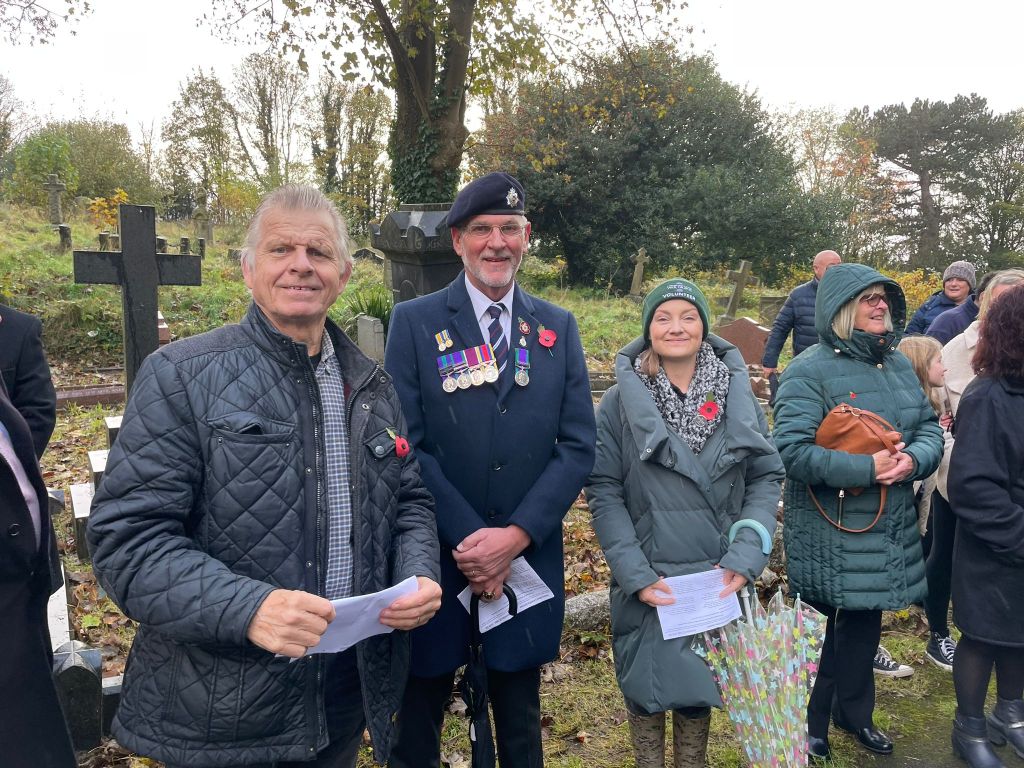
We had torrential rain, thunder and eventually beautiful sunshine on our guided cemetery walk yesterday, during which we welcomed regular and new cemetery followers.
Kevin updated us on the work of the CWGC Eyes On Hands On team and in honour of the forthcoming 80th anniversary he spoke about Private Kenneth William Scott-Browne, killed in an air accident during D Day training.
If, like me, you enjoy walking through old cemeteries and reading the inscriptions on the headstones you will find the views of this ‘Spectator’ thought provoking. At the beginning of 1881 the cemetery question was upper most in the thoughts of many Swindonians.
A cemetery should be a wooded garden, with walks and avenues and glades according to its size, and not, as in most villages now, a stonemason’s yard, studded with squat temples and tombs, or with tall, meaningless headstones so mouldy that it would be nearly impossible to read the inscriptions, even if the undertakers did not have them made as illegible as possible, in order to “make business” of the work of cleaning them out. These headstones are the destruction of all beauty or solemnity in a graveyard. Nothing uglier or more meaningless in form has ever been conceived by man, and nothing worse adapted for exhibiting an inscription. If they are upright, they gradually sway out of the perpendicular with their own weight; and if they are flat, they destroy the reverential vegetation which else, without means, watchfulness or exertion, would, but for the stones, clothe the surface of the grave. They are, besides, utterly needless. What is required by each grave is a number cut in granite – cut solid, we mean, not out of granite – a number distinguishable for centuries, and referring to a granite tablet, which need not be more than six inches by a foot, with an inscription identifying, describing, and, if you will, praising the dead. – Spectator
The SwindonAdvertiser, Monday, January 3, 1881
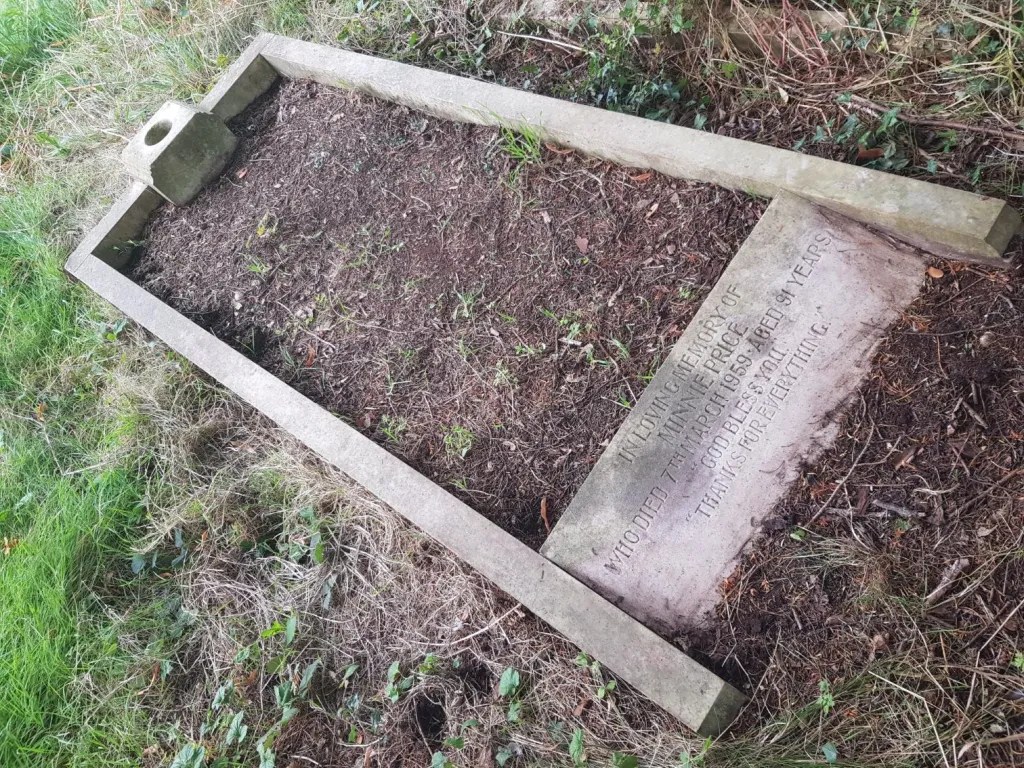
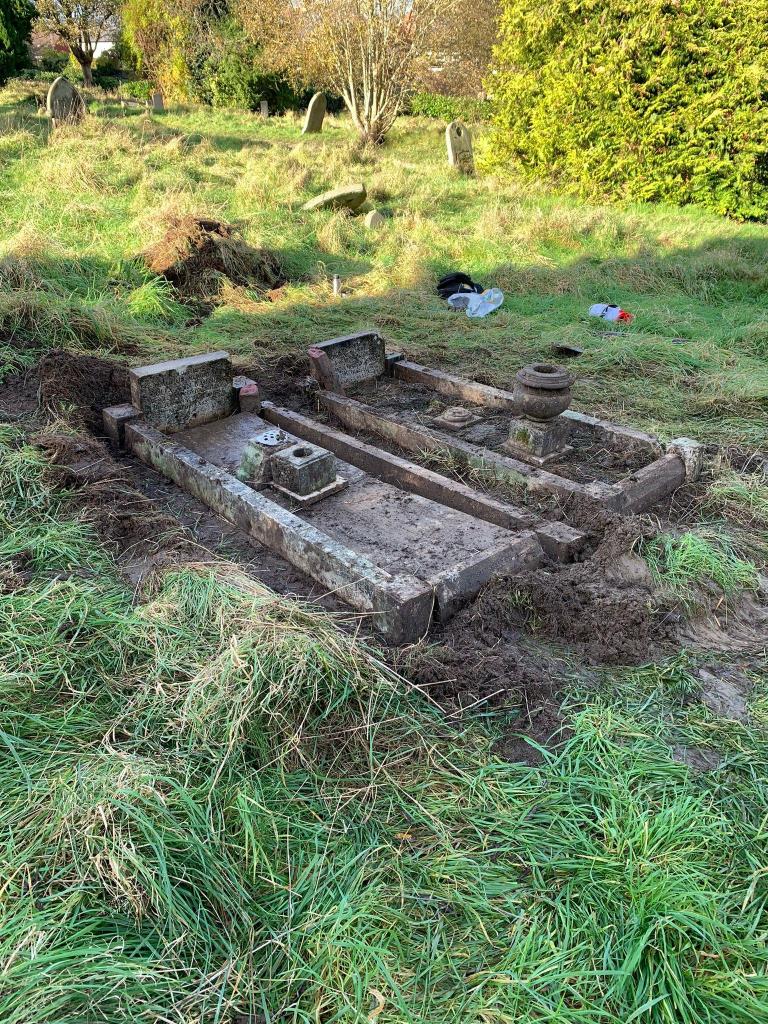
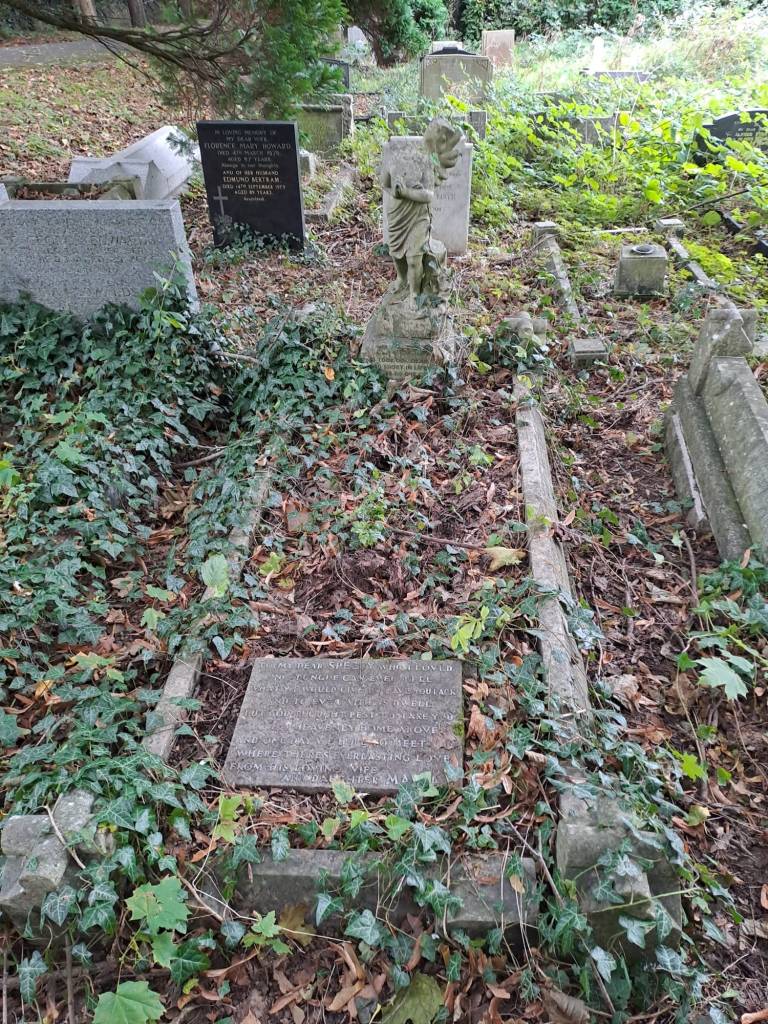
Swindon Borough Council workers have recently done a grand job at the cemetery. I am sharing here some photographs taken by Kevin a CWGC and dedicated Radnor Street Cemetery volunteer.
This path clearing project is a work in progress by our own dedicated volunteers
On January 9, 1919 the SS Northumbria sank in the North Sea. Only two members of the crew survived; among those lost was Thomas Poole.
Thomas Poole was born in 1882, the son of William and Elizabeth Poole. He enlisted with the Royal Marine Light Infantry on April 9, 1901. In 1919 he had been drafted to the SS Northumbria, a Defensively Armed Merchant Ship carrying wheat from Baltimore to the UK, to man the ship’s gun. The ship sank off the coast of Coatham, County Durham, after striking two mines.
Thomas’s younger brother Henry John joined the Royal Navy in January 1907. He served on HMS Empress of India, Argyll and Leviathan before being transferred to the Royal Fleet Reserve in 1912. Able Seaman Henry Poole ended his naval career in 1921 on Vivid I, a shore based ship.
And along with a patriotic love of their country, the two brothers shared the love of a woman.
On February 16, 1916 Thomas Poole, a Royal Marine aged 34, married Beatrice Fanny Dixon aged 26 at Christ Church. The couple’s son Derrick Thomas Poole was born on October 20, 1918. Less than three months later Thomas was killed on the SS Northumbria.
Did he ever get to see his son? What was Beatrice to do now?
We can’t begin to imagine what life was like for those women in the immediate aftermath of the war. The 1921 census figures revealed that there were in excess of 1.7 million more females than males in the population – known collectively as the ‘Surplus Women.’ The prospect of marriage and a family unlikely for so many. But what about the women like Beatrice, widowed aged 30 and with a child to support. What kind of future could she expect?
In the December quarter of 1919 Beatrice married Henry John Poole, Thomas’s younger brother. They went on to have two children of their own – Gordon Henry John born in 1920 and Doreen Elsa born in 1930.
In 1939 the family lived at 138 Broad Street. Henry John Poole was working as a Rivetter’s Holder Up in the railway factory, Derrick was a Motor Mechanic and Gordon a Metal Machinist also in the railway works. Nine year old Doreen was still at school.
A happy ending for one war torn family.
Henry John Poole died in 1965 and Beatrice Fanny in 1977. Neither of them are buried in Radnor Street Cemetery.
Thomas Poole was buried on January 16, 1919 in grave plot D1023 where he lies alone. The CWGC Eyes On Hands On team of volunteers care for his grave.
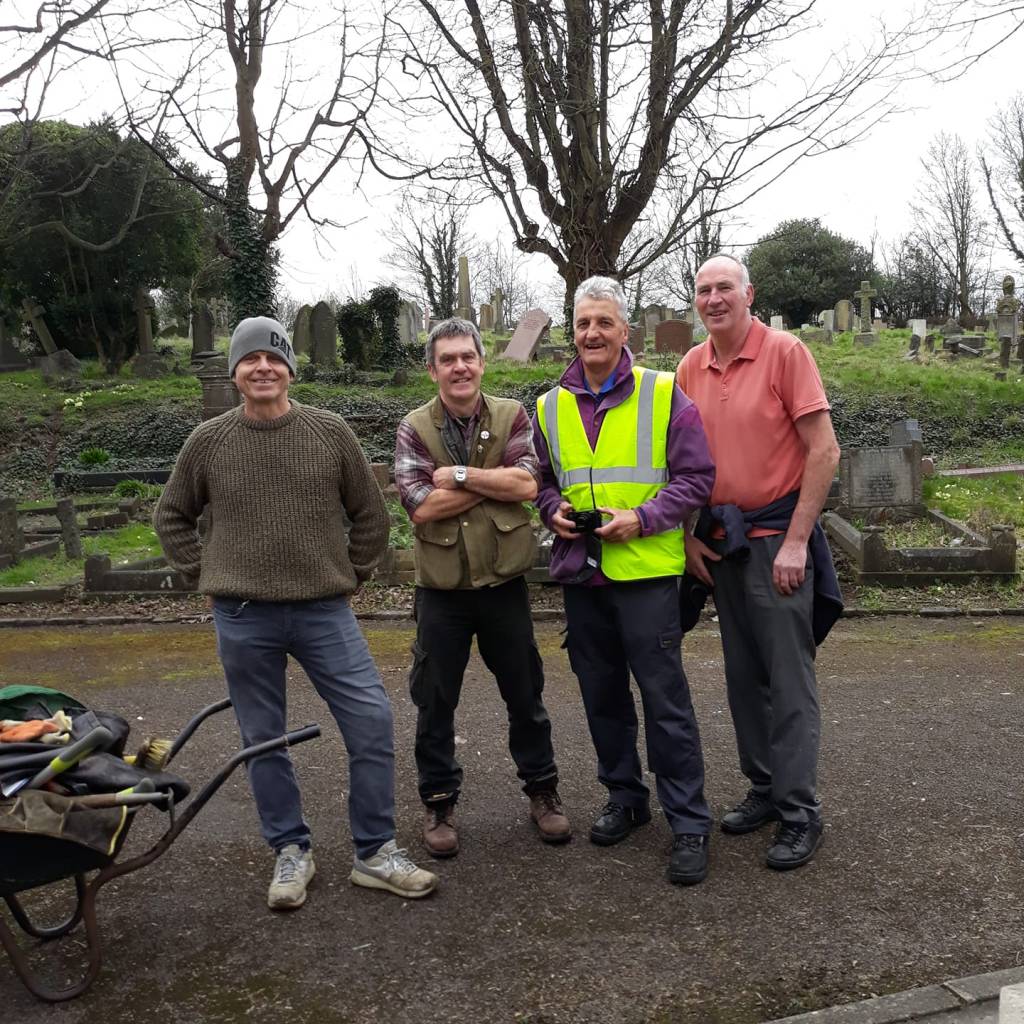
In the beginning there were just two members of the Radnor Street Cemetery volunteers. Pictured below with Andy are Jon and David shortly after appointing Brian as their new apprentice. More than six years on and the group is considerably larger and Brian has ‘done his time.’*
The original objective of the group was to care for the Commonwealth War Graves. Today the volunteers are members of the CWGC Eyes On Hands On initiative, keeping the area around the war graves clear and reporting any concerns over safety or damage to the headstones. They are also recording family memorials that mention service personnel lost or missing in war. Their latest project is an attempt to secure recognition by the CWGC for a soldier who died in the Victoria Hospital, Swindon in 1918 from broncho pneumonia having recently been discharged from the army as unfit for service. We believe that his death may have been as a result of his military service. If successful this will be the second WWI soldier to be so recognised in the past two years.
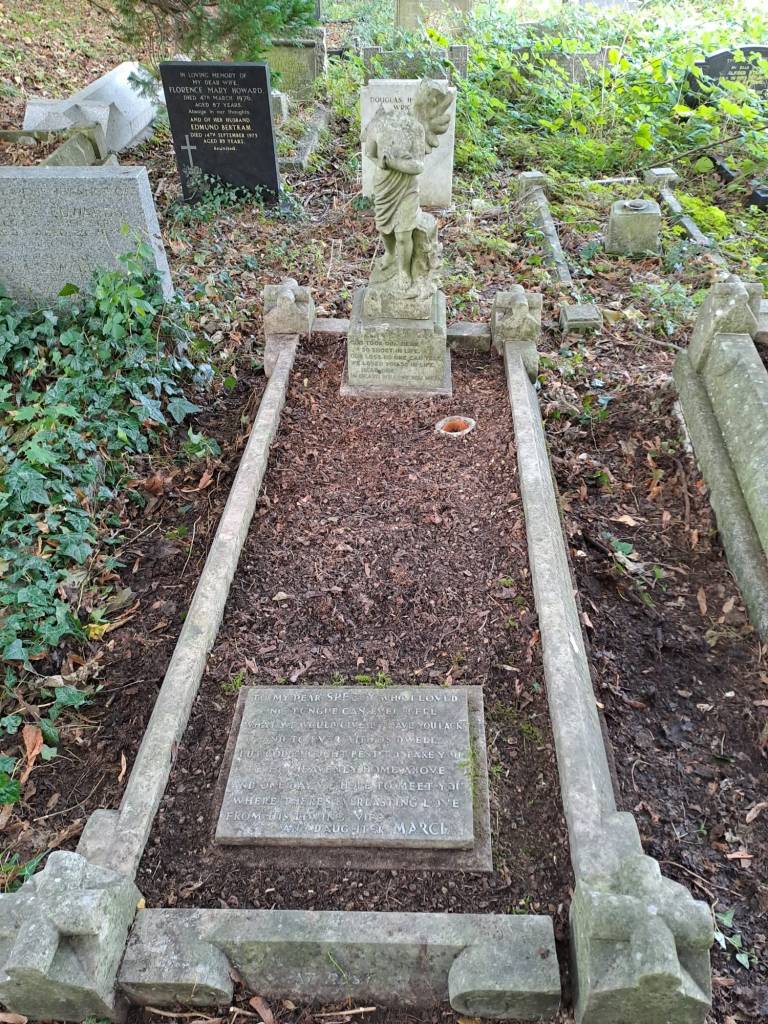
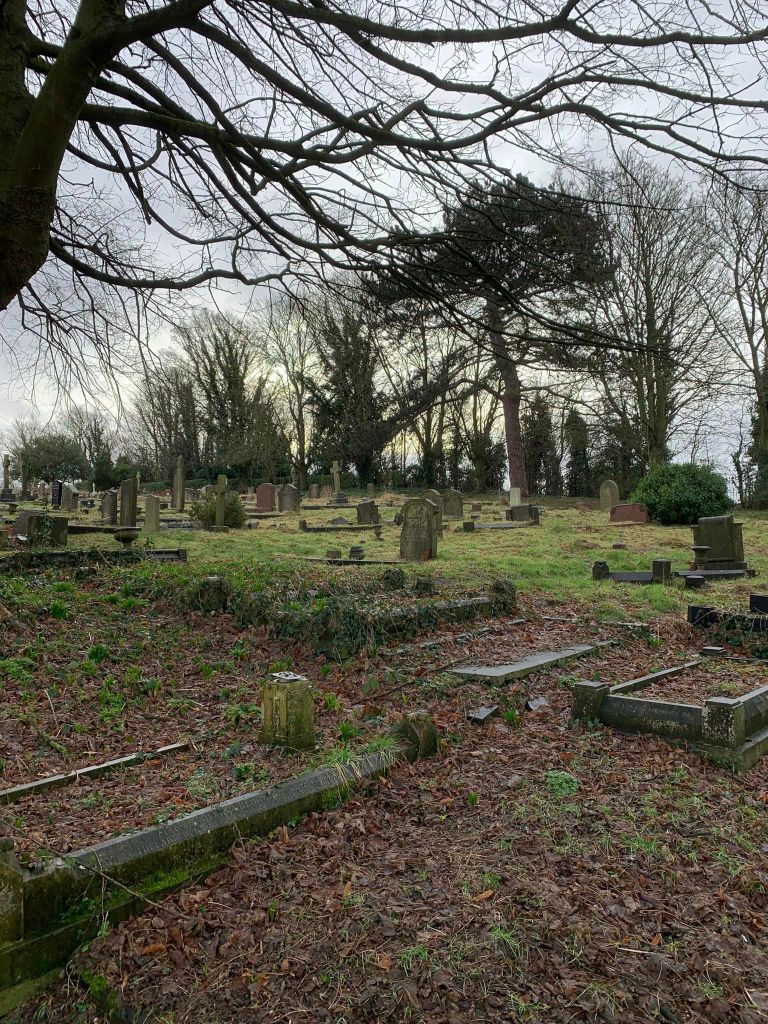
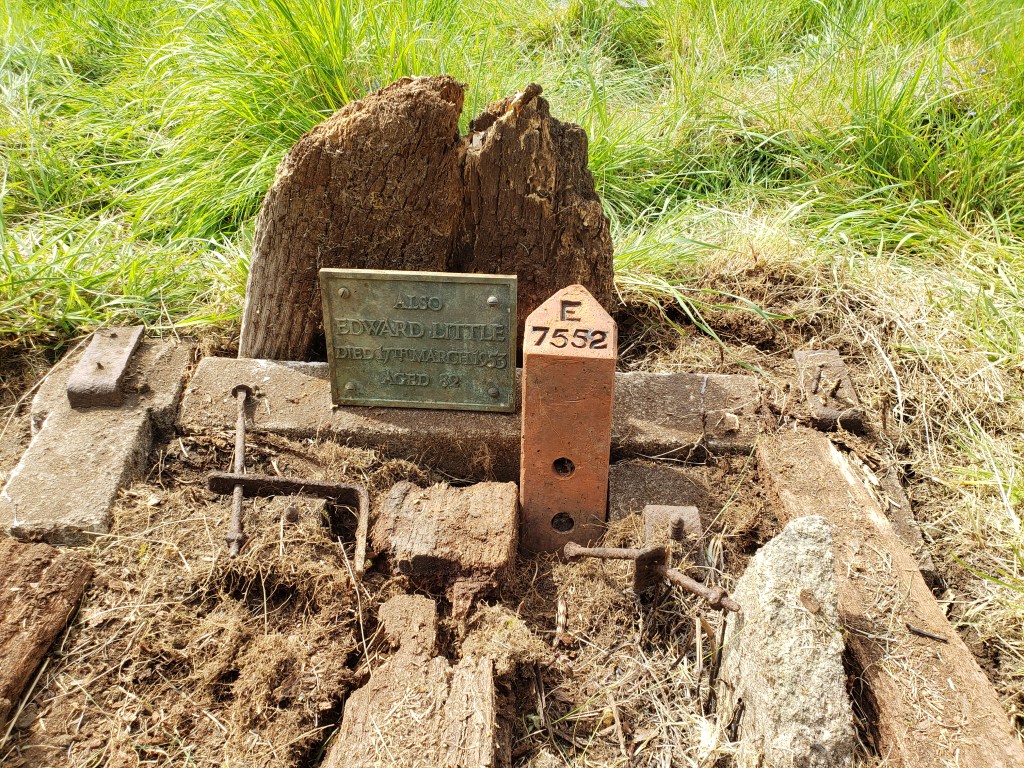
But this is only part of the volunteers work, as you can see from the photos below.
Would you like to join them?
You can contact us in a number of ways. You can leave a message here on this blog or on our Radnor Street Cemetery Facebook page and we also have a Twitter (now known as X) feed @StreetRadnor.
Why not come along to our next guided cemetery walk when Jon will be able to tell you more and answer your questions?
Our last walk of this season will be on Sunday October 29, meet at the cemetery chapel for 2 pm.
*finished his apprenticeship
Before and after … Kent Road gate
Read about Bob Menham, Swindon Town FC goal keeper.











 Radnor Street Cemetery