Ernest Hayball – dairyman

One of our regular cemetery followers has a wealth of family history knowledge, a vast archive of photographs and ephemera, more than one family grave in Radnor Street Cemetery plus a photograph taken at the time of his grandmother’s funeral in 1937. How lucky are we to be given access to all this material and the story of Ernest Hayball!

Ernest Edwin Hayball was baptised on April 1, 1872 in the parish church of Donyatt, Somerset, the son of Mathias Hayball, a tailor and his wife Emma.

By 1891 he had moved to Swindon and was living in Commercial Road and working as a dairyman with his brother-in-law George Parkhouse.

Ernest Edwin Hayball married Theresa Georgina Meads at St. Mark’s Church on July 19, 1899. Paul has a copy of the wedding photograph with an index of the pictured guests compiled by his mother (see below). The couple went on to have five children, Leonard, Ernest, George, Doris and Gladys (Paul’s mother).

Ernest established his own dairy business in Hythe Road, later moving to 32 Bath Terrace, which became 71 Faringdon Road after renumbering and renaming in the early 1920s.

In 1932 the local press reported on yet another successful Children’s Fete where 35,000 people had celebrated in the GWR Park opposite the Hayball business. Organised by the Mechanics’ Institute, catering for the thousands of adults in attendance was undertaken by the Swindon Town F.C. Supporters’ Club with “40lbs of tea, nearly 4 cwt of sugar, and 40 gallons of milk, the latter being supplied by Messrs E. Hayball and Sons, of Faringdon road, Swindon.”

A brief obituary in the local press following Ernest’s death in 1952 encapsulated his busy life.

Was dairyman for 50 years

Swindon Death

A former member of the committee of the Swindon Town F.C. Supporters’ Club, Mr E.E. Hayball (79), 71 Faringdon Road, Swindon, has died.

He had been in business as a dairyman for 50 years. Starting at 1 Hythe Road, he bought Mr H.J. Hulme’s business, and after staying there for nine years went into partnership with the late Mr G. Parkhouse in Commercial Road.

In 1914 he started on his own account at 71 Faringdon Road, where he continued until his death.

At one time he played skittles for Ashford Road and the Central Clubs.

He leaves three sons and two daughters.

Ernest died at his home on January 13, 1952. He was buried in grave plot E7749 with his mother Emma who was living with them at 32 Bath Terrace at the time of her death in 1918; his wife Theresa who died in 1937 and his daughter Gladys and son-in-law (Paul’s parents).

Here is a selection of Hayball family photographs published courtesy of Paul.
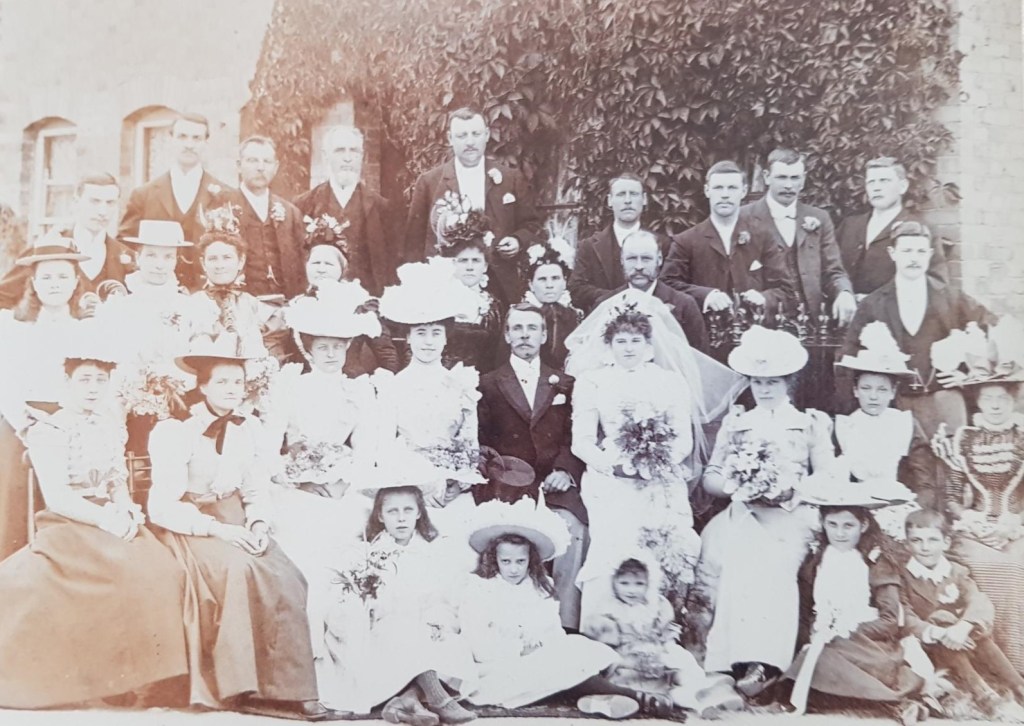
Ernest and Theresa’s wedding photo.

Back row 4th from left is Mathias William Beazley Hayball (father of the groom).

Middle row 6th from left standing behind the bride and groom is Emma Hayball (mother of the groom).

A family photograph celebrating Ernest and Theresa’s Silver Wedding Anniversary.

Left to right standing:- Doris, Leonard, Ernest and George

Gladys stands between her seated parents Theresa and Ernest
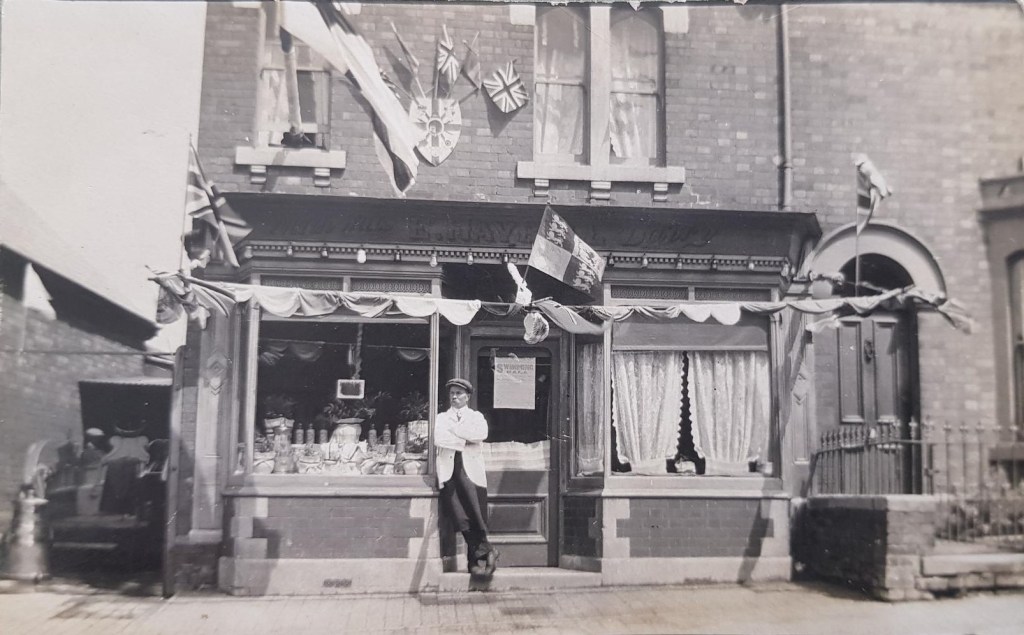
Ernest standing outside the shop in Hythe Road.
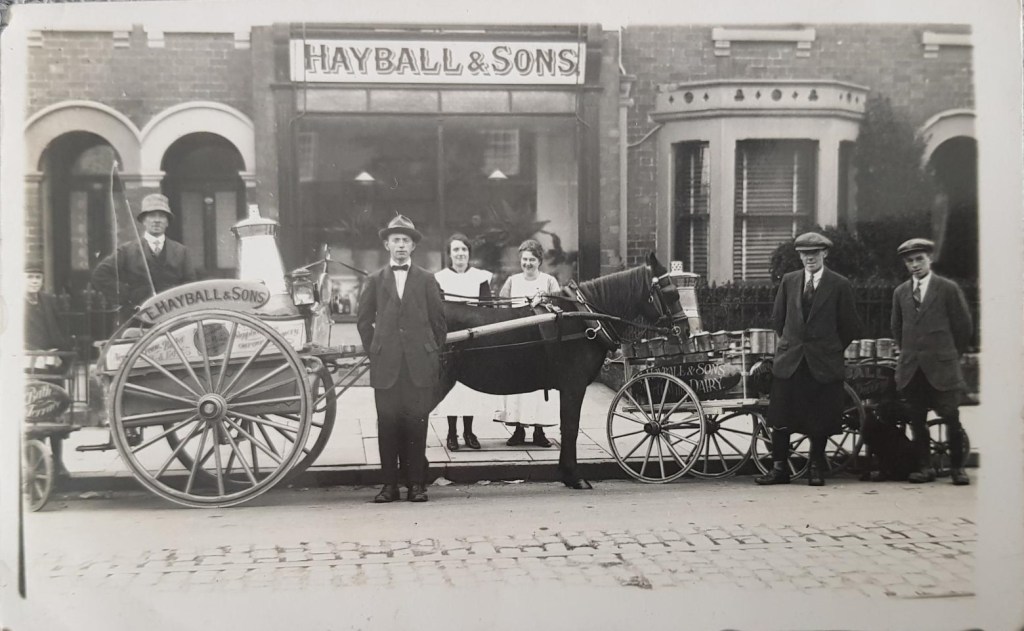
71 Faringdon Road

Ernest and Theresa Hayball

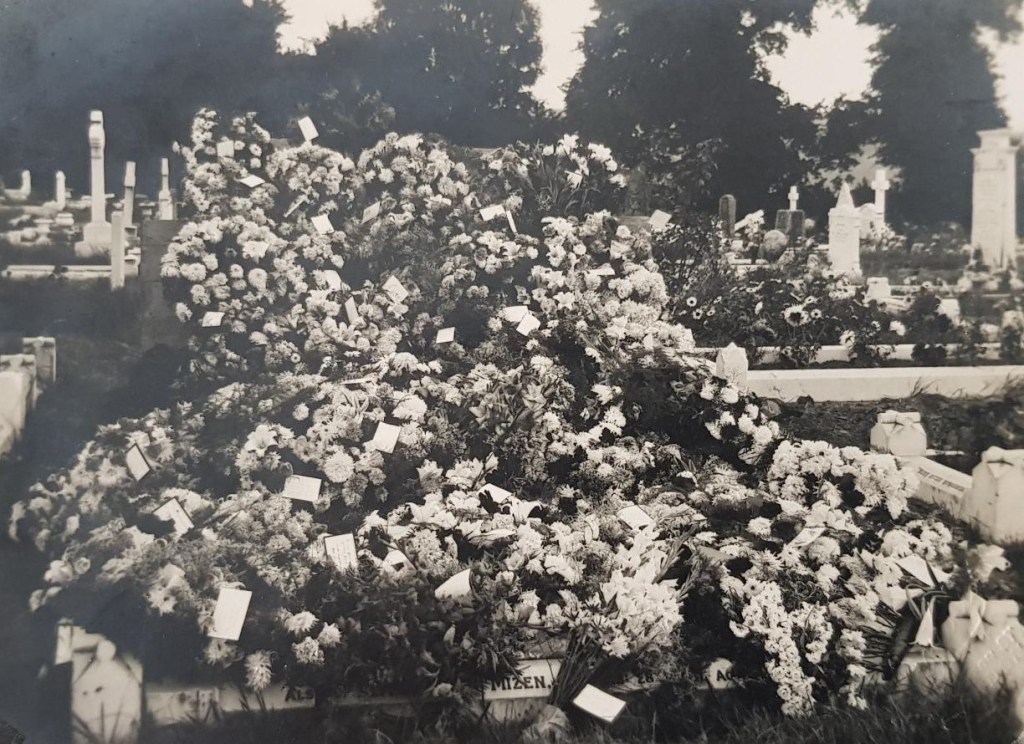
The Hayball family grave in Radnor Street Cemetery following the funeral of Theresa Georgina Hayball in 1937.

The life and times of Richard and Ada Jones

Today’s story has been revealed by an enquiry through the Radnor Street Cemetery Facebook page and two newspaper articles.

When Hilda Lawes was interviewed by the Swindon Advertiser in 1995 she spoke with affection about her childhood, living in Faringdon Road above her parents’ fish shop.

It had taken Ada and Richard Jones a long time to get to Swindon.

Ada was born in 1879 in Canton, Cardiff the daughter of Edward Barrow, a stonemason, and his wife Mary. She married Richard William Amhurst Jones in Cardiff in 1897. Their daughter Ada was born that same year in Cardiff. In 1899 a second daughter Emma was born followed by son Richard William in 1902 when the family lived in Tilehurst, Reading where Richard worked as a Ferryman. The family were soon on the move again and Edna was born in 1905 and Hilda in 1907 in Southampton. They eventually arrived in Swindon where Matilda was born in 1910. By 1911 the family were living at 26 Commercial Road where Richard worked as a fish dealer. The census of that year informs us that they have been married for 14 years and have 6 children who are all living. Their last child, Freda, was born in Stratton St. Margaret in 1912.

Their family complete, their business established, Richard and Ada might have thought they were settled.

The Great War was raging when Richard enlisted in Swindon in November 1915.  He was 41 years of age with a family of seven children to support. His military records reveal that he served in the RAMC as a Motor Driver and Mechanic from 1916 to 1919 in what was then known as German East Africa. During 1916 he was injured in a bomb explosion suffering wounds to his left leg. That year he also contracted malaria. He remained in East Africa until the end of the war, returned to England in January 1919 when he was declared 30% disabled, but still transferred to the Reservists List.

Hilda, then aged 12, remembers him returning from the war and how the family moved to new premises at Faringdon Road.

Despite his injuries, work carried on apace for Richard, but family life sounds as if it was rather fun.

In June 1931 Richard and Ada’s youngest daughter Freda entered the Carnival Queen competition organised by the Evening Advertiser. She was crowned by popular actress Evelyn Laye (who had a Swindon connection) and was presented with a silver rose bowl.

The Swindon Advertiser report includes a fantastic photograph of Richard riding his motorbike with Ada sitting in a wicker sidecar. The second photograph is a grainy picture taken from the North Wilts Herald of their youngest daughter Freda crowned Carnival Queen in 1931.

Ada died aged 63 at 39 Faringdon Road. Her funeral took place on October 13, 1937 when she was buried in Radnor Street Cemetery in grave plot C4490. Richard died aged 65 at 176 Pinehurst Road, the home of his youngest daughter Freda, and was buried with Ada on November 24, 1939.

Many thanks to Helen Diggens

William Graham Little – Swindon philanthropist

Faringdon House

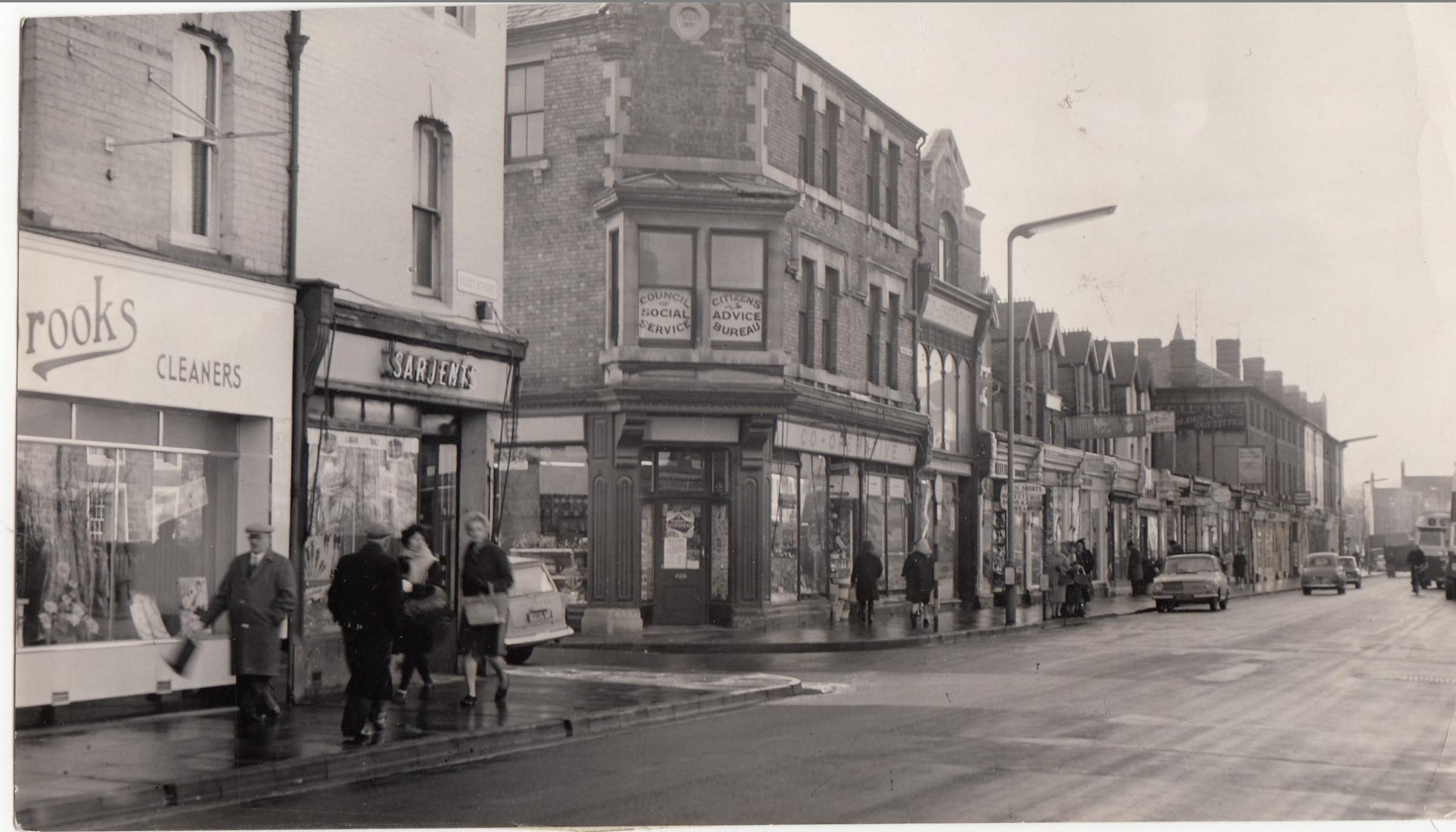
W.G. Little’s shop on the corner of Fleet Street and Catherine Street.

William Graham Little left a legacy that lived long in Swindon’s history.

William Little was born in Chippenham in 1856, the son of George Little, a linen and woollen draper, and his wife Dinah. William was the fourth of eleven children.

He moved to Swindon when he was 18 and began business as a door to door salesman. His first shop was at 32 Fleet Street where he sold clothes and fabrics.

At the time of the 1881 census he was living at 31/32 Fleet Street, his home for more than 40 years, where he employed his 19-year-old brother Albert as a tailor and cutter and his sister Sealy Anne 23, as his housekeeper.

As the business prospered he was able to build a shop in Faringdon Road. The ghost of an advertisement on the side of the building can still be seen – WGL 1892 draper, milliner.

Little served as a Councillor, a JP and an Alderman during the same period as Reuben George and James ‘Raggy’ Powell.

William Little died in 1927 aged 72. He left an estate of more than £56,000 worth today in the region of £2.5 million.

Little never married and seemed to be distanced from his family. He left his sister Frances (who had been his housekeeper at one point) £100 and the rest of his estate he left to Swindon. His family unsuccessfully contested the will but in 1932 the WG Little Scholarship and Band Concert Fund was established. His money was left in trust ‘for the promotion and advancement of education and recreation among the youth of the town.’

In 1965 an article in the Swindon Advertiser said that grants of £52,000 had been made since 1938. In 2012 a grant of £6,000 was paid to help recreate the Children’s Fete at Faringdon Road Park.

In the past, grants have gone towards helping support students at university but more recently payments have been made to buy uniforms for children of needy families transferring from primary school to secondary school.

William Graham Little was buried on May 10, 1927 in plot D47A Radnor Street Cemetery.

William Graham Little

You might also like to read:-

Reuben George and the Christmas card

James ‘Raggy’ Powell – one of nature’s princes