Mary E. Slade MBE

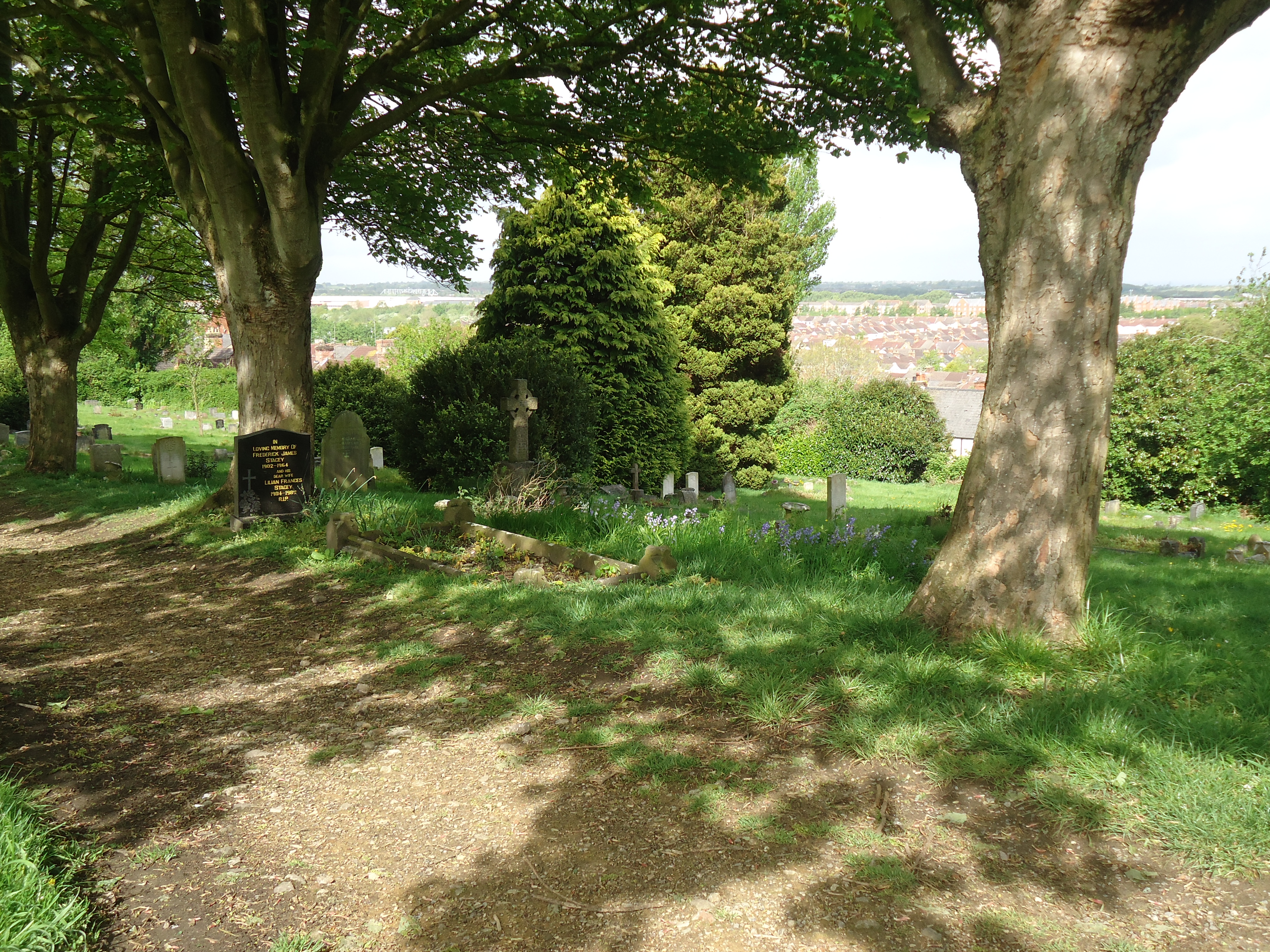
I had long wanted to find the grave of Mary E. Slade who died in 1960. I eventually discovered she was buried in the churchyard at Christ Church, but where …

The Swindon Committee for the Provision of Comforts for the Wiltshire Regiment was formed in 1914.  More than thirty years later Mary Slade and Kate Handley would still be supporting the soldiers who had survived the horrors of the Great War and the families of those who hadn’t.

Mary Elizabeth Slade was born in Bradford upon Avon in 1872, the daughter of woollen weavers Frank and Susan Slade.  Mary and her brother George grew up in Trowbridge but by 1899 Mary had moved to Swindon and a teaching position at King William Street School.

At the outbreak of war Mary headed the team of mainly women volunteers who were based at the Town Hall.  Their work was much more than despatching a few cigarettes and a pair of socks to the Tommies on the Front Line and soon became a matter of life and death as the plight of the prisoners of war was revealed.

“When letters began to arrive from the men themselves begging for bread, it was soon realised that they were in dire need, and in imminent risk of dying from starvation, exposure and disease,” W. D. Bavin wrote in his seminal book Swindon’s War Record published in 1922.

The provisions the prisoners received daily was a slice of dry bread for breakfast and tea and a bowl of cabbage soup for dinner.

“Had it not been for the parcels received out there from Great Britain we should have starved,” said returning serviceman T. Saddler.

The team of volunteers co-ordinated supplies and materials with the support of local shopkeepers, schools and hard pressed Swindon families.

In the beginning the committee spent £2 a week on groceries to be sent to Gottingen and other camps where a large number of men from the Wiltshire Regiment had been interned following their capture in 1914. By October 1915 the committee was sending parcels to 660 men, including 332 at Gottingen and 152 at Munster.  And at the end of July 1916 they had despatched 1,365 parcels of groceries, 1,419 of bread comprising 4,741 loaves, 38 parcels of clothing and 15 of books.

As the men were moved from prison camps on labour details, the committee adopted a system of sending parcels individually addressed.  Each prisoner received a parcel once every seven weeks containing seven shillings worth of food.  More than 3,750 individual parcels were despatched in the five months to the end of November 1916.

But their work did not end with the armistice on November 11, 1918.  Sadly, the soldiers did not return to a land fit for heroes as promised, but to unemployment and poverty.  Mary Slade continued to fund raise for these Swindon families through to the end of the Second World War.

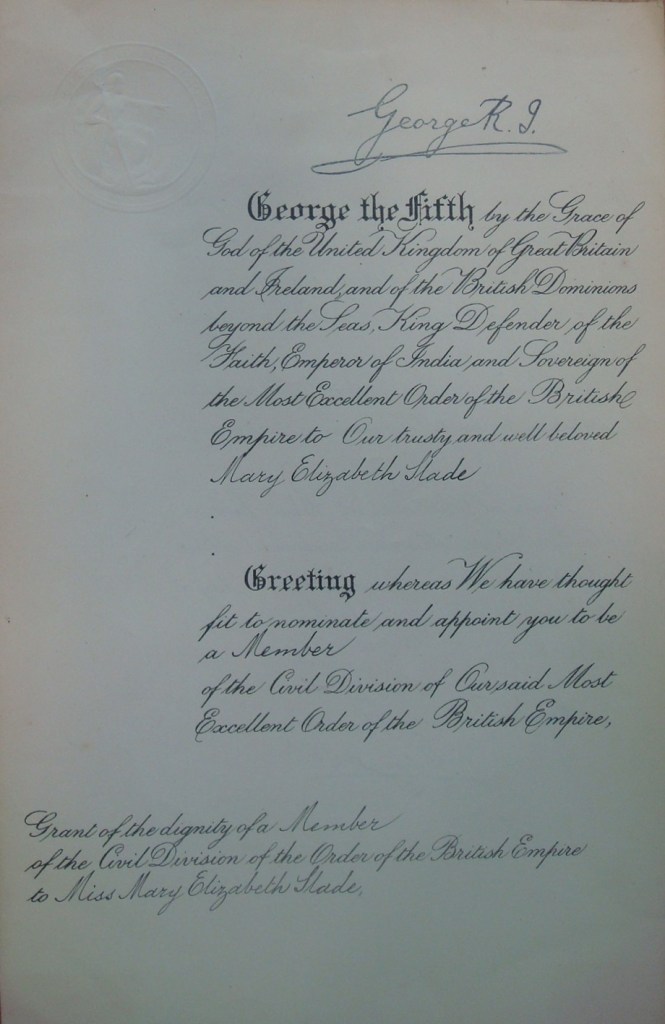
On July 25, 1919 Mary Slade and Kate Handley represented the Swindon Prisoners of War Committee at a Buckingham Palace Garden Party and in 1920 Mary was awarded the MBE.

Mary Slade died suddenly on January 31, 1960 at her home, 63 Avenue Road.  She was 87 years old.  The previous evening she had been a guest at the choir boy’s party at Christ Church.

Yesterday Noel and I visited the churchyard at Christ Church to pay our respects at the grave of our friend Mark Sutton. As we passed the Rose Garden on our way out I looked down and there was a plaque dedicated to Mary E. Slade. It was through Mark’s lifelong study of the Swindon men who served in the First World War that I first heard the story of Mary E. Slade.

Mary Elizabeth Slade
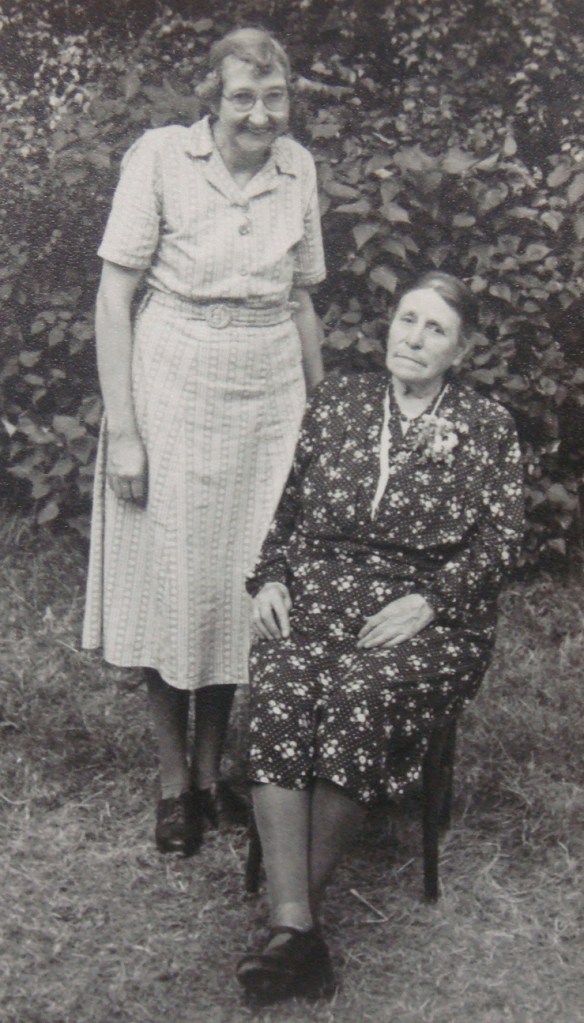
Mary Slade and Kate Handley

Cyril Gordon Webb – Tell Them of Us

How terrifying must it have been to be the parents of five adult sons on the eve of war in 1914?

James George Webb and his wife Bertha lived a comfortable life at 117 Bath Road where in 1911 they stated on the census returns that they had been married for 25 years. They answered the questions– how many children born alive 5; children still living 5; children who have died nil. Not every family in this period was so fortunate.

Four of James and Bertha’s sons still lived at home with them in 1911. Their eldest son Vere was employed as a draughtsman in the Loco, Carr & Wagon Dept at the Wolverhampton railway works.

Then in 1914 second son Algernon Ewart Webb enlisted in the Army Service Corps, eight months before the outbreak of war. However, his military service was brief as he was found to be medically unfit when mobilization took place on August 6, 1914.

How relieved his parents must have been to welcome him home. Algernon and three of his brothers went on to live long lives. It would be their youngest son Cyril Gordon Webb who went away to war. 

A former student at the North Wilts Technical College in Victoria Road, Cyril is remembered on the college’s stained-glass window war memorial. The window, restored and renovated by stained glass window craftsman Richard Thorne, was moved to Swindon College at the North Star campus in 2010.

Pte C.G. Webb of the 52nd Battalion Bedfordshire Regiment died on June 7, 1918 at his home 37 Okus Road. His cause of death was Pulmonary Tuberculosis contracted during his military service.

Cyril’s father James died in October that same year, a few months after his son. Bertha died in 1934. They are both buried with their boy in Plot D402.

#TellThemofUs

#MarkSutton

Tell Them of Us – Pte. R.A. Cook – promoted for gallantry

Continuing a series remembering Swindon’s sons who served in the First and Second World Wars.

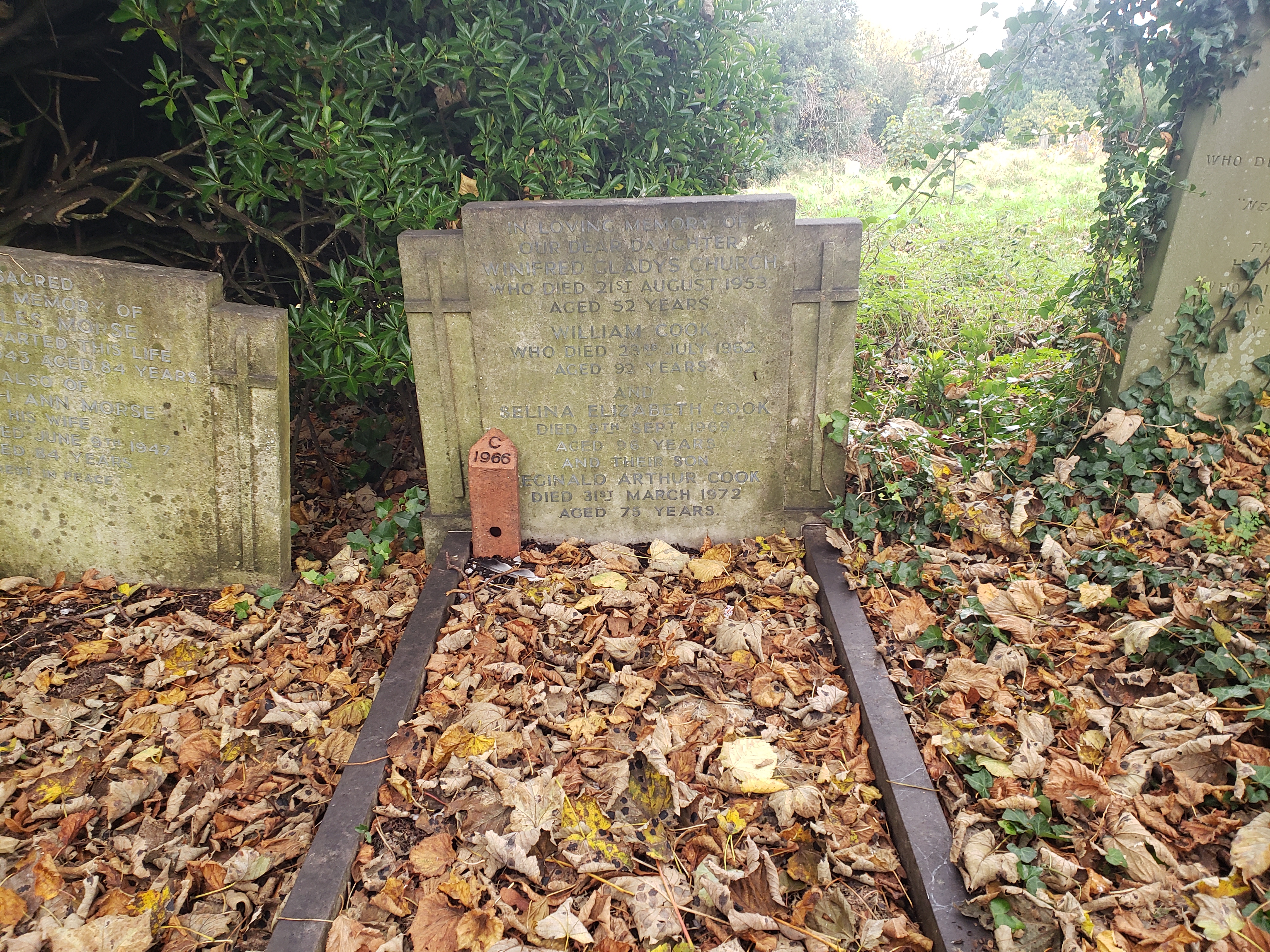
Reginald Arthur Cook was born in Swindon on September 8, 1896 the son of William and Selina Cook. Reginald entered the employment of the GWR shortly after his 14th birthday and stayed with the company until his retirement. His only absence was during the First World War when he served on the Western Front and was promoted for an act of gallantry.

Swindon Soldier Promoted for Gallantry

Pte. R.A. Cook, the only son of Mr. W. Cook, Cemetery Superintendent, Radnor Street, Swindon, has been promoted to the rank of lance-corporal for gallant conduct.

Major-General H.D.E. Parsons, Director of Ordnance Services, British Armies in France, has written to Pte. Cook, dated October 19th, as follows: “Your name has been brought to my notice by your Commanding Officer for ‘gallant conduct in snatching an enemy stick-grenade, that had become ignited, from another man, and throwing it into a shell hole some ten yards away, thus saving the man’s life at grave risk of your own. The report reflects credit on yourself and the Army Ordnance Corps.”

Lce. Copl. Cook is 21 years of age, and is a native of Swindon. On leaving school he entered the GWR Works as a clerk. He joined the Army on October 6th, 1915, and proceeded to Woolwich for training, but after being there three weeks he was transferred to France, where he has been ever since. He is now home on leave, and will return to France on December 21st.

North Wilts Herald, Friday, December 14, 1917.

Reginald returned home to Swindon at the end of the war and lived with his parents at 63 Kent Road where he died on March 31, 1972. Reginald never married and was buried with his parents and his only sister Winifred Gladys, in the cemetery where his father once worked as Cemetery Superintendent.

Pte Percy Walter Dyer and his brother Pte Frank Edward Dyer – Tell Them of Us

With a fresh complexion, brown hair and brown eyes, Percy Walter Dyer weighed 129 lbs (9st 3lbs) and stood 5ft 5ins tall when he enlisted in the army. This poignant description of 19 year old Percy was written more than 110 years ago when his ambition was to serve with the Wiltshire Regiment.

Percy was born on April 13, 1888 in Lea, a small village 1½ miles east of Malmesbury. He was the son of John and Sarah Dyer and one of 11 children.

By 1901 the family were living at 141 Beatrice Street, Gorse Hill. Still living at home were Percy’s elder brothers Charles, Frank and Lewis who all worked as general labourers. His sisters Alice and Edith both worked as laundry assistants while Kate was employed in one of the towns several clothing factories. Younger siblings George, Ernest and Florence were still of school age but at 13 Percy stood on the threshold of adulthood.

When he filled in his attestation papers in Devizes on August 13, 1907 he was already serving in the Militia. What was his driving force – patriotism, or did he see a career in the army as an opportunity to travel, to escape.

As a serving soldier with seven years’ experience Percy was sent to France with the British Expeditionary Force (BEF) when war broke out in 1914.

During action at Armentieres on December 14, 1915 Percy received a gun shot wound to his right elbow. Although he survived, the injury caused permanent damage and limited the movement of his arm. In 1917 Percy was declared physically unfit for military service and was transferred to Avonmouth to work in an ammunitions factory.

A medical examination made in May 1918 declared that the injury to his arm rendered him 30% disabled and limited his prospects of employment on the open labour market. But this was not the extent of his poor physical condition. Percy was also declared 100% disabled by tuberculosis with ‘Sanatorium treatment’ recommended. But it was too late. Percy died on September 22, 1918. He was 30 years old and had spent eleven years in the army, three of those fighting in France and Flanders.

Sarah buried her son in Radnor Street Cemetery on September 25. Was there any consolation for her in having her boy back home? This was not the first of her sons to die as a result of the war but her elder son Frank had no known grave.

The military service records of Frank Edward Dyer do not survive, destroyed when an incendiary bomb hit the War Office Record Store in September 1940 during the Second World War. We do not know if Frank had been a volunteer when war broke out or whether he had been ‘called up’ following the introduction of conscription in 1916. Frank’s name is recorded on the Tyne Cot Memorial in Belgium, which bears the names of almost 35,000 officers and men whose graves are not known. The memorial was unveiled in 1927 – it is unlikely Sarah was ever able to visit it.

Percy was buried on September 25, 1918 in grave plot B2756. He was buried with his younger brother Ernest who died in 1911 and the boys’ father John who died just weeks after Percy joined the army. In 1933 Sarah Ann Dyer, the boys’ mother, joined them.

Private G.H. Wilkinson – Tell Them of Us

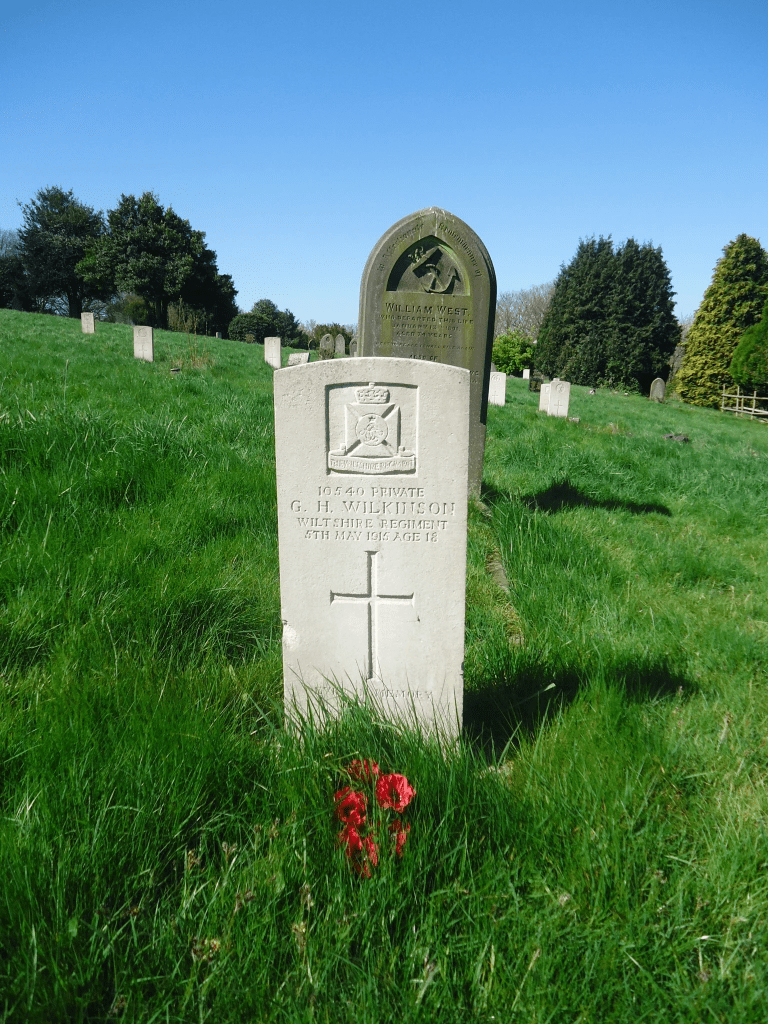
In the Spring of 1915, a new disease was observed on the battlefield. It would cause 35,000 British casualties and many hundreds of deaths. Symptoms included breathlessness (leading to bronchitis), a swelling of the face or legs, high blood pressure, headache and sore throat along with albuminuria (abnormal levels of the protein albumin in the urine). When the disease was first observed in 1915 doctors were at a loss as to know the cause. It was first thought it was caused by infection, exposure and diet (including poisons) although it was later suggested it may have been caused by hantavirus, a virus carried by rodents. This disease was named trench nephritis* and it killed 18-year-old George Henry Wilkinson on May 5, 1915.

George was born in Milton, Berkshire the second of John and Emma Wilkinson’s large family of ten children. He enlisted with the Duke of Edinburgh’s (Wiltshire) Regiment in Swindon where his mother had grown up and where his grandfather worked in the GWR Works.

George died on May 5, 1915 in the Weymouth Sydney Hall Hospital. He was buried in Radnor Street Cemetery on May 11 in grave plot B1599, a public grave. The burial registers record that his last address was 28 Butterworth Street. The Commonwealth War Graves Headstone includes an inscription chosen by his grieving father – Ever in Memory.

His mother Emma had died the previous year and was buried in another public grave, number B1559, close to where her son would eventually lie.

*nephritis – inflammation of the kidneys

Image of funeral account kindly supplied by A.E. Smith & Son, Funeral Directors.

John Henry Puzey – the hidden cost of war

John Henry Puzey was born on August 10, 1895 at Upper Stratton, the youngest of four sons. By the time of the 1911 census his parents John and Sarah with younger sons Alfred Robert and John Henry were living at 165 Redcliffe Street, Rodbourne. Three elder sons had followed their father into the GWR Works but John Henry had taken a different career path and at 15 was an apprenticed house decorator. A bit of a lad was John, so say those who remembered him.

John Henry Puzey enlisted at Swindon on October 7, 1915 with the Wilts (Fortress) R.E. (T) and was later transferred to the 3/1 Wessex Field Coy. R.E. serving in Salonika. On August 1, 1919 John Henry Puzey was examined at Tiflis prior to being demobilised. He signed the following statement: I do not claim to be suffering from a disability due to my military service. His signature reveals a shaky hand. On September 14, 1919 he was discharged from Fovant in Wiltshire, No. I Dispersal Unit. His Medical Category was described as A1. But John was clearly not in good mental health.

“His illness was not diagnosed as shell shock but merely a worsening of his mental state before WWI,” says his great niece, Mary. He was clearly suffering from what would now be called Post Traumatic Stress Disorder (PTSD). Whatever the terminology, whatever name you want to give it, John’s mind was destroyed by war.

John Henry Puzey was admitted to Roundway Hospital, the former Wiltshire County Lunatic Asylum, in Devizes, Wiltshire. His family visited him regularly, his brother Alfred taking over the responsibility after their mother’s death. Alfred would bring his little granddaughter Mary to see his brother. Mary recalls how when he was in good health he shopped in Devizes for the staff and went out with the staff football and cricket teams.

“During visits if he was well, we saw him in the canteen/visitors room. I remember one Christmas one of the inmates had painted an alpine scene around the walls. It was wonderful. In summer months we would walk around the grounds, which he helped to maintain. He always took us to the garden tool store room under the main hospital. He called this his dugout. To him it was a safe area the same as his dugout in Salonika,” said Mary.

John Henry Puzey died at Roundway Hospital on July 25, 1962. He was 66 years old. He left administration of his will to the brother who had visited him in hospital for all those years, retired boilermaker Alfred Robert Puzey. John Henry was buried in Radnor Street Cemetery on July 31, 1962. He shares plot D636 with his parents, John who died in 1928 and Sarah Ann who died in 1947.

The rebellious John Riley

The re-imagined story …

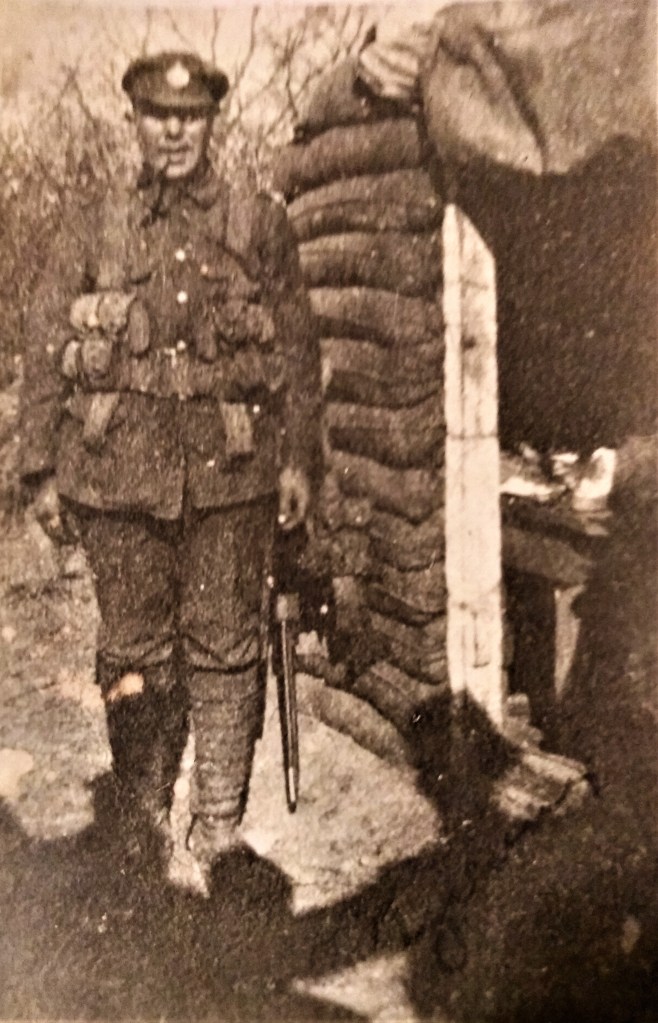
Some said John Riley was an intimidating character, but I never found him so. Yes, after a drink or two he could get a bit lairy, but I knew how to handle him. I suppose I had a bit of insight into what he had been through.

I don’t think anyone came back from the war the same person they had been before it. I’d argue with anyone who said they hadn’t known fear, hadn’t seen sights that made their stomach churn, done things that haunted them.

John Riley had known a fear and a horror the like of which few experienced and the only way to blot it out was to drink.

Aged just twenty, John had left the safety of a job as a storeman in the Works to join the army and have an adventure. Mostly all John saw were the bowels of the earth, like a rat in a sewer.

John liked to drink and he liked to gamble. His life was one big gamble. Would he be blown to pieces or buried alive? Would it happen today or tomorrow? The odds weren’t good.

DSC07150 - Copy

The facts …

John had little time for military protocol, he was outspoken and insubordinate and for this he was awarded Field Punishment No. 1. Sounds pretty innocuous, doesn’t it, but it was a torture metred out to rebels, those who wouldn’t abide by regulations. It was used to set an example to others who baulked at military discipline.

In September 1917 John went missing. He was absent while on active service for 34 hours and 55 minutes, and was charged with breaking out of camp at 9.30 pm on September 14 and breaking back in at 8.55 am on September 16. His punishment was to forfeit three days pay and 14 days Field Punishment No. 1.

So, what was Field Punishment No 1? The soldier found guilty was placed in fetters and handcuffs (sometimes spread eagled in a form called ‘crucifixion’) and tied to a fixed object such as a gun wheel or fence post, for one hour in the morning and one hour in the afternoon. Although this punishment was supposed to take place behind the front line in a field punishment camp, it was sometimes applied within range of enemy fire. When a unit was on the move, the unit itself would administer the punishment.

It wasn’t the first time John had been so punished. In September 1915 he had been ‘awarded’ as if it was an honour, 96 hours Field Punishment No 2 for “when on active service missing 8 am parade.” Field Punishment No 2 was a lesser punishment and involved the prisoner being placed in fetters and handcuffs, but not attached to a fixed object. Both sentences included hard labour.

In the summer of 1918, he was sentenced to 7 days Field Punishment No 1 for ‘misconduct’ on 24 August and on 31 August he received a further 7 days Field Punishment No 1 for leaving the lines without leave and missing a Medical Board as a consequence.

And a final insult, 12 days after the guns were silenced, John was demoted to Private by his Commanding Officer for “Neglect of duty.”

John’s audacious and fearless attitude, the qualities that made him a good tunneller, were the very characteristics that frustrated his Commanding Officers.

No one was more surprised than John when he survived the war and returned to the same job in the Works that he had left behind in 1914.

Did he enjoy the security, the safety, the daily routine? Surely, he didn’t miss the claustrophobia of the tunnels.

When John enlisted it was for three years or the duration of the war. It turned out to be a life sentence.

This image has an empty alt attribute; its file name is cemetery-view-3.jpg

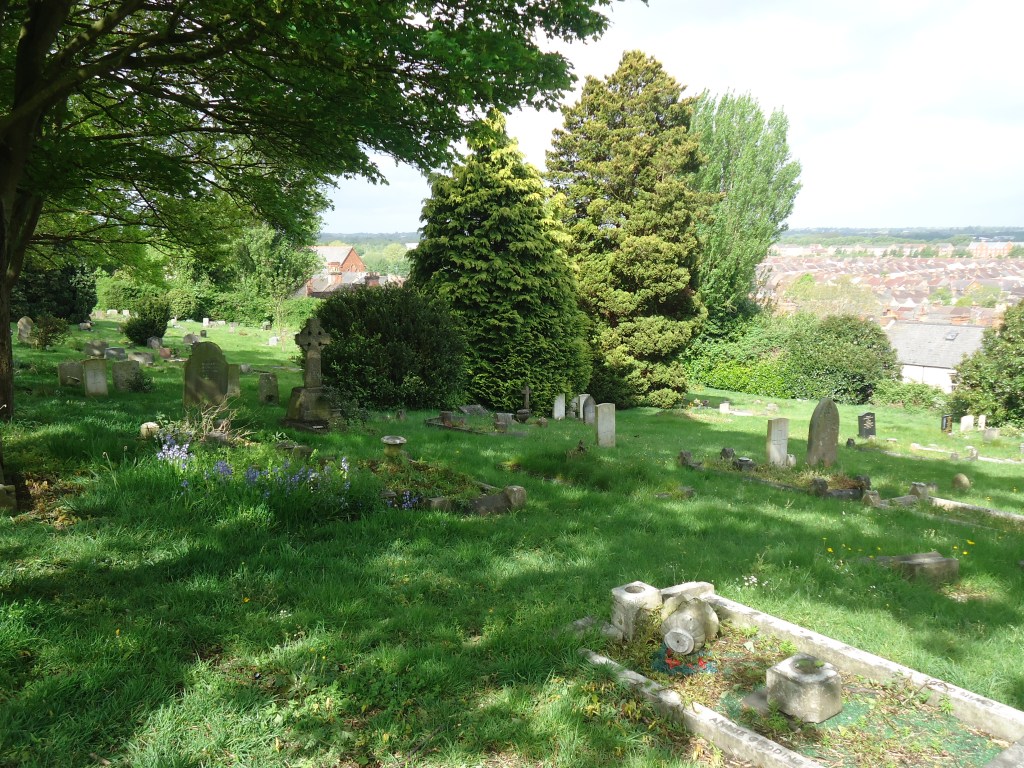
View across Section C where Edwin John Riley is buried.

(Edwin) John Riley was born c1895 in Rodborough, Gloucestershire, the only one of John and Sarah Jane’s three children to survive to adulthood. By 1901 the family had moved to 11 Folkestone Road, where John’s father worked as a builders’ plumber.

As a sixteen-year-old John worked as a fishmonger but by 1913 he had secured a job as Storeman in the Works

John enlisted in the 1st Battn Grenadier Guards at Caterham on December 19, 1914, aged 20 years and 34 days. His military records reveal that following eight months service at home John joined the Expeditionary Force in France from August 11, 1915 until January 10, 1918. By May 1916 John was attached to the 177th Tunnelling Coy RE (Permanent) Authy. For more information about the work of the tunnelling companies and the 177th see https://en.wikipedia.org/wiki/177th_Tunnelling_Company.

He married Daisy Sweeper in 1919. John was discharged on demobilization on March 31, 1920 and their daughter Stella was born in 1922. A second daughter Jose was born in 1927.

In 1939 John was working as a Stores’ Issuer in the Railway Works and living in Harcourt Road, Gorse Hill with Daisy and their two daughters Stella and Jose.

Edwin John Riley died in October 1945 and was buried in plot C1678 on October 16.

cemetery view

Frank Nutbeem – St. John Brigade Superintendent

Frank Nutbeem was born in Wroughton in 1895 the youngest son of Robert William and Mary Nutbeem. By the time of the 1911 census Frank and his two brothers were living with their widowed mother at 24 Shelley Street. All three young men were employed in the Works, Frederick 20 as a Coach Finisher; Claude 17 as a Brass Finisher and Frank 16 as a Screwing Machine boy.

Frank had begun work as a 15 year old machine boy on August 8, 1910 at a daily rate of one shilling and two pennies. He would remain working in the Machine Shop (No 15) his entire working life, except for his service in the RAMC during the First World War.

Mr G. Culling, chairman of the GWR Swindon Division of the St. John Ambulance Association stated that the tragedy of this accident was one with which, ‘had it been required of him, he could have so efficiently dealt.’

Fatal Accident in Swindon GWR Works

Death of Mr F. Nutbeem: Ambulance Stalwart

A verdict of “Accidental death” was returned by Mr. Harold Dale, the Wilts Coroner, at the inquest at Gorse Hill Police Station, Swindon, on Tuesday, on Mr Frank Nutbeem (45), of 61 Grosvenor-road, Swindon, who was killed instantly when he was drawn into a machine while at work in the Swindon GWR works on Saturday morning.

Evidence of identification was given by his brother, Claude Nutbeem, who said his brother had been in good mental and physical health before the accident.

Fractured Skull

Dr. Frumin, GWR Medical Fund, said that he was called to No 15 Shop in the GWR works about 11.10 a.m. when he found Nutbeem lying entangled in a machine. His head and face was crushed and his body was acutely bent. He was dead.

His injuries were a severely crushed dome, and fractured skull in front and behind.

Samuel John Owen, Highworth-road, Stratton St. Margaret, a machine foreman in No. 15 Shop, said that Nutbeem, who was a chargeman machinist, had been working a Holroyd four spindle axle-box boring machine for the past 18 months. He had complete charge of the machine.

Owen said that about 10.55 on Saturday morning he was told that Nutbeem was caught in his machine, so he telephoned from his office for ambulance men. A doctor was called, and soon arrived.

At the scene of the accident he saw Nutbeem had been carried into his machine.

He was on his back, and his head was underneath the “bar.” He appeared then to be dead.

Nutbeem was wearing a warehouse jacket of a grey coarse canvas material. These coats were long, and were worn by all the machinists, though it was not compulsory. The costs were bought from a private concern by the men themselves.

Nutbeem’s coat was found round the “bar,” which had a protruding cutter.

Heard a Shout

Stephen John Hunt, a machinist, of 15, Alfred-street, Swindon, said that he worked by Nutbeem.

On Saturday morning he heard a shout, looked up, and saw Nutbeem was in the machine. He rushed round, and stopped the machine, when he found that Mr. Nutbeem had become entangled.

Regret and sympathy was extended to the relations by Mr. Ray Hobbs, representing the NUR (Swindon branch). Mr Hobbs paid high tribute to Mr. Nutbeem for his work in connection with the GWR No. 3 Division of the St. John Ambulance Brigade.

Mr Dale said that it was an unfortunate case in which a very good worker who was thoroughly used to his machine, had been accidentally caught in it.

Mr. Nutbeem, who was married with a family, was a prominent St. John Ambulance Brigade worker. During the last war he was a sergeant in the RAMC and was attached to the Swindon Unit of the Field Ambulance.

An Appreciation

Mr G. Culling, chairman of the GWR Swindon Division of the St. John Ambulance Association writes:

By the death of Mr Frank Nutbeem, the GWR Swindon Division of the St. John Ambulance Association has suffered a great loss.

Qualifying for his first ambulance certificate in 1912, he served during the last war with the Swindon unit of the Field Ambulance of the RAMC, attaining the rank of sergeant. Upon the formation of the Old Comrades Association he became a popular member and retained his membership until his death.

Upon returning to civil life he became closely associated with those who at the time were organising the local division of the St. John Ambulance Brigade and was quickly promoted to the ranks of Sergeant, Ambulance Officer and Brigade Superintendent – a position he held until his retirement from that body a few years ago.

Frank held a remarkable record in competitions and for some years captained teams which were successful both in local contests and those organised by the GWR Company, and his Swindon team has on two occasions been one of the representative teams of the Company in the inter-railway annual competitions in London. He was leader in 1928 of the local Great Western team, who succeeded at Paddington for the first time in winning the Directors’ Shield, and they won the same trophy again in 1936.

During the years 1932-1936 he served on the Swindon Divisional Ambulance Committee, and shewed great ability in organising classes and instructing pupils in first aid, and was instructor to the Great Western Ladies’ Class when this was formed. These abilities were recognised by the local authorities, who since 1938 had utilised him as instructor at classes organised under the ARP scheme. He was also a keen worker in similar services organised by the GWR Company.

“Nutty,” as he was familiarly known to a wide circle of friends, has passed over – the victim of an incident of rare tragic intensity – in circumstances with which, had it been required of him, he could have so efficiently dealt. The esteem and regard in which he was held was shewn on Sunday morning, when over 150 ambulance men at the Bridge-street Institute joined with Dr. Hick and the Ambulance Committee in paying a silent tribute to his memory and as an expression of their deep sympathy for Mrs. Nutbeem and her two daughters in their loss.

He held gold awards for prolonged efficiency in first aid to the injured. Of him it can truly be said that his life was dedicated to the service of others, thus upholding the motto of the Order of St. John: “For the benefit of humanity.”

North Wilts Herald, Friday, 25 October, 1940.

Frank Nutbeem 45 years old, of 61 Grosvenor Road, died at the Great Western Works. The funeral took place on October 24, 1940 when he was buried in grave plot C1682.

You may be interested in reading about another St John Ambulance stalwart, Jack Dixon. It is more than likely that Jack and Frank Nutbeem served alongside each other, taking part in the various competitions at which both were so successful.

You can read about the life and times of Jack Dixon and the Dixon/Atwell family in the award winning book A Swindon Time Capsule – Working Class Life 1899-1984 by Graham Carter available from the Library Shop.

Season of mists Pt II

And still more, later flowers for the bees,
Until they think warm days will never cease,
For Summer has o’er-brimm’d their clammy cells.

To Autumn by John Keats

Hope you can join me from the warmth of your sitting room where the logs crackle in the hearth and the wind moans down the chimney. You might have expected the cemetery to be inaccessible after the deluge yesterday, but I shall pull on my wellington boots and my raincoat and venture forth.

This is the final resting place of members of the Wall family, husband and wife William and Mary Ann, and their son Arthur Henry.

Arthur was born in 1899, one of William and Mary Ann’s six children of whom sadly only three sons survived childhood.  He grew up in Rodbourne living at addresses in Redcliffe Street, Drew Street, Linslade Street, Montague Street and Jennings Street.  William worked as a Boiler Maker in the railway factory and when young Arthur left school he followed him into the GWR Works and the same trade.

Following the outbreak of war in 1914 Arthur was keen to join up and enlisted in the 2nd Wiltshire Battalion on January 12, 1915.  He gave his age as 19.  He was in fact not yet 16, but recruiting officers were apt to turn a blind eye to a fresh faced, eager young volunteer.  He was posted to France on June 1 where his age was quickly detected and on July 7, 1915 he was sent back to England as being ‘under age and physically unfit for service at the front.’  He spent the following year in service on the home front before returning to France in June 1916, this time in the 1st Hertfordshires.

His service records reveal that on May 12, 1918 he was gassed. His medical records state that his capacity was lessened by 40% and he was left with defective vision and suffering from headaches.  He was discharged on November 23, 1918 as being no longer physically fit for war service.  He received a pension of 11s and returned to Swindon where he married Mabel Pinnegar in 1919.  

Whether Arthur was able to return to work as a boiler maker remains unknown.  In 1920 he wrote to the Infantry Record Office asking if he was entitled to anything under Army Order 325/19 concerning the Territorial extra allowances.  He received this reply:

‘I regret to inform you that you are not entitled to any extra pay or allowances under Army Order 325 of 1919 as you were discharged on 23rd November, 1918. The increase of pay authorised under the Army Order in question was only granted from 1st July, 1919 to soldiers who were actually serving on the date of the order, viz 13th September 1919.

Arthur died on May 22, 1922 aged just 23 years old. Have you noticed the date of death of Arthur and his father William? You can read more about the sad event here.

But for now I think I shall quicken my step and head off home as the rain clouds are gathering again. See you tomorrow to continue our virtual tour of Radnor Street Cemetery.

Clara Ada Rumming and an unmarked grave

Distressing Accident – On Monday an inquest was held at the Castle inn, Swindon, on the body of Clara Ada, aged 15, daughter of John Rumming, 4, Dover-street, New Swindon, striker in the Great Western Railway Works. The evidence went to show that the mother left the deceased at home with other children about eleven o’clock on the 27th of October. About four o’clock the deceased must (as she stated to a neighbour) have prepared to clean up the grate, when she became giddy. On recovering she found her clothes in flames, and having unsuccessfully attempted to extinguish them under a water tap, ran out, when they were put out by some neighbours, who, with oil dressed the burns she had sustained. Dr. Howse attended the deceased, but she died on Sunday last from exhaustion, consequent upon the injuries received. All the lower parts of the body were burnt more or less. The jury returned a verdict of “Accidental death.”

Trowbridge Chronicle, Saturday, November 12, 1881.

Ada was buried on November 9, 1881 only the 56th burial in the new cemetery. She was buried in an unmarked public grave, plot A460 where she lay alone for more than 20 years. In 1902 Elizabeth Painter, a 52 year old widow from Ponting Street was buried with her in this public grave and in 1916 they were joined by Walter William Palmer.

Walter William Palmer joined the Coldstream Guards, later transfering to the Grenadier Guards and served from 1894 for 12 years. As a former soldier Walter was called up as a reservist at the outbreak of the Great War. He enlisted with his old regiment on September 12, 1914 and left for France as part of the Expeditionary Force on November 11.

In 1917 Major General Sir Fabian Ware founded the Imperial War Graves Commission (now known as the Commonwealth War Graves Commission) and a programme of installing a headstone on the graves of the war dead was begun. Walter William Palmer had died as a result of his military service and was awarded an official headstone in recognition of his sacrifice.

Unfortunately, the names of those buried with him in the public grave are not recorded on this headstone, but if you visit the grave of Walter William Palmer please spare a thought for young Clara Ada Rumming (and Elizabeth Painter) who are buried with him.