William James Knee – newsagent and tobacconist

How good are you at dating photographs? This one is thought to have been taken around 1920. I have been unable to discover any details about this photograph taken outside W.J. Knee’s shop in Emlyn Square. What clues are there in the fashions? The girl at the centre of the group is holding a photograph – is this someone who has recently died or someone who has left Swindon to work abroad? And finally, is this a gathering of the Knee family?

The following two stories may help us date this photograph.

Postcard reproduction

William James Knee was the eldest of Arthur and Eliza Knee’s large family of 10 children. William was born in Melksham but by the time of the 1891 census the family had moved to Medgbury Road, Swindon where Arthur was employed as a Rivetter in the Works.

William also entered the GWR and in 1911 he was working as a labourer in Newport, Monmouthshire where he was lodging with a relative by the name of John Knee. That same year he left Newport to return to Swindon where he subsequently opened a newsagents shop on the corner of London Street and Emlyn Square.

Death of Mr W.J. Knee -The death has taken place at the Old Manor House, Salisbury, of Mr William James Knee, son of Mr and Mrs Arthur Knee, of 78 Medgbury Road, Swindon. Mr Knee, who was in his 46th year, carried on business as a newsagent in Emlyn square for a number of years. He had a breakdown in health and went to Salisbury for treatment of an internal complaint. He was well known in Swindon and was popular with many GWR employees. A telegram announcing his death was received this morning.

North Wilts Herald Friday January 10, 1930.

William was buried on January 13, 1930 in grave plot D494. His mother Eliza died in 1937 and his father Arthur in 1940 and both were buried with him.

The second story is that of William’s younger brother Dennis Arthur Knee.

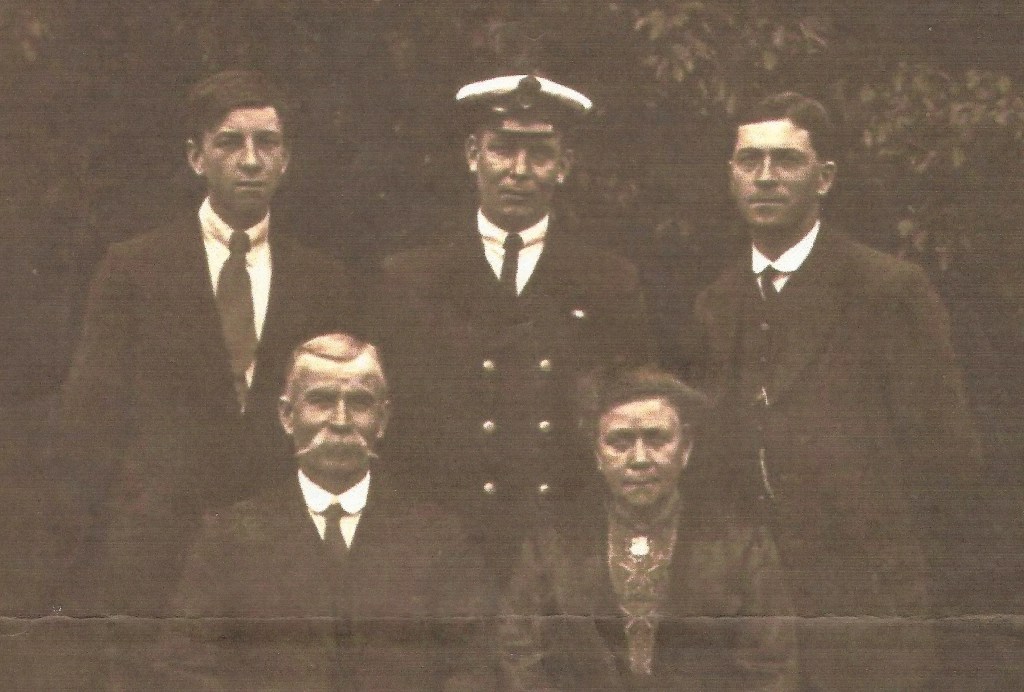
Dennis was born in 1895 after the family arrived in Swindon, and at the age of 16 he was working as a Rivetter Carrier in the Works. But like so many men of his generation, Dennis would leave the Works to serve in the First World War. Unfortunately, Dennis’s attestation papers do not survive but we do know that in 1917 he was serving as a gunner with the Royal Marine Artillery on board HMS Vanguard. Dennis died on July 9, 1917 when the Vanguard sunk following a series of internal explosions while on a routine patrol in Scapa Flow. He was 22 years old and one of 843 out of 845 men who died that night.

Acting Bombardier Dennis Knee is remembered on the Portsmouth Naval Memorial.

Please get in touch if you have any further information about this photograph and/or the Knee family.
The Foyle and Finney families

The Radnor Street cemetery volunteers are a versatile group. Not only do they care for the CWGC graves and identify others with a military connection, but they mow and hoe, weed and clean and also locate lost graves. Bex recently helped Liz, a visitor to Swindon, to find her great grandparents grave and in doing so revealed yet another fascinating Swindon family history.

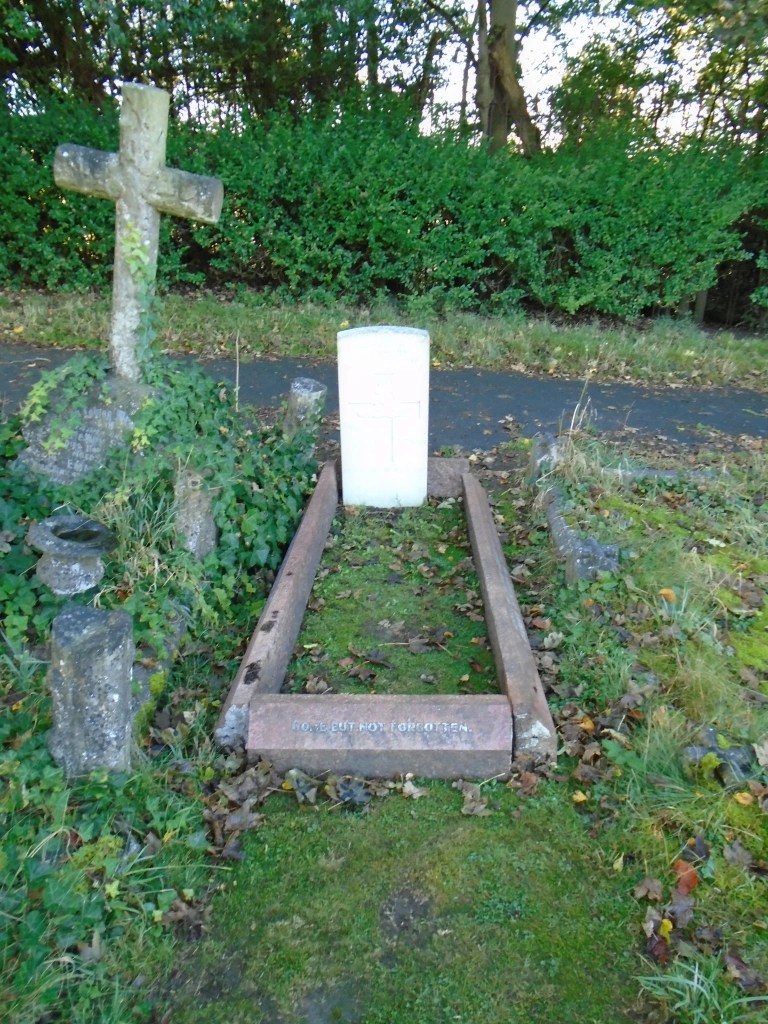
Liz helpfully had the cemetery paperwork concerning two family graves – plots D937 and D938. These proved to be the graves of two brothers, William John and James Henry Foyle with their respective wives, Margaret Ann and Mary Jane. The brothers were two of four sons born to Isaac and Rebecca Foyle. All four sons were born and raised in Swindon and all four followed their father Isaac, a labourer in the GWR iron works, into the railway factory; William as a boiler smith, James a brass finisher, George a railway clerk and Alfred an electrical fitter. William would eventually move to Wolverhampton, but following his death he was buried next to his brother James.

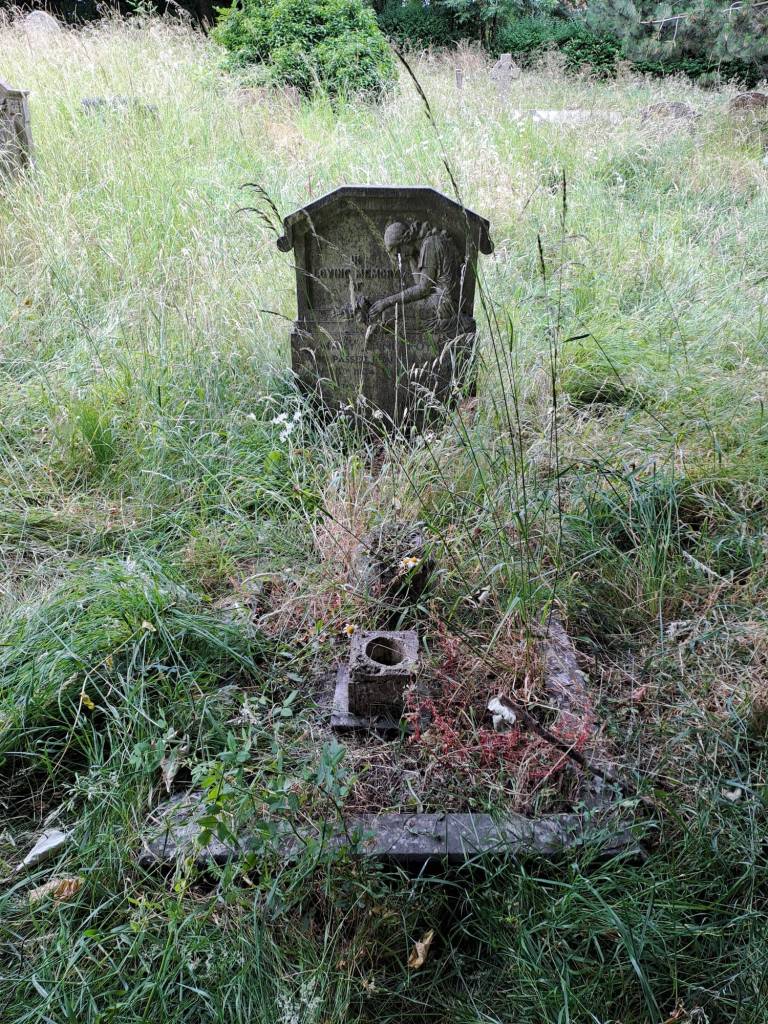
James’s grave with its elegant headstone was easy to locate. See below two before and after photographs taken by Bex.

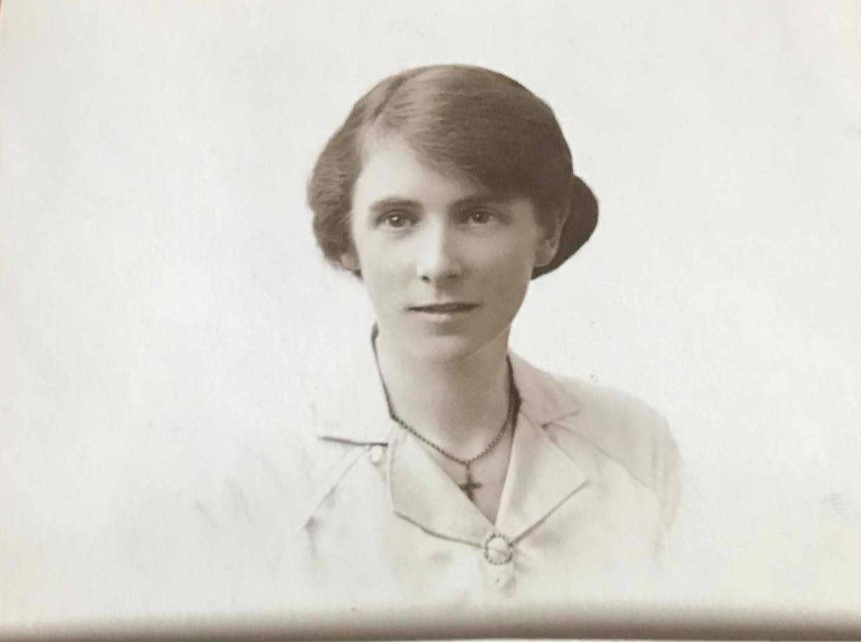
Liz was also keen to find other family graves, including those of Esther and Kate Finney. Research revealed that the two sisters were the daughters of William and Emma Finney.

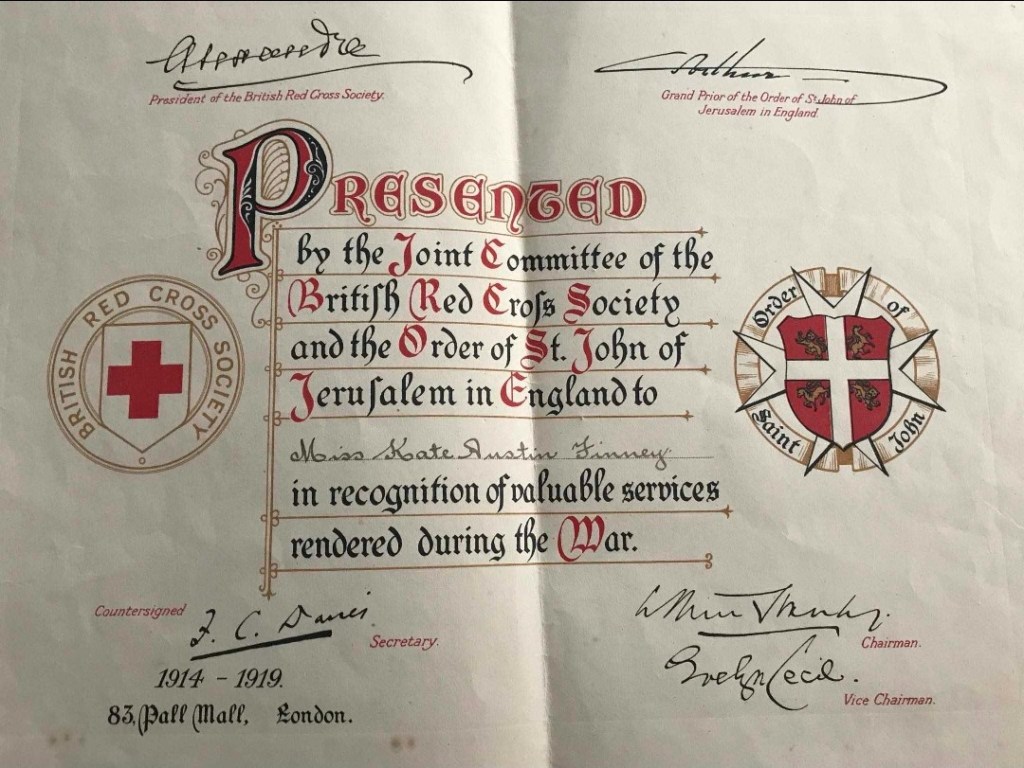
Esther and Kate both served as Red Cross nurses during WWI. Esther was a volunteer at the Red Cross Hospital In Taunton in 1917 while Kate stayed closer to home and served as a Ward Helper at the Red Cross Hospital in Stratton in 1918.

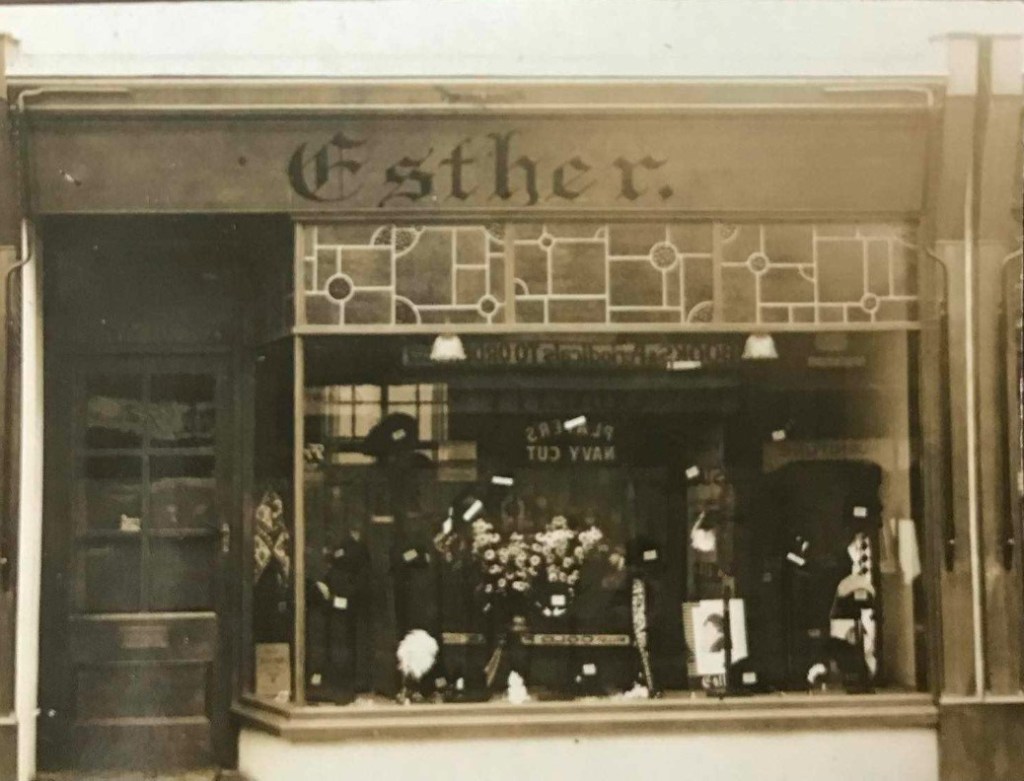
In 1939 Esther, Kate and their brother William lived with their widowed mother at 11 Clifton Street. Esther is described as a Shopkeeper (Gown and Millinery) and Liz was able to provide a photograph of the shopfront.

Esther died in 1959 and Kate in 1970 and they are buried together in grave plot E8298 with their brother William who died in 1957.

The connection between the Foyle and Finney family is that Esther and Kate’s brother John Marshall Finney, married James and Mary Jane Foyle’s daughter Elsie Gladys Foyle.

Hopefully Liz will keep in touch with Bex and even more family stories will emerge.

War Graves Week – Sapper Percy Harold Comley

Mary Elizabeth Hutchings and Percy Harold Comley are pictured (middle row right) at a family wedding in 1914.

Saturday May 11 sees the launch of the annual CWGC War Graves Week 2024. Radnor Street Cemetery friend and colleague Mark Sutton spent a lifetime devoted to remembering those who served in WWI.

Our thoughts today go out to those parents who lost a son, and in many tragic cases, more than one. But, Albert and Mary Ann Comley were not to know their youngest son had been killed in action.

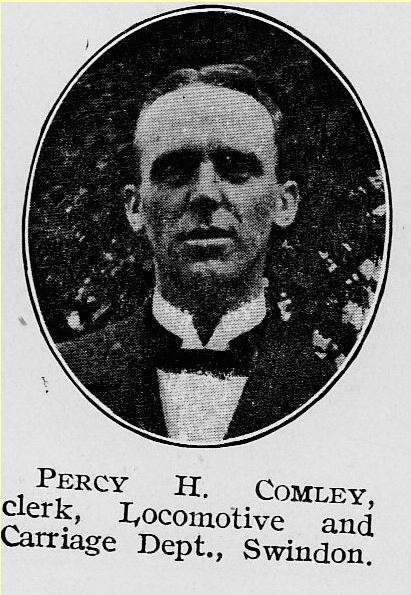
Percy Harold Comley was born on August 12, 1889 and began work as a 14 year old clerk in the GWR Works. He enlisted on November 24, 1915 and was put in the Army Reserve. He was mobilized on January 5, 1917, a Sapper in the Royal Engineers serving with the 2nd Light Railway Operating Coy.

He had married Mary Elizabeth Hutchings on October 26, 1916 at Christ Church. Less than a year later he was dead.

The charred remains of a telegram survive with his military records. It reads:

“Regret to inform you Officer Commanding 2 Canadian Casualty Clearing Station France reports 1st October 218815 PH Comley RE 1st October shell wound abdomen.”

Percy Harold Comley is buried in Lijssenthoek Military Cemetery Poperinge, Belgium. Mary Elizabeth never remarried. She died on February 4, 1947 at Weston-super-Mare.

Today our volunteers continue Mark’s work, caring for the Commonwealth War Graves headstones and recognising those remembered on private, family graves. To date they have noted 50 such fallen heroes. For more information about the War Graves Week visit the Commonwealth War Graves Commission website.

Mary Ann Comley died at her home 8 Ashford Road and was buried on May 21, 1915 in grave plot E8044. Her husband, Albert Comley, a watchman, died at Guys Hospital, London and was buried with her on August 15, 1916.

Rodbourne Remembers

In 2018 the Rodbourne Community History Group hosted Rodbourne Remembers, a joint project with St. Augustine’s Church, to honour the Rodbourne men who died in the First World War.

Of those who returned to Rodbourne after the war many suffered from poor health and died as a result of their military service. These are the stories of some of those men now buried in Radnor Street Cemetery, their graves attended to by our CWGC volunteers, the Eyes On Hands On team.

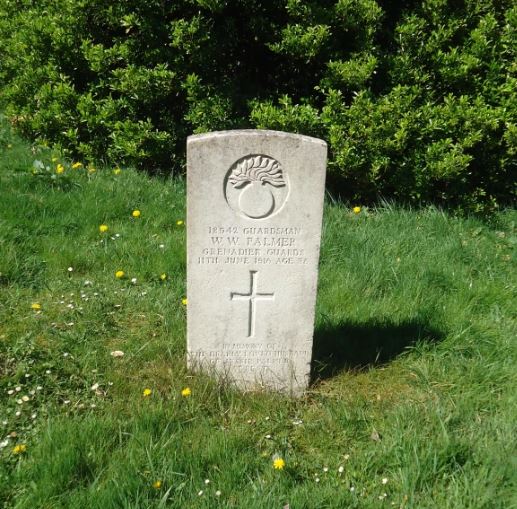
Walter William Palmer – Tell Them of Us

Charles Normandale and Walter George David Hughes

William Jasper Hall – DSM

William Jasper Hall pictured in uniform

William James Pitt – no longer physically fit to serve

The Rodbourne Community History Group meets at Even Swindon Community Centre, Jennings Street on the last Wednesday of the month. Find out more here

William and Maud Brotheridge

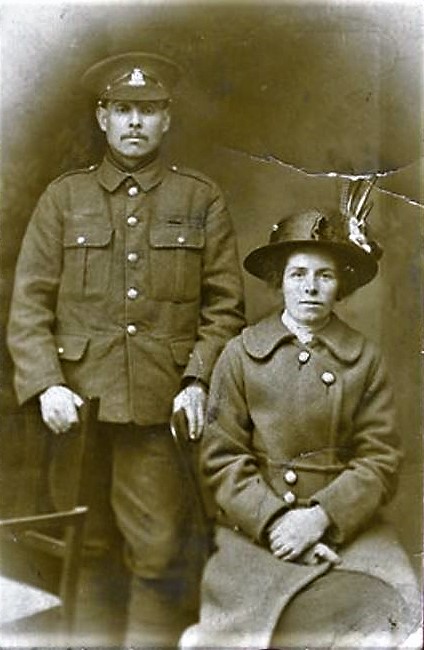
Could this be a wedding photograph of William and Maud? She looks very young; only 20 years old at the time of their marriage in 1893. William was 8 years older and had already seen service in the Warwickshire Regiment.

We find them next on the 1901 census living at Wroughton Road. William is working as a ‘Collector and Salesman for Singer Sewing Machines.’ The family had moved around with the elder children’s birthplaces recorded as Cheltenham and Fairford.

By 1911 they were living in Ashton Keynes with further children born in Swindon, Faringdon, Stanford in the Vale and Ashton Keynes. By then Maud had had 10 children, 9 of whom were still living. At least 3 more sons were born between 1911 and 1915 but only one survived to adulthood.

Another baby, Thomas Reginald Brotheridge, was born in 1915 and died aged just 7 months old when the family were living at 90 Montagu Street. By then war was raging. William and Maud’s eldest son, also named William, had joined his father’s old regiment, the Warwickshires. On May 27, 1918 he was on board the Leasowe Castle, an armed troop transport ship, when it was torpedoed and sank off the coast of Alexandria. A total of 83 officers and men were drowned that day, including 21 year old William. He is remembered on the Chatby Memorial in Egypt. He left a small sum of money, including a War Gratuity of £17, to his mother, as previously agreed with his father.

William and Maud were just one of many Rodbourne couples who lost a loved one during that awful conflict.

Montagu Street, Rodbourne

Maud died in February 1924 at 90 Montagu Street. She was 51 years old – no age to die, we would say now. She had given birth to at least 13 children and along with the babies she lost she also lost a son to war.

She was buried in Section Lower C grave plot C3953 where in 1934 her daughter Elizabeth Maud Mary joined her. Elizabeth was 38 years old and unmarried.

William Brotheridge died at 86 Montagu Street in November 1941. He was laid to rest with his wife and daughter.

Minnie Louisa Day – a soldier’s wife

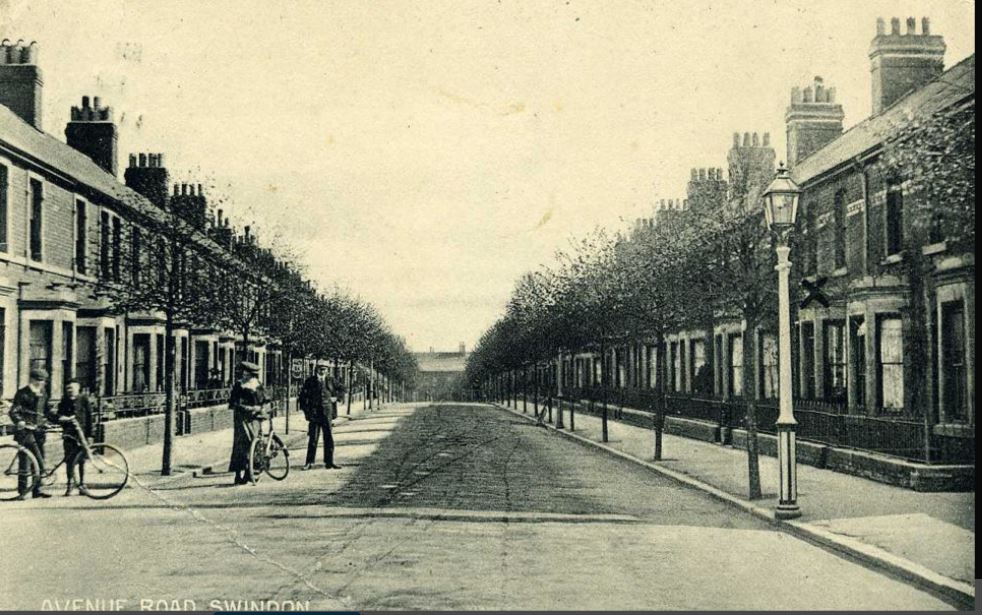
Every cemetery story is a recognition, a celebration of a life, but sometimes that story is one so sad it is difficult to write and to read. Such is the story of Minnie Louisa Roach whose future looked promising when she was born in 1874. Her father John Roach was an erector employed in the Works, her mother was Louisa Roach and she had a brother William born in 1873. By the turn of the new century the family were living in Avenue Road.

Image published courtesy of Swindon Museum and Art Gallery

Minnie married Frederick William Gilchrist, a railway clerk, at the Wesleyan Chapel Bath Road on March 23, 1901. He was 38 years old and she was 26. They began married life at 39 Dean Street, but sadly less than 3 years later Frederick died.

A Well Known Volunteer

For 7 Years Bugle-Major

The death took place on Thursday, Dec. 31st at his residence, 4 Lethbridge-road, Swindon, of Mr F.W. Gilchrist, a well-known Swindonian, who has been a great sufferer for the past two years or more, his illness being induced by the after effects of influenza. He has been taken in
the prime of life – he was only 40 years of age, – and leaves a sorrowing widow, but no children. Deceased, who was the son of Capt. G. Gilchrist, of the Royal Artillery, was for many years employed in the Drawing Office, GWR Works, Swindon. But he was best known to the public as a prominent member of the Wilts Rifle Volunteers. He was a man of fine physique and good soldierly bearing. He was a member of the F and G Companies for 27 years, during 7 of which he held the position of bugle-major.

Extracts from The Swindon Advertiser, Friday, January 8, 1904.

Minnie moved back into 45 Avenue Road where she lived with her widowed mother. In 1913 she married again. Her second husband was Frederick Charles James Perry Day, the illegitimate son of Kate Day. Frederick was a coach body maker in the GWR Works and had spent most of his life living with Charles and Elizabeth Davies, presumably relatives, at 101 Stafford Street. At the time of her second marriage Minnie was 39 and Frederick 34. They should have been looking forward to a long and financially secure marriage, but of course a war was just around the corner and Frederick enlisted.

Perhaps the fear and anxiety proved too much for Minnie. She died in 1917, a patient in the Devizes Asylum.

A Soldier’s Wife’s Death – The death took place on Tuesday, at the age of 42 years, of Minnie Louisa Day, wife of Corporal Day, RFA now on active service at Salonika.

Deceased was the only daughter of the late Mr John Roach, of 45, Avenue Road, Swindon, and leaves her husband, an only brother, and a widowed mother to mourn a heavy loss.

The funeral took place on Saturday at Swindon Cemetery amid many tokens of respect on the part of friends and neighbours.

Amongst the beautiful wreaths was the following – “With deep sympathy and in grateful remembrance of much kindness shown in 1907 – from Mrs L.A. Baugh – ‘Thy will be done.’”

The relatives of deceased desire to return sincere thanks for the many kind expressions of sympathy received in their sad bereavement.

North Wilts Herald, Friday, May 25, 1917.

Stafford Street

Minnie was buried in grave plot E7888 on May 19, 1917. The burial registers record her address as 101 Stafford Street, the home where Frederick grew up. She was buried with Charles Henry Davies who had died in 1904 and was later joined in 1919 by Elizabeth, his wife, the couple who had raised Frederick.

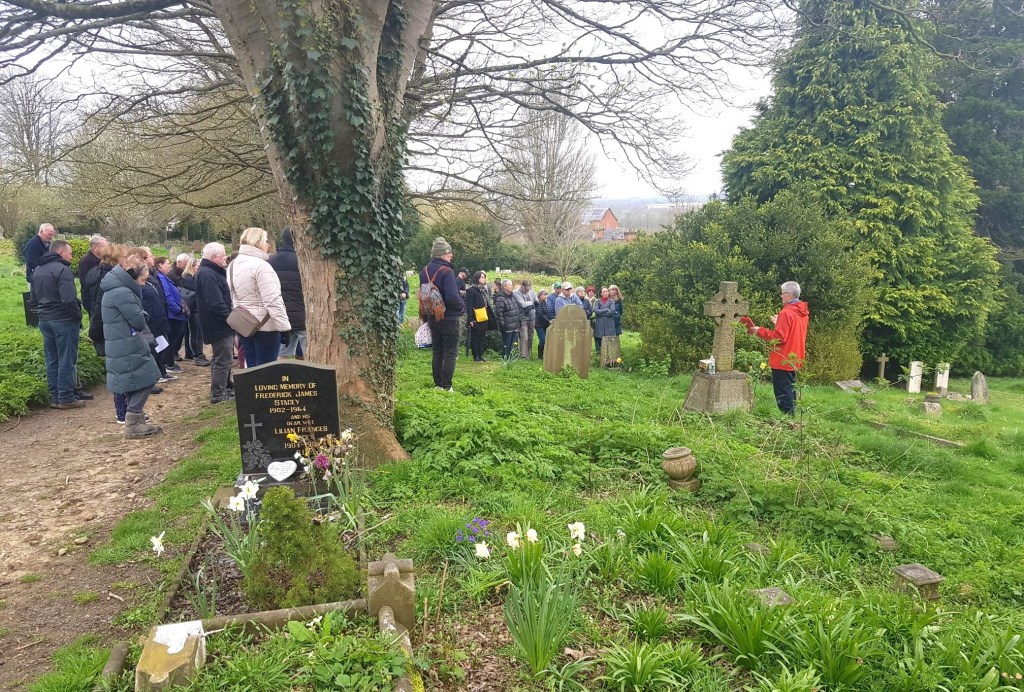
Guided cemetery walk

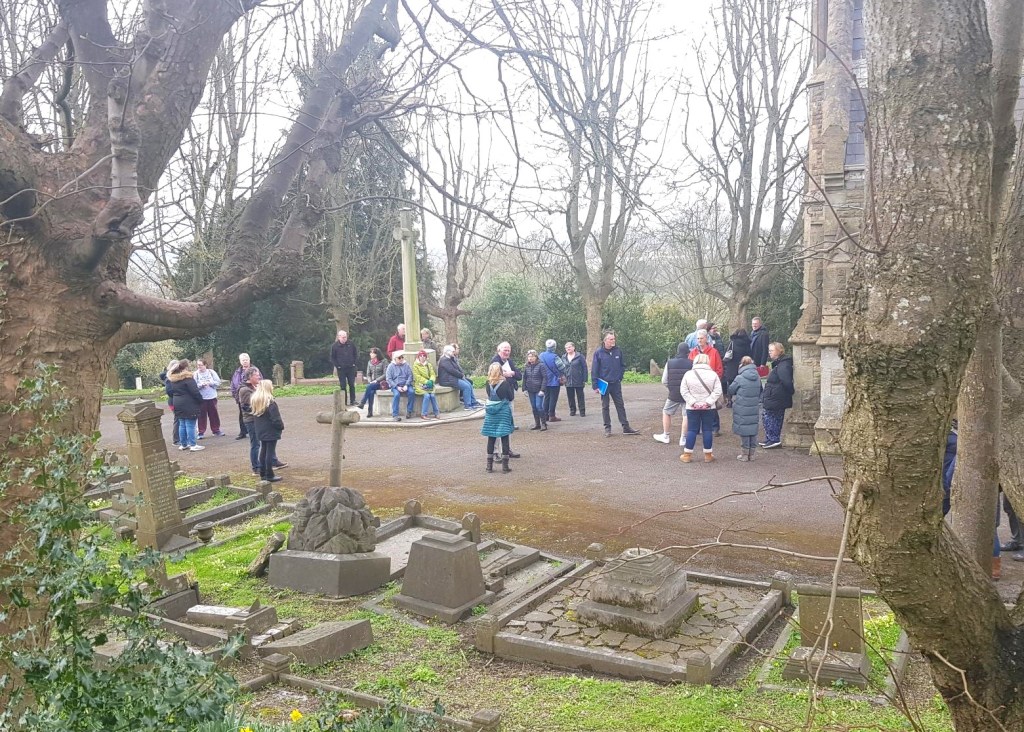
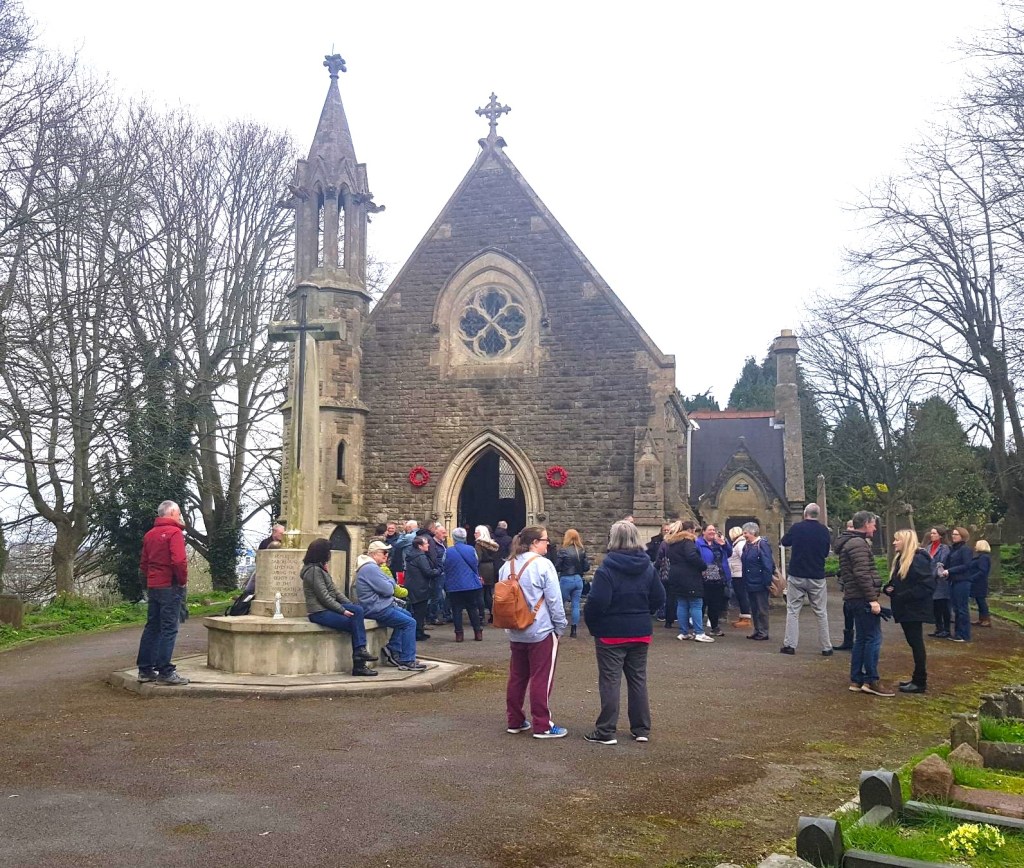
Many thanks to everyone who joined us for the first of this season’s walks. The weather was kind and the rain held off.

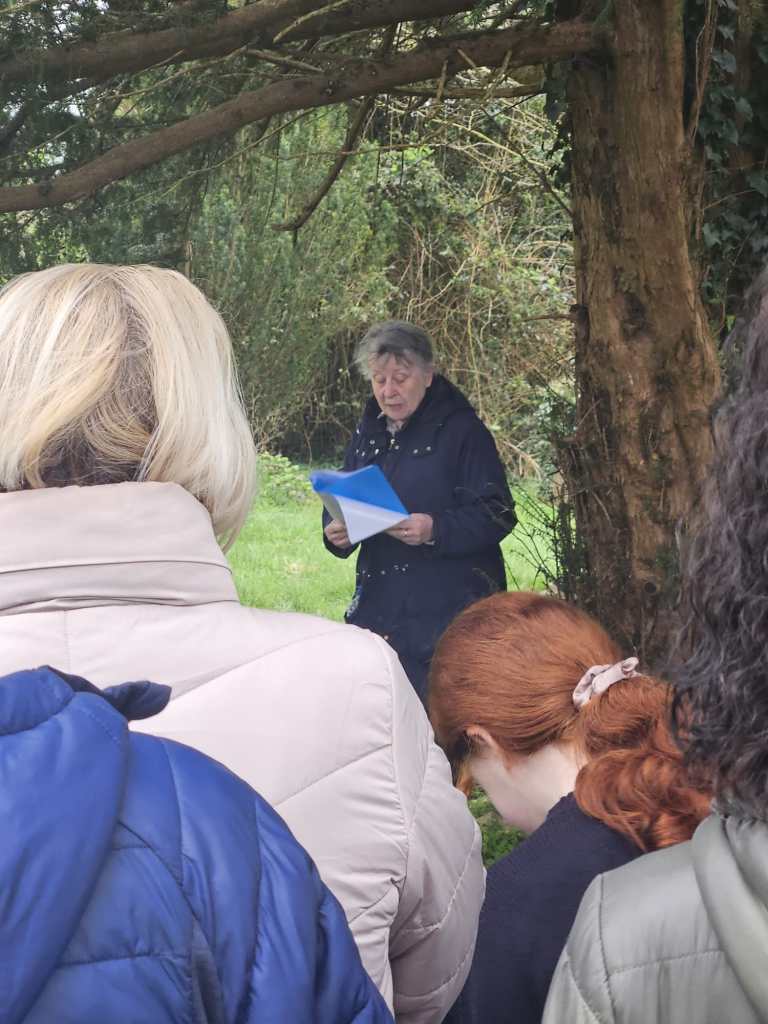
We were joined by members of the Menham family as Andy spoke about Swindon Town football legend Bob Menham. Kevin followed by telling us of the military career of his son Reginald Menham and reading a poignant letter taken from Mark Sutton‘s book Tell Them of Us.

Further talks included the stories of Frederick and Elizabeth Alley, Minnie Price, Ethelwyn May Collet, Elsie Wootten White and another sporting legend Scottish rugby player Dr. Charles Reid. Jon told us about the continuing work of the volunteers and introduced members of the team who give so much of their time to looking after the war graves and helping visitors find family graves.

There were lots of fascinating conversations as visitors shared their family history stories with us. It was lovely to meet Clare and I hope you found your family grave. I look forward to receiving your information and photographs to publish here.

Our next walk will take place on Sunday April 28. Meet at the chapel for 2 pm.

Private Francis James Gleed – Royal Army Medical Corps

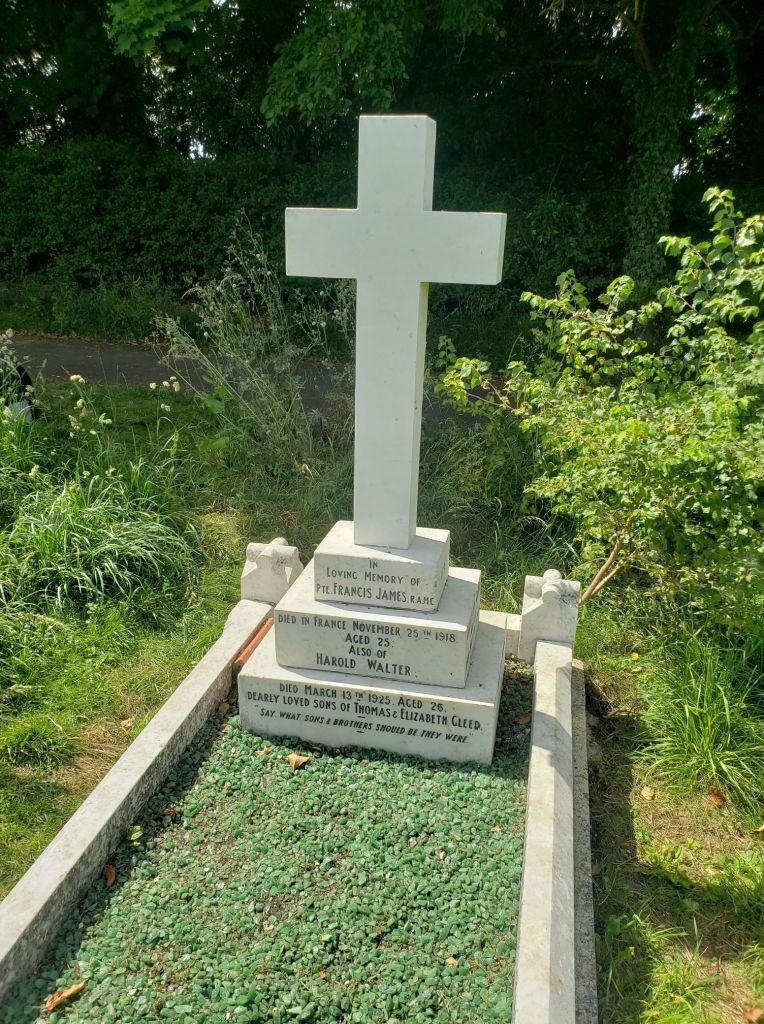
456089 Private Francis James Gleed of the Royal Army Medical Corps died on October 28, 1918. He was not killed in action, neither did he die from wounds or disease, but he did die as a direct result of his military service.

Francis James Gleed was born in 1893 the third of four sons of blacksmith striker Thomas Gleed and his wife Elizabeth. Unlike his two elder brothers, Francis did not follow his father into the railway works but instead took up a tailor’s apprenticeship.

Francis enlisted in Swindon on May 11, 1915 in the Royal Army Medical Corps and was posted with the Mediterranean Expeditionary Force on November 30, 1915. His military service would last for 3 years 199 days, most of it spent in Egypt. Francis continued to serve in the 231st F.A. before being transferred to France in May 1918. Three months later he was granted 14 days leave to the UK, the last time he would see his family in Swindon.

His medical notes detail the nature of his injury which occurred in March 1916 when he was loading an ambulance train in Minia Station, Egypt. He was working with a bearer party when he strained himself, causing a hernia. An operation was successfully performed, but Francis complained of a recurrence in October 1918.  After wearing a truss with unsuccessful results he was admitted to the 32 Casualty Clearing Station and then transferred to the 54 Casualty Station before being moved to the 7 Stationary Hospital where he died on October 28, 1918. His cause of death was an inguinal hernia caused by a weakening of the muscles in the lower abdomen.

Francis James Gleed was buried in Terlincthun British Cemetery, Wimille on the northern outskirts of Boulogne. The inscription on his headstone as submitted by his mother Elizabeth reads – Life’s Work Well Done Life’s Race Well Run Life’s Crown Well Won Now Comes Rest

In 1921 Thomas Gleed took receipt of his son’s 1914-1915 Star Medal followed a year later by his British War and Victory Medals.

On April 22, 1919 Francis’s personal effects were returned to his family. They were listed as follows:
Letters

2 religious books

Valet safety razor in case

Metal cig. Case

Pipe

2 titles

Purse

2 wallets

Photos

Note book

P. cards

Safety razor & blades in tin box

Defaced coin 5 cts coin ½

However, there was something of far more significance that Elizabeth wanted returned. She acknowledged receipt of the above mentioned items and wrote:

There is my sons 2 pairs of scissors one large and one small and a pen knife white handle – should be pleased if you could find it and send it on. Yours truly E. Gleed.

The scissors were possibly tools of his tailoring trade tangible reminders of the son she had lost and the career he had pursued at home in Swindon.

Francis James Gleed is remembered on the Gleed family headstone in Radnor Street Cemetery.

“Say what sons & brothers should be. They were.”

Charles and Annie Guley and their two soldier sons

Edward George Guley was born on January 25, 1895 and baptised at St. Paul’s Church, Swindon on July 7. He was the second son of railway carriage fitter Charles Guley and his wife Annie. In 1911, the last census taken before the outbreak of war in 1914, the family lived at 8 Beatrice Street, Gorse Hill. All three men in the family worked in the railway factory. Charles as a Railway Carriage Fitter, his eldest son Harold Charles Guley was 19 and employed as an Engine Fitter apprentice and part time student and Edward George Guley was 16 and a machine boy and part time student.

Both Charles and Annie’s boys enlisted – possibly together, and both served in Basra. Harold was nearly 24 years old, Edward was 20. Harold’s service records have survived but unfortunately Edward’s haven’t. Harold served in the Royal Army Service Corps and Edward in the 5th (Service) Battalion. Harold returned home to Swindon at the end of the war; Edward didn’t.

The First World War campaign in Mesopotamia (modern day Iraq) cost 85,000 British casualties, one of whom was Edward George Gulley, killed in action on March 29, 1917.

The 5th (Service) battalion were in action on the 25th January 1917 when they assaulted the Turkish front line, one flank of which rested on the Hai River which they had crossed only a month before. They took heavy casualties in this action. On the 25th of February they crossed the River Tigris and by the end of the month after hard marching they were 40 miles short of Baghdad. On the 10th March they made a night river crossing over the Diala River establishing a bridgehead and taking 120 prisoners in the process. The way to Baghdad was open and the battalion was the first to enter the city. At the end of March the battalion advanced on Turkish positions 35 miles north of Baghdad near Daltawa. They sustained heavy casualties in this attack. In April and May they continued the advance up the line of the River Adhaim with contact being made with the Russians operating from the Caspian Sea. They then took up defensive positions between the rivers Tigris and Adhaim, East of Samara. In early December they advanced towards Kara Tepe, with the battalion pursuing the Turks through Sakaltutan Pass. They paused at this point and ended the year reorganizing and training.

The Rifles Berkshire and Wiltshire Museum

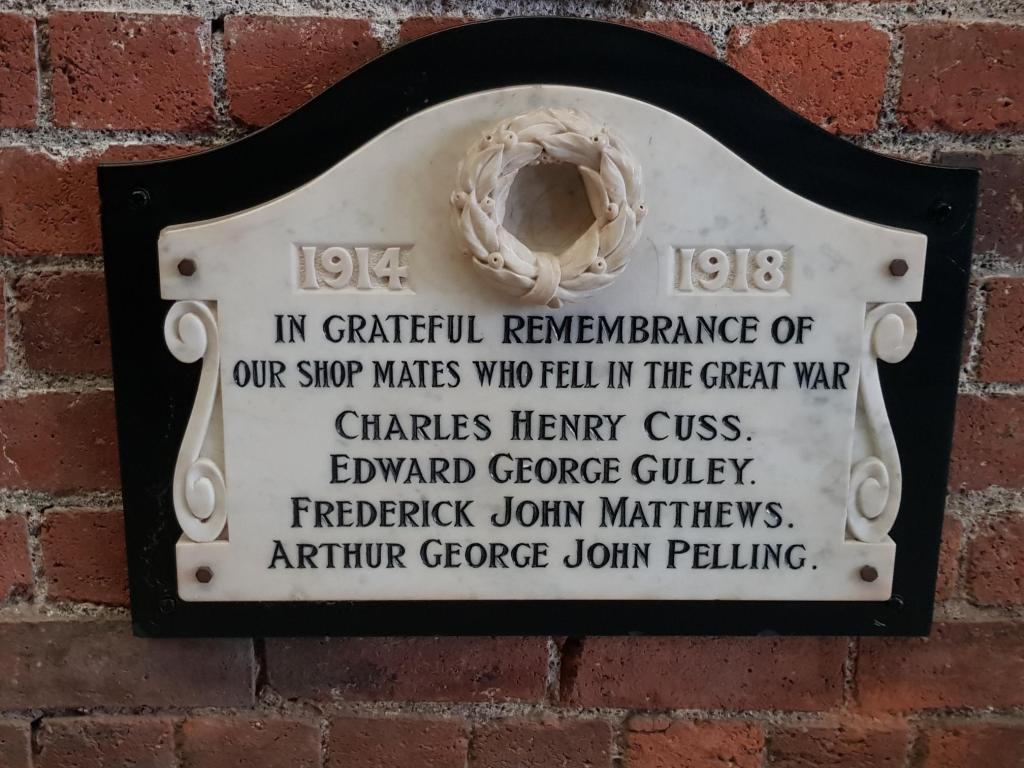
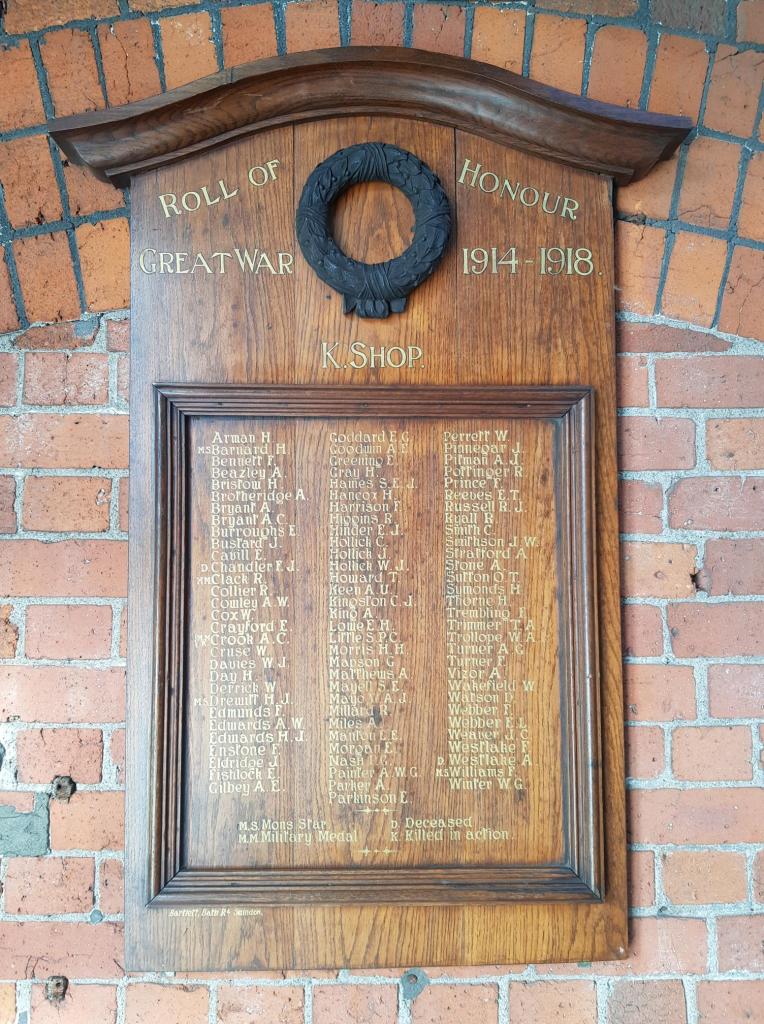
Edward has no known grave and is remembered on the Basra Memorial. He is also remembered on a plaque raised by his colleagues in the GWR Works, which now hangs in the STEAM – Museum of the Great Western Railway

Annie survived the war and the loss of her son, but what was survival like for her? Did parents ever recover from the loss of their boys? I doubt it. Her husband Charles was buried in Radnor Street Cemetery on January 5, 1928 in plot D245 where Annie joined him on June 20, 1933.

Railway Stories

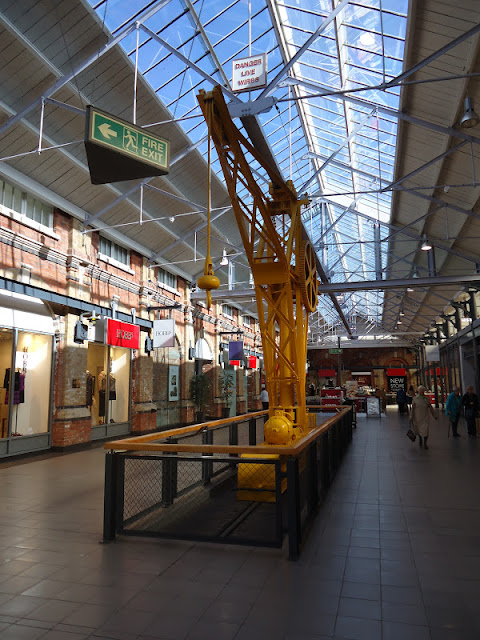
I’m having a rather expensive sandwich and a cup of tea (not many people drink tea now, I find it’s become an ‘old persons’ beverage) in a coffee bar which proudly boasts on the signage that it was ‘established 1999.’ It is situated in the former railway factory established slightly earlier – in 1843!

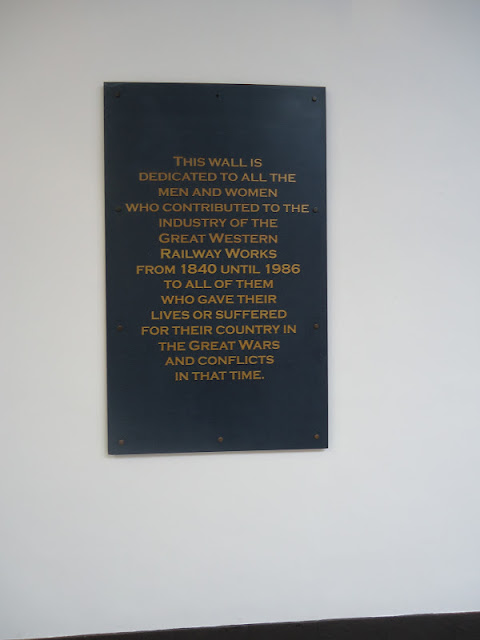
The model train has just done a circuit – a nod to the railway history of the McArthur Glen Designer Outlet Village. In all fairness there are plenty of reminders – machinery, overhead cranes and the war memorials to the railwaymen who gave their lives in two world wars.

There is still a generation of railwaymen around who can remember the Works when it closed in 1986 making 1,100 redundant. A far cry from the glory days of the 1920s when there were more than 14,000 on the payroll.

As I sit here enjoying my sandwich and (generous) mug of tea, listening to the hum of conversation around me, I think of all those men who spent a lifetime grafting within these walls.

You may like to read the stories of some of them – see below.

Some railway stories

Elias Isaac Webb – still painting at the age of 83

Luke Higgs – a first class engineman

Edwin Thomas Brittain – oldest foreman in the Works