Miss Jenner’s Bible and Tract Depot

The re-imagined story …

I hadn’t visited Miss Jenner’s shop for many years. I wasn’t even sure if it was still open or whether Miss Ellen had taken over the running of the business after her sister’s death.

As Sunday schoolteacher at the Railway Mission I’ve patronised Miss Jenner’s establishment on countless occasions, buying bibles and prayer books, scripture cards and presents for the children on prize giving day. Now that seems like another place, another time.

We have lost so many of our young men in the Great War. Members of our congregation who worked on the railways and in the GWR factory. Young boys, barely men; boys I taught in the schoolroom at the Railway Mission; boys I remember well.

And now that it’s all over, where is the solace. Sadly, I find it less and less in the word of God. What comfort can a text from Miss Jenner’s shop provide for a grieving mother, a bereaved wife, an orphaned child?

Miss Jenner died before the horror of war erupted. I decided against a visit to her shop today. Perhaps that has been lost as well.

remembrance 3

August, 1914

God said, “Men have forgotten Me:
The souls that sleep shall wake again,
And blinded eyes must learn to see.”

So since redemption comes through pain
He smote the earth with chastening rod,
And brought destruction’s lurid reign;

But where His desolation trod
The people in their agony
Despairing cried, “There is no God.”

Vera Brittain

The facts …

Sarah Ann and Ellen Mary Jenner were the daughters of William, a farmer and his wife Mary. Sarah Ann was born in Linley, Tisbury and her sister in Bremhill, Wiltshire. By 1871 the family had moved to Swindon where William farmed at Okus Farm.

Following William’s death in 1879, Sarah and her mother lived at 21 Victoria Street where Sarah opened her first stationery shop.

By 1891 the women were living at 12 North Street where Mary, Sarah Ann and her sister Ellen Mary described themselves as ‘Stationer & Bookseller.’

In 1901 they had moved to 29 Commercial Road. Sarah was described as head of the household, her occupation ‘Shopkeeper Books Tract Depot’. Her widowed mother, by then 75 years old, was described as a ‘retired farmer’ and Ellen as a ‘Tea Merchant.’

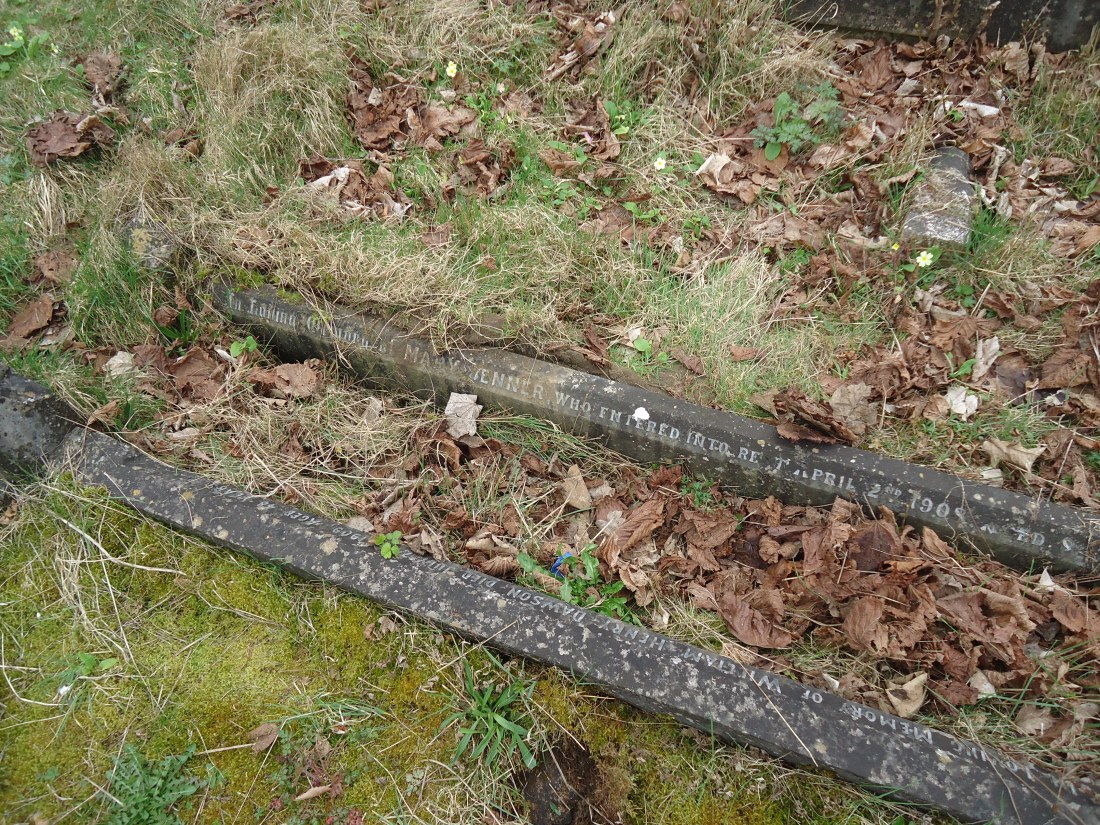
Mary Jenner died in 1908 and is buried in plot A2484. At the time of the 1911 census Sarah Ann and Ellen Mary are living at 14 Dowling Street. Sarah’s runs a Bible & Tract Depot while Ellen works as a ‘Dealer in Tea, Coffee, Cocoa etc.’

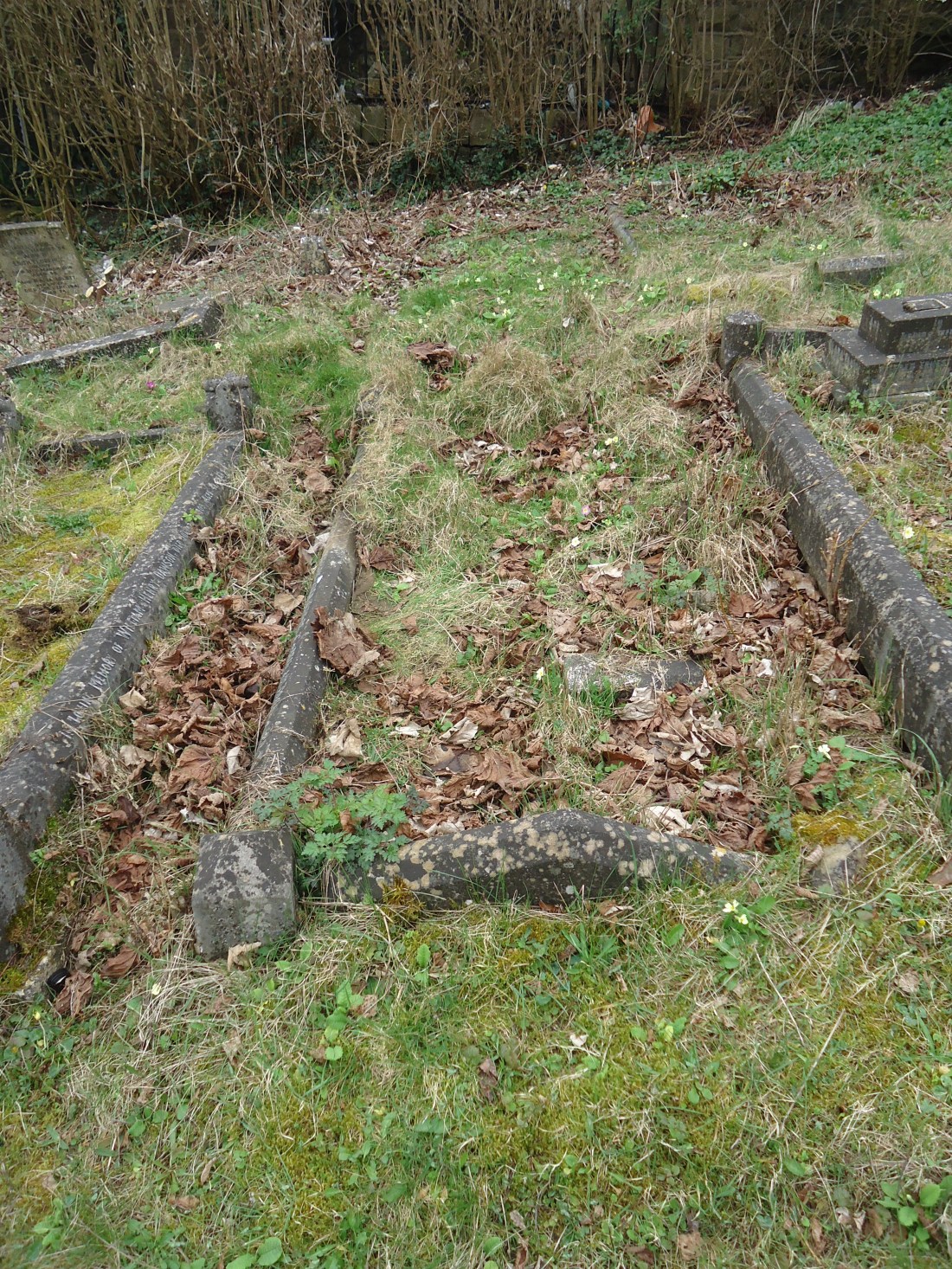
Sarah died in February 1913 and was buried with her mother in plot A2484 on March 1. Another sister, Annie Sophia Smith died in December 1930 and was buried in the same plot on January 1, 1931. Ellen Mary died in 1937 and was buried on March 20 with her mother and two sisters.

Mary Jenner

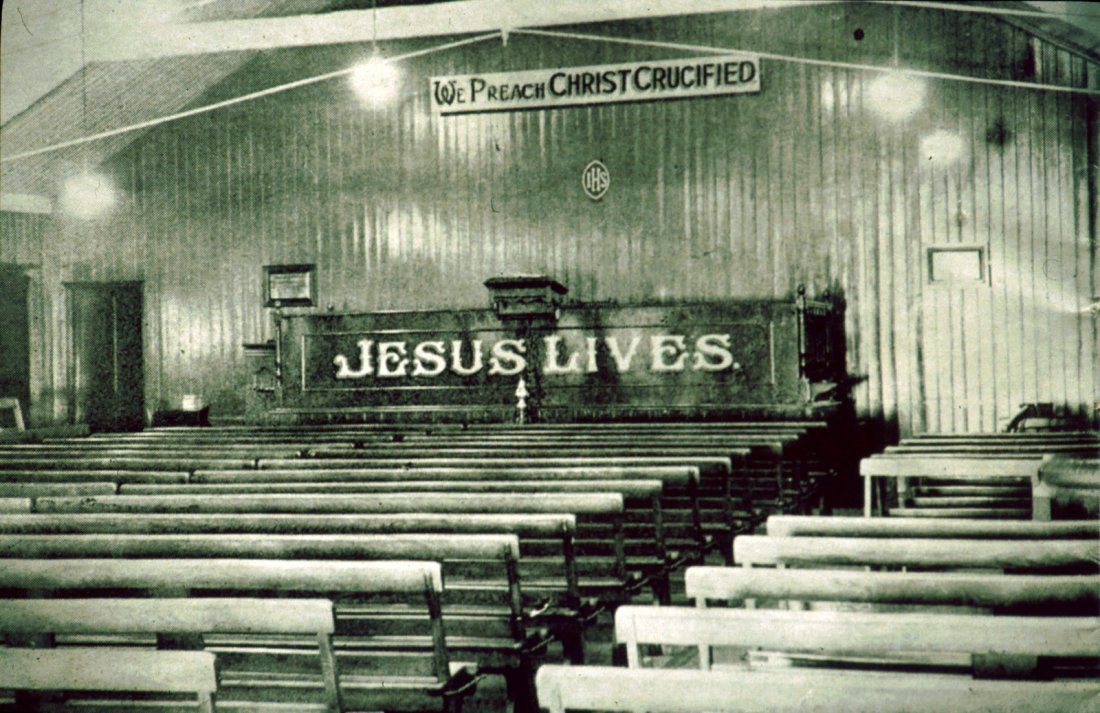
Mary Jenner (3)featured image is a view of the Railway Mission

Pte. Thomas Tugby – Tell Them of Us

Sometimes the death of a soldier received a lengthy obituary in the local newspaper. One such case was that of Thomas Tugby.

Swindon Soldier’s Funeral

Man Who Was Wounded at Ypres

Great sympathy has been extended to Mrs Thomas Tugby in the loss she has sustained by the death of her husband, which resulted from wounds sustained in action. Pte. Tugby was the son of Mr. and Mrs. J. Tugby, of 9 Gooch Street, Swindon, and was only 29 years old. He joined the Army at the age of 17 and became attached to the South Wales Borderers, and on taking his discharge, some years later, he entered the employ of the GWR Company and worked in ‘V’ Shop (Loco. Dept.) of the Swindon Works. On the outbreak of hostilities, he was called up on reserve, and went to the front with his old regiment. He was a participant in the heavy fighting at Mons and on the Aisne, and was wounded at Ypres by bursting shrapnel. On Nov. 1st he arrived in England with a batch of wounded, and was sent to St. Bartholomew’s Hospital, Rochester, and hopes were entertained that he would recover from his wounds. On Wednesday last, however, his condition gave cause for anxiety, and his relatives were summoned. They were in time to see him before he died later in the day, and on Saturday his body was brought to his home in Swindon.

The remains were interred with full military honours at Swindon Cemetery on Monday afternoon. A large number of the Royal Field Artillery stationed at Swindon were present, and formed a guard of honour as the body was borne from the house in Gooch Street to St. John’s Church. The coffin was of plain oak and was covered with a Union Jack. The service at the church was impressively conducted by the Rev. W.H. Walsham How, who also officiated at the graveside. After the coffin had been lowered into the grave, the firing party fired three volleys and the “Last Post” was sounded by the buglers. The inscription on the breastplate of the coffin read:-

Pte. Thomas Tugby

Died Feb. 17th, 1915.

Aged 29.

The chief mourners were the widow, Mr. and Mrs. J. Tugby (father and mother), Mr and Mrs E. Lewis, Mrs. Lewis, Mrs Lewis (sister), Mr J. Tugby and Miss Lily Tugby, Mrs W. Turner and Mrs. J. Green (sisters) Sergt. J. Green (brother-in-law) Mr W. Turner (brother-in-law) Miss Ivy Lewis (sister-in-law), Mr. W. Lewis (brother-in-law), Messrs. J. Smith and A. Whale (representing deceased’s old shopmates), Mr C. Hill, Mrs. W. Gleed and Mrs Skeates (aunts) and Mrs W. O’Neil (cousin). Beautiful floral tributes were placed on the coffin from the widow, Mrs and Mrs Tugby, Mr and Mrs. Turner, St. Mark’s Ward of the Hospital at Rochester, Mr. and Mrs. J.A. Cooper, Mrs Dance and Mrs Gleed, ‘The family at 1 Linslade Street,’ Sergt and Mrs Green, Shopmates in ‘V’ Shop, Loco, Dept. GWR Works.

It is interesting to note that Sergt. Green was with deceased in the early days of the war. He has been invalided home, and is shortly to return to the front.

North Wilts Herald, Friday, February 26, 1915.

But after the funeral what happened to the family left behind?

His widow Alice was just 24 years old when he died. On April 22, 1916 she married for the second time. The wedding took place at St Mark’s Church, the groom was Thomas Henry Walter Archer, himself a widower.

The UK World War I Pension Ledgers and Index Cards 1914-1923 record that sadly Alice’s second husband died on September 10, 1925, also as a result of the war.

Quite what happened to Alice after this second bereavement remains difficult to discover. The impact of that terrible war can never be under estimated.

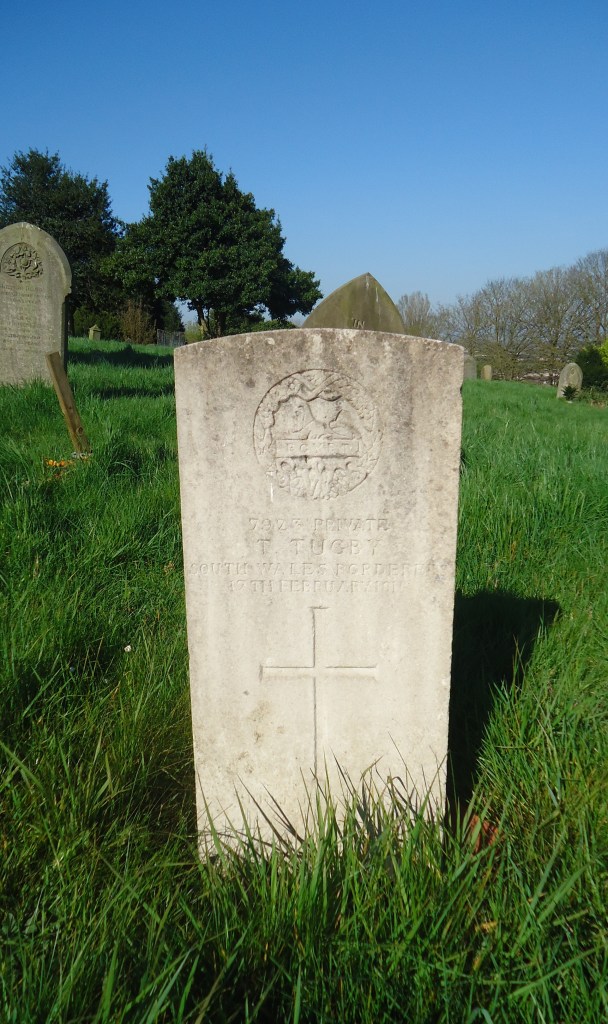
Tugby, T.

Private 7923 1st Battalion South Wales Borderers

Died 17th February 1915

Husband of A. Tugby of 9 Gooch Street

B1722 Radnor Street Cemetery

Tell Them of Us by Mark Sutton

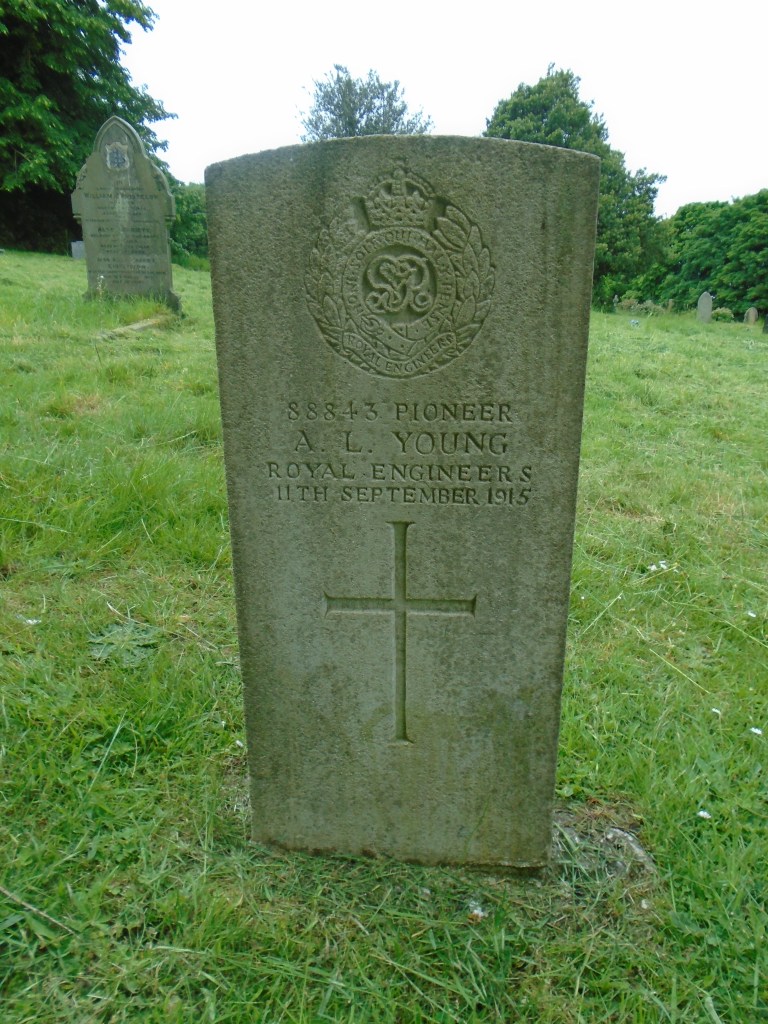
Pioneer Andrew Lowe Young

And then there are the men about whom so little can be discovered. Even the Commonwealth War Graves Commission website can provide little information about one such soldier buried in Radnor Street Cemetery.

Andrew died in the Isolation Hospital, Gorse Hill on September 11, 1915. The cemetery burial registers record that he was buried on September 14, 1915 in grave plot B1769, a public plot where he lies with two others. His headstone displays the regimental badge of the Royal Engineers and his regimental number, but there are no personal details – not his age nor a few words chosen by his family.*

Andrew Lowe Young was born in Longforgan, Perth and Kinross, Scotland in about 1890. The UK World War I Pensions Ledgers and Index Cards 1914-1923 reveal that he left a widow, Elizabeth Young and an illegitimate stepchild, John Binett Gillatley born April 25, 1905, but even this information is not enough to reveal more about the young soldier’s life and times.

Andrew enlisted at Dundee and served in the 205th (1st Dundee) Field Company, Royal Engineers, raised in March 1915 as part of Kitchener’s 5th New Army. The 35th Division included units known as “Bantams”; soldiers who were under the minimum regulation height of 5ft 3ins, so perhaps Andrew was of small statue.

We can see from the headstone that Andrew served as a Pioneer, but what is that exactly? The extensive network of trenches across the battlefields of France and Flanders were dug by infantry regiments’ own pioneer battalions, however, it would seem that Andrew probably never saw service overseas. In August 1915 the 35th Division moved to Salisbury Plain with headquarters in Marlborough. Further moves during that month were made to the training camp at Chiseldon, which may explain why Andrew ended up in Swindon’s Isolation Hospital after he took ill.

Andrew was about 26 years old when he died as a result of his military service.

*more information might be available on the death certificate but we do not have funds to purchase the certificates of everyone we research.

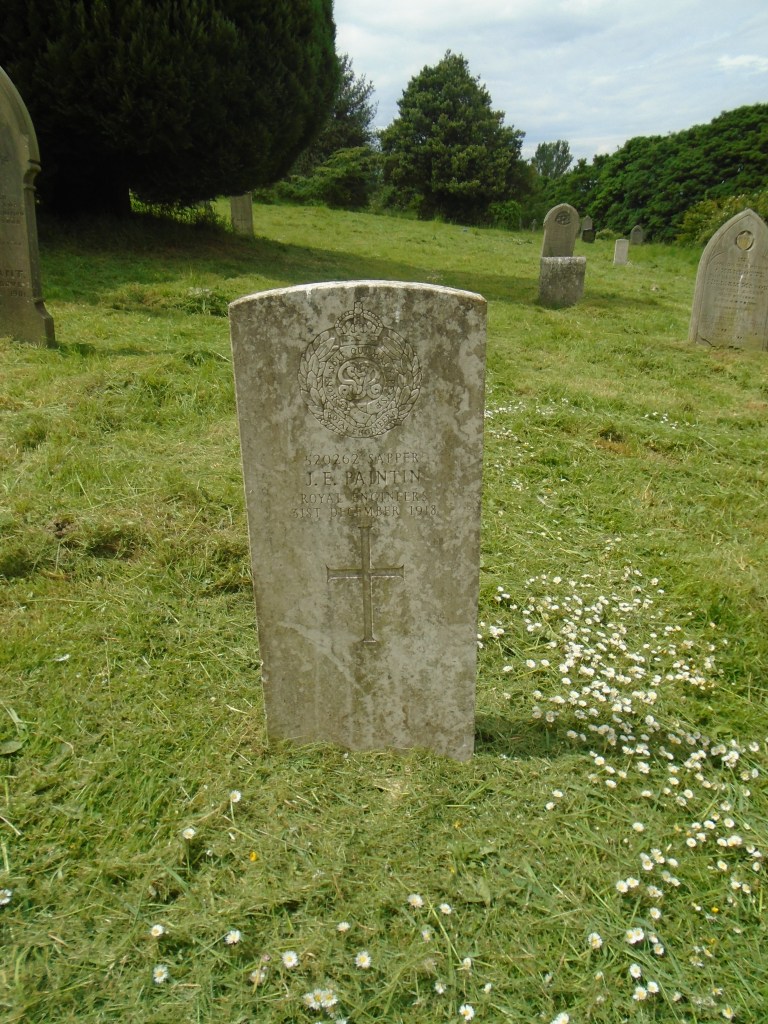
Sapper J.E. Paintin – Tell Them of Us

John Edward Paintin was born on September 6, 1883 and baptised at the ancient church of St. Aldgate, Pembroke Square, Oxford. He was the second of six children born to John Edward Paintin Snr and his wife Julia Betsey.

In the summer of 1906 John Edward jnr married Florence Alice Hazlewood. In 1911 the couple lived with their two young children (a baby had recently died) at 54 Sunningwell Road, Oxford. But by 1913 the family had moved to Swindon and were living at 84 Beatrice Street. John had arrived in Swindon not in search of a job in the GWR Works but as an attendant in the Electric Palace [cinema] in Gorse Hill. A daughter Dorothy Lorna Mary was born on May 3, 1913 and baptised on July 12 at St. Barnabas Church, Gorse Hill. A last child, Gordon, was born and died in 1917.

It is likely John was conscripted in 1916 but unfortunately his military records have not survived and we only know the briefest details about his service from the UK Army Register of Soldiers’ Effects 1901-1929. He died on December 31, 1918 at the Military Hospital, Chiseldon. The hospital was established at the training camp in June 1915 and was soon receiving casualties from the battlefields in France and Flanders. The hospital opened with six wards and 24 beds but was soon extended and supplemented with tented accommodation. By 1917 an additional hospital was built on the site, reserved for patients suffering from sexually transmitted diseases and known locally as the ‘Bad Boys’ Camp.’

John Edward Paintin was buried in Radnor Street Cemetery on January 6, 1918 in a public grave with four others. His last address is given as 15 Handel Street. He was 35 years old.

Florence Alice quickly remarried, as did many young war widows with a family to support, but she was sadly misled by her second husband. Austin Oliver Rogers was a Corporal in the South African Native Labour Corps and the couple met while he lodged with Florence awaiting demobilisation. They married on April 7, 1919 and sailed for South Africa that September. But when they arrived at Barberton in the Eastern Transvaal, Florence discovered Austin’s circumstances were not as he had described. He had promised her that he was well off and that he could provide for her and her children, giving her boys a college education. But the reality was quite different. Austin and his widowed mother lived as tenants on a small farm. The marriage broke down because Austin’s mother refused to accept Florence and her children.

Florence left the family home, placing her children in lodgings, but despite her best efforts and working two jobs her three younger children ended up in a children’s home. Florence died in 1925 in the Johannesburg General Hospital as a result of pneumonia contracted in hospital following an appendectomy.

The two sons that John barely knew both joined the military in their adopted home of South Africa. Edward James joined the SAMC Active Citizen Force later enlisting with the South African Permanent Force.

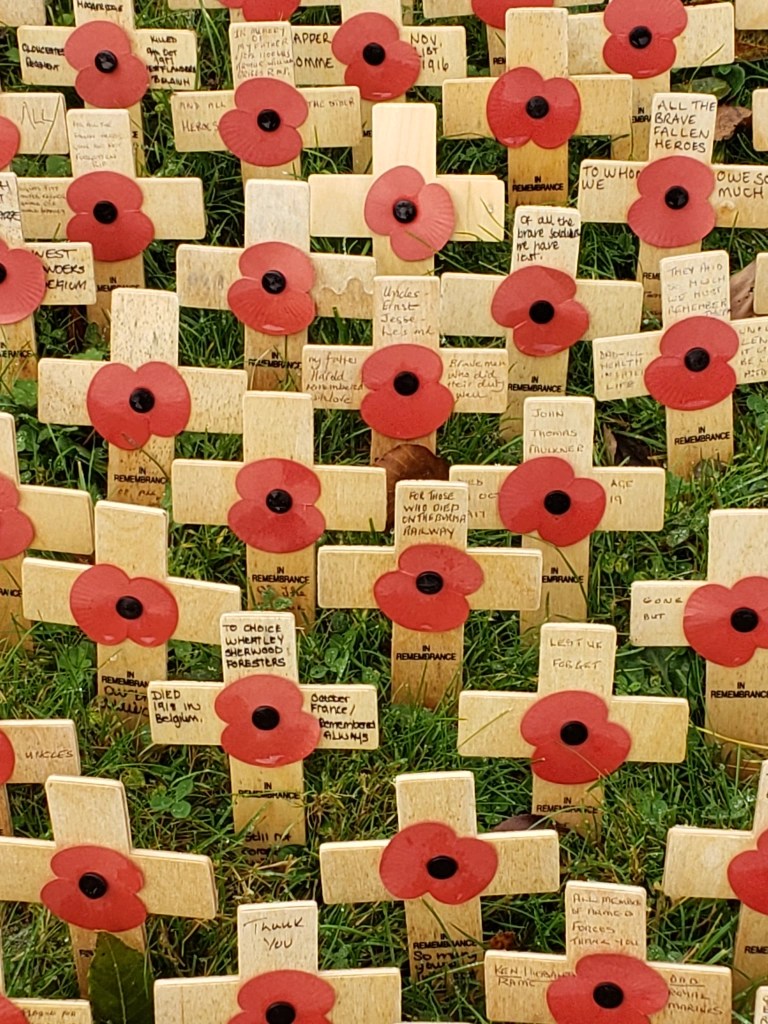
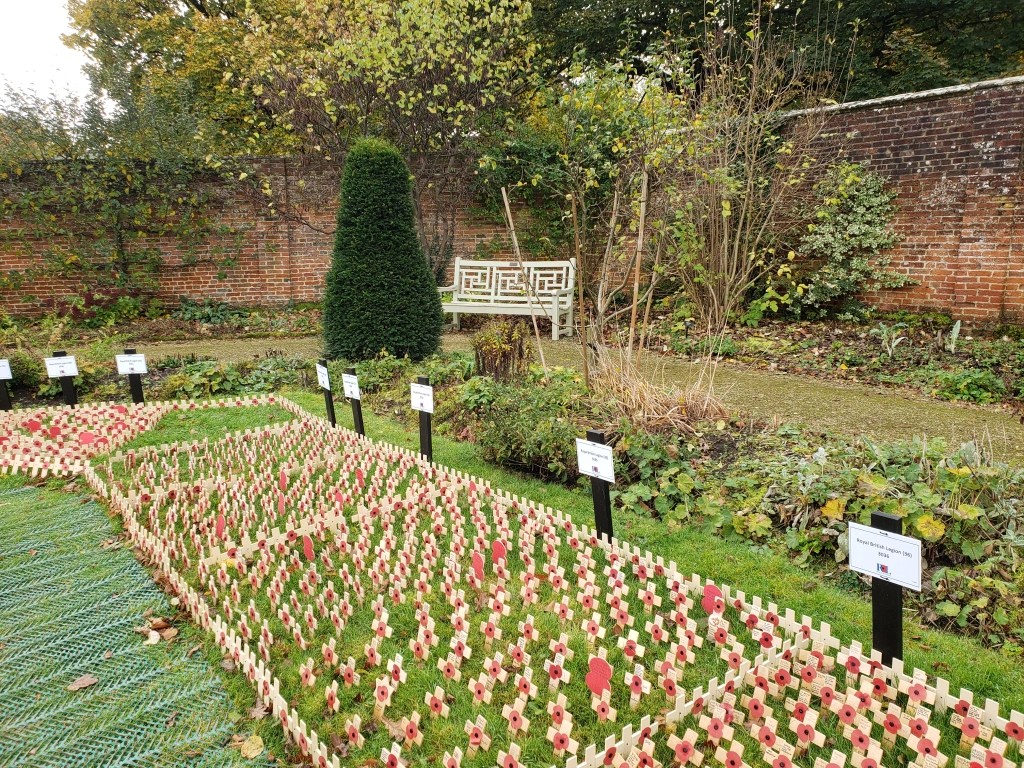
Lydiard Park Field of Remembrance

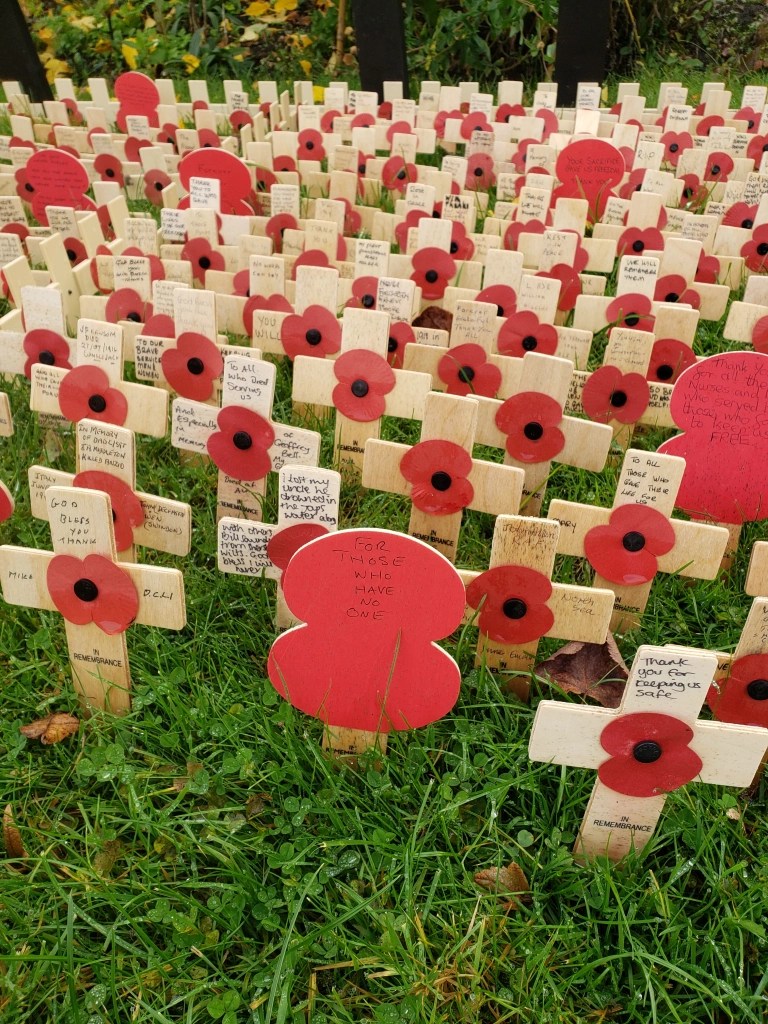
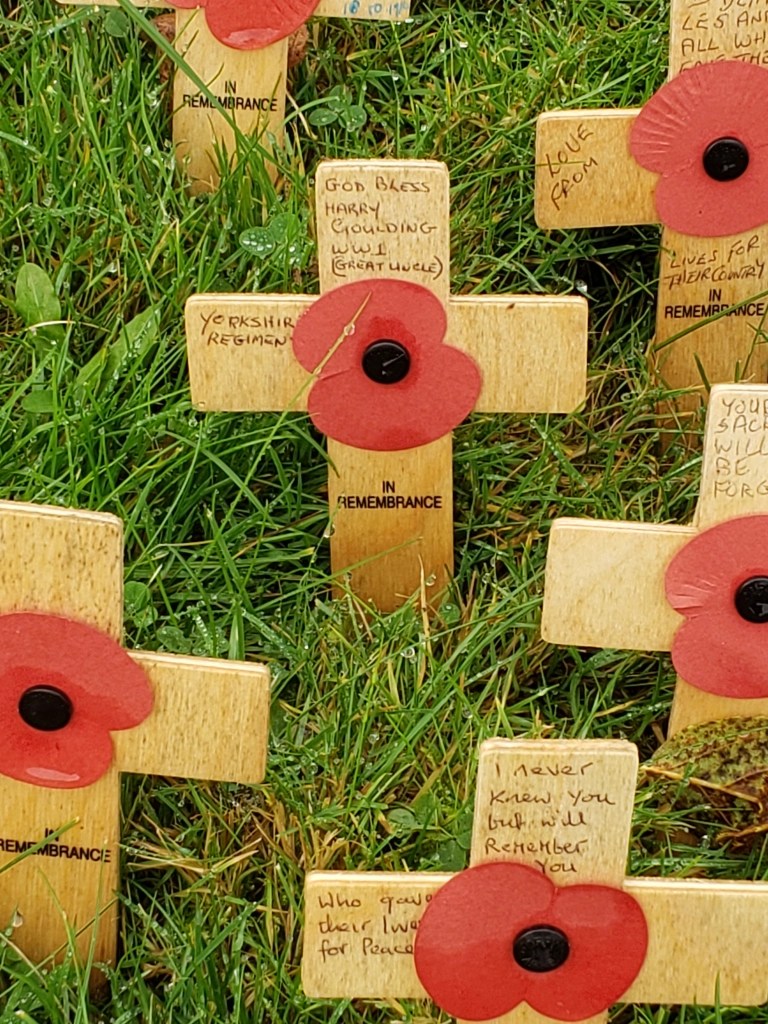
Today I was among those who came to the Walled Garden at Lydiard Park to remember the men and women who had given their lives in the service of their country.

Revd Teresa Townsend read out the names of the local men from the small parish of Lydiard Tregoze who had gone to war and never came home.

The Great War 1914-1918 – the war to end all wars, they said.

Sergeant Ernest Arthur Townsend

Pte Reginald Skull D.C.M.

Pte Henry Frank Porter

Pte Percival Edge Smart

Pte Edward David Embling

Pte Charles Barnes

Pte Victor Reuben Newman

Pte Frank Curtis Webb

Pte Wilfred John Parrott

Pte Thomas Jesse Laurence

Pte John Thomas Titcombe

We remembered J. Embling and R. Fisher who lost their lives in the Second World War and Flt Sgt Mark Gibson who died when the Hercules XV179 was shot down in Iraq in 2005 and is buried in Hook Street Cemetery.

The day was sunny and the weather unseasonably warm. Birds flew overhead and all was quiet as we stood in silence.

Comrades of the Great War

The re-imagined story …

I stood in front of the Baptist Tabernacle and watched the crowds gather, ten, twelve, fifteen deep in some places, packing all the approaches to the Town Hall.

Hundreds upon hundreds of people had come to pay their respects. Grieving parents stood next to those who had welcomed home their shattered sons, everyone touched by the horror of four long years of war.

Soldiers on crutches, soldiers with no obvious injuries. Widows holding the hands of little children, who even at such a young age appreciated the solemnity of the occasion.

Gathered immediately around the shrouded war memorial were the Mayor and civic dignitaries standing next to members of the clergy from the various Swindon congregations. Alongside detachments of the local military units were a group of Boy Scouts and Girl Guides, all standing to attention.

I went to school with the Preater brothers. I was in the same class as Bert, the youngest. Six sets of brothers were lost from Sanford Street School and I knew them all. Reginald Corser, an Engine Room Artificer who died on board HMS Defence in 1916. His brother Horace died on the Western Front two years later.

The Leggett brothers both served with the Wilts 1st Battalion and died within three months of each other in 1915. Bill was shot through the stomach. He was 22 years old. Ern was also killed in action. He was 21.

I went to school with the Preater brothers and Bill and Ern Leggett and the Corser brothers, but I didn’t go to war with them. The British Army wouldn’t have me. I tried to enlist twice, but each time I failed the medical.

The ladies used to wait outside the Works with their white feathers. I keep mine in an envelope in my sock drawer.

And then it was time for the service to begin. The Mayor unveiled the Cenotaph as the Last Post was sounded.

The band of the Comrades of the Great War played the introduction to the hymn “Nearer my God, to Thee” and a great swell of voices carried the words heavenwards on that serene and sunny day in October 1920.

After the prayers the short service closed with another hymn, “For all the saints who from their labours rest” and as the voices stilled, relatives made their way to the war memorial to lay their flowers. The silence only broken by the sound of sobs. How many more tears could we shed?

Mrs Preater leaned heavily on the arm of her son John, the only one of four who went to war and returned home. She looked frail. Three sons lost and no grave to visit for any of them.

The war had been over for almost two years but for families like the Preater’s it would never be over.

It took a long time for the crowd to disperse. People were reluctant to leave this place, this time.

I stood and watched and wondered how I could continue to face the men who had returned home broken. The war casualties continued long after the armistice.

I am writing my memories of that day. Maybe in the future someone will be interested. At the moment I can’t see a future.

These words were found with a white feather in an envelope in his sock drawer.
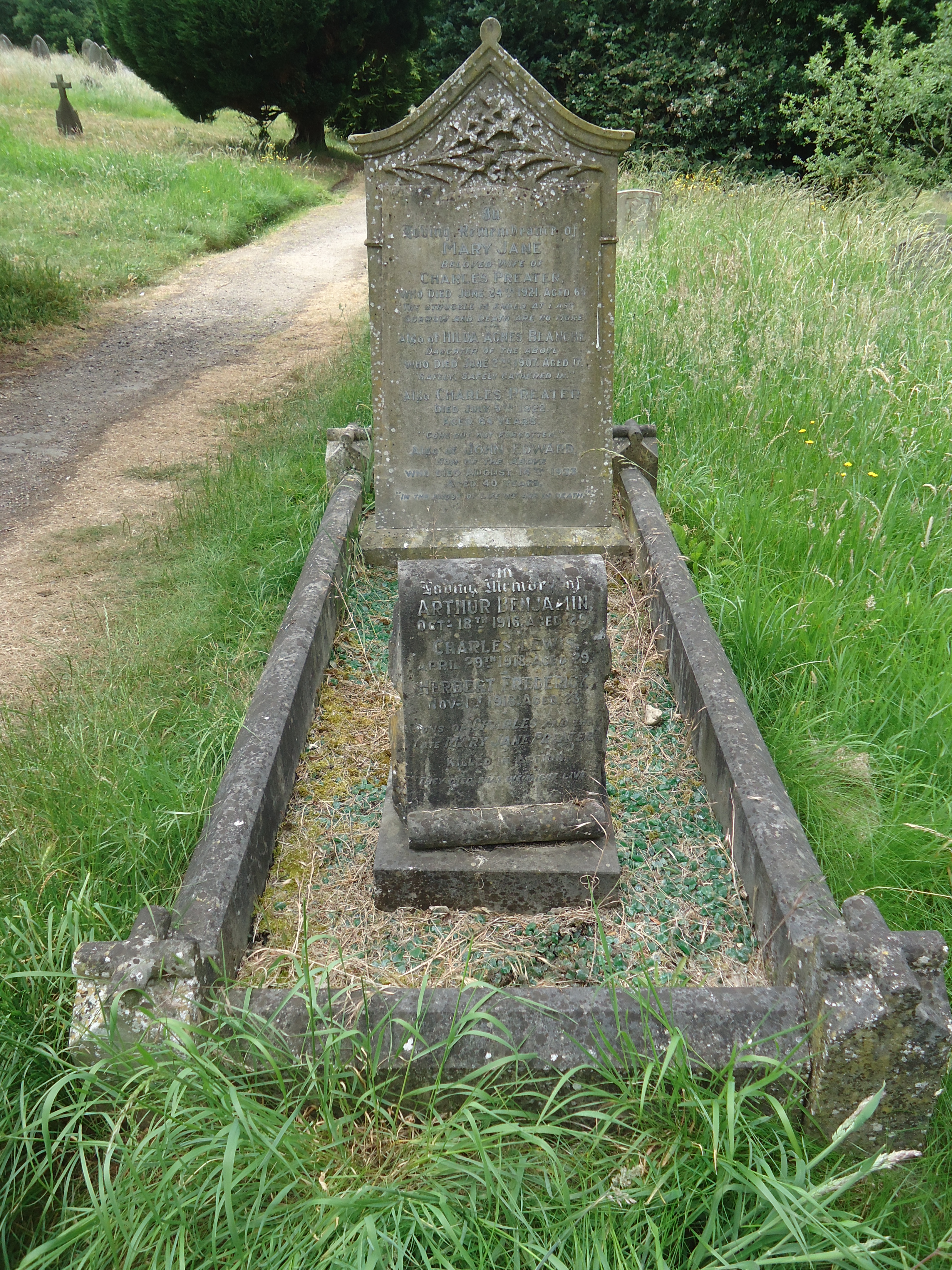
Preater family

The Preater family grave in Radnor Street Cemetery

The facts …

Buried in this grave are Charles and Mary Jane Preater, their daughter Hilda who died in 1907 and John Edward Preater, the son who survived the First World War.

A memorial to the three sons who died stands on the grave.

Arthur Benjamin Preater was born in 1886 and served in the 2nd battalion of the Wiltshire Regiment. The battalion had been involved in the Somme battles since July 8, 1916. On October 18 they were in the line along with the 2nd Liverpool, 2nd Manchester Pals and the 2nd Yorks and attacked the German positions not far from Flers. The attack was not successful and the battalion reported casualties of 14 officers and 350 other ranks. Arthur was among those killed. He is remembered on the Thiepval memorial and has no known grave.

Charles Lewis Preater was born in 1889 and served in the 6th battalion of the Wiltshire Regiment. In April 1918 the 6th were in the Messines area of Belgium about seven miles from Ypres. The 2nd part of the great German offensive took place on the night of the 9/10 and the objective was Ypres again. In the path of this onslaught was the 6th Wilts. By the time the battalion was relieved on April 20 they had lost over half their strength. Charles had been severely wounded and died as a result on April 29. His grave was lost due to constant shelling and he is remembered on the Tyne Cott memorial.

Herbert Frederick Preater was born in 1896 and served with the 2nd/8th Battalion of the Worcestershire Regiment. He was killed in action on November 1, 1918 and is buried in France in the Cross Roads Cemetery Fontaine au Bois.

John Edward Preater was born in 1893. He served with the Worcestershire Regiment. He survived and returned home. He took over as landlord at The New Inn following his father’s death in 1922. John collapsed at the GW Railway Station, Chippenham on August 14, 1933. He was travelling with a group of friends and his fiancée. They were off to Weymouth for a short holiday. He died on the platform before a doctor could arrive. There was no inquest as John was under the care of a doctor at the time of his death. He is buried with his parents and his sister.

Two elder sons didn’t serve.

There were two daughters. Eva Emma Leah Preater who married James Ernest Wood, an Engine Erector, in 1909. Eva died in 1974 aged 90 and is buried close to the Preater family grave. Youngest child, Ada Cora Preater, never married. She took over as proprietor of The New Inn after her brother’s death in 1933. She died on February 26, 1956 at the pub where she had lived all her life. She is also buried in Radnor Street Cemetery in plot D65A.

Resources include Tell Them of Us by Mark Sutton

Swindon’s War Record by W.D. Bavin

William (left) Ernest (right) Leggett (1)

The Leggett Brothers – William (left) Ernest (right)

Sanford Street School memorial 2

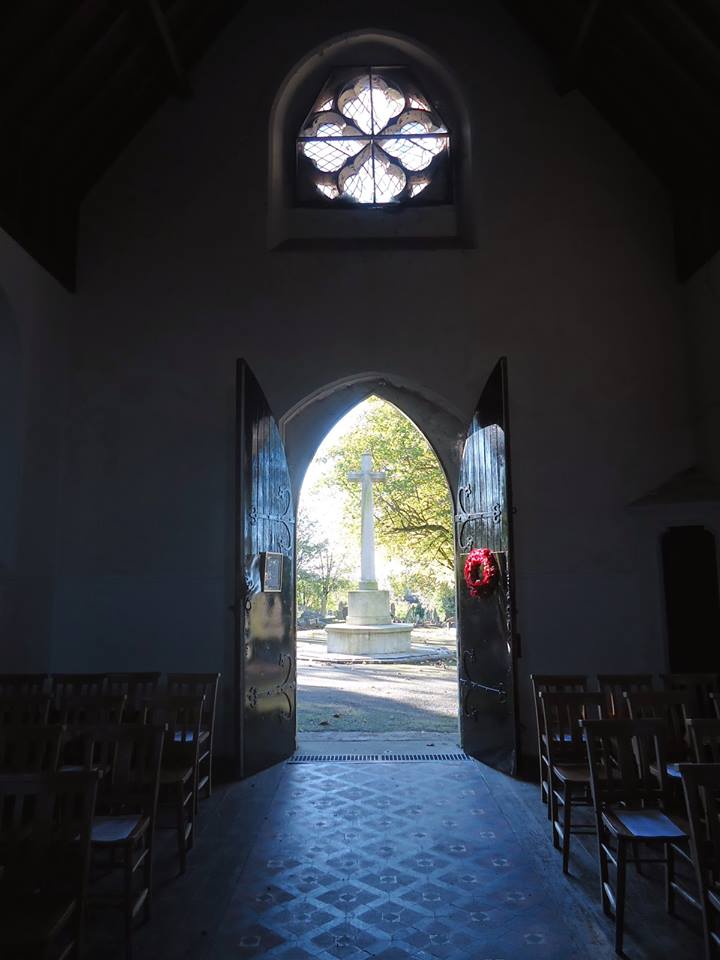
Sanford Street School Memorial, Radnor Street Cemetery chapel

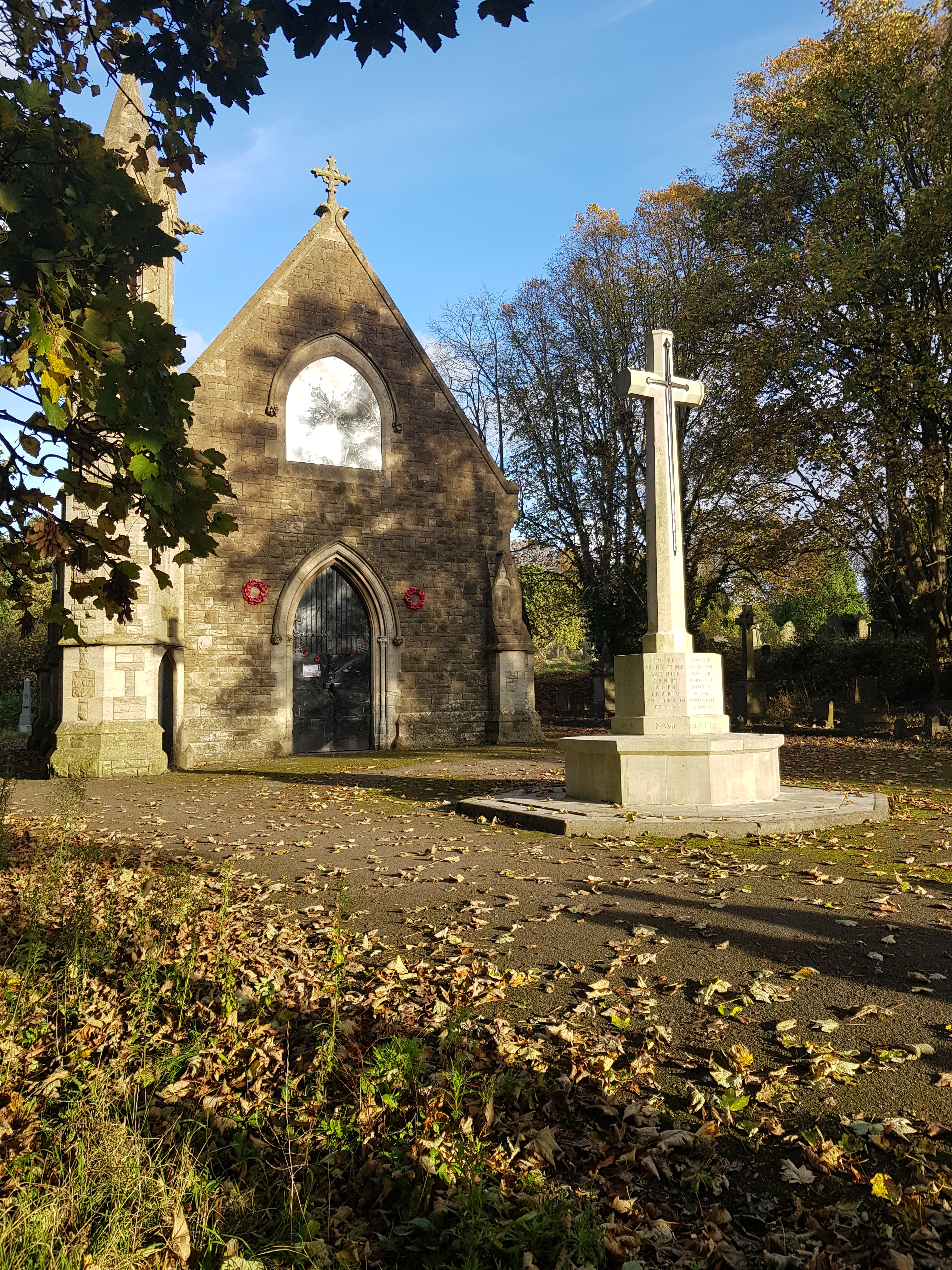
Join us in a Service of Remembrance at Radnor Street Cemetery on Sunday November 10. Meet at the Cross of Sacrifice memorial for 2pm.
20241027_145956