Florence L. Clapham – a case of mistaken identity

It’s not very often I find an error in the Radnor Street Cemetery burial registers, but this one could have proved rather confusing.

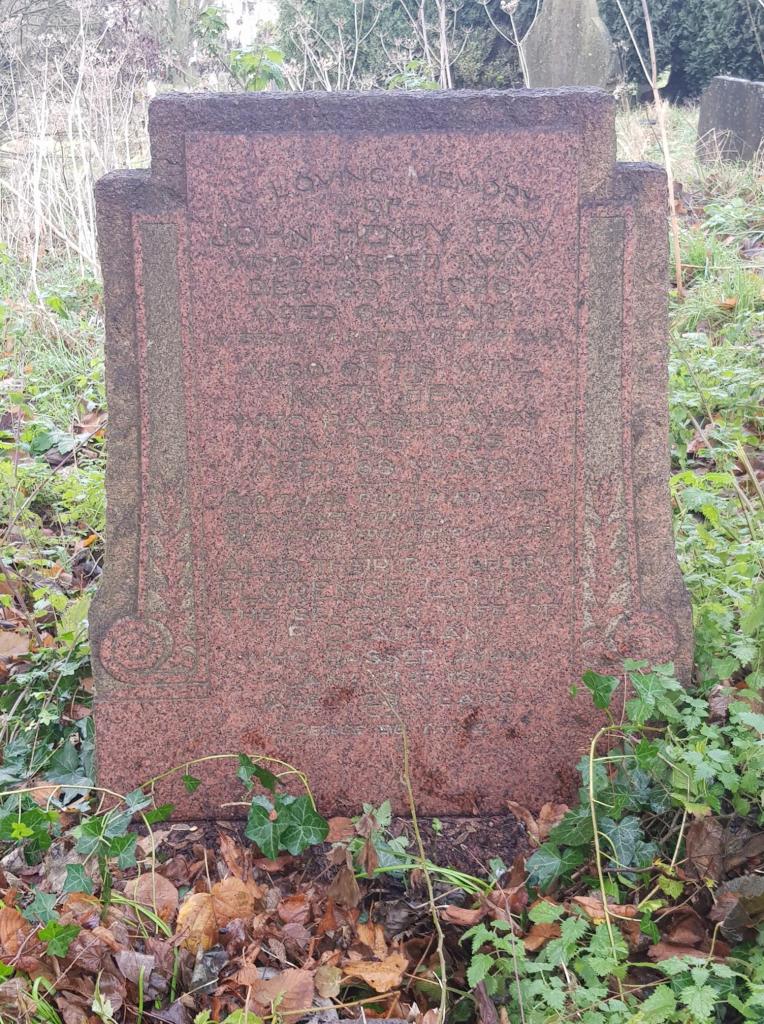
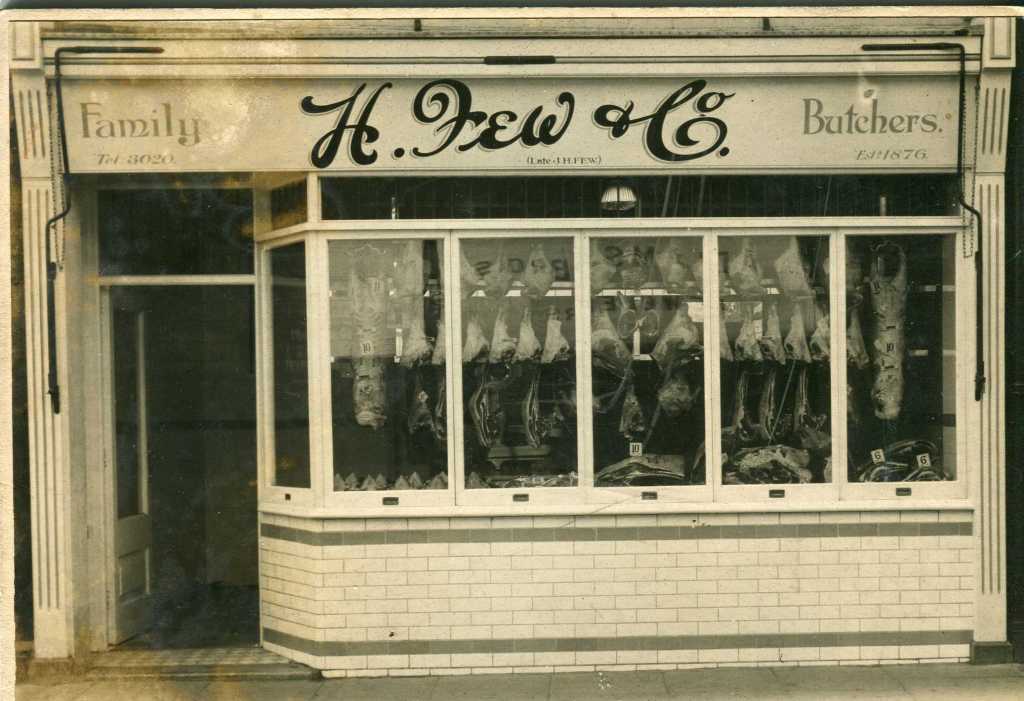
Florence Louise Few was baptised on August 27, 1888 at St. Mark’s Church, the eldest child of John Henry Few, a butcher and his wife Kate. John must have been a very enterprising young man as he was already in business at the age of 19 when he ran a butcher’s shop at 26 Prospect Hill. By 1891 he had moved the business down to New Swindon and a premises in Bridge Street. In 1891 he was based in at 59 Fleet Street and by 1911 he was at 61 Fleet Street (possibly some renumbering of Fleet Street had taken place).

In 1911 Florence was working as a shop assistant in the butchers. Her younger sister Freda was employed at ‘housework’ while 18 year old Gladys Elizabeth also worked in the shop. Younger brother Jack was still at school. Another brother, Harold Bastable Few, was born the following year.

Florence married Frederick Clapham, a Fitter, on November 17, 1913 at St. Mark’s Church and began married life in Weston Super Mare. She died there in January 1917 aged just 28 years of age.

Florence’s remains were returned to Swindon where she was buried on February 5, 1917. Her name is recorded in the burial registers as Florence Louise Clappen, which could cause confusion for those researching both the Few and the Clappen families. William Clappen had a Tailor and Outfitters shop in Wood Street, Old Swindon and another at the junction of Fleet Street and Bridge Street in New Swindon. This became known as Tram Centre where the tram drivers would check their departure times by the clock set in the shop front.

Florence lies in grave plot C2017. Her mother Kate was buried with her following her death in 1933, but there may yet be another mystery to solve. Although John Henry Few is remembered on the headstone, he is not buried in this plot. Only Florence and her mother Kate are buried here.
The Late Mrs F. Clapham – The funeral took place on Monday at Swindon Cemetery of Mrs F.L. Clapham, the wife of Mr F. Clapham, of Weymouth, eldest daughter of Mr and Mrs J.H. Few, of 61, Fleet Street, Swindon. The cortege left the residence of the deceased’s parents at 1.45 p.m. and proceeded to St. Mark’s Church (where the first part of the service was read), and thence to the Cemetery.

There were many beautiful wreaths and expressions of sympathy sent by relatives and friends. The coffin was made of polished elm with brass fittings and was inscribed: “Mrs Florence L. Clapham, aged 28 years, died Jan. 31st, 1917.” – Mr F. Clapham and Mr and Mrs J.H. Few desire to express their sincere thanks for the many expressions of sympathy received during their recent sad bereavement.

Extracts from North Wilts Herald, Friday, February 9, 1917.

John Henry and Kate’s youngest son took over the business; the butchers’ shop is pictured here and we are able to confirm that the shop still survives.

Then …
and now
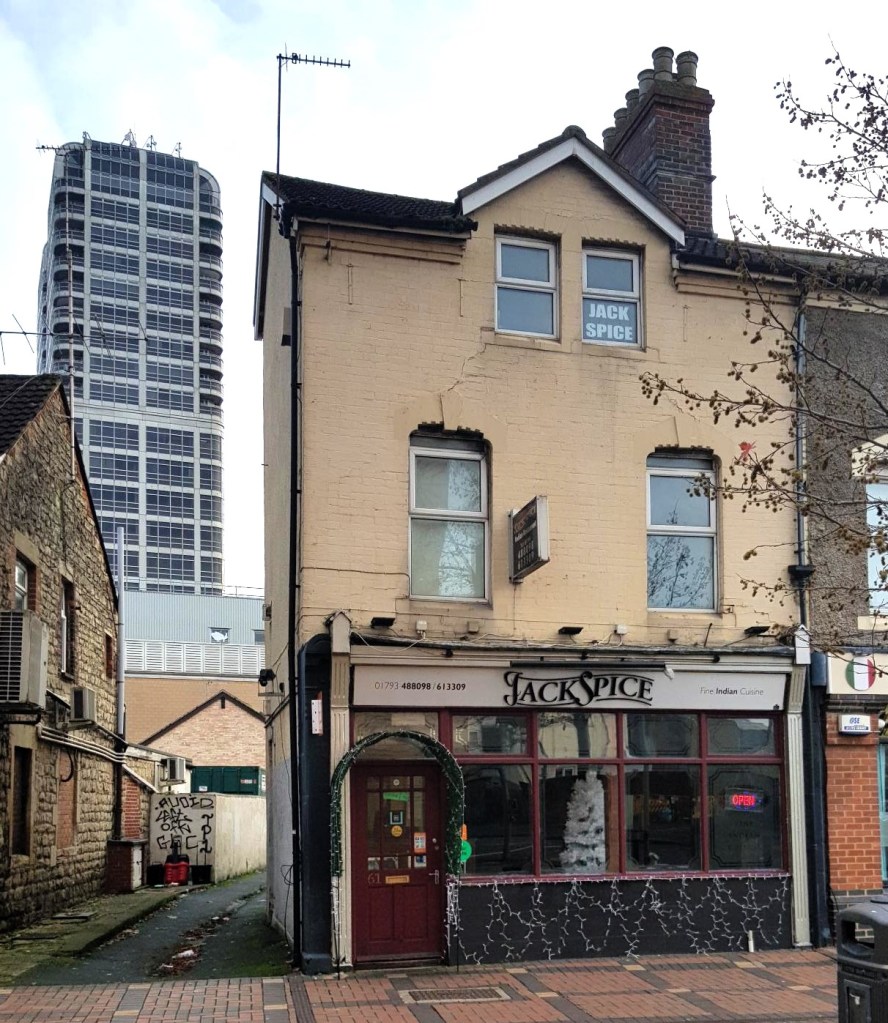
No 61 Fleet Street with the iconic David Murray John Tower in the background.

George and Clara Bosley – drapers

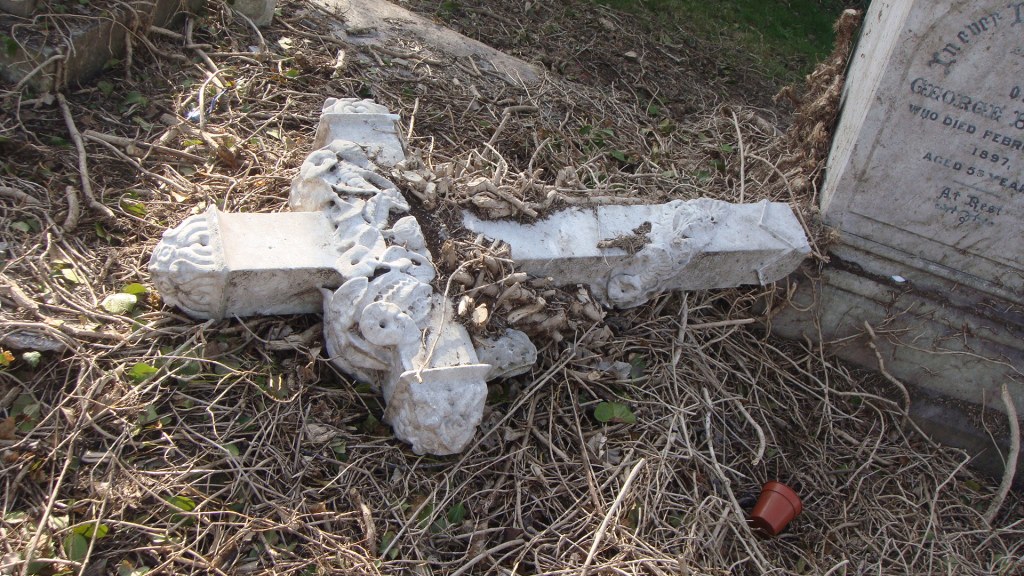
How magnificent must this memorial have looked when first installed?

In 2010/11 Swindon Borough Council conducted a major tidy-up at the cemetery. Memorials and monuments that had been hidden by ivy and brambles were seen again, possibly for the first time in years. And so the Bosley memorial was revealed, although unfortunately the ornate cross had already tumbled down.

The Bosley family ran a drapers shop in Fleet Street – an area of the town centre that has been significantly redeveloped (though not improved) in the 20th century. Their shop was numbered 55 and 57 so maybe renumbering took place even earlier.

Clara ran the business following George’s death and in 1911 she employed Charles Hiskins as manager.

Clara died on February 28, 1917. Administration was awarded to her daughter Clara Edith Burrows (wife of George Burrows) and her effects were valued at £7948 5s 8d.

Death of Mr G. Bosley – The hand of death has been busy amongst Swindon tradesmen during the last few months, as our columns have shown week by week. Today our obituary column contains the announcement of the death of Mr George Bosley, draper, who had been in business in Swindon for the past 23 years. Mr Bosley, who was 52 years of age, died somewhat suddenly at the residence of his brother-in-law at Ealing last Friday. Mr Bosley had suffered for many years from asthma, and left Swindon about three weeks ago to consult a London specialist. He had paid several visits to his doctor from Ealing, and it was thought he was improving, but he died somewhat suddenly in the presence of his wife and other members of the family. Deceased leaves a widow and nine children. The funeral took place at Swindon Cemetery on Wednesday last.

The Swindon Advertiser, Saturday, February 13, 1897.

This seemingly large burial plot contains the remains of just George who was buried on February 10, 1897 and Clara who was buried on March 5, 1917.

Clara Edna Susan Chappell – fallen angel

The fallen angel with her broken arm and wing would have once been a majestic memorial standing close to the cemetery chapel. Now her predicament symbolises the sorrow of this grave and those buried here.

When Clara Edna Susan Smith married Joseph Llewellyn Chappell in 1895 they had a bright future ahead of them. Joseph, who had begun work as a 15 year old clerk in the GWR in 1884 where he worked for more than ten years, had recently set up in business as a cycle agent. His business would prosper, but sadly not so his personal life.

His wife Clara died in 1908 aged just 35, leaving him a grieving husband with two young sons.

Death of Mrs J.L. Chappell – The many friends of Mr J.L. Chappell, of Fleet Street, and Fernleigh, Park Lane, Swindon, will learn with deep regret of the death, at the early age of 35 years, of Mrs Chappell, and will sympathise with the bereaved husband in the irreparable loss he has sustained. The deceased lady, Mrs Clara Edna (Dot) Chappell, was born at Wootton Bassett 35 years ago, and spent all her early life there until she was married to Mr Chappell 13 years ago. She was the daughter of the late Harry and Edna Smith, who were old and respected inhabitants of Wootton Bassett. Mrs Chappell suffered a long and painful illness, borne with great patience, and she passed peacefully away at noon on Saturday last. Deceased proved herself to be an ideal wife and mother, and was devoted to her home, her husband and her children. She leaves a sorrowing husband, and two sons to mourn her loss. The funeral will take place on Wednesday next. The cortege will leave Fernleigh at 2.45 for St Mark’s Church, and will reach the Cemetery at 3.30 p.m. Will all friends kindly accept this the only intimation.

The Evening Swindon Advertiser, Monday, September 14, 1908.

And then the following year their younger son, Leslie Cyril, died aged 4 years old. He was buried with his mother in grave plot D7A.

Joseph never remarried. At the time of the compilation of the 1939 List he had retired to Bournemouth where he lived at Rosemount, Headswell Crescent with his housekeeper, Emily Mitchell, who had worked for him since those first sad years following Clara’s death.

He died on September 9, 1942. The publication of his will revealed just how successful his business had been and his generosity and affection for Swindon.

Swindon and Bristol Bequests

Mr Joseph Llewellyn Chappell, of 17, Headswell Crescent, Bournemouth, Hants., who died on September 9 last, left £31,551 8s 9d gross, with net personalty £30,318 9s 10d (Duty paid £4,174).

He left, in addition to several personal bequests: £100 each to Swindon Victoria Hospital; Muller’s Orphanage, Bristol; RSPCA, NSPCC, St Dunstans, Baptist Tabernacle, Swindon; Wesleyan Church, Swindon; Primitive Methodist Church, Swindon; the vicar and churchwardens of Christ Church, Swindon (for charitable purposes); and to Harry Haskins, for any purpose he may think fit for City Road Church, Bristol.

William Drew – Swindon architect

The re-imagined story …

Tonight I shall raise a glass to Mr William Drew, although sadly not in The Lamb and Flag, a favourite watering hole of mine back in the day. When it came to pubs William Drew knew what he was talking about.

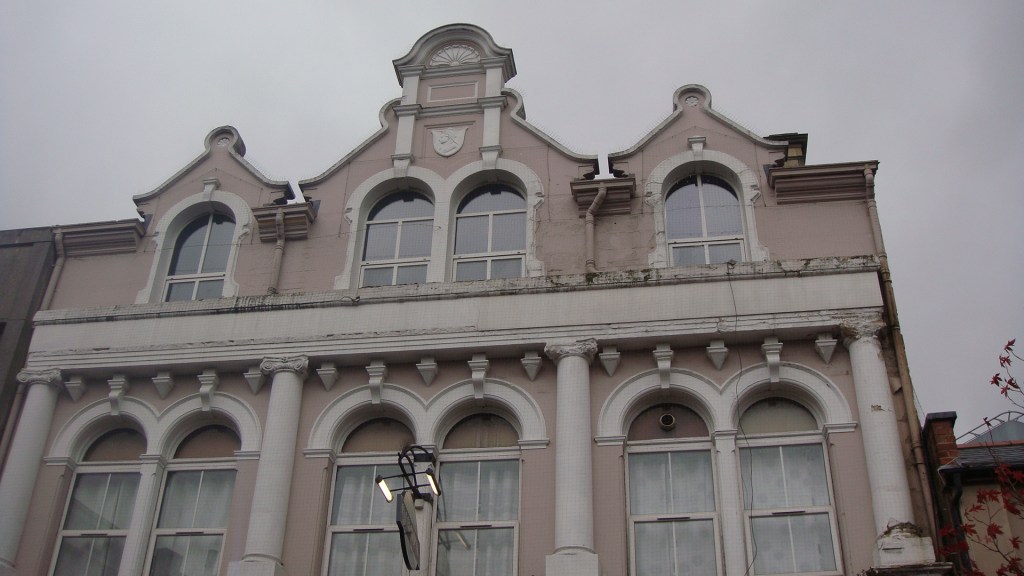
You youngsters might remember The Litten Tree in Fleet Street but of course that building was never designed as a pub, oh no, that property began life as the North Wilts Conservative and Liberal Unionist Club. It was built by Charlie Williams in 1897, the year of the old Queen’s Diamond Jubilee. You can see the commemorative plaque if you look up – past the blocked gutters and peeling paint.

They say some developer has got a plan for the building – well, they all have don’t they?

Death of an Architect. – The death occurred at Swindon on Monday of Mr William Drew, senior member of the firm of Messrs W. Drew and Sons, architects and surveyors. The deceased gentleman was at one time a very familiar figure in Swindon and the neighbourhood, but during the past three or four years he has more or less been confined to his house by illness.

Deceased was in his 68th year, and was one of the oldest members of the Society of Architects, having been admitted in 1887. He commenced practice at Highworth, where he remained for 12 years, and then removed to Swindon, where he has always earned and received the esteem and regard of his patrons and of all with whom he has had business or social relations. As a hotel valuer he was known over a wide district, while the results of his skill as an architect are to be seen in many large buildings in Swindon and the surrounding neighbourhood.

For over 30 years he has held the responsible position of architect to Messrs T. and J. Arkell, of Kingsdown Brewery, and he designed the majority of that firm’s licenced houses at Swindon, Faringdon, Lechlade, Cirencester, and many other towns and villages in the district.

Amongst other large buildings for the plans of which Mr Drew was responsible were the Clarence Street Schools (at that time amongst the finest in the west of England), the Rodborne Road Schools and enlargements, the Gorse Hill Schools (the first in the district conducted on the central hall principle), the Upper and Lower Stratton Schools, the Rodborne Cheney and Haydon Wicks Schools, Mr E. Arkell’s residence at Kingsdown, the Conservative and Unionist Club in Fleet Street, Faringdon Post Office, the Primitive Methodist Chapels at Rodborne Road and Stratton St. Margaret, the Cricklade Road Baptist Chapel and many others. Mr Drew prepared the plans of the original sewage tanks at Rodborne for the New Swindon Local Board; he developed the Kingshill Estate for Mr J. Hinton, the first street laid out being Clifton Street; and he also laid out and developed the Even Swindon Estate for Mr J. Morrison. –

The deceased gentleman has been assisted in the conduct of his business by his sons, Messrs Edward and William Drew, and they will continue to act in the same capacity as their late father.

The Faringdon Advertiser, Saturday, May 20, 1905.

*Rodborne is a spelling error in the original text.

As a valuer his services were constantly in demand, and no man was more conversant with the growth and growing importance of Swindon during the past forty years.

Deceased never took any part in the public life of the town, preferring a quiet life. In politics he was a staunch Conservative, but the only occasion on which he took an active part in the political arena was in support of the late Sir Daniel Gooch, when he was returned for the old Cricklade Division.

Mr Drew leaves a widow and family of nine children:- four sons and five daughters – for whom the deepest sympathy will be felt in their bereavement.

Some few years ago deceased took into partnership in his business two of his sons, Mr Edward Drew and Mr William Drew, by whom the bulk of the work has been carried on during their father’s long illness.

The Funeral

The mortal remains of the late Mr William Drew, were laid to rest in the Swindon Cemetery on Thursday. The funeral cortege left deceased’s late residence in Victoria Road at half-past three. Deceased was a man of great weight – considerably over 20 stone – and the remains were enclosed in an elm shell, within a coffin of immense size, of polished oak, with massive brass fittings. The inscription on the breast-plate was as follows:- “William Drew, born 29th October, 1837; died 15th May, 1905.”

The coffin was conveyed in a hearse, and there were six mourning carriages.

At the graveside there was a large assembly of sympathising friends, the funeral service being conducted by the Vicar of Swindon, the Rev. Canon Estcourt.

The funeral arrangements were satisfactorily carried out by Mr J. Williams, of Bath Road, Swindon, assisted by his son, Mr Fred J. Williams.

Extract from the obituary published in The Swindon Advertiser, Friday, May 19, 1905.

For more and better photographs of this building you might like to visit Duncan and Mandy Ball’s website.

Bessie Symons Sparkes and the restored headstone

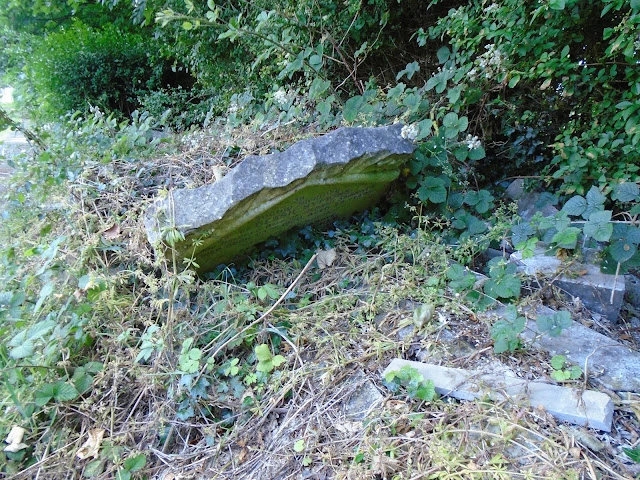
After more than fifteen years of research at the cemetery, I had never before seen this headstone, dumped in one of the cemetery’s peripheral verges.

In Loving Memory of Bessie Symons the beloved wife of Albert Sparkes died April 23rd 1920 aged 53 years. The rest of the inscription is difficult to read. The headstone was not far from its original site on plot E8516, removed for who knows what reason.

The Sparkes family were well known Swindon butchers at the turn of the 20th century. Frederick Sparkes had a shop at 47 Regent Street while his cousin Albert’s shop was at 60 Fleet Street.

The census returns reveal a large household living over the Fleet Street shop in 1911. Albert and Bessie with their three daughters – Gladys Delia Alberta 19, a student teacher, Elsie Muriel Bessie 17, still at school part time while working as a book keeper for her father’s business and nine year old Dorothy Irene Audrey, still at school.

George Howard, a butcher’s apprentice, Ernest Salter, an assistant in the shop and May Beard, butcher’s book keeper, all lodged with the family along with Winifred Hunt, a domestic servant. The property  comprised nine rooms, not including the scullery, warehouse, shop and office, so quite a squeeze to accommodate eight adults and a child.

According to the headstone and burial registers Bessie died at her home at 15 Okus Road, Swindon on April 23, 1920 aged 53 and was buried four days later on April 27. However, confusingly the entry in England & Wales, National Probate Calendar (Index of Will and Administrations) 1858-1995 states that she died on 19 May 1919 and that administration was awarded to ‘Albert Sparkes butcher’ on 30 December 1926 when her effects were valued at £45 2s 6d.

Bessie was buried in plot E8516 with her husband Albert who died in 1937 and their daughter Gladys Delia Alberta who died in 1970. Is it possible the headstone was never replaced on the grave after the burial of Gladys?

And then I came across the Sparkes family tree published on the Ancestry website by philipacore and some fab photos.

Bessie and Audrey Sparkes
Gladys Delia Alberta Sparkes
Elsie Muriel Bessie Sparkes

The Radnor Street Cemetery volunteers have rescued Bessie’s headstone and it now sits on her grave.