Fanny Ireland Fletcher

In Britain in the 1950s, 60s and 70s young, unmarried mothers were coerced into giving up their babies for adoption, an estimated 185,000 of them. That this practise continued into the late 20th century is now shocking and unforgiveable. Was this attitude a legacy of 19th century social mores – all those myths about Victorian prudery and piano legs? In fact the Victorians were far more broad minded and accepting than we give them credit for.

In my work transcribing the diaries of Elliot Woolford, farmer at Hook Farm between 1899 and 1940, I have come across two examples where an illegitimate birth was no big deal, the child welcomed into the extended family.

William Woolford married Frances Ann Fletcher in the parish church at Purton in May 1849. The bride and groom signed the marriage register by making their mark, suggesting they were not proficient in writing their name. Both stated they were over the age of 21.

At the time of the 1851 census the young couple and their two year old daughter lived at a property in Poor Street, Purton. William’s occupation was given as labourer at stone quarry. Their eldest child had been born several months before the couple married. Ellen Woolford Fletcher was baptised at the church of All Saints, Lydiard Millicent on December 24, 1848, the daughter of Ann Fletcher – no father’s name was given. There is little doubt that William was her father but Ellen continued to use her mother’s maiden name. She never married and died at Hook Farm in 1904 aged 56.

William and Frances went on to have six more children, diarist Elliot George Woolford was born in 1867. The 1871 census reveals their six children (their youngest, 7th child Rowland was born in 1874) and a granddaughter Fanny Ireland Fletcher, just 5 months old. It would appear that like her mother, Ellen had produced a child out of wedlock, but unlike her mother there was no husband waiting in the wings. Fanny Ireland Fletcher was baptised in the parish of Purton on December 4, 1870, daughter of Ellen Walford [Woolford] Fletcher, single woman.

Fanny grew up in the large Woolford family and by the time of the 1881 census she was described as William and Frances’s daughter, because by then that was how she was regarded. Was she ever made aware of the circumstances of her birth? Did she know that Ellen was her mother or did she believe her to be her elder sister?

And what about Elliot who in his diaries recorded the facts of his life, work and those of the community who lived in Hook. What did he know of Fanny, four years his junior, the little sister with whom he grew up? Perhaps everyone knew the facts of Fanny’s birth and it really didn’t matter, which is how things are today.

Fanny married Edward Harry Matthews, a drilling machinist in the GWR Works, in the summer of 1898 and by 1901 they were living at 54 Exeter Street. They had two sons, Leslie and Edward.

On Friday March 10, 1911 Elliot makes his usual weekly visit to Swindon, selling eggs and butter at the market and buying his weekly provisions. He writes in his diary:

‘I went to 65 Ponting St and saw Mrs H. Matthews gave her a rabbit and some rhubarb.’

Fanny Ireland Matthews died at her home in Farnsby Street in December 1925. She was buried in Radnor Street Cemetery on December 22, in grave plot D621. Her husband Edward Harry Matthews died in December 1936 and was buried with Fanny on December 22, the anniversary of her funeral eleven years previously.

There are several volumes of Elliot Woolford’s diaries transcribed and available to read on the Friends of Lydiard Park website and I am working on a book about Elliot, Hook Farm and the parish of Lydiard Tregoze.
The Abandoned churchyard at Eysey

Several years ago I joined an ‘expedition’ to discover the abandoned churchyard at Eysey and of course, as invariably happens when I start researching, I found a link to the parish of Lydiard Tregoze. Not this time to the St. John family and Lydiard Park, but the Willis farming family.
The medieval settlements of Eysey and Water Eaton were transferred to the parish of Latton, Cricklade in 1896 when they were by then just a few scattered cottages and farmsteads. The population of Eysey had always been a small one, just 95 adults in 1851 and only 52 in 1901.

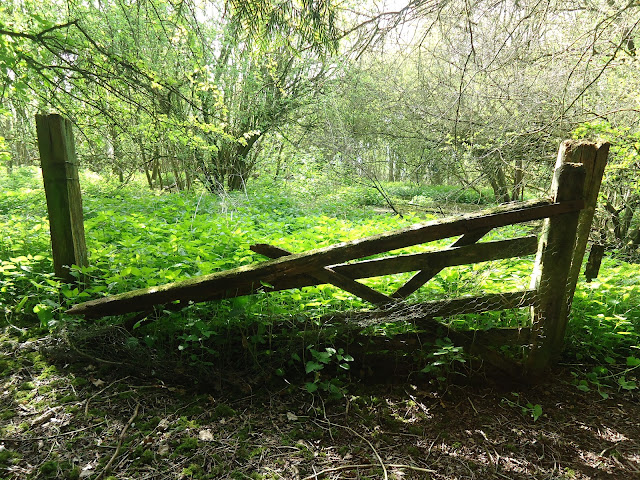
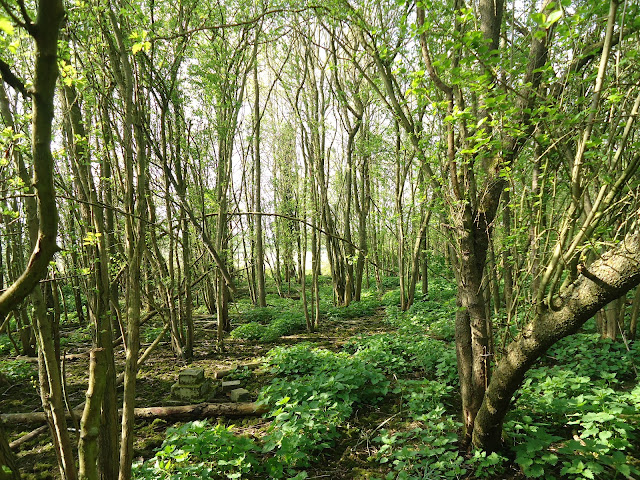
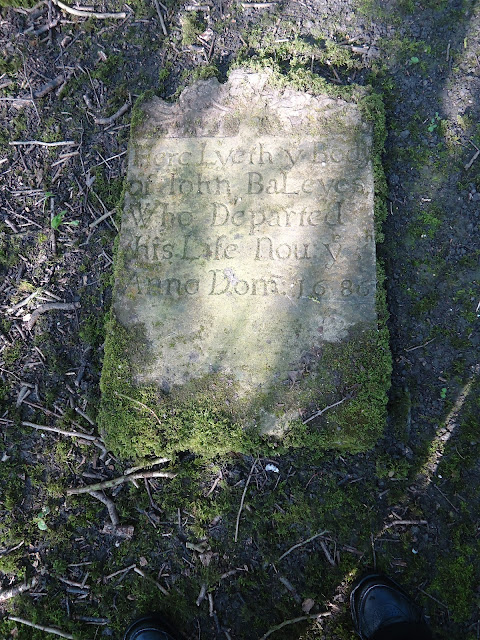
The church of St Mary’s, Eysey dated from the 14th century but was demolished and rebuilt in 1844. The Victorian church that replaced it stood empty for several years before it too was demolished in 1953. The parish registers date from 1571, and end in 1947 so as you can imagine there are a fair few burials in the churchyard. Today there is evidence of the boundary wall and some memorials but the whole area is heavily wooded and overgrown.

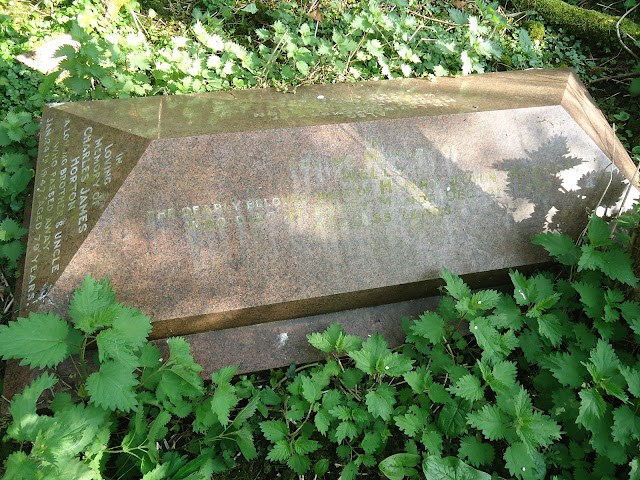
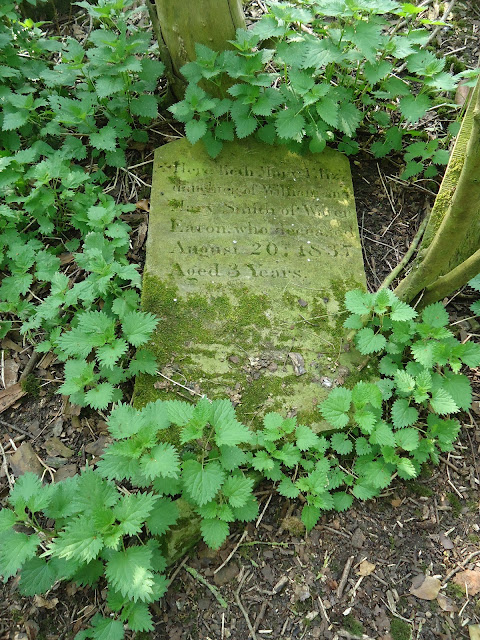
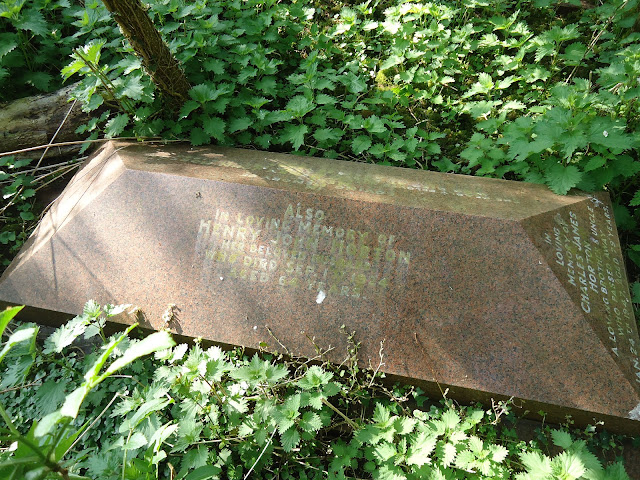
Amongst the nettles and fallen trees I found two perfectly preserved pink granite memorials both apparently dating from the 1920s and contained in a large family plot.

The inscription on one of the graves reads: In Loving Memory of Nelly, the dearly beloved wife of Henry John Horton who died at Eysey Manor Dec. 5th 1924 aged 55 years. On the other side of the memorial the inscription reads: Also In Loving Memory of Henry John Horton her beloved husband who died Sept 1st 1924 aged 64 years. The third inscription reads: In loving memory of Charles James Horton a loving brother & uncle who passed away Jan. 24th 1947, Aged 79 years.

In the neighbouring grave is a memorial to a mother and son. The inscription reads: In loving memory of Margaret the dearly beloved wife of Ernest Willis who died 24th July 1958. Aged 95 years.

On the opposite side of the memorial was the inscription that would lead me to Lydiard Tregoze.

In Loving Memory of Ernest Willis dearly beloved younger son of Ernest and Margaret Willis late of Can Court Wilts. July 5th 1891 – Feby 17th 1924 He served in the King’s Own (Royal Lancaster) Regt. & Royal Air Force throughout the Great War.

The Horton family had nipped back and forth across the Wiltshire/Gloucestershire county borders, farming at various times at the Manor Farm, Inglesham, Wiltshire and Broadway Farm at Down Ampney in Gloucestershire.

The Willis family had moved from Stanford in Berkshire to the parish of Lydiard Tregoze where John Ambrose Willis married farmer’s daughter Harriet Ellison and raised a large family at Can Court Farm, owned by The Masters, Fellows, Scholars of Pembroke College, Oxford. (For a history of Can Court Farm you might like to visit).

John Ambrose Willis died in 1886 and is buried in the churchyard at St Mary’s, Lydiard Tregoze. His son Ernest took over the tenancy of the farm and in 1889 married Margaret Fanny Horton at Down Ampney parish church where a host of Horton’s are recorded as witnesses at the wedding. That same year Ernest’s sister Ellen Willis married Margaret’s brother Henry John Horton.
On census night in 1891 Ernest and Margaret Willis are recorded at Caln Court with their one year old son Edward Ambrose and Ernest’s brother Henry L. Willis who was visiting with his two children, Sarah and Robert.

Henry John and Ellen Willis are at Costow Farm, a neighbouring property across the parish boundary in Wroughton.

By 1901 the Willis family had moved to Caversham where Ernest worked as a ‘butcher & purveyor’ at 12 Church Street. The family were still living in Caversham at the time of the 1911 census. Ernest and Margaret had been married for 22 years. Still living at home was Edward Ambrose, their eldest son, who worked at a Clerk for the GWR, and their daughter Margaret Louisa. Younger son Ernest is not recorded with the rest of the family.

Ernest senior died the following year. He may be buried in the large family plot in Eysey, perhaps mentioned on the sunken kerbstone that surrounds the two large memorials.

In 1911 Henry John and Ellen were living at Eisey [Eysey] Manor where Ellen (Nelly) died in 1920 and Henry John four years later. Henry John left £43,648 17s 9d with probate granted to his brother Charles James Horton and his three sons Robert Willis Horton, Henry Horton and Charles Horton.

Margaret, meanwhile, moved to Swindon and a house in Westlecott Road. The son with whom she is buried died at the Sanatorium, Linford, Hampshire in 1924. On the eve of the Second World War Margaret was still living at Southwood, Westlecott Road with her bachelor brother Charles J. Horton. Charles died in 1947 and Margaret in 1958 aged 95.

Childrens’ Christmas Tea

Continuing the story of Elliot Woolford, farmer at Hook Farm from 1899-1941. On Friday December 31, 1915, as the impact of the deprivations of the First World War tighten, Elliot writes about the Childrens’ Christmas Tree – a big event on the local Christmas calendar held at the school in Hook, usually a few days after Christmas. A particularly welcome event, especially in 1915.

Friday December 31, 1915.

I went to Swindon and sold butter 12/-                                                     12   0

Bt Groceries 2/6 Meat 2/3 papers 1/- Cigarettes,

Soap & Diary 3/3                                             9   0

Dog Biscuits 2/8 Sauceges 7d Sundries 2/6                                            5   9

Paid Carter 17/- William 14/6 Walter 14/6 Frank 8/-

Clarence 5/6                                2   19   6

                                                                                                                                                                                      3   14   3

Carter, William, & Walter, attending to Cows

Frank not at work

Clarence took the milk first time instead of Frank

Amy, & Dora Ody, & Babe, went up to the school tea. Amy was the sole means of they having a tea. She had no difficulty in Begging the money. Miss Dora & Dolly Ody Mrs Newth Mrs & Miss Hale Miss Habgood Mrs Webb Mrs Painter & Mrs W. Ody took their Children & assisted. About a 100 children attended. It was quite a success. Mr Leighton School master & his wife worked hard preparing the school etc.

Weather rough wind & stormy

God save the King

Read more about the Elliot Woolford diaries on the Friends of Lydiard Park website.

This old image of Hook Farm taken 1940-1960 is published courtesy of the Friends of Lydiard Park.

Boxing Day 1899

Continuing the story of Elliot Woolford, tenant farmer. December 1899 and Elliot spent his first Christmas at Hook Farm with his brother Rowland.

Tuesday December 26, 1899 St Stephen. Bank Holiday

Got a Gun Licence out for Rowl. 10/-                                        10.0

Gave Mother 10/- for Household Exs.                                      10.0

Sent £13. 15/- to Bank.

Went up to Mr Owen Hales. “Creeches Farm” shooting

Rowl shot two sparrows all told. Could not find a rabbit

Started 2 Blackbirds these escaped unhurt with the exception of a little fright & palpitation.

We spent the evening with them viewing photos of the family and indulging in a few games with the childrens playthings the Party broke up at 11.15 pm all perfectly sober.

Weather Dull foggy & raining all the forenoon

Very quiet Xmas Generally No doubt owing to the War

Image of Creeches Farm taken 1880-1890 is published courtesy of the Friends of Lydiard Park.

The day before Christmas

In 2025 I shall continue my research into the life and times of Elliot Woolford (farmer at Hook Farm) and the parish of Lydiard Tregoze based on his diaries. Selected volumes of the diaries can be viewed on the Friends of Lydiard Park website.

In 1899 Elliot Woolford moved to the village of Hook where he took over the tenancy of Hook Farm, part of the Lydiard Park estate. Elliot kept a meticulous diary recording daily work on the farm from 1899-1940. In this unique archive we learn about changing practices in agriculture as he continued to modernise and develop the farm. He writes about family members, friends and neighbours, social and national events and life on the declining Lydiard Estate.

Read about the day before Christmas 1902. Work carried on as usual but Elliot also records his sorrow at the sudden death of his much loved mother.

Tuesday December 23, 1902

Mother Died to Day at 2.40 o.clock P.M.

Cut 425 Sprouts 17 Bags Savoys etc

I went to Swindon & delivered vegetables received Cash  1 15 0

Bought fish 6d Butter 1/3                 1  9  

Paid Mobeys for their labour 9/- 9/- & 4/-        1  2 0

Gave Ellen 20/- to get mourning             1  0 0

                                                                 £2 13 9

                           2  3  9

Mother died this afternoon at 2.40 Rowl, Aunt Martha, Ellen, Fanny Matthews, & Father was there also Fred Woolford’s wife “Bessie” She died very happy & passed away without pain while in Rowls arms as he was trying to turn her over. We feel her loss to us we were so attached to her for she was most devoted to us all & ever studdying our well being & comfort and could never do enough for us. She asked to see Sam but he did not arrive till after she had been fallen asleep two hours. I went over in the Evening.

Weather Mild

Frances Ann and William Woolford are buried in St Mary’s churchyard, Purton. Image published courtesy of Duncan and Mandy Ball.

Pictured seated are Elliot and his wife Amy with their son Rowlie in the garden at Hook Farm.

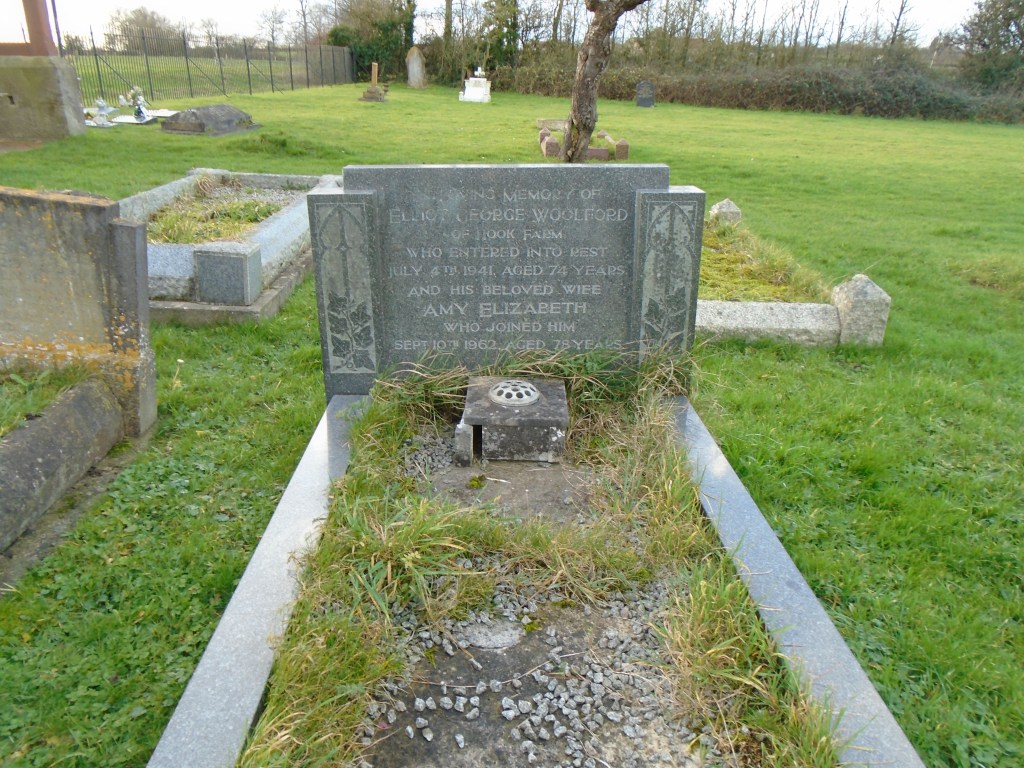
Elliot died in 1941 and is buried in Hook Cemetery with his wife Amy who died in 1962. Hook Cemetery was laid out in 1891 in a field gifted by Viscount Bolingbroke. This field, formerly called Ables, was once part of Hook Farm.

Highgate Cemetery

What better way to spend a wet and windy Friday than to go on a cemetery walk.

I recently went with two new cemetery loving friends on a trip to Highgate Cemetery. For many taphophiles Highgate ranks high on the list of must visit cemeteries and I can confirm it did not disappoint.

Highgate is a cemetery of two halves, bisected by Swain’s Lane. We were met at the entrance to the older, West cemetery by our guide Martin who conducted us on a ‘highlights’ tour and a masterclass in all things cemetery focused.

We first stopped at the grave of James Selby, a coachman who won a £1,000 bet by driving his coach and horses from London to Brighton and back in under eight hours. We marvelled at the enormous Otway vault with its mosaic floor, once visible through a glass topped cover while at the grave of Baronness de Munck, Martin told us the significance of the Pelican engraving on the headstone, symbolic of sacrifice and a mother’s love, and something I had never heard of before.

I never expected we would be able to enter the Terrace Catacombs but Martin unlocked the door and led us into this twilight world of burials. Badly vandalised in the 1970s there was still much to see and learn as we listened to the story of surgeon Robert Liston described as ‘the fastest knife in the West End.’

Amongst the ornate headstones and tombs and massive mausoleums (the Beer Mausoleum is bigger than my house!) the most moving grave for me was that of Highgate’s lost girls. Ten young girls and women, inmates of the Highgate penitentiary, a reformatory for “fallen women” are buried in an unmarked grave and remained forgotten and unknown until historians Rowan Lennon and Sam Perrin researched their stories in 2014. The first of the girls buried in the grave at the cemetery’s furthest boundary was 12 year old Emma Jones in 1862. The last was Agnes Ellis, 29 who died in 1909. The Lost Girls are now included on the official tours where their stories have a new “life”.

We three had our own personal mission – to get to the bottom of a burial that had once taken place in the Egyptian Avenue but whose coffin was reputedly no longer there.

Ellen Medex was the long suffering mistress of Henry, 5th Viscount Bolingbroke whose country seat was at Lydiard Park. Apparently his intention to marry the young Belgian born woman had been thwarted by her sister and it looks like Henry stopped pressing his suit thereafter. The couple sojourned on the continent for awhile before returning to London and a life lived as Mr and Mrs Morgan. They had four children, of whom only one, a daughter Ellen Rose, survived to adulthood before Henry took up with a servant from Lydiard, Bessie Howard. When Ellen died in 1885 Henry was overcome by grief, apparently! He chose the fashionable Highgate Cemetery as his preferred burial place for his “wife” and paid £136.10.0 to have Ellen interred as the Viscountess Bolingbroke. There is, however, no evidence that Henry ever married Ellen and even the entry in the burial registers describes her as “wife” (in inverted commas).

So why did I think Ellen had been removed? Well, someone told me she had. However, Nick at Highgate confirmed that she is still most definitely there and he includes her on his guided walks, which was lovely to learn.

The other mausoleums in the Egyptian Avenue have inscriptions by the door, but of course Henry didn’t do this for Ellen. He probably wasn’t brave enough to declare her status as Viscountess Bolingbroke in so public a place when there were many who knew she wasn’t.

One visit to Highgate is definitely not enough and my new found friends and I want to return. And now we have an ambitious plan to visit the remaining six cemeteries on the “Magnificent Seven” list. Look out Kensal Green – here we come!

The Egyptian Avenue, Highgate Cemetery

View from the Egyptian Avenue, Highgate Cemetery

The Egyptian Avenue where Ellen Medex is buried as Viscountess Bolingbroke

Cemetery map of the Egyptian Avenue – Ellen Medex (Viscountess Bolingbroke) is buried on the second right.

Ellen Medex – published courtesy of the Friends of Lydiard Park

Henry, Viscount Bolingbroke – published courtesy of the Friends of Lydiard Park

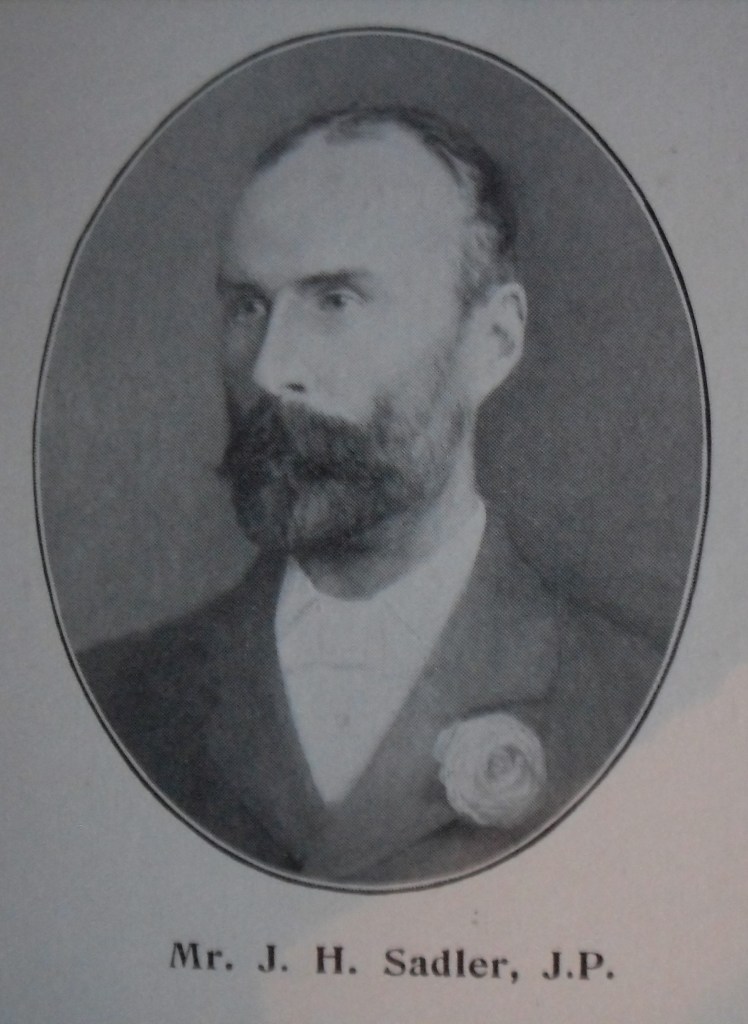
James Henry Sadler – much respected

Most of the time I am entrenched in Radnor Street Cemetery – but occasionally I venture out, sometimes to neighbouring churchyards and cemeteries. And sometimes my work with the Friends of Lydiard Park collides with Radnor Street Cemetery. I am presently transcribing the diaries of Hook farmer Elliot Woolford. On March 30, 1929 Elliot writes:

Saturday March 30, 1929

I went to James Henry Sadler Esq funeral at Lydiard Millicent this afternoon he was taken to Church on a farm wagon there was a lot followed he was much respected.

A short biography is published in the ‘Wilts Book’ discovered by Radnor Street Cemetery friend and colleague Mark Sutton.

Sadler. – James Henry Sadler, J.P., Lydiard House, near Swindon; son of the late Samuel Champernowne Sadler, J.P., F.R.C.S., of Purton Court, Wilts; born at Purton, August 17th, 1843; educated at Hoddesdon, Herts, and Royal Agricultural College, Cirencester. Landowner and agriculturist, farming some of his own property; Justice of the Peace for Wilts; member of the Wilts County Council since its formation, representing the Purton Division; Captain, Royal Wiltshire Yeomanry (retired); Chairman of the Cricklade and Wootton Bassett Board of Guardians, and Rural District Council; formerly, and for some years Chairman of the Purton and Lydiard Millicent Parish Councils, North Wilts Liberal Association, and Swindon Chamber of Agriculture. Recreations: hunting, and shooting. Married, in 1879, Ann Matilda, daughter of the late T.P.W. Butt, of Arle Court, Cheltenham.

Photograph published courtesy of Duncan and Mandy Ball.

Kate Romans – a very good servant

Wednesday January 3, and as promised I am working on my new book based on the diaries of Elliot Woolford, but as ever the residents of Radnor Street Cemetery continue to creep in.

Following the sudden death of his sister Ellen in 1905 Elliot was compelled to engage a housekeeper. He appointed Kate Romans who had plenty of experience of domestic service and had recently been employed as a housekeeper for widower James Harper and his three sons in Swindon.

Kate was baptised  on January 12, 1870 the daughter of Methodists William and Maria Romans. William states his occupation as labourer and in 1871 the family were living at 5 Eastcott Hill. So, I had to check the Radnor Street Cemetery burial registers and of course several members of the family were buried there.

Both William and Maria were from Chiseldon and their first child, Alfred James Leonard was born there in 1864 and was buried there in 1867.

By 1870 the family had moved to Swindon. William died in 1894 and was buried in grave plot A928 which he shares with his daughter Ada who died two years later.

Maria died at The Institution, Stratton St. Margaret and was buried on April 13, 1916 in grave plot C711. Like William and Ada’s grave, this is a public plot and Maria is buried with 6 others, although two of them are her sons. Ernest Edward Romans who died aged 17 in 1896 and Thomas Webb Romans who died in 1898 aged 38. A note in the burial registers reads – ‘fell down dead at Railway Wks Stratford S.’

I was able to locate various other members of the family – George Romans who died in 1926 and Alfred Henry Romans who died in 1934. Elizabeth Passmore nee Romans died in 1951 and was buried in plot C4677 with her husband and son and Sarah Ann Robinson nee Romans who died in 1913 and was buried with her husband in grave plot D1290. Youngest daughter Florence Jane died in 1963 – in Australia and I can’t find William Romans jnr either who died in 1936, but he maybe buried in Whitworth Road Cemetery.

But what about Elliot’s housekeeper Kate Romans?

On June 14, 1911 Elliot married Amy Newth. Kate had already handed in her notice as Elliot had recorded in his diary entry Tuesday May 23.

With just a day left of their honeymoon, Elliot writes in his diary on Tuesday June 20:

Miss Kate Romans left my employ today after 6½ years service as housekeeper. Very good servant.

So what happened next to Kate. Well, she’s proving to be a bit elusive. In 1939 there is a Kate Romans resident at St. Margaret’s Institution, Stratton St. Margaret. Her occupation is stated as Domestic Duties – Retired. In 1953 there is a death registered in Swindon for Kate Romans aged 81, which is roughly the correct age. Could this be Elliot’s Miss Romans? If anyone has any information I’d love to know.

Now it’s back to Hook Farm and Elliot Woolford’s diary.

Image of Hook Farm published courtesy of the Woolford family and the Friends of Lydiard Park.

George Watson – greengrocer and florist

Local farmer Elliot Woolford kept a daily diary for more than 50 years and I’m transcribing it for the Friends of Lydiard Park online Lydiard Archives project.

The diaries in which Elliot records life in the small rural parish of Lydiard Tregoze constitute an important social document. Here he discusses everything from the vagaries of the weather to crop failures; from church festivals to village goings-on; the death of Queen Victoria and the end of the war in South Africa. His writing is unaffected and his voice colloquial, the diary was written for his reference only.

In 1911 Elliot brought his produce to Swindon market and delivered to shops in the town centre. One of his regular customers was George Watson who ran a greengrocers and florists at 21 Cromwell Street. In his diary Elliot records their transactions.

Friday April 7: Received 10/6 of Mr G. Watson for rhubarb delivered last week.

Monday May 15: 1 doz Pea sticks to Swindon for Mr G. Watson.

On Friday September 22 it was Mrs Watson who greeted Elliot, paying him £1 10/- for 20 dozen cabbage.

On Saturday September 23 Elliot writes in his diary: Mr G. Watson died last night after a short illness.

George Watson was buried in Radnor Street Cemetery in grave plot E7394. Two days later Elliot writes: Received 43/- of Mrs Watson for cabbage & turnips delivered.

Annie Watson continued to run the shop after the death of her husband.

Saturday October 28: 7/6 worth of cabbage to Mrs Watson and 9 old hens @ 1/3 each.

Annie and George were both in their 40s when they married; there were no children to carry on the business.

In time Annie moved in with her sister and brother-in-law, Susan and George Fowler at 23 Salisbury Street. When George Fowler died in 1929 he was buried in grave plot E7394 with Annie’s husband. Annie died in 1945 aged 80. She was buried with both the Georges.

George Watson’s shop pictured during flooding in Swindon July 25, 1909 published courtesy of Local Studies, Swindon Central Library.

Death of Mr. G. Watson, – At his residence, 21, Cromwell Street, on Friday night, Mr. G. Watson suddenly passed away. Deceased, who was 52 years of age, was a florist, and he had recently been under medical attention for heart trouble, though the end came quite unexpectedly. Mr Watson had lived in Swindon during the last nine years, and was on the executive of the local Horticultural Society. He was also a member of the Ancient Order of Foresters. He leaves a widow, but no children.

The funeral took place on Wednesday afternoon. The procession left the house at 3 o’clock and wended its way to St Paul’s Church where the first portion of the service was conducted by the Vicar (the Rev. H.H. Rackham). The cortege then proceeded to the Cemetery, where the Rev. T.L. Mackesy read the concluding portions of the service.

The floral tributes were numerous and handsome and included two artificial wreath inscribed “A token of respect to George Watson from stallholders, shopkeepers, friends and neighbours RIP” and “a tribute of respect from members of the Queenstown Club.”

Extracts from the North Wilts Herald, Friday, September 29, 1911.

The Woolford family

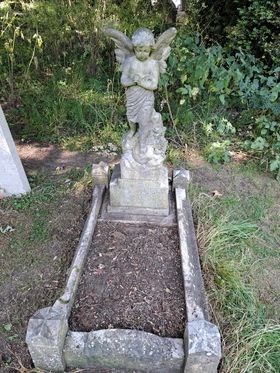
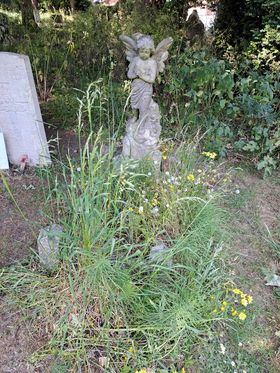
One of our volunteers recently sent me a photo of a grave she had cleared and tidied up. This angel memorial surmounts the grave of a young child. Bex has a knack of finding graves with a particularly poignant story.

Terence Anthony Woolford was born in July 1930, the first of Reginald and Gladys Woolford’s three children. Reginald Charles Woolford was born in 1904, the son of Charles Woolford who worked as a wheel turner in the railway factory. In 1928 Reginald married Gladys Rose Popham, the daughter of Ernest Popham, a fitter in the railway factory.

Reginald and Gladys were living at 7 Drove Road in January 1936 when their young son was taken ill. He was admitted to the Isolation Hospital where he died. He was 5 and a half years old. His funeral took place in Radnor Street Cemetery on January 20 where he was buried in grave plot C1720.

I am presently engaged in a BIG project transcribing the diaries of a local farmer as part of the Friends of Lydiard Park’s archival work. Elliot Woolford kept a daily diary from 1885 until his death in 1940. No mean feat for a busy farmer with a small team of family members and local labourers working with him.

And then I wondered if there could possibly be any connection between Elliot and this little boy buried in Radnor Street Cemetery.

So far I have traced Elliot’s family back several generations. There have been Woolfords living in the Purton, Lydiard Millicent and Lydiard Tregoze area for at least 600 years. From Robert Woolford who married Susannah Staley in the parish church at Lydiard Millicent in 1757 to “William Woolford of ye parish of Lidyeard Treagoze in the County of Wilts yeoman” who in 1695 left four of his sons William, Benjamin, Nicholas and Oliver, £5 each in his will.

Returning to the story of little Terence Anthony Woolford…

A family historian has placed an extensive Woolford family tree on the Ancestry, website which I navigated with alacrity. At first there were no obvious connections; no farming background for Reginald, no links with the rural Lydiard parishes, but back and back I went. Then I discovered John Woolford born in 1600 in Trowbridge. John married Elizabeth Baker in the church of St. Mary’s, Lydiard Tregoze on February 12, 1621. He died in his adopted parish on February 28, 1674 and was buried in the churchyard there. This John Woolford appears in both little Terence and Elliot Woolford’s family tree.

Thank you Bex for another fascinating find.

Before and after photos.

You might also like to read:

Fanny Ireland Fletcher