James Shopland – a local hero

The re-imagined story …

I’ve seen them all arrive at Swindon Junction, the King and Queen in 1924, the young Princess Elizabeth in 1950, politicians, film stars, you name them, I’ve seen them. But I’ve never seen a sight like the day they brought back the body of James Shopland.

I was just a youngster then and recently employed as a station lad. My duties mostly consisted of carrying things around, everything from luggage to parcels. I wasn’t allowed too close to the passengers as they alighted from the trains; I was considered too cheeking and disrespectful. I had a lot to learn and looking back I reckon my education began that day in July 1900.

Early that morning I was told to clear out a small, seldom used room along the platform. I was to get rid of any rubbish and sweep the floor. I was to place a small table there and a couple of chairs and to make sure everything was polished.

“Who are we expecting?” I asked Fred, the head porter, “the bloomin’ Queen herself.”

I soon learned not to give him any cheek. He boxed me round the ear and gave me a good telling off. I was lucky not to lose my newly acquired job that day and for a good few weeks after that I tried to keep out of his way.

The room was to be made ready to receive the floral tributes for a funeral due to arrive that afternoon. So many wreaths and crosses, I had never seen so many. That day on July 11, 1900 I witnessed the homecoming of an unsung hero, James Shopland who died as he tried to rescue three men in an accident at the Southampton Sewage Works at Chapel.

The funeral cortege left Mr Shopland’s home in Woolston, proceeding by way of the floating bridge to the Dock station. A special carriage was attached to the 2 pm train to Swindon where Mr Shopland was to be interred at the Swindon Cemetery on Kingshill.

The coffin was carried from the train, through the station and placed in a glass-panelled car. I watched the pallbearers return to collect the flowers and counted more than 60 wreaths and crosses. Some were placed in the car, others were carried by those that followed.

I watched the long line of carriages with many more people walking behind. The procession continued along Wellington Street where blinds and curtains were drawn at the windows and people stood with bowed heads to pay their respects.

The story of James Shopland’s death had already appeared in the Swindon Advertiser, but I was just a silly, cheeky young lad. I had paid no attention. That evening, when I told my Pa about the funeral, he told me how James Shopland had died.

primroses

The facts …

James Shopland, a civil engineer, was born in Purton in 1873, the son of James Rew Shopland, also an engineer.

By 1900 James had moved to the Southampton area and on July 6, 1900 he was at the Southampton Sewage Works, although it was pointed out at the inquest that he had nothing to do with the works, but was assisting in the rescue.

Three labourers working in the press house at the Sewage Works had attempted to free a blockage in a lime vat, firstly by ramming a rod down from the top, which was the usual way of clearing it. However, when this didn’t work, one of them went down into the ejector chamber and tried to free the pipe by undoing it. They tried to remove the cap but this wouldn’t move either, so they proceeded to remove a flange from the bottom and then the upright pipe. This immediately set off a fast flow of sludge and released a smell that rendered the men semi-conscious.

Passing workmen attempted to rescue the three men who were all lying unconscious in the sludge. As a call went out for volunteers, James Shopland arrived on the scene. A witness at the inquest described how as Mr Shopland descended the ladder he saw him put his hand to his head.

At one point someone tried to stop any more men going into the chamber, declaring that at this rate there would soon be fifty dead at the bottom.

James was brought to the surface where artificial respiration was attempted, but he was already dead. At the subsequent post mortem the cause of death was found to be due to congestion of the lungs brought about by carbolic acid gas poising.

The jury at the inquest recorded a verdict of accidental death and commended the noble endeavour made by James Shopland and four others who had attempted to rescue the men.

James was 26 years old and had been married for just a year. He is buried in plot D100 with his wife Helena (Nellie) Elizabeth Shopland. Helena moved to Bournemouth where she lived with her widowed mother-in-law, but she eventually came back to Swindon. At the time of the 1911 census she was living at 159 Goddard Avenue with her sister Violet Blanche Brown. She died just a few weeks later, on June 16, 1911. Her funeral took place on June 20 and she is buried with her husband.

James Shopland D

Up at the Castle

The re-imagined story …

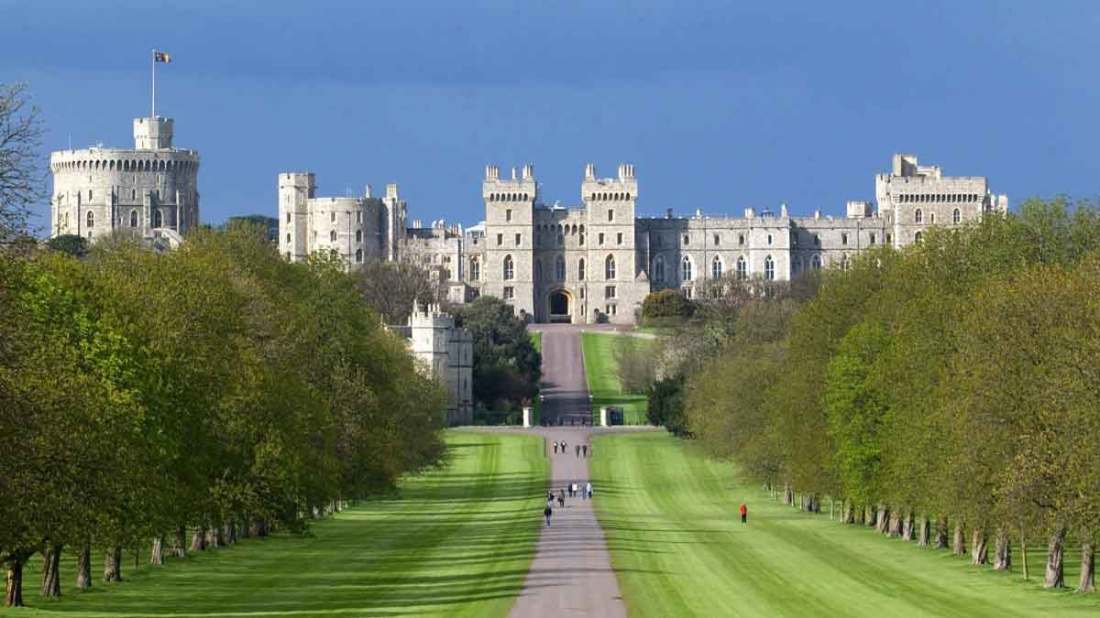
Rosa Christelow and I started work as housemaids at Windsor Castle on the same day. Rosa was older than me and had lots of experience. I had grown up in Oakley Mere, a small village on the outskirts of Windsor, and had lots to learn. Rosa also used to say I had a lot of cheek.

People couldn’t understand how we were such good friends; we were like chalk and cheese. Perhaps that’s why.

Rosa got me out of a lot of scrapes, I can tell you. And me, well I could always make her laugh. Once I demonstrated how to dance the Charleston in a corridor outside the library where some of the young royal cousins were playing a gramophone. I nearly lost my job over that, but Rosa managed to intercede for me.

It was a wonderful life working up at the Castle. The things we saw and the people we met. Well, not met exactly. Most of the guests barely noticed us, but we would peep round corridors and over the top of stairs to watch them arrive and depart. And of course, there were occasions when the household staff were presented to the King and Queen. And Christmas – oh Christmas was a wonderful time. Hard work, but wonderful.

And sometimes the staff had the place to ourselves. What we got up to then, well I couldn’t possibly tell you.

I left in 1913 when I married Robert one of the footmen up at the Castle, but I always kept in touch with Rosa. When she retired, I visited her once or twice at the house she shared with her sister in Swindon. Her home was as neat as a pin. You could tell she had been a housemaid; little touches I noticed, ways of doing things she had taught me. I didn’t envy the little girl who came in to clean for them. I bet Rosa put her through her paces.

Goddard 2
Goddard Avenue

The facts …

Rosa Harriet Christelow was born on October 25, 1879 the third child and second daughter of John Christelow, a boilermaker, and his wife Priscilla. Rosa was baptised at St Mark’s Church on November 30, 1879 and grew up at 42 Wellington Street, the family home for more than 70 years.

In 1907 she entered the Royal Household at Windsor Castle as one of the 38 Class 3 housemaids earning £25 per annum. Rosa was later promoted to a Class 2 housemaid on £30 per year. She was still employed at Windsor Castle during the First World War and records list her there in 1924, the date at which published figures close.

At the time of the 1911 census Rosa was one of 33 housemaids, a total of 51 female servants. Royals in residence in 1911 were Princess May of Teck who was five years old and her three-year-old brother Prince Rupert of Teck. These children were Queen Victoria’s great-grandchildren.

By 1939 Rosa was living at 42 Wellington Street with her sister Rhoda where she is described as a paid domestic servant. There are gaps in what is known about Rosa’s whereabout between 1891 to 1901 and 1924 to 1939 probably due to a mis-transcription of her surname.

Rosa’s parents, John and Priscilla, are buried with two of their daughters, Laura Priscilla and Rhoda Annie, in plot D1350.

Rosa eventually moved into 125 Goddard Avenue, a home she shared with her brother Samuel. After several years working in the railway factory, Samuel Christelow travelled to Zimbabwe where he was ordained. Widowed and retired he returned to Swindon where he lived with Rosa at 125 Goddard Avenue. He died in St Margaret’s Hospital in 1972 and is buried in plot D1587.

Rosa died at St Margaret’s Hospital in 1972. She was aged 92. She is buried with her grandmother in plot B1877.

Christelow - Copy
Rosa was buried with her grandmother

Samuel James Christelow
Samuel Christelow

You may also like to read:

Archdeacon Samuel Christelow – missionary

Down Your Way – Old Town

The ‘fur coated women of Old Town’ received a bad press when the Swindon Advertiser interviewed local bus drivers and conductresses during the Second World War.

“They expect to be picked up and put down outside their own homes, regardless of the approved stopping places, take twice as long as the average passenger to leave the bus because they are too busily engaged in a conversation which almost monopolises the vehicle, and invariably need change from a half crown or a note,” reported the Advertiser.*

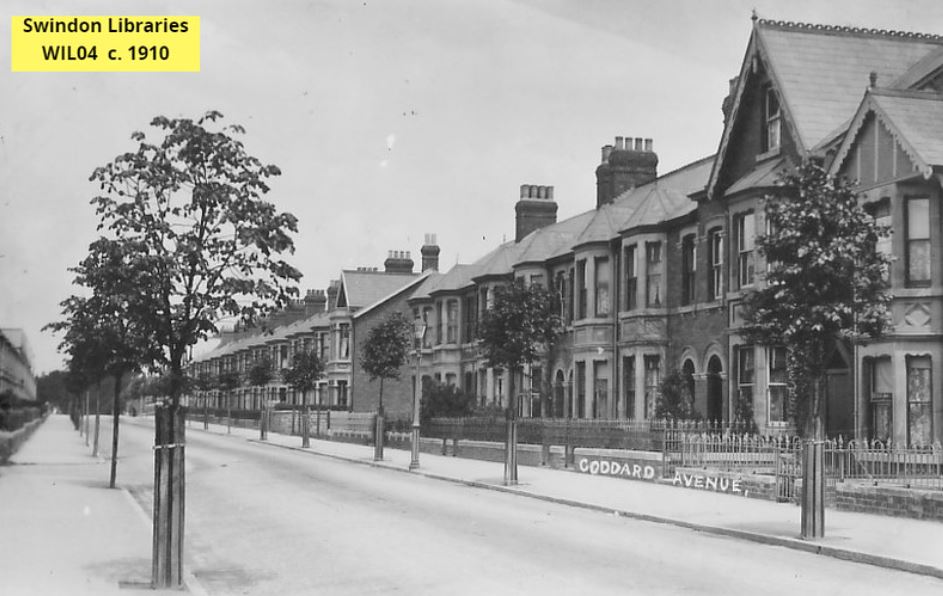
Read about some of the former residents of Goddard Avenue who were hopefully less annoying!

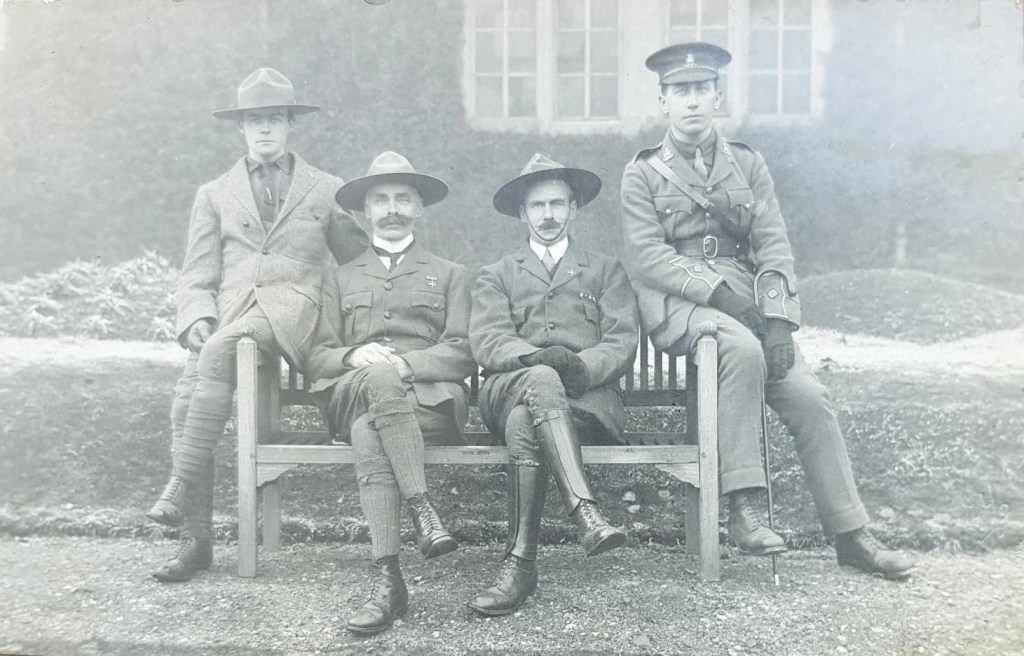
William Rowland Bird – chief chemist at GWR Works and Scout Leader

Phyllis Mary Peters – Railway Clerk

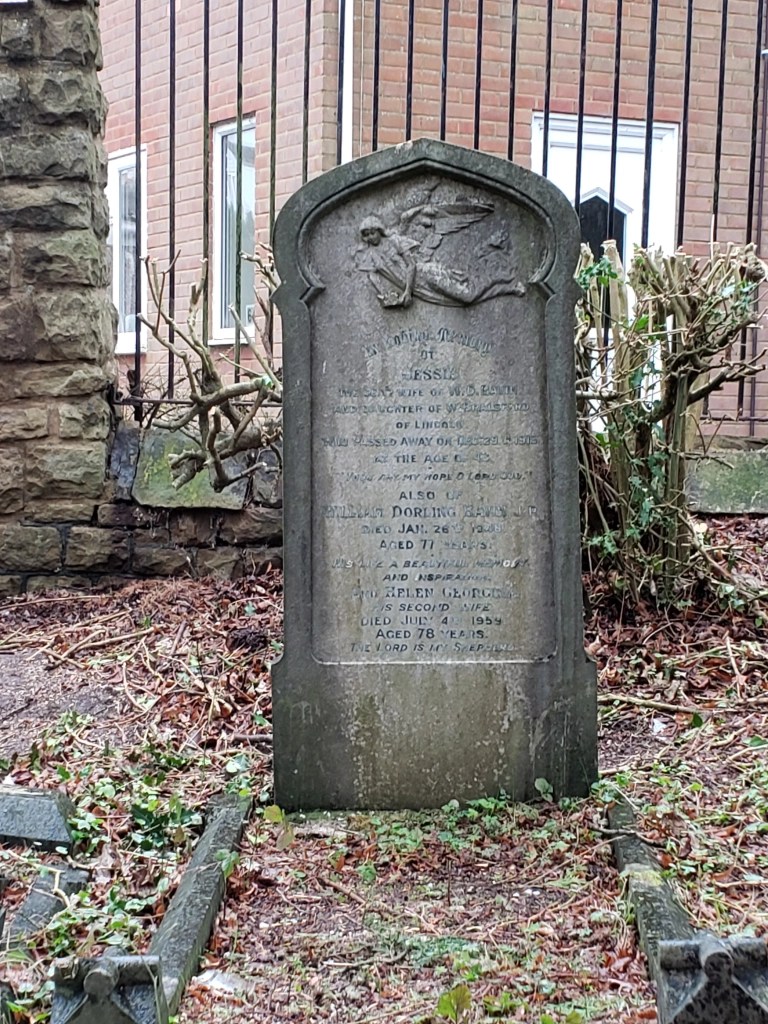
William Dorling Bavin – Swindon’s War Record

*Swindon at War was a series of articles published in 2011 sourced from the Swindon Advertiser 1939-1941 and compiled by myself.

John Glover Norman – builder

John Norman and his wife Eliza Loveday had a very long courtship. John appears on the 1891 census as boarding with the Loveday family at 26 Victoria Street North. John is 25 and working as a carpenter, Eliza Jane is also 25 and working as a dressmaker. The couple didn’t marry until the winter of 1906.

John Glover Norman was born in Chedworth, Gloucestershire in 1863 the son of Isaac Norman, a woodman and agricultural labourer, and his wife Mary. He completed his carpentry apprenticeship with a Chedworth carpenter but by the end of the 1880s he had moved to Swindon where he set up in business as a builder.

In 1898 and 1899 he was working in Goddard Avenue. He also built several properties in Westlecot Road and in 1906 he built 13 houses in the Mall. John built some classy properties but business was not straightforward and in the Spring of 1909 John Glover Norman was declared bankrupt.

At the time of the 1911 census, following his bankruptcy, John and Eliza are living in Victoria Road with a whole clutch of Loveday relatives. Eliza’s widowed mother lives with them as does two of Eliza’s nephews – Frederick Wm Loveday aged 22 a Law Clerk who describes himself as out of work, and Ernest Albert Loveday who was 24 and a carpenter, so most probably working with John. John and Eliza had two children, Beryl and a son Garnet.

John recovered from the bankruptcy crisis of 1909 and was soon back in business in Gorse Hill where he built a lot of properties including 44 houses in Caulfield Street and between 1926 – 1933 he built more than 60 houses in a road that would eventually bear his name – Norman Road.

John died in the Westlecot Manor Nursing Home in February 1954. He is buried in grave plot E8331 with his wife Eliza Jane, her mother Jane and 14 year old Dorothy Frances Reason the daughter of Eliza’s sister Mabel.

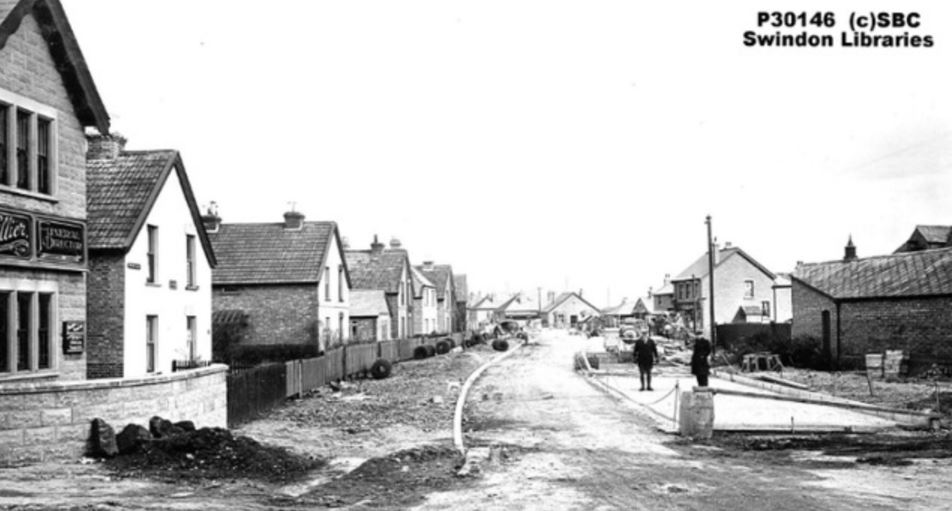
William Hooper image of Goddard Avenue taken around 1910 and published courtesy of Local Studies, Swindon Central Library.

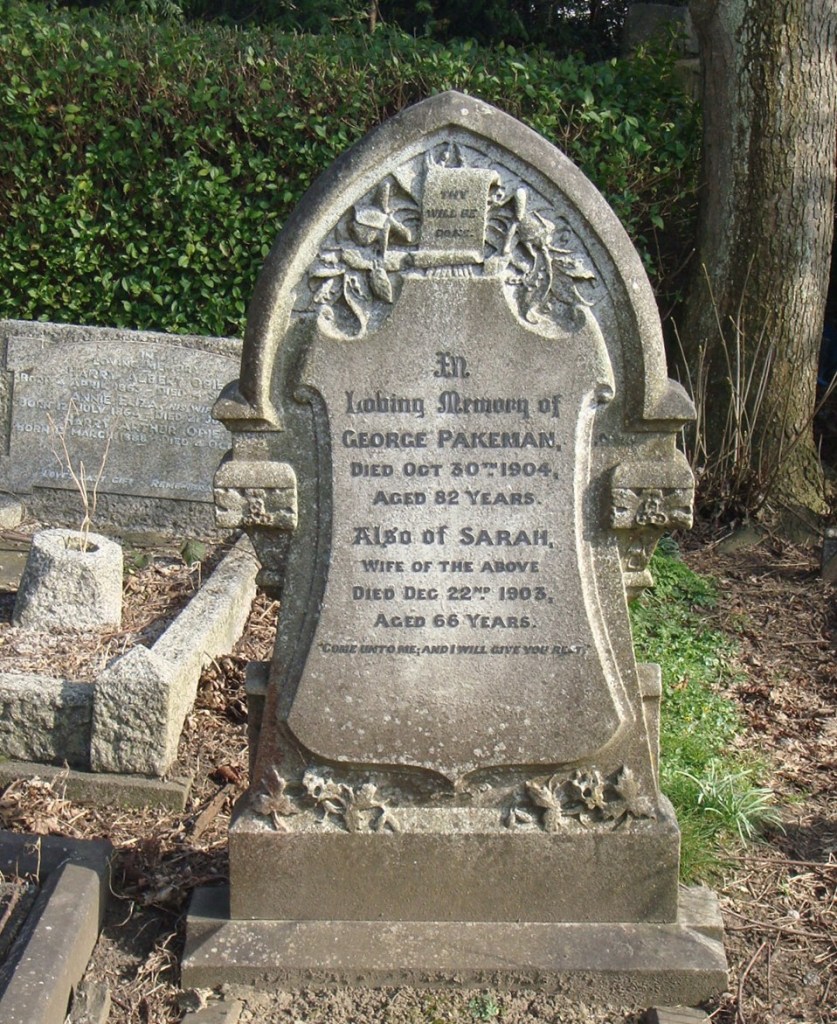
George Pakeman – regimental tailor and Crimean Veteran

During more than 100 years in business, Pakeman Brothers advertised themselves as a Civil and Military Tailor, which is hardly surprising!

Founder George Pakeman was born in Uxbridge, Middlesex in 1822, the son of John, a tailor, and his wife Jane Pakeman. He followed his father into the tailoring business, but not the family firm. In 1859 he married Sarah Philpott and by 1863 the couple had moved from Canterbury, Kent and set up in business at 22 High Street, Old Swindon.

But prior to that George can be found on the 1851 census as ‘Master Tailor in the Regiment’ at Ashton Barracks, Hartshead, Ashton Under Lyne, Lancashire. However, it was only when I searched for George’s obituary that I discovered the full extent of his military career.

The remains of Mr George Pakeman, one of Swindon’s Crimean veterans, were on Wednesday interred in the Cemetery, Swindon. Deceased, who had served in the trenches before Sebastopol, and had been engaged at the battles of Alma and Inkerman, left the army with the rank of sergeant, after having acted for about ten years as master tailor in the depot of the 50th Regiment at Canterbury.

The Western Daily Press, Bristol, Thursday, November 3, 1904.

George died at his home (appropriately named Inkerman) 129 Goddard Avenue, on October 30, 1904. He was buried on November 2 in grave plot E8617 joining his wife Sarah who died the previous year.

This newly discovered history reveals George Pakeman as a member of the growing number of recently located Crimean veterans buried in Radnor Street Cemetery.

William Henry Selby – honourable in all his dealings

Many of the men who built Swindon were incomers to the town, but William Henry Selby was homegrown.

William Henry Selby was baptised at Holy Rood, the old Swindon parish church in the Lawn, on April 27, 1834, the son of Thomas Selby, bricklayer and his wife Mary. On the 1841 census the 7 year old boy is living in Dammas Lane with his parents and four siblings, Daniel 8, John 5, Jane 4 and 3 months old George.

William followed his father into the building trade, working as a stonemason. In 1863 he married Mary Ann Saddington, a domestic servant working for the Goddard family at the Lawn at the time of her marriage. In 1871 the census reveals the couple were living at William’s boyhood home with his widowed mother and their own three children. William would live his whole life in the house where he was born.

William’s name first appears in trade directories in the 1870s and across the years his sons Albert Henry and George Alexander Selby would join him in the business. Between 1896 and 1900 the family business built more than 50 houses across both Old and New Swindon from St. Margaret’s Road and Goddard Avenue to Graham Street and Rosebery Street.

Image of St Margaret’s Road published courtesy of Local Studies, Swindon Central Library.

William died April 14, 1899 aged 66 years. He was buried in plot E8088 on April 19, which he shares with his son George Alexander who died in 1923 and Julia Barnett, possibly a family member, who died in 1953 aged 91 years.

Death of Mr W.H. Selby

Another link between the Swindon of the past and that of the present has been snapped by the painfully sudden death of Mr W.H. Selby, builder. Mr Selby had not enjoyed the best of health of late, but he moved about with his wonted activity, and his friends did not entertain any forebodings. About 9.30 on Friday night, however, Mr. Selby was taken ill in Victoria Street, and within a few minutes he had breathed his last. He was assisted in the direction of his home as far as the Goddard Arms Hotel, where, in view of his condition, it was thought advisable to complete the journey in a cab. Mr Selby was accordingly driven home, where he expired in the course of half an hour, his death having been brought about by a paralytic stroke. The deceased’s figure was very familiar in Swindon, and the news of his death will be heard with great regret. Three generations of Mr Selby’s ancestors have been associated with Swindon, and have carried on successful businesses as builders in the town; and Mr Selby himself well perpetuated the tradition, winning much respect as a tradesman of the best type, upright, faithful, and honorable in all his dealings. Deceased was an enthusiastic horticulturist, and did a lot of hard work as a member of the Swindon Horticultural Society. His chief hobby was fruit and flower growing, and the success of his efforts in this direction may be gauged by the fact that he has won numerous prizes at the Crystal Palace shows against the strongest opposition. His local triumphs have been almost innumerable.

The interment took place on Wednesday at the Cemetery amid many tokens of sorrow and regret. The cortege left deceased’s residence at three o’clock, and proceeded to Christ Church, where the service was read by the Rev N.E. Howe (vicar). The procession then wended its way to the Cemetery, where the last solemn rites were performed by Mr. Howe. The principal mourners were Mr. T. Selby (brother) and Mrs T. Selby, Miss Annie Selby (sister). Messrs Albert, George and Lewis Selby (sons), Miss Louisa Selby (daughter), and Mr and Mrs Smith (cousins). A large number of friends followed. Wreaths were sent by the family, Mr Wheeler, Mr and Mrs F. Williams, Mr and Mrs Fenton, Mr and Mrs Day, Mr and Mrs White, Mr and Mrs Croad, Mr and Mrs D. Lane, Mr and Mrs Cockbill, Miss Kinneir, and the Committee of the Swindon Horticultural Society. The coffin was of polished panelled elm, with massive brass fittings, bearing the inscription, “William Henry Selby, died April 14th, aged 65 years.” The funeral arrangements were satisfactorily carried out by Mr F.J. Williams, acting for Mr. J. Williams.

North Wilts Herald, Friday, April 21, 1899.


Whitworth Road and the Broadway pictured during the 1930s when William Henry Selby’s firm was building a house for N.L. Selby in 1937. Published courtesy of Local Studies, Swindon Central Library.