Stanley William Ashton – pilot officer

Pilot officer Stanley Ashton married Josephine Loveday in December 1939. Josephine was the daughter of Frederick and Adeline Loveday. Frederick served as an Air Mechanic 1st Class during the Great War. He died in the King George Military Hospital in Stamford Street, South London. He was 29 years old and left a widow and two small daughters.

Stanley William Ashton and Josephine Loveday

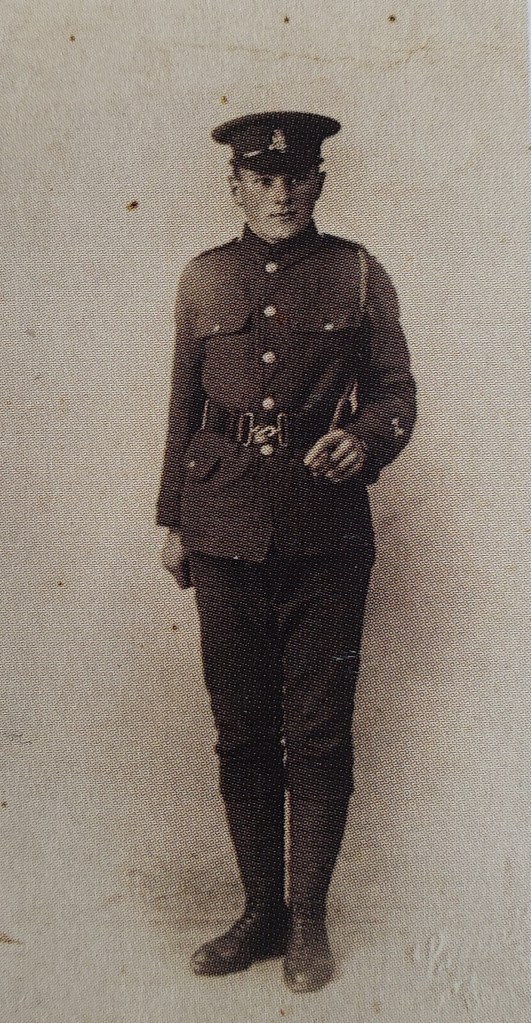
Stanley William Ashton, who was born on 22nd August 1911, served an apprenticeship as an electrician. He joined the RAF and gained his Pilots wings in Nov 1938. In 1939 he was serving with 59 squadron in France where they were using Blenheim MIV aircraft. As the Germans pushed through France in 1940 the squadron was withdrawn to England and based at RAF Odiham Hampshire.  They continued to fly missions over France, mainly reconnaissance operations.

Stanley William Ashton

On Tuesday 4th June 1940 Pilot officer Ashton and his crew were flying R3697. They took off from RAF Eastchurch in Kent – There are 2twotheories as to what they were doing.  One is that they were on a transit flight to head back to their base in Hampshire. The other is that they were on an operational mission.

Neither have been confirmed but as the aircraft banked during take off one of the wings clipped the ground and the plane crashed killing all on board. Among those killed were Observer Sgt William John Wilson and Wireless operator/Air gunner Sgt Roland Wilson (unrelated). Stanley Ashton had been married just six months.

Josephine eventually remarried in 1955 and died in 1982 but is buried elsewhere. Although the cemetery was closed by then the burial registers indicate that there was room for one adult left in this plot.

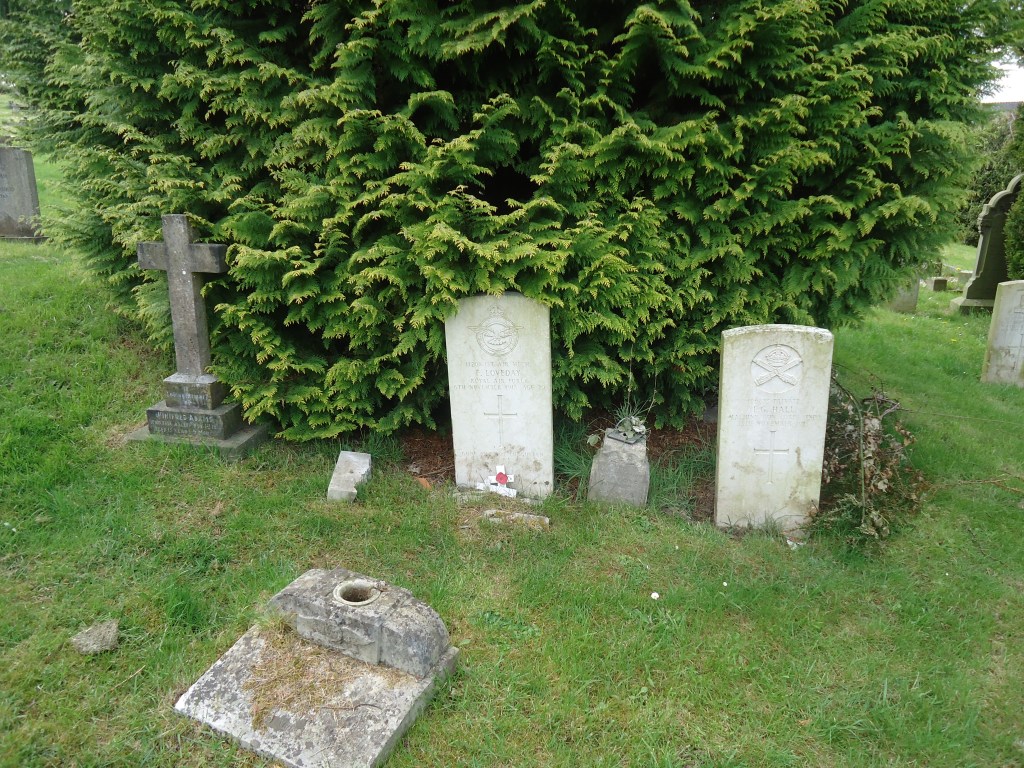
Stanley William Ashton is buried here in plot C3524 with Frederick and Adeline Loveday.

Tell Them of Us – Arthur North

Mark Sutton had a life long interest in the Swindon men who served in the Great War, researching, writing and recording their service and sacrifice in his book – Tell Them of Us.

Mark made numerous visits to the battlefield cemeteries in France and Belgium, laying wreaths on the graves of Swindon men on behalf of their families back home. Mark also worked with Swindon’s schools, showing items from his vast military collection. He knew instinctively how to talk to children about a war that was beyond living memory but intrinsic to our town’s history. For many years he conducted guided walks at Radnor Street Cemetery, visiting the Commonwealth War Graves and remembering the men buried there. He was a popular speaker on the Swindon history circuit, his talks selling out immediately they were announced. He was also co-founder of Swindon Heritage, a quarterly history magazine published between 2013 and 2017. Sadly, Mark died in 2022 but his memory and his legacy will live on, in the same way he made the story of Swindon’s sons who served in the Great War endure.

I begin with the story of Arthur North who is mentioned in Mark’s book Tell Them of Us and is told here in the words of Kevin Leakey, local historian researching the history of Queenstown and Broadgreen.

Gorse Hill Memorial rescued by Mark Sutton and displayed in the Radnor Street Cemetery chapel.

Arthur was a younger brother of one of my Great Grandmothers – Kate Leakey.

He was 7 months old and living with his family at 62 Bright St. on the
1891 census, so I would guess he was probably born at that address.

By the 1901 census the North family were living at 69 Cricklade Rd and
by 1911, were at 139 Cricklade Rd, where Arthur’s parents lived until
they passed away.

The 1934 funeral of his Mother, Mary Ann, took place at Trinity
Methodist Church (139 Cricklade Rd being a few doors away from the
church), which I think was the church the WW1 memorial came from.

Arthur emigrated to Australia in 1909 and worked as a farmer, living
with his Uncle Samuel North and his family at a small place called
Batchica near Warracknabeal, Victoria.

He joined the Australian Army in January 1915, and after going to
Gallipoli in Sept. 1915, he seems to have been ill from the end of
October until June 1916, then spending the next 7 months in the UK,
before being sent to France in Feb. 1917.

He was killed on the 3rd May 1917 on first day of the second battle of
Bullecourt. As far as I can tell his body was never recovered.

The Red Cross files give info about his death from other soldiers that
saw him on the day it happened. I don’t suppose it was at all unusual, with the men being in the middle of a battle at the time of his death, but their reports as to his
whereabouts etc. seem to contradict each other.

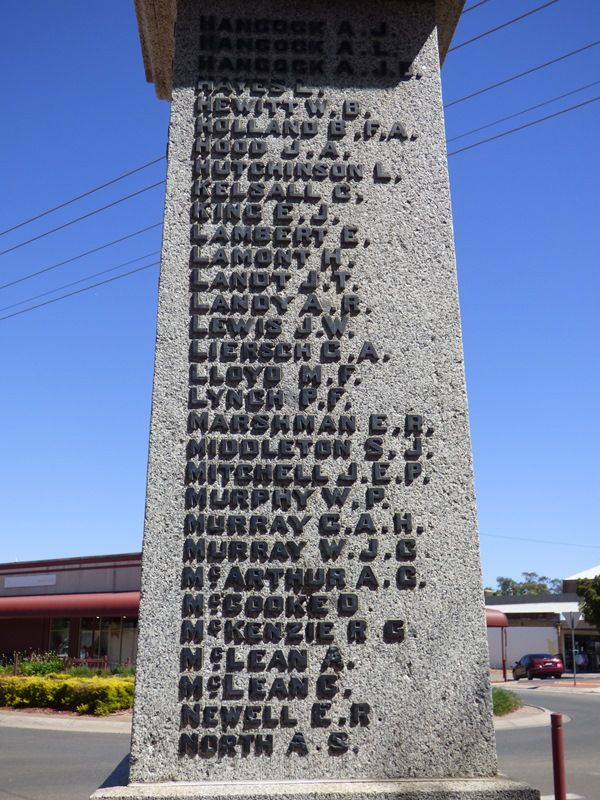
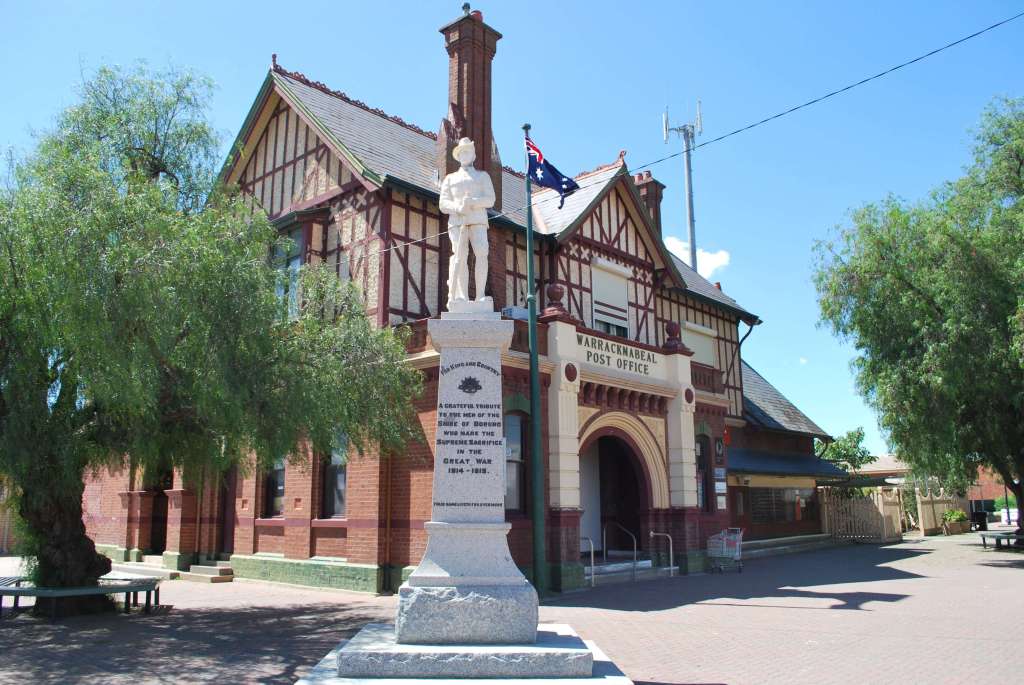
Apart from his name being on the Gorse Hill memorial, it is also on the
Warracknabeal war memorial in Australia.

Sadly, we have no photos of Arthur and aren’t in contact with any of his
brothers and sisters families, but I always put a cross down at the
cenotaph every year in remembrance.

Tell Them of Us – Jesse Bray

Military and local historian Mark Sutton spent a lifetime dedicated to the research of the Swindon men who served in the First World War. In 2006 he published Tell Them of Us – Remembering Swindon’s Sons of the Great War 1914-1918 – a go-to book for anyone researching their Swindon ancestors who served.

Among the many stories Mark tells in his book is that of Jesse Bray.

Born on November 13, 1897 in Aldbourne, Jesse was the son of Albert, a Windsor chair maker, and his wife Honor Bray. He was baptised on January 30, 1898 at the parish church of St. Michael’s and grew up in Castle Street and South Street, Aldbourne.

Taking up the story in Tell Them of Us, Mark writes how Jesse Bray enlisted at the age of just 17 and served with the 4th Battalion Wiltshire Regiment, attached to the Signal Service Royal Engineers. Jesse kept a diary recording his movements during the war, which Mark was allowed access to and which he reproduced in his book.

Jesse enlisted with the 4th Wilts on April 24, 1915. He returned to Aldbourne for a brief holiday before being sworn in at Princes Street, Swindon. On September 3 he joined the Signal Service and was moved to Winton, Bournemouth where he was billeted with “Mrs Best 33 Somerly.”

On March 14, 1916 Jesse embarked on HMS Saturnia at Devonport. “Set sail at noon. Destination unknown.” On April 3 he arrived at Alexandra Docks, Bombay. From 13-17 April he marched more than 60 miles from Jelicote to Chanbattia. On July 7 he visited Ranikhet, the Indian hill station, which made such an impression on another Wiltshire man, the Hammerman poet Alfred Williams.

Jesse spent 3 years serving in India recording his movements and memorable incidents in his diary. He recorded the marches, the outbreaks of fever and a minor wound. And then on November 11, 1918 Jesse Bray, signaller for 37th Brigade HQ, took the historic telegram that announced the armistice and an end to hostilities.

On August 29, 1919 Jess writes: “Transferred to departure camp.” On September 22 he enters “Warned for England.” The following day he left Deolali to begin his journey home. October 14 and he writes “Arrived Plymouth and entrained for Fovant.” Oct 16 – “Handed in rifle and left for Swindon.” On April 1, 1920 he is able to write “Final Discharge.”

Jesse returned to Swindon where he married Teodolinda Stefani in 1922. Despite the dangers and deprivations of his military service, Jesse lived to the grand age of 95. He died on March 24, 1992 at 26 Tiverton Road, Swindon and lies buried in St. Michael’s churchyard, Aldbourne.

Perhaps without Mark’s dedicated research we would never have known about Jesse Bray’s Great War Service.

Tell Them of Us – Remembering Swindon’s Sons of the Great War 1914-1918 by Mark Sutton.

Driver L.T. Hacker

On a dank, November day we remember him.

We do not know the date that Ladas Tom Hacker enlisted. He could have served but a few months as by December 1915 he was dead. Still hardly a man, just a boy. Recruitment officers bent the rules, boys lied about their age, patriotism was high.

Ladas Tom Hacker was born during the early summer of 1899, the only son of Tom Hacker and his wife Ada. He was baptised at the Independent Church that once stood on the corner of Victoria Road and Bath Road and he lived all his short life at 16 Belle Vue Road.

All we know about Ladas Tom Hacker is that which is inscribed on his headstone, his military records were destroyed in September 1940 when a German bombing raid struck the War Office repository in Arnside Street, London where they were stored.

2730 Driver L.T. Hacker

Royal Field Artillery

24th December 1915.

We know where he died from a short entry that survives in the UK, Army Registers of Soldiers’ Effects, 1901-1929 and the Radnor Street Cemetery Burial Registers. He died on Christmas Eve 1915 at Tidworth Military Hospital. His cause of death was Cerebro Spinal Fever, contracted as a result of his military service. He was 17 years old.

Hacker, L.T.

Driver 2730 3/3 Battalion Wessex Brigade, ammunition column, Royal Field Artillery.

Died 24th December 1915.

B1815 Radnor Street Cemetery, Swindon.

Tell Them of Us by Mark Sutton

Private John James Kendall – Tell Them of Us

John James Kendall was born in Bromsgrove in about 1884, the son of John Kendall, a nail maker, and his wife Ellen.

He married Agnes Winifred Jasper in the December quarter of 1906. At the time of the 1911 census they were living at 61 Hillfield Road, Sparkhill, Birmingham. They had been married for four years and during that time three children had been born, however, sadly two had died. John’s brother Bertie lodged with the couple and he and John both worked as ‘bread deliverer’s.’

Again the loss of military records hide the full story of the tragic death of John James Kendall. What action had he already seen, if any? Was it the fear of what lie ahead that caused his mental breakdown, or was it due to the recent seizure he had suffered and a lack of treatment for his epilepsy? Perhaps the death of his two young children years previously had led to undiagnosed depression.

Soldier’s Suicide

Followed Epileptic Fit

“Death from haemorrhage through cutting his throat while insane” was the verdict of a Swindon jury on Wednesday respecting the suicide of John James Kendall (34), a private in the Worcester Regiment, billeted at 24, Winifred Street, and whose wife and children live at Sparkhill, Birmingham.

Mr G.H. Russell was foreman of the jury. Evidence of identification was given by a brother, Lance-Corporal Bertie Walter Kendall, Machine Gun Corps, who had the “wounded” stripe and leaned heavily on a stick. In reply to the Coroner he said there was no strain of insanity in the family.

Frank Arthur Jackson, another private in the same battalion as deceased in the Worcester Regt., said he was billeted at 24, Winifred Street. On Monday Kendall was going on leave, and he went from the house to catch the 4.15 p.m. train. At 9.55 he returned to the house, and surprised to see him, the landlady asked how it was that he had not gone home. He said “I don’t know: I’ve lost my mind. I’ll think in a minute.” He sat down and had supper and asked witness for a cigarette. About a quarter to eleven he went out into the garden. Ten minutes later witness went out to look for him. He called, and at the second call of “Jack, where are you?” he heard a murmur. He went down to the end of the garden and found Kendall lying on the ground, smothered in blood and with a razor by his side.

“No one could get into the yard except through the house?” asked the Coroner.

“Not so far as I know,” replied the witness.

Lieut. Francis William Hartley, RAMC said he was called to the house close on midnight and found Kendall in a precarious condition, with his throat badly cut. First aid had been rendered. He died as the ambulance from the camp hospital arrived at the door. Death was due to the haemorrhage.

“Had you attended the man?” asked the Coroner?

“Yes, frequently,” said the doctor. “He was often complaining of illness – rheumatism, pains in the head, indigestion, and other small ailments. On Saturday, after he had been on light duty, he came to me and said that he felt a lot better and would I put him on full duty. I asked him if he thought he could stand it, and he replied “Yes.”

“There was no symptom of insanity, then?” the Coroner asked.

“Not at the moment,” the doctor replied. “He had an epileptic fit on August 8th, and his brain was affected for some time afterwards.”

You saw him in the fit? – Yes.

The jury returned the verdict, as stated, that the man cut his throat while insane.

North Wilts Herald, Friday, August 24, 1917.

John was buried in a public grave, plot B1883 on August 25, 1917. The interment was conducted by an army chaplain.

Two years after this tragic event Agnes and her two daughters, Hilda May aged 9 and Winifred aged 2, born just months before her father’s death, left Britain for a new life in the USA. On October 8, 1919 they boarded the White Star Liner, the Adriatic and set sail for New York. Agnes died in Monmouth County, New Jersey in 1941.

George Augustus Crocker – with Mother’s fond love

The re-imagined story …

‘Some say it was a futile war, a pointless war, an unjustifiable war. Tell that to Kate Crocker, that’s what I say.

When the old Queen married off her children into European Royal households she did it to create one big family. Well, we all know what families are like – there are favourite children and jealous cousins and an interferring aunt and uncle – but it’s something quite different when family members fall out on the world wide stage. Some people don’t know when they’re well off.

The First World War began when Gavrilo Princip assassinated Archduke Franz Ferdinand of Austria, but of course there was more to it then that. The causes of that Great War were many. Tell that to Kate Crocker.

By the time Kate took possession of her son’s war medals she was alone in this world, her immediate family gone, her husband and both her children dead. Europe was a different place as well. The old Queen’s plans for her family had come to nothing. Just like Kate’s.’

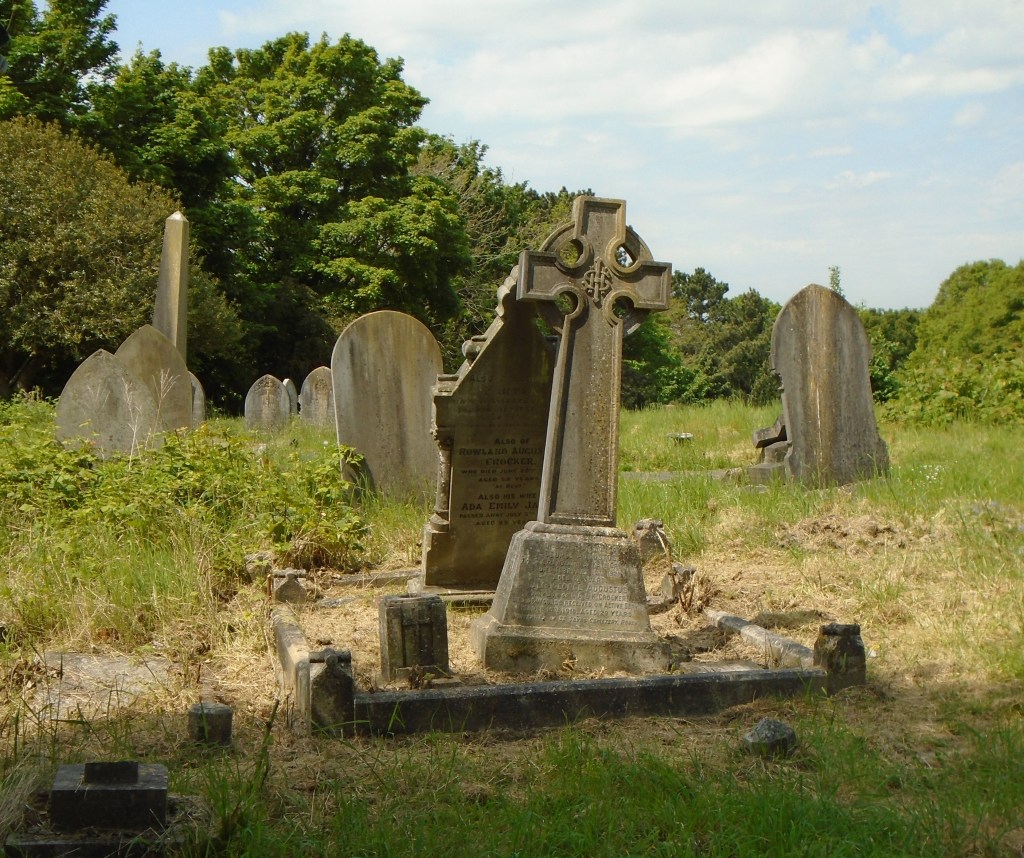
The inscription on the headstone reads:

Also George Augustus

only son of G.A. & K. Crocker

Died of wounds received on Active Service

March 15th 1918 Aged 29 years

Interred in St Seves Cemetery Rouen

The facts …

George Augustus Crocker and his sister Edith were baptised together at St. Mark’s on December 3, 1888. The family home at that time was at 28 Reading Street. In 1901 the family are recorded as living at 63 Exmouth Street.

George followed his father into the Works and a job as a railway clerk in the Operating, Traffic, Coaching Depts. He began his employment as a 16 year old on an annual salary of £25 on May 16, 1904.

George Augustus Crocker enlisted in the Royal Army Medical Corps at Swindon on May 10, 1915. He later transferred to 6th Cyclists Bttn Field Ambulance. He died on March 15, 1918 from wounds received in action (Gas) in No 9 General Hospital Rouen. He was 29 years of age. He had served a total of two years and 310 days – a year and 280 days at Home and 1 year and 30 days in France. He is buried in St. Sever Cemetery extension, France. The inscription on his headstone reads – They died that we might live with Mother’s fond love.

He left effects valued at £125 to his mother. Property returned to Kate included letters, photographs and a diary.

Kate Crocker died on June 8, 1938, She is buried in plot E8506 with her daughter Edith who died in 1908 aged 21 years and her husband George Augustus senior who died in 1921. Their son George Augustus is mentioned on their memorial. Ada Emily Jane Crocker, the widow of Rowland Augustus Crocker, George Augustus senior’s brother, was buried in the same plot in 1967.

In the neighbouring grave plot E8507 lies William Crocker, George Augustus senior’s brother, his wife Martha and the aforementioned brother, Rowland Augustus Crocker.

St Sever Cemetery and St. Sever Cemetery Extension are located within a large communal cemetery situated on the eastern edge of the southern Rouen suburbs of Le Grand Quevilly and Le Petit Quevilly. – see www.cwgc.org.

The rebellious John Riley

The re-imagined story …

Some said John Riley was an intimidating character, but I never found him so. Yes, after a drink or two he could get a bit lairy, but I knew how to handle him. I suppose I had a bit of insight into what he had been through.

I don’t think anyone came back from the war the same person they had been before it. I’d argue with anyone who said they hadn’t known fear, hadn’t seen sights that made their stomach churn, done things that haunted them.

John Riley had known a fear and a horror the like of which few experienced and the only way to blot it out was to drink.

Aged just twenty, John had left the safety of a job as a storeman in the Works to join the army and have an adventure. Mostly all John saw were the bowels of the earth, like a rat in a sewer.

John liked to drink and he liked to gamble. His life was one big gamble. Would he be blown to pieces or buried alive? Would it happen today or tomorrow? The odds weren’t good.

DSC07150 - Copy

The facts …

John had little time for military protocol, he was outspoken and insubordinate and for this he was awarded Field Punishment No. 1. Sounds pretty innocuous, doesn’t it, but it was a torture metred out to rebels, those who wouldn’t abide by regulations. It was used to set an example to others who baulked at military discipline.

In September 1917 John went missing. He was absent while on active service for 34 hours and 55 minutes, and was charged with breaking out of camp at 9.30 pm on September 14 and breaking back in at 8.55 am on September 16. His punishment was to forfeit three days pay and 14 days Field Punishment No. 1.

So, what was Field Punishment No 1? The soldier found guilty was placed in fetters and handcuffs (sometimes spread eagled in a form called ‘crucifixion’) and tied to a fixed object such as a gun wheel or fence post, for one hour in the morning and one hour in the afternoon. Although this punishment was supposed to take place behind the front line in a field punishment camp, it was sometimes applied within range of enemy fire. When a unit was on the move, the unit itself would administer the punishment.

It wasn’t the first time John had been so punished. In September 1915 he had been ‘awarded’ as if it was an honour, 96 hours Field Punishment No 2 for “when on active service missing 8 am parade.” Field Punishment No 2 was a lesser punishment and involved the prisoner being placed in fetters and handcuffs, but not attached to a fixed object. Both sentences included hard labour.

In the summer of 1918, he was sentenced to 7 days Field Punishment No 1 for ‘misconduct’ on 24 August and on 31 August he received a further 7 days Field Punishment No 1 for leaving the lines without leave and missing a Medical Board as a consequence.

And a final insult, 12 days after the guns were silenced, John was demoted to Private by his Commanding Officer for “Neglect of duty.”

John’s audacious and fearless attitude, the qualities that made him a good tunneller, were the very characteristics that frustrated his Commanding Officers.

No one was more surprised than John when he survived the war and returned to the same job in the Works that he had left behind in 1914.

Did he enjoy the security, the safety, the daily routine? Surely, he didn’t miss the claustrophobia of the tunnels.

When John enlisted it was for three years or the duration of the war. It turned out to be a life sentence.

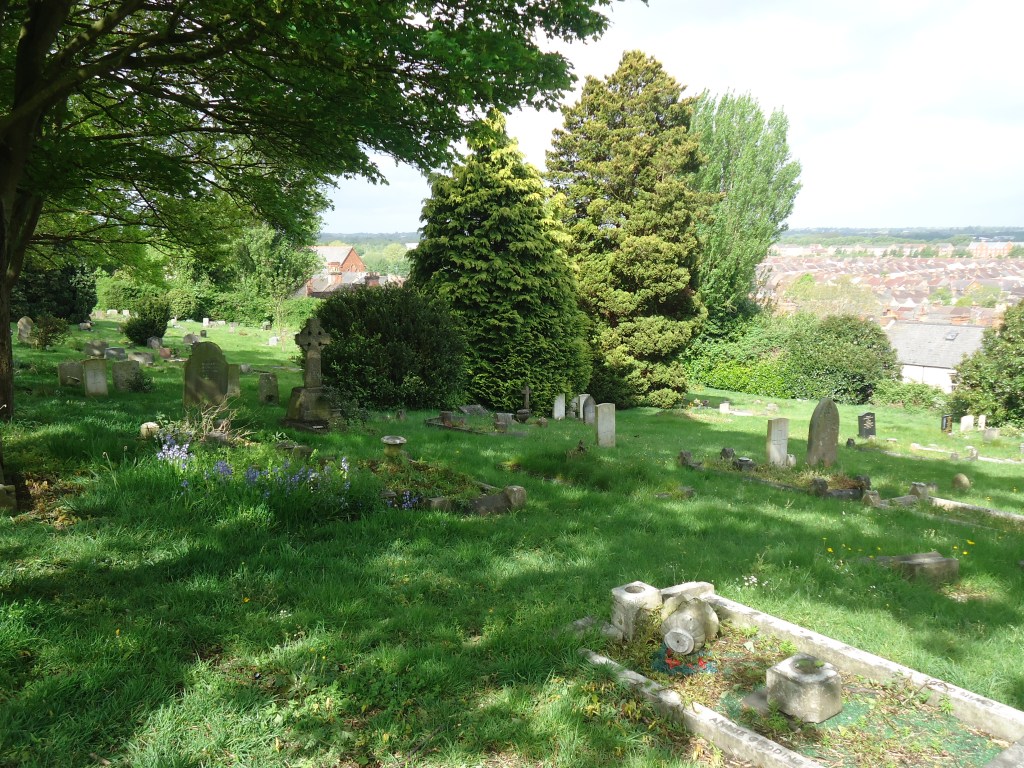
This image has an empty alt attribute; its file name is cemetery-view-3.jpg

View across Section C where Edwin John Riley is buried.

(Edwin) John Riley was born c1895 in Rodborough, Gloucestershire, the only one of John and Sarah Jane’s three children to survive to adulthood. By 1901 the family had moved to 11 Folkestone Road, where John’s father worked as a builders’ plumber.

As a sixteen-year-old John worked as a fishmonger but by 1913 he had secured a job as Storeman in the Works

John enlisted in the 1st Battn Grenadier Guards at Caterham on December 19, 1914, aged 20 years and 34 days. His military records reveal that following eight months service at home John joined the Expeditionary Force in France from August 11, 1915 until January 10, 1918. By May 1916 John was attached to the 177th Tunnelling Coy RE (Permanent) Authy. For more information about the work of the tunnelling companies and the 177th see https://en.wikipedia.org/wiki/177th_Tunnelling_Company.

He married Daisy Sweeper in 1919. John was discharged on demobilization on March 31, 1920 and their daughter Stella was born in 1922. A second daughter Jose was born in 1927.

In 1939 John was working as a Stores’ Issuer in the Railway Works and living in Harcourt Road, Gorse Hill with Daisy and their two daughters Stella and Jose.

Edwin John Riley died in October 1945 and was buried in plot C1678 on October 16.

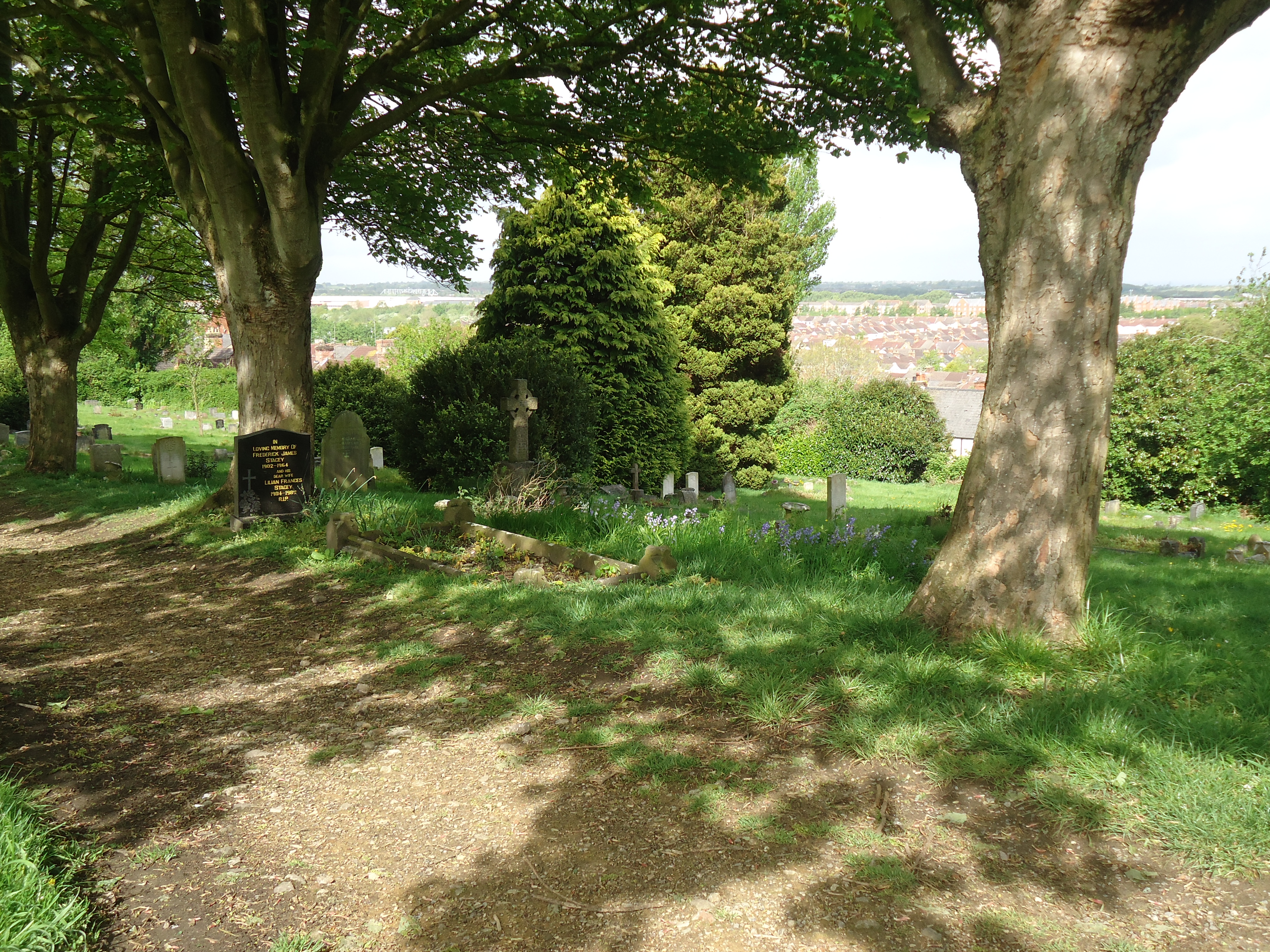
cemetery view

Frank Crossley – a safe pair of hands

The re-imagined story…

Swindon Town Football Club had been founded less than ten years when Frank joined the team. This was before the team turned professional in 1894, when they played at the Croft and changed into their kit at The Fountain public house. Football was a different game in 1887.

Swindon Town FC

The players may have been amateurs but there was nothing amateurish about their game. Take Frank Crossley for example, a fitter in the Works who played in the late 1880s.

Frank Crossley was an intelligent player and a safe pair of hands. Fans wondered why he didn’t play more regularly for the Town. Frank played just seven games in a career that spanned five seasons from 1887 to 1892.

He then went on to referee matches and he didn’t mince his words.

I suppose the war will change football in the same way it has changed everything else. So many good players lost. Our own Freddie Wheatcroft lost, killed in action in 1917. Freddie notched up more than 90 goals in six seasons at Swindon. We won’t see the likes of him again.

And what about Frank? Will he be forgotten too?

William Elizabeth and William Crossley

The facts …

This headstone marks the burial place of William and Elizabeth Crossley and their son William. The kerbstone surround has sunk into the ground and it is no longer possible to see an inscription, if there is one. It is likely the names of two further sons both buried here, Frank and George, are mentioned.

William senior was a steam engine maker and fitter. He was born in Yorkshire in about 1827. By 1860 he and Elizabeth had moved to Stratton St Margaret and later a home in the railway village where they raised their five children, William, Frank, Emma, Sarah and George. All three sons followed William into the Works and jobs as fitters.

As the headstone reveals William died in 1895, Elizabeth in 1910 and their son William in 1899. William and Elizabeth are buried in plot A990, their son William is actually in the neighbouring plot A991. There is no obvious mention of the two sons who share the grave with their parents.

After William senior died, Elizabeth, Frank and George left their long-time family home at 15 Oxford Street and moved to 126 Broad Street. Following Elizabeth’s death Frank and George continued to live together.

Research has revealed that Frank played for Swindon Town Football Club from 1887 to 1892 and later went on to be a football referee.

In the last months of the Great War George was called up; he was 44 years old. As a skilled man he enlisted with the Royal Engineers, serving as a Sapper in the Royal Engineers and the Inland Waterways and Dock Companies. He served his time in Britain, returning to his job in the Works at the end of the war.

Frank died in 1947 aged 82 and George died in 1959 aged 85. Neither men married and left no descendants. Their lives forgotten, their amazing stories untold.

Frank Crossley of 126 Broad Street Swindon, died aged 82 years old. Burial took place in plot A990 on February 24, 1947.

Some sporting stories

Frank also played for the county team.

Football Gloucestershire v. Wiltshire

The most important match on Saturday in and about Bristol was the one between the representatives of the above counties, which was played on the St George’s ground, in the presence of about 2000 spectators. Although the Wiltshire men had to travel some distances, they were the first to take possession of the battlefield, but they had not to wait long before the home defenders jumped over the roses and took up their different positions ready for the attack.

From the throw in a combined rush was made by the visitors, who worked the leather in close proximity to the home territory, but Percy Newnham was not found wanting, and, with the help of Russell, stopped the attacking party, and the former player, with a clever kick, placed the globe half way down the ground, where, unfortunately, the ball was handled, and on the appeal being made a free kick was awarded the visitors…

From the kick off, Francis and Perrin sent in a stinger which puzzled Crossley, and matters were made equal admist the vociferous cheering of the spectators. The ball was kicked from the centre, and the home men, encouraged by their success, made another heavy attack upon the visitors’ territory, Noble, Taylor, and Francis sending in shot after shot, which were all well stopped by Crossley…

Poole next had a try with the leather, got from Francis; he sent in a clinking shot to Crossley, who saved in splendid style by falling with the ball and putting it behind…

Some very pretty passing play was witnessed between Perrin and Francis, who were loudly cheered by the spectators; the former headed the ball in front of the goal, but Crossley saved. The home forwards pressed the game, and Thompson getting the leather from C. Newnham had a chance of scoring, but he misjudged his shot and the ball went behind.

For five or ten minutes the visitors were penned in, Francis, Poole, and Perrin sending in some sharp shots, but Crossley was equal to the work, and his fisting out was remarkably clever.

Eventually the scene of action changed, and the visitors working together the ball was driven up the field and was placed between the sticks for the third time.

Up to half time the play was of a give and take nature, neither side being able to notch any further point. Immediately after the change of ends an appeal for hands was allowed the visitors, the leather being near the back division of the home quarters, but from the free kick the ball was sent out of play.

Directly after the ball was restarted it was kicked into touch, and from the throw in Taylor got it, and passing it to Poole, that player put in a shot, but Crossley cleared the goal.

Stancomb drove the leather down the ground, and Thomas tried a shot which Phipps hit over the crossbar, thus giving a corner, from which nothing resulted. Shortly afterwards W.H. Williams scored another goal for the visitors by heading the leather between the uprights. Up to the call of time no further point was scored. The game stood Wiltshire, five goals; Gloucestershire, two.

Extracts from The Wiltshire Times, published Saturday December 7, 1889

Football: Prospects of the Coming Season

“Can you manage to write something for us about the coming football season, and what we may expect to see the Town Club doing?” queried our Editor the other day.” What, football already? Why its only a few weeks since when we took up the willow for the first time this year! You might at least wait until the first-class cricket teams have made up their averages.”

It was not to be, however, for the “season” is already upon us, and almost before we could get a talk with some of the knowing ones of the local teams Swindon Town are hard at it – and at first-class matches, too.

Our first wail must be over the retirement of the popular captain of the past few years, for who can doubt that during the time Frank Crossley has held the exalted, but not at all time enviable, position of captain, Swindon has, under his care, and by plucky challenges well sustained, worked its way to a prominent position amongst southern teams. Le roi est mort; vive le roi! Frank Crossley retires, but Gordon Wainwright takes his stead, and in their new captain the Swindon eleven have not only a most firm commander, but also a thorough-going athlete. So after all, Crossley’s “stiffness” did not develop at a most critical time in the club’s history; he has assisted mightily his team’s accession to an exalted place in the football world, and does but leave other hands (and feet) to continue the work.

Extracts from The Swindon Advertiser published Saturday September 10, 1892

Lance Corporal Thomas Neate Harding – Tell Them of Us

The First World War was all about loss; loss of life and loss of prospects. Landed property was lost with the death of an heir; local businesses were lost when sons did not return, and in this case, families fell on hardship with the loss of a breadwinner.

Within the records of the UK World War I Pension Ledgers and Index Cards 1914-1923 published on Ancestry are claims mostly made by service personnel incapacitated by their military service, and war widows. However, Thomas Henry Harding, the father of Lance Cpl. T.N. Harding, made an application declaring he was a dependant of his son.

Thomas Neate Harding was baptised on July 15, 1888 in the parish of Holy Trinity, Slad. He was the only child of Thomas Henry Harding, a labourer, and his wife Caroline.

The family moved to Argyle Street, Gorse Hill, Swindon three years after Thomas’s birth. By the time of the 1911 census both father and son were employed in the GWR Works. Thomas Henry Harding worked as a wood sawyer and 23 year old Thomas Neate Harding as a Blacksmith’s Striker.

Caroline Harding died in March 1913 and is buried in a public grave in Radnor Street Cemetery. So now father and son carried on alone at home.

At the outbreak of war in 1914 Thomas Henry Harding was about 54 years old, his son 26. Thomas Neate Harding was not one of the early volunteers to join the army. Perhaps his responsibilities at home were too great. But with the introduction of conscription in 1916 he would eventually be called up, enlisting in July 1917 with the Royal Engineers and serving with the Inland Waterways and Docks.

Thomas Neate Harding died on February 12, 1920 at the Northern Hospital, Liverpool. He was 32 years old. His father made an application to the War Office for the cost of his son’s funeral expenses.

Administration of Thomas Neate Harding’s will was granted to his father in April 1920. His effects were valued at £173 7s 1d.

Thomas Neate Harding was buried in a public grave plot number B1271. The same grave in which his mother Caroline was buried.

Lance Corporal Thomas N. Harding is commemorated on plaque in St. Barnabas Church, Gorse Hill.

First published November 3, 2022.

Private F.J. Kent – farm labourer

A career in the modern armed forces offers today’s young people a wide range of opportunities, and perhaps it was ever thus. When 18 year old farm labourer Frederick John Kent enlisted in 1906 did he take stock of his life and decide he wanted more – wanted to do more, see more?

Frederick John Kent was born in Blunsdon St. Andrew in 1888, one of the younger of Thomas and Ann Kent’s ten children. Thomas worked as a farm labourer and shepherd and Frederick looked destined for a life on the land as well, until he decided to join the army.

After six months training, which included a gymnastic course, his physicality had improved considerably. He stood 5ft 4½ ins and had gained 19lbs in weight. It would be another 18 months before he was posted overseas, first to India where he served for a year and 12 days and then Africa where he spent more than 3 years.  

On September 4, 1914 Frederick returned home following Britain’s declaration of war on Germany on August 4. On October 6 he arrived in Belgium as part of the British Expeditionary Force (BEF). An experienced soldier with eight years’ service, he was involved in the first bloody Battle of Ypres during which British losses numbered more than 54,000 killed, wounded and missing. After just 18 days of fighting in atrocious weather conditions, Frederick was taken prisoner of war. He would spend 4 years and 32 days in a German prisoner of war camp Kom 2, Lager 1, Munster.

Frederick was repatriated in November 1918 and his medical records state:

“Was taken prisoner of war in 1914 at Ypres with the 2nd Wilts. Whilst prisoner suffered from hardship & starvation.” He was declared 80% disabled, suffering from valvular disease of the heart (V.D.H.). He looked ‘old and feeble – rather depressed.’ He was 31 years old.

Frederick died at Bath Hospital on March 15, 1920 and was buried in Radnor Street Cemetery in grave plot A2539 on March 20. He remained alone in this plot until the death of his sister Ada Townsend who was buried with him on November 16, 1950 followed by her husband Albert Henry Townsend who died ten years later.

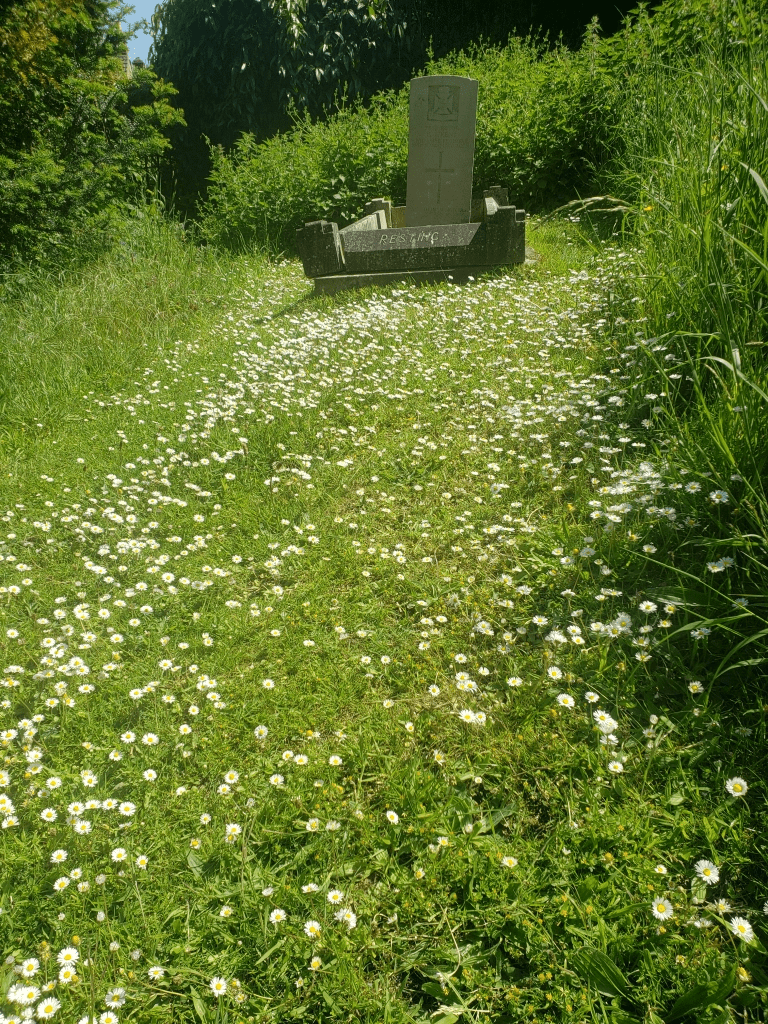
This war grave is one of the many maintained by our group of dedicated volunteers. In the summer months a carpet of daisies is spread before the grave.

Image of funeral account kindly provided by A.E. Smith & Son, Funeral Directors.

Originally published June 10, 2022.