Freda and Irene Dening – winners of the Brunel Medal

The re-imagined story …

I always knew those girls would do well, especially little Irene. She was always so attentive and eager to learn.
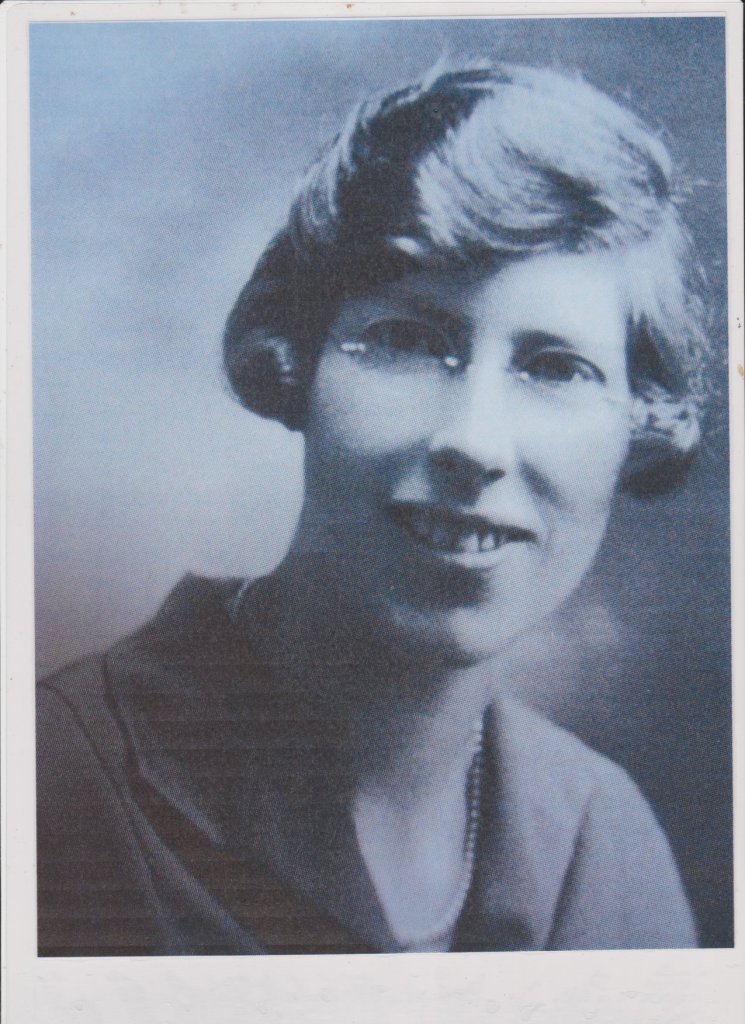
Irene Dening

The turn of the century was an exciting time to be a woman; plenty of new opportunities to be had and women everywhere were pushing the boundaries that had constrained them for too many years.

I began my pupil teacher training at Queens Town Infants School in 1891. Among the girls who joined with me was Edith New who would go on to play a significant role in the Votes for Women campaign with Mrs Pankhurst and her daughters.

Queens Town School opened in 1880, an impressive red brick building built alongside the old canal. Perhaps not the most salubrious of settings, but the school served the Queens Town community well. By the time I began my pupil teacher training there ten years later a girls’ school had been built on the site.

However, there were still anomalies in the teaching profession. Women teachers who taught infants and girls were paid less than men who taught boys, an inequality that Miss New would later campaign to change. But the Swindon School Board was a progressive organisation that set high standards of which young Freda and Irene took best advantage.

When we gained our teaching certification Miss New moved to London, but I stayed closer to home. I followed the Dening sisters careers with great interest. So many of the girls I taught did well, but perhaps none more so than Freda and Irene Dening. I always knew those girls would do well, especially little Irene. Always so attentive and eager to learn.

Freda Dening

The facts …

Freda and Irene were born into a railway family. Their father Richard was a steam engine fitter and along with their brother Henry, the three children were all born in Swindon and grew up at 61 Hythe Road.

Freda entered the service of the GWR in 1912 when she was 15 and Irene joined the workforce in 1914 when she was about the same age.

Freda began work in the statistical section of the engineer’s office at Marlow House and was one of the first girls to be employed in the clerical department of the Swindon Works. She studied shorthand and typing at Swindon College, going on to become a shorthand typist in the Works. But her ambition didn’t stop there. She went on to study for three years covering accounting and business methods, the law of carriage by railway, the basis of railway rates and charges.

Her sister Irene was equally ambitious and worked as secretary to the Stores Superintendent. She also went on to study and both women won the prestigious Brunel Medal.

The Brunel Medal was awarded to Students in the railway department of the London School of Economics who, in not more than four years, obtained three first class passes in examinations held in connection with courses approved for the purpose.

The women’s elder brother Henry was also awarded the Brunel Medal, so they were a pretty extraordinary family.

In an interview with the Swindon Advertiser Freda said:

“I really loved my job and it opened many doors to opportunity that my sister and I would not of otherwise had. There were very few women in the railways in those days and it was a fascinating place to be.”

But there were sacrifices to be made. Neither women married nor had children. Of course, this may have been by choice. These days an ambitious woman would probably expect to be able to have it all – as an ambitious man can!

Freda retired early to care for her elderly parents while Irene had a career that spanned nearly 45 years.

Both sisters ended their days in the Cheriton Nursing Home. Irene died on February 25, 1982 aged 81 and Freda on March 18, 1994 aged 96. Their cremated remains are buried here with their parents.

My thanks go to Dr Rosa Matheson who first drew my attention to the Dening sisters in her magnificent book The Fair Sex: Women in the Great Western Railway.

Robert Martin – Grenadier Guard and Crimean Veteran

Queen Victoria and Prince Albert with their sons inspect the wounded Grenadier Guards at Buckingham Palace February 20, 1855.

In 1861 Robert Martin, Grenadier Guard, was part of the District Foot Guards Detachment based at North Camp Aldershot. The Grenadier Regiment of Foot Guards had served with distinction during the Crimea War, seeing action at the Alma (1854), Inkerman (1854) and Sebastopol (1854-1855). His military career was drawing to a close.

Robert Martin was born in 1834 in Lolworth, Cambridgeshire, the son of agricultural labourer William Martin and his wife Sarah. At the time of the 1851 census Robert was also working on the land. Was he restless? Did he see his future as just more of the same? Was he looking for an adventure when he decided to join the army?

Robert was no doubt grateful to have survived the horror of the Crimea War. On Christmas Day 1863 he married Harriett Kimberely at St Andrew’s Church, Bordesley, Birmingham. She was 20 years old, the daughter of John Kimberley, a victualler from Small Heath. Robert was 29 and working as a railway servant.

The couple moved around a fair bit and lived in Birmingham and Aberdare before rocking up at Swindon in the late 1870s. In 1881 they were living at 25 Carfax Street – Robert worked as a Railway Guard and his two sons, Alfred 14 and William 11 were Telegraph Messengers.

Harriett died in 1882 and the following year Robert married Fanny Maria Roberts at St. Mark’s Church. They went on to have a daughter, Daisy Harriett Gertrude Maude.

In addition to serving in the military for eight years, Robert Martin worked for the GWR for 43 years. It was said that his ‘familiar figure will be greatly missed on Swindon GWR platform.’

Death of a Crimean Veteran

An old GWR Guard

Mr R. Martin, of Swindon

The Funeral

There was laid to rest in Swindon Cemetery on Sunday afternoon the mortal remains of the late Mr Robert Martin, who passed away in his 72nd year at his residence, 25, Carfax Street, Swindon, last week, after a very short illness.

Mr Martin, whose familiar figure will be greatly missed on Swindon GWR platform, had been in the service of the Co. for the long period of 43 years, during 39 of which he was a passenger guard. During his extended period of service, he gained the entire confidence of all the officials of the line, and he was very popular with regular passengers. His upright soldierly bearing and his pleasant manner made him one of the most familiar figures on the line.

On reaching the allotted span, in January, 1904, he retired from the Company’s service, and his colleagues then, to show their esteem and appreciation, presented him with a silver teapot.

Deceased, who was twice married, leaves a widow and family of five grown-up children – three sons and two daughters.

In his younger days, Mr Martin served for eight years in the Grenadier Guards. He saw active service in the Crimea, and was proud of his possession of Crimean and Turkish medals, with the Sebastopol clasp.

The Funeral

Was very numerously attended, there being an exceptionally large crowd assembled in the Cemetery. The first portion of the burial service was conducted at St. John’s Church, by the Rev A.G. Gordon Ross, Vicar of St. Mark’s, who also officiated at the graveside. In addition to the family mourners, there was a large attendance of railway men and local Volunteers…

Following the family mourners came Mr John Brewer (GWR Stationmaster), and Inspector Rochester, and about forty guards, ex-guards, porters, and other officials on the line. Then came about thirty Volunteers, under Sergt. Ellwood. The coffin, which was covered with beautiful wreaths, was of polished oak, with brass fittings, and on the breast plate was the following inscription:- “Robert Martin, died Sept. 18th, 1905, aged 71 years.”

Mrs Martin and family desire to tender their sincere thanks to numerous friends for all kind expressions of sympathy with them in their bereavement.

Extracts from the Swindon Advertiser, Friday, September 29, 1905.

Robert Martin aged 71 years, died at his home in 25 Carfax Street and was buried in grave plot C1694. He is buried with his second wife, Fanny Maria ‘who died on her way to hospital’ July 1911. Robert’s first wife, Harriett died in January 1882 at the age of 38 years and is buried alone in grave plot E7001.