Fanny Ireland Fletcher

In Britain in the 1950s, 60s and 70s young, unmarried mothers were coerced into giving up their babies for adoption, an estimated 185,000 of them. That this practise continued into the late 20th century is now shocking and unforgiveable. Was this attitude a legacy of 19th century social mores – all those myths about Victorian prudery and piano legs? In fact the Victorians were far more broad minded and accepting than we give them credit for.

In my work transcribing the diaries of Elliot Woolford, farmer at Hook Farm between 1899 and 1940, I have come across two examples where an illegitimate birth was no big deal, the child welcomed into the extended family.

William Woolford married Frances Ann Fletcher in the parish church at Purton in May 1849. The bride and groom signed the marriage register by making their mark, suggesting they were not proficient in writing their name. Both stated they were over the age of 21.

At the time of the 1851 census the young couple and their two year old daughter lived at a property in Poor Street, Purton. William’s occupation was given as labourer at stone quarry. Their eldest child had been born several months before the couple married. Ellen Woolford Fletcher was baptised at the church of All Saints, Lydiard Millicent on December 24, 1848, the daughter of Ann Fletcher – no father’s name was given. There is little doubt that William was her father but Ellen continued to use her mother’s maiden name. She never married and died at Hook Farm in 1904 aged 56.

William and Frances went on to have six more children, diarist Elliot George Woolford was born in 1867. The 1871 census reveals their six children (their youngest, 7th child Rowland was born in 1874) and a granddaughter Fanny Ireland Fletcher, just 5 months old. It would appear that like her mother, Ellen had produced a child out of wedlock, but unlike her mother there was no husband waiting in the wings. Fanny Ireland Fletcher was baptised in the parish of Purton on December 4, 1870, daughter of Ellen Walford [Woolford] Fletcher, single woman.

Fanny grew up in the large Woolford family and by the time of the 1881 census she was described as William and Frances’s daughter, because by then that was how she was regarded. Was she ever made aware of the circumstances of her birth? Did she know that Ellen was her mother or did she believe her to be her elder sister?

And what about Elliot who in his diaries recorded the facts of his life, work and those of the community who lived in Hook. What did he know of Fanny, four years his junior, the little sister with whom he grew up? Perhaps everyone knew the facts of Fanny’s birth and it really didn’t matter, which is how things are today.

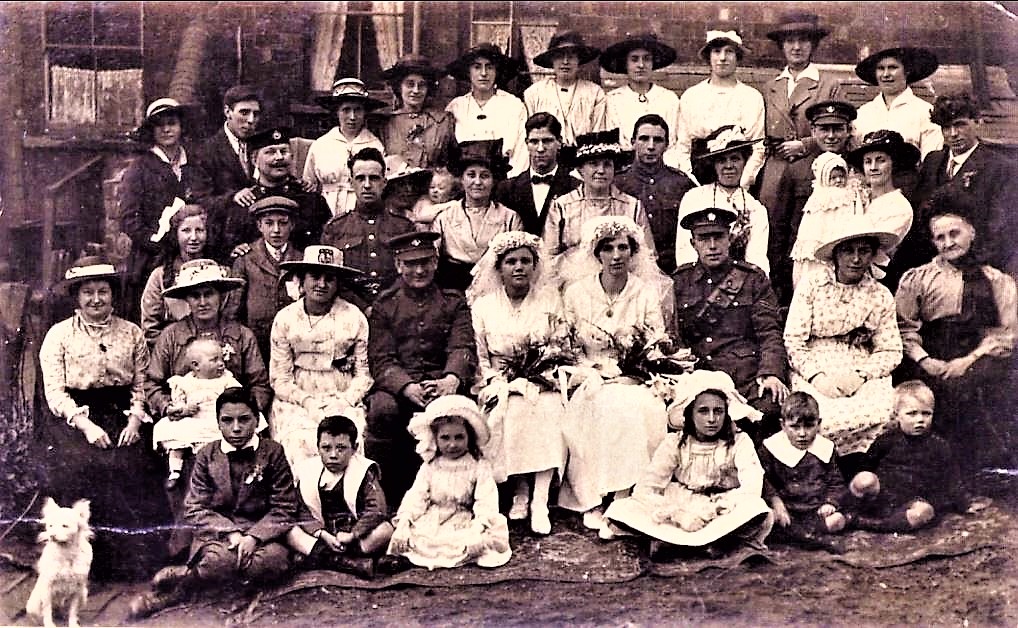
Fanny married Edward Harry Matthews, a drilling machinist in the GWR Works, in the summer of 1898 and by 1901 they were living at 54 Exeter Street. They had two sons, Leslie and Edward.

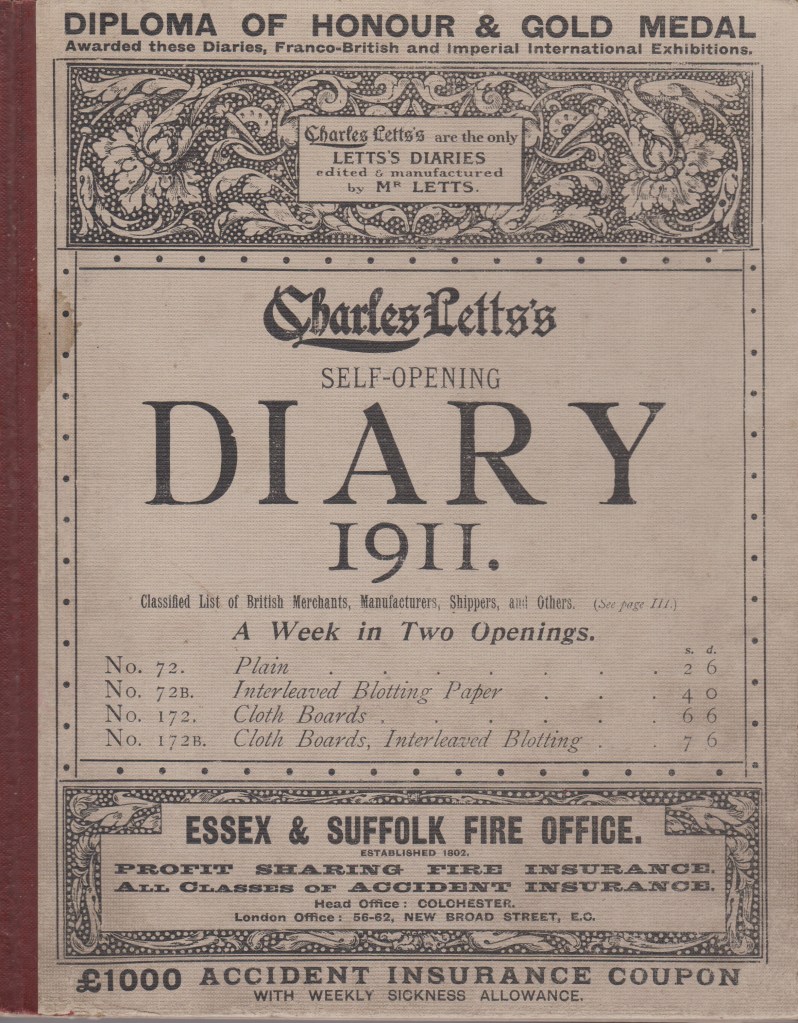
On Friday March 10, 1911 Elliot makes his usual weekly visit to Swindon, selling eggs and butter at the market and buying his weekly provisions. He writes in his diary:

‘I went to 65 Ponting St and saw Mrs H. Matthews gave her a rabbit and some rhubarb.’

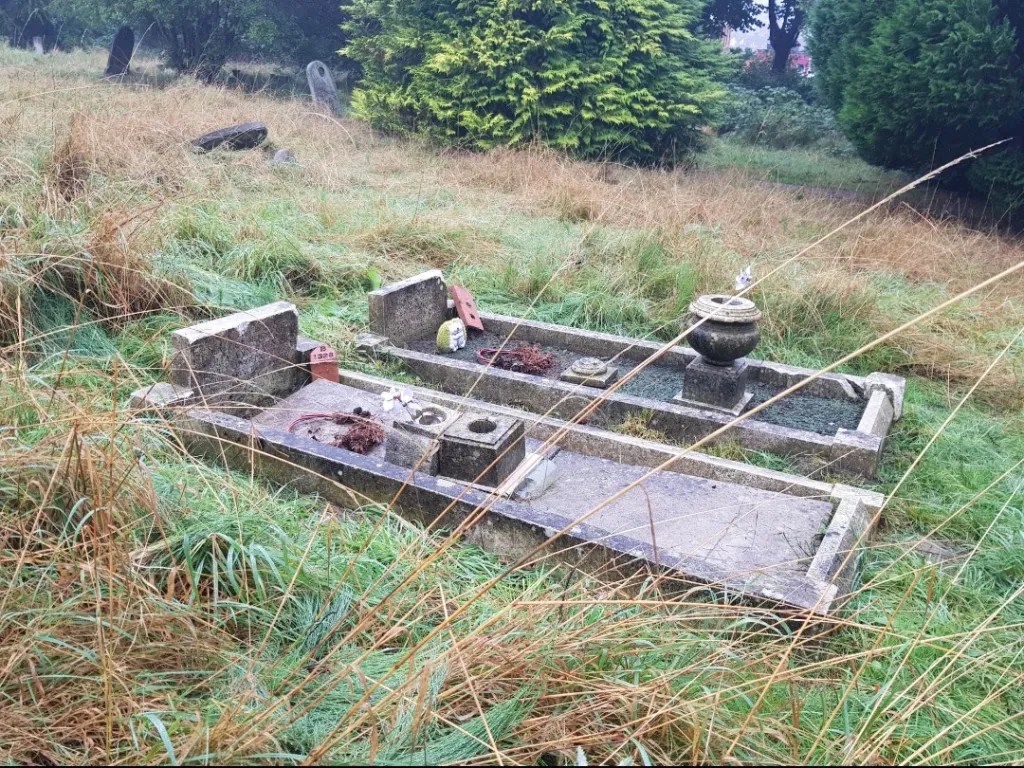
Fanny Ireland Matthews died at her home in Farnsby Street in December 1925. She was buried in Radnor Street Cemetery on December 22, in grave plot D621. Her husband Edward Harry Matthews died in December 1936 and was buried with Fanny on December 22, the anniversary of her funeral eleven years previously.

There are several volumes of Elliot Woolford’s diaries transcribed and available to read on the Friends of Lydiard Park website and I am working on a book about Elliot, Hook Farm and the parish of Lydiard Tregoze.

Sarah Peaple – a grand old lady

The re-imagined story …

When I was a little girl I could never understand why we had so many grandmothers in our family. The lady my cousin Joyce called Nan wasn’t my Nan and neither was the lady Mollie called Nan.

I once asked Elsie why we all had different Nans but she just smiled at me in the way adults do when children ask tiresome questions.

But we all called the same woman Granny and one thing I could understand was that she was by far the oldest lady in the whole family.

I once tried to work out how many dozens of children she must have had, not understanding that the aunts, uncles and numerous cousins who all called her Granny were sons and daughters, sons-in-law and daughters-in-law, grandchildren and even great grandchildren. It was all too complicated for me to grasp.

And then suddenly, one day, she was gone. You look back and wish you’d paid more attention, listened to her stories, asked a few, sensible questions.

The facts …

Sarah Ralphs was born in Rodbourne Cheney in 1838, the daughter of agricultural labourer William Ralphs and his wife Mary Ann. At the time of the 1851 census, she was living with her parents and four siblings, Elizabeth 15, Richard 8, Rhoda 5 and two-year-old Rosanna in Haydon Wick.  

Sarah married John Peaple in the church at Rodbourne Cheney in November 1862. They were both described as being of full age with John stating he was an ‘Artisan’ [a skilled manual worker or craftsman.]

Their first child, a daughter named Rosanna, was baptised on November 8, 1863. The couple were then living in Moredon and John described his occupation as Factory Operative. By the time of the 1871 census the family were living in a house close to the Independent Chapel in Rodbourne Cheney with their four young children – Rosannah 7, Esrom 5, Mary J. 3 and one-year old William.

Ten years later and the family had moved to 3 Linslade Street in Rodbourne, closer to John’s place of work in the GWR Works. The family lived here for more 20 years and it was here that they sadly lost two of their sons. William died in December 1883 aged 14 years and Charles in May 1889 aged 13.

By 1911 John and Sarah were living at 174 Redcliffe Street. John was 72 and Sarah 73 and they declared they were both Old Age Pensioners. The couple had been married for 48 years and had had 9 children, six of whom were still living. Living with them was their long-term lodger, Sidney Stapleford.

John died in 1915 when he was living at 5 Hawkins Street. His funeral took place on March 20 and he was buried in Radnor Street Cemetery in grave plot A532 with the couples two young sons who had died more than 25 years earlier.

Sarah died in 1933 at 131 Kingshill Road. Her funeral took place on February 22 and she is buried with four others in Radnor Street Cemetery in grave plot C1193, an unmarked public grave.

Death announcement

The oldest member of the Salvation Army in Swindon has died in the person of Mrs Sarah Peaple of 131 Kingshill Road, Swindon, at the age of 94.

Wiltshire Times and Trowbridge Advertiser, Saturday February 25, 1933.

Sarah Peaple was the grandmother of Elsie Morse.

She was also the great grandmother of Joyce Murgatroyd and Mollie Tanner.

Mrs Annie Brooks – a remarkable family longevity

When Annie Brooks died in 1907 The Gloucester Citizen published some interesting facts and figures and it would appear that Annie came from a line of long lived ladies. Her mother died at the age of 98 and her grandmother at 105. Now of course, I wanted to know more about these women and it would have helped me enormously if someone had thought to insert a few names, but I was up for the challenge!

First I began to pin down Annie’s son George. George had been resident in Swindon since at least 1871 when he appears on the census returns as living at 20 Fleet Street with his first wife Elizabeth and their baby daughter Adelaide.

George was born in Bristol in 1846 the son of Joseph and Annie Brooks. In 1851 the Brooks family were living in Berkley Square, Bedminster and continued to live at various addresses in Bedminster through the 1850s, to the 90s when Joseph died. Annie moved to Swindon to live with George and his family and appears with them on the 1901 census returns. So now I needed to find Annie and Joseph’s marriage to discover her maiden name and possibly access her mother’s name.

Joseph and Annie were married in Bristol at the church of St. Philip and St. Jacob on September 4, 1842. Annie’s maiden name was Stock and when George gave her details to the enumerator at the time of the 1901 census he said his mother’s birthplace was Tidenham, Gloucester. It was here that I found her baptismal record on 29th December 1811. Her parents were Nicholas and Joan Stock so now I needed to find their marriage. This took place on April 4, 1795 at Kenn Juxta Yatton when Nicholas Stock married Joan Taylor.

Now you’d be surprised at just how many Joan [Joanna] Taylors there were living in Somerset/Gloucestershire in the second half of the 18th century (and we know this family moved about a bit) which rather put the kibosh on tracing the last lady in this trio of long lived lovelies. And I was beginning to wonder about the great ages too.

On May 24, 1841 the widowed Joan Stock (Annie’s mother) married William Rawling at Kenn. Widowed for a second time, Joan Rawling formerly Stock nee Taylor was living with Annie and Joseph Brooks in Bedminster at the time of the 1851 census when she was 85 years old. She died six years later, which would have made her 91 so not quite the legendary 98, but an impressive age nonetheless, don’t you think? And as to her mother, well I’ve had to give up on that lady for the time being, but I’d like to think she did make it to her 105th birthday!

Remarkable Family Longevity

There were laid to rest in Swindon Cemetery this week the mortal remains of the late Mrs Anne Brooks, mother of Mr George Brooks, a Great Western Railway official, of Park-lane, Swindon, who passed away at her son’s residence at the ripe age of 96 years. It is interesting to recall the fact that the deceased old lady’s mother died at the advanced age of 98 years, that that lady’s mother, Mrs. Brooks’s grandmother, lived to be 105 years old, so that the united ages of mother, daughter, and granddaughter totalled 298 years.

The Citizen, Friday April 5, 1907.

Burial Registers

Brooks, Annie   97 years   22 Park Lane  burial 30th March 1907  grave plot E8522

Mary Gibbs – A Swindon Octogenarian

The re-imagined story …

Do you believe that a house can retain memories? Have you ever visited a house and felt it had an atmosphere?

“Can’t you feel it?”

“All I can feel is damp. I bet this place hasn’t got a damp course.”

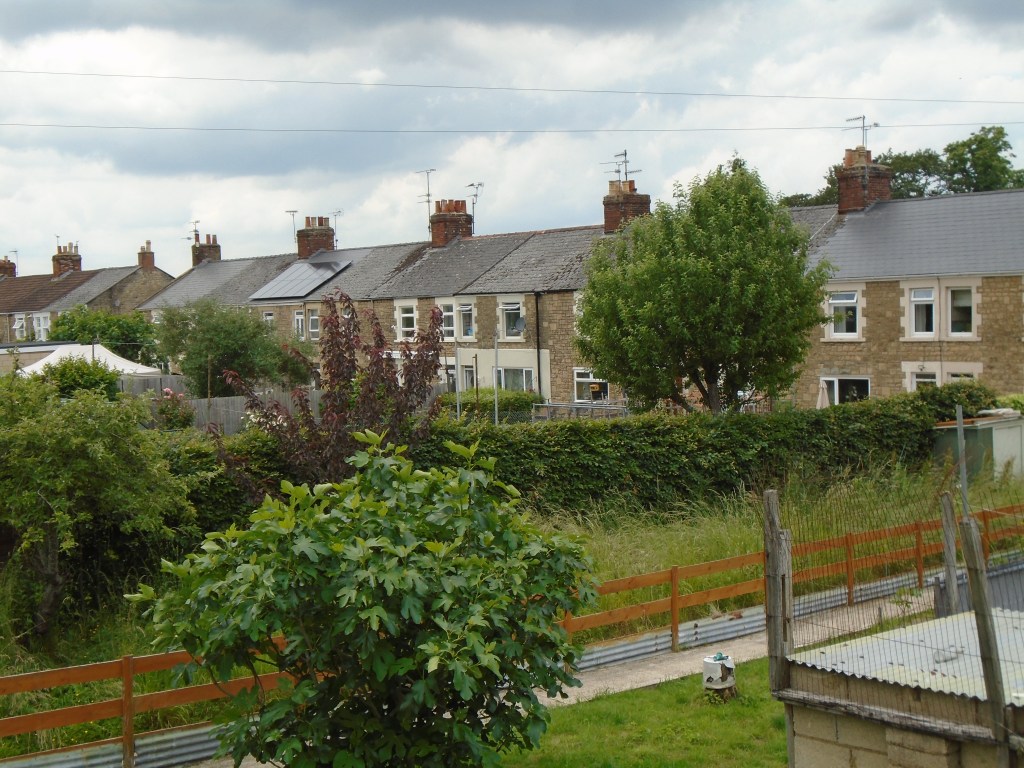
The row of stone-built cottages had once overlooked the canal before it was filled in, but it wasn’t damp that I was feeling.

“This could be a happy home,” I suddenly blurted out, but that wasn’t the plan. We were looking for a cheap property to renovate and sell on. “I could happily live here.”

“Really! Have you seen the bathroom?”

I wondered who had once lived here. Not recently, we knew who the vendors were, I mean in the past. Who had lived here when it was a brand-new property? How many children had squeezed into the bedroom upstairs, one of only two in the beginning? I bet there was a clothes line running the length of that long garden, full of washing every Monday; pinafore dresses and shirts, lots of shirts and overalls. I wondered how many meals had been eaten around the kitchen table? How many prayers had been said in this house?

I wasn’t quite sure what I was feeling – well, I did but if I blurted it out Darren would think I’d lost the plot. Ha, I know he sometimes has his doubts about me anyway.

This had been a busy house, but there was something else about the place, a sense of serenity. This was a house of God, a house where God had resided. I could just imagine telling Darren that.

“Let’s get back to the estate agent. See if there’s any movement on the price. Personally, I think they’re asking too much for it. And I bet it hasn’t got a damp course.”

The facts …

Death of Mrs Gibbs

Interesting Reminiscences

Rode on a Stage Coach and Electric Trams

There was laid to rest in Swindon Cemetery on Thursday in last week the mortal remains of Mrs Mary Gibbs, late of 120 Broad Street, and widow of the late Mr William Gibbs, who resided for many years at 46, Cambria Place, Swindon. The deceased lady, who had attained to the great age of 88 years, and retained all her faculties to the end, was an interesting personality. She was probably the oldest member of the Baptist community in Swindon, and was in the service of the Rev. Richard Breeze, before he came to Swindon and opened a Baptist Church here at the corner of Fleet Street and Bridge Street. Her late husband, who died 17 years ago, was one of the pioneers of the Ancient Order of Foresters in Swindon, and assisted at the opening of Court “Briton’s Pride,” A.O.F., and also the “Vale of White Horse” Court, Shrivenham. He was himself initiated a member of the Order at Abingdon, when he was residing at Sutton Courtenay, and remained a Forester until his death, having been a member for over fifty years.

The deceased lady was born at Lechlade, and her earliest recollections of Swindon was riding through this part of the country on a stage coach. What is now known as New Swindon then comprised only green fields. She lived to see the whole of the land built on, the electricity works opened in the neighbourhood where she resided, and more than once rode on the electric trams, notwithstanding her great age.

Her husband worked on the GWR during the construction of the line between Didcot and Swindon. He was connected with the Baptist Church, and took a leading part in the opening of the Rehoboth Baptist Chapel at the top of Rolleston Street, Swindon.

At the funeral of the deceased lady the burial service was conducted by Mr. S. Chappell, of the Rehoboth Baptist Church. The mourners included deceased’s five sons, Charles, William, Harry, George and John Gibbs, a grand-daughter, two grand-sons, and other relatives and friends.

There were many beautiful wreaths and other floral tributes placed on the grave.

The Swindon Advertiser, Friday, July 16, 1909.

Mary Gibbs 88 years 120 Broad Street burial 8th July 1909 plot number B2073

1871 census

Cambria Place

William Gibbs Head of household 47 Platelayer born Swindon

Mary Gibbs wife 49 born Berks Coleshill

Charles H. Gibbs son 21 Boiler Smith born Berks. Sutton

William J. Gibbs son 19 Boiler Smith born Stratton

Henry H. Gibbs son 17 Moulder born Stratton

Mary J. Gibbs daughter 15 Domestic Servant born Stratton

Edward J. Gibbs son 12 Scholar born Stratton

George Gibbs son 9 Scholar born Stratton

John Gibbs son 6 Scholar born Stratton

Celia Morkot – the first woman employed in the Works

The re-imagined story …

I started in the Works in the polishing department in 1937 and stayed for two years. I hated every day I was there.

French polishing sounds as if it might be a delicate, artistic occupation. I suppose there was an element of artistry about, it but it certainly wasn’t delicate. French polishing involved stripping back to the basic wood, making good any damage and then building up the polish again, brushing and sanding, brushing and sanding. A door could take you five days, on and off. We worked on anything made of wood, everything from panels and partitions to toilet seats.

12A Shop was in the Carriage Works along London Street and it was cold and filthy. We were quite separate from the men in the railway factory and had our own facilities. That’s a laugh, one toilet with two washbasins and some disinfectant soap useless at getting all the muck off our hands. Methylated spirits worked much better but it was hard on your hands and left them red and raw.

The mess room was under the workshop but no one wanted to spend their lunchtime there. When the weather was good me and Ivy used to walk to the GWR Park and eat our sandwiches on a bench. It got you out of the dirt and fumes for a bit.

In those days, just before the Second World War, jobs in the Works were few and far between for women. In fact, the polishing department was the first to employ women back in the 1870s. A big deal had been made about ‘the comfort of the women.’ Ha, well by 1937 that had all gone by the board.

My dad used to keep on about getting a trade and being set up for life, as if I were a man, but I couldn’t wait to get out of that place. All I wanted was a nice, clean little job before Ted and me got married. I looked forward to polishing my own furniture and it would be a sight easier than French polishing railway carriage doors, I can tell you.

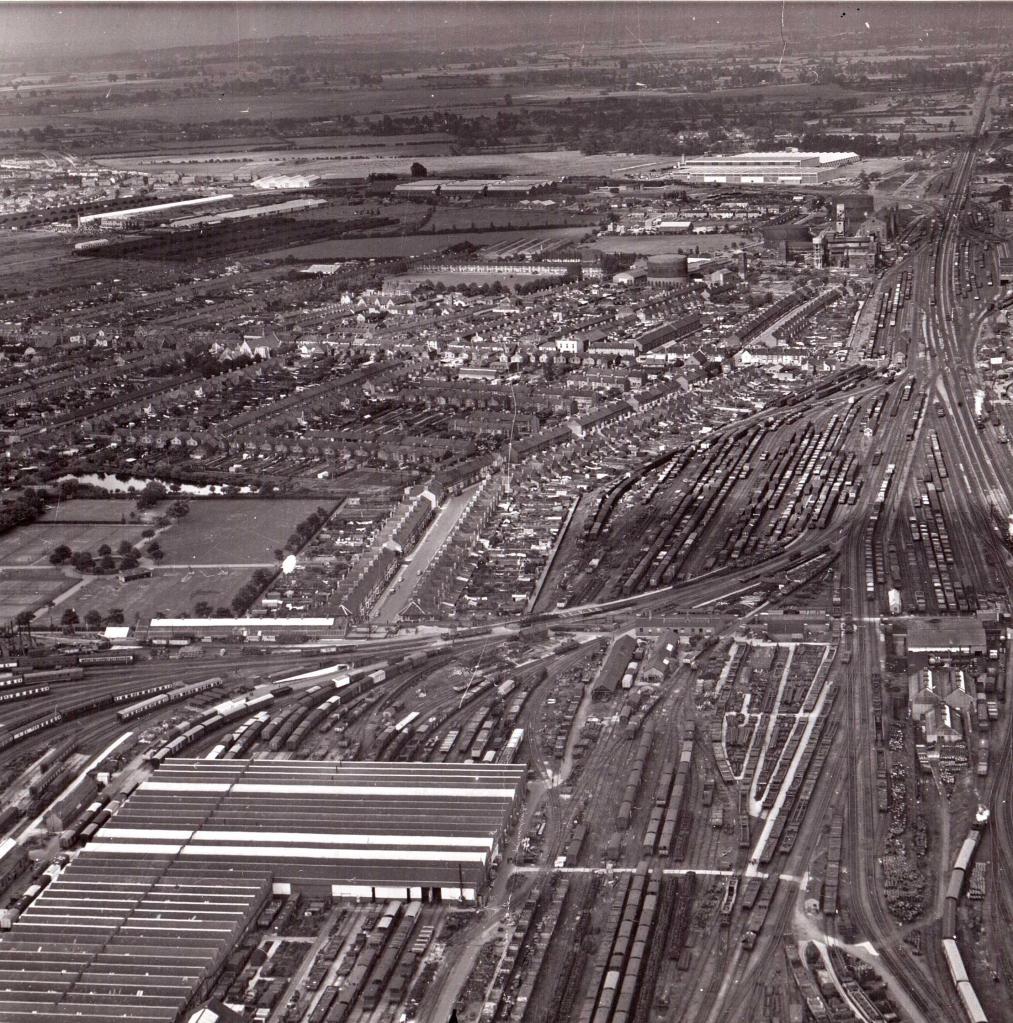
London Street

The Carriage and Wagon Works, London Street published courtesy of Local Studies, Swindon Central Library.

The facts …

By the 1870s the railway factory had been in operation for some 30 years but the GWR were finding it difficult to recruit skilled men. The problem was a shortage of jobs in Swindon for young women, the railwaymen’s daughters. The men wouldn’t move their families to Swindon if there was no work for their daughters.

Joseph Armstrong, the Locomotive, Carriage and Wagon Superintendent, the top man, addressed the problem by extending the Carriage Works on London Street and creating a separate upholstery department for the employment of girls only. By the end of 1874 five women were employed in the new trimming department.

Celia Folland was born in Tredegar, Monmouthshire in 1857, the daughter of Richard Folland, a rail sawer, and his wife Margaret. By 1871 the family had moved to Swindon and were living at 1 Reading Street in the railway village.

Celia Folland was the first woman to be employed in a GWR workshop where she worked as a French polisher, checking in for the first time on July 18, 1874.

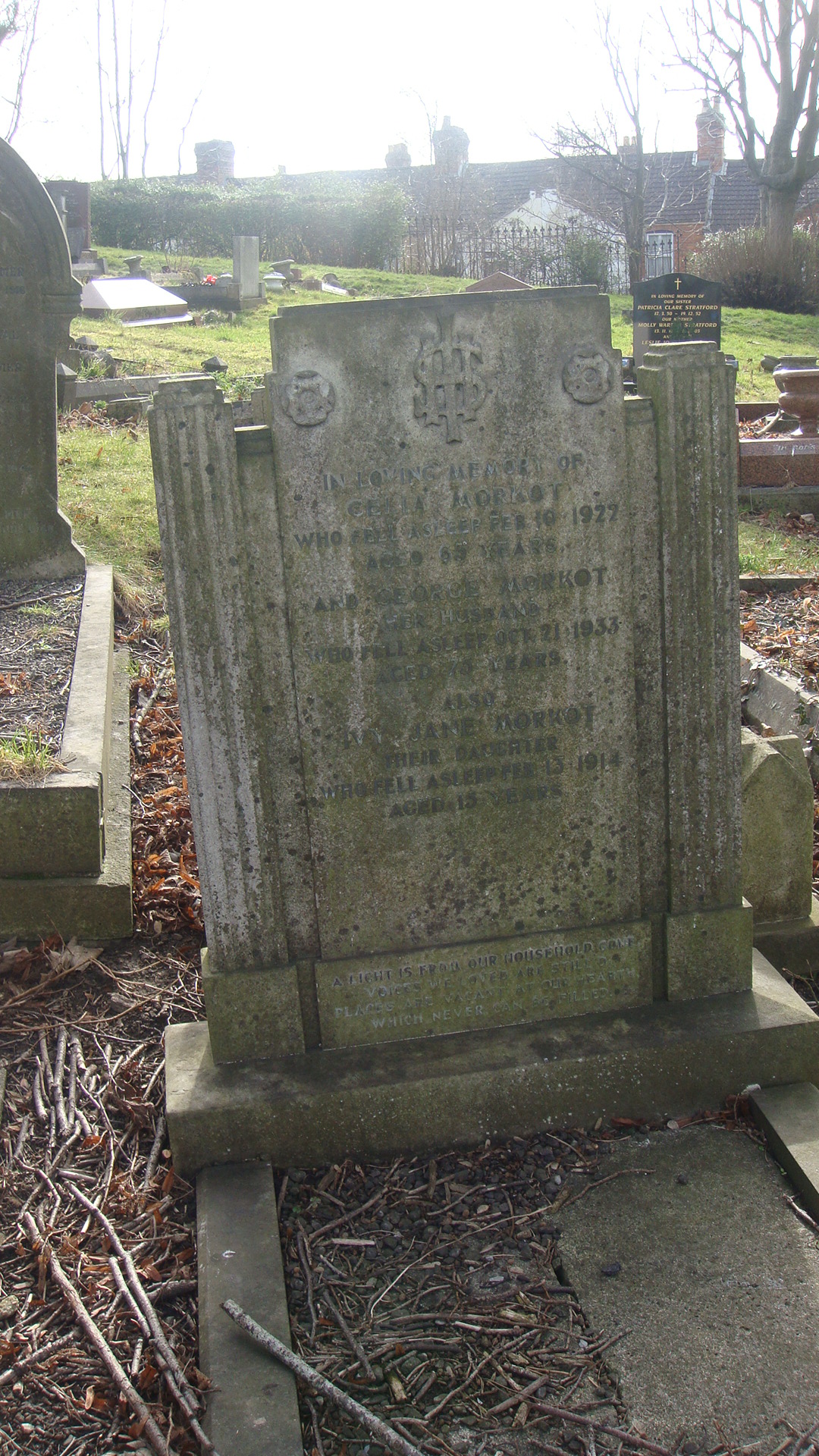
Celia married George Morkot at St Mark’s Church, Swindon on July 19, 1883 and by 1891 they were living at 31 Chester Street with their three children, Charles 6, Nellie 4 and George 2. Celia would go on to have another four children.

Celia died aged 65 years old in February 1922 at 31 Chester Street where the family had lived for more than 30 years. Her funeral took place at Radnor Street Cemetery on February 15 and she is buried in plot D1613.

Celia Morkot


Jane Elizabeth Hobbs – killed in WWII air raid

A lone raider on a bombing mission came dangerously close to the Great Western Railway factory during the night of Thursday December 19, 1940. But instead of hitting the Works the high explosive bomb fell on Beatrice Street, Gorse Hill.

There were several casualties and some miraculous rescues, but sadly Jane Elizabeth Hobbs died the following day in the Victoria Hospital.

Jane Elizabeth Miles was the daughter of a railway man; she married another railway man like so many women of her generation did. William John Hobbs had begun his working life as a cattleman on a farm in Calne but by the time of his marriage to Jane in 1907 he was working as a machineman in the GWR.

The couple lived their entire married life in Gorse Hill where they raised three children. William died in 1933 at 167 Beatrice Street; the house that was later destroyed by a bomb on the night of Thursday December 19, 1940.

Five houses were demolished and others damaged, but there were few casualties when a lone raider dropped bombs on a town in the South of England last Thursday night.

In one street where three houses were wrecked, the rescuers, who were on the scene within two or three minutes, were astonished to hear cries for aid.

Gaining a way through the debris from the back of the house they saw three or four heads protruding from beneath the collapsed stairway. These were the occupants of the house, who had rushed under the staircase as the building collapsed upon them and were thrown flat on the floor. They were all pulled out suffering from slight injuries.

Mrs Jane Hobbs, a widow, was the most seriously injured, and she died in hospital on Friday evening. Her 24-year-old daughter Jane, who was also seriously injured is still in hospital.

A Mr. Crook, who was on a visit from another part of the town, was also taken to hospital.

In another nearby street a bomb dropped in the middle of a small backyard at the rear of two houses. All the outbuildings were demolished and the walls at the back of the houses were fractured. Here again there were lucky escapes. Five or six occupants in the kitchen included a married couple who had twice previously been bombed in London.

Scores of houses in the neighbourhood were hit by flying masonry, and in this way, as well as through blast, many windows were broken.

Praise for ARP Squads.

Everyone was loud in praise of the magnificent way in which the wardens, the rescue and demolition squads. First-aid workers and firemen discharged their duties.

One resident observed: “They were here and hard at work almost before we could get out. Not a second was wasted, and I can tell you this fact was a great relief to us all.”

Extracts from North Wilts Herald, Friday, 27 December, 1940.

Gorse Hill

Jane was buried on December 26 in grave plot C3831 which she shares with her husband William and her parents Henry John and Fanny Miles.

George Barefoot – an investor in people

The re-imagined story …

I’ve lived in New Swindon all my life. I was born in my gran’s bedroom in Bristol Street and I’ve never known anywhere else. But I’m tired of the close-knit railway community where everyone knows everyone else’s business, and a life confined to the Works and the railway village. I’m weary of seeing the same faces day in, day out, I don’t want to marry a boilermaker or a fitter and live the same life my mum and my Gran have.

“But that’s the strength of this place,” said Gran. “It’s knowing Mrs so and so’s baby is poorly or that Mr whatsit needs help with his shopping.” Gran was settling in for a long session, I could sense it. I offered her a piece of cake.

“When me and your Gramps moved here, I thought we had made the biggest mistake of our lives. All that was here was the Works and the company houses and that was it. No market, no shops, no church even, nothing.”

She took a sip of her tea.

“Is there any sugar in this?”

“Two spoons, Gran.”

“Your Gramps wanted to move out of London. He thought the kids would have a better future here. He thought living in the country would be healthy.” She shook her head sadly.

“The company houses looked nice enough from the outside but the railway village was worse than any East End slum. That first winter we lived here there was an outbreak of typhus. Six children died in Bristol Street. We were fortunate.”

She twisted the wedding ring on her gnarled finger, worn thin by hard toil.

“Did you ever consider moving back to London?”

“It wasn’t that easy and your Gramps had a good job in the Works here. He kept telling me we’d stick it out a bit longer, give it a chance, he’d say.”

“So, what persuaded you to stick it out?”

“Your grandfather and the men he worked with, they made the difference. Men like George Barefoot, elected on to the Mechanics’ Institute Council. Those men were investors; investors in people, they weren’t interested in share prices and profit. They wanted to protect their families and improve their standard of living. They wanted health care in a time when people didn’t call out the doctor because they couldn’t afford to. They were good men and they made the difference.”

“I’m glad your Gramps and George Barefoot gave New Swindon a chance.”

Gran spooned out the sugar from the bottom of her cup.

“Is there anymore tea in that pot? And make sure you put some sugar in this time.”

The facts …

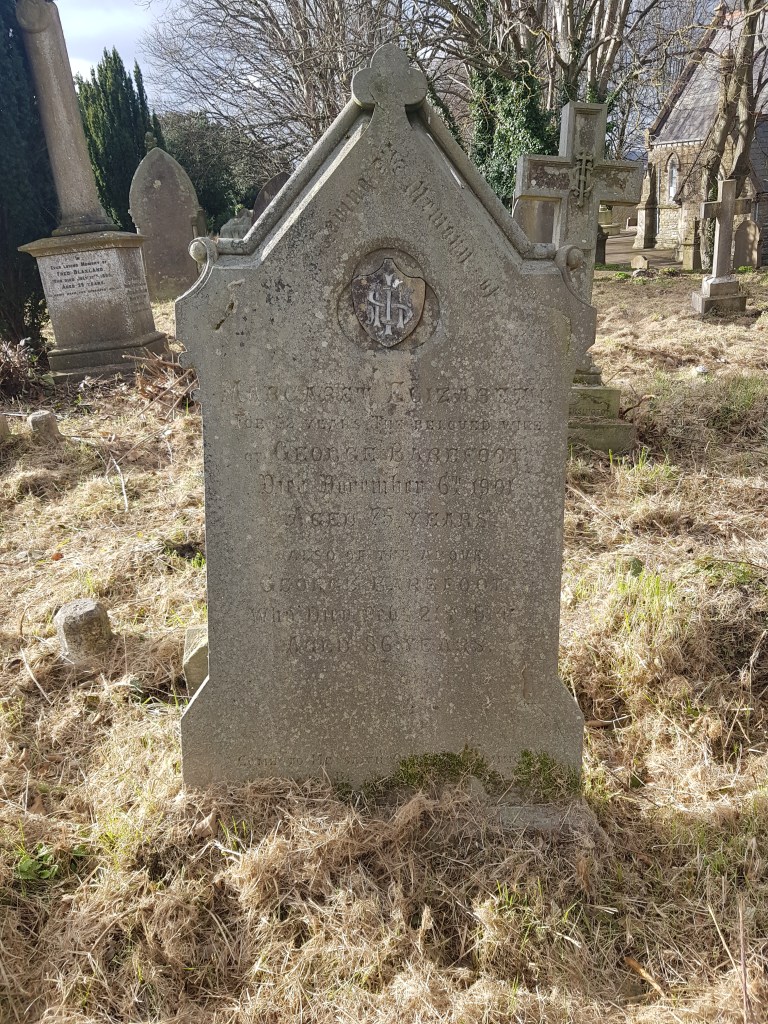
George Barefoot was born in Maidenhead in 1828. He married Margaret Elizabeth Williams, a dressmaker, at Holy Rood on December 23, 1848. George was transferred to Gloucester where on November 12, 1865 three of the couple’s children, John James, William Alfred and Mary Ellen, were christened at St James’s Church, Gloucester. The family’s address is given as Front Terrace. By 1869 the family had returned to Swindon.

That same year George Barefoot was elected on to the Mechanics’ Institute Council with 166 votes. The following year he was re-elected with an increased number of votes, topping the poll with 281. Election results continue to show his presence on the Council and in 1873 he is recorded as ‘George Barefoot Locomotive Department K shop 296 votes.

George Barefoot died at the age of 86 years. He was buried on February 26, 1914 in Radnor Street Cemetery in plot E7936

Death of Mr George Barefoot

The death took place on Saturday, at the residence of his son-in-law, Mr F. Edge, “Inglewood,” Deacon Street, Swindon, of Mr George Barefoot. The deceased gentleman who was very well known in Swindon, was born at Maidenhead in 1828, and commenced his working career as an office boy at Paddington Station. In 1847 he came to Swindon, being then at the age of 19, and was transferred for a few years to Gloucester, and finally returned to Swindon.

It is interesting to note that he was married at the old Parish Church by the then Vicar (the Rev. H.G. Baily), and he has, therefore, watched Swindon grow from what were practically two large villages into the large and enterprising town it is to-day.

He was a chargeman in the GWR Works for over 30 years, and he won the esteem and respect of all who knew him. In recognition of his faithful services the company granted him a pension on his retirement, and he went to live with his son-in-law and daughter.

He was always a prominent Conservative, and the late Sir Daniel Gooch used to speak of George Barefoot as his staunchest supporter in the Works. He had been a regular attendant at St. Mark’s Church.

A few weeks ago Mr. Barefoot had a stroke, and took to his bed, the end coming peacefully on Saturday. He leaves five children to mourn his death.

North Wilts Herald, Friday, February 27, 1914.

George Bayliss – Your Majesty

The re-imagined story …

Swindon certainly pushed the boat out when King George V and Queen Mary came to town. The streets were all decorated and the people turned out in their thousands, cheering and waving their handkerchiefs as the royal car travelled down Regent Street.

The King’s first port of call on that April day in 1924 was to lay a wreath at the cenotaph, a gesture that gained him the respect of even the most anti royalist for the King was not that popular in some quarters so soon after the Great War. But not in our family – we were Royalists through and through – and after that visit in 1924 people used to call my Pops ‘Your Majesty.’

The Royal couple visited the Victoria Hospital and the Medical Fund building, but the highlight of the day for us was their tour of the Railway Works. I was working in the Carriage and Wagon Works, making luggage rack netting and we knew the Queen was going to be brought around. I don’t think I have ever been so nervous in all my life. She stood right behind me, watching me work. She smelt lovely, lilies of the valley. I didn’t dare look round, even when I heard her say ‘what nimble fingers you have young lady.’

But the star of our family show was my Pops, George Bayliss. Some 75 old railwaymen who had worked for the GWR for more than 50 years were introduced to the King and Queen that day and the King actually spoke to my Pops. It was all there, published in the Adver. He asked him how old he was – “I am 69, your Majesty, and I have had 58 years’ service,” to which the King replied “I hope to be as good a man as you are when I am your age.”

Afterwards a photograph was taken to commemorate the occasion. You can’t miss my Pops, sitting in the front row in his spotless white ducks, the white jacket and trousers worn by railwaymen in the old days. Pops took it all in his stride, but for me it was the proudest day of my life. The Queen admired my work and my Pops got to talk to the King. I wish I had a copy of that photograph.

The facts …

George was born in 1855 in Newark on Trent, Nottinghamshire the son of John Bayliss, a boiler maker and his wife Hannah. By 1881 he was living in Swindon and lodging at 17 Harding Street with Samuel Shallcroft and his wife and two daughters. He was 25 years old and working as an engine fitter.

George married Henrietta Kirby in 1882 and at the time of the census in 1891 they were living at 14 Charles Street, Rodbourne with their children William, Frederick, Walter, Lilian, Mabel and Edith. A seventh child, Beatrice May was born in 1893.

By 1901 the family had moved to 189 Rodbourne Lane, George’s home until his death in December 1926 aged 71 years old. George Bayliss was buried on December 11, 1926 in plot D760.

The home of George Bayliss in Rodbourne Road

The couple were non conformists and had children baptised on the Highworth Primitive Methodist Circuit and the Regent Primitive Methodist Circuit. George would no doubt have been happy to be buried in Radnor Street Cemetery where the burial ground was unconsecrated and the cemetery chapel non denominational.

Swindon Advertiser.

“He (Bayliss) is one of the old brigade and was conspicuous by the fact that he wore the old time white jacket and trousers. Though not worn nowadays, Mr Bayliss will not discard the old style and has a clean suit every week. His Majesty chatted with him for a few minutes and said to him “I hope to be as good a man as you are when I am your age.”

The photograph titled Swindon Works Veterans Inspected by Their Majesties the King and Queen on April 28th 1924 is published courtesy of Local Studies, Swindon Central Library, although the general consensus is that this is probably not the original. Carefully examination has revealed a couple of super imposed images, presumably those of men unable to attend on the day.

Myra Nash – mother of STFC goalkeeper

Throughout history women are invariably identified by their father’s occupation and status, then their husband’s and eventually their children’s and such was the case of Myra Nash.

Born in 1867 Myra was one of Matthew Beasant’s large family of children. Myra was baptised at All Saints Church, Lydiard Millicent on October 6, 1867 and grew up at The Green, Lydiard Millicent. Matthew was a labourer in the GWR Works, making the four mile journey from his home in Lydiard Millicent to the railway factory in Swindon every day.

At the age of 13 Myra was already out at work, employed as a domestic servant for George Seward Prentice and his wife Eliza at Grove House, Lydiard Millicent. However, sometime after 1881 she moved into Swindon and a job as a domestic servant for the Nash family at their new confectionery business premises at 32 Bridge Street. It was obviously while working here that she fell in love with the eldest son Edmund William Nash whom she married at St. Mark’s Church on January 9, 1887.

By 1891, with the confectionery business doing well, Edmund had left his job in the Works to concentrate on the family business, and in the census of that year describes himself as a ‘sugar boiler.’ The couple have one child, Rose. By 1901 they had left 32 Regent Street and were living at 243 Cricklade Road where Edmund describes himself as a ‘confectioner.’ By now the couple have a second daughter, Winnifred, and despite having two children and a family business, the census enumerator does not see fit to record any occupation for Myra. At the time of the 1911 census the family are now living at 104 Cricklade Road, their long time home. Edmund describes himself once again as a ‘sugar boiler,’ the couple’s 19 year old daughter Winifred is employed as a Shop Assistant in the family’s confectionery business and now the couple have a young son, born in 1902 – Edward Montague Nash.

Edward Montague Nash (Teddy) went on to be a talented sportsman, playing county cricket for Wiltshire, but he is probably best remembered as Swindon Town F.C. goalkeeper. As a young footballer he played for Gorse Hill Boys and North End Albion before signing a youth contract with Swindon Town in 1916. He signed a professional contract in 1920, playing in the 1919/20 season until the 1929/30 season when he transferred to Brentford.

Teddy Nash pictured in his last season with Swindon Town F.C.

He even gets first mention when Myra’s death is reported in the North Wilts Herald, April 11, 1930.

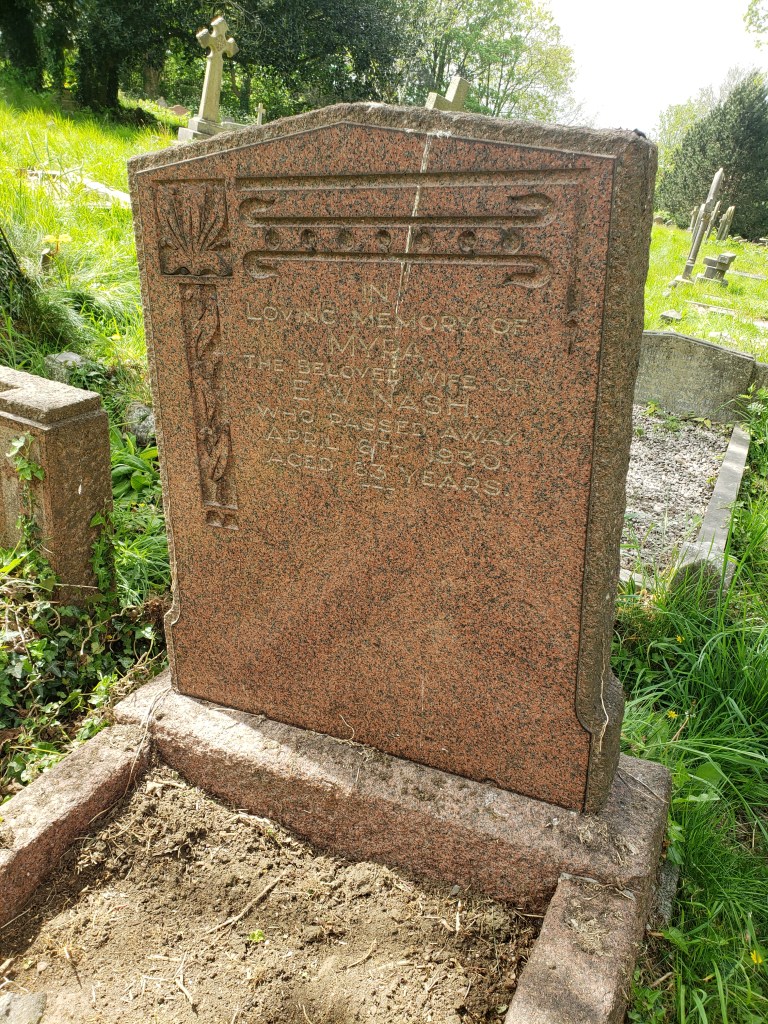
Myra died aged 63, but despite a reasonably well documented life, we really know little about her.

When Myra died in 1930 there is a reference that she had seldom watched her son play of late ‘owing to nerves’ and I am left wondering what Myra’s story really was.

Death of Mrs Nash

Mother of Swindon Town’s Goalkeeper

“Teddy” Nash, the well known Swindon Town goalkeeper, has sustained a sad loss through the death on Sunday night, of his mother, Mrs Myra Nash.

Both the late Mrs Nash, and her husband, Mr Edmund William Nash, are well known in Swindon as tradespeople, and for the last 30 years have carried on a confectionery’s business at 104, Cricklade Street, Gorse Hill, Swindon. Mrs Nash was 63 years of age, and early last night appeared in the best of health.

She very seldom saw her son play for the Town of late owing to nerves.

North Wilts Herald, Friday, April 11, 1930.

Mental Health Awareness Week 2025 will take place from May 12-18 as we continue to try to remove the stigma and encourage people to talk about their mental health.

Arthur and Sarah and the Ashfield angel

The re-imagined story …

The Ashfield angel was my mum’s favourite memorial in Radnor Street Cemetery. Weird, I know, but my mum was like that.

She wanted a ‘Victorian’ funeral with a hearse drawn by black horses with plumes and mutes (whatever they are) in attendance, until she realised how much it would all cost. I thought it sounded like an East End gangster’s funeral myself.

My mum loved Radnor Street Cemetery but she always knew it could never be her final resting place. The cemetery had long since closed to new burials and we didn’t have an existing family plot.

Mind you she spent enough time up there when she was alive and as I mentioned the Ashfield angel was one of her favourites.

“She looks like she has taken them by the hand and led them away to heaven,” she used to say. I know, vaguely creepy.

Mum wasn’t even that religious and she certainly didn’t believe in a life after death and heaven. Personally, I don’t think the statue is even an angel, but there we are. It’s funny the effect Radnor Street Cemetery can have on a person. Take me for example, wandering around the graves and stopping at the Ashfield angel.

The facts …

This is the final resting place of Arthur and Sarah Ashfield.

Arthur worked as a carpenter and railway horse box builder in the GWR Works. In 1904 he married Sarah Gray, the daughter of a steam engine maker and fitter. At the time of the 1911 census Arthur and Sarah lived at 30 Alfred Street with their five year old son Charles and Arthur’s widowed mother Annie.

The youngest child of Charles and Annie Ashfield, Arthur was born in 1881, the year that Radnor Street Cemetery opened. Although his birth place is stated as Stratton, by the time he was a month old the family were living at 19 Redcross Street, the original name for Radnor Street.

In 1891 Arthur and his family were living at 71 Radnor Street in quite possibly the same house, following the renaming and renumbering of the street.

Sarah died in 1927 aged 46 and Arthur 22 years later when he was 68.