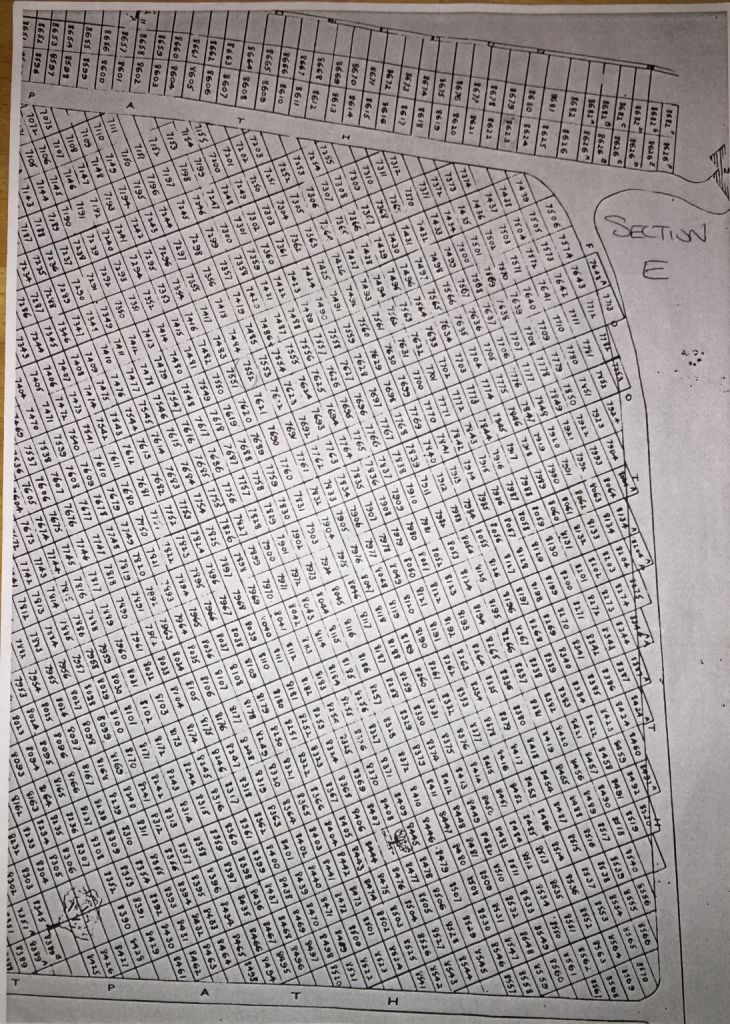
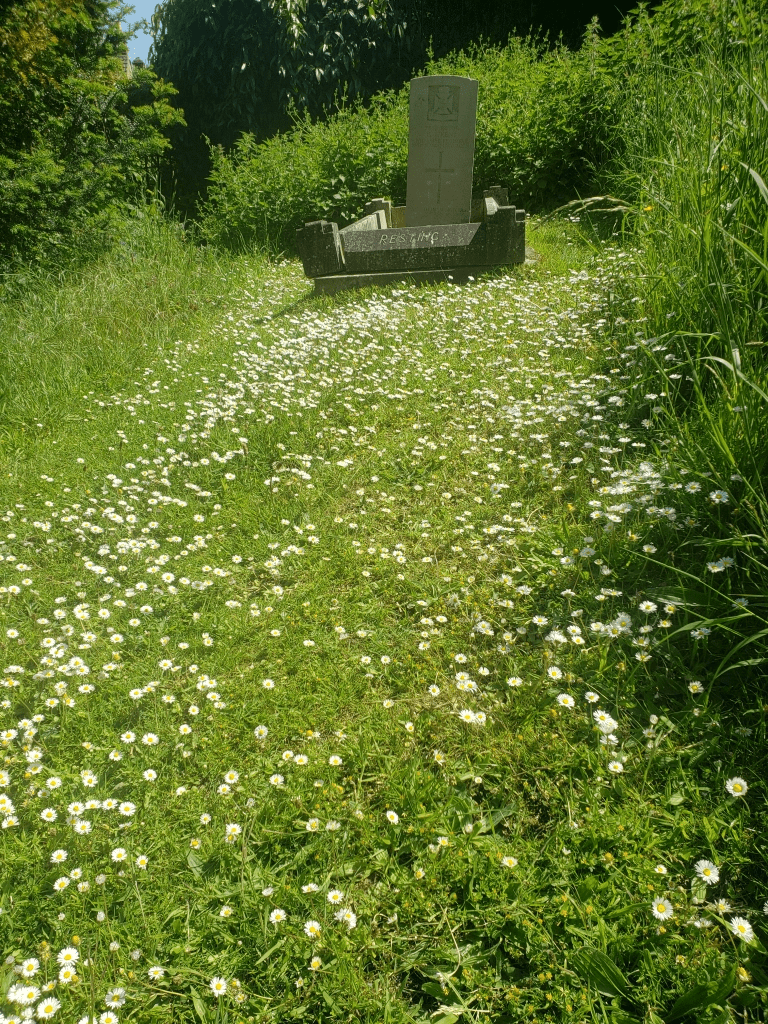
Sometimes the cemetery map can be a little misleading. When I researched the Holbrow family a year or so ago it appeared that the family grave might be beneath a path. There was no evidence to suggest that sections of the cemetery had been re-configured and as it turned out the Holbrow family plot was on the periphery of Section E but with plenty of room for a fine headstone.
Samuel Edward Holbrow was born on November 5, 1871 the son of Joseph and Mary Holbrow. At the time of the 1881 census Samuel, his five brothers and sisters and his parents were living at 10 Reading Street, sharing a property with Elijah Jones and his daughter Sarah, evidence of the overcrowded situation in the railway village that continued into the 1880s.
He began his 7 year apprenticeship in the Tender & Fitting Shop in the Works on his 14th birthday on a daily rate of 10d rising to 2/- in his 7th year. His record of employment shows that he received his certificate signed on November 19, 1892 by H. Birch (accountant at the GWR Works after whom Birch Street was named) and that he left in April 1893. A completed apprenticeship did not guarantee a permanent job in the Swindon Works as so many of the newly qualified apprentices discovered.
During his absence from Swindon Samuel married Minnie Florence Louise Bishop at St. Andrew’s Church, Cardiff. By 1896 the couple had returned to Swindon and their elder daughter Elsie (born in Devonport on August 24, 1896) was baptised at Christchurch in 1897 when the family lived at 60 Dixon Street.
Their second daughter Hilda May was baptised at St. Mark’s Church on June 19, 1898 when the family lived at 9 Dean Street. Soon after Hilda’s birth the family moved to 47 Deacon Street where Samuel died in 1941 and Minnie in 1965. This would remain Hilda’s home until her death in 1995.
Her sister Elsie, however, had a much more adventurous life – you can read more by following the link below.
Samuel Edward Holbrow
Samuel, Minnie and their daughter Hilda are all buried in grave plot E7643A. Interred with them are the cremated remains of 9 year old Peter Scott, Samuel and Minnie’s great grandson who was born in Peru. His death was registered in Lothingland, East Anglia, however the address recorded in the Burial Register is Hotel Junin, Oraya, Peru. Another mystery to solve!
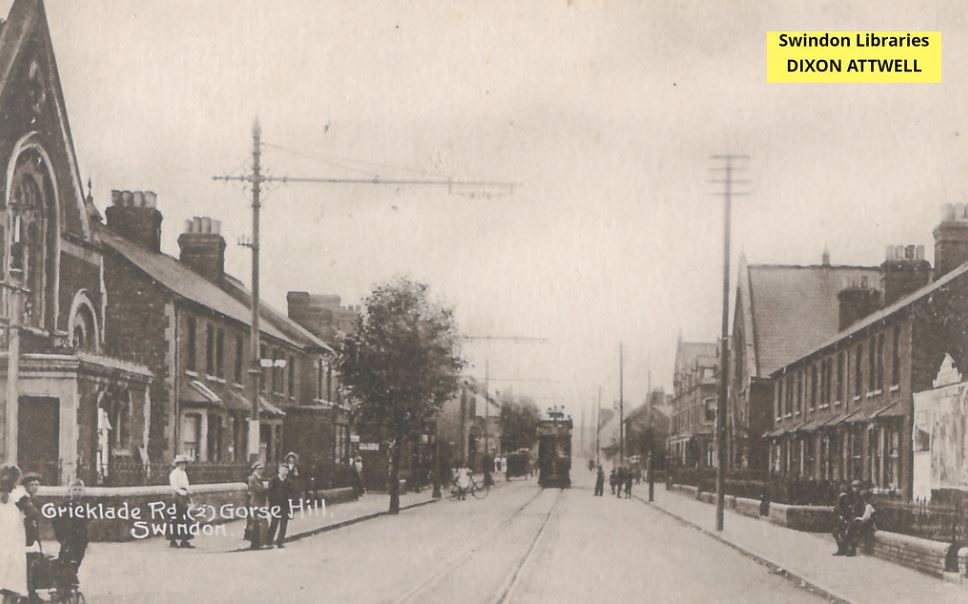
Image of Chapel Street, Gorse Hill published courtesy of Local Studies, Swindon Central Library.
The lives of the ordinary people of Swindon never cease to amaze me. When I began researching the Rodway and Sellwood families of Gorse Hill I discovered a combined military history spanning almost 70 years.
Ellen Rodway was born in 1856 in Newport on the Isle of Wight, the daughter of Joseph Rodway, a soldier who served in the 28th Regiment of Foot from 1843 to 1864. In 1861 Joseph was serving in St. Helena, Coast of Africa, where Ellen’s brother, Joseph Thomas and sister Jane were both born before the family returned to England. By 1871 Joseph Rodway and his family were living in Barton St. Michael, Gloucestershire and in 1881 they were in Stratton St. Margaret where Joseph, the former soldier, worked as a railway porter. And we tend to think people didn’t move about much in the old days!
Joseph Thomas Rodway would later enlist in the Royal Marines, serving for more than 20 years. His son, William John Rodway, aged 16 in 1911, was a soldier in the Kings Royal Rifles and on census night of that year was staying with his uncle William Rodway at 126 Chapel Street.
In 1881 Ellen Rodway married Henry Sellwood who had recently retired from B. Brigade R.H.A. (Royal Horse Artillery) aged 24 and was described as a Royal Hospital Pensioner. Henry settled down to a job in the railway factory and married life in Gorse Hill.
In 1891 the couple were living at 116 Chapel Street with their four children, Henry 9, Joseph 6, Rosa 4 and one year old Robert. By 1911 they had moved to 95 Edinburgh Street, which remained their home until Ellen died in 1940.
Henry died in 1918 and was buried on October 17 in grave plot B2850 joining two of the couple’s sons – Robert Charles who died in 1907 aged 19 and Joseph William who died in 1914 aged 28.
Ellen died on May 7, 1940 at her son’s home in Broad Street aged 83 years old. Her funeral was reported in the North Wilts Herald. She was buried on May 11 and joined her husband and two sons in grave plot B2850.
Ellen’s mother, Kate Rodway, died at 44 Chapel Street in 1901. She was buried in Radnor Street Cemetery on May 7 in grave plot A317, a public grave. Her husband, that old soldier Joseph who served in the 28th Regiment of Foot for more than 20 years, died at 126 Chapel Street in 1910 aged 84 and was buried with his wife on September 3.
Mrs E. Selwood
The funeral took place on Saturday, of Mrs Ellen Selwood, of 95, Edinburgh-street, Swindon, who died on 7 May, at her son’s home, 66 Broad-street, a few days before her 84th birthday. The service at the *Russell Memorial Church was conducted by Rev. Burgin, who also officiated at the interment in Radnor-street Cemetery.
Chief mourners were: Mr F.R. Selwood (son and daughter), Mr W. Rodway (brother), Mrs C.D. Love (granddaughter), Mrs. E.M. Selwood (daughter-in-law), Mr T. Robins, Mrs E. Bell, Mrs. L. Scott, Mrs M. Griffiths.
Funeral arrangements were carried out by Messrs. A.E. Smith and Son, 24, Gordon-road, Swindon.
North Wilts Herald, Friday, 17 May, 1940.
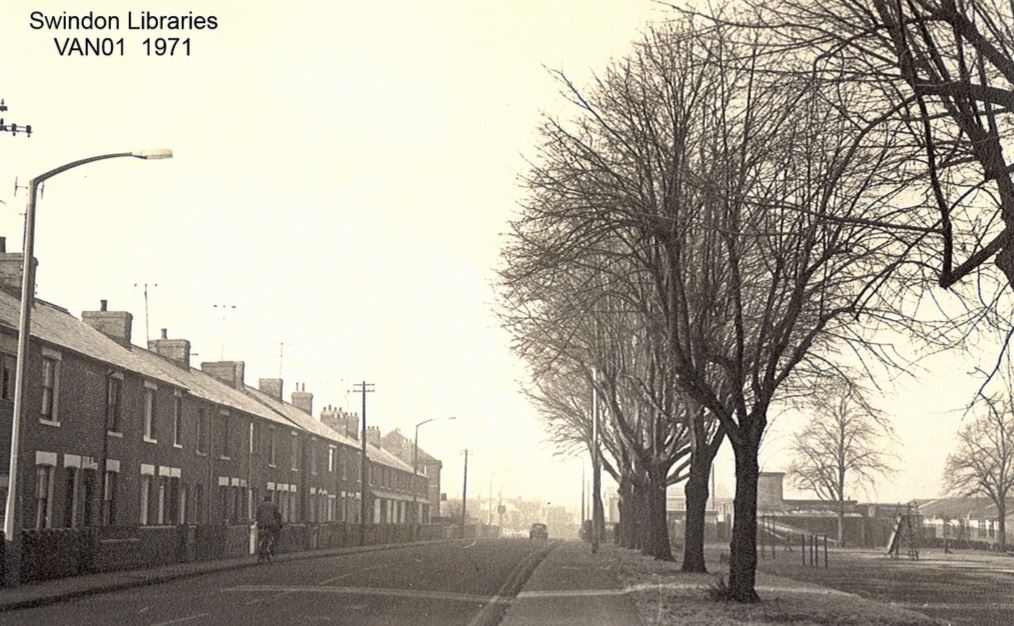
Image of Cricklade Road, Gorse Hill published courtesy of Local Studies, Swindon Central Library.
*The Russell Memorial Church was built in 1890 on the corner of Cricklade Road and Edinburgh Street. It was named after Thomas Russell the early missioner.
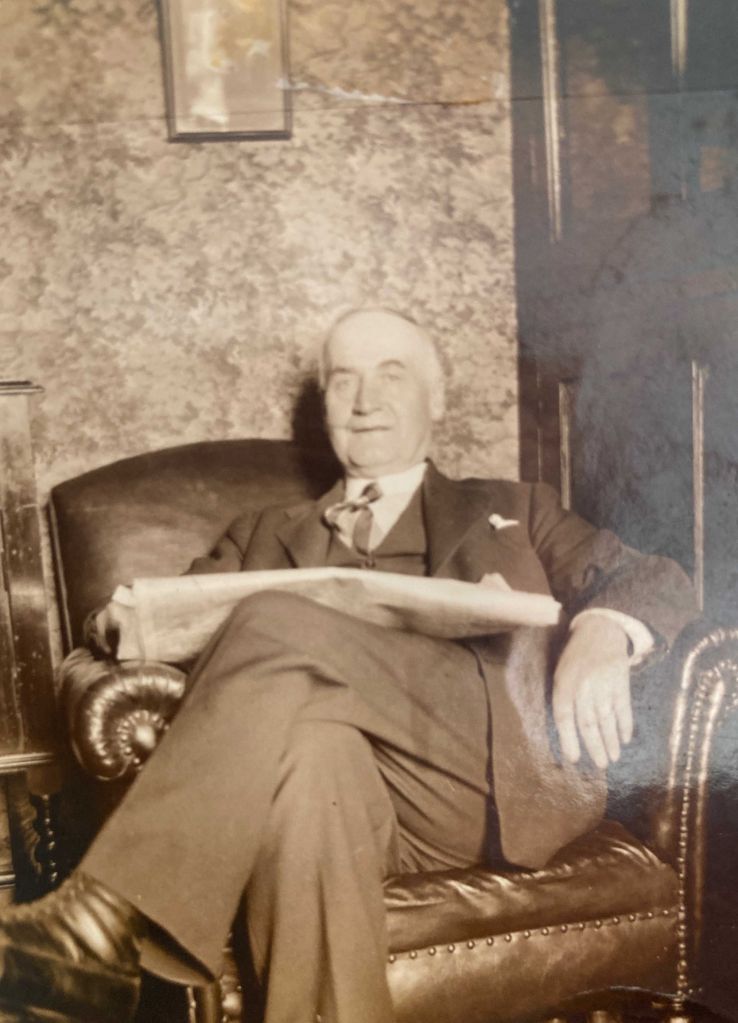
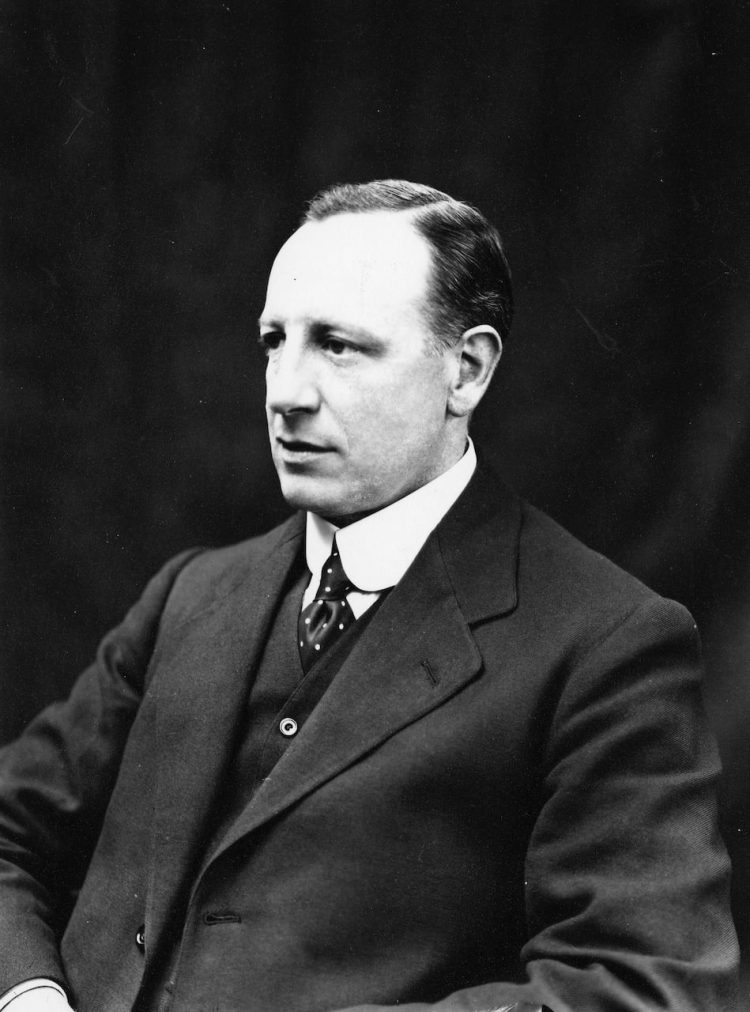
Charles Benjamin Collett – GWR Chief Mechanical Engineer 1922-1941
It is relatively easy to find out a great deal about Charles Benjamin Collett, OBE, Chief Mechanical Engineer at the Great Western Railway.
He has gone down in history as a well-respected, modest man who designed the iconic fleet of “Castle” and “King” Locomotives yet lived an unassuming lifestyle alongside the railwaymen and their families in the railway village.
Charles and Ethelwyn Collett’s home in the railway village
He was born on September 10, 1871 the son of journalist William Collett and his wife Mary. He was educated at the Merchant Taylors School Charterhouse Square and later studied at the City and Guilds College of London University. He was articled as a pupil to Mr Joshua Field, of Maudslay, Sons & Fields Ltd., London before joining the GWR in 1893 as a junior draughtsman. He then became assistant to the Chief Draughtsman and in 1900 Technical Inspector and later Assistant Manager. By 1919 he was Deputy Chief Mechanical Engineer before succeeding George J. Churchward as Chief Mechanical Engineer.
Rather less is known about his wife.
Ethelwyn May Simon was born in 1876 the daughter of Henry Simon, a Congregational Minister who served as Pastor at Westminster Chapel from 1876-87, and his wife Annie.
Charles and Ethelwyn married at St. George’s Church, Bloomsbury on November 4, 1896. It is said that the couple were very devoted and that Charles was greatly affected when Ethelwyn died in 1923, the year in which he launched the record breaking Caerphilly Castle Locomotive.
Ethelwyn was buried in Radnor Street Cemetery on March 23, 1923. Charles purchased two grave plots numbered Section A2517 and A2518. However, it seems unlikely that his intention was to be buried with his wife when the time came as a note in the burial registers reveal that Ethelwyn was buried in the centre of both graves.
Radnor Street Cemetery Jon stands at Ethelwyn’s unmarked grave
Ethelwyn lies in an unmarked grave, which is probably what Collett wanted. He lies in an unmarked grave in Gap Road Cemetery, Wimbledon, which he shares with two other unrelated persons. Apparently, he requested that his grave should also go unmarked.
Edward George Guley was born on January 25, 1895 and baptised at St. Paul’s Church, Swindon on July 7. He was the second son of railway carriage fitter Charles Guley and his wife Annie. In 1911, the last census taken before the outbreak of war in 1914, the family lived at 8 Beatrice Street, Gorse Hill. All three men in the family worked in the railway factory. Charles as a Railway Carriage Fitter, his eldest son Harold Charles Guley was 19 and employed as an Engine Fitter apprentice and part time student and Edward George Guley was 16 and a machine boy and part time student.
Both Charles and Annie’s boys enlisted – possibly together, and both served in Basra. Harold was nearly 24 years old, Edward was 20. Harold’s service records have survived but unfortunately Edward’s haven’t. Harold served in the Royal Army Service Corps and Edward in the 5th (Service) Battalion. Harold returned home to Swindon at the end of the war; Edward didn’t.
The First World War campaign in Mesopotamia (modern day Iraq) cost 85,000 British casualties, one of whom was Edward George Gulley, killed in action on March 29, 1917.
The 5th (Service) battalion were in action on the 25th January 1917 when they assaulted the Turkish front line, one flank of which rested on the Hai River which they had crossed only a month before. They took heavy casualties in this action. On the 25th of February they crossed the River Tigris and by the end of the month after hard marching they were 40 miles short of Baghdad. On the 10th March they made a night river crossing over the Diala River establishing a bridgehead and taking 120 prisoners in the process. The way to Baghdad was open and the battalion was the first to enter the city. At the end of March the battalion advanced on Turkish positions 35 miles north of Baghdad near Daltawa. They sustained heavy casualties in this attack. In April and May they continued the advance up the line of the River Adhaim with contact being made with the Russians operating from the Caspian Sea. They then took up defensive positions between the rivers Tigris and Adhaim, East of Samara. In early December they advanced towards Kara Tepe, with the battalion pursuing the Turks through Sakaltutan Pass. They paused at this point and ended the year reorganizing and training.
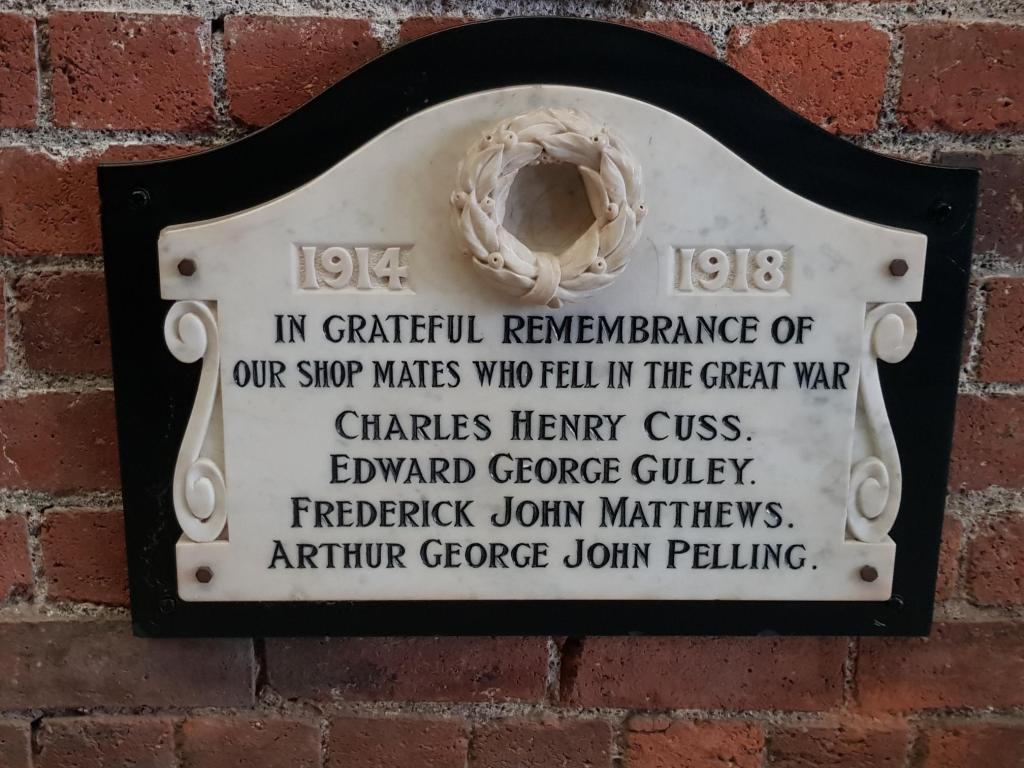
Edward has no known grave and is remembered on the Basra Memorial. He is also remembered on a plaque raised by his colleagues in the GWR Works, which now hangs in the STEAM – Museum of the Great Western Railway
Annie survived the war and the loss of her son, but what was survival like for her? Did parents ever recover from the loss of their boys? I doubt it. Her husband Charles was buried in Radnor Street Cemetery on January 5, 1928 in plot D245 where Annie joined him on June 20, 1933.
I’m having a rather expensive sandwich and a cup of tea (not many people drink tea now, I find it’s become an ‘old persons’ beverage) in a coffee bar which proudly boasts on the signage that it was ‘established 1999.’ It is situated in the former railway factory established slightly earlier – in 1843!
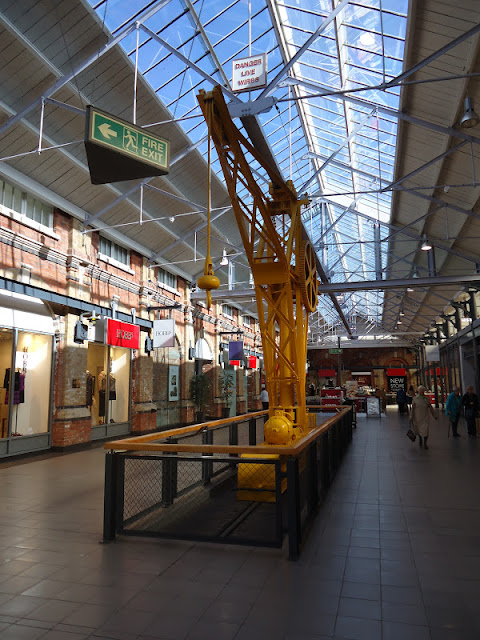
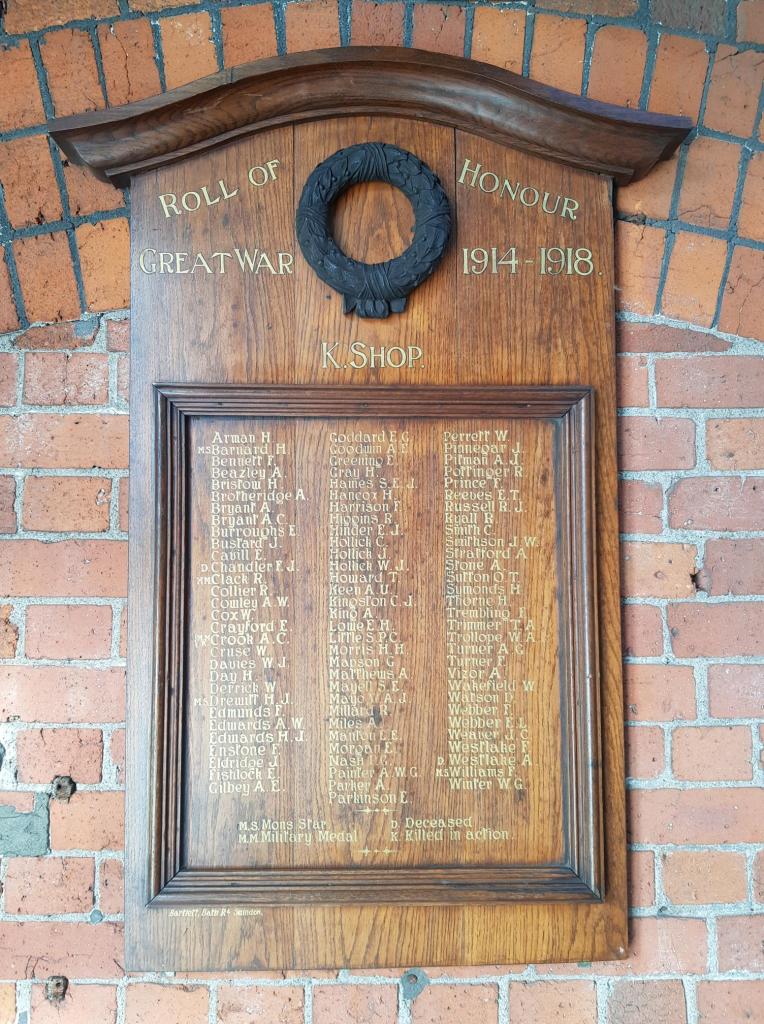
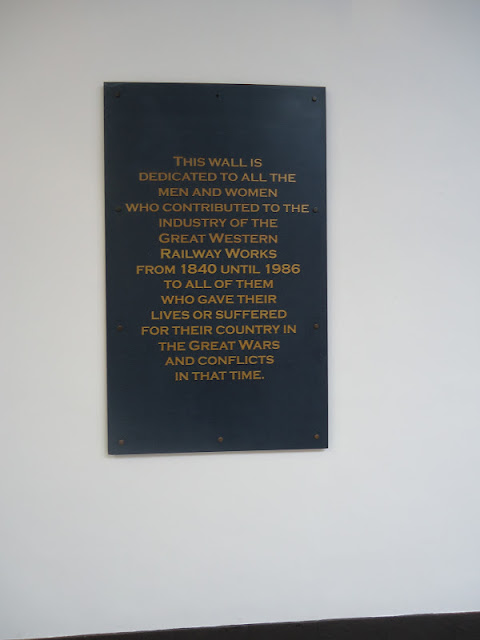
The model train has just done a circuit – a nod to the railway history of the McArthur Glen Designer Outlet Village. In all fairness there are plenty of reminders – machinery, overhead cranes and the war memorials to the railwaymen who gave their lives in two world wars.
There is still a generation of railwaymen around who can remember the Works when it closed in 1986 making 1,100 redundant. A far cry from the glory days of the 1920s when there were more than 14,000 on the payroll.
As I sit here enjoying my sandwich and (generous) mug of tea, listening to the hum of conversation around me, I think of all those men who spent a lifetime grafting within these walls.
You may like to read the stories of some of them – see below.
It is probably fair to say that Edmund and Elizabeth Bramwell were an aspirational couple. Edmund was a fitter and turner in the Great Western Railway Works, a skilled occupation in which he had served a lengthy apprenticeship. Elizabeth had worked as a school mistress, a career she could no longer pursue after her marriage, a situation that didn’t alter within the teaching profession until 1944.
Edmund Bramwell and Elizabeth Burroughs married at Christ Church, Swindon on December 23, 1854. They both came from a railway family. Edmund’s father Joseph was a mechanic as was Elizabeth’s father Richard.
The couple made their home in Reading Street where their four daughters were born; Frances in 1856, Mary in 1859, Clara in 1866 and Maud in 1870.
Frances and Mary trained as draper’s assistants. By 1881 Mary had left Swindon and in subsequent years worked in large stores in Bath and Birmingham. Clara and Maud became teachers. Clara began her teaching career working as a 14 year old pupil teacher. By 1891 she was headmistress at one of Swindon’s local board schools. Her sister Maud also worked as an Assistant School Mistress.
Swindon Suffragette Edith New was some ten years younger than the two teaching Bramwell sisters. In 1891 she was also beginning her teaching career as a 14 year old pupil teacher in Swindon. By 1908 she had left Swindon and teaching and had joined the women’s suffrage movement as a paid organiser for the Women’s Social and Political Union. Edith fought in the Votes for Women campaign, serving several terms of imprisonment and going on hunger strike. She eventually returned to teaching and devoted her life to fighting for women’s rights within that profession.
Edith New
Perhaps the sisters followed the news of Edith’s involvement in the suffrage campaign, which featured in the Swindon Advertiser on several occasion. Perhaps they had known her when they were all setting out on their teaching careers.
Draper’s Assistant Frances married in 1885, ending any career progression she might have had. She briefly moved away to Portsmouth where her husband was a fitter in the dockyard and where her son Edmund was born, before returning to Swindon by 1890.
Maud married in 1896 and Clara married in 1901 and in so doing sacrificed their teaching careers. Clara’s status as Headmistress was not even mentioned on her marriage certificate.
Elizabeth Bramwell died in 1907 and was buried in grave plot D87 with her brother Samuel Burroughs, a boilermaker, who had died five years previously. Her husband Edmund died in 1910 and was buried with her. Mary, the daughter who spent a lifetime working in the drapery business, eventually returned to Swindon. She was buried in the family grave on January 18, 1911.
Frances died in 1915 and is buried with her husband in grave plot B3327.
Clara died in 1909 and is buried alone in grave plot E8626B
Maud died in Swansea in 1957.
After a life time teaching in London, Edith New retired to Polperro in Cornwall where she died in 1951.
On Wednesday January 14, 1925 Sampson Birkby bought half an ounce of tobacco, a box of matches and half a pint of bitter at the Carpenter’s Arms, Gorse Hill. At 2.30 pm he left the pub and was never seen alive again.
Five days later the Advertiser published an account of his disappearance. Described as 62 years of age, 5ft 6ins tall with a pale complexion and a grey moustache, Sampson Birkby was a charge hand coach body maker at the GWR Works.
On the day of his disappearance he had returned home for lunch at 76 Dean Street where he lived with his wife Alice, his married daughter, son in law and young grandson.
Sampson called in at the Baker’s Arms near the GWR factor entrance on his way back to work. Reminded that he would be late, he hurried out, but as was later revealed, he did not clock in, but instead walked to the Carpenter’s Arms at Gorse Hill.
Later that evening one of his workmates called in on Alice Birkby to tell her Sampson had not checked in for work. The worried family immediately reported him missing.
Nearly four weeks later Sampson’s body was pulled out of the river at Buscot Weir by Samuel Kemble, a lock keeper employed by the Thames Conservancy at St. John’s Lock, Lechlade.
How did Sampson Birkby, described as being of a happy disposition and without any financial worries, end up drowned in the river at Lechlade?
Sampson was born in Hunslet, Yorkshire in 1862. By 1891 he had moved to 47 Cambria Place, Swindon and a job in the railway works. Ten years later he and Alice were living at 37 George Street with their two year old daughter Edith and 14 year old May Beswick, described as ‘adopted.’
Evidence suggested that Sampson, although not especially talkative, was a social man. A member of the High Street Workingman’s Club, he was an enthusiastic amateur photographer and a keen fisherman.
Giving evidence at the inquest, his son in law, George Bridgeman told how Sampson had been suffering from giddy fits during which he staggered and fell if someone did not support him.
Mr A.P. Ross Ormiston, the Coroner for North Berkshire, supposed that finding himself late for work, Sampson had decided to catch the bus to Lechlade and plan the fishing trip he had previously discussed with his son in law.
Summing up, the Coroner suggested that Sampson had suffered one of these giddy fits whilst walking along the tow path and had fallen into the river. He returned a verdict of ‘Found drowned’ and expressed his sympathy with the relatives of the deceased.
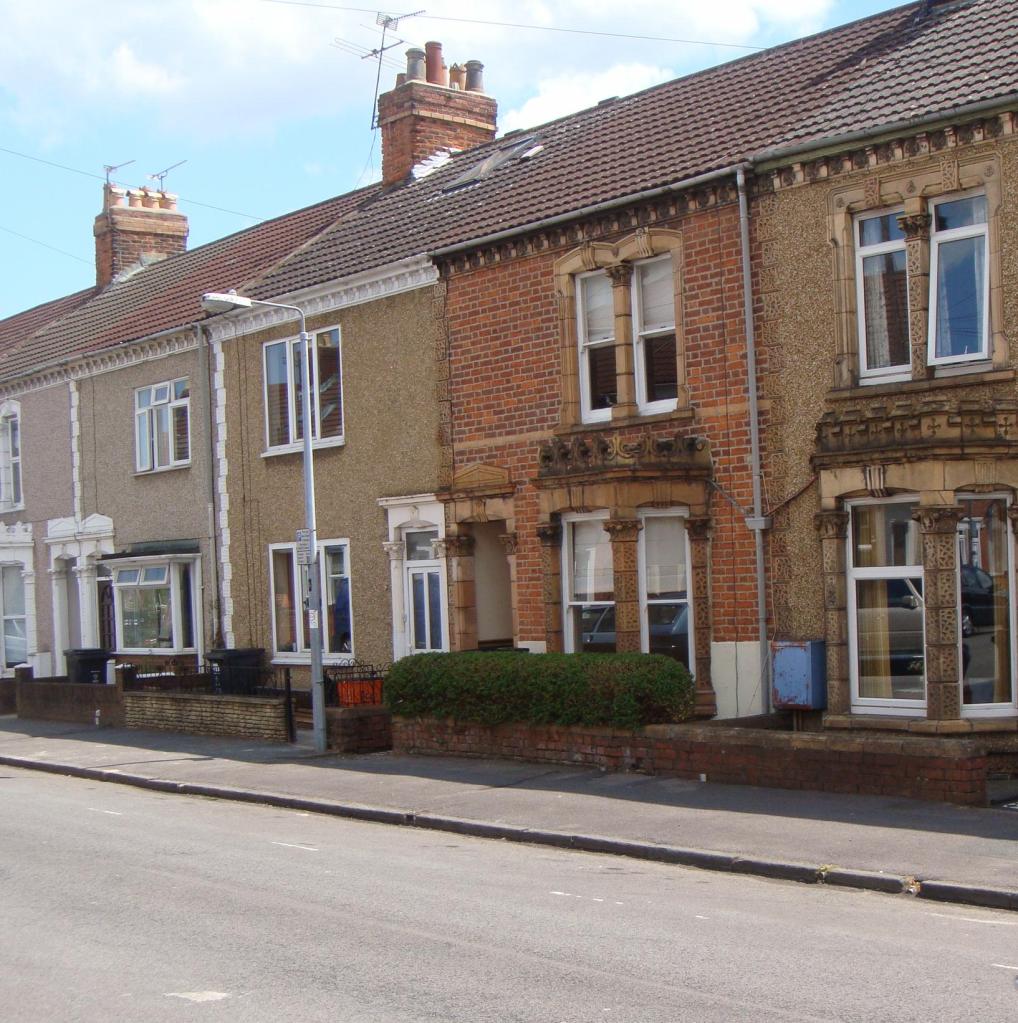
Houses on Dean Street
Sampson Birkby was buried on February 14, 1925 in grave plot D892. His wife Alice died just seven months later and was buried with him. The cremated remains of their son-in-law George were buried with them following his death in 1983 and their daughter Edith Annie when she died in 1986.
This Saturday you’ll find Rodbourne a busy place, as it is most Saturdays. The big attraction is the McArthur Glen Designer Outlet Village housed in the former railway works building. Rodbourne was a busy place back in the day as well and in this account of a fatal accident on the railway line you get a glimpse of the area as it was nearly 100 years ago.
Mr G. Brown, district organiser for the NUR, tried to establish if a shortage of manpower had contributed to the accident, but David Wirrell did not grasp this lifeline. You can’t help but wonder how the poor man coped in the aftermath of the accident.
Knocked Down By An Engine.
Swindon Man Dies From His Injuries.
Leg Severed
A verdict of accidental death was returned at the inquest on Tuesday attending the death of Stephen Amor, 63 of 101 Linslade Street, Swindon, a GWR employee, who was knocked down by an engine near the Rodbourne Road siding, and who died shortly afterwards in the Medical Fund Hospital.
The jury returned a rider that David Wirrell, who was with deceased at the time of the accident and who was acting as “look-out” man, committed an error of judgment in using his brook instead of devoting all his time to “looking out.”
Mr G. Brown, district organiser for the NUR watched the proceedings on behalf of the local branch of the Union, and Mr A.T. Tyrrell was present with Mr Hannington representing the GWR Co.
Mrs Isabella Amor widow of the deceased, said he had been in good health during the past 39 years.
Henry Harold Greenwood, chief surgeon at the GWR Medical Hospital at Swindon, said when admitted he found deceased was suffering from haemorrhage and compound fracture of the right ankle. Amor was taken to the hospital immediately after the accident.
In the course of his evidence, Mr Greenwood paid a very warm tribute to the St. John Ambulance Association for their valuable assistance in rendering first aid.
A Marvellous Escape
David Wirrell, switch cleaner, living at Devonshire Villas, Rodbourne Cheney, said that on Saturday morning he started work at 7.30 with Amor. He first got his tools and started cleaning switches.
“I was the look-out,” he continued, “and proceeded as far as the third compound, which is nearly opposite Rodbourne Road Signal Cabin. We were proceeding from one point to the other, and I looked up to see if anything was coming from the factory, from where most of the traffic comes in the morning.
“There was nothing close to us in that direction, and so I stepped over into the road and gave a few strokes with the broom looking out at the same time.
“When I looked round in the opposite direction to the factor I saw an engine was close upon us, within about four feet. I tried to give the alarm, but the engine pushed me down and ran over me, without causing injury.
“I got up, ran to my mate Amor and found him badly injured. I spoke to him, but he never answered.”
Witness said that he had been about 20 years in his occupation, and always worked towards Swindon Station.
The Coroner: Are you always the look-out man? – No. Every other day. It is my turn on Saturdays.
Don’t you look out both ways? Yes, I do.
Witness explained that Saturday’s incident occurred in a minute or so, and he was not quick enough in looking behind.
There were always two men on the job and sometimes three, but the third man had been ill for some weeks.
Heard No Whistle
Replying to the Coroner, he said that he heard no whistle.
The Coroner: Was a train passing? I believe one had previously passed along the main side.
As a general rule witness looked one way first, but the engine came from another and it all happened in a minute or two.
Mr Brown (who was representing the NUR): As a look-out man, shouldn’t you confine yourself to looking-out? – Yes.
Mr Brown: Is there a signal at that point? – Yes.
Did you observe the signal? No. I can’t say whether it was on or not.
Witness added that the points in question were worked by a lever, and the signals were not of much use to them.
Mr Brown: Did the fact that there were only two men cause you to do additional work?
Witness: No, that made not a bit of difference to looking out.
He heard no warning from the driver of the train.
Mr Brown: Had there been three men would the look out man have to do more work? No.
John Thomas Thorpe of 5, Deacon Street said that at about 8.15 he was standing on the engine line at the siding opposite the Rodbourne Road cabin when he saw an engine approaching the compound or double-switch. He then saw two men either knocked down or fall under the engine.
He ran to where Amor lay and found his leg severed. Hen then went to the AE Shop for the ambulance men.
In answer to the coroner, witness said the men had their backs to the engine.
A Slow Speed
Edward Price, 15 Beatrice Street, locomotive driver, said he was driving a crane engine from the subway to the loco yard in the factory sidings. About 8.15 he was informed that he had run over two men in the compound near Rodbourne Road signal box. There was a signal post with a loop signal, and that was off for him to proceed. He was going at two miles an hour, and at that pace he could have stopped instantly if he had seen anyone on the line.
The Coroner: When shunting, who gives you orders to proceed?
Witness said that he was given orders at the subway. He was also guided by the signal. He touched his whistle just before or as he passed the signals. He was in charge of the engine. When shunting he was given orders by the shunter, but in the present case he was not shunting.
There was a fireman and a shunter in the engine besides himself, but he went across the footplate and looked at the signal.
The Coroner: You did not see anybody on the line?
Witness: No, I saw no sign. He could see nothing from his side, he added.
The Coroner: When people are cleaning points you know that they are guarded – I know they are supposed to be guarded.
Mr. Brown. You were working round a curve? Yes.
Was there anything on the next set of rails? Yes, a number of tenders.
Heard People Shouting.
Herbert Arthur Nash, 173 Rodbourne Road, fireman to Driver Price, said that when they were approaching Rodbourne Road signal box they were keeping a sharp look-out for signals in case they were put at danger against them. Traffic was clear as far as he could see. The driver blew his whistle and went on to the compound. He saw no-one, and was not aware anyone had been knocked down until he heard someone shouting to them to stop. They stopped immediately.
The Coroner: Were you going slowly? – About 2 miles an hour – we were going at a slow walking pace.
Albert William Dew, 6 Spring Gardens, a shunter, said he was in charge of shunting on an engine and crane. He was riding on the left-hand footplate, and was looking out, but saw no-one in the road, as they came round the left-hand curve.
Summing up, the Coroner said that the man who had been killed was working with another man whom they had had as a witness. The man who was not run over was supposed to have been on the look-out for his mate, who was cleaning points. According to his own evidence he was not carrying a flag or horn as he should have done. The cleaners were supposed to be guarded by “look-outs” and the jury would have to determine whether the man was guilty of criminal negligence. His duty was to obey the rules.
Mr R.G. Hannington, manager of the locomotive department, expressed, on behalf of the GWR Company, his very deep sympathy with Mrs. Amor and relatives and his very great regret at the occurrence.
North Wilts Herald Friday April 30, 1926
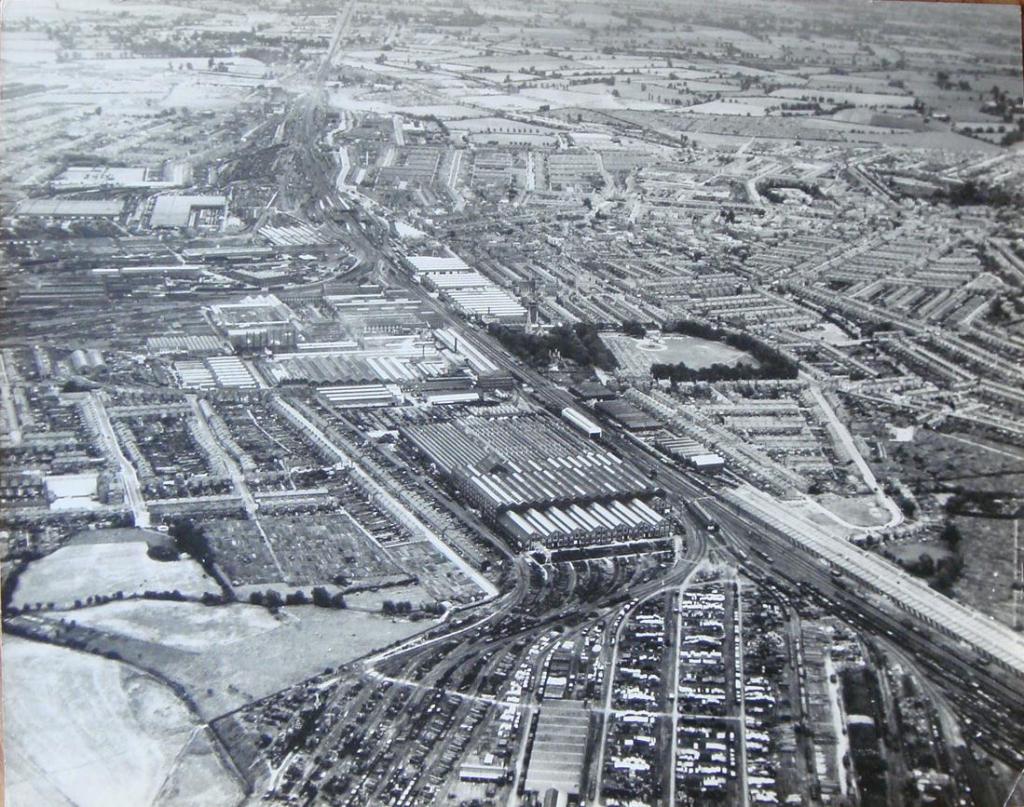
Rodbourne and the Swindon railway works
Stephen Amor, aged 63 years, of 101 Linslade Street and killed on the GWR Line, was buried on April 29, 1926 in grave plot D819. Isabella Amor died 10 years later. She was buried with her husband on April 25, 1936.
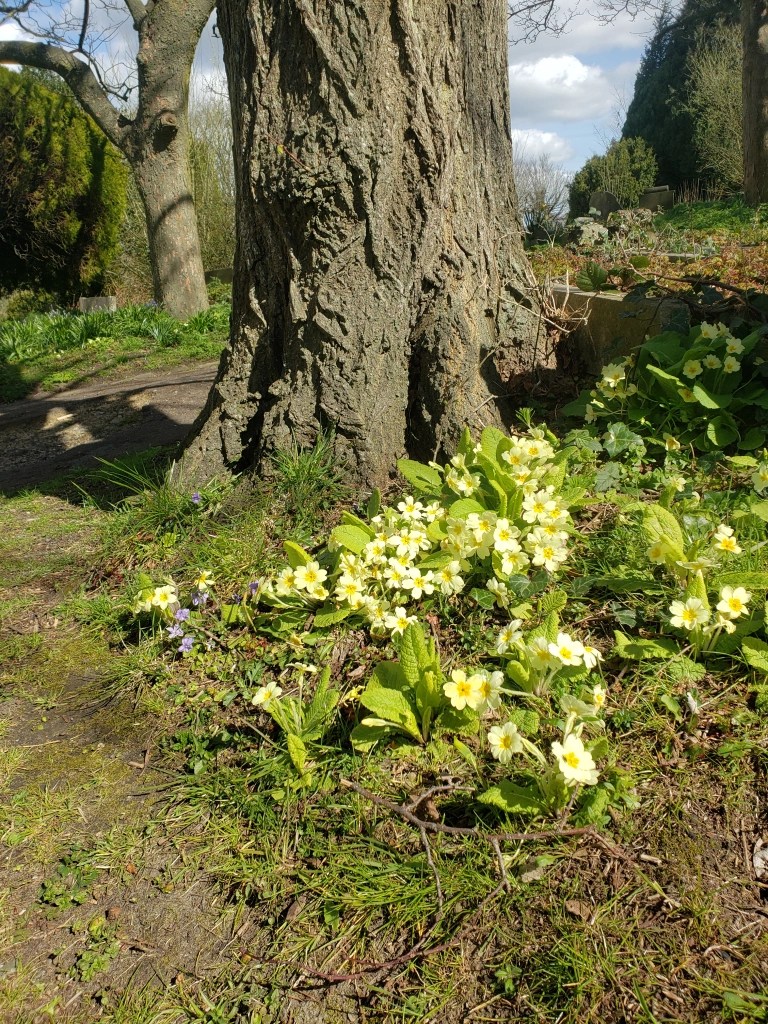
Looks like we might all see some rain today. But spring is just around the corner and our guided cemetery walks will begin again at the end of this month.
The Spring walks are scheduled for:
March 31, April 28 and May 26.
Summer walks are yet to be arranged but our Autumn walks are already in the diary.
September 1 and 29 and October 27.
Our Remembrance Day Service is Sunday November 10.
Well, what can you expect from a typical guided cemetery walk?
A gentle meander through 11½ acres of our picturesque Victorian cemetery. Our CWGC volunteers will tell you about their work to maintain the war graves and the incredible stories they have discovered. Learn about the people who made Swindon; from the boilermakers to the businessmen. Hear about the women who contributed to every aspect of life in Swindon from the home, the factory floor and the magistrates bench! This year we will have even more stories to tell.
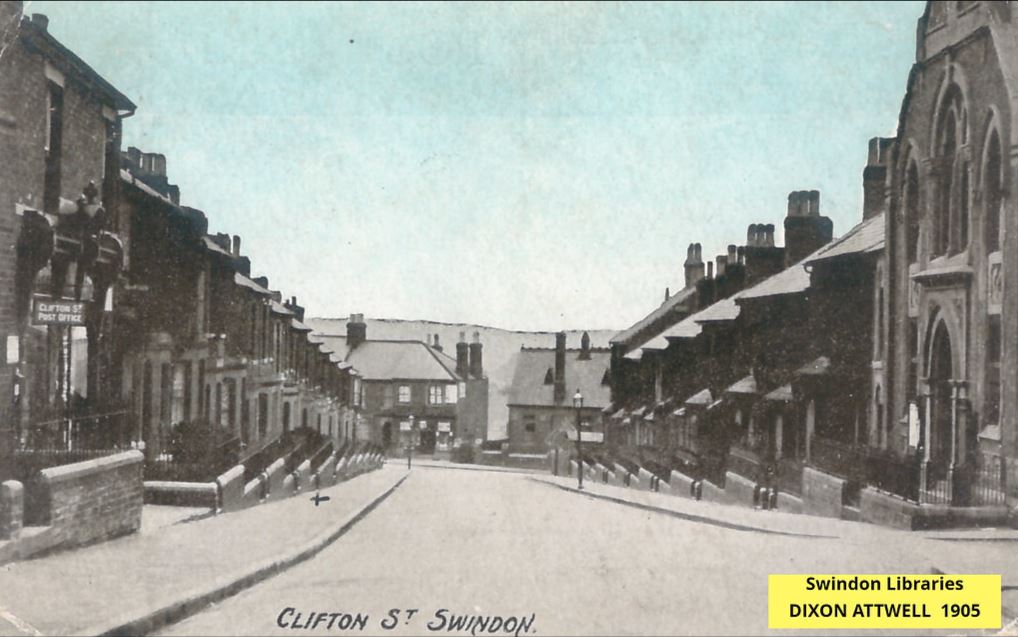
Building began in Clifton Street in about 1879. There were a lot of builders involved, Job Day, James Hinton, Richard Leighfield, which is why the houses all look a little different. There is the Clifton Hotel and 180 houses in Clifton Street; some detached, semi detached, some terraced. Some of them have extensions and loft conversions or porches and some have a name incised in the stonework above the front door, a remnant of a bygone era. There’s a blue house and another with a pink front door and a pink gate and artificial flowers and a heart in the window. The Clifton Stores, still there, stood opposite the the Primitive Methodist Chapel, long gone. There were probably other shops along this long street that stretches from the top of Kingshill to Radnor Street. And tucked away behind is the cemetery.
In the 19th century Clifton Street was home to a lot of railwaymen and their families, now all gone as well.
You might like to read about some of the former residents of Clifton Street who now reside in the cemetery.












 Radnor Street Cemetery