Thomas Simpson and the missing portraits

There can’t be many people who have received a portrait of themselves when they leave a job – but what I want to know is what happened to those two paintings presented to Thomas Simpson in 1885.

Death of Mr Thos Simpson

50 Years in the Railway Service

We regret to announce the death of Mr. Thomas Simpson, which occurred at his residence, Summerville, The Sands, Swindon, on Sunday last.

Deceased, who was 67 years of age, had been ill for the past four years, and his end was not unexpected. Up to two years ago he held for some years the responsible position of outdoor locomotive and carriage superintendent in the GWR Company’s employ, and it was only owing to his continued ill-health that he retired from harness, the kindness and sympathy always exhibited by the deceased towards his men won for him the respect and esteem of all who knew him, so much so that on his retirement he was presented with a very handsomely illuminated album and a Bank note.

Mr Simpson started his long railway career on the Shrewsbury and Birmingham Railway in 1851. Three years later he was transferred to the Great Western Railway. On being offered the post of foreman on the Vale of Clwydd Railway (now part of the L. and N.W. system), Mr Simpson left the GWR in 1859 to fill the post at Denbigh. After spending six years there he returned to the GWR Company as foreman of their Wolverhampton Works. In 1868 he was appointed manager of the Locomotive Works at that station, a position which he held to the satisfaction of all, and the news of his promotion of the important post, in 1885, of outdoor superintendent of the locomotive and carriage department at Swindon gave general pleasure to his many friends. This post he retained until his retirement in the September of 1897.

Whilst at Wolverhampton he gained great favour amongst the employees, and on his removal to Swindon he was the recipients of an illuminated address, accompanied by two valuable oil paintings of himself and Mrs. Simpson, a fine marble clock and ornaments, and a very fine silver tea and coffee service. This alone is quite sufficient to show how faithfully deceased discharged his duties.

The Evening Swindon Advertiser, Tuesday, October 10, 1899.

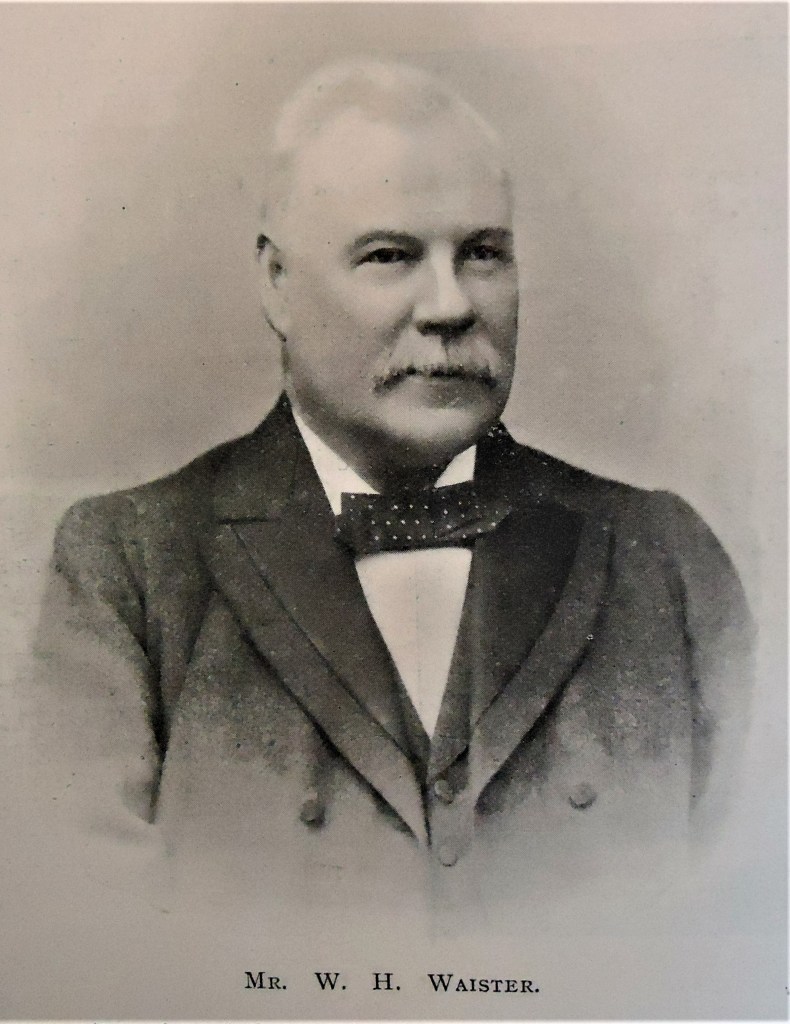
William Henry Waister – an interesting career recalled

Sometimes there is little I can add to the words written in an obituary. This is a lengthy report but well worth reading.

Death of Mr W.H. Waister

Interesting Career Recalled

Honoured by the German Emperor

Many Swindonians will hear with regret of the death of Mr William Henry Waister, of Clifton House, Swindon, which occurred on Saturday, after a long illness.

Mr Waister, who was 66, had been in failing health for the last five years, and during that time his sister-in-law, Mrs Clarke, had resided with him. Three weeks ago he went to Weston-Super-Mare, in the hope that the change would be beneficial, but when he returned home on Thursday his state of health was about the same, and he passed away as stated. Deceased leaves two sons and two daughters. The elder son is in the service of the GWR and occupies the position of Assistant Divisional Locomotive Superintendent at Newport, while the younger son is in Canada. Of the two daughters one is married and resides in London. Mr Waister’s wife, who was a daughter of Mr. William Elliott, of Wolverhampton, pre-deceased him 11 years ago.

Mr Waister’s association with the GWR was a long and honourable one, and was marked by the bestowal of many more honours than fall to the lot of the average railway official. Under the age limit he retired from the Company’s service at the end of 1912, and was succeeded by Mr W.H. Williams, who for some years had acted as his assistant. For 15 of the 48 years he was connected with the GWR he occupied the position of Chief Outdoor Assistant to the Locomotive, Carriage and Waggon Superintendent, and when he retired into private life he took with him several tokens of the high regard in which he was held, opportunity being taken of the occasion by the members of his own personal staff, over 60 in number, to present him with a handsome silver salver. The presentation was made, in felicitous terms, by Mr T. Piggott (chief clerk in Mr Waister’s department) and many tributes were then paid to Mr Waister’s services and high personal qualities.

Mr. Waister was a Tynesider, and, following some experience in the Marchioness of Londonderry’s workshops at Seaham Harbour, he was in 1865 apprenticed to the mechanical engineering in the GWR Works at Wolverhampton. As time went on he made satisfactory progress in his passage through the various departments, and after having acted as relieving foreman he eventually became Chief Draughtsman. In 1885 Mr Waister was transferred to Swindon to take charge of the Drawing Office, and a year later he became Locomotive Superintendent of the Swindon Division. In 1888 he returned to Wolverhampton in the capacity of assistant to Mr. George Armstrong (the Superintendent of the Northern Division) and as manager of the Stafford Road Works. His second stay at Wolverhampton extended over a period of nine years. In February, 1897, on the retirement of Mr. Armstrong, he became superintendent of the Northern Division, and the following October witnessed his return to Swindon as Chief Running Superintendent, under the late Mr. W. Dean, and from June, 1902, until the date of his retirement he was under the Chief Locomotive and Carriage Superintendent (Mr G.J. Churchward).

Mr Waister had a very interesting career. He served under no fewer than six General Managers, and it worthy of note that from 1886 onwards he accompanied practically every royal train running over the GWR system. He was with the train in which the German Emperor and Empress and their suite travelled over the line in 1907, and the Kaiser then conferred upon him the Order of the Red Eagle. He also accompanied the Czar and Czarina on their journey from Wolverhampton to Basingstoke in October, 1896. For the services he rendered in arranging accommodation for Royal personages he several times received the thanks of the General Manager and Chief Superintendent, and it is also interesting to note that he was one of the recipients of a medal from the Company commemorating the reign of the late Queen Victoria.

Mr Waister’s organising and administrative abilities were little short of remarkable, and for the services he rendered in connection with the removal of troops from one part of the system to another for the purposes of manoeuvres and mobilisation he received the thanks of the War Office on more than one occasion.

Funeral

The remains were laid to rest in Swindon Cemetery on Tuesday afternoon the funeral being attended by several of the deceased gentleman’s old colleagues and representatives of the Great Western Railway Company. The Vicar of Swindon (the Rev. C.A. Mayall) conducted the service in the Cemetery chapel and also performed the last rites at the graveside. The coffin, which was of polished elm with brass furnishings, was covered with beautiful wreaths, and the inscription on the breast plate was as follows:-

William Henry Waister

Died October 3, 1914.

Aged 66

Extracts from the North Wilts Herald, Friday, October 9, 1914.

William Henry Waister was buried on October 6, 1914 in grave plot E7949, a plot he shares with his wife Annie Maria who died in 1902. Their daughter, Lilian Waister, died in Newport in July 1950 and was buried with her parents here in Swindon.

This is all that remains of the Waister family memorial.

Blanche Louisa Smith

In some respects the desires of the 19th century Swindon railway families were not so far removed from our own. People wanted a good standard of living, a regular income, food on the table and nice things in their home.

And when Blanche Louisa Smith married Thomas Edward Watkins she no doubt wanted the same.

The couple married in the June quarter of 1892 – not many weeks before their first child was born, again, not so very different from life today. At that time Thomas was working as an Engine Fitter in the railway works, a well paid job with good prospects.

Life had been a little different for Blanche. Her family had also been drawn to Swindon and the employment prospects here. On the 1861 census Blanche’s father was working as an ‘iron factory labourer’ (in the railway factory).

George died in 1879 aged just 41 years old. He was buried in the churchyard at St. Mark’s. By the time of the 1882 census his widow Ellen was living at 7 High Street (later renamed Emlyn Square) where she worked as a laundress. Living with her were three of her children, George 22 who worked as a boilermaker and Blanche 8 and John 5.

When Blanche and Thomas Watkins took their baby son to be baptised at the Primitive Methodist Church in Regent Street in 1892 they were living with Thomas’ parents in Eastcott Hill, but they would soon move away. In 1901 they were living at 17 Flathouse Road in the dockland area of Portsmouth, with their three young sons Thomas 8, George 6 and one year old Archibald.

When Blanche died in 1911 aged 38 years her address is recorded in the Radnor Street Cemetery burial registers as being 10 Oxford Street, Swindon. With no members of her Smith family buried in the cemetery Blanche was laid to rest with her father-in-law Charles Watkins who died in 1907.

Her two little daughters who died in infancy are buried in Portsmouth but remembered on the Watkins family grave in Swindon.

You may like to read more about the Watkins family here.

Granville Street and the Watkins family

The Griffin family – another Swindon story

The national news this weekend has been dominated by the announced closure of the Tata Steelworks in Port Talbot, South Wales with the loss of more than 4,000 jobs, half that number going within the next 18 months. Steel production in Port Talbot dates back more than a century with 20,000 employed there during the peak of production in the 1960s. The people of Port Talbot are fearful for the future of their town and the prospects for their young people.

Does all this sound rather familiar? Here in Swindon, where the railway factory closed in 1986, we now have a whole generation who never knew Swindon when it was a railway town.

For the children of Rodbourne who attend Even Swindon School the history of the railway works is kept alive, but is this the same for other schools in the town where local history has a low priority on the national curriculum.

Once upon a time (and yes, this is beginning to sound like a fairy tale) whole families were employed in the Works. Take the Griffin family for example.

Phillip James Griffin was employed as a clerk in the railway factory and all four of his sons followed him ‘inside.’ Eldest son Frank Aldworth Griffin entered service in the Works as a clerk, passing his probationary period satisfactorily along with the Paddington examination on May 17, 1898. He was followed by Phillip William Griffin who embarked upon a 7 year Fitting and Turning Apprenticeship on his 14th birthday in 1899.  Ralph Ernest Griffin was 15 years old when he began a Fitting and Turning Apprenticeship on April 16, 1903 and youngest brother Cyril Arthur started work on September 8, 1908 as an office boy aged 14.

The four brothers never married; Frank, Ralph and Cyril lived with their widowed mother Caroline in Clifton Street. Only Phillip William Griffin moved away, and when the time came he returned home to be buried with the family in Radnor Street Cemetery, the last resting place for so many of the railway men and their families.

Cyril died in 1934 and was buried with his parents in grave plot A742.

Frank, Ralph and Phillip Griffin are buried together in grave plot D440.

Emma Louisa Newberry

Image of Drove Road taken c1926 and published courtesy of Local Studies, Swindon Central Library.

Emma Louisa Newberry died in 1964 aged 96 years. Emma was born in Guernsey in 1867. She had lived through almost a century of enormous social change including two world wars, the second of which saw the German occupation of her former island home.

Unfortunately, I can find out very little about her family background, not even her maiden name, but I will continue to research.

By 1893 she had married Ernest Walter Newberry, a gas fitter, quite probably in Guernsey where he was also born and raised. Emma’s Swindon story begins in 1894 when her daughter Gertrude May was baptised at St. Mark’s Church on May 27. Emma and Ernest, who was employed in the GWR Works, then lived at 28 George Street. In 1901 they were living at 54 Dean Street where their second daughter Clarice Louise was born. In 1939 Ernest and Emma were living at 86 Drove Road, their last home together.

Emma outlived not only her husband Ernest but both her two daughters as well. She died in the Isolation Hospital, Swindon on May 17, 1964.

Emma was buried on May 22, 1964 in grave plot B2669 which she shares with her husband Ernest who died in 1940, her daughter Clarice Hallard who died in 1958 and her son-in-law Herbert Hallard who died in 1948.

Her elder daughter Gertrude May died in 1954 but she is not buried here in Radnor Street Cemetery.

Louisa Say – death from shock to the system

On August 26, 1891 Frederick and Louisa Say(e) took their baby son to be baptised at the Primitive Methodist Church in Regent Street when the seven week old baby received the rather grand name of Montague Frederick William Say.

Frederick was a blacksmith’s striker in the GWR Works and Louisa had been a needlewoman before her marriage. After the christening the little family returned to their home in West End Terrace, Westcott Place but just four months later a great tragedy struck.

In December 1891 Louisa, Frederick and baby Montague Frederick William were living at 13 George Street. Before she went to bed on the night of Wednesday December 21, 1891 Louisa hung her washing up on a line in the kitchen to dry over-night. But suddenly, the line gave way and as the washing collapsed the clothes knocked over an oil filled lamp setting Louisa alight. Louisa was dreadfully burned, and died that same night.

Louisa was buried in Radnor Street cemetery on December 26 in grave plot B1675, a public grave, where she lies with three other unrelated persons. She was 29 years old.

What happened to five month old Montague Frederick William? On the 1901 census he is aged 9 years old when he was living in Trowbridge with his paternal grandparents William, a woollen cloth dresser and Martha. His father was lodging with George and Mary Taylor at 6 Theobald Street, Swindon. In 1904 Frederick married widow Ada Maria Thomas and moved into her house in 101 Dean Street. By 1905 Montague, aged 14, was back in Swindon living with his father and step-mother. That same year he began a 7 year boiler making apprenticeship in the Works.

Frederick Say died in 1929 aged 64 and was buried in grave plot D98 with his second with Ada who died in 1923.

The little boy who lost his mother at just five months old went on to marry and have his own family. Montague was living in Kent in 1916 when he married Lilian Deeks. He died in Cosham, Hampshire in 1958 aged 67.  

The New Ship Hotel more usually known as the Ship Inn published courtesy of Local Studies, Swindon Central Library.
Sad Death From Burning – Mr W.E.N. Browne, Coroner for North Wilts, held an inquest at the New Ship Hotel, New Swindon, on Thursday in last week on the body of Louisa Saye, wife of Frederick Saye, living at 13 George St., New Swindon. The evidence went to show that on Dec. 21st. about 9.30 p.m., deceased was hang some clothes on a line in the kitchen of her own house, when one of the nails to which the cord was attached gave way. The clothes in falling overturned a lamp on the table, with the result that the oil ignited, and the deceased’s wearing apparel was set on fire. Her cries for help attracted the attention of her husband, who was in bed at the time, and he ran down and with some difficulty succeeded in extinguishing the flames. Medical aid was obtained, but Dr Jones (assistant to Messrs Swinhoe, Howse and Bromley), pronounced the case hopeless, and the woman, who was dreadfully burned, expired on Wednesday night in great agony. After hearing the evidence the jury returned a verdict of “Death from shock to the system,” and, on the suggestion of the foreman, Mr. A. Webb, gave their fees to the husband.

North Wilts Chronicle Saturday Jan 2, 1892.

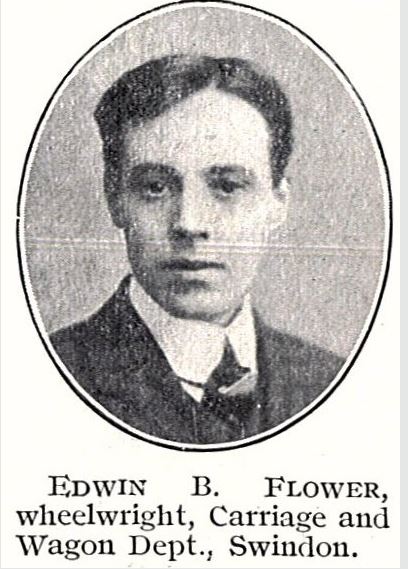
Emma Flower’s boy Edwin

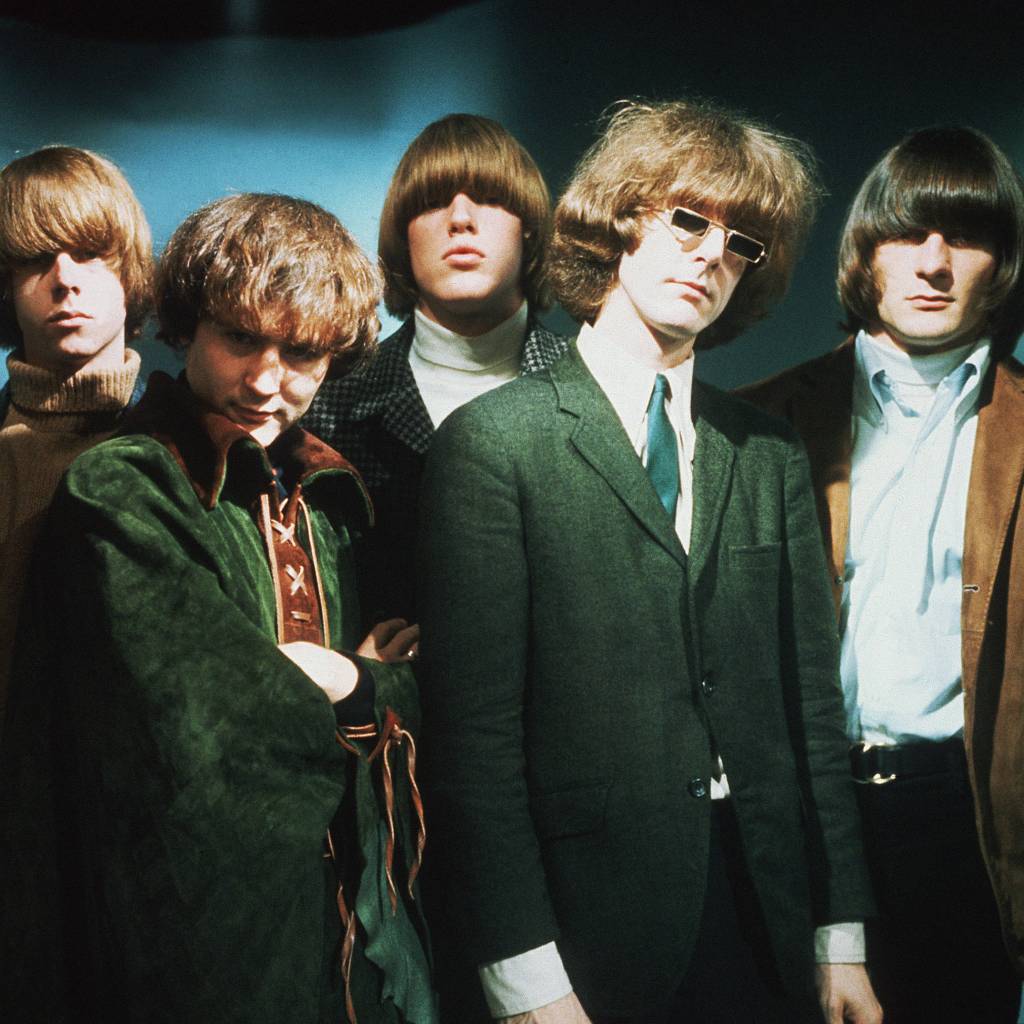
If you are of a certain age you may remember Turn, Turn, Turn, a song released by The Byrds in 1965. The lyrics were written in 1959 by Peter Seeger and are taken from the book of Ecclesiastes Chapter 3 verses 1-8.

So, what do you think? Is there a time to be born and a time to die.

Emma Flower died in March 1912. She had lived to see her only surviving child, Edwin Brian Flower, marry. She was 49 years old. A tragedy to die at that age both now and then. Had she suffered a long, painful illness, in which case it might have been a time to die?

Emma Head was born in 1861 the daughter of John Head and his wife Hannah. She married Edwin Flower at the church in South Marston on Christmas Eve 1888. At the time of the 1891 census the young couple and their baby son were living at 36 Avening Street, Gorse Hill. By 1911 the family had moved to 23 Florence Street where their son Edwin Brian was married from on October 21, 1911 and where Emma would die five months later. She was buried on March 14, 1912 in grave plot B3209 where she lies alone. Her husband Edwin married again in 1913 to widow Jane Martha Stone (nee Head) most probably Emma’s elder sister.

Edwin Brian Flower was the only one of Emma’s three children to survive childhood. He was born on September 23, 1889 and lived in Gorse Hill all his life. At the age of 13 he started work as an office boy/messenger in the Carriage Works, later transferring to the Wheelwright Shop. He married Ethel Woodman in 1911 and they had a daughter Iris Minnie born the following year. By 1917 Edwin was serving with the 9th Light Railway Operating Company as a Sapper in the Royal Engineers. He was killed in action on October 4, 1917 aged 28 and is buried in the Rocquingny-Equancourt Road, British Cemetery, Manancourt. Was it his time to die?

This is Emma Flower’s boy, Edwin.

Jane and Charles Wise – rediscovered

For a certain generation of Swindonians the name Wise will be synonymous with the bakery at Headlands Grove, established in 1938 and which went out of business in 2001. However, this Wise family are railway through and through.

Charles Wise was a Railway Signal Inspector. In 1903 he is recorded in the UK Railway Employment records as having been employed by the GWR for 30 years.

Born in Ufton, Berkshire in about 1848 he married Jane Smith at St Mary’s Church, Reading on December 29, 1874. Their first child Charles was born in Wargrave and their second Thomas in Devizes. By 1879 they had arrived in Swindon where they were living at 14 Sanford Street, their home for more than 10 years.

A daughter Alice Mary who died aged just a year old in 1880, before the cemetery opened, was buried in St Mark’s churchyard and is remembered on this headstone.

Their youngest daughter Gertrude Grace trained as a teacher before marrying in 1917. Her husband was architect Granville Walter Henry George the son of local politician Reuben George.

Jane Wise died at her home 62 Eastcott Hill in August 1920. She was buried in grave plot A238 which she shares with her small son Sydney George who died in 1886 aged 3 years 4 months and her husband Charles who died in 1933 aged 85. Their fallen headstone has been cleared and cleaned by our volunteers.

Hubert Cyril Littleton Haggard – a promising career cut short

Hubert Cyril Littleton Haggard was born on May 23, 1889, the second of William and Sarah Haggard’s two sons. He began work with the Great Western Railway aged 15 as a ‘lad clerk on probation’ in the stores department before transferring to the laboratory as an assistant analysist on the junior staff then progressing to the senior staff. Hubert was a conscientious and meticulous student; sadly, it was this attitude to work, which contributed to his fragile mental health. In 1908 Hubert was signed off work and ‘on the club’‘required to be indoors at half past five in the evening.’ Today we have a better understanding of mental health but even now young people like Hubert are failed by an overburdened system.

Swindon Lad’s Sad End

Chemical Student’s Body found in the Canal

Promising career cut short

An exceptionally sad affair has occurred near Swindon. Last (Wednesday) evening a boy walking along the path by the side of the canal in the neighbourhood of Hay Lane, near Swindon, noticed a body in the water. He at once gave the alarm, and a man succeeded in getting the body out. It was apparent that life was extinct. Enquiries proved that deceased was Hubert Cyril Littleton Haggard, of 29 Chester Street, Swindon.

Our reporter made enquiries at the deceased’s home, where the news of the discovery of the body had come as a terrible shock.

Hubert, who was 19 years of age, was one of the brightest and best liked lads in the chemical laboratory in the GWR Factory. He was a lad full of promise, and most attentive to his work. He had been in the GWR laboratory as an analyst for between three or four years, and his exceptional progress and general aptitude for difficult and delicate work impressed those under whose directions he laboured. He held several certificates, and had won scholarships for efficiency in chemical science, being one of the foremost pupils when at the Swindon and North Wilts Technical School. Latterly he had exhibited signs of suffering from debility, which was attributed somewhat to an over application to his duties, for the father stated to our reporter that “Hubert was an extremely sensitive lad; he was conscientious to a degree, and once he applied himself to any piece of work he would stick at it until it was done to his best satisfaction.” The debility was not by any means acute, but it was decided that Hubert should take up no subjects this season, and he was himself agreeable to this. He placed himself under medical care, and being “on the club,” as the saying goes, he was required to be indoors at half past five in the evening. Before then, however, he generally managed to get in a little stroll.

On Tuesday afternoon he went for his usual stroll. He appeared quite fresh and happy when he went out. When he did not return at the usual time, some anxiety was felt, and as the night came on and he still did not return, the police were informed, and all night a search was kept up without avail, until the news came late on Wednesday afternoon that his body had been found in the canal. The deceased, apart from his work, was a cheerful, pleasant lad. He was a member of St. Mark’s Church, and was well liked and warmly respected by all who knew him. Much sympathy is felt with the relatives in their bereavement.

The inquest was held this afternoon and a verdict of “Found drowned” was returned.

Swindon Advertiser, Thursday, November 26, 1908.

Hubert was buried on November 30, 1908 in grave plot E7727. The burial registers include the comment – Found in Wilts & Berks Canal. His mother Sarah died in 1923 and was buried with him. William Haggard died in 1938 aged 85 years and was buried with his son and wife.

Do you know where Carr Street is?

Do you know where Carr Street is? If someone asked you for directions, would you be able to help them? Today Carr Street runs behind the Waiting Room pub, an access road with parking for several businesses including Da Vinci’s Restaurant.

However, it wasn’t always so. Carr Street was built in around 1878/9 by the United Kingdom Land and Building Society along with Catherine Street and Farnsby Street. In 1881 Carr Street comprised 27 houses and cottages and was built in a most convenient situation.

In 1885 numbers 2-10 came on the market when they were described as four roomed cottages, ‘yielding the sum of £128 14s per annum.’ As today, investors bought property to rent and Carr Street was an attractive proposition. The advertising blurb stated ‘The Houses are only a short distance from the Great Western Railway Works, and therefore let readily.’

In 1888 numbers 11 and 12 Carr Street were also on the market when they were described as follows – ‘Each house contains Passage, Parlor, Kitchen with Cupboards, 3 Bed-Rooms, back kitchen, with fire-place and copper, coal house and, outside, a closet. The Houses have Gardens, and water is laid on.’

New-build number 13 Carr Street was probably of a similar design when Thomas & Eliza Wells moved there in 1879. Edith Mary was born that same year and Frederick James in 1883. Thomas was employed as a carpenter in the Works and by 1881 his two elder sons had already joined him there – George William 16 worked as a carpenter and 14 year old John as a railway clerk.

The Wells family lived at 13 Carr Street for more than 15 years. By 1900 they had moved to 5 Dean Street where Thomas died in March 1901. He was buried on April 3 in one of three Wells’ family graves, E7644, E7645 and E7646. He was buried with his wife Elizabeth who died in May 1924.