George Restieaux and the French connection

Today it is so easy to begin your family history research. With a couple of clicks of a laptop mouse you can enter a whole world of internet possibilities. Of course, there are pitfalls one of which is mis-transcriptions with websites such as Ancestry and Find My Past littered with them. I came across some examples such as Rasticand and Reastreamy when researching the surname Restieaux.

George Francis Restieaux was just sixteen years old (the newspaper report says 18) when he died in 1881. George was born in Neath, Glamorgan but Restieaux was definitely not a Welsh name.  He was the son of coachbuilder/painter Edward Alban Restieaux and Susannah Matthews. Edward was employed in the GWR Works and in 1881 the family lived at 2 Bristol Street. Edward and Susannah had married in 1854 at St Pancras Church when they both lived in that London parish. By 1861 they were living in Neath, Glamorgan where George was born in 1865. His father Edward states that his own place of birth was Norwich in Norfolk and I wondered how the Restieaux family had ended up there.

With a few clicks of that laptop mouse I was able to find Edward’s parents Joseph Restieaux and Elizabeth Tidman who married in St John de Sepulchre, Norwich in 1804. Back one more generation and I arrived at the French connection; Andre Restieaux born in Bordeaux about 1740 who married Marguerite Magdalaine Mignot on January 6, 1766 at St Anne’s, Soho.

There is, however, only so far you can get with internet research and at some point you have to look at original documents. It would be interesting to discover what Andre’s occupation was and how he and Marguerite ended up in London, but that is a task for someone else out there. But beware of the pitfalls.

The first burial service in accordance with the rites of the Roman Catholic Church in the new cemetery was performed on Saturday last by the Rev Father Eikerling and the members of the St. Cecilia Society, of which deceased was a member. The body of deceased, George Restieaux, aged 18 years, having been removed from the house of his parents to the Roman Catholic Chapel in Regent Street, the service, which throughout was choral, commenced, lasting close upon an hour, when the body was removed to the hearse and conveyed to the cemetery, accompanied by the Rev Father Eikerling and his attendant acolytes, the relatives and friends and members of the choir and society. At the cemetery chapel the service was resumed by the singing of the Requiem aeternam of Cacciolini, at the close of which the officiating priest preached a brief sermon, in course of which he reviewed the life of deceased and his connection with the St. Cecilia Society. The procession having been reformed, the corpse was borne to the grave, the choir singing the “Miserere,” concluding with the Requiem aeternam. At the grave the singing, which was particularly effective, was brought to a close by the singing of the anthem “I know that my Redeemer liveth.”

The former Roman Catholic Chapel painted by local artist George Puckey in 1890

Despite a rather elaborate funeral service, young George was buried in Radnor Street Cemetery in a public grave, plot A353, where he lies alone.

His father Edward died 14 years later in 1895 and his mother Susannah in 1912. Both were buried in separate, public graves. Edward in B2434 and Susannah in B1609. George’s brother John Valentino Restieaux died in 1928 and was buried in grave plot C61, another public grave.
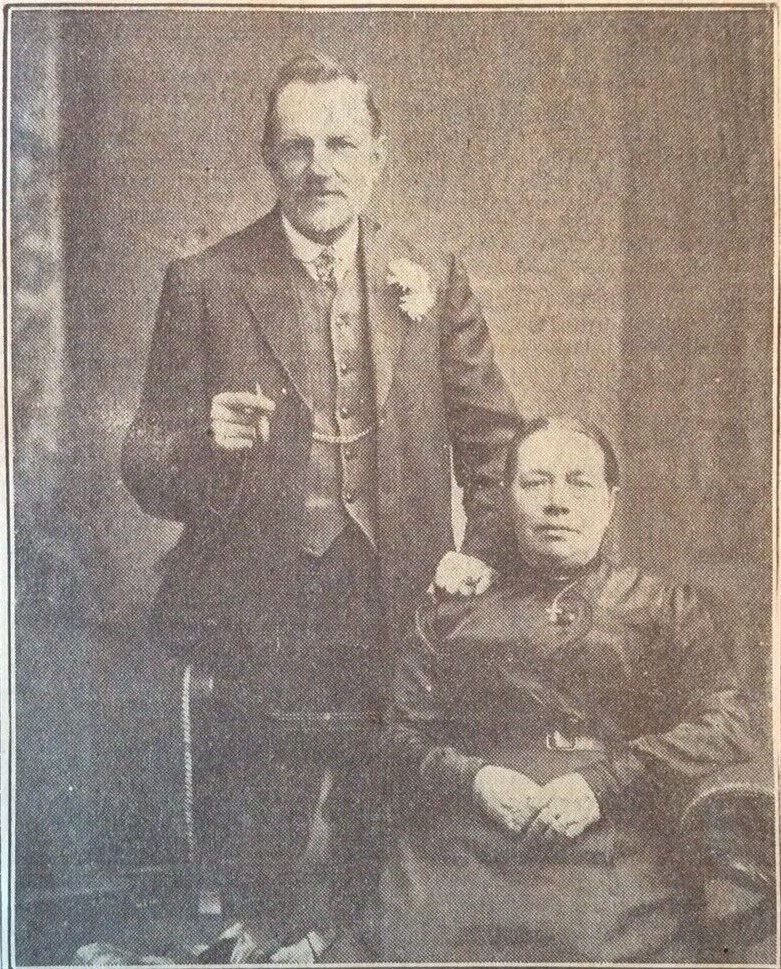
Mr and Mrs Dashfield – married fifty years.

I can’t help but notice that Mary Dashfield doesn’t get equal billing in this story of her Golden Wedding Anniversary – so I shall redress the balance.

Mary Maria Sartin was born on February 6, 1859 and baptised at St. James with St. Stephen Church, Trowbridge on June 19. She was the youngest child of James and Martha Sartin. James worked as a Wool Dyer and Martha as a Laundress and Mary grew up in the Castle Street/Lower Courts area of Trowbridge.

She married John Dashfield in 1879 and by 1881 they had moved to 37 Cheltenham Street, Swindon with their baby son William.

By 1891 they were living at 1 Lambeth Terrace, Swindon with their six children. By 1901 they were at 21 Westcott Place, the three eldest sons already employed in the Works.

In 1911 Mary had already notched up 32 years as a wife and mother. She states that she has had 9 children of whom 8 are living.

Her life had been one of child raising and housekeeping, so maybe I don’t know that much about her after all, but hopefully this is a more rounded account than the newspaper article.

Married Fifty Years

To-day Mr and Mrs John Dashfield, of 21, Westcott Place, Swindon, celebrate their golden wedding.

Mr Dashfield is 72 years of age, and his wife is two years his junior. Both, who are in the enjoyment of good health, are natives of Trowbridge.

Mr. Dashfield came to Swindon 57 years ago, and entered the service of the GWR as a shunter. At the age of 18 he had the misfortune to lose his right leg whilst in the execution of his duty. He was afterwards given a position as storekeeper in the W Shop, which post he held until his retirement two years ago.

For 40 years Mr Dashfield was a co-worker or shopmate with the present Mayor of Swindon (Councillor G.H. Stevens).

Mr and Mrs Dashfield had a family of nine children, seven of whom are living. One son is at Weymouth, another at Christchurch, a third in Nigeria, and two are in Swindon. One of the daughters is Mrs A.M. Chappell, wife of the licensee of the Borough Arms, Wootton Bassett.

Mr Dashfield is interested in the club life of Swindon, and he is a keen horticulturist.

John Charles George Dashfield died at his home, 21 Westcott Place in 1943 aged 86 years. He was buried in grave plot D769 which he shares with Joan Mary Dashfield who died in 1926 aged 6 years old (most probably a granddaughter); his wife Mary Maria who died in October 1945 aged 86 years and Rosabella Minnie Chappell their daughter who died in 1948 aged 59 years.

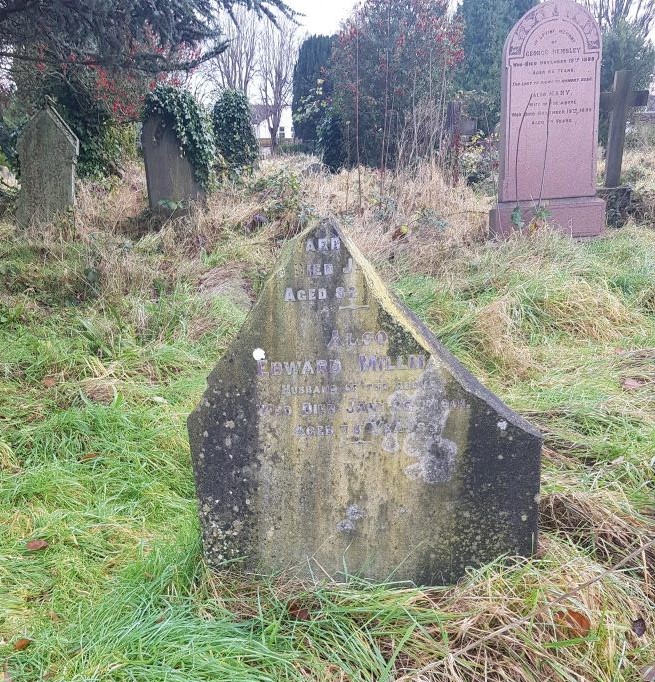
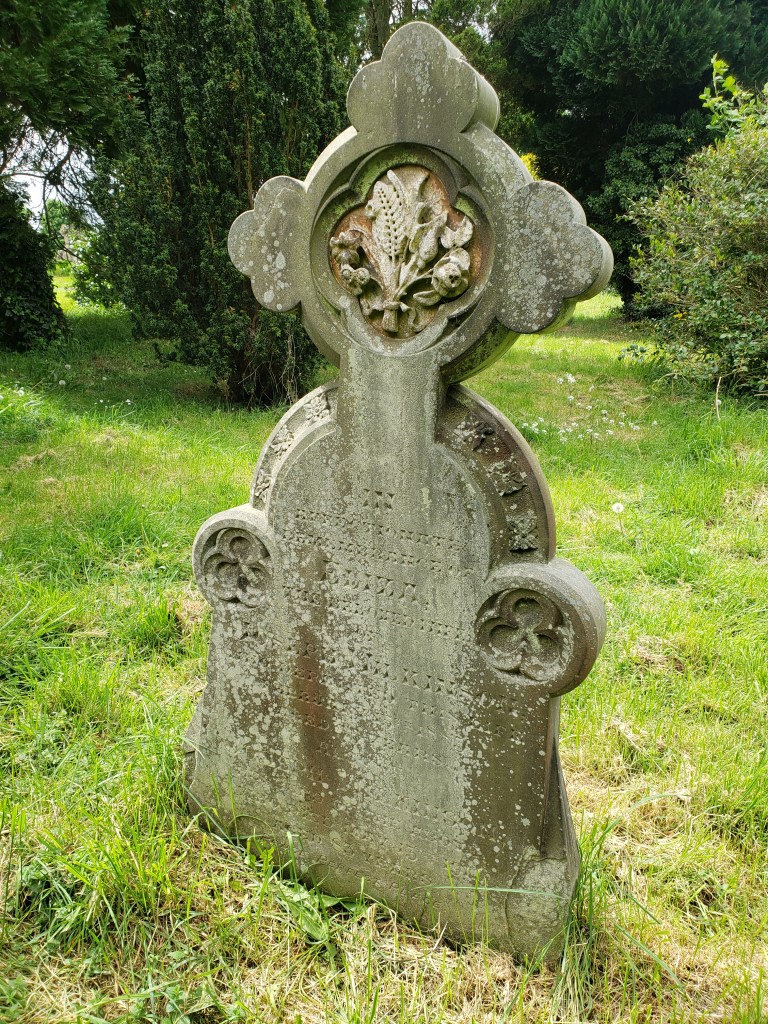
The story of the broken headstone

I’ve had this broken headstone on my to-do list for a very long time. I thought it might prove something of a challenge. I had long wondered who Frederick Millman’s lost wife was and once I discovered her, she pieced together a large Radnor Street Cemetery family history.

Delia Spry was born on December 25, 1805 in Ninfield, Sussex and was baptised in the parish church there on March 26, 1806. In 1829 she married Richard Veness at the Church of St Peter the Great, Chichester.

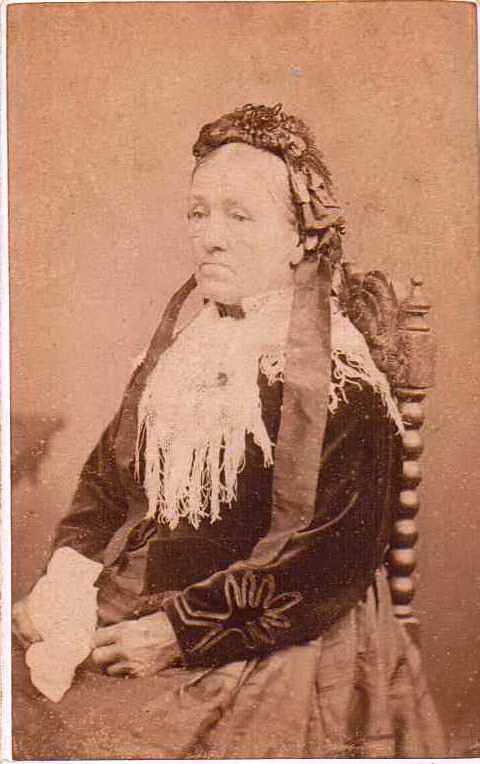
Delia Millman formerly Veness born Spry

I discovered Delia on the 1841 census returns, the first complete census available online. She is living in Hartlebury, Worcestershire, a widow with 5 young children – Maria 10, Jane 9, Thomas 7, Alfred 5 and 3 year old Louisa.

Needs must and it would not be long before she married again. Her second husband was Edward Millman, a bricklayer, and in 1851 the family were living in Wolverhampton. Delia’s two sons by her first marriage have taken their stepfather’s name and Delia has three children by her second marriage – Edward 6, Elizabeth 4 and 2 year old Mary.

Thomas Veness

By 1881 Thomas Veness, married with four children – Thomas, Alfred, Harriet and Reginald, had arrived in Swindon and the family were living at 30 Sheppard Street. You can read their story (especially that of their daughter political activist Harriet) here.

The death occurred at Worcester, on May 21st, of Mr. Thos. Veness, a retired foreman from the Locomotive Department at Swindon, at the ripe age of 87. Mr. Veness was one of the founders of the Swindon branch of the GWR Temperance Union, and as a member and chairman of the branch Committee rendered great service in the early days of the Union. He was an abstainer for over 60 years and an earnest worker. He was for many years connected with the Band of Hope movement, the Church of England Temperance Society, and the Good Templars. After the formation of a branch of the GWR Union in Swindon he gave himself whole-heartedly to forwarding the work and influence amongst the railway staff.

Great Western Railway Magazine August 1920

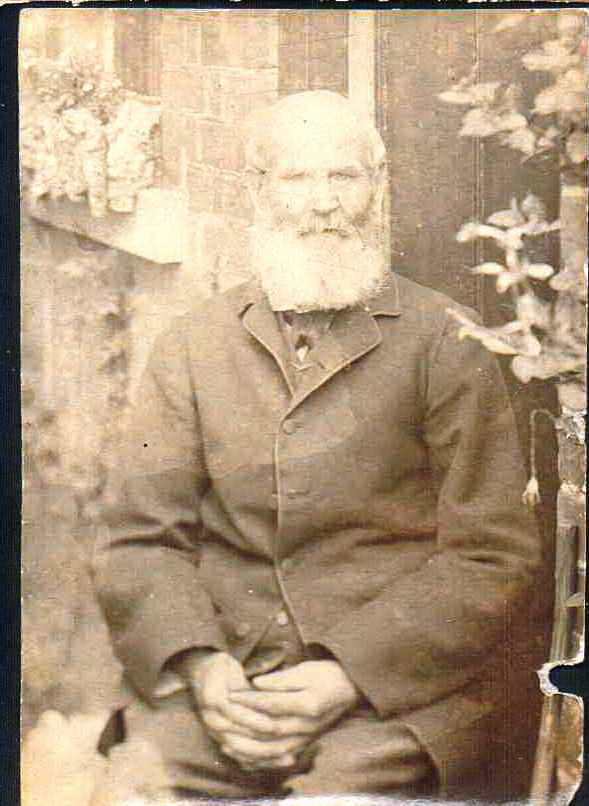
By 1881 Delia and Edward had returned to Bexhill but they would soon make there way to Swindon. Delia died at her home, 72 Bridge Street and was buried on January 6, 1887 in grave plot E8430 – the headstone broken and her name missing. Edward died 14 years later, at his daughter Mary’s home, 83 Victoria Road. He was buried with Delia on January 30, 1901.

Edward Millman

Elizabeth Millman had also made her way to Swindon by 1881. She had married Frederick Benjamin Hook, another bricklayer, and in the census of that year was living in Upper Stratton with Frederick and her family of six children. You can read the sad story of Ben Lawson Hook who died in an accident in the Works here.

Elizabeth Hook nee Millman

Elizabeth died in 1892 and is buried in grave plot B1711 with her husband and her 16 year old daughter Nora who died in 1909.

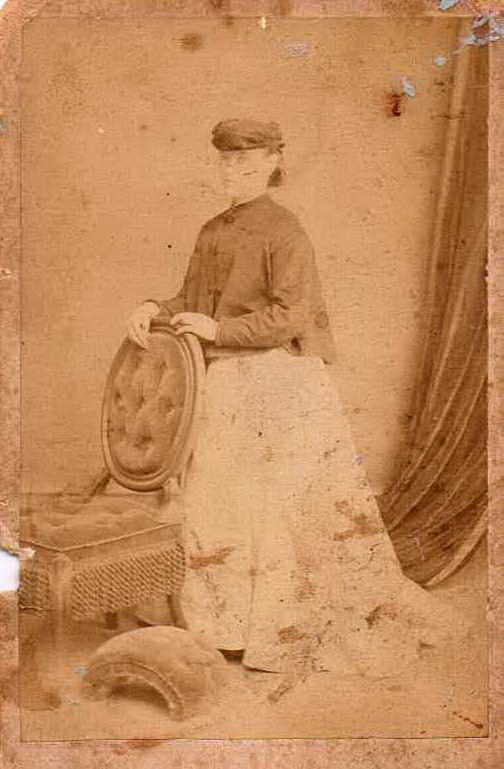
And finally, (or is there more to discover) there is Mary Millman, Delia’s youngest daughter born in 1848. After working in domestic service as a nurse she married builder Henry William Bennett and by the mid-1870s they were also living in Swindon. (It was at Mary’s home that her father Edward died in 1901).

Mary Bennett nee Millman

Mary died in 1922 and is buried in grave plot C3672 with her husband Henry William, her son Aleck and daughter-in-law Sarah Annie.

My thanks go to family historians Ellen Magill and S.C. Hatt who have generously shared so much of their family history and photographs on Ancestry and Local Studies, Swindon Central Library enabling me to tell all these Swindon stories.

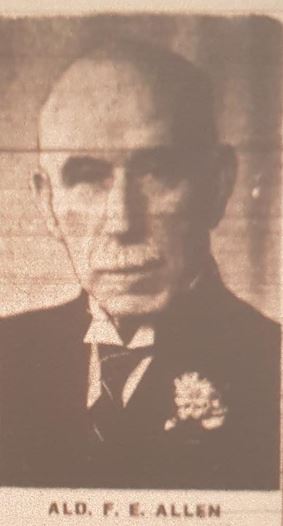
Francis Edward Allen – Mayor of Swindon 1940-41

Francis Edward Allen was 77 years of age when he served as Mayor of Swindon during one of the difficult years of the Second World War, 1940-1941. Among his numerous duties during that year he launched Swindon Food Week, an initiative to help housewives make better use of rations; he lent his support to a national flag day on behalf of the air raid distress fund and he welcomed evacuees to the town.

Francis Allen was born in 1863 and baptised in the parish of Widcombe, Somerset, the son of stonemason Joseph Allen and his wife Mary Ann. By the 1880s he was living in Swindon where he married Emily Brooks on December 25, 1883 at the church of St. Paul’s. The couple went on to have 9 children and lived for all of their married life in the Rushey Platt/Wootton Bassett Road area.

Ex Mayor of Swindon’s Sudden Death

Alderman Francis Edward Allen Mayor of Swindon in 1940-41, died suddenly at his home, 9, Wootton Bassett road early this morning. He was 80 years of age.

Mr. Allen was born at Bath and came to Swindon as a young man to taken up employment in the GWR Works. He rose to chargeman of the gas works and retired about 18 years ago, after 42 years service.

On his retirement Mr Allen took up public life and was returned to the Town Council as councillor for the East Ward. Later he was made an alderman and was elected Mayor in 1940-41.

Mr Allen was well-known for his work in connection with the North Wilts district of the Ancient Order of Foresters, of which he was senior trustee at the time of his death. As recently as Wednesday evening he attended a Foresters’ meeting in Swindon.

Mr Allen also made a name for himself by his interest in horticulture. In the days of the old Swindon Flower Show, then held in the Town Gardens, he was a most successful exhibitor and was also a very competent judge of flowers.

He had taken innumerable prizes in local club flower shows, and at one time was on the committee of the “Evening Advertiser” Flower Show.

He was a former treasurer of the Swindon Division Liberal Association.

Mr Allen leaves a widow, three sons (two living in Australia and one in Swindon) and six daughters. All the sons and daughters are living and married.

The Evening Advertiser, June 13, 1943.

Funeral of Ald. F.E. Allen, Former Mayor of Swindon

Ald. F.E. Allen

Alderman Francis Edward Allen, aged 80, Mayor of Swindon in 1940-41, of 9 Wootton Bassett road, who died last Saturday, was buried with civic and forestry honours yesterday.

The Mayor (Ald. A.J.B. Selwood), wearing his chain of office, attended the funeral service at Wesley Church, Faringdon road, and the Foresters’ burial service was read at the graveside in Radnor street cemetery by Bro. F.J. Franklin, District Trustee.

The service at Wesley Church was conducted by the Rev. A..E. Banks, who, in the course of a short address, referred to the integrity and steadfastness of purpose with which Ald. Allen had served the town, and said the qualities of character he had shown in his public work had won for him a warm place in the hearts of his fellow citizens.

Extracts from the Evening Advertiser, Thursday, June 17, 1943.

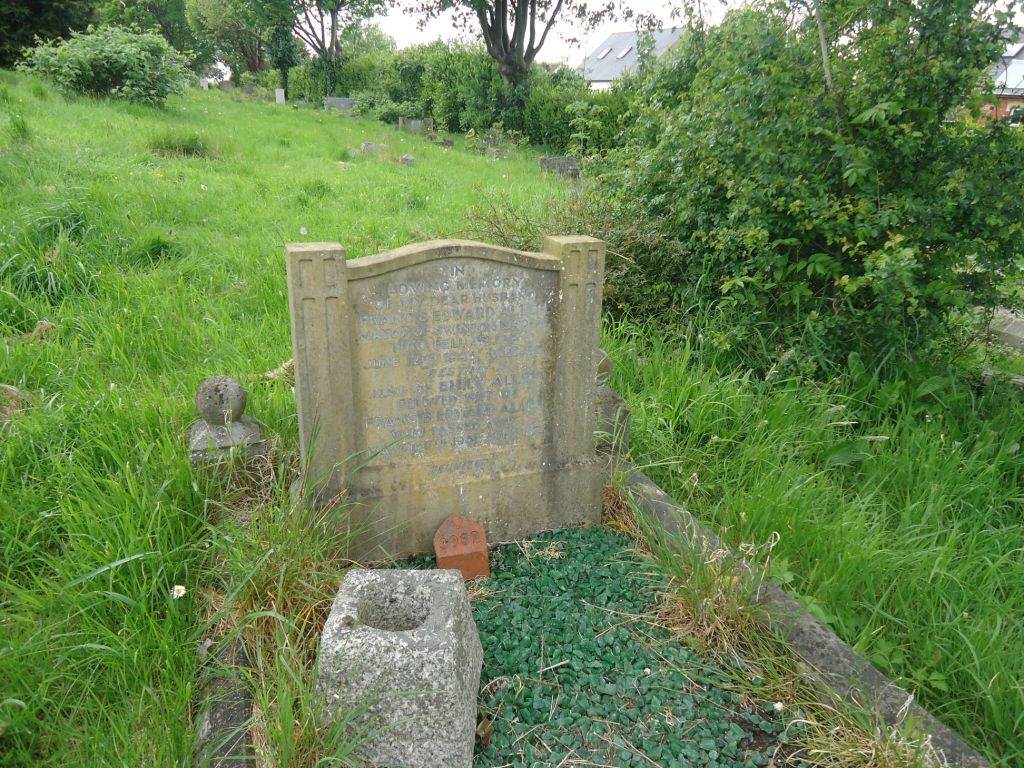
Francis Edward Allen died at his home 9, Wootton Bassett Road, aged 80. He was buried on June 16, 1943 in grave plot B3130, which he shares with his wife Emily who died in 1951. The couple are buried with Emily’s sister, Elizabeth Hannah Wilden who died in 1910.

William Thomas Long – boilersmith

Death Notice – Swindon Advertiser Friday, December 31, 1909.

Long, Dec 24, at the residence of his daughter, 16 Curtis St. Swindon, William Thomas Long, aged 73 years.

When William Thomas Long died in 1909 his personal effects were valued at more than £900 – worth around £100k today. He had spent a lifetime working as a boilersmith, most of that in the Great Western Railway Swindon Works.

William Thomas Long was baptised at Holy Rood, the old parish church in Swindon, on July 31, 1836, the son of baker John Long and his wife Louisa. He grew up in Newport Street where his mother took over the business as Pastry Cook following the death of his father.

By 1861 William was a married man with two young daughters living in Newton Abbot where he worked as a boilersmith. William and Ann would complete their family with another five daughters plus Margaret born in 1879 who is first described as ‘granddaughter’ and later as ‘daughter.’

Yet, there is still so much we don’t know about Ann and William.

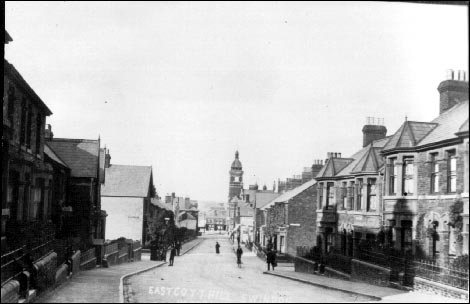
Looking down Eastcott Hill

For more than 20 years they lived at No. 8 Eastcott Hill – they may even have owned the property; Swindonians were renowned for investing in bricks and mortar.

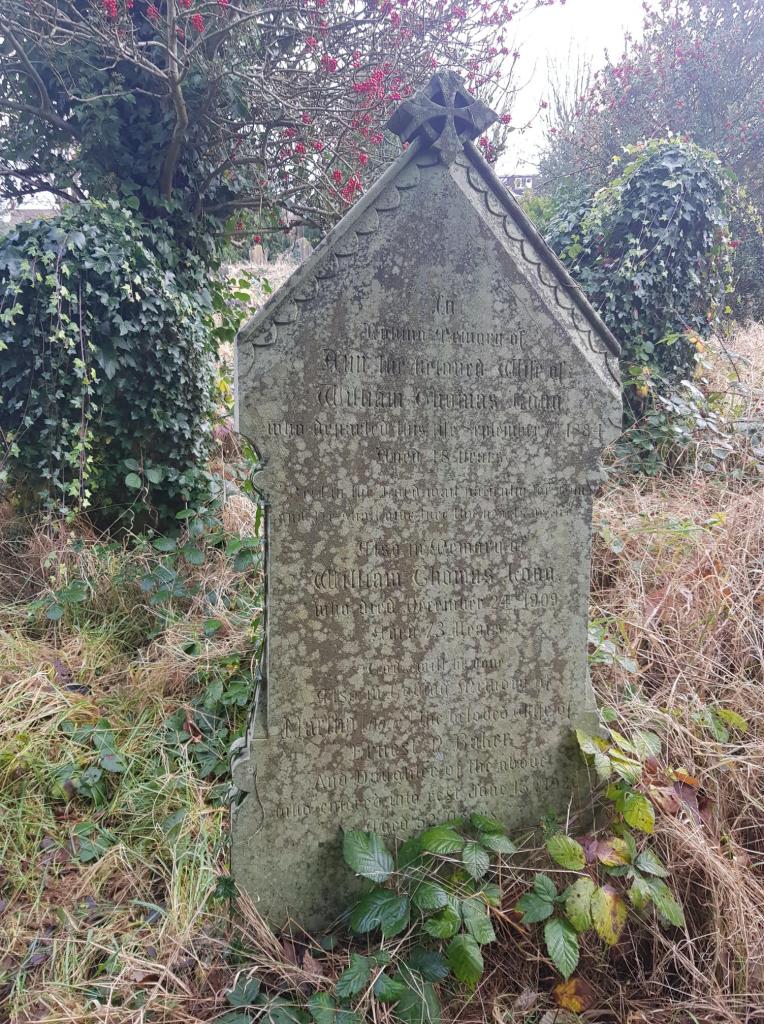
Ann died in September 1884 aged 48. When his wife died William had been able to purchase a grave plot in Radnor Street Cemetery where an impressive headstone was later installed; not everyone could afford to do this. He didn’t remarry after Ann’s death, which was is also quite unusual. He still had young daughters at home but presumably the elder ones took over the household duties and childcare; perhaps he could afford to employ a maid-of-all-work.

Ann was buried in grave plot E8306 on September 12, 1884 where William joined her in 1909. The cremated remains of their grandson William Clarence Heath and his wife Alice Ruth were interred in the same plot some 60 years later.

Remembering the ordinary people of Swindon.

Benjamin Messiter – Swindon’s story

If ever a family provides a snapshot of life in Swindon at the turn of the 20th century, it is the Messiter family. A story of Swindon’s growth and the development of the railway works encouraging migration from across the country; a story of non-conformity and close family ties. Even Benjamin’s death took place during that iconic event in the Swindon calendar – the GWR Trip.

Image published courtesy of Local Studies, Swindon Central Library.

Benjamin was born in Trowbridge in 1845 and began his working career as a wool worker, arriving in Swindon in the 1860s for a more lucrative job in the railway works. He married Ann Ferguson in 1869 at the Wesleyan Methodist Chapel ‘near the market place, Swindon’ (the Planks).

The young couple began married life at the newly built Cambria Place living with Ann’s parents and six siblings at No. 34. Her father Charles was a fitter who had moved down from Scotland in the 1860s to a job in the railway factory. Ann and her brothers and two of her sisters were all born in Scotland.

Benjamin and Ann’s only daughter Louisa Ann, was born in 1872 and at the time of the 1881 census they were all still living with Ann’s parents in Cambria Place.

By 1901 Benjamin and Ann had moved to 11 Deacon Street where they lived with their married daughter Louisa, her husband Frank and their 5 year old son, Stanley.

An old and highly respected resident of Swindon, in the person of Mr Benjamin Messiter passed away with painful suddenness at Bristol early in the evening of last Saturday. Mr. Messiter had been spending his “Trip” holidays with his sister at 31, Hayward Road, Barton Hill, Bristol, and, not desirous of coming back to Swindon with the “Trip” train on Friday, he had arranged to return on Saturday evening.

After having completed all the preparations for his return, Mr Messiter was partaking of tea at half past five o’clock, when he collapsed and passed away immediately.

With all speed, medical aid was summoned, and in less than five minutes from the sad occurrence a doctor was in attendance, but could only pronounce life extinct.

News of the occurrence was immediately despatched to Mr. Messiter’s relatives at Swindon, his son-in-law, Mr. Matthews, at once leaving for Bristol

A Coroner’s inquiry touching the death was held on Monday, when a verdict of “Death from syncope” was returned.

Mr Messiter, who had been ailing for the past two years, was a native of Trowbridge and was 64 years of age. Coming to Swindon from his native town some 32 years ago, the deceased gentleman had since that time followed his occupation in the GWR Saw Mills.

During his many years’ residence in Swindon, he had gained the warmest esteem and respect of a very large circle of friends amongst the older generation of Swindonians, among whom the news of his death will occasion the keenest regret. He had a large number of relatives in Swindon, who have been the recipients of many tokens of sympathy in their sad bereavement.

Extracts from The Swindon Advertiser, Friday, July 16, 1909.

Swindon’s storyphotograph taken from Radnor Street Cemetery

Benjamin Messiter was buried on July 15, 1909 in grave plot E7956 which he shares with his wife Ann who died in 1902 and his son-in-law Frank Matthews who died in 1935 and daughter Louisa Matthews who died in 1958.

Joseph Wilkinson – a link with Swindon’s Past

Sometimes an obituary is written so evocatively that there is little I could possibly add. This is the story of Joseph Wilkinson who moved to Swindon in the 1870s and worked in the new Carriage and Wagon Works under Joseph Armstrong.

Death of Mr Joseph Wilkinson

A Highworth Octogenarian

Link with Swindon’s Past

By all the older generation of Swindonians, and especially by those who have been connected with the GWR Works, the news will be received with unfeigned regret that Mr Joseph Wilkinson, formerly a foreman over the Wagon Works, has passed away at Highworth, at the ripe age of 83 years.

Mr Wilkinson was an interesting link with Swindon’s past. Born at Marshe (Yorkshire), in 1828 he migrated at an early age to Chester where he followed his occupation as a coach builder. Thirty-five years ago he came to Swindon with the late Mr. Holden, and took up the position of foreman over the new wagon works, under Mr. Armstrong. Mr Wilkinson held the foremanship continuously for many years. Until 13 years ago he enjoyed capital health, even for his advanced age, and then, acting under medical advice, he retired at the age of 70 years. It is interesting to note that Mr. Wilkinson is believed to be the first foreman who received a pension under the superannuation scheme, which was initiated shortly before his retirement.

Upon his retirement the old gentleman went to live at Highworth, where he was liked and respected by all with whom he came in contact. Since this time Mr Wilkinson’s health had been gradually failing. He had been ailing off and on every since; and a couple of months ago he was taken ill with heart disease. Dr. Powell and Dr Lewty did all that medical skill could devise but inspite of their attentions Mr Wilkinson passed away on Saturday evening.

While he was in Swindon, Mr. Wilkinson took an active interest in the affairs of the Faringdon Street Wesley Church, where he was an assistant class leader but since his removal to Highworth failing health prevented him from participating in this branch of public service. His first wife predeceased him by 28 years, and it was while in Swindon that Mr Wilkinson married his second wife. Thirteen years ago Mr. Wilkinson’s second wife also died; but a family of one son and three daughters are left to mourn their loss.

The Swindon Advertiser, Friday, May 19, 1911.

Joseph Wilkinson was buried on May 17, 1911 in grave plot A641 where he joined his first wife Eliza who died in 1883

Lance Corporal Thomas Neate Harding – Tell Them of Us

The First World War was all about loss; loss of life and loss of prospects. Landed property was lost with the death of an heir; local businesses were lost when sons did not return, and in this case, families fell on hardship with the loss of a breadwinner.

Within the records of the UK World War I Pension Ledgers and Index Cards 1914-1923 published on Ancestry are claims mostly made by service personnel incapacitated by their military service, and war widows. However, Thomas Henry Harding, the father of Lance Cpl. T.N. Harding, made an application declaring he was a dependant of his son.

Thomas Neate Harding was baptised on July 15, 1888 in the parish of Holy Trinity, Slad. He was the only child of Thomas Henry Harding, a labourer, and his wife Caroline.

The family moved to Argyle Street, Gorse Hill, Swindon three years after Thomas’s birth. By the time of the 1911 census both father and son were employed in the GWR Works. Thomas Henry Harding worked as a wood sawyer and 23 year old Thomas Neate Harding as a Blacksmith’s Striker.

Caroline Harding died in March 1913 and is buried in a public grave in Radnor Street Cemetery. So now father and son carried on alone at home.

At the outbreak of war in 1914 Thomas Henry Harding was about 54 years old, his son 26. Thomas Neate Harding was not one of the early volunteers to join the army. Perhaps his responsibilities at home were too great. But with the introduction of conscription in 1916 he would eventually be called up, enlisting in July 1917 with the Royal Engineers and serving with the Inland Waterways and Docks.

Thomas Neate Harding died on February 12, 1920 at the Northern Hospital, Liverpool. He was 32 years old. His father made an application to the War Office for the cost of his son’s funeral expenses.

Administration of Thomas Neate Harding’s will was granted to his father in April 1920. His effects were valued at £173 7s 1d.

Thomas Neate Harding was buried in a public grave plot number B1271. The same grave in which his mother Caroline was buried.

Lance Corporal Thomas N. Harding is commemorated on plaque in St. Barnabas Church, Gorse Hill.

First published November 3, 2022.

The Pickett family

This week our volunteers uncovered a collapsed and partially buried headstone and in so doing revealed a whole family history.

The newly discovered inscription reads:

Thomas Pickett

Who entered into rest

March 19, 1903

Aged 65 years

Also of Lucy

The beloved wife of the above

Who died August 27th 1913

Aged 74 years

Also in memory of Elizabeth

Wife of Arthur Thompson

Their daughter

Who died March 20th 1948

Aged 77 years

Also Edith their daughter

Who died March 22nd 1955

Also two sons and two daughters

Interred in St Mark’s Churchyard

Thomas’s record of railway employment reveals he was employed as a fireman on February 4, 1864 on a daily rate of 3 shillings. By 1871 he was working as an Engine Turner and in 1873 as a Goods Engineman. He resigned on February 12, 1898 when he received a cheque for £70 ‘on account of old age.’ His service record includes a handful of disciplinary cautions and fines during a career spanning more than 30 years.

On the domestic front Thomas married Lucy Telling in 1858. By 1871 they were living at 42 Fleet Street with their three children Thomas 11, Emily 2 and Elizabeth 5 months. By 1881 they were at 15 Sanford Street with Elizabeth 10, Emily 7 (the earlier child by this name had died) and Edith 4 years old.

At the time of the 1911 census Lucy was still living at 15 Sanford Street. She states that she is a widow and that she has had 10 children of whom 4 are still living and 6 had died. She lives with her daughter Edith who states her profession as that of Head Teacher.

Lucy died at her home in Sanford Street on August 27, 1913. Her effects were valued at £208 15s with administration awarded to her son Thomas Pickett, also a schoolmaster.

Before and after photographs – an amazing discovery by our volunteers, enabling the story of the Pickett family to be told and remembered.

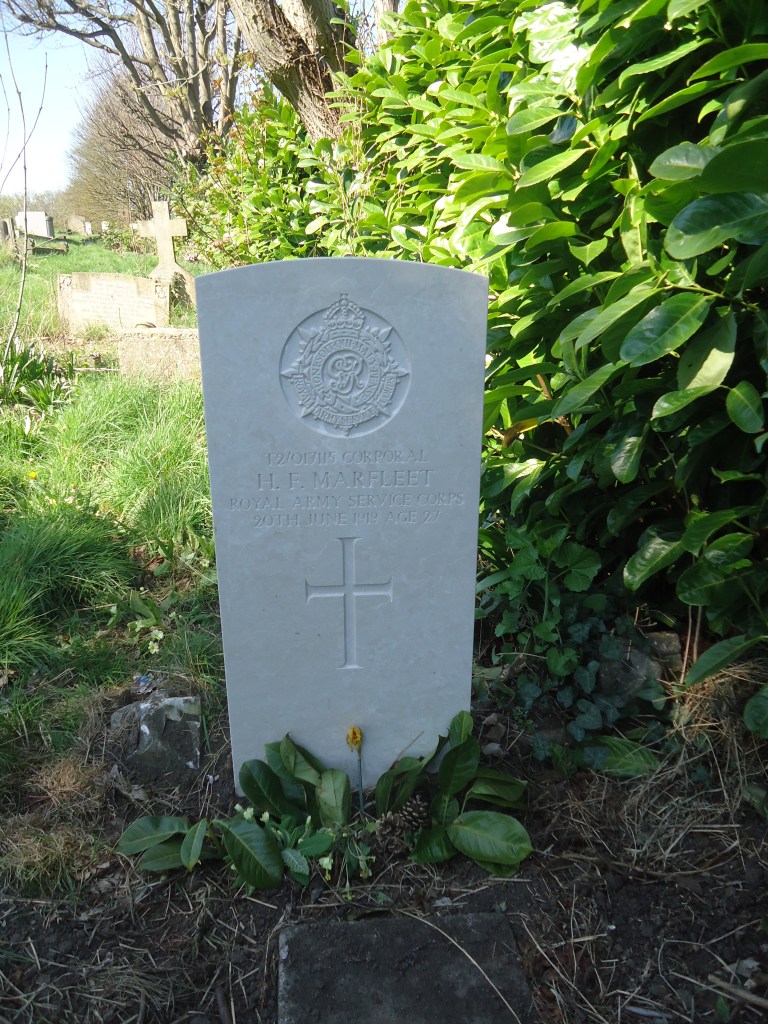
Herbert Marfleet – CWGC official recognition in 2015.

The re-imagined story …

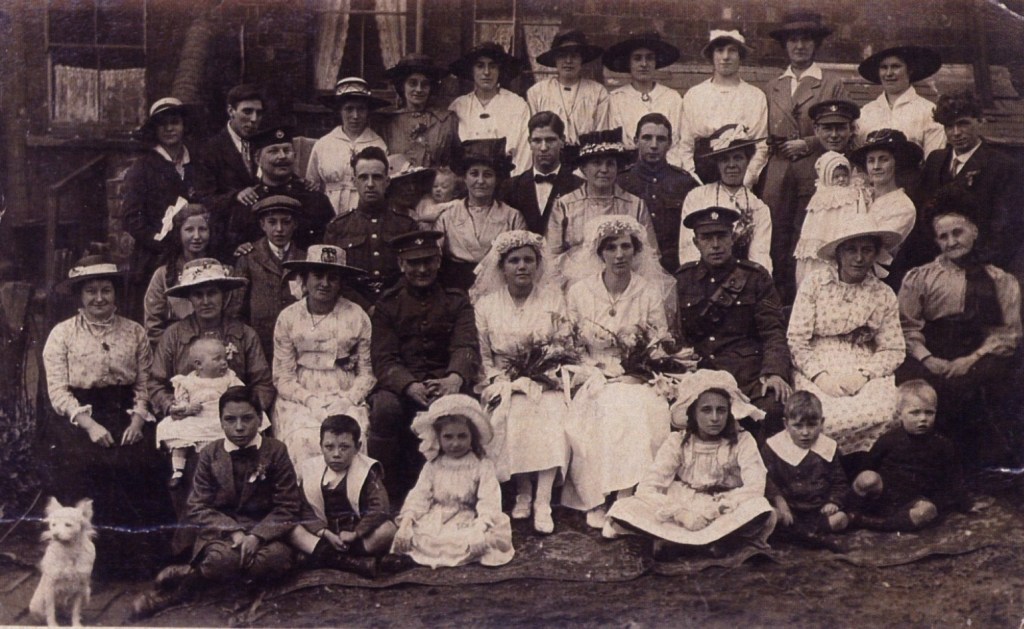
There are two surviving photographs taken that day and in each of them our Elsie looks so sad. You shouldn’t look sad in your wedding photographs – I keep thinking. People say it’s the happiest day of your life. And she looked so beautiful as well.

It was a proper family wedding. All the aunts and uncles were there and three little babies. My was little Joyce noisy, and would she keep her bonnet on? Granny’s dog was better behaved!

Six men in uniform were there that day, including the two grooms. Bert came home, but Elsie lost him anyway. Perhaps she already knew that then, on the happiest day of her life.

The facts …

Herbert Frederick Marfleet, the son of Benjamin James Marfleet a sergeant in the 2nd Dragoon Guards, was born in the Punjab in 1891. By 1901 the family had returned to England and Benjamin was working as a Railway Shop clerk in the GWR Works. On leaving school Herbert followed his father into the railway factory as an apprentice coach finisher.

In 1915 Herbert joined the Royal Army Service Corps serving first in Egypt. In 1917 he briefly returned home to Swindon to marry his sweetheart Elsie Morse. Elsie was the eldest of William and Agnes Morse’s seven children.  By 1911 Elsie’s father had died and Elsie, aged 18, was working as a finisher in a clothing factory.  This could have been either Cellular Clothing in Rodbourne or John Compton’s in Sheppard Street.  The family lived at 4 Albion Street where these wedding photographs were taken in the back garden in 1918 when Elsie and her sister Agnes married in a double wedding.  Agnes’ bridegroom was a Canadian by the name of Hooper Gates.  Hooper survived the war.

Immediately after the wedding Herbert returned to his regiment in Salonika where he contracted malaria. He was discharged from the army and returned to Swindon in the spring of 1919 but died just a few weeks later.

It was at first thought that he lie in an unmarked grave in the cemetery but it was later discovered that he was buried with his aunt and uncle, Matilda Hammett and Edward Johnson. He was, however, entitled to a Commonwealth War Graves official headstone as his death was a direct cause of his military service. The official application process began in May 2011 and the headstone was erected in June 2015. Guest of honour at the dedication ceremony was 98 year old Joyce Murgatroyd, his only known living relative, who as a baby is pictured in the wedding photograph.

Joyce with Andy and Mark

First published on April 20, 2022.