Lorna Dawes – in her own words

Last year I published on this blog an article about Miss Lorna Dawes and her memories of working ‘inside’ (that is inside the GWR Works). Yvonne Neal, of the Swindon branch of the Wiltshire Family History Society, has managed to collate the articles Lorna wrote for that Society’s newsletter and has kindly given me permission to print them here. Yvonne also contacted Lorna’s brother Ken who has supplied this photograph of his sister. So, published here in three instalments is a piece of Swindon’s history – Lorna’s story – in her own words.

GWR Memories – Lorna Dawes

Swindon Railway Works grew over many years and became the site of a fantastic organisation, with many sub-sections and with everything needed to support and organise the volume of work, i.e. possibly more than one locomotive a week. Even had its own window cleaners, clock man and master clocks connection to Greenwich time, ambulance, fire engine etc. all in situ.

As a shy 14 year old, I came for interview with my mother, but really wanted to work in a flower nursery, not that there was any work experience in those days.

I joined an army of boy and girl office messengers, some in the main offices and others in workshop offices, dealing with immediate personnel. I ended up in No. 13 Staff Office (see further information below); the hub of the Works and in control of quite a few events all over the West and Wales. One small element was the letting of railway houses and cottages, which included a crossing cottage in the west, which carried the comment ‘water in churns’. It set me wondering at the possible difficulties.

I’ve realised lately that, whilst someone must have introduced me to my job, I actually ended up running it all myself as regards programming. It was extremely busy and most of it physical as I went to so many areas and hardly stopped. It was a job I loved and led on to all kinds of interests, so I never regretted it and I’ve always had friends.

The whole background was a pride-based one and it wasn’t unusual for new engines to bring an admiring crowd along the lines.

The messengers went on to apprenticeships for the boys and office jobs for some of them also, as well as clerical posts for the girls.

I had already started shorthand and typing privately, and it became a condition of work to proceed so I went to night school three nights a week 7.00 pm to 9.00 pm at the college in Sanford Street, which included Commerce, English and Arithmetic. The work-related ones were sometimes taught by men (Clerks) from the Works. I managed 130 wpm shorthand and really loved it.

The only way I was ever given ‘instructions’ was as part of a bell system for individuals, and I was about four or five rings to go to an officer at post time. For instance:

Early morning:   sorted copies of last night’s post and distributed

Every morning:  Bank bags to Railway Bank on London Street

                                Sometimes called into the Railway Union Group in next street, or Railway Club, Bridge Street.

                                On return every day, collected Time Book at main entrance. This contained information on anyone leaving/returning from outside the Works.

                                Then round the offices obtaining signatures to cover reasons given i.e. dentist, surgery, etc.

                                Then made coffee, individual cups for about 25, and washed up downstairs.

I was responsible for obtaining and distributing dusters, towels, soap, string etc. to ‘my’ office, around 25, and sometimes to General Stores, which was between the Main Offices and the Station. It was a large building with three floors and I had to find the correct location.

The Stationery Office and another office was accessed by crossing all the lines in front of the Engine Shed where engines were being shunted and men cleaning. (Graded – cleaner, fireman and then driver.) The Stationery Office had typing paper, some water-marked, ink pens and also confetti from punch cards!

The Duplicating Office was in the wall of the Body Shop. Here there was the traverser hazard and I quite often had to divert. I had to go there a lot and quite often in a rush with special or urgent notices. Printing was slow and with a hand roller, one at a time, which meant I had to wait around.

At Park House I saw drivers with piles of coloured wool which were used to give vital eyesight checks. Yes!! Also went into the cellar for old files, some were accident originals.

At the Mechanics Institute, I had to transport books to and fro between ‘Officers’ who read and vetted books before they were put on display in the Mechanics Library (may be something no one knew).

I took ‘travellers’ to the Loco or Carriage Works and also interviewees to the Carriage Canteen.

Sometimes I was sent to the Loco Canteen, for clerks who needed sandwiches because they had unexpectedly to work overtime. The Loco Canteen was underground and in electric light.

The Works had its own Telephone Exchange – push/pull units.

The Head Messenger’s office, Mr Bill Ferris, was where the postal boxes were kept.

The Storehouse consisted of three floors and was to the rear of the offices. Very creepy there as it was quite often empty except for files.

I also had to go to the Laboratory at Church Place.

The Drawing Offices were on the third floor, main building – you could see Purton from the landings.

The above were my duties, and places I had to go in the mornings. In the afternoons:

                                Make tea and wash-up.

                                Get post signed and despatched – that was very busy

                                Works Cash Office

                                Visit to the fourth floor – no lift, exhausting!

                                Mileage Office – SPL, toilet for older women in this office!

                                Extra jobs would include advertisers and lardies

A little story: I was sent in search of saccharines (sweeteners) for a desperate officer one day after Bank duty!

These are all rough memories but my work seemed to get more and more interesting all the time.

I spoke before about No. 13 Office. The layout in 1945 was:

Boss of Staff Office – Percy Mills

Deputy – Ted Click – in the corner was my bit of desk and a cupboard

Four typists – I was one here, later. One of the typists was a big fan of WEA Hikers and I joined. Another was the daughter of Louis Page, Football Manager. She took me to the Isle of Man, with two others, when I was around 14½.

Then there were row of Clerks.

More than once I passed F.W. Hawksworth, Chief Mechanical and Electrical Engineer, in the tunnel. My wages in 1945 were 18/- a week. (approx. 90p).

I probably have enough to fill my own book with my very wide GWR experiences and, in fact, Rosa Matheson has used a lot of my information. I once gave an hour’s talk to the Railway Lounge Group.

To be continued …

You may also like to read:

Miss Lorna Dawes and a life ‘inside’.

John Jones – Rolling Mills foreman

The re-imagined story …

When the Rolling Mills opened in the 1860s the large contingent of incoming workers from Wales were housed in a building better known as the Barracks. The story goes that the Welsh women couldn’t get along together and that they used to fight and argue, but my Nana didn’t hold with that.

Wesleyan Chapel

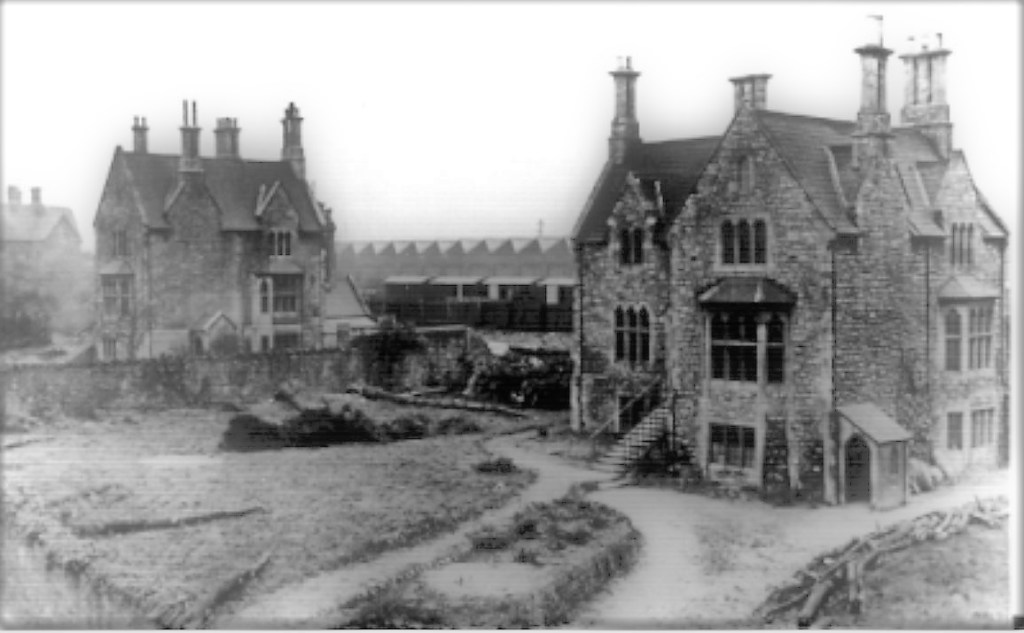
The former GWR lodging house, known as the Barracks, later became a Wesleyan Chapel image published courtesy of Local Studies, Swindon Central Library.

“We had to live in dreadful conditions; if it hadn’t been for the other women, I don’t know how I would have survived. Two years we were there. It felt more like ten.

“We couldn’t keep the place clean, the water closets were permanently blocked and we had nowhere to put our rubbish or the ashes from the fire. There was always someone sick. It was all down to the water see, ‘unfit for drinking purposes,’ the public health inspector said. Two days a week we had water, Wednesday and Saturdays, and then it came from the canal.

Five hundred people there were crammed into that building. I had small children, why we all did, I don’t know how they all survived, many didn’t, I know. My sister Gwen gave birth in that place. I don’t know how they expected people to live like that.

The company cottages were bad enough, but that building. In the early days the men used to call it the Barracks. I don’t know about barracks, more like a prison it was.

When they started building the cottages at Cambria Place I used to go along every day. I used to will that little house along. I loved every square inch of that place. Mind after two years in that hell hole it was like living in heaven.”

Cambria Place

Cambria Place

The facts …

“I consider this building in its present state quite unfit for human habitation and dangerous to the health of the district,” Inspector Henry Haynes wrote to the monthly meeting of the New Swindon Local Board held on 2nd August 1866. What had once been intended as a model lodging house for the single men in the railway village was an unmitigated disaster.

Designed to accommodate young men in single rooms with a variety of communal facilities the lodging house, complete with Gothic turrets, was built to ease overcrowding in the GWR company houses. Unpopular from the outset, the building soon became known as the Barracks. Constrained by GWR rules and regulations the young men moved out, preferring to lodge in the cramped conditions of the railway village cottages instead.

The building stood empty until the construction of the new Rolling Mills in 1861 saw an influx of migrant Welsh workers and their wives and children. The GWR Company responded by converting the Barracks into supposedly family friendly accommodation.

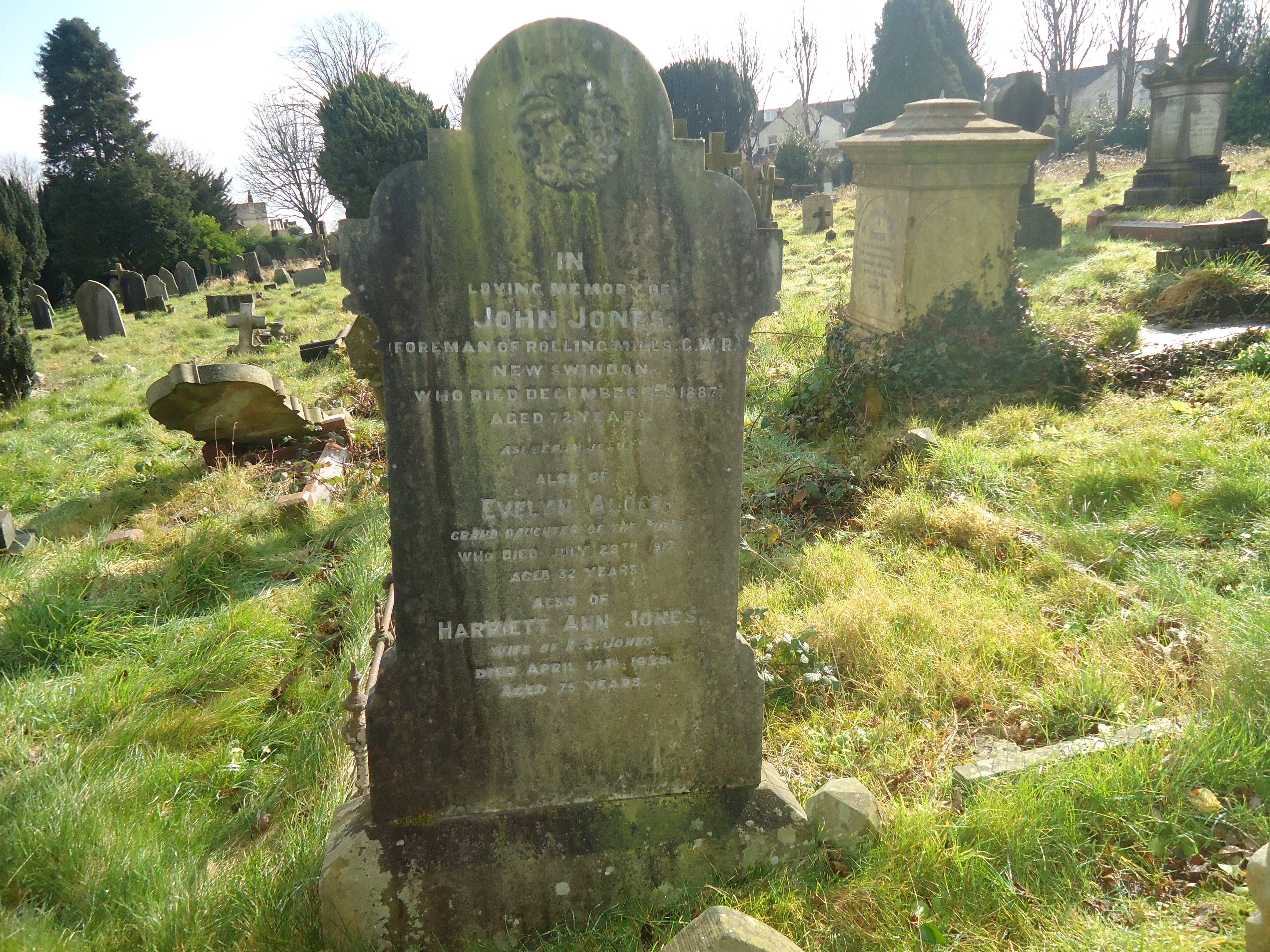
This is the final resting place of John Jones, who as can be seen from the inscription on the headstone, was foreman of the Rolling Mills. John was born in Tredegar, Monmouthshire on March 13, 1815.

In 1851 John was living at Thomas Road, Llanelly with his wife Sarah, and their children. Edwin 14, (already working as a forgeman), Elizabeth 13, Isabella 11, Ephraim 9, Emma 7, Enos 5 and Elijah S. who was 5 months old.

John was a highly experienced worker by the time he entered the GWR service here in Swindon on May 25, 1861. As a Foreman Roller he was paid 7 shillings a day (that’s 35p) although worth considerably more 155 years ago.

The Rolling Mills opened in the 1860s and saw the arrival of a large Welsh community in Swindon. In 1869 the manager Mr Ellis told the Advertiser there were about 310 men employed in the Rolling Mills, divided into a day and a night shift working alternate weeks.

The arrival of so many families placed huge pressure on the available accommodation in New Swindon. The first Welsh families in the Barracks lived in appalling, insanitary conditions, and work soon began on Cambria Place and it was here at No 22 that we find John and his family living in 1871.

John died in December 1887 and is buried in Plot E8296 in Radnor Street Cemetery with his granddaughter Evelyn Alder who died in 1917 aged 32 and his daughter in law Harriett Ann Jones (Evelyn’s mother) who was the wife of Elijah Stockham Jones, John’s youngest son.

John Jones

Private Frederick William Darling

Unfortunately Frederick William Darling’s military records have not survived. We do know, however, that he served with the Royal Army Ordnance Corps in France during the First World War. The RAOC was responsible for supplying weapons, ammunition and equipment to the British Army. It has to be asked if his wartime experiences contributed to the state of his mental health and the onset of neurasthenia.

Neurasthenia is described as an ill-defined medical condition characterized by lassitude, fatigue, headache, and irritability, associated chiefly with emotional disturbance.

Frederick was born on March 22, 1888 the son of Richard and Louisa Darling and baptised at St. Marks Church on April 16. Frederick William was one of eight children and grew up in Horsell Street. His father worked as a blacksmith in the GWR Works as did Frederick and his elder brother Charles.

Frederick married Ella F. Wills at the church of the Holy Apostles, Charlton Kings, Gloucester on August 1, 1921. The couple later moved to Cardiff where Frederick died on September 2, 1927.

Cardiff Man’s End

Neurasthenic Poisoned By Gas

Dr R.J. Smith, the Cardiff Coroner, on Monday enquired into the death of Frederick William Darling (39), a blacksmith, who was found dead near a gas oven. Darling had suffered for two years with neurasthenia, and his widow, Mrs Ella Fanny Darling, informed the Coroner that he was in Whitchurch Mental Hospital last May, but was discharged on probation in July, when he seemed much better. During the war he served with the Royal Army Ordnance Corps.

Cecil Elder deposed to finding Darling in a house at Bloom Street, Canton, Cardiff and Dr. Pittard said death was due to coal gas poisoning.

A note left by Darling, addressed to his mother, read: “Don’t worry; I cannot live this life any longer.”

The Coroner returned a verdict of “Suicide while of unsound mind,” and expressed sympathy with the relatives.

Frederick was buried on September 7, 1927 in grave plot C1889. He is buried with his parents Richard, who died in 1926 and Louisa who died in 1945.

Arthur Lancelot Darling was Frederick’s younger brother. He was born on June 14, 1894. Aged 16 he was working as a machineman in the Works.

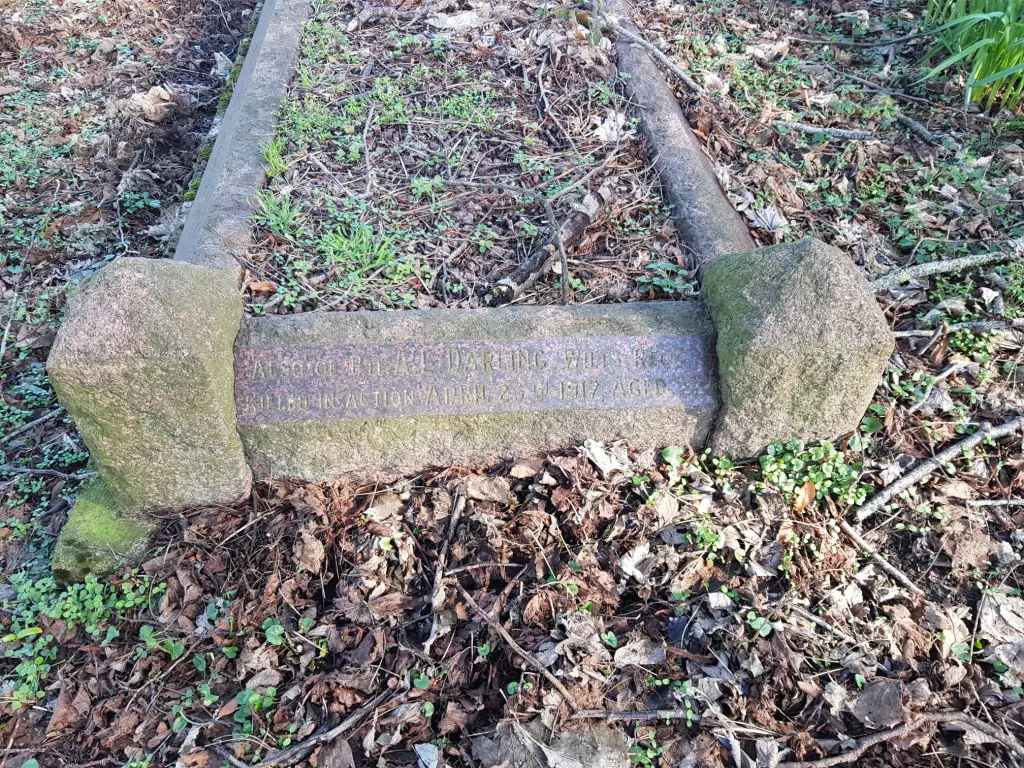
Arthur served in the 7th Battalion of the Wiltshire Regiment and was killed in action in Salonika on April 24, 1917. He was 22 years old. There was no body to bury – he was presumed dead. Arthur is commemorated on the Dorian Memorial in Greece and on his parent’s grave in Radnor Street Cemetery.

Frederick O’Conor – devoted servant

The re-imagined story …

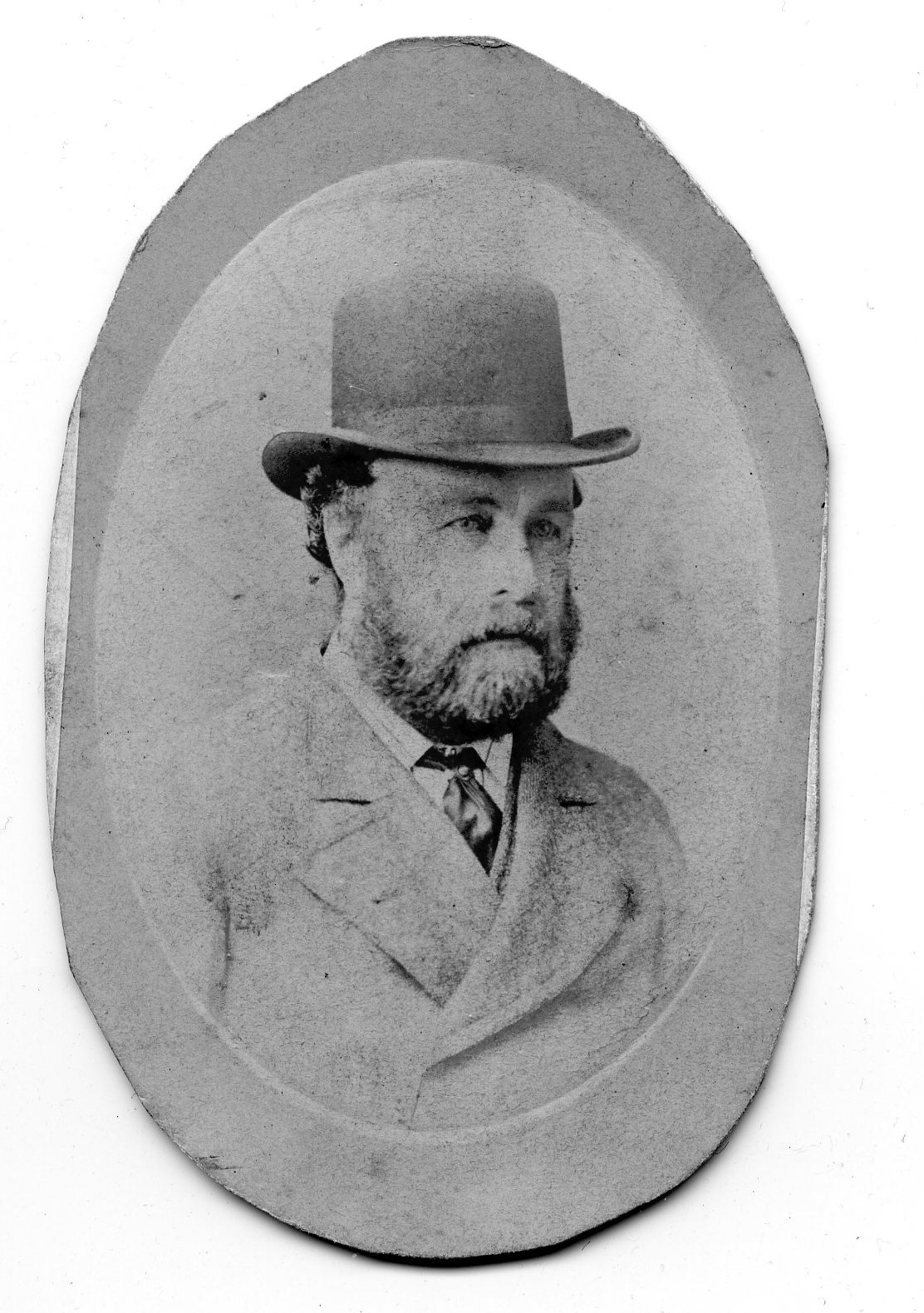
Word quickly travelled around the Works. Lord Bolingbroke was trying to silence the hooter. The Swindon Advertiser had published in full his application for the abolition of the Works hooter. This wasn’t his first attempt. In 1868 he successfully forced the GWR to dampen the noise by erecting a screen around the hooter. However, the workmen complained that this rendered the hooter ineffective and the screen was removed.

Now his Lordship was at it again, complaining that the early morning call disturbed his sleep and was injurious to his health.

DSC07211

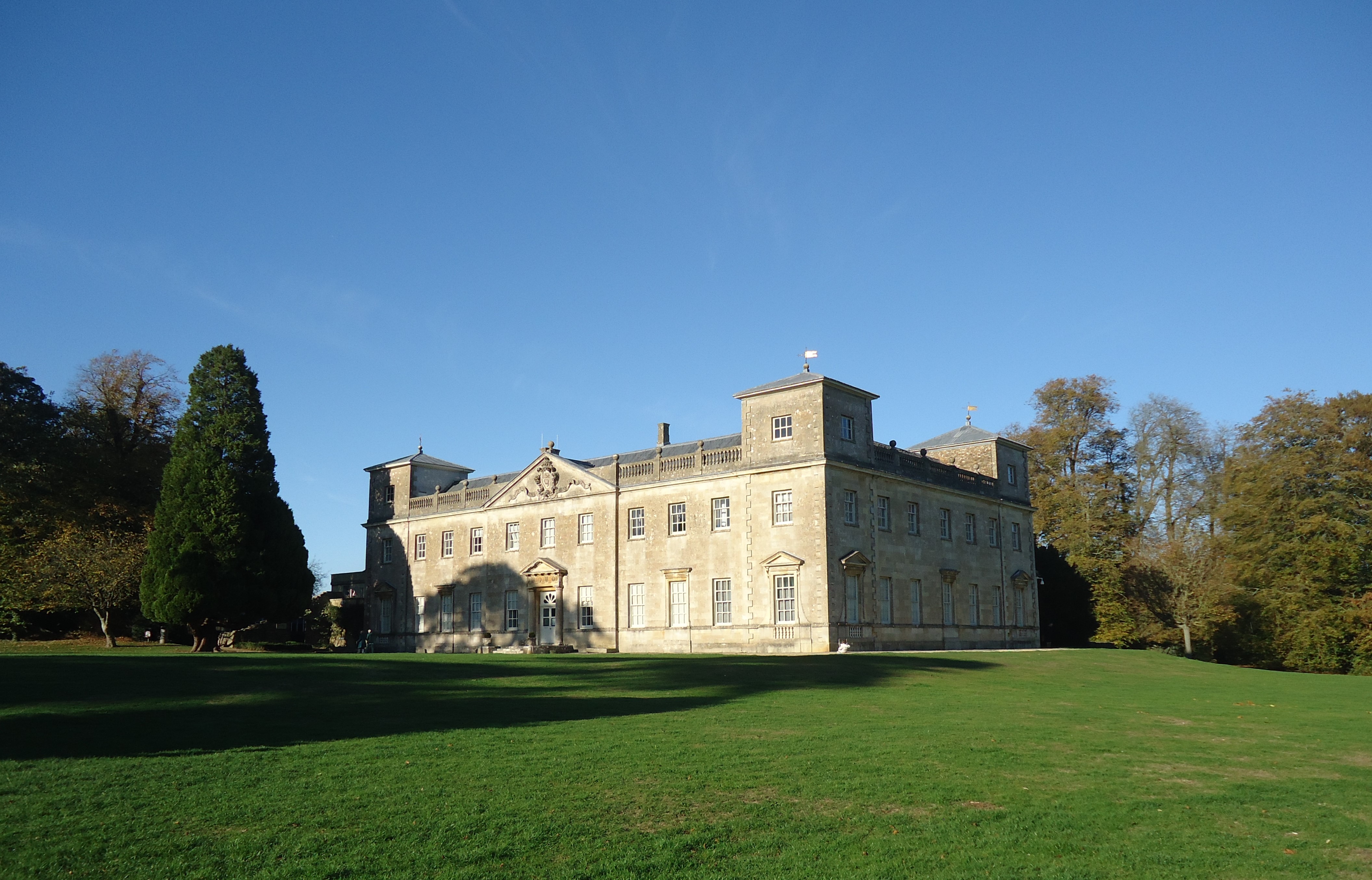
Lord Bolingbroke lived in a mansion at Lydiard Park, about 2½ miles west of the railway works, as the crow flies, but you could hardly describe him as a resident. For many years he had lived on the continent returning to Lydiard Park for barely two months of the year during the shooting season.

Unlike us working men Lord Bolingbroke could lie abed as long as he liked. To be late to work for us was to lose pay and unlike his lordship we do not have fancy timepieces to waken us. I am sure without the blast of the hooter I should lose many morning quarters.

The hooter punctuated the daily routine of the railway factory and we depended upon it. And not only us railway workers. Other employers such as Arkell’s brewery in Kingsdown supported keeping the hooter. It was even suggested that Lord Bolingbroke’s tenants probably found it useful.

We resolved to challenge his lordship and who better to lead us into battle than Mr Frederick O’Conor, a newly elected member of the Mechanics’ Institute Council.

A campaign headquarters was established at the Mechanics’ Institute and a petition was drawn up. More than 4,335 signatures were obtained and when the pieces of paper were pasted together they measured 43 yards in length.

Henry, 5th V Bolingbroke - photo owned by Nellie

The matter went to Whitehall and despite the fact that Bolingbroke was the only complainant, he won the day and the licence to operate the hooter was revoked. But with Mr O’Conor at the helm we were not to be defeated.

Despite the decision by Whitehall, the Mechanics’ Institute Council and the working men of Swindon united and carried on the battle for the hooter.

We held another protest meeting at the Mechanics’ Institute where the case was reassessed, and reason won over entitlement. The hooter was reinstated.

The facts …

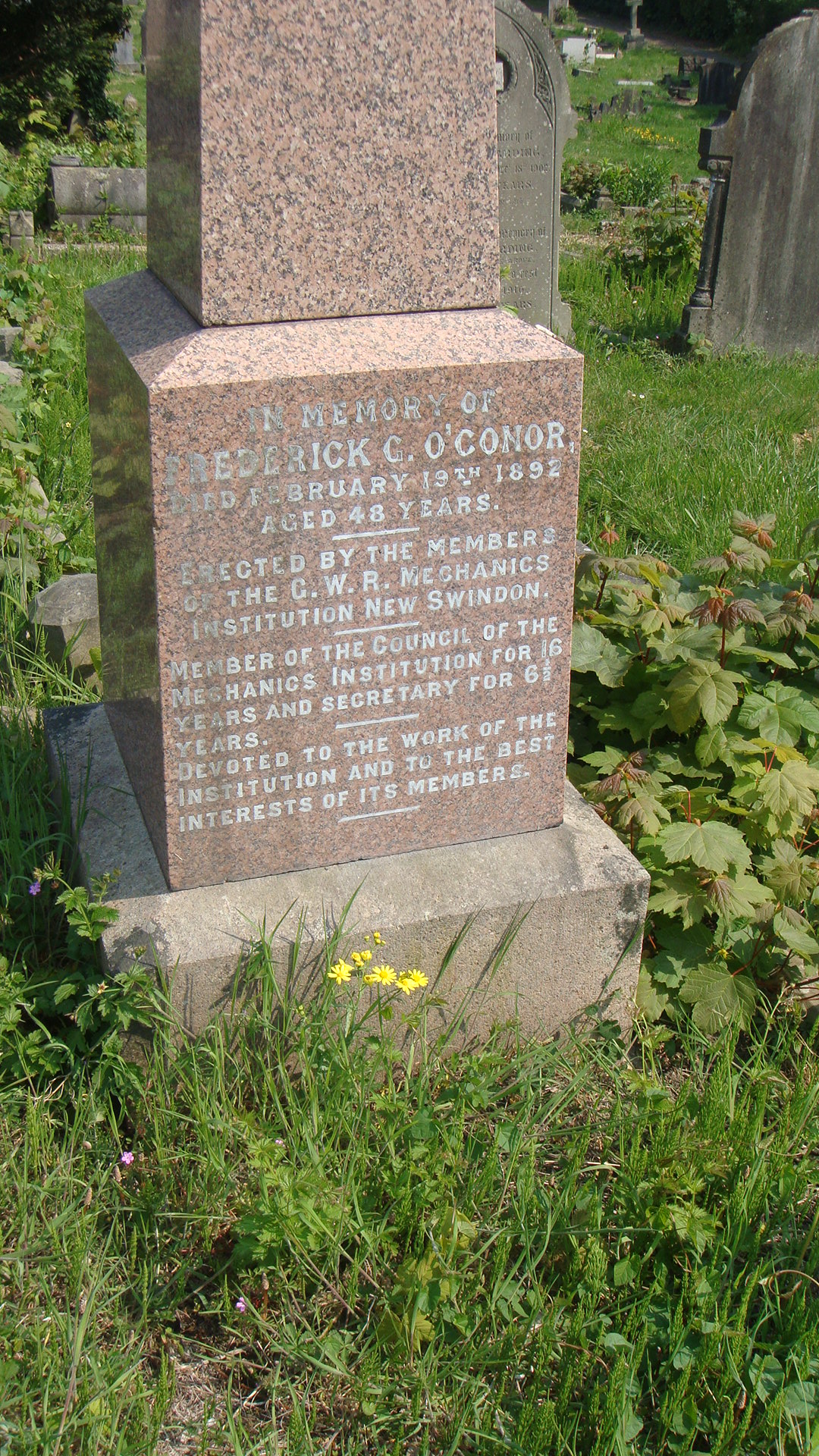
Frederick George O’Conor was born in Swindon in 1843 the son of John and Mary O’Conor. In 1865 he entered work in the service of the Great Western Railway as a clerk in the loco office at Swindon Works.

In April 1876 he married Mary Adelaide Kerr. The couple had two daughters, Mary born in 1878 and Adelaide born in 1879. His wife died shortly after the birth of their second daughter.

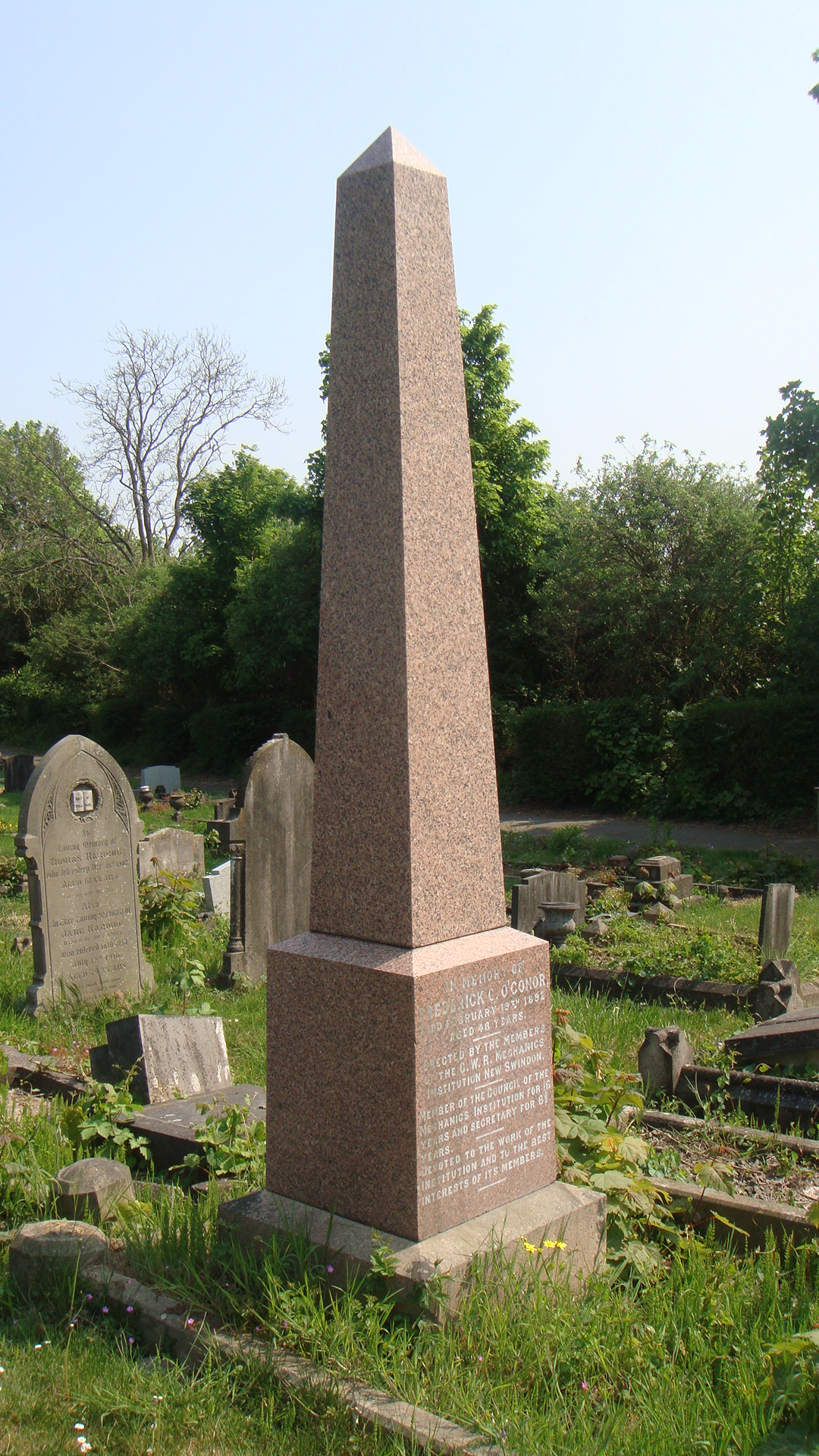
Frederick died on February 19, 1892 following a long illness, most likely tuberculosis. He was just 48 years old.

In a lengthy obituary the Advertiser referred to his many other involvements. He was chairman of the local education committee, a member of the Wilts Archaeological Society and a prominent member of St. Mark’s Church.

The funeral at St Mark’s was attended by a large congregation and members of the Mechanics’ Institute Council followed behind the hearse as the cortege made its way to Radnor Street Cemetery where the service at the graveside was concluded by Rev. Ponsonby.

The magnificent pink granite obelisk was erected by the members of the GWR Mechanics’ Institution.

Frederick O'Conor D (3)Frederick O'Conor D (2)

Enoch Wall – apprentice

Today it comes as something of a shock when we read about boys as young as 13 and 14 employed in the railway works. The work was heavy, the working day long, and it was a dangerous environment. Accidents were frequent and sometimes fatal.

Rumour circulated throughout the Works that young Enoch Wall had lost his life due to the negligence of a fellow workman. Do you think the jury came to the correct verdict?

Enoch Wall was born on February 19, 1871 the second youngest of James and Elizabeth’s fourteen children. The UK Railway Employment Records state that he began a fitters apprenticeship on his fourteenth birthday earning a daily rate of 10d (about 4 pence) and that he was ‘Killed 15/10/85.’

The Fatal Accident in the GWR Works

On Saturday morning Mr Coroner Baker opened an enquiry at the Cricketer’s Arms inn, New Swindon, on the body of the lad Enoch Wall, aged 14 years and 8 months, son of Mr Wall, permanent way inspector, GWR, who was killed in the Works on the previous Thursday under circumstances briefly reported in these columns. The body was lying at the mortuary attached to the Accident Hospital. A good deal of interest appeared to attach to the proceedings, in consequence of a rumour being circulated that the deceased lost his life through the carelessness of a fellow workman. Mr W.E. Morris was elected foreman of the jury. Mr E.C. Riley attended and watched the proceedings on behalf of the GWR officials, and the deceased’s brother was also present. The first witness examined was,

Arthur Thos. Gillmore, of 24, Eastcott Hill, a fitter in the GWR Works, who said he knew the deceased, who was an apprentice with the engine fitters. On Thursday morning the deceased was assisting him, at about 10.45, to put in a left hand distance buffer to an engine tender. Deceased was at the end of the buffer holding it up with his two hands, the end of it being against his chest. Witness was in the pit under the tender working at the spring of the buffer. The first warning he had of anything moving was the engine striking his head, and then he heard some one call out. He dropped into the pit immediately, at the same time putting out his arm and pushing the deceased out. Witness noticed then that the tender was moving, and saw that the deceased had been jammed by the engine. The tender moved on from the engine and deceased staggered out, crying out “Oh, oh,” once or twice before he fell.

In answer to the foreman, witness said he heard no warning at all of the engine coming up. Men were always working about there, and there should be a warning given. The first he heard was someone crying out “hey,” after he had been struck by the moving engine; it was a lad who called out to him. The deceased had been jammed before witness knew the engine was moving.

By the jury: His work was generally in a most dangerous place. He had heard that there was a man to give them warning, but he did not know if this was so in this shop – there was in the shop he generally worked in, but this was in the paint shop, where he had been sent to look to a weak spring. Was sure no signal was given him or deceased to look out on this occasion.

Peter Neal, Eastcott Hill, labourer in the Works, said he was employed to get engines in and out of the paint shop. On Thursday morning he was in charge of the traversing table, and had orders to get three engines out. After they had moved one engine on to the table he went into the shop to see if there was anyone in the way. Not seeing anyone he gave the signal to the engine driver to move, at the same time calling “Look out,” in case there was anyone working where he could not see. The engine moved against the one deceased was working at, and he got caught.

By the Foreman: Generally he went up the shop to see if anyone was working before shunting. It was his duty to do so. He did not go all the way up this morning. He scarcely ever did go all the way unless he knew there was someone in the way.

By the jury: If he had gone up to where the deceased was the accident would not have happened, but he did not know there was anyone there.

At this point the coroner said the evidence was taking such a turn that he thought it most desirable that the jury should view the spot where the accident happened. This the jury did, and saw the working of the table. On returning to the jury room, the Coroner said he was glad this course had been taken. He had no idea when he commenced taking Neal’s evidence what the nature of the case was. Under the circumstances he thought it best to adjourn the enquiry until Tuesday, when all the evidence possible to get would be taken. The witnesses and jury were then bound over in the sum of £10 to appear on Tuesday.

On the enquiry being resumed on Tuesday, the witness Gillmore was re-called, and his evidence was read over to him.

Walter Hunt deposed: I live at 11, Cromwell Street, and am foreman of the west yard, GWR Works. I have been so employed over five years. Peter Neal has been employed there all the time. When I receive orders from any of the foremen to move engines from the paint shop I invariably give Neal orders to do it, and it is then his duty to get the engine out on to the travelling table and run it up on to the bank. He has entire charge of the table for the time being, and his instructions from me are to stand between the engine to be moved and the table, and give the signal. He has not to go into the shop. There is another man to go round and see that no one is in the way.

The witness Peter Neal was re-called, and repeated his evidence on oath, after having been cautioned by the Coroner. He said it was his duty to see the road clear before he gave the signal to the engine-man to move. He did so on this occasion to the best of his ability. He went into the shop and looked down the engines, but could see no one, so he gave the signal to move. The engine ran freer than usual. There was generally another man to look to the inside of the shop, but this man was not present when this engine was moved. There generally were four or five men to move an engine, but on this occasion there were only three. He had done the job hundreds of times, but never had anything happen before. He never remembered men working at buffers in this shop. He should like to add that before he commenced to remove these engines he went to the chargeman and asked him to send another man to help him, but he refused to let him come.

William Thrush, labourer, of Shaw, said he generally assisted in moving engines from the paint shop, but on Thursday, when the accident happened, he was sent to another shop. When he was present it was his duty to look round and see that no one was in the way. He took his instructions generally from Jesse Townsend, the chargeman, but was often called by Neal. He always went down the shop to see if anyone was working between the engines, as men were often up underneath the working parts. On Thursday he was not sent for at all.

The Jury said they would like to see the chargeman, Townsend, and he was sent for. In the interval the evidence of

Dr. Bromley was taken. He said he was called to see the deceased at 10.55 a.m. on Thursday in the paint shop. He found him on a stretcher, dead, and had the body removed to the mortuary, where he found his ribs fractured and lungs punctured, injuries which would cause instantaneous death.

Jesse Townsend, residing at Even Swindon, foreman of labourers in the west yard, said when the accident happened he was engaged in the Paint Shop moving a lathe. Neal come to him and asked for Thrush to help move some engines. He told him he did not think Thrush was in, but on Neal saying he knew he was he said “All right, he would send him directly.” He did not send him, as it slipped his memory. Had never neglected to send before.

By the foreman: It was necessary to have four men to move an engine out – not less.

This was the whole of the evidence. The Coroner briefly summed up, asking the jury to pin their attention to what they heard there, and disabuse their minds of anything they had heard outside. Neal was in charge of the shunting engine in question, and was evidently trying to do four men’s work with three men. He had looked down the shop and given warning, and it was for the jury to say whether in their opinion Neal was guilty of negligence; if he was not, he was not responsible, and it was a clear case of accident. If, on the other had, they considered he was guilty of gross negligence, then it was a clear case of manslaughter. Those were the two points for the jury to consider. – The jury deliberated for about a quarter of an hour, and brought in the following verdict: – “That the deceased was accidentally killed by being crushed between an engine and tender. The jury are of opinion that the witness Townsend was guilty of some negligence in not sending help when asked by Neal, and that Neal exceeded his duty in attempting to do two men’s work.” The jury also added a rider to their verdict recommending the officials in the Works to arrange for a better system of scotching wheels, to prevent engines bumping as in this case.

The Swindon Advertiser, Saturday, October 24, 1885.

Enoch was buried in Radnor Street Cemetery on October 19, 1885 in grave plot E8580 where he would lie alone for almost 40 years years. His brother Lewis was buried with him on February 2, 1924 aged 56. Lewis’s wife Anne joined them in July 1935 when she died aged 71 years. Enoch and Lewis’s parents are buried in the neighbouring plot. In all those years the family had lived at 5 Wellington Street.

Charles Robert Thompson – a carpenter’s suicide

Below you will read the awful story of Charles Robert Thompson. A story of a broken marriage, a runaway wife and a tragic suicide. It makes for dreadful reading. And in the middle of all this are two girls – the couple’s twelve year old daughter, Mabel Annie Thompson and a young servant girl, Beatrice Ferris.

Mabel was called as a witness at the inquest where she gave evidence about the events that had led up to her mother’s departure and her father’s state of mind and Beatrice told how she found the body of her employer.

It is impossible to imagine how these two girls were affected by the events of that terrible time and whether they ever truly recovered. There would have been no talking therapies available to them then nor probably any other form of help.

Mabel was born in Cirencester on January 11, 1891. In 1901 the family were living at 1 Stafford Street, although Charles’ name does not appear on the census as living with Emily and their three children. Was the marriage already in crisis?

In 1915 Mabel married George Woodward, a butcher with a shop at 107 Cricklade Road, Gorse Hill. At the time of her marriage she was living at Swindon House, The Square, Old Town. In 1939 Mabel was living at 220 Ferndale Road with her husband, three children and her father-in-law. She died in the June quarter of 1972, aged 81. She is not buried in Radnor Street cemetery.

A summer view across the cemetery

A Carpenter’s Suicide

Deserted by his Wife

A Pathetic Story

A further inquest was conducted by Mr W.E. Nicolson Browne at the Ship Hotel, Swindon this afternoon, touching the death of Charles Robert Thompson, carpenter in the employ of the GWR Co., residing at No. 12 Cambria Place, Swindon, who was found with his throat cut on Saturday morning.

Mabel Thompson, aged 12, daughter of the deceased, who gave her evidence admirably, said her father was 39. Her mother went away nine weeks ago with a Joe Barratt, and nothing had been heard of her. Joe Barratt was a lodger at deceased’s house, and was employed in the factory.

The Coroner: Was your father cut up about your mother going away?

Witness: Yes, sir. He mentioned it every day, and went to Cirencester and Glo’ster to try and find her.

Witness further said that Barratt was introduced as a lodger by her mother. One night her father had repeatedly to ask her mother and Joe Barratt to go to bed. They said they would go when they thought they would. A bill had recently arrived for her father who said on receiving it, he could not face it.

Beatrice Ferris, servant at deceased’s house, said she had been with deceased for six weeks. He had not in her presence or to her knowledge stated or hinted that he intended to take his life. He never drank to any extent. On Friday she bought him some brandy.

He frequently exclaimed, “Oh my poor head.” On Thursday he expressed a wish to be let alone when she went to rouse him she could not wake him. A bottle (produced) was found near him by his daughter Mabel. He woke eventually and went to bed. There was no disturbance during the night. On Saturday morning she saw a light in the w.c. She called to ask who was there, and receiving no reply, she pushed the door open and found Mr Thompson dead, with his throat cut. There was a chair there.

Hubert Knew, said he was living in deceased’s house at the time of the death. On Saturday morning he got up before six o’clock. He heard Mr Thompson shout from his room. “Who’s about?” He (witness) replied: “It’s only me,” and Mr Thompson said. “All right.” Deceased had appeared very much depressed lately. He knew that deceased and his wife had had a few words at times. Mrs Thompson had been away nine weeks.

Dr H. Brown, assistant to Dr Swinhoe, said he was called at 7.30 on Saturday morning to the deceased. He found the man dead with his throat cut, and a razor beside him. Death was due to haemorrhage, arising from the wound in the throat.

At this point a letter, which the deceased had left was handed to the Coroner. On the envelope was written: “My purse is on the shelf with all I have.” On looking at the letter enclosed in the envelope the Coroner said that there was no doubt the man had himself cut his throat, and he did not think it necessary that the letter should be read.

The jury returned a verdict of suicide during temporary insanity.

Swindon Advertiser Monday November 23, 1903

Charles Robert Thompson was buried on November 27, 1903 in grave plot C1395. He is buried with his wife Emily who died just three years later in November 1906. Also in the same grave are William S. Stone who died in 1929 and Charlotte Rose Wearing who died in 1933.

Henry Chatten – verdict ’caused his own death’

The jury delivered a verdict of ‘Accidental death’ while the Coroner added that Chatten had evidently been too zealous in attempting to unload the wagon himself, and thus caused his own death. Behind this tragic story is a further one of sorrow and loss.

Fatal Accident in the GWR Works, Swindon

A Labourer Killed

Inquest and Verdict

A fatal accident occurred on Tuesday morning last to a man named Henry Chatten, widower, aged 36 years and recently employed in the GWR Works. Deceased was killed by the falling of a log of wood, weight 16 cwt from a truck on which it was stacked. The log in its fall dashed Chatten against the sleepers of the line, breaking both his legs and killing him on the spot.

The Inquest was held on Thursday morning, in the Lecture Hall of the Mechanics’ Institute, New Swindon, before Mr W.E.N. Browne, County Coroner, and a jury of whom Mr Thomas Pearse was chosen foreman. The following evidence was taken:-

George Keen said deceased lodged with him at Dean-street, New Swindon. He was a sober, steady man and appeared in the best of health when he went to work at six o’clock on Tuesday morning. Witness heard no more of him until he was informed that he was dead.

William Mason, steam crane driver, then, stated that he was on duty on Tuesday morning, and whilst passing the truck of timber in question, he saw deceased laid down by the truck. He stopped his engine and cried out to some men of the staff, but when they reached Chatten he was dead. In answer to the Coroner, witness said he did not see the timber fall. He was about forty yards away when he first saw the deceased. There was no indication as to how the timber fell off the truck.

William Yeo, foreman of the timber gang, said there were 17 men working under him, and on Tuesday morning they were unloading the timber trucks. Deceased’s duty was to sweep up the yard and clear away the ropes, etc. He had no need to touch the trucks at all. In his opinion deceased had loosened the ropes of the truck and thus let the timber fall on him. The weight of the log was 16 cwt. Cross examined by the Inspector: The timber would not fall off the truck without a little jerk.

Dr. Grant, assistant to Dr. Swinhoe and Howse, stated that he was called about half-past seven o’clock on Tuesday morning. He saw deceased lying upon his back, and evidently a log had fallen from the truck and dashed the man against the sleepers, breaking both legs and fracturing the skull. He was quite dead. This was about twelve minutes after the accident, and death must have been instantaneous. A verdict of “Accidental death,” was returned by the jury, the coroner remarking that Chatten had evidently been too zealous in attempting to unload the wagon himself, and thus caused his own death.

Mr T.O. Hogarth watched the case on behalf of the GWR Company, whilst Mr. J.S. Maitland, of Bristol, Inspector of Factories and Workshops, was also in attendance.

Swindon Advertiser, Saturday, June 12, 1897.

Henry Chatten was born in Norwich, Norfolk in 1862, the son of John and Rachel Chatten.

By 1891 he had moved to Swindon and was working as a labourer in the GWR Works. At that time he was boarding with George Keen (the witness at the inquest) in Iffley Road.

The intervening years between 1891 and his death in 1897 are difficult to navigate.* There is a marriage of a Henry Chatten to Elizabeth Siney at St Stephen’s Church, Norwich in 1894 but this Henry Chatten describes himself as a greengrocer living at 73 King Street, Crooks Place, Norwich.

The details given at the inquest indicate that Henry was a widower and I have discovered the death of Elizabeth Chatten during the March quarter of 1897 – was this Henry’s wife? She does not appear to have been buried in Radnor Street Cemetery.

Henry was buried on June 12, 1897 in grave plot C853. He is buried in a public grave with four others. His address at the time of his death was 37 Dean Street.

And then another entry in the registers caught my eye. John E. Chatton, a 7 week old baby, was buried in plot C721 on February 20, 1897. The baby’s address was 37 Dean Street.

It would seem, therefore, that Henry lost both his wife and baby within a period of three months.

*spelling of name in transcriptions vary from Chatten to Chatton and Challen

Mr J.C. Westmacott – Primitive Methodist Preacher

When John Christopher Westmacott died in 1931 the North Wilts Herald published a lengthy obituary. I visited his grave in Radnor Street Cemetery where I discovered an elegant headstone, which included an inscription dedicated to his wife who died twenty years later. When I saw that his wife included the name Morse in her name I presumed that he had married into the prominent Primitive Methodist Morse family.

Elizabeth Jane Morse Trotman was born in Stratton St. Margaret and her baptism was performed by Charles Morse. Elizabeth was the daughter of Jane Morse Austin who married Cornelius Trotman. Jane was the daughter of Robert Austin and his wife Elizabeth Morse who was the daughter of William and Elizabeth Morse of Purton, but as yet I have been unable to make that all important link with the mighty Morse family (and I bet you’re glad I’ve stopped trying!)*

John Christopher Westmacott married Elizabeth Jane Morse Trotman in 1898. The marriage was registered in the Hungerford area of Berkshire. By 1901 they were living in Kingshill before eventually moving to 133 Goddard Avenue. They had no children.

When Elizabeth died there was no fulsome obituary, just a brief death notice published in The Reading Standard on Friday March 16, 1951.

Westmacott – on March 9, 1951, at Prince of Wales Avenue, Reading, Elisabeth Jane Morse Westmacott, aged 81 years, widow of John Christopher Westmacott, formerly of Swindon, passed peacefully away. – Sadly missed.

Mr J.C. Westmacott

Death of a Swindon Local Preacher

Funeral Tributes

The funeral took place on Friday afternoon of Mr J.C. Westmacott, of 133, Goddard Avenue, Swindon.

Mr Westmacott, who was 60 years of age, was a member of an old Swindon family, and had been in the service of the GWR Company for many years. He was well known in Primitive Methodist circles, having been a local preacher for nearly 40 years. He leaves a widow, and is also survived by his widowed mother, who is now 87 years of age.

The first portion of the service was conducted at the Regent Street Primitive Methodist Church, by the Rev G. S. Hooson (supt. Minister), the Rev F.W. Harper (a former supt. minister at Regent Street Church and now at Wootton Bassett), the Rev. T. Sutcliffe, the Rev. F. Sellers, and Mr G.P. Pickard. Special hymns were sung, and the organist (Mr. A. Barrett) played the “Dead March.”

38 Years as a Preacher

The Rev. G.S. Hooson paid tribute to the good work Mr Westmacott had done as a lay preacher. He had been a faithful and loyal member of the Regent Street church and his chosen sphere of work was preaching. For 38 years he was a lay preacher, and during that period he rendered a true and complete ministry in the Methodist Church.

The interment took place in the Radnor street cemetery.

The family mourners were: Mrs J.C. Westmacott (widow), Mr. and Mrs. C.H. Westmacott, Mr and Mrs J.A. Westmacott (Stroud), Mr Wm. E. Westmacott, Mr and Mrs H.G. Westmacott (brother and sister in law), Miss F.A. Trotman (sister in law), Mr F.T. Trotman (brother in law) Mr H.C. Trotman (brother in law, of Reading), Mr R.R. Trotman (nephew, of Oxford), Miss Freda Parsons (niece), Mrs W.H. Watts, Mrs E. Austin (cousin, Highworth), Mrs T. Austin (cousin), Mr and Mrs Uzzell, Mr and Mrs Pockett, Nurse Booth.

The bearers were Messrs C. Hands, H.T. Budgell, W. Robinson, Gingell, Deaman and M. York (local preachers).

GWR Works Representatives

The representatives of the GWR Works were Messrs. F. Hyde (chief foreman), J. Bond, and B. Thorne (of J. Shop) E. Thomas (retired foreman), J. Summerhayes, R.W. Newport and F. Dennis (of the chair foundry).

Amongst the representatives of the Primitive Methodist Connexion were Messrs. W. Webb, J. Haydon. J.T. Robins, H. Martin, J.P., T. Minchin, W. Bayliss, Wheeler, Uzzell, G.H. Hunt, C.J. Iles, J.P. (Purton) H.J. Franklin, H.J. Hancock, W.T. Harding, and H. Thatcher.

The funeral arrangements were carried out by Messrs. Smith and Son, Gordon road, under the personal supervision of Mr. A.E. Smith.

North Wilts Herald, Friday, January 23, 1931.

*So, I returned to my research and managed to find the connection between Elizabeth Jane Morse Trotman and the prominent Primitive Baptist family by the name of Morse. Elizabeth traces her ancestry back three generations to William and Mary Morse of Purton. These were the parents of Charles Morse, leading figure in the Primitive Methodist Church in Swindon.

You might like to read:

Mr Levi Lapper Morse – the end of an era

Raymond George Cripps – first Mayor to be invested in new Civic Offices

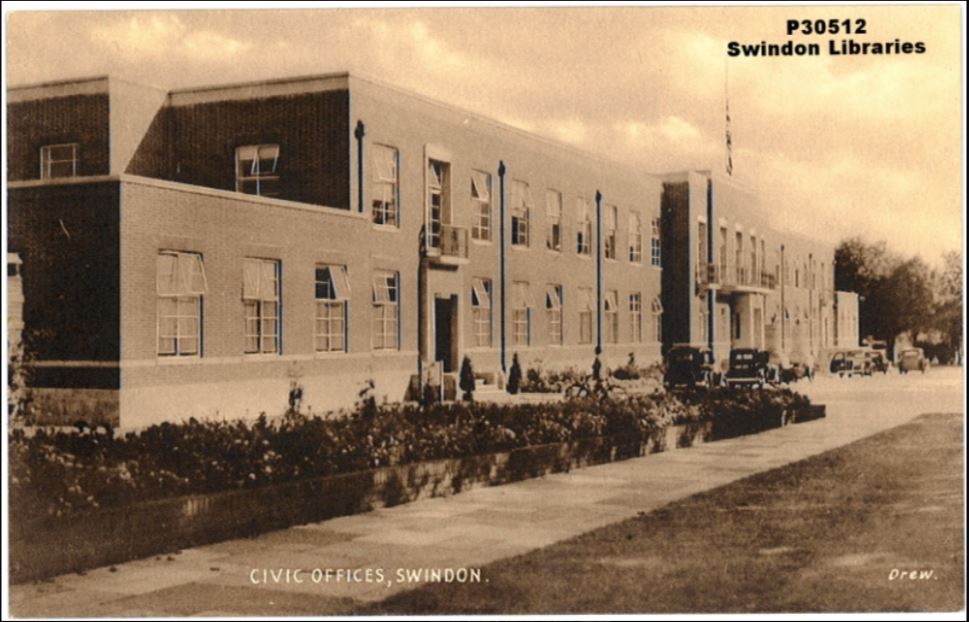
As Swindon residents eagerly await the opening of the temporary museum and art gallery space in the Civic Offices, let’s visit the opening of the building in 1938 and the first Mayor to be invested there.

The Civic Offices in Euclid Street were designed in a Moderne style by Oxford architects Bertram, Bertram and Rice and officially opened on July 5, 1938 by the Duke of Gloucester. The North Wilts Herald reported that ‘one of the highlights of the tour was when the Duke, with the Mayor, appeared on the balcony. His Highness was loudly cheered, and he waved an acknowledgement.’

The building was given a Grade II listing in 2020 when Historic England described it in the designation details ‘as a symbolic expression of Swindon’s civic identity during the interwar period.’

Image published courtesy of Local Studies, Swindon Central Library

Raymond George Cripps was born on December 18, 1877 in Kings Lynn, the son of Primitive Methodist Minister George Cripps and his wife Ursula Ellen. The family moved around the country following George’s ministry, but by 1901 George had retired and the family were living at 134 Goddard Avenue. Raymond was 23 years old and working as a railway clerk.

In 1906 Raymond married Beatrice Maud Raggett, the daughter of another prominent Primitive Methodist Henry Raggett and granddaughter of Charles Morse, one of the founders of the church in Swindon. The couple had two children, Cyril and Marjorie.

Raymond George Cripps first stood for office in the local elections of 1924 but was disqualified owing to his nomination papers not been filled in properly. He sought election the following year and continued to represent the King’s Ward.

Raymond George Cripps died aged 82 years at his home, 85 Croft Road. He was buried on January 25, 1960 in grave plot D85A which he shares with his wife Beatrice Maud who died in 1954.

Swindon’s New Mayor

Unanimous Election of Councillor R.G. Cripps

Labour’s Support

Just an ordinary man, unpretentious, not a Swindonian, but very proud of the town, in which he has lived for 40 years.

That was how Councillor Raymond George Cripps described himself on Wednesday when he was elected Mayor Swindon.

With the usual ceremonial his election was approved by the full Council, in the presence of members of his family and friends and representatives of the public life of the town.

Thirty-ninth in the list of Swindon Mayors, Mr Cripps, a retired GWR clerk, is the first Mayor to be invested in the new Civic Offices.

This year, for the first time in Swindon civic history, the members of the Council and visitors were deprived of the ceremony of robing and investiture with chain of office. This took place in an ante-room during a brief adjournment of the special Council meeting.

Mr Cripps made the customary reference to the work which lay ahead of the Council. He thought the dispute with the Wilts Standing Joint Committee over the police strength in Swindon would be settled on advantageous terms to the Council. The cattle market scheme would call for all the resources possessed by the Council in the way of financial judgment and wise planning. Mr Cripps described Swindon’s educational facilities as unequalled in the country, and he appealed for greater civic pride in the town.

Among those occupying reserved seats at the rear of the Council Chamber were the new Mayoress and members of her family the retiring Mayoress, Mrs Niblett, and Mrs L.J. Newman, a former Mayoress, the Rev. E. Banks and the Rev C.H. Cleal.

Mr Cripps election was proposed by Councillor A.E. Harding, and seconded by Ald. T.C. Newman.

In proposing Councillor Cripps as a ‘qualified person’ to be Mayor, Councillor A.E. Harding described Swindon as one of the best governed towns in the country. ‘Our offices and officials are second to none; we are proud of them.’

Then as an aside he made the suggestion to the Transport Committee that ‘bus conductors should be supplied with spectacles ‘so they might see people hurrying to catch the bus.’

Mr Harding spoke of the new Mayor’s church and Council work as providing excellent training for the exalted position he was to fill.

Tribute to Mrs Cripps and her ability to fulfil her duties was added by Mr. Harding.

Ald T.C. Newman seconded, and referred to his long association with Mr Cripps.

Labour’s Support

On behalf of the Labour group Coun. W.R. Robins supported the nomination and said the Mayor could rely on the support of his colleagues.

‘We differ in political allegiance but we are as desirous of doing the best for the town and people as any other members of the Council.’ Coun Mrs May George and Coun A.H. Wheeler also supported the nomination.

Coun. H.R. Hustings protested against the discordant note brought into the proceedings by the insult to the ‘bus conductors. He was very surprised at the remark being made on such an occasion of dignity. It was a very inopportune time.

The election of the Mayor was then approved unanimously, and the Council adjourned for a few moments while the new Mayor robed and was invested with chain of office.

When the new Mayor returned robed and took his place in the Mayoral chair he was loudly applauded.

The Mayor, speaking of Council work, said he was afraid that Swindon people did not appreciate the educational advantages of the town. He questioned whether any other town of its size could equal them.

Promising to do his work to the best of his ability he confessed that he had been tempted to withdraw after being proposed as Mayor-elect. He realised the responsibility he was assuming.

Referring to a reference in the Press in which it was suggested that he would need good humour, he said he could still see the funny side of things. ‘God help the man in public life who cannot,’ he said. He hoped to serve impartially and he knew the Mayoress would do all in her power to render service and forward any good cause in the town.

Provision had been made in current estimates for erection of a cubicle block at the isolation hospital. It was anticipated that during the coming year the Victoria road improvement would be completed, or at least substantial progress made.

The programme of educational development would, in the main, be completed and proposals for a central education and health clinic were approaching realisation.

North Wilts Herald, Friday, 11 November, 1938

You may also like to read:

Henry Raggett – a humble God fearing Christian

Levi Lapper Morse – the end of an era

Regent Street Primitive Methodist Chapel

William Bonner – Railway Station Superintendent

To give him his proper title, William Bonner was the Railway Station Superintendent at Swindon and the fifth person to fulfil that role.

Railway village builders Joseph D. & Charles Rigby built the railway station, known as Swindon Junction, in 1842. The building accommodated the Refreshment Rooms on the ground floor and a hotel and lounge above. In 1881 the hotel staff numbered 25 members all living on site. The Victorian building was largely demolished in 1972.

William Bonner began his railway career as a clerk before serving as station master at West Drayton, Uxbridge and Wrexham before moving to Swindon in 1873.

His accommodation as Railway Station Superintendent was Station Villa, one of the Managers Houses on Station Road, long since demolished.

Station Villa is to the right of this photograph pictured in around 1910

Sad Death of Mr Bonner,

The GWR Station Master

A long life passed in the care and preservation of other people’s lives was brought to a sad end on Tuesday last, at Swindon, when Mr W. Bonner, the highly respected but unpresuming, station master at Swindon GWR junction, met with his death whilst in the discharge of his duty. The particulars of the sad event will be found below.

The GWR authorities have been particularly happy in their choice of station masters at Swindon. Mr Holmes, the almost immediate predecessor of Mr Bonner, being as remarkable for his courteousness and urbanity as was Mr Bonner. At such a large and important station, a man of much tact and skill is an absolute necessity, not only for the safety and comfort of the travelling public but for the governance of the large staff of station hands at such a junction as Swindon.

Mr Bonner proved himself the right man in the right place – civil, courteous, and obliging to all, to such a degree that his loss is felt more than by the natural feeling experienced at the sadness of his going from amongst his family and friends.

But like so many, the deceased gentleman went through all the numerous dangers to life and limb incidental to his occupation, only to be overtaken at a time when he might pardonably have been looking forward to a period of retirement and rest after a busy life. Capt. Speke, the explorer, passed through the dangers of the African jungle to come home to shoot himself whilst getting through a hedge: Mr Bonner’s sad ending may be somewhat likened to this, and to many others of a like nature.

Deceased had been in the service of the Company about 40 years, and commenced his duties at Paddington. He had been at Swindon just a quarter of a century, having come here from Wrexham, where he was presented with a gold watch and chain by the station employes as a token of their appreciated of his kindness and consideration. When his body was discovered on Tuesday evening the watch and chain, slight damaged, were found in the six footway. The watch had stopped at 6.47 p.m.; the train reached Swindon at 6.50 p.m.

The Inquest

Was held at the Queen’s Hotel, GWR Station, on Wednesday, before Mr W.E.N. Browne, County Coroner, and a jury of whom Mr H.J. Deacon was foreman, Mr Kislingbury, Divisional Superintendent of Bristol; Inspector Wheeler, of Chippenham; and Mr W. Martin, Locomotive Shed Foreman, of Swindon, were present on behalf of the GWR Company. The following evidence was taken:

Mr Kislingbury, Divisional Superintendent of Bristol, said deceased came to Bristol to see him on Tuesday, and was engaged with him from 11 a.m. till 1.30 p.m. He was in his usual health, and witness had never seen him brighter.

William Readings, a GWR engine driver, said he was driving one of the recently constructed express trains. He left Bristol at 5.50 p.m. Deceased got on the engine at Bath. Witness asked him for his pass and he produced it. During the run from Bath they conversed together and deceased spoke of his son who was a Loco Superintendent in India. He also referred to the difference in the present day lines and the old broad guage.

When reaching Hay Lane signals witness found he had not shut off the train steam warning signal cock. When he shut it off deceased asked him what he had done and witness explained to him. That was the last word he spoke. Directly afterwards when witness shut off the steam he turned round and saw deceased falling off through the opening near the engine tender, and all witness could see was the tail of his coat. – By a juryman: Deceased might have looked over at the side to see if the signals were right, but witness did not see that. – By another juryman: He had never travelled with witness on the engine before. He had his engine pass on this occasion. – By another juryman: The train was going at the rate of 50 miles an hour. Witness had not the least chance of saving him.

George Cole, fireman on the same train, said he did not see deceased fall off the engine. The train was not stopped until it arrived at Swindon. Witness was looking for the signals on his side. Deceased fell in the six foot way.

George Rochester, platform Inspector at Swindon, said that on the arrival of the train at Swindon at 6.50 p.m., the driver Readings reported to him what had happened, telling him that Mr Bonner had fallen off the engine near Major Dean’s house. Witness immediately obtained the assistance of three men, and they took a stretcher and went on an engine down towards Rodbourne Road. They pulled up beyond Major Dean’s house, and then walked along the line in search of deceased, whom they found lying on his face with his two legs on the down line. Deceased’s head was fearfully cut about, and there was not the slightest sign of life. They placed the body on a stretcher and took the train on to Wootton Bassett in order to get on the up line. Witness had previously sent word to Swindon Station for a doctor to be there in readiness, and Dr. Swinhoe attended. There was not doubt that deceased was struck by some part of the train after he pitched on the ground.

The Coroner said Dr Swinhoe was not present, but if he were he could only corroborate what Inspector Rochester had said with regard to life being extinct. He (the Coroner) had no doubt Dr. Swinhoe, like most of them, was suffering from shock at the sad way in which the life of an old friend had been brought to a close. It was only a few days ago that deceased told him (Mr Browne) that he would be retiring shortly on a superannuation. Deceased was always kind and considerate to the staff, and the GWR Co. had lost a most valuable servant. He (Mr Browne) deeply regretted his untimely death, and had hoped he would have lived many years to enjoy a well earned rest. He was sure they all sympathised with the bereaved family in their great bereavement.

The jury concurred; they returned a verdict of “Accidental death,” and gave their fees to the Victoria Hospital.

The funeral which will be of a public character, will take place to-day (Saturday), leaving the deceased’s late residence at 1 p.m., 1.30 p.m. at St Mark’s Church, and 2 p.m. at the Cemetery.

Swindon Advertiser Saturday February 13, 1897

The Late Mr William Bonner

Funeral of Deceased

As announced in our last Saturday’s edition, the funeral of the late Mr William Bonner, for over a quarter of a century the courteous and obliging station master at the GWR Swindon station, took place on Saturday afternoon amidst every token of respect for the deceased (who met his death in such a tragic and sudden manner), and sympathy for his sorrowing children.

The funeral cortege left deceased’s late residence, Station Villa, shortly after one o’clock, and the solemn procession wended its way to St. Mark’s Church, New Swindon where the first part of the funeral rites were conducted.

The body was enclosed in an interior shell, with an exterior coffin of 1¼ inch polished elm, with raised moulded lid, brass furniture and engraved brass plate on panel bearing the following inscription: “William Bonner, died Feb. 9th, 1897, aged 59 years.”

The coffin was conveyed in a pair horse funeral car, and on arriving at the church gates it was carried into the sacred edifice by eight of deceased’s staff in uniform. The first part of the service at church was conducted by the Hon and Rev Canon Ponsonby, vicar of St. Mark’s and rural dean, whilst the lesson, taken from the first epistle to the Corinthians, 15th chapter, and starting at the 20th verse, was impressively read by the Rev. A.G. Gordon Ross, priest in charge of the district church of St. John, in which parish deceased lived. Service over, the procession was re-formed, and way was made for the cemetery, where the service was conducted by the Hon and Rev Canon Ponsonby.

The mourners numbered between 150 and 200, including over 50 of the men employed on Swindon platform, who attended in uniform.

There follows a long list of mourners and floral tributes…

Whilst at the graveside, one of the sons of the deceased, who had only just recovered from a serious illness, was taken with a fit and had to be carried away. He was immediately driven home and placed in bed. On making enquiries on Monday we were glad to find that he had recovered from the shock, and was as well as could be expected under the circumstances.

The funeral arrangements were satisfactorily carried out by Messrs Chandler Bros., Wood Street, and Mr Joseph Williams, Devizes Road, Swindon.

Swindon Advertiser, Saturday, February 20, 1897.

William was buried on February 13, 1897 in grave plot E8365 which he shares with his wife Caroline who had died the previous year.

The grave of William and Caroline Bonner

The Late Mr. Bonner – A handsome memorial to the late Mr W. Bonner, who was for nearly half-a-century superintendent of the Swindon GWR Station, has been erected in the Swindon cemetery. The memorial takes the form of a massive wheel cross, with carved face, standing on a moulded die, raised on two spacious bases, the material of the whole being white marble. The monument, which is 7 ft. in height, is enclosed with massive marble kerbs, and corner block; and its appearance is at once striking and artistic. It has been erected by the officials of the GWR Company, and Mr Bonner’s own personal staff at Swindon Station, also many other friends, to “mark the esteem in which he was held during the 24 years as station superintendent.”

The Marlborough Times and Wilts and Berks County Paper, Saturday, December 18, 1897.