Swindon’s working class history

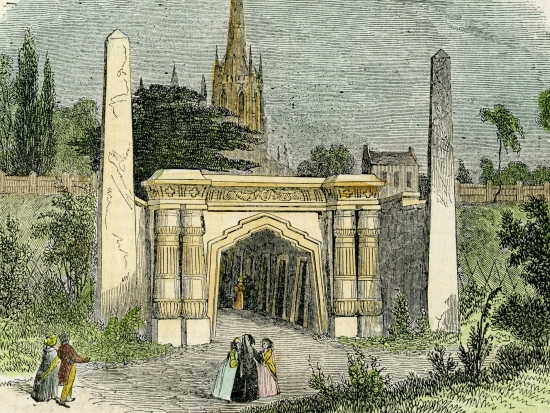
Unlike Highgate Cemetery in London, Radnor Street Cemetery is not a tourist destination. Plenty of Swindonians don’t even know of its existence. There are no elaborate mausolea, no Egyptian Avenue or Terrace Catacombs and although at first sight there appear to be large numbers of headstones, the vast majority of graves are unmarked.

The GWR Works opened in 1842 and employed more than 1,700 men twenty years later. At the same time a shortage of burial spaces in the town became of critical concern, but the Radnor Street cemetery was not opened until 1881.

Highgate Cemetery has been the setting for numerous books, several films and in the 1970s was subject to a bizarre vampire obsession. Radnor Street cemetery online archives include just a few early 20th century photographs and a 1980s music video filmed by Swindon music legend XTC.

Highgate Cemetery is famous for being famous; for the number of people of note and celebrities interred there. Radnor Street cemetery is all about working class history. The men who rose through the ranks of the railway engineering hierarchy and others who spent a lifetime on the factory floor in the GWR Works. Those men who served in two world wars and died as the result of their service. The women who trained as nurses, who taught in Swindon’s schools, worked in factories, shops and offices and raised large families who began the cycle all over again.

This is Swindon’s working class history – stories of the triumphs and the tragedies and the sheer hard work.

The Egyptian Avenue at Highgate Cemetery

Elsie Wootten White

The lost Alley family babies

It was my great good fortune to recently meet up with some overseas visitors researching the Alley family. Di, George and Kay are all descended from Frederick Alley and his wife Elizabeth. When we visited the couple’s grave in Radnor Street cemetery with local Alley family historian Wendy, we talked about their large family (18 children) and the seven who had died, whose burial places were unknown.

Originally from Westbury and Trowbridge the young couple arrived in Swindon in the late 1860s, appearing on the 1871 census living at 64 Cheltenham Street with their two sons, Frederick 4 and one year old Albert, both born in Trowbridge. Two children had already died.

So many of their lost children were born and died in between the taking of the 10 yearly census returns, but the visiting family members knew their names and all I had to do was discover where they were buried.

Eldest daughter Annie Phedora, born in 1865 who died in 1870 was buried in St Mark’s churchyard. George Martin, born in 1868 died in 1871 and was also buried at St Marks.

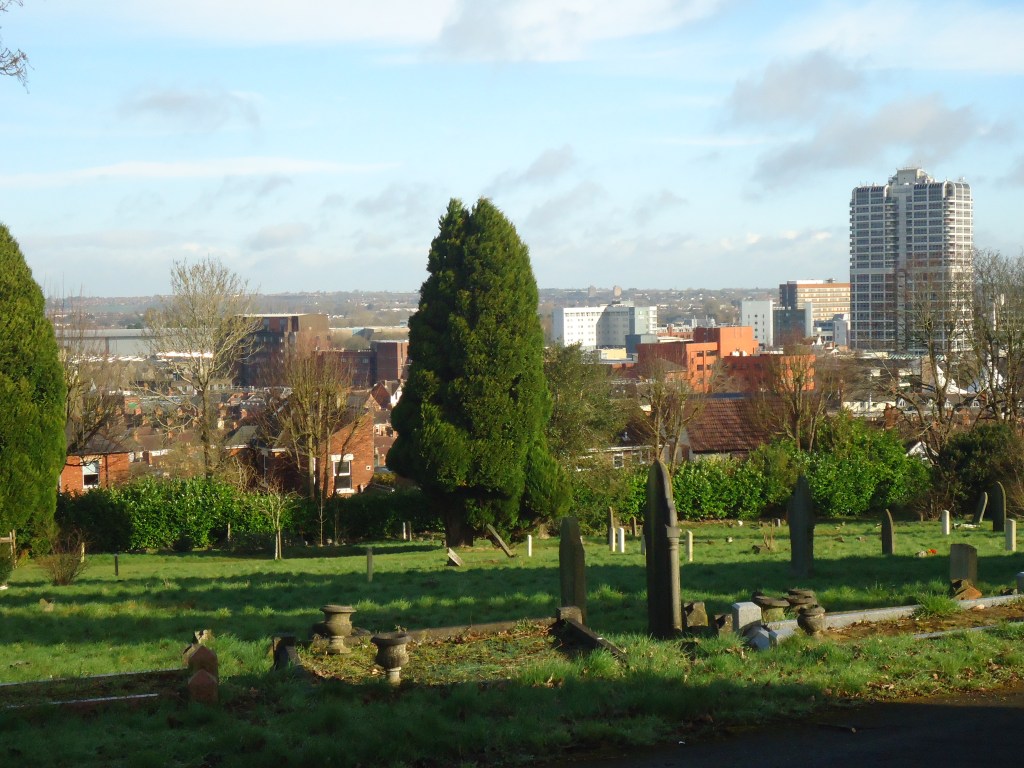
View of St Mark’s taken from the cemetery

Three boys and another little girl are all buried in Radnor Street Cemetery although, sadly not together.

Charles was 9 months old when he died in April 1883. He was buried in a public plot number A490 which he shares with six other babies and young children who died between 1883 and 1902.

Later that same year Frederick and Elizabeth lost another baby son. Sidney was only 16 hours old when he died in November 1883. He was buried in a public plot number A62 which he shares with two others; a girl aged 11 years who died in 1901, almost 20 years later. The third burial was that of a gentleman aged 89 who died in 1928, so again another long gap between interments.

Arthur was 11 months old when he died in November 1885. He is buried in plot number A110 with five other babies and young children who died between 1885 and 1915.

The family home at the time these babies died was at 65 Gooch Street.

Lizzie died aged 3 years old and was buried on January 1, 1891. She is buried in a public plot number B1922 with five other babies aged 2 – 13 months who died between 1891 and 1917. At the time of her death the family lived at 16 Princes Street.

Unfortunately, I have been unable to find the burial place of one remaining daughter. Elizabeth Maria was born in 1873 and died before her first birthday, but at least we now know where six of those seven little children are buried. I didn’t like the thought of them being ‘lost’.

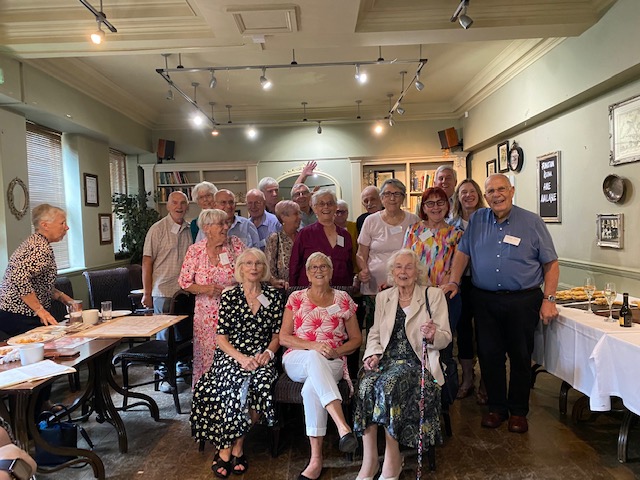
The Alley family reunion

Local history is a wonderful discipline. When I first began researching those buried in Radnor Street Cemetery I came across a fascinating family by the name of Alley. Fast forward some 15 years and yesterday I was a guest at the Alley family reunion where more than 30 members of the local family (plus Colin and his wife who travelled from Bedfordshire) gathered to celebrate their shared ancestry. The event was organised by Wendy and Christine who welcomed not only local cousins but Di and George from Australia and Kay from Canada.

It was an afternoon packed with stories and discoveries, fun and laughter. There were photographs and spread sheets and family tree charts that people were adding to and updating.

Di, George and Kay joined me on a cemetery visit to the grave of their common ancestors Frederick and Elizabeth Alley. We also paid a visit to the grave of George Richman Alley and his wife Emma and marvelled at the story of their seven daughters, one of whom was Emma Louisa Hull, suffragette.

I’m waiting for the reunion photos to circulate, which I will add to this blogpost, but meanwhile here is the story of Frederick and Elizabeth Alley.

As promised, here a few reunion photographs

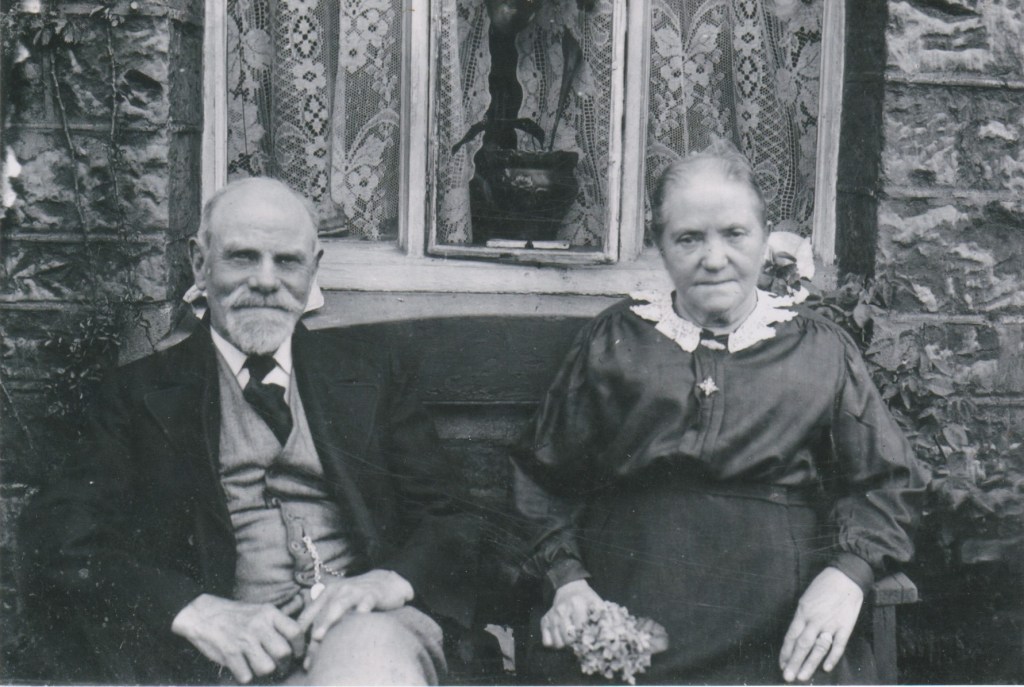
Frederick married Elizabeth Gould in 1864 in Trowbridge. He was 19 and she was 17. They had a very large family – 18 children, although sadly seven of them died in childhood.

Frederick and Elizabeth Alley

Frederick arrived in Swindon in 1868 to a home in Cheltenham Street and a job as a railway labourer, later becoming a machine man. He worked in the GWR factory for 51 years and when he retired he set up the GWR Retired Workmen’s’ Association.

The couple were members of the Baptist church where Frederick was a lay-preacher for more than 45 years and from 1890-1924 he was a Trustee of the Baptist Tabernacle.

Elizabeth died in 1927 aged 80. Frederick died the following year aged 83 at 45 Buller Street, the home of his daughter Ada.

Edgar Gould Alley

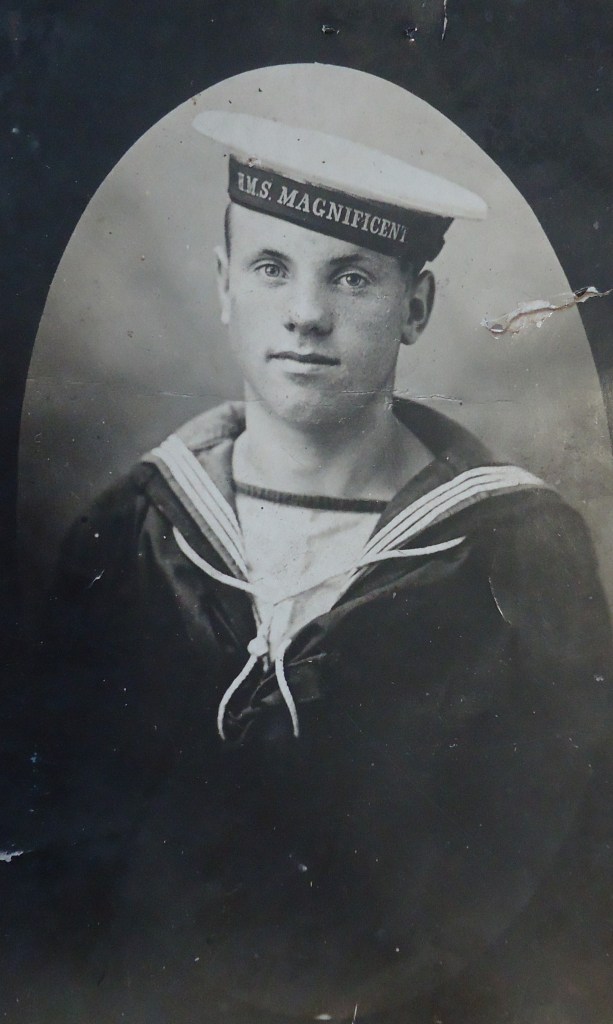
The couple had already purchased this grave ten years previously when their youngest son Edgar died in 1918. Edgar had joined the navy as an 18 year old in 1909, initially for a 12 year period. However, in the middle of his service war broke out. Edgar was invalided out of the navy in 1916 – family sources say he had suffered shell shock – and returned to Swindon and a job as an electrician in the ammunitions factory known locally as the Powder Works.

He died on November 28, 1918 suffering from broncho pneumonia and influenza. Edgar was 27 years old when he died. He left a widow and two young children.

Ada with her daughter Grace and sister Edith at the grave of Frederick Alley

George Ewart Hobbs – A Swindon Radical

We’re often asked if there is anyone famous buried in Radnor Street Cemetery. Well George Ewart Hobbs is definitely up there when it comes to homegrown brilliance. George was an example of a self taught man with an exceptional intellect. He left school at the age of 13 to begin a lifetime of working ‘inside’ (as the locomotive factory was called) as did every other schoolboy who lived in Rodbourne.

The UK Railway Employment Records 1833-1956 state his first job description was that of ‘boy.’ He would later become an apprentice fitter and turner, then a chargeman and eventually a foreman.

He married Agnes Ann Thomas in 1901 and the couple had two children Dorothy, and Ivor, who sadly died aged 2 years old.

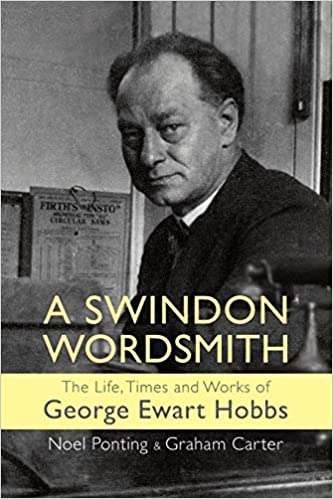
And I’m not going to tell you anymore about George as my friends Noel Ponting and Graham Carter have already done that in two meticulously researched and readable books – A Swindon Wordsmith and A Swindon Radical. Both books can be purchased in the Library Shop, Swindon Central Library or from the publishers Hobnob Press.

George Ewart Hobbs died on December 22, 1946 aged 63 years. He lies in an unmarked grave in Radnor Street Cemetery, which he shares with his young son Ivor and his mother-in-law Eliza Anne Thomas. His wife Agnes died in 1964 and was the last person buried in this family grave, plot number C3617.

William Bickle – inventor

The re-imagined story …

Have you ever thought how fortunate you are to be born in this place at this time? I could have been born 100 years ago or a 150 years from now. What would Swindon be like in the year 2001. Will the mighty GWR, God’s Wonderful Railway still be here in Swindon? Perhaps they will be producing other forms of transport, a time travelling machine perhaps.

Mother says I have some funny notions and how could I possibly have been born in the future. But surely it’s just a random act that a soul enters a body at a given time and place in history – but I suppose if you don’t believe in the existence of the soul, then it does all sound a bit phantasmagorical. I’m not sure what I believe in when it comes to religion. I think there are some things that are still inexplicable and science doesn’t have the answer to everything – yet!

I think my parents wish I was more practical. It’s all very good having these theories but they won’t put food on the table or pay the rent, mother says.

But surely the great inventors of our time are not just good with their hands. Take Mr Bickle, for example. Without a questioning mind how could he invent his double vibrating cylinder steam engine presently on exhibition at the Great Exhibition. Mother and father are going to take me to London in the school holidays. There are so many things I want to see in the Great Exhibition. I especially want to see the Lord of the Isles loco, which will be on display, but I also want to see Mr Bickle’s invention – apparently it is so small it will be displayed on a two inch counter space. Isn’t that incredible. I think that if anyone could invent a time travelling machine it would be Mr. Bickle – or possibly me!

The facts …

‘Daddy’ Bickle’s engineering treasure chest

15 May 1981 Swindon Evening Advertiser

Swindon’s reputation for high quality engineering goes back a long way.

Ever since the railway works were established alongside Brunel’s iron road to the West, generations of craftsmen have been producing the best.

So it’s not altogether surprising that a Swindon man had an exhibit accepted for the world famous Great Exhibition of 1851 at Crystal Palace.

The official catalogue says William Bickle, described as a designer and manufacturer of 18 Reading Street, exhibited ‘a working model of a pair of non-condensing steam engines, which stand within the compass of a shilling and weighs three drachms; made, with the exception of the piston rods, of fine white metal.’

Imagine in thos days when a man had little more than his own skills to depend on producing a working model which would stand on a five pence piece and weighed less than a quarter of an ounce.

A recent visitor to Swindon from Yeovil remembered meeting this remarkable man whose work was ranked so highly 130 years ago.

‘I knew him as ‘Daddy Bickle’ and used to go to his home – he had moved to Oriel Street – to look at all the wonderful things he had made said Stanley Richards, now in his upper eighties.

Stanley’s family lived in Medgbury Road and London Street, and Stanley was apprenticed in the railway works and later held important posts with the aircraft manufacturers Handley Page and Westland.

He remembers William Bickle as an outstanding engineer who made at least two microscopes, a gyroscope and his own geometric lathe which enabled him to produce many other pieces.

A beam engine expert employed by Harvey’s of Hale in Cornwall, Mr Bickle is believed to have moved to Swindon to instal the beam engine which kept the Severn railway tunnel free of water.

At one time he worked in the Spanish copper industry.

He became a railway man by adoption and left one example of his craft in the Mechanics Institute a working electric clock, unfortunately no longer in evidence.

Swindon – In addition to the locomotive engine now in course of erection in the Swindon works, and intended for the Great Exhibition, two other articles will be sent from this place, one of which is a double vibrating cylinder steam engine, the handiwork of Mr Wm. Bickle, one of the artizans employed at the Swindon works. So small is this article, that after being wrapped up in paper it can be placed very comfortably in an ordinary size walnut shell. The plate on which this Lilliputian piece of workmanship stands being about the size of a sixpence, yet we have been informed by competent judges that it is quite complete, and that the workmanship and finish are of a first rate character. We understand that two inches of counter space was applied for and granted for this model.

The other article is of a more practical character, being a model to exemplify an improvement in the valve gearing of steam engines. This article is now in course of manufacture by the inventor, Mr. W.D. Sharp, of Swindon.

Salisbury and Winchester Journal Saturday January 25, 1851.

Model of a High Pressure Oscillating Steam Engine, improved and constructed by William Bickle of Hayle Foundry. This model was intended to illustrate an engine of greater simplicity than any hitherto constructed. The steam enters the piston through one side of the tumbler in the cylinder, and leaves through the opposite side. This tumbler is so contrived that the oscillating motion of the cylinder opens and closes those passages at the proper time. All valves, eccentrics, and gear of every sort are therefore dispensed with, and consequently, the liability to derangement is considerably diminished. The speed of the engine is regulated by turning the cock fixed underneath the cylinder; the same cock also reverses the engine by admitting steam through the opposite side of the tumbler; consequently by turning this cock, a reversal of the motion is certain. This engine is therefore peculiarly applicable for whims, marine purposes etc, or where a reverse motion is often required.

As with so many of the 33,000 burials in Radnor Street Cemetery, William Bickle’s grave has no surviving memorial.

With thanks to the family historian bicklehe who has submitted information on a public family tree on Ancestry.

Radnor Street Cemetery Walk

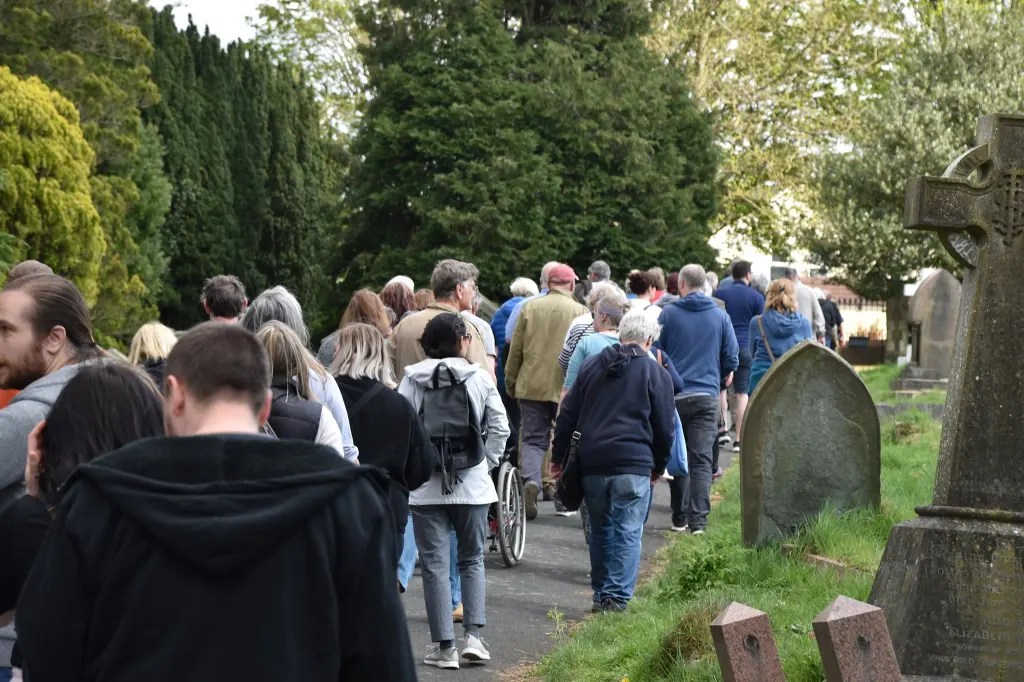
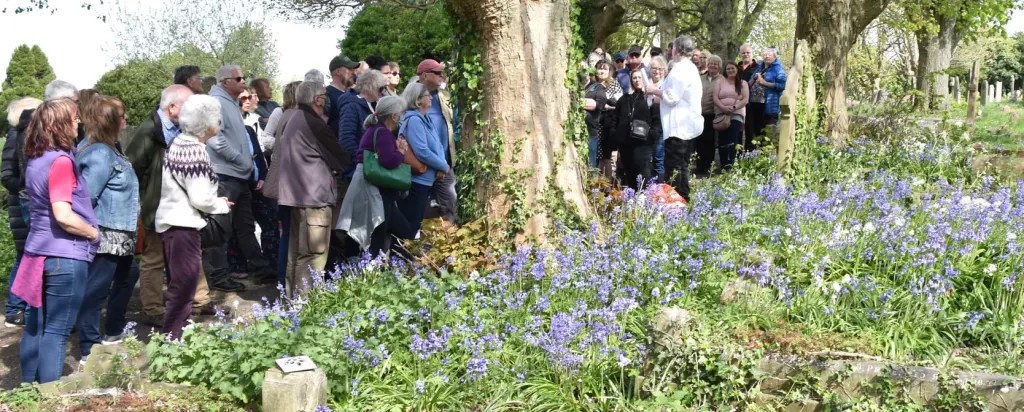
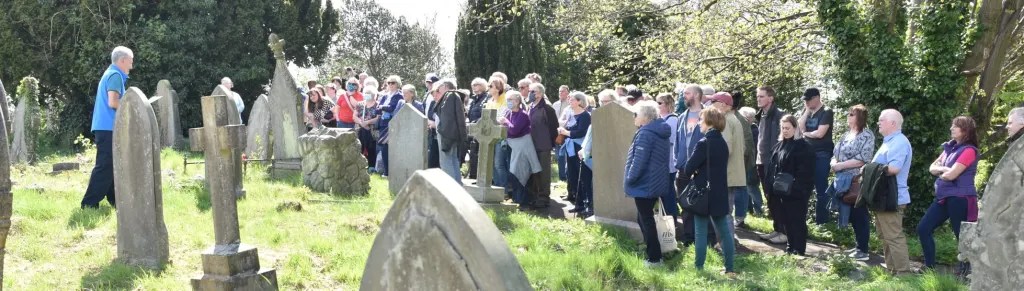
We were delighted (and somewhat overwhelmed) to welcome more than 90 visitors to the cemetery for our first guided walk in two years.

The sun shone, although there was a chill in more exposed areas, and cardigans and coats were donned at various points, but no one seemed to mind.

One local family joined us across their garden fence in Kent Road with waves and smiles, proving that a cemetery walk can include humorous interludes as well as respectful remembrances.

Our thanks to everyone who joined us and our apologies to those we didn’t get around to speaking to (or got called away mid-conversation). It was wonderful to see you all.

We will be publishing a list of dates for more walks during the summer months.

Our thanks to Royston Cartwright, Swindon history friend, for his photographs, published below.

Remembering Mrs Stanier on Mother’s Day

The re-imagined story …

Grace Stanier (2)

I have such wonderful memories of childhood Christmas’s. I suppose most children would say the same.

With five of us in the family, we didn’t have much, not like children today. We would hang our stockings on the bedposts on Christmas Eve and try to keep awake all night to wait for Father Christmas to come, but of course we never saw him. Does any child?

And on Christmas morning we took our bulging stockings beneath the bedcovers to keep warm as we opened them. There was always a tangerine and some walnuts and some humbugs and a little toy. I remember the year my brother Bert received a real guard’s whistle and blew it until I thought my ear drums would burst. Mother told him he wasn’t to blow it again until Boxing Day.

As soon as we could read, we received a book. Sometimes a character improving story like The White Feather but one year Fred received a copy of Treasure Island and I got a copy of Little Women!

And as members of the Congregational Chapel Sunday School we always received a little gift from Mrs Stanier. The Stanier family was very involved with the Chapel. We were all a bit frightened of Mr Stanier. He was a bigwig in the factory and you had to mind your ps and qs around him.  But we were all very fond of Mrs Stanier. We used to think she was very old but of course she wasn’t. As a child you can never imagine older people as they might have been when young; vibrant and vital with loves and lives of their own. You never take account of the sorrow and the losses they may have suffered. I suppose we didn’t consider her much at all.

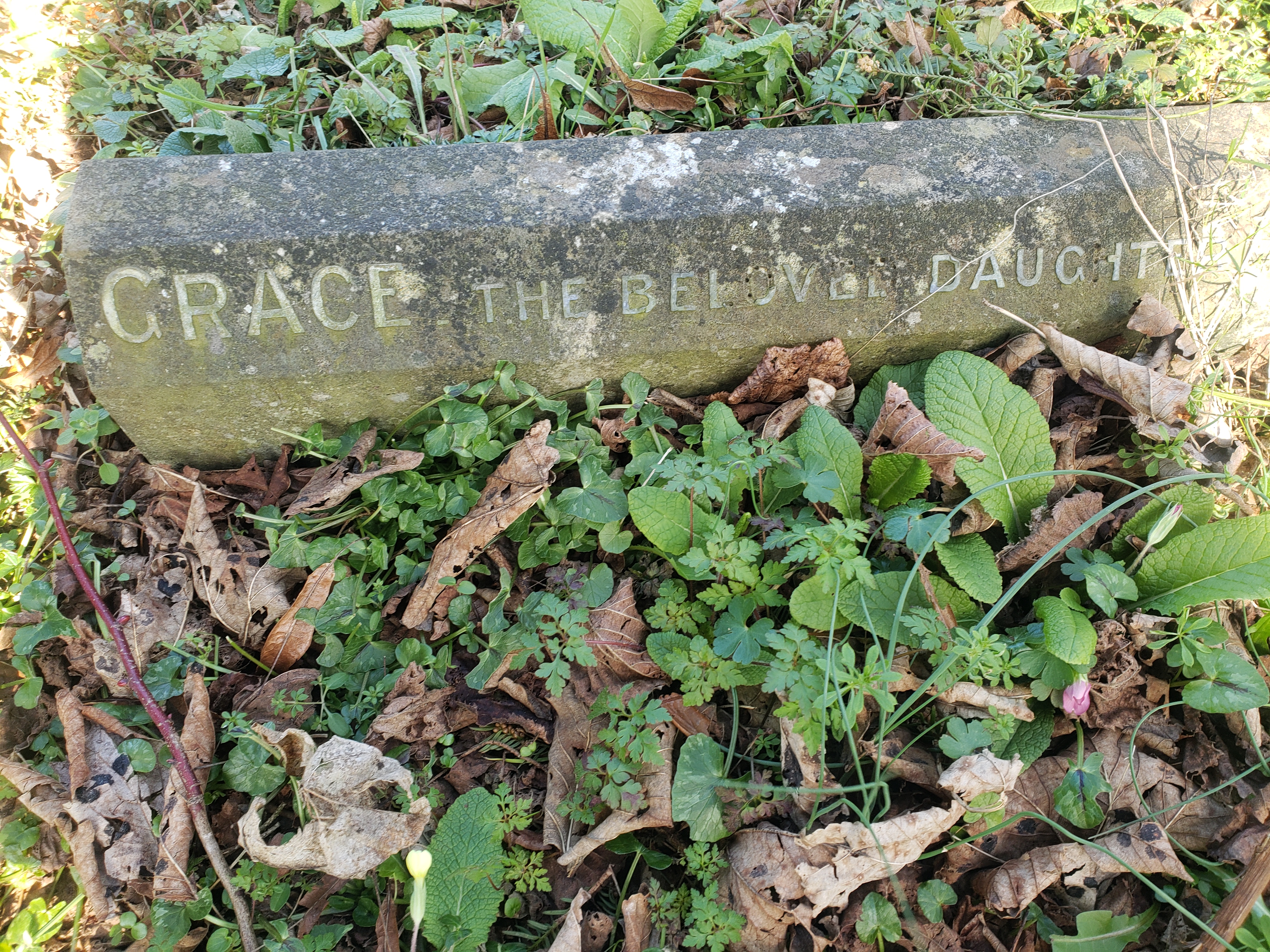
It was only after her funeral that mother told me she had been buried with her little daughter Grace who died when she was seven years old. Mrs Stanier had also lost two little boys, Francis John who was three years old when he died and Alfred, who was just a baby. She probably thought of those children when she wrapped up our gifts every Christmas.

The facts …

Grace Ball was born in Southport, Lancashire in 1847, the daughter of Robert Ball, a shopkeeper and farmer and his wife Ann. Grace grew up at North Moels and worked as a teacher in a small private school there.

Grace married William Henry Stanier in the Ormskirk registration district during the September quarter of 1875. By 1881 they were living at Church Place, Swindon with their three children William, Annie and Charles. The couple went on to have five more children but sadly three of these died in childhood. The couple’s last home together was at Oakfield, Bath Road.

The funeral of the late Mrs Stanier, wife of Ald. W.H. Stanier, of “Oakfield,” Bath Road, Swindon, took place on Tuesday afternoon, and evidence of keen regret and deep sympathy was everywhere apparent.

At 2.30 pm an impressive service was commenced at the Sanford Street Congregational Church, of which the deceased lady had been a prominent member. As the procession entered the building, “O Rest in the Lord” was played on the organ. The service was conducted by the Rev J. Stroud Williams (Pastor), and the Rev T. Garbutt Vinson (Pastor of the Victoria Street Congregational Church). The hymns, “Light after darkness,” and “When the day of toil is past” were sung during the service, and the Dead March in “Saul” was played as the procession slowly filed out of the building.

During the service the Rev Stroud Williams said: We little thought a few days ago when we met in this Church on a similar occasion that we should meet here to-day. Our sister, greatly beloved, has been called to her rest, after a long and painful illness. Her departure leaves a keen sense of loss and bereavement behind. We cannot estimate the loss. Hers was a bright, sunny soul. In early years she came to know Christ as her Saviour, and consecrated herself and her life to His service. In very many ways she sought to help forward His work. She was full of cheerfulness and strong hope, and that cheerfulness and hope bore her through all the years of weakness and of pain, and when the call came it did not find her unprepared. She knew in whom she believed. She knew she was going to Christ. “Blessed are they that die in the Lord.” Why should we be sorry? Our sorrow is not sin. It is manly, it is Divine. For Jesus Himself wept at the graveside. We sorrow, but not as those who have no hope of a reunion. We see only the going down into the valley, and not the climbing up the hill of God and the entrance into life. Our sister has seen the face of Christ. She knows what she longed to know. We are thankful for the memory that she has left behind, and we pray for the grace that we may follow as she followed Christ.

At the graveside the committal sentences were said by the Rev. J.S. Williams.

The inscription on the coffin was as follows: “Grace Stanier, died 10th November, 1905, aged 58 years.”

The chief mourners were Mr W.H. Stanier (husband), Messrs. W., C., and G. Stanier (sons) Misses Stanier (daughters), Mrs C. Stanier, Mr and Mrs H.A. Stanier, Miss B. Stanier, Mr T.W. Stanier (Newcastle), Mr and Mrs H. Hill, Miss Hill, Miss Morse, and Mr E. C. Riley.

Others following were: …

The following were present representing the GWR Loco and Carriage Department Staffs: Messrs. J. Lockyer, J.W. Rose, W.H. Adams, C. Godsell, W.J. Burleigh, and John Clark. The Stores Department was represented by Messrs W. Jones, J. Wood, E.H. Page. A.H. Dunn, J. Dowling, V.R. Daines, J.H. Barker, A.H. Jervis, W. Davies, W.S. Clark, C.T. Smith, W.J. Smith, A. Tyler, H. Brown, F.J. Etherington, C.A. Plaister, H.J. Edmonds, R. Brock, J. Hart, D. Sheward, A.J. Rolls, F.S. Westlake, E.A. Blackman, J.W. Smith, S.F. Adams, C.E. Barker, J.E. Lockyer, and H.L. Smith.

Councillor George Brooks was unable to be present in consequence of his having to attend to some business in London that day, in the place of Mr Stanier.

Many members of the Sanford Street Congregational Church were also present.

The funeral arrangements were carried out by Messrs Chandler Bros of Wood Street, under the personal direction of Mr J.H. Chandler.

Extracts published from The Swindon Advertiser, Friday, November 17, 1905

Mrs Stanier was buried in plot A2508/9 in a double plot where she lies with her young daughter Grace who died in October 1890 aged 7 years. On the other side of the footpath lie her two young sons, Francis John and Alfred, buried in plot A188.

You may also like to read:
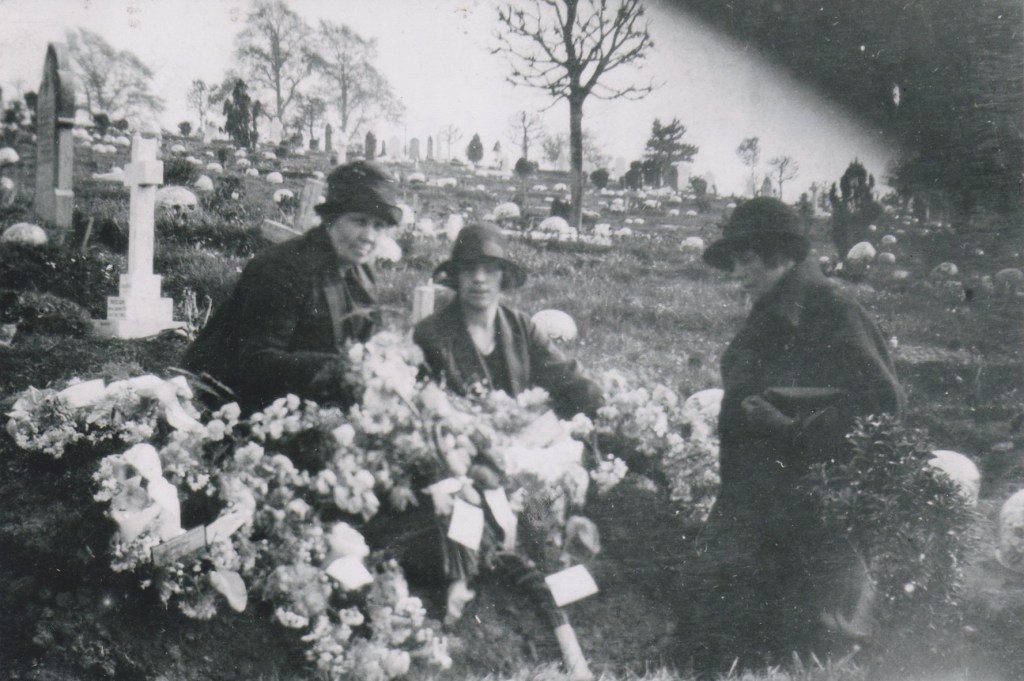
Francis John and Alfred Stanier

Alice Arman and Women’s History Month

There have been an awful lot of words written about Queen Victoria, but it always come back to just how tall (or small) she was. You probably know that she was lacking in stature, something she frequently mentioned herself. It’s one of the facts of her life still talked about today. She had nine children, she was not amused and she was – how tall, 4ft 10ins, 4ft 11ins. In fact, she was probably a little over 5ft.

So what does Alice Arman have in common with Queen Victoria?

Well, she had 4 children not 9 and she didn’t become Empress of India neither was she the subject of countless books, TV series and films. Alice Arman quietly (or maybe loudly) spent a lifetime of service to the people of Swindon, which is now lost and forgotten. There does remain however this rather spectacular photograph of Alice in which she doesn’t look particularly small (or tall).

So which women of history would you like to meet during Women’s History Month. I’ve got a very long list, and I’d also rather like to have met Alice Arman.

The facts …

Alice was born in Oldham in 1857, the daughter of Jacob and Elizabeth Schofield. She married William Fairclough at the church of St Wilfrid, Standish, Lancashire on July 16, 1883. At the time of the 1891 census Alice and her first husband, William Fairclough, were living at 3 East Vermont Street in the Govan district of Glasgow with their three children, Mary, William and Alice. A fourth child, Norman was born in 1891 but died before his first birthday. The family moved to Swindon in around 1893 when William secured a job as a boilermaker in the Works.

Industrial New Swindon probably looked quite familiar to Alice who had grown up in Oldham, Lancashire where her parents ran a greengrocer’s shop. But sadly the move to Swindon didn’t herald a brave new future for the family as William died that same year.

In 1896 Alice (sometimes known as Alison) married widower Thomas Arman. The couple lived first in King Street where Thomas was employed as a carpenter in the GWR Works and Alice worked as a trouser machinist. Her son William lived with them along with Thomas’s three children by his first wife, Alfred, Mabel and Rosie. On the 1911 census Alice and Thomas Arman are living at 15 Lowestoft Street with Thomas’s daughter Rose Mary Arman and Alice’s daughter Mary Elizabeth Fairclough. Alice’s occupation is described as ‘part time student.’ I hope this is correct and not an error when the census return was filled out. I love the thought that Alice is studying at the age of 50.

In 1909 Alice was involved with the Bridge Street Men’s Adult School. An article published in the Swindon Advertiser on February 26, 1909 reporting on a recent meeting when ‘at the Social Hour at eight p.m. Mrs A. Arman read, by request, her paper entitled “From Gypsy Lane to the Workhouse” to an appreciative audience’ a subject no doubt informed by her work with the Poor Law Board of Guardians.

In 1894 the Local Government Act enabled the election of women to the Poor Law Board of Guardians for the first time. In Swindon Maria Matthews, Elizabeth Williams, Elizabeth House and Elinor Buller were the first four women to serve as Guardians. At the beginning of the 20th century Alice was also elected a member. We know she served as a Guardian for several years because an election in 1922 produced some shock results. Seven of the old members were defeated including Mrs Elizabeth Williams, the Deputy Mayor Alderman E. Jones and Mrs Alice Arman.

Alice continued with her community work after the First World War when she served as secretary of the Comrades’ Club, which met at Bridge Street.

In 1920 Alice unsuccessfully stood as one of six Labour candidates in Swindon’s local elections, however, her political colleague Mrs Ellen Anglesea Tanner won the West Ward seat for the Labour party.

Alice died at her home in Princes Street aged 68. She was buried three days before Christmas 1927 in plot C24a in Radnor Street Cemetery. She is buried alone with her first husband William Fairclough remembered on her headstone.

A special baby

The re-imagined story …

He was a bonny baby – and he was in such a hurry to get here. My pains began in the early hours of the morning and he was here before George left for work. There was barely time to send for my mother.

And he was so quick to do everything. Quick to smile – and oh what a smile that boy had – enough to melt your heart. Quick to sit up. Quick to start crawling.

“That boy is in a hurry to grow up,” said George. “Perhaps I should put his name down for the Works already.” We laughed.

Then one day he seemed different – as if someone had dimmed the light that shone from within. His cheeks developed two pink patches, but it wasn’t a bloom. I’d seen that look before.

That last night I paced the floor with him in my arms until his cry became a whimper. Then I sat in the chair by the window and looked across the darkened rooftops to the Works. I knew he’d gone.

I wondered how I could carry on. Prayers were of little comfort, but perhaps they helped Freddie on his way. In the cold December morning I wondered how the baby Jesus had survived, born in a stable in the middle of winter. I suppose he was a special baby but my Freddie was a special baby too.

We buried Freddie on December 24. I wondered if it was cold in Bethlehem that day, when Mary and Joseph were looking for somewhere to sleep, their baby already on his way. It was bitterly cold in Swindon the day we buried Freddie.

The facts …

Frederick Wm. George died on December 21, 1881 at 21 Sanford Street. He was 9 months old. He was buried on December 24 in plot number E6991, a public grave. After Christmas on December 31st he was joined by Minnie Elizabeth Purnell, a one year old infant from 19 Oriel Street. The two babies would lie together for more than 20 years until Matilda Pound, the wife of Thomas Pound from 44 Avenue Road joined them.