Call yourself a Swindonian?

Can you call yourself a Swindonian? Many an argument has ensued about how long you have to live in Swindon before you’re considered a local; 20 years, 30 years, 2 generations – or more?

Walter Rumble was born in Chieveley, Berkshire in 1864 and began his working life as a Carter Boy (a farm servant). In 1890 he married Annie Caines and by the time of the 1891 census the couple were living at 128 Stafford Street. Walter worked as a general labourer, most probably in the GWR Works where he remained for the rest of his working life.

Yesterday I met Walter’s great-grandson at the Swindon Society Open Day held at the Lawn Community Centre, Guildford Avenue. There were displays from the Society’s extensive photographic collection (including the many albums of Beaney photos) talks about Alfred Williams and Radnor Street Cemetery and more local historians on call than you could shake a stick at!

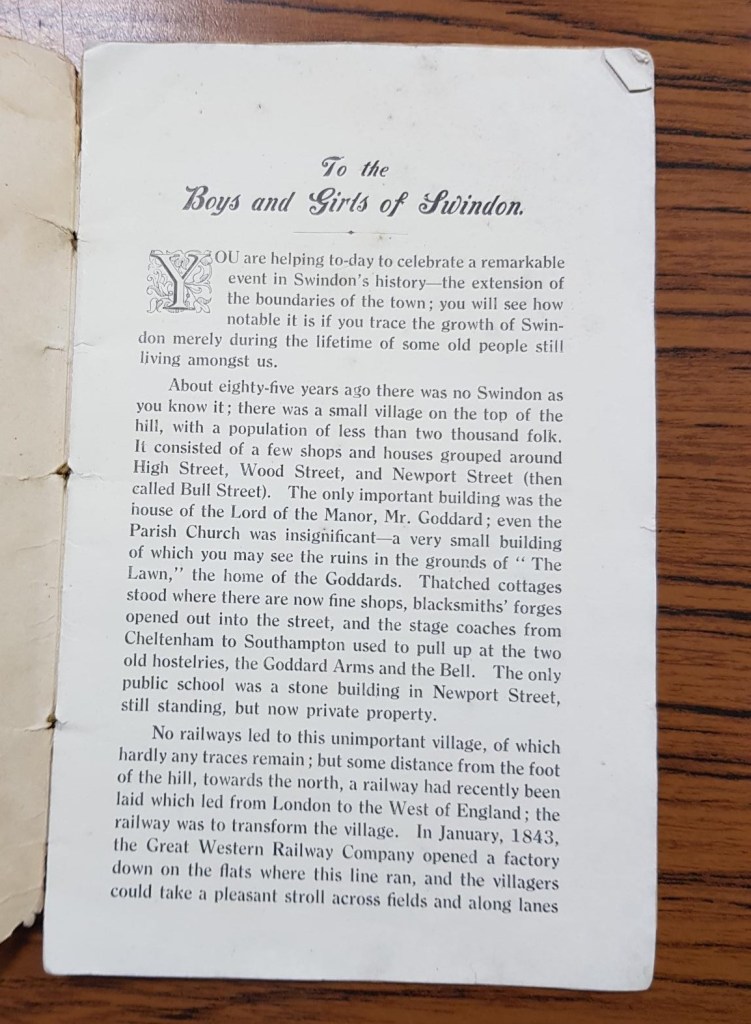
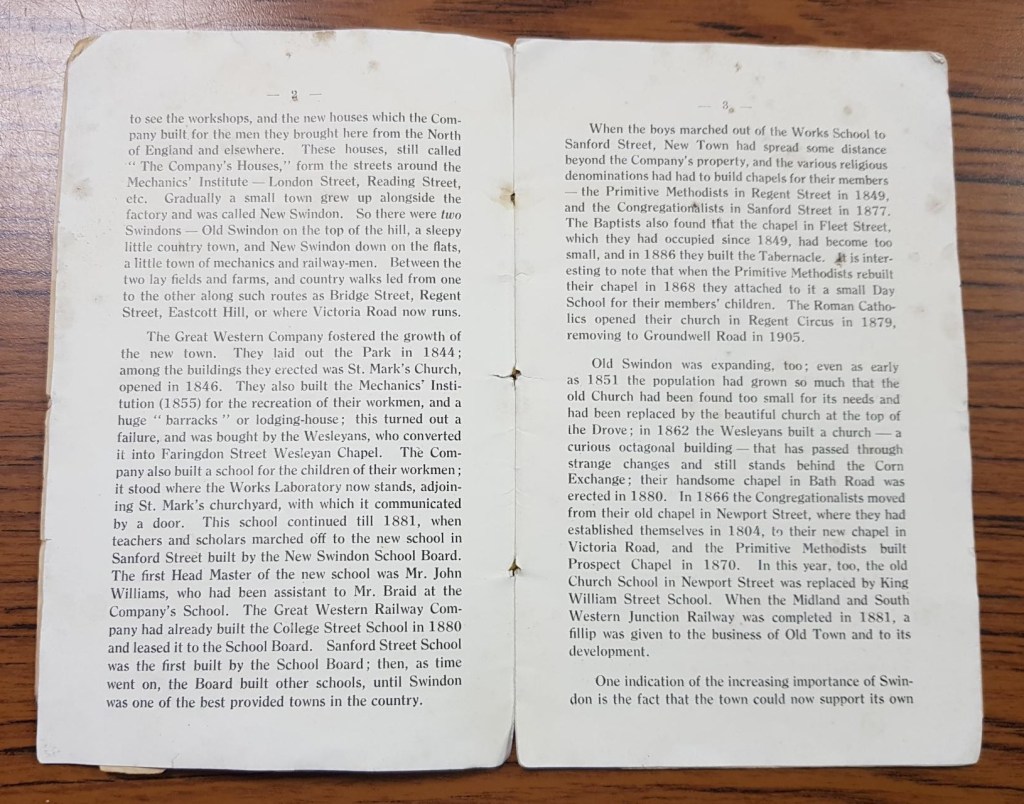
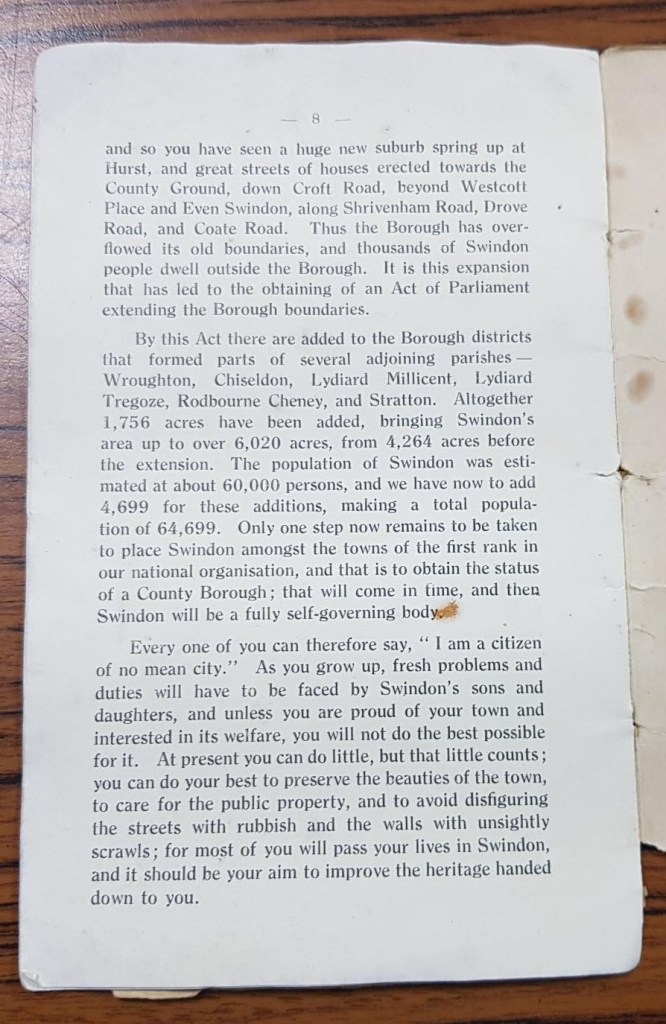
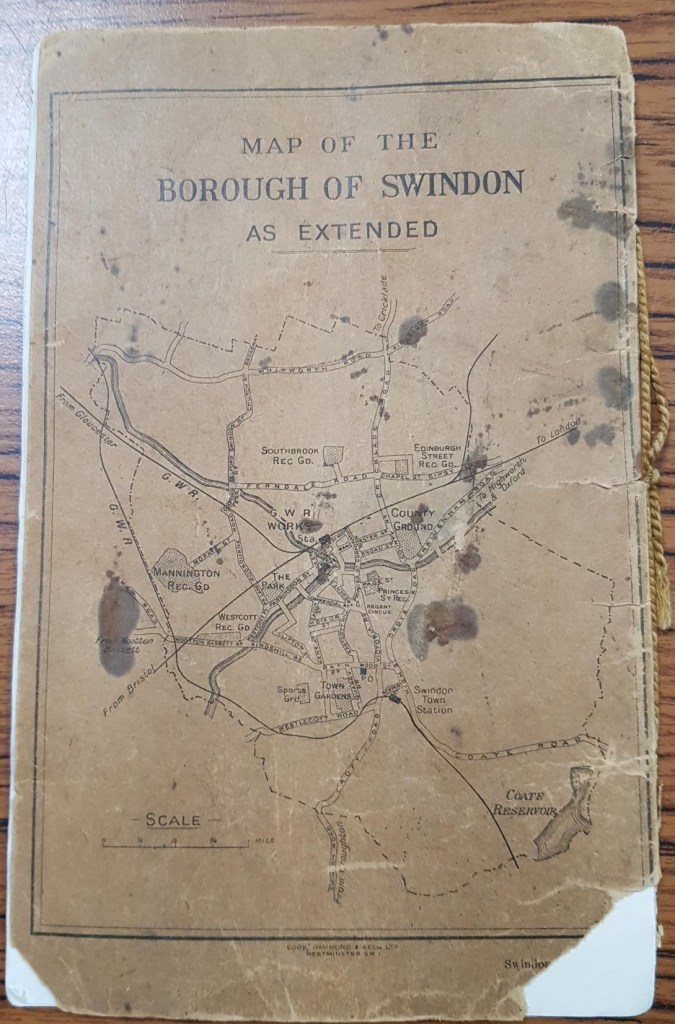
And then Mr Rumble showed me a booklet his father was presented with as a schoolboy in 1928 – Borough of Swindon – Extension of the Borough 1st October 1928.

Walter and Annie lived at various addresses in Stafford Street where Annie died at No. 105 in 1926. She was buried in Radnor Street Cemetery in grave plot D826.

Walter later lived with his son Frank and daughter-in-law Violet at 134 Ferndale Road where he died aged 80 and was buried with his wife in 1944.

I think members of the Rumble family can consider themselves Swindonians – but what about you?

Edward Thomas William Robins – Swindon Veterans of Industry

In December 1930 more than 200 men retired from the Great Western Railway Works, an event of such importance to warrant a detailed article in the first January edition of the North Wilts Herald published in 1931.

The names and addresses of those men forced to retire under the introduction of the 66 years age limit were recorded in appreciation of their long years employed in the Works.

Mr E.T.W. Robins – A large number of different interest have claimed the attention of Mr. Robins. He has had 52 years’ service as a fitter with the GWR Co., and has been a chargeman for 37 years, working as a fitter in the B Erecting Shop.

He is now 66 years old. A Londoner by birth, he has lived in Swindon since he was a child.

Mr Robins was one of the first secretaries of the Swindon Hospital Saturday Fund in 1894 and 1895, and has also been a member of the Hospital Management Committee.

He has done a great deal of church work at St. Mark’s, Swindon.

He is a member of the Foresters (Court Britain’s Pride). He was at one time secretary of the Swindon Chrysanthemum Society.

Swindon Veterans of Industry – North Wilts Herald, Friday, January 2, 1931.

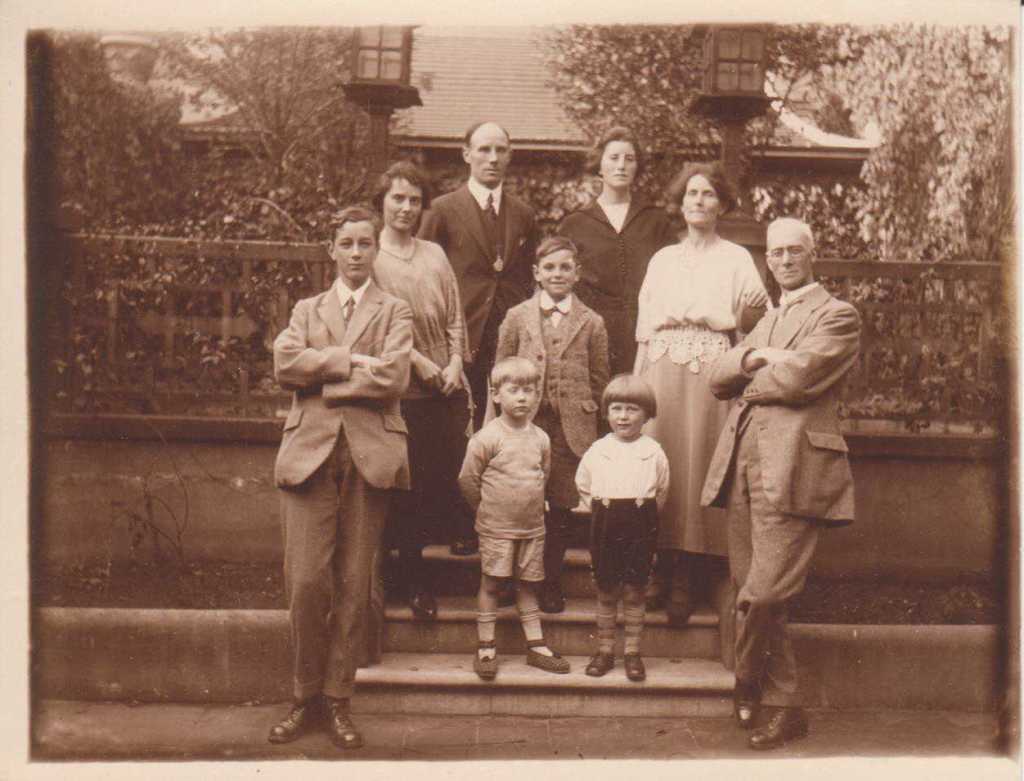
Agnes and Edward Thomas William Robins are pictured to the right of the photograph

Edward Thomas William Robins was born in March 1864 and baptised at St. Stephen’s Paddington June 26, one of Thomas and Henrietta’s 11 children. The family appears on the 1871 census as living at 16 Reading Street.

Edward married his first wife Hannah Williams on February 10, 1889 at the Independent Church, Victoria Street. Following her death he married his second wife Agnes Thomas at St. Mark’s on April 17, 1897. The couple had two sons Thomas Arthur and Cecil.

Edward Thomas Wm Robins died aged 82 years and was buried on March 25, 1947 in grave plot B3102 where Agnes joined him when she died in 1948.

Herbert Pinnegar – killed at work aged 14

Emma Pinnegar’s five sons all followed their father into the railway works. Francis and Ernest became fitters, Nelson a blacksmith and Levi a coppersmith. Her youngest son Herbert had been employed just a few months when he was killed at work one Monday afternoon.

Herbert was working in D Shop “cutting of tyres for the wheels of railway carriages.” He was rather short sighted, according to the newspaper report, and working with heavy machinery. Do you suppose he was wearing glasses? I doubt it. Do you suppose anyone was supervising him? I doubt it.

In Swindon Works – The Legend, Dr. Rosa Matheson devotes a chapter to accidents. She writes: “The causes of accidents could be put down to a number of things – workers’ carelessness, difficult and horrendous conditions, over work, inexperience, lack of supervision, inattention, youth, old age, bad luck.”

It would seem young Herbert ticked a number of these boxes.

The railways brought employment and prosperity to Swindon; the railways brought life and they also brought death. Emma’s husband had been killed ten years previously walking home to Purton along the railway line. It appears he had been doing some shopping in Swindon that evening after work – it was the week before Christmas.

Fatality at Swindon

A terrible fatal accident occurred in the D Shop of the GWR Works on Monday afternoon. A lad named Pinnegar, aged about 14, was engaged upon a machine for the cutting of tyres for the wheels of railway carriages. Pinnegar, who was rather short sighted, was looking down to see if his work was placed in a right position, when going too near the large wheel, he was knocked down between the chisel and another part of the machine. The top of the poor boy’s head was cut completely off. Death, of course, was instantaneous. Deceased’s father, about six years ago, was killed on the railway while returning home from work.

The Bristol Mercury, Wednesday, September 16, 1891.

Herbert was buried in Radnor Street Cemetery in grave plot B1592, a public grave. He is buried with three other unrelated persons.

Fatal Railway Accidents Near Swindon – Between twelve and one o’clock on Saturday morning the stoker on a goods engine passing the Rifle Butts, between Swindon and Purton, saw what he thought to be the body of a man lying by the side of the rails. On search being made the body of a man named Frank Pinniger, a boilersmith in the Great Western Railway Works, but living at Purton, was found. He had been in Swindon shopping on the previous night, and left Rodbourn Lane about eleven o’clock to walk to his home down the line. The night was rough and windy, and it is supposed he was struck by the 11.20 mail train from Swindon. His body was removed to the mortuary at Swindon to await an inquest. Deceased was between 40 and 50 years of age, and leaves a wife and eight children.

The Stroud News and Gloucestershire Advertiser Friday, December 24, 1880.

Frank was buried on December 24, in St. Mark’s graveyard ‘by Coroner’s Order.’

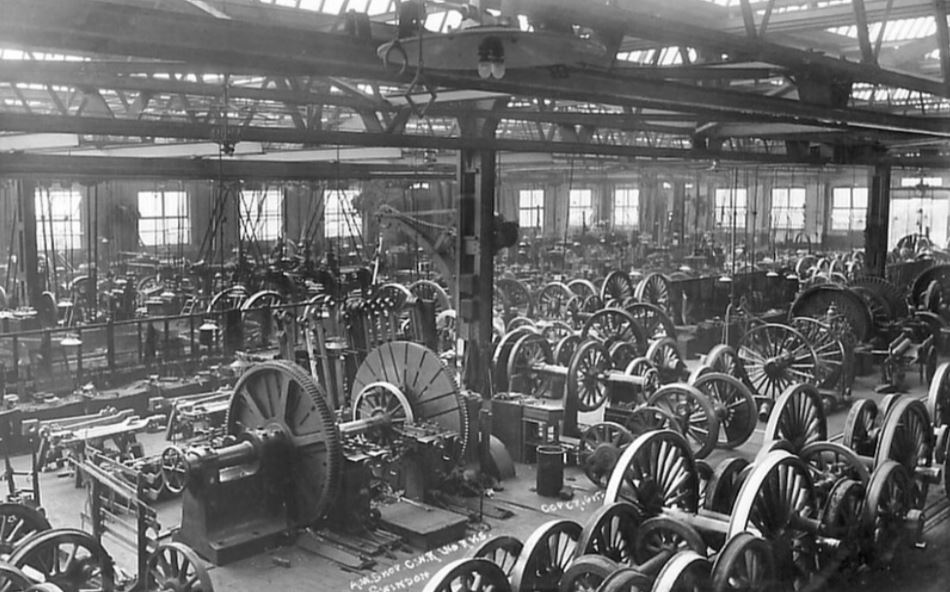
A William Hooper image of A W Shop taken in 1907 and published courtesy of Local Studies, Swindon Central Library.

Ben Lawson Hook – Fitter’s apprentice

Do you have a 15 year old son? Maybe you have a 15 year old grandson. He’s probably still in bed as you read this or perhaps, he’s playing some online computer game with his mates.

On Tuesday May 7, 1895 15 year old Ben Lawson Hook was at work in the R Shop (Loco Department) at the GWR Works. He was 18 months into a 6 and a half year Fitters apprenticeship. But that day he was mucking about, as 15 year olds are wont to do. A witness at the inquest said the boy ‘had no business to be swinging on the tyre’ (the metal wheel or tyre weighed 9cwt 15lbs and was in the yard outside the shop).

Ben Lawson Hook was born on June 8, 1879 one of Frederick and Elizabeth Hook’s large family. Frederick was from Eastbourne and the family lived in Bexhill for sometime before moving to Swindon in the late 1870s. Elizabeth died in 1892 and Frederick in 1894. By the time of the 1901 census 17 year old Sidney was recorded as head of the household, living with his sisters Millie 30, housekeeper, Caroline 28, tailoress, Katie 23, laundress and 9 year old Norah. But this was more than five years after the tragic events of that day in May, 1895.

At the inquest held in the Cricketers Arms on Thursday May 9, 1895 the jury returned a verdict of “Accidental death.” No blame being attached to anyone.- Mr J. Fordyce Stephenson was present to watch the case on behalf of the GWR authorities. The boy was buried the next day.

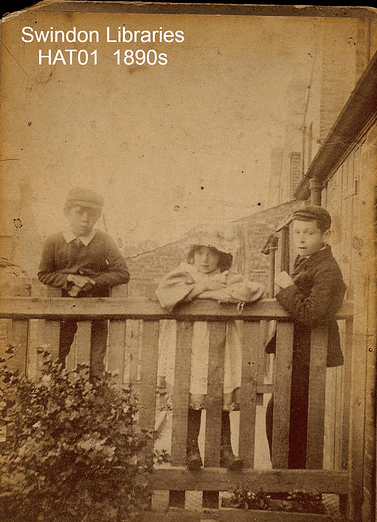
Image published courtesy of S.C. Hatt Local Studies, Swindon Central Library.

Fatal Accident to a Boy in the GWR Works – On Thursday afternoon, Mr W.E.N. Browne, County Coroner, held an inquest at the “Cricketers’” Arms, New Swindon, on the body of Lawson Hook, aged 15 years, of Maxwell street, New Swindon, who was killed on Tuesday last.

Deceased was employed in the R Shop (Loco Department) of the GWR Works. It appears that deceased and two other boys were amusing themselves in various ways, and deceased swung himself on to a large wheel, weighing over nine cwt., which over balanced and fell on him, inflicting such serious injuries that he died three hours later.

Mr Alfred Adams was chosen foreman of the jury, and after viewing the body, which was lying at the GWR Medical Fund Hospital, the following evidence was taken. Mr. Frank Apted produced a plan of the place where the accident occurred, and a sketch showing how it happened. – Robert Hook, brother of the deceased, identified the body.

David Turnbull was the next witness. He said he saw the boy swinging on a large wheel or tyre – one of 34 which were resting against the wall. He saw the wheel overbalancing, and shouted out, “Good gracious, that boy will be killed.” The wheel fell across deceased’s thighs, and he immediately hurried to his assistance. With assistance he removed the tyre, and deceased was at once taken to the hospital. Deceased had no business to be swinging on the tyre; it weighed 9cwt 15lbs, and was in the yard outside the shop.

Wm. H. Green, an apprentice in the GWR Works, said he saw deceased swinging on the wheels or tyres. Just after witness left him the accident happened, and witness heard deceased groaning. Witness went back and tried to lift the tyre off deceased, but could not do so, and Mr Turnbull and three or four other men came up at the time.

Dr Crowther, assistant to Dr Swinhoe, said he was called to the hospital to see deceased. He was suffering from collapse, and died three hours later from shock to the system.

The jury returned a verdict of “Accidental death.” No blame being attached to anyone.- Mr J. Fordyce Stephenson was present to watch the case on behalf of the GWR authorities.

The Swindon Advertiser, Saturday, May 11, 1895.

Lawson Hook was buried in a public grave in Radnor Street Cemetery on May 10, 1895. He shares the grave with his two sisters. Clara Hook who died in November 1897, aged 15 years old. Millie Hook, who held the family together after the truly awful 1890s, and died in March 1909 aged 38.

Frederick and Elizabeth Hook are buried in a public grave, plot B1711 with their daughter Nora who died aged 16 years of age in the Stratton Infirmary, also in March 1909.

Charles Edmonds – shunter

In May 2024 I attended the Friends of Swindon Railway Museum’s monthly lecture, entitled ‘Into the Jaws of Death – working and dying on Britain’s railways 1900-1939,’ delivered by Mike Esbester from the University of Portsmouth. The subject was the danger railwaymen faced on a daily basis whether working on the trackside or in railway factories such as Swindon Works.

One of the facts Mike raised was that saftey both on the line and in the factories was considered by the railway companies to be largely a matter of personal responsibility. Despite the incredibly dangerous nature of the work, employees were expected to look out for themselves.

The following account records the extreme stoicism of Charles Edmonds, a shunter, who stepped between the buffers to couple up two engines. Despite his injuries he walked to the accident hospital and then home to Princes Street, a distance of approximately a mile.

Fatal Accident at the GWR Works

Mr J.B. Baker, coroner, held an inquest at the Red Cow Princes-street, on the body of Charles Edmonds, 48, shunter, who resided at 51, Princes-street, and who died on the previous Saturday night from injuries received whilst following his usual employ, which he had been engaged in many years, at the west yard of the GWR Works, on the 11th inst. It appeared to be generally admitted that death was the result of a pure accident.

The jury, of whom Mr W.E. Morris was foreman, having viewed the body, proceeded to hear the following evidence:- Felix Hale, 52, Bath-street, engine driver, said he knew the deceased, who was employed as a shunter in the GWR. On the morning of the 12th of October, at 9-45, they were engaged together shunting some engines. The deceased got in between the buffers to hook them on. When he had done so the engines rebounded and thus caused a space between the buffers. The deceased attempted to pass through these, thinking there was time, but the chains suddenly tightening the engines rebounded and he was caught. Witness said he did not know for certain that deceased was caught, as he saw him put his hands up. He remarked to his mate on the engine “Well, if Charley was not caught then he had a narrow escape.” As deceased did not come out witness got off his engine to go and see for him, and found him leaning against the coupling. He asked him how he came to try and pass through the buffers like that, and he answered that he thought he had time. With assistance deceased walked to the hospital and home.

By the Jury: There were hooks for shunters on the line, but not for engine shunters, the couplings being different. If deceased had stopped instead of trying to go between the buffers he would have escaped. Deceased was a man of experience.

John Hunt, Brunel-street, foreman of the “A” Shop, GWR Works, said Brown, the fireman for the last witness, told him of the accident and he went and found deceased sitting in the watchman’s cabin. He asked him if he was hurt very bad, to which he replied that he did not think he was. He asked him how it happened, to which deceased replied that he got between the engines to couple them, when one touched the other and sent it the length of the chain, thus leaving room for him to pass out, but as he was doing so the engine rebounded and caught him, but only for a moment, as he was instantly released. Deceased declined the use of a chair to go to the hospital, preferring to walk.

In answer to the Foreman, witness said there was no appliance for coupling engines without going between, as there was with trucks. In the Works they had so many classes of engines and tenders that they were bound to connect them by hand. It would have been all right if deceased had stooped under the buffer.

Dr. C. Spackman (Messrs. Swinhoe, Howse, and Bromley) said he saw the deceased when he came to the hospital on the morning of the accident. He said he had been “nipped” by the buffers, but did not appear to be in much pain. There was no abrasions or broken bones. He gave him a little stimulant, and deceased said he could walk home. Dr. Bromley saw him later in the day, but could find no sign of injury. It was impossible now to say the exact cause of death; there was no doubt internal injuries, and also injuries to the spine, as paralysis of the legs followed in a few days. He, however, rallied once or twice, and it was thought he would recover. He could take all kinds of food.

The Jury at once Returned a verdict of “Accidental death.” As it was said he had left a family of eight children, the Jury made a collection for the widow.

Swindon Advertiser, Saturday, October 31, 1885.

Charles Edmonds was buried on October 30, 1885 in an unmarked, public grave plot number A151 with three other unrelated persons.

PolluxHawthorn Class 2-4-0 built in Swindon Works in 1866.

Photograph published courtesy of P.A. Williams and Local Studies, Swindon Central Library.

Mike’s lecture was both compelling and revelatory. To discover more visit www.railwayaccidents.port.ac.uk.

And if you would like to join the Friends of Swindon Railway Museum visit their website. http://www.fosrm.org.uk/

Rivet boy killed in horrific accident

Working in the GWR factory was a dangerous affair. Serious injuries were commonplace and even fatal accidents occurred such as the one that highlighted poor safety practise in the works in 1896.

Fifteen-year-old Matthew William Fox Burton had been working as a rivet boy for just seven weeks when he was involved in an horrific accident early one Tuesday morning. Matthew – known as William – was the second son of Matthew and Mahalah Maud Burton. He was baptised at St. Mark’s Church on August 9, 1880 when his father’s occupation was given as Engine Fitter. And like just about every other boy living in New Swindon at that time, William followed his father into a job in the railway works.

His duties as a rivet boy included cleaning out the rivet forge when on that morning an hydraulic pressure riveter weighing 35 cwt, suspended by chains from an overhead crane capsized.

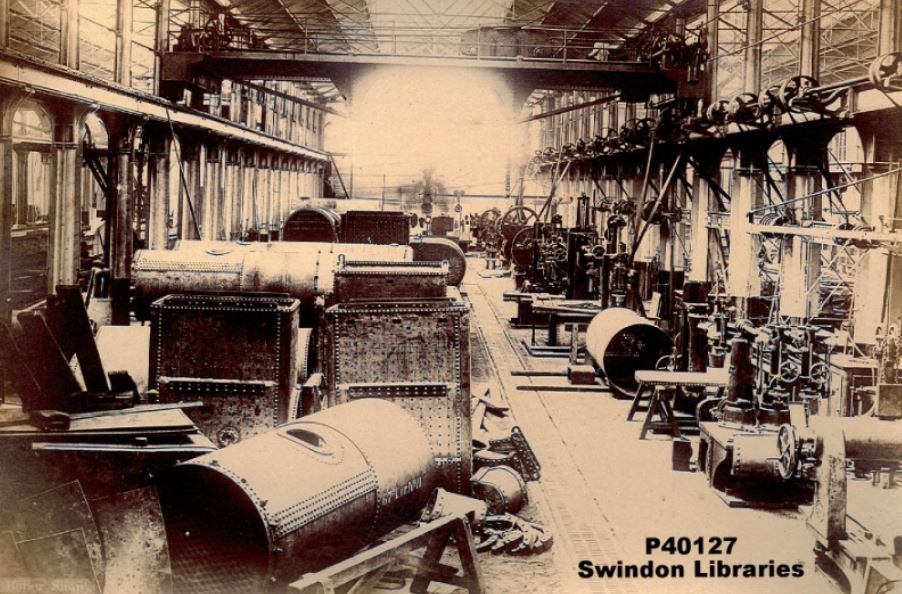
published courtesy of Local Studies, Swindon Central Library.

Men working nearby carried William to the Medical Fund Hospital.

“But it is feared that he has sustained very serious internal injuries and that he will not recover,” reported the Advertiser.

William died in the hospital five days later; the cause of death was shock following the injuries he had sustained.

An inquest attended by Works Manager G.J. Churchward held at the Cricketer’s Arms on Monday March 2, 1896 heard how the accident in V1 (Boiler) Shop happened just after the men returned to work at 9 a.m.

Mr R.L. Dyer, the foreman of the shop, suggested that a very slight leak in the valves could have caused the machine to drop to the ground when the water was turned off while the men were at breakfast. The subsequent slackness in the chain may have caused it to slip from one of the two hooks that supported it.

The coroner adjourned the proceedings in order to inform the Inspector of Factories.

When the inquest reconvened on Wednesday afternoon the jury heard how as the machine was lifted off the boy it slipped again, landing on him for a second time.

Dr Simms, the assistant to GWR medical officer Dr Swinhoe, said the boy had a fracture of the upper jaw and left arm and extensive bruising of the chest and back.

The jury asked to examine the machine and the inquest was adjourned for a second time, much to the consternation of Mr Churchward.

When asked when the machine had last been officially inspected, Churchward replied that Mr Dyer and himself “would see it each time they passed it.” It became apparent that inspections were done on an ad hoc basis. Mr Maitland, the Inspector of Factories, said there was no definite period for examination or visits to factories.

The jury returned a verdict of accidental death but recommended greater precautions should be taken to prevent accidents with machines of this kind.

William’s funeral service was held on March 5 at St Mark’s, the church where he had been baptised. He was buried in grave plot C771, an unmarked public grave, with four other unrelated people.

My thanks to Debra and Peter Melsom who first brought this story to my attention. The story of Matthew Burton was originally published in the Swindon Advertiser on April 1, 2011.

A name to grow into

The re-imagined story …

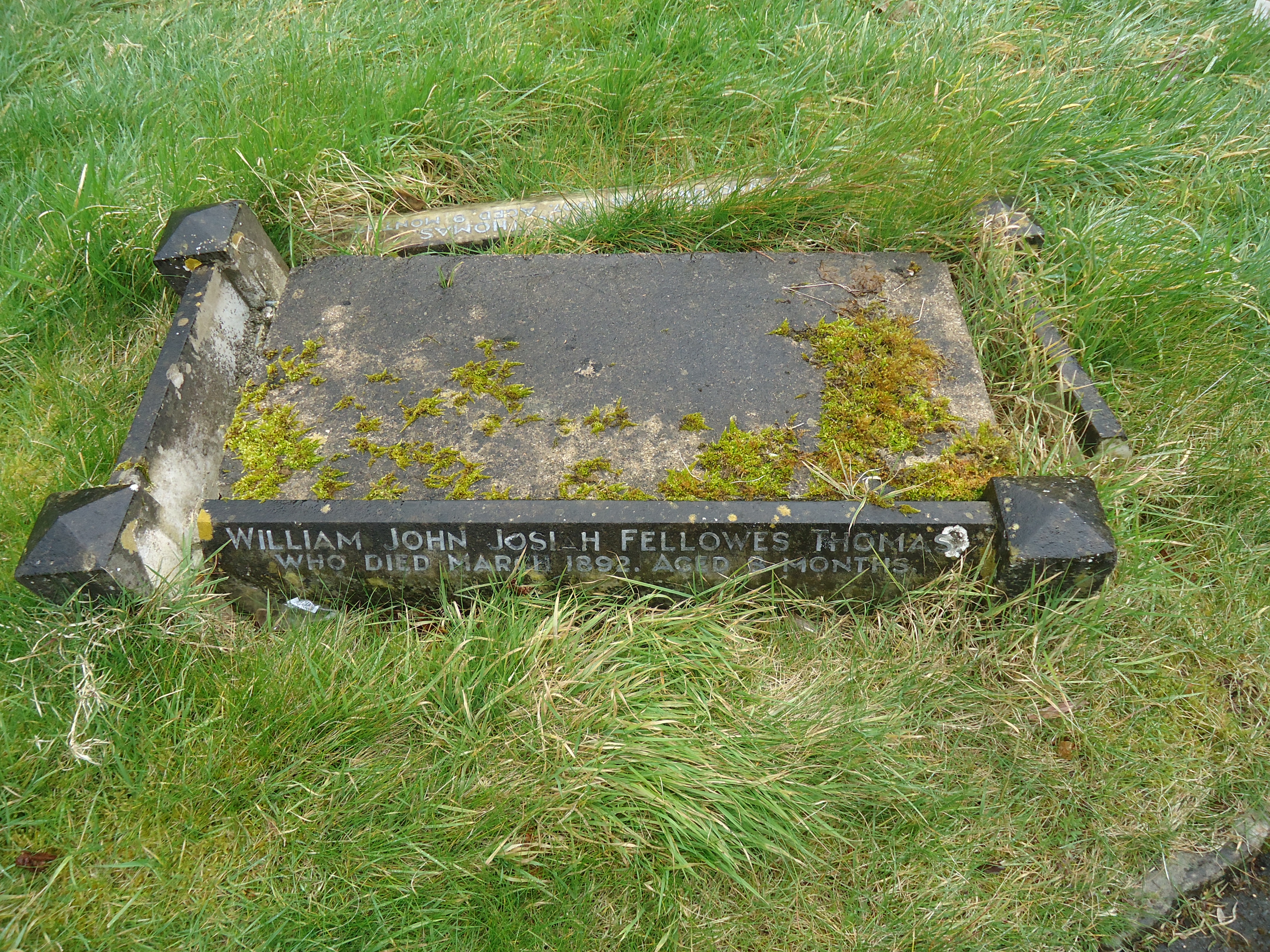
William John Josiah Fellowes Thomas. What a long name for such a small person. It was a name to grow into. Sadly, he never had that opportunity.

The inscription stretched the length of the small kerbstone memorial. ‘William John Josiah Fellowes Thomas who died March 1892 Aged 8 months.’ They had lived at No 4 Albion Street then, their first home together. Such a happy time, waiting for the birth of their first child.

She had prayed she would never have to bury another child in the cold earth and for several years it seemed as if God had heard her; spared her. Two daughters survived and thrived and then another son; a small, sickly baby.

‘Also of Cyril Thomas who died Feb 1907 aged 9 months.’

Why had they named him Cyril; she couldn’t remember now. Why hadn’t they given him a more impressive name. Cyril; not much of a name. She didn’t even care for it now. Cyril.

The little grave was the size of a cot. She wished John hadn’t chosen this plot in the lower half of the cemetery. She wished they had buried the babies up on the higher ground, near the other family graves, where the early morning sun peeped through the trees. The boys always woke early. She remembered that, watching the sunrise at the bedroom window, rocking them, trying to soothe them.

She looked across the cemetery. Some of the mourners were still standing at the graveside. This was where she would be laid to rest when the time came, buried with John, next to her parents, close to her brothers. She wished she could have her sons with her.

She left a spray of flowers on the small grave. Two daughters survived and thrived, two sons died.

William John Josiah Fellowes Thomas 1892

The facts …

During the 1870s William Fellowes, an iron moulder, brought his family down to Swindon from Wolverhampton. By the time of the 1881 census William and his wife were living at 22 Albion Street. His sons William and Josiah had followed their father into the railway works while their sister Adelaide is working as a dressmaker.

On July 9, 1890 Adelaide married John Thomas, a widower with two young daughters. Her first child, a son named William John Josiah Fellowes Thomas, named after her father and three brothers, was born in 1891 and baptised on November 3. A daughter named Adelaide Fellowes Thomas was born in 1896; Gwendoline was born in 1900 a second son Cyril  in 1906.

By the end of the 19th century William and Sarah were running a grocer’s shop at 35 Commercial Road, a property that would remain in the Fellowes/Thomas family for more than forty years.

William died at his home in Commercial Road in May 1905 and was buried in plot E7812. The burial registers include the following information – ‘Exhumed 14th March 1906 Re-interred in 7741E.’ His wife Sarah died nine years later and was buried in the same plot on October 22, 1914.

Adelaide and John were buried next to William and Sarah in plot E7740 and brother William and his wife Mary were buried in plot E7742.

Josiah died in 1902 aged just 37. He is buried in plot E7955 with his brother John who died in 1910 aged 50. Their grave is just two plots away from their sister Adelaide. 

The Fellowes family remained close in life and death, except for the two little babies buried together on the other side of the cemetery.

DSC08999

Section E 1 of 3

Alfred and Amy Haynes

Alfred William Haynes served as Mayor of Swindon 1917-18. It must have been a particularly difficult time to be a local politician as the Great War drew to a slow and painful conclusion.

Alfred William Haynes was born on October 13, 1862 and was baptised on December 7 at St. Leonard’s Church, Eynsham. Eynsham is an ancient village about 5 miles north west of Oxford. He spent his early childhood at Crown Crescent, (the site of a serious outbreak of typhoid in 1875) Acre End Street, with his parents John, a sawyer, his mother Ann (d 1874) and his four younger siblings, George, Florence, Arthur (d. 1874) and Frederick.

In 1880 Alfred married Rosa Major at St. Mark’s, Old Street, Shoreditch where he stated his age as 21 when in fact he was only 18. The newly married couple returned to Wantage where they lived with Rosa’s parents Frederick and Amy Major. Sadly, Rosa died on January 30, 1885 and was buried in Chain Hill Cemetery, Wantage.

At the time of the 1891 census Alfred was boarding with James White at 20 Regent Street and was employed in the Works as an Engine Fitter.

Alfred married for a second time on April 18, 1892 at St. Friedswide, New Osney, Oxford. His bride was Amy Whiting who worked as a domestic servant at the time of their marriage.

Alfred served as a councillor for the Kings Ward from around 1911 and was appointed an Alderman in 1915. He was appointed Mayor in 1917. In 1924 he was awarded the OBE in King George V’s Birthday Honours list for his work as Chairman of the Swindon, Chippenham & District War Pensions Committee.

He died on July 31, 1935 and was buried in grave plot C1820 where Amy joined him 10 years later.

The area in Section C where Alfred and Amy are buried.

The Bentley family

Sometimes a family leaves a very small footprint in this world and the Bentley family seems to be just such a one. But there is a lot to say about their stylish headstone full of symbolism. The fluted columns represent the entrance to heaven while the furled scroll indicates a life that had more to be lived. The bouquet of flowers express condolences and grief.

This is the last resting place of Pelham Bentley who is buried with his parents. It is likely their names are mentioned on the kerbstone edging.

William Charles Bentley married Sarah Wynn Malley at St. George’s Church, Wolverton in 1877. Like Swindon, Wolverton was established as a locomotive repair shop for a railway line under construction, situated at the midpoint of the London & Birmingham Railway in 1838.

William and Sarah both hailed from Lancashire, William from Bury and Sarah from Lancaster. In 1878 Sarah gave birth to twins, a boy Pelham and a girl Lily. By 1881 they had moved to Swindon where William worked as a Coach Trimmer and the family lived at 11 Harding Street.

By 1901 Pelham was lodging in North Manchester where he was was also working as a Coach Trimmer but by 1911 he was back in Swindon. Aged 32 he was living at 129 Broad Street with his parents and his sister Lily who was an Elementary School Teacher.

Lily married John Wells in Swindon during the December quarter of 1912 but at the moment I can find nothing more about him or them. William died in 1937 and by 1939 both Lily and her mother Sarah are widowed and living at 21 York Road.

The Bentley family were obviously a small, close knit family, the type of ordinary people who worked hard and contributed to the building of Swindon. They do not seem to have left us much to remember them by, except this rather beautiful headstone.

Jim Hurst: king of all engine drivers

In the Summer 2016 edition of Swindon Heritage Noel Beauchamp told the story of the man who drove the GWR’s first train and was a personal friend of no fewer than three railway pioneers, and lived and died in the Railway Village. Here is an extract from that article – Colourful career of the man they couldn’t sack.

He was a personal friend of Sir Daniel Gooch, but there is no getting away from the fact that Jim Hurst was a difficult character.

Official GWR reports reveal a catalogue of arguments, rows, conflicts, accidents and even fights throughout the career of the man who became the company’s first driver.

His first accident occurred in 1836 while he was still working for the Liverpool & Manchester Railway.

Sacked, he was almost immediately hired by Daniel Gooch, then Locomotive Superintendent of the GWR – although when recounting the story to the company magazine, many years later, he gave an entirely different explanation of the circumstances.

He also told the GWR magazines that he had had “some very narrow escapes”, including in 1855 when the engine he was driving exploded and “I was blown up through the air and my mate was killed.”

The first blot on his GWR career came in 1840 when he was reported for driving his engine in a careless manner and colliding with the engine Wildfire, which was severely damaged, along with the tender of the engine he was driving.

The following year he was reported for refusing to work a train with a particular guard he had taken a dislike to: a policeman called Burton.

Jim was fined £2.

In 1842 he was accused of taking passengers for a joyride, and charging them for the privilege.

‘Sundry policemen’ reported him for the offence, one claiming Jim was “in the habit of taking people on the engine to and from Kemble and Cirencester, as many as three at a time … but stopped the engine about three-quarters of a mile from Cirencester and set them down.”

Not for the last time, his friend Gooch stepped in, and Jim was able to produce a leter from one of the ‘passengers’, denying that any payment was made.

So he was off the hook.

The same year he was involved in a serious accident at Kemble in which an engine called Meteor overturned, and the passenger train that Jim was driving ended up in a siding. He later claimed it was caused by a switchman.

In 1854 he was in trouble again.

This time he threatened to take a policeman into a nearby field for a fight and after the matter came before the GWR Board, they fined the hapless driver ten shillings (50p).

Two years later it looked like Jim’s employment with the GWR was over when the Board sacked him for fighting with a porter at Newnham.

However, Gooch had been away at the time, and 10 days after his friend’s sacking he intervened and Jim was reinstated.

At the hearing it was noted by one GWR man that “You can do nothing with Hurst. He follows Gooch’s order.”

Then, in 1858, Jim found himself fined another £3 for damaging a horse box after running past a danger signal at Farringdon Road, London.

Another bad year in Jim’s career was 1859, when he ran into two engines in two separate incidents.

First he hit the tender of Dart, a Firefly Class loco, for which he was fined 14s 3d (71p), then he wrecked the buffers of Alma, an Iron Duke Class engine.

This time he was ordered to pay the cost of repairs, which would have been carried out at Swindon and amounted to £3 6s 10d (£3.34).

Then, in August 1862, there was another incident, the details of which are not recorded. But it was serious enough for him to be removed, at last, from the footplate, and permanently transferred to Swindon Works. Even Gooch seemed unable to save Jim’s driving career this time, but he still had a job – and would eventually receive a generous pension.

Although drivers were often moved around the GWR, in Jim’s case it seems successive managers at Paddington, Taplow, the Forest of Dean, Cirencester, Totnes, Swansea and Leamington all found that if they couldn’t dismiss him, there was always the option of transferring him to another part of the vast network.

For the last 30 years of his life Jim was a Swindonian, living in the Railway Village and earning, through his pension, more than most of the general workers ‘inside.’

Time ran out for him in August 1892 when he died in his 81st year, and he was buried with his wife in Radnor Street Cemetery.

Strangely, considering he and his family would have been able to afford a memorial, the grave is unmarked, and was only recently rediscovered by the Swindon Heritage team. (Summer 2016).

The burial took place on August 15, 1892 of James Hurst, 80 years old, of 30 Taunton Street. He was buried in grave plot B1641.