William James Knee – newsagent and tobacconist

How good are you at dating photographs? This one is thought to have been taken around 1920. I have been unable to discover any details about this photograph taken outside W.J. Knee’s shop in Emlyn Square. What clues are there in the fashions? The girl at the centre of the group is holding a photograph – is this someone who has recently died or someone who has left Swindon to work abroad? And finally, is this a gathering of the Knee family?

The following two stories may help us date this photograph.

Postcard reproduction

William James Knee was the eldest of Arthur and Eliza Knee’s large family of 10 children. William was born in Melksham but by the time of the 1891 census the family had moved to Medgbury Road, Swindon where Arthur was employed as a Rivetter in the Works.

William also entered the GWR and in 1911 he was working as a labourer in Newport, Monmouthshire where he was lodging with a relative by the name of John Knee. That same year he left Newport to return to Swindon where he subsequently opened a newsagents shop on the corner of London Street and Emlyn Square.

Death of Mr W.J. Knee -The death has taken place at the Old Manor House, Salisbury, of Mr William James Knee, son of Mr and Mrs Arthur Knee, of 78 Medgbury Road, Swindon. Mr Knee, who was in his 46th year, carried on business as a newsagent in Emlyn square for a number of years. He had a breakdown in health and went to Salisbury for treatment of an internal complaint. He was well known in Swindon and was popular with many GWR employees. A telegram announcing his death was received this morning.

North Wilts Herald Friday January 10, 1930.

William was buried on January 13, 1930 in grave plot D494. His mother Eliza died in 1937 and his father Arthur in 1940 and both were buried with him.

The second story is that of William’s younger brother Dennis Arthur Knee.

Dennis was born in 1895 after the family arrived in Swindon, and at the age of 16 he was working as a Rivetter Carrier in the Works. But like so many men of his generation, Dennis would leave the Works to serve in the First World War. Unfortunately, Dennis’s attestation papers do not survive but we do know that in 1917 he was serving as a gunner with the Royal Marine Artillery on board HMS Vanguard. Dennis died on July 9, 1917 when the Vanguard sunk following a series of internal explosions while on a routine patrol in Scapa Flow. He was 22 years old and one of 843 out of 845 men who died that night.

Acting Bombardier Dennis Knee is remembered on the Portsmouth Naval Memorial.

Please get in touch if you have any further information about this photograph and/or the Knee family.

The day Nellie Fitch came calling

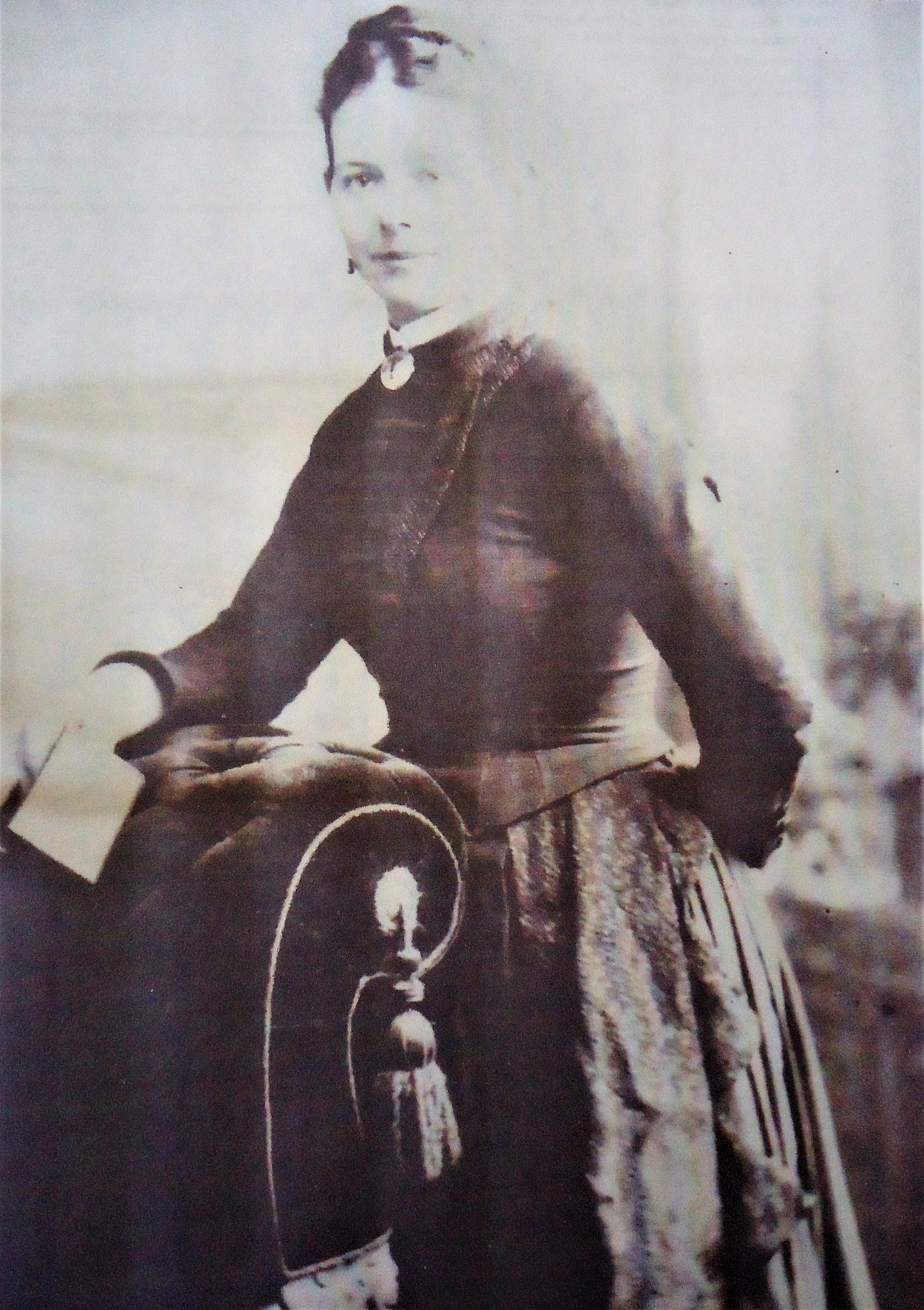
Jane Tuckey
Jane Helena Tuckey photograph courtesy of Peter Guggenheim

The re-imagined story …

Mother went to Mrs Dicks funeral. It was a very quiet affair, she said. Not many at the church and even fewer at the graveside.

“I don’t know why she wasn’t buried at St Mary’s, along with all her family,” said mother. “There’s a long avenue of Tuckey graves in the churchyard there. Great big gravestones enclosed by iron railings. Of course, there was money in the family then.”

A familiar guilty twinge stabbed me.

I used to visit Mrs Dicks most weeks. Mother would send me round with a meat pie or a suet pudding.

“She doesn’t eat very well.”

Mrs Dicks lived opposite us in Hawkins Street. Her husband had died several years before.

“He was a fitter in the Works. Nice man, people said, although a bit of a come down for her. Her first husband had been a wealthy farmer from Chippenham.”

Mrs Dicks’ terrace house was crammed full of great big pieces of dark furniture.

“No doubt from her father’s house in Shaw.”

Sometimes she would open the drawer in the big, old dresser and hand me a tortoiseshell casket and together we would look at her ‘treasures’ as she called them.

Then one day Nellie Fitch came with me.

I usually went to Mrs Dicks on my own but this day Nellie was sitting on our front wall.

“She can smell the pie.”

Nellie Fitch wore shoes with holes in them and her winter coat was too small for her. Nothing unusual about that. During the war most of the kids in Rodbourne wore hand me downs. But then she told me she often didn’t eat.

We didn’t have much, but I always knew I would have a cooked dinner. Nothing fancy mind, but mother was a good, plain cook and she knew how to make a little go a long way.

Nellie’s dad was away fighting the Hun, she told me.

“Nellie’s father disappeared years ago,” said mother. “And so has the layabout she thinks is her father.”

Mrs Dicks opened her front door to a small hallway, just like the one in our house and all the other houses in Hawkins Street.

She was pleased to see me, but less so to see Nellie. I don’t think it was her dirty clothes and shabby shoes that bothered Mrs Dicks. I imagine it was more the fact that now Nellie would know she accepted food from neighbours. Mrs Dicks tried to keep up appearances. She had come down in the world and keenly felt her loss of status. But to me she was just another little old lady who wore old fashioned dresses and spoke in a posh voice.

“Good morning girls. How lovely Violet. Please thank your mother,” she said as she took the warm basin into the kitchen. “Tell her I will settle up with her at the end of the week.”

She always said the same thing. No money ever changed hands, my mother wouldn’t have expected any and Mrs Dicks had none to give.

“Come into the kitchen girls. I was just making a cup of tea.”

If Nellie was hoping for a piece of cake or a biscuit she would be out of luck.

Nellie probably wondered why I spent time with the posh old lady in her dark and dreary house where there was nothing nice to eat.

Mrs Dicks would tell me about the house in Shaw where she had grown up with her eight sisters and her brother. How they played in the orchard at the back of the house and on Sundays they would walk all the way to the church in Lydiard Millicent. She would bring out her photograph album and tell me about the people; bewhiskered old men and wasp waisted ladies.

And sometimes she would bring out the tortoiseshell box and show me the beaded bag she took to dances when she was a young woman, and the diamond tiara that became a pair of dangly earrings at the click of a pin at the back. There was an amethyst ring that had belonged to her grandmother and brooches and pins.

Please don’t bring out the tortoiseshell box today, I silently pleaded. But the atmosphere was awkward with Nellie there. We were probably the only two quiet children in Rodbourne that morning.

I watched Nellie’s eyes grow as wide as saucers as she peeped inside Mrs Dicks’ tortoiseshell box, and she looked at me and smiled. Not a big, open smile, but something sly.

I never wanted to visit Mrs Dicks after that.

“I don’t have time to go calling in on Mrs Dicks,” my mother complained when she had to deliver the meat pie.

Nellie got a new winter coat that year, and a new step father.

“They’re not married,” said my mother. “She’s never marries any of them.” And then they moved away from Rodbourne.

The facts …

Jane Helena Tuckey was born on March 15th 1848 at Langley Burrell, the fourth daughter of Robert and Ann Tuckey.

The 1841 census returns for Yatesbury record wealthy bachelor farmer Robert Tuckey living with Ann Trotman, an unmarried servant and her four year old daughter.

Perhaps Tuckey family opposition to this mismatched alliance delayed a wedding. By the time the couple did get around to walking up the aisle at St. Saviours in Bath they had two daughters and Ann was pregnant again.

But by 1851 Robert had come into his inheritance and the growing family moved into Shaw House along what is now called Old Shaw Lane in West Swindon.

In 1872, shortly after the death of her father, Jane married farmer John Clarke, thirty years her senior, and moved to nearby Kington St. Michael where John farmed 381 acres. With 20 farm and house servants on the payroll, this was a big establishment.

Then in 1882 John Clarke was found dead in one of his fields having suffered a fatal heart attack and Jane’s life was to change dramatically.

In 1884 Jane married Francis Dicks. Her second husband, seven years her junior, was a fitter employed in the GWR works. The couple with Jane’s girls moved into 37 Hawkins Street, Rodbourne where a further two children were born.

In the small terraced house Jane’s lifestyle was far removed from the comfortable childhood she had enjoyed, playing in the orchard at Shaw House.

Widowed for the second time in 1903 she survived on an income derived from taking in a lodger.

Mrs Dicks died on November 26, 1918. She was buried in plot B1494, a pauper’s grave in Radnor Street Cemetery.

Tuckey house

Shaw House, Old Shaw Lane, Swindon

Mary Bailey – of intemperate habits

There is a world of difference between enjoying a drink and taking a bottle of whiskey to bed and I wonder what propelled Mary Bailey from the one to the other.

Drunkenness was the scourge of the 19th century working classes. Even in Swindon where the much lauded Great Western Railway Company provided wrap around care ‘from the cradle to the grave’ there was still want and destitution for those who fell through the cracks of society.

Temperance societies encouraged people to abstain from drink and to take the pledge of a lifetime of sobriety. By the end of the century Swindon numbered around 18 such organisations, including the GWR Temperance Union with around 3,000 members, however it is unlikely Mary joined their ranks.

A Fatal Taste for Alcohol

A sad case came from Coroner W.E.N. Browne, on Monday in an inquest concerning the death of Mary Baily, wife of a GWR fitter of 11 Hawkins Street, New Swindon.

The deceased who was 49 years of age, was stated by a neighbour to be of intemperate habits. Her husband on Friday night went to bed at 10 o’clock, and thinking his wife was asleep did not disturb her. He arose at five o’clock on Saturday morning and found his wife dead and quite cold. A whiskey bottle was found beneath the bed. Dr. Duffield stated that death was due to asphysxia, cause by the woman lying on her face in a helpless condition ensuing upon an over-dose of alcohol.

Gloucester Citizen Tuesday November 28, 1899.

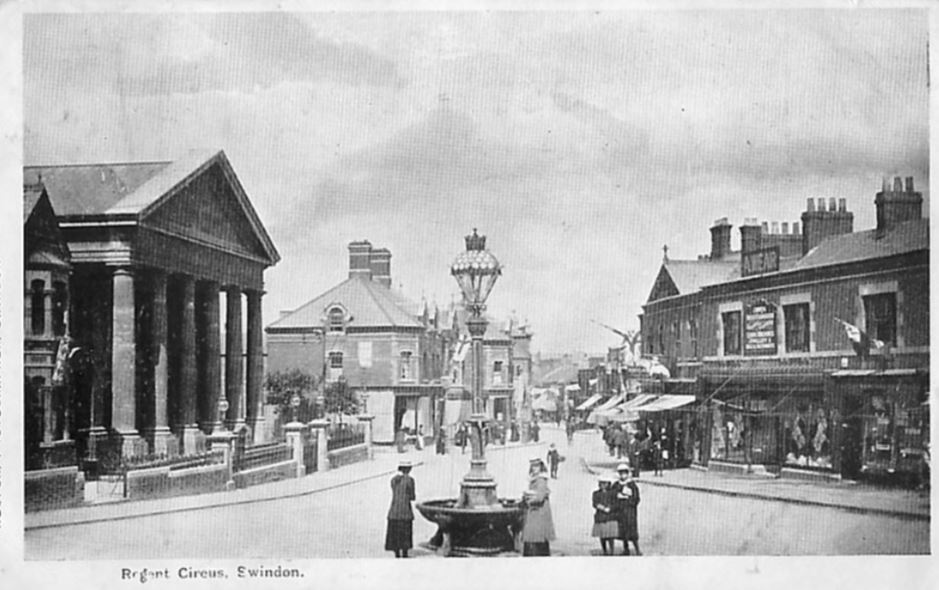
Drinking fountain erected by the Swindon United Temperance Board in Regent Circus 1893

Mary Christianna Dance was born in Stratton, Gloucestershire and baptised on February 4, 1849, the eldest of John and Jane Dance’s eight children. She married Thomas Bailey in 1871 and by 1881 they were living at 11 Henry Street (later renamed Hawkins Street) with their 8 year old son Thomas, and Mary’s brother Charles. Both men worked as carriage fitters in the Works.

So what happened to Mary between 1881 and 1899, or had her problem with alcohol begun long before? Did she try to control her drinking, or was she aided and abetted by her husband Thomas, whose comments at the inquest appear ingenuous when compared with the neighbours observations.

Mary was buried on November 28, 1899 in grave plot C109, a privately purchased grave, which might come as some surprise. In 1908 she was joined by Tryphena Bailey, Thomas’s second wife and then in 1937 by Thomas himself.

Many thanks to David Lewis and his book Between the Bridges – The Early Days of Rodbourne.

What can a headstone tell you?

Thomas-and-Susan-Hughes

What can a headstone tell you? A surprising amount actually, and that doesn’t just include the inscription.

In older churchyards you might find skulls and crossed bones and dancing skeletons on headstones but you are unlikely to come across these symbols in Radnor Street Cemetery. There are angel monuments and angels carved in relief, but most of the iconography is more subdued.

The cemetery was established in response to several urgent needs. The rapid growth of the town saw diminishing space for burials in the existing churchyards (see Proposed Cemetery for Swindon) and a large and a growing congregation of Dissenters or Non-Conformists. This accounts for the non-denominational nature of the cemetery chapel (most municipal cemeteries have an Anglican and a Dissenters’ Chapel) and why the burial ground itself is unconsecrated ground.

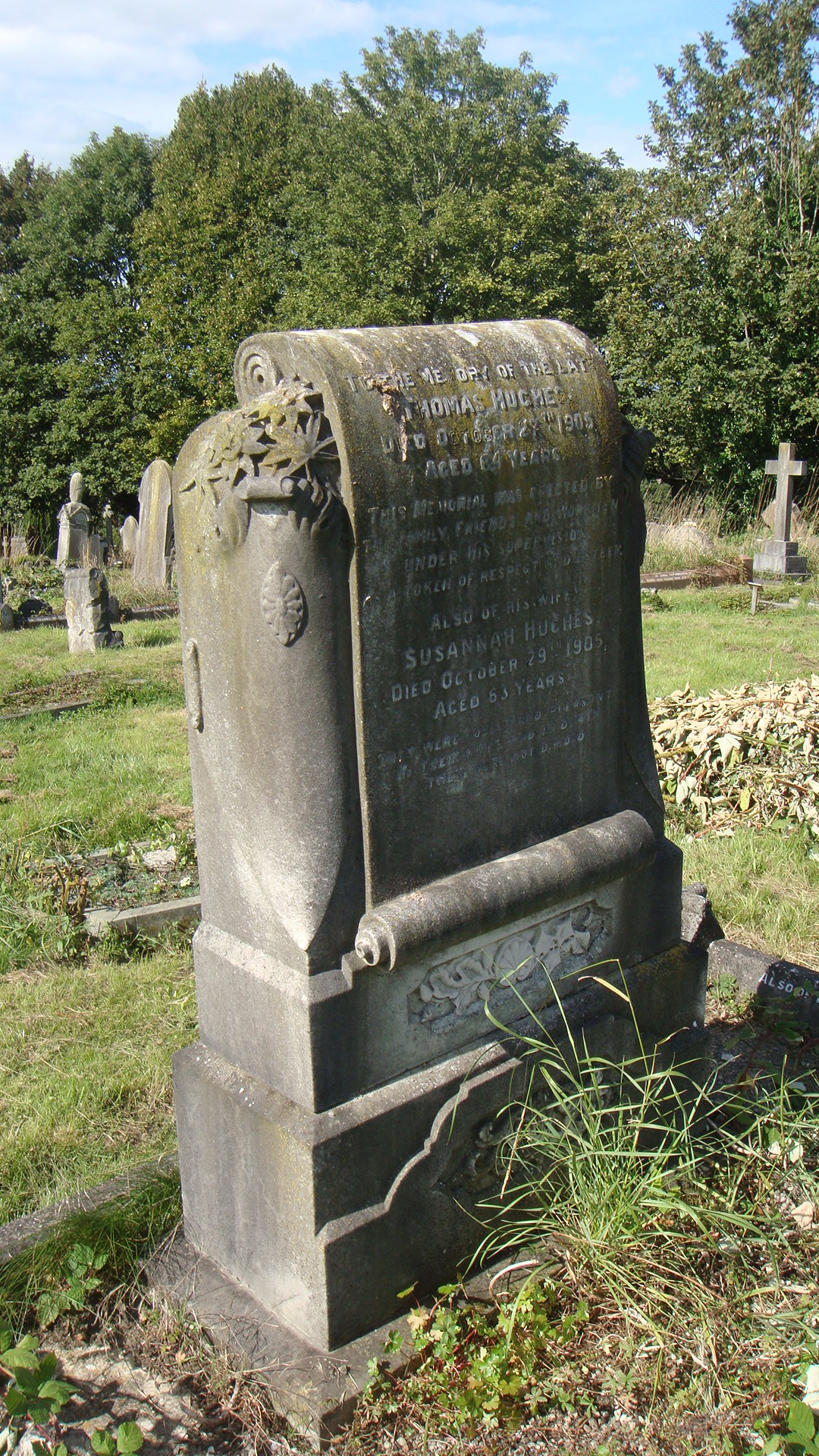
So, what does the inscription on Thomas and Susannah Hughes’s headstone tell us?

To the memory of the late Thomas Hughes/Died October 27th 1905/Aged 64 years/This memorial was erected by the family friends and workmen under his supervision/a token of respect and esteem/also of his wife/Susannah Hughes/died October 29th 1905/aged 63 years/They were (illegible) and pleasant/(illegible) their lives and death/they were not divided

The headstone is in the shape of a scroll, which itself has various interpretations. It can signify a love of learning or a religious conviction. A scroll partially unfurled can indicate a premature death, although not in this case as both Thomas and his wife Susannah were in their 60s.

Acanthus leaves are a classical symbol dating from antiquity and represent both immortality and life’s prickly path. Ivy leaves represent friendship and immortality and oak leaves hospitality and endurance. The medallion shaped flower is most probably a sunflower, representing affection and remembrance while the Easter lily signifies resurrection.

The facts …

We regret to announce the death, on October 27th, after a very short illness, of Mr Thomas Hughes, foreman of the Erecting Shops at Swindon.

Mr Hughes was born at Smethwick, Staffordshire in 1841, and in 1855 was apprenticed to Messrs. James Watt & Co., late Boulton & Watt, Engineers, Soho Foundry, Smethwick, near Birmingham, as general engineer, machinist, turner, fitter and erector. He left Soho Foundry in 1862, after the completion of his apprenticeship, and joined the service of the London and North Western Railway at Crewe, where he stayed for only a short time, returning to Soho Foundry and eventually entering the service of the Great Western Railway Company at Swindon in 1866, as an erector. He was appointed foreman in 1876, and his position was one of the most important at Swindon, as he had full control of the erection of new engines, also of the erecting work in connection with repairs.

He was a man of marked ability in his profession, and was held in high esteem by the officials, particularly by the Chief Superintendent, who, at the opening meeting of the Junior Engineering Society on October 31st, alluded to the said incident in the following terms: – “This Society is unfortunate in a lost which we have sustained within the past  few days. I allude to the death of poor Foreman Hughes. He was a member of our Committee, and I am sure I express your views when I say he was one of your most respected members. I am proud to say that Tom Hughes was a friend of mine for a great number of years, and I can scarcely express to you the shock it gave me when I heard of his death.”

For a number of years Mr Hughes held the position of First Engineer in the Company’s Fire Brigade, and in this direction exhibited characteristic energy and interest. He was also a Member of the Council of the Mechanics’ Institution, to which he was devotedly attached. The case is a peculiarly sad one, as within a day or two of Mr Hughes’s death, his wife, who had been ailing for some time, passed away.

Great Western Railway Magazine December 1905.

Death of Mr Hughes

We regret to announce the death, which took place on Friday morning, at his residence, 8 Faringdon Street, Swindon, of Mr T. Hughes, a foreman in the GWR works. Deceased, who had only been ailing a short time, passed away somewhat suddenly. He had been a foreman in the GWR works – over the A Shop (New Work & Erectors), B Shop (Erectors), and P Shop, for 30 years, having been employed in the GWR Works 40 years. He was well known as a member of the Council of the Mechanics’ Institute, in which he took an active interest, especially in the Library and Reading Room, having been a member of the council for seven years. Deceased leaves a widow and grown up family, for whom the deepest sympathy will be felt, especially as Mrs Hughes is lying seriously ill. Mr Hughes was also a prominent member of the GWR Fire Brigade.

Death of Mrs Hughes

An extremely pathetic sequel to the death of Mr T. Hughes, a GWR foreman, which took place on Friday last, is the fact that his wife passed away yesterday morning. She had been ill for some time, and was lying prostrate when her husband died. The funeral takes place tomorrow, when the bodies of Mr & Mrs Hughes will be buried in the same grave in the Swindon cemetery.

Swindon Advertiser November, 1905

In 1871 Thomas and Susannah lived in a shared property at 24 Oxford Street. By the time of the 1881 census they had moved with their six children into one of the larger, foreman’s houses at 8 Faringdon Street where they remained for the rest of their married life.

They were buried on the same day, October 31, 1905 in plot D141. They share their grave with their eldest son Charles Thomas, who died in 1907 and their son in law, Ernest James John Tarrant, the husband of their daughter Alma Susan, who died in 1914.

Thomas-Hughes

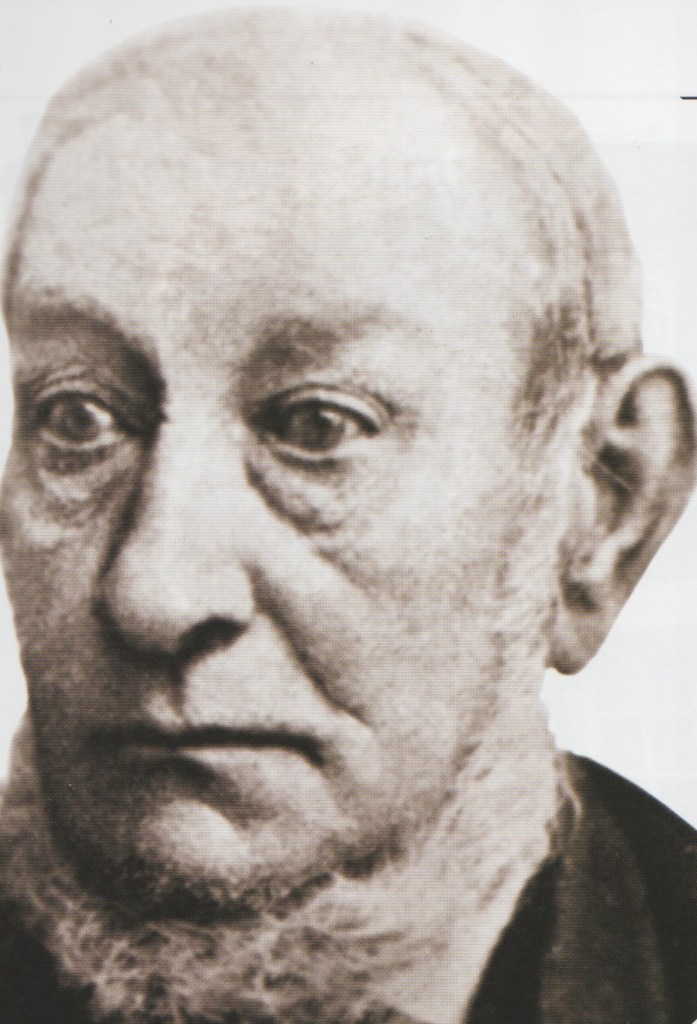
Mr Thomas Hughes

James Hill and the case of the stolen flowers

This is the case of a man who placed a few stolen flowers on a grave where he would later lie himself.

Helen Hill died on January 31, 1885. She was 84 years of age and a widow. The Hill family were originally from Scotland where her husband Mathew worked as a Flax Mill Spinner in Leven, Fife. By 1861 Helen, and her son James, a turner in the Works, and her daughter Henrietta, were living in Faringdon Street.

This wasn’t exactly the crime of the century, more the act of a grieving son. Even Mr. H. Kinneir, Clerk to the Local Board, emphasised that this was a trivial case but the theft of flowers on existing graves was taking place all over the cemetery. Standards had to be unheld and such petty thieving would not be tolerated! (I detect here the opinion of cemetery caretaker Charles Brown.)

Charge of stealing flowers from a grave – James Hill, 51, fitter, of Faringdon street, New Swindon, was summoned at the instance of the Swindon Local Board and Burial Board, charged with stealing some flowers – daisies – from a certain grave in the Swindon Cemetery and placing them on that of his mother – Mr. H. Kinneir, Clerk to the Local Board, appeared to prosecute, and in opening the case stated that the action was taken at the instance of the New Swindon Local Board and the Cemetery Committee. The case, although not a serious one – possibly a trivial one to many – was one of importance to the Cemetery Authority, and people interested in the cemetery. It was well known that persons who had relatives lying buried therein took pains with the graves, and planted flowers thereon. The present action arose through defendant, who was a man well known and highly respected, going through the cemetery on a Sunday and plucking several flowers from a certain grave and placing them on his mother’s grave. It was to point out the seriousness of the case that the present action was taken. Mr Kinneir said the Board did not wish to press the case, but wished for a small fine to be imposed, to let the public know that they must not gather flowers from a churchyard or cemetery. This proceeding of gathering flowers was going on all over the cemetery, and the Board wished to put a stop to it. The maximum penalty for the offence was £5. Without hearing any witness the bench imposed a fine of 2s 6d, and ordered payment of court fees.

James died in 1897 and was buried with his mother in grave plot A631, a public grave. They share the grave with 23 years old Lily Palmer who died in 1928 and is unlikely to be any relation.

Frank Crossley – a safe pair of hands

The re-imagined story…

Swindon Town Football Club had been founded less than ten years when Frank joined the team. This was before the team turned professional in 1894, when they played at the Croft and changed into their kit at The Fountain public house. Football was a different game in 1887.

Swindon Town FC

The players may have been amateurs but there was nothing amateurish about their game. Take Frank Crossley for example, a fitter in the Works who played in the late 1880s.

Frank Crossley was an intelligent player and a safe pair of hands. Fans wondered why he didn’t play more regularly for the Town. Frank played just seven games in a career that spanned five seasons from 1887 to 1892.

He then went on to referee matches and he didn’t mince his words.

I suppose the war will change football in the same way it has changed everything else. So many good players lost. Our own Freddie Wheatcroft lost, killed in action in 1917. Freddie notched up more than 90 goals in six seasons at Swindon. We won’t see the likes of him again.

And what about Frank? Will he be forgotten too?

William Elizabeth and William Crossley

The facts …

This headstone marks the burial place of William and Elizabeth Crossley and their son William. The kerbstone surround has sunk into the ground and it is no longer possible to see an inscription, if there is one. It is likely the names of two further sons both buried here, Frank and George, are mentioned.

William senior was a steam engine maker and fitter. He was born in Yorkshire in about 1827. By 1860 he and Elizabeth had moved to Stratton St Margaret and later a home in the railway village where they raised their five children, William, Frank, Emma, Sarah and George. All three sons followed William into the Works and jobs as fitters.

As the headstone reveals William died in 1895, Elizabeth in 1910 and their son William in 1899. William and Elizabeth are buried in plot A990, their son William is actually in the neighbouring plot A991. There is no obvious mention of the two sons who share the grave with their parents.

After William senior died, Elizabeth, Frank and George left their long-time family home at 15 Oxford Street and moved to 126 Broad Street. Following Elizabeth’s death Frank and George continued to live together.

Research has revealed that Frank played for Swindon Town Football Club from 1887 to 1892 and later went on to be a football referee.

In the last months of the Great War George was called up; he was 44 years old. As a skilled man he enlisted with the Royal Engineers, serving as a Sapper in the Royal Engineers and the Inland Waterways and Dock Companies. He served his time in Britain, returning to his job in the Works at the end of the war.

Frank died in 1947 aged 82 and George died in 1959 aged 85. Neither men married and left no descendants. Their lives forgotten, their amazing stories untold.

Frank Crossley of 126 Broad Street Swindon, died aged 82 years old. Burial took place in plot A990 on February 24, 1947.

Some sporting stories

Frank also played for the county team.

Football Gloucestershire v. Wiltshire

The most important match on Saturday in and about Bristol was the one between the representatives of the above counties, which was played on the St George’s ground, in the presence of about 2000 spectators. Although the Wiltshire men had to travel some distances, they were the first to take possession of the battlefield, but they had not to wait long before the home defenders jumped over the roses and took up their different positions ready for the attack.

From the throw in a combined rush was made by the visitors, who worked the leather in close proximity to the home territory, but Percy Newnham was not found wanting, and, with the help of Russell, stopped the attacking party, and the former player, with a clever kick, placed the globe half way down the ground, where, unfortunately, the ball was handled, and on the appeal being made a free kick was awarded the visitors…

From the kick off, Francis and Perrin sent in a stinger which puzzled Crossley, and matters were made equal admist the vociferous cheering of the spectators. The ball was kicked from the centre, and the home men, encouraged by their success, made another heavy attack upon the visitors’ territory, Noble, Taylor, and Francis sending in shot after shot, which were all well stopped by Crossley…

Poole next had a try with the leather, got from Francis; he sent in a clinking shot to Crossley, who saved in splendid style by falling with the ball and putting it behind…

Some very pretty passing play was witnessed between Perrin and Francis, who were loudly cheered by the spectators; the former headed the ball in front of the goal, but Crossley saved. The home forwards pressed the game, and Thompson getting the leather from C. Newnham had a chance of scoring, but he misjudged his shot and the ball went behind.

For five or ten minutes the visitors were penned in, Francis, Poole, and Perrin sending in some sharp shots, but Crossley was equal to the work, and his fisting out was remarkably clever.

Eventually the scene of action changed, and the visitors working together the ball was driven up the field and was placed between the sticks for the third time.

Up to half time the play was of a give and take nature, neither side being able to notch any further point. Immediately after the change of ends an appeal for hands was allowed the visitors, the leather being near the back division of the home quarters, but from the free kick the ball was sent out of play.

Directly after the ball was restarted it was kicked into touch, and from the throw in Taylor got it, and passing it to Poole, that player put in a shot, but Crossley cleared the goal.

Stancomb drove the leather down the ground, and Thomas tried a shot which Phipps hit over the crossbar, thus giving a corner, from which nothing resulted. Shortly afterwards W.H. Williams scored another goal for the visitors by heading the leather between the uprights. Up to the call of time no further point was scored. The game stood Wiltshire, five goals; Gloucestershire, two.

Extracts from The Wiltshire Times, published Saturday December 7, 1889

Football: Prospects of the Coming Season

“Can you manage to write something for us about the coming football season, and what we may expect to see the Town Club doing?” queried our Editor the other day.” What, football already? Why its only a few weeks since when we took up the willow for the first time this year! You might at least wait until the first-class cricket teams have made up their averages.”

It was not to be, however, for the “season” is already upon us, and almost before we could get a talk with some of the knowing ones of the local teams Swindon Town are hard at it – and at first-class matches, too.

Our first wail must be over the retirement of the popular captain of the past few years, for who can doubt that during the time Frank Crossley has held the exalted, but not at all time enviable, position of captain, Swindon has, under his care, and by plucky challenges well sustained, worked its way to a prominent position amongst southern teams. Le roi est mort; vive le roi! Frank Crossley retires, but Gordon Wainwright takes his stead, and in their new captain the Swindon eleven have not only a most firm commander, but also a thorough-going athlete. So after all, Crossley’s “stiffness” did not develop at a most critical time in the club’s history; he has assisted mightily his team’s accession to an exalted place in the football world, and does but leave other hands (and feet) to continue the work.

Extracts from The Swindon Advertiser published Saturday September 10, 1892

Frank Wallington and the family back home

Have you picked up your copy of Moonies, Movers and Shakers yet (available from the Library Shop, Central Library, Hobnob Press and Amazon)? If so, you will have read about Frank Wallington.

Frank Samuel Wallington was born in Gloucester in 1865, the son of Francis and Mary Ann Wallington. By 1871 the family had moved to Swindon where Francis worked as a fireman on the locos, eventually progressing to engine driver.

By 1891 Frank had completed his engine fitter’s apprenticeship in the Swindon Works and had moved to London where he boarded with his brother William in Plumstead.

He joined The Association of Wiltshiremen in London (The Moonies in London) and from 1893-1901 acted as Honorary Secretary. Frank eventually emigrated to the United States where he died in Eton, Georgia in 1936.

But other members of the family stayed in Swindon and found their final resting place in Radnor Street Cemetery.

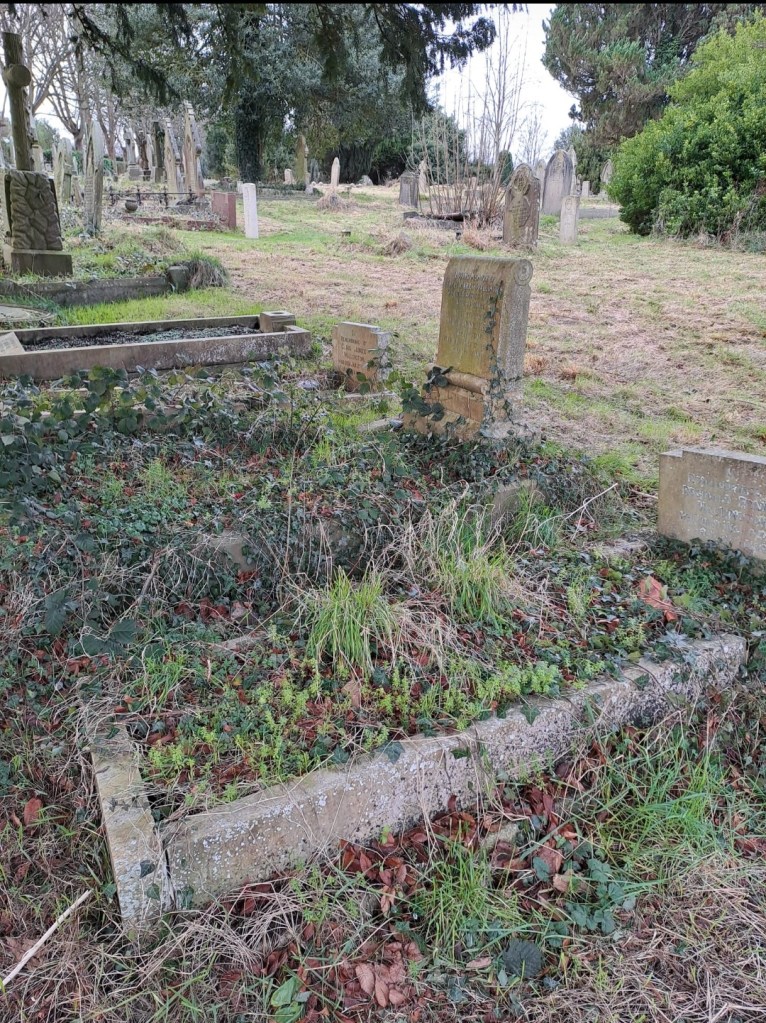
Cemetery volunteer Bex discovered the family graves and what a fantastic job she made of clearing them.

Francis Wallington died aged 49 years at his home 4 Edgeware Road in May 1884 and was buried in grave plot A287. His wife Mary Ann survived him by more than 30 years and died aged 85. She was buried with him on May 31, 1916. These are Frank Samuel Wallington’s parents.

George Harry Wallington and his wife Maud Annie Kate are buried in neighbouring plot A288. George was another of Francis and Mary Ann’s sons and brother of Frank Samuel Wallington.

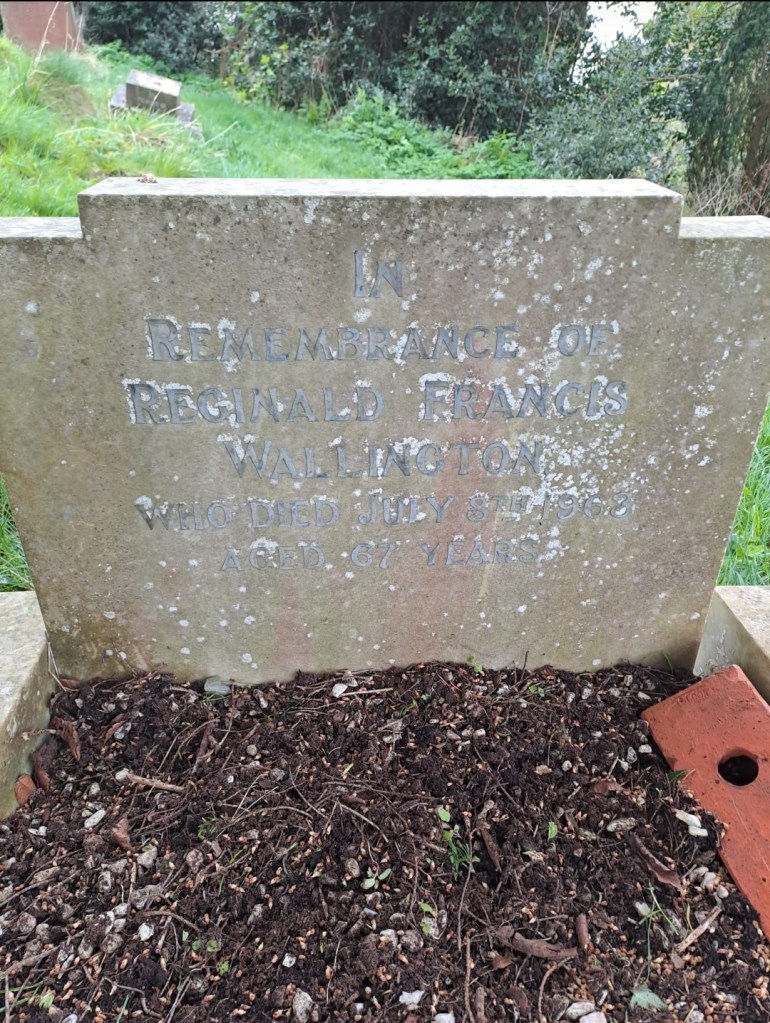
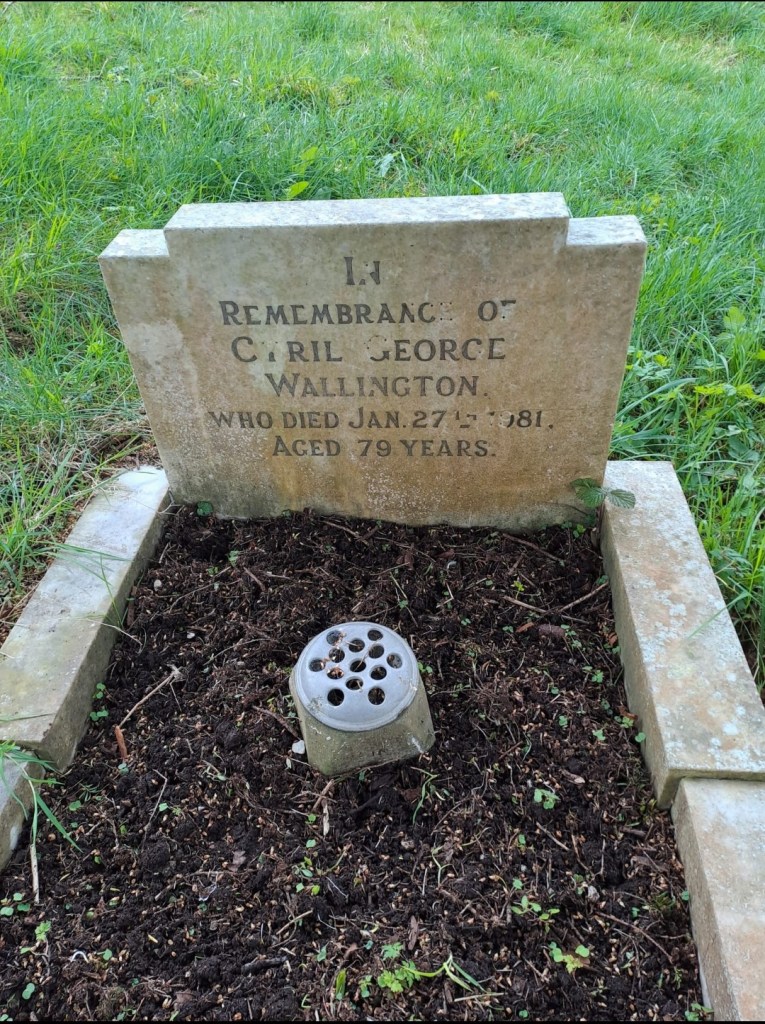
Buried next to George and Maud are their two sons, Reginald Francis Wallington who died in 1963 and Cyril George Wallington who died in 1981.

Before and after photographs of the Wallington family graves.

Edwin Thomas Brittain – oldest foreman in the Works

The re-imagined story …

Gran loved a good funeral. She especially liked the ones held at St Mark’s where Canon Ponsonby officiated as he had such a lovely voice, she said. But she wasn’t adverse to attending services at one of the many non conformist churches or chapels across town, or even the little cemetery chapel itself.

And afterwards she would come round to our house and over a cup of tea she would recount the events.

Mr Brittain’s funeral ranked as one of the best she had attended, she told us. The list of mourners read like a Who’s Who of Swindon railway royalty, she said.

As a child I accepted Gran’s funeral fascination as just one of the funny things old people did. Most things about the elderly were pretty incomprehensible to the young. It wasn’t until Gran died that I began to understand.

Gran had been born at a time when death was very much a part of life. Before she was ten years old she had lost her own mother and several siblings. Today we tend to think people must have become used to all that death and dying. One child died and the next one born received their name. Perhaps people didn’t invest so much love in their children then as we do now. Of course once I had my own family I realised what a ridiculous notion that was and I came to understand the loss Gran continued to mourn throughout her life.

Mr Brittain’s funeral was one of the best she’d ever seen, Gran told us.

E T Brittain 4

The facts …

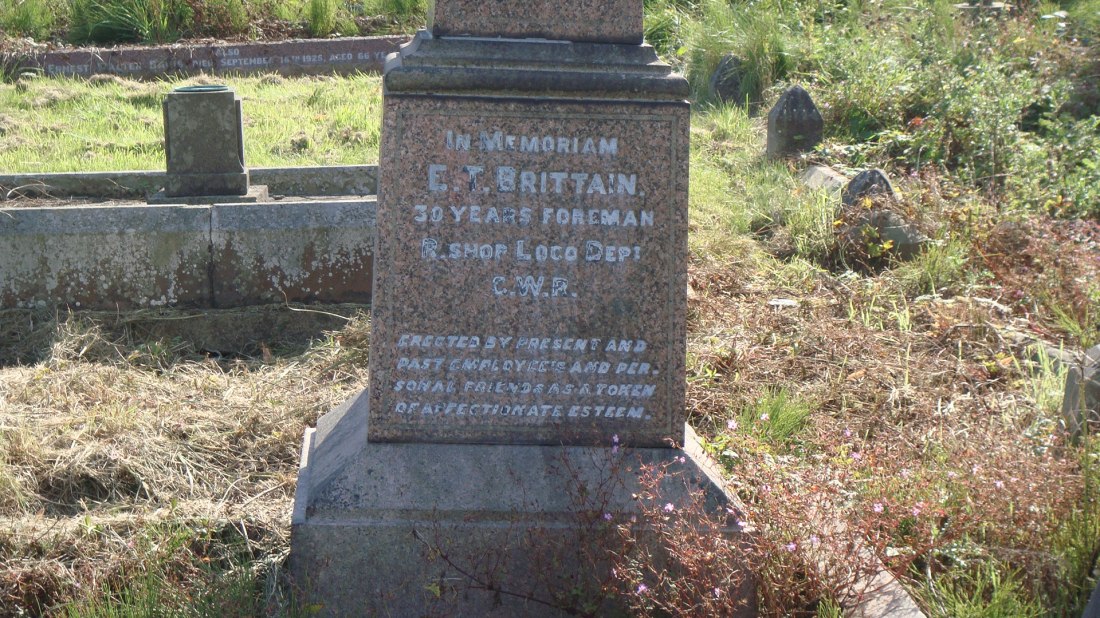
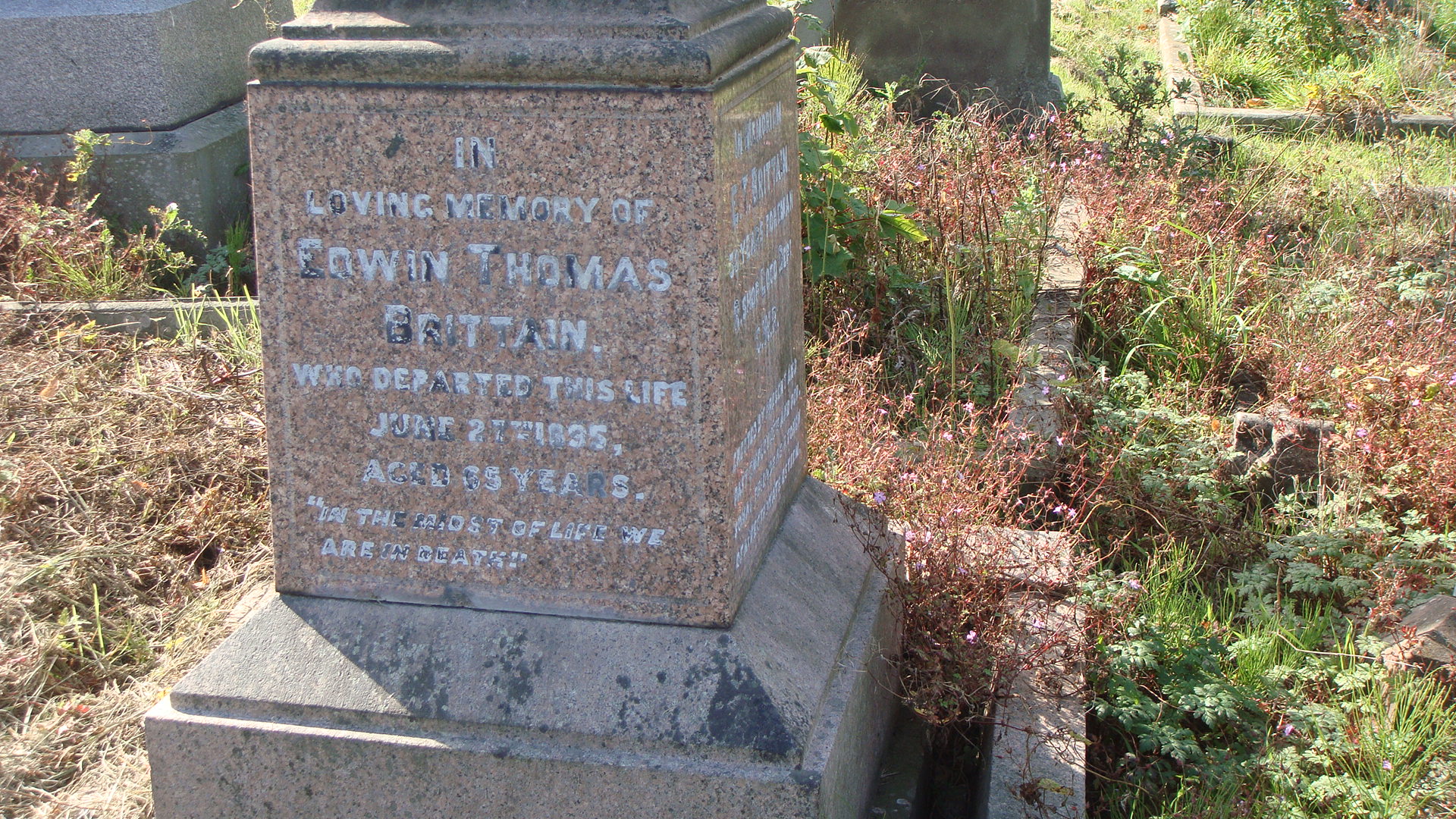
The Late Mr E.T. Brittain – We gave a brief account in our last Saturday’s issue of the sudden death of Mr E.T. Brittain of Wellington-street, New Swindon, the esteemed foreman of the R. Shop (Loco. Dept.) of the GWR Works.

Mr Brittain, who was 65 years of age, was well-known in New Swindon. For many years he occupied a seat on the Council of the Mechanics’ Institute, and for 17 years he was a director of the New Swindon Industrial Society, and during the last 12 years he ably filled the office of chairman. Deceased also took a great interest in political matters; he was a staunch Conservative, and at the time of his death was treasurer of the North Wilts Conservative Association.

His position in the GWR Works was unique, as he was the oldest foreman in the Works. He commenced as assistant foreman in the R. Shop, the principal fitting and machine shop, under the late Mr James Haydon. Upon that gentleman being appointed as Assistant Works Manager, Mr Brittain continued in the same capacity under Mr E.J. Davies. When some 20 years ago, Mr Davies obtained the appointment of the managership of the Engine Department of Messrs Ransomes, Sims and Jefferies, Limited, Ipswich, Mr Brittain was appointed to the chief foremanship, a position which he held and worthily filled to the day of his death.

We understand that for many years nearly all the fitter, turner and erector apprentices received their early training under Mr Brittains’s management and we are sure that his lamented death will come as a great shock to engineers who have been trained under him, and who are to be found at most centres in the world where engineers are employed.

The funeral of deceased took place on Monday last, and was the occasion of a striking demonstration of respect on the part of the officials and workmen of the GWR and the various bodies with which deceased was connected, as well as the general public.

The funeral cortege left deceased’s late residence in Wellington-street at half-past four, and proceeded to St Mark’s Church, where the first portion of the service was conducted by the Vicar, the Hon. and Rev. Canon Ponsonby, who also read the concluding service at the graveside in the Cemetery.

There were five mourning carriages, and the chief mourners included deceased’s three sons and brother-in-law. Deceased being an old Volunteer, eight members of the New Swindon Companies attended as bearers. Nearly 400 persons followed the remains from the church to the graveside, and the route was lined with spectators, besides which a vast crowd assembled in the Cemetery. Some idea of the extent of the procession may be gathered when we state that it extended from the Cemetery entrance throughout the whole length of Radnor-street.

The coffin was covered with an immense number of beautiful wreaths and crosses and other floral offerings. Amongst the mourners, besides deceased’s relatives, we noticed Mr. D.E. Marsh (Loco. Dept.), Mr J. Fordyce Stevenson (district engineer), Mr F.C. Kent (district estate agent), Mr Webb (representing Mr Carlton), Messrs. T.B. Watson, A. Adams, W.H. Ludgate, E.L. Pugh, Theo Wright, R.B. Pattison, W. Mole, W. Hunt, T. Veness, W.H. Lawson, J. Ireland, T. Stone, T. Money, H. Green, G.M. Butterworth, R. Baker, A. Nash, W. Booth, W. Harvie, R. Affleck, H.J. Southwell, F. Tegg, W. Sewell, D. White, J.D.R. Phillips, T. Spencer, H. Morris, R. Chirgwin, H. Wright, L. Dyer, H. Andrews, J. Christelow, E.Y. Westlake, E. Harvie, R. Hogarth, W. Morrison, R.N. Sutcliffe, E. Burns, W. Clark, J.S. Protheroe, W.J. Greenwood, C. Fox, T.C. Morgan etc. etc. The funeral arrangements were satisfactorily carried out by Mr H. Smith. Mrs Brittain and family desire to thank the many kind friends for the expressions of condolence and sympathy in their recent bereavement.

The Swindon Advertiser, Saturday, July 6, 1895.

20240807_143421[4011]


Edwin Thomas Brittain pictured centre – published courtesy of Rosa Matheson – Railway Voices ‘Inside’ Swindon Works

Edwin Thomas Brittain was born in the parish of St Pancras on November 21, 1829, the eldest son of Henry James Brittain, an undertaker, and his wife Charlotte.

He married Louisa Elizabeth Hooker at Trinity Church, St Marylebone on January 11, 1852 and the couple soon moved to Wolverton in Buckinghamshire where Edwin was employed at the London & North Western engine works. Their son Thomas is born in Wolverton but by 1853 the family have moved to Swindon.

Edwin Thomas Brittain entered the GWR Service on July 26, 1853 working as a Fitter in the Loco factory. He was made Assistant Foreman on October 7,1865 and Foreman on January 12, 1867.

At the time of the 1861 census he was living at No 6 King Street with Louisa and their five children. The couple had nine children in total, moving to Wellington Street where they lived at No 18 and No. 39 at various times over the next twenty year period.

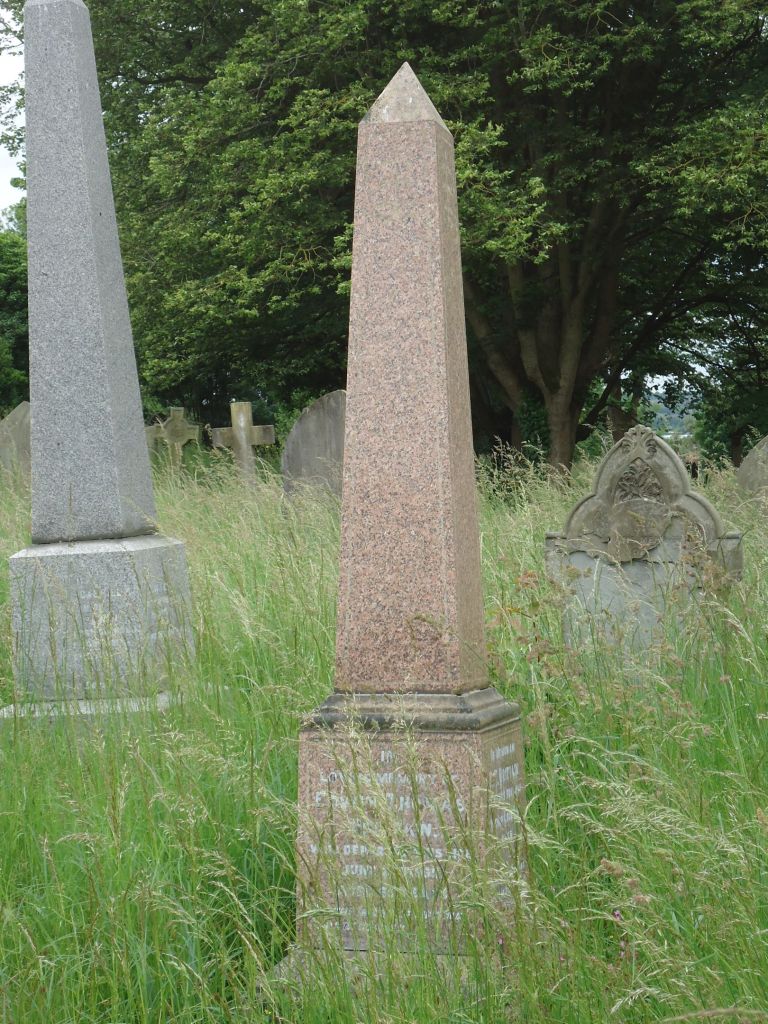
Edwin died at his home at 39 Wellington Street on June 27, 1895. He left effects to the value of £181 5s 2d. Louisa survived him by eighteen years and is buried here with him.

Snap village and the Bates family

The re-imagined story …

My mother wasn’t an emotional type of woman, but when John and Hannah Bates moved away she was inconsolable. I don’t think I’d ever seen her cry before, so it came as quite a shock.

The Bates boys Bill and Tom had already gone and with the selfishness of youth all I could think was how lucky they were to escape. There was nothing in Snap anymore, but to be honest the village probably never had a thriving social life; not like Swindon where there were theatres and clubs and pubs.

But what there had been in Snap was a sense of community, and now even that had gone. I think that’s probably what upset mother as much as the departure of John and Hannah Bates. The families she had lived alongside had all left – the babies born at the same time she had hers, the children raised, the hardships shared, the good times celebrated, all in the past.

I hoped we might follow the Bates family but my parents were loathe to leave. We stuck it out a while longer, but things were never going to improve. There would be no new jobs, no one moving into the empty cottages; no one even came back to visit those of us still here.

I never made it to the bright lights of Swindon. My parents moved up the road to Aldbourne, and now I find, like mother, I don’t like change much either.

The facts …

The first recorded mention of Snap, or Snape as it was sometimes called, is in a medieval document dated 1268. In the 14th century Snap was the smallest settlement in the parish of Aldbourne and one of the poorest in Wiltshire.

During the last decades of the 18th century the village consisted of five cottages built on the southern side of the valley and by 1851 there were just 41 inhabitants. For more than one hundred years Snap village was the home of the Bates family.

Three generations of the Bates family made their home in Snap. They worshipped at the Wesleyan Methodist Chapel at Woodsend where John Bates was a trustee, and worked as agricultural labourers on the two farms that supported the village.

In 1861 John Waldron owned Snap Farm where he employed 8 men, 7 boys and a groom on his 411 acre holding. Thomas Bates was employed as a carter, living in one of the larger properties in the village which had an extension to accommodate the cart and stable the horses.  His son Joseph boarded at Snap Farm where he worked as under carter. Thomas’ father Joseph lived in the village and at the age of 76 he was still working as an agricultural labourer.

The difficult years 1871-1880 saw the onset of an agricultural depression. A series of cold, wet summers resulted in a succession of poor harvests and the residents of Snap began to move away.

At the time of the 1881 census there were just seven occupied cottages and a property described as a hut where the young shepherd William Marten lived.

John Bates lived at Snap Cottage with his wife Hannah and their three youngest children, William 14, Emily 10 and Thomas 7. For William, already working as an agricultural labourer, and his younger brother Thomas, there was no future for them in Snap.

William moved to Swindon where there were jobs aplenty in the railway factory. He married Ada Florence Gerrard at St Mark’s Church on September 30, 1893 and at the time of the 1901 census the couple and their three young children Dorothy 6; Hubert 4 and 8 month old Frances, were living at 13 Curtis Street. William’s brother Thomas was boarding with them and the brothers both worked as Machinemen in the GWR Works.

Back home in Snap a series of events would sound the death knell for the village. William’s parents had already left the cottage that had been their home for more than thirty years and moved to East Garston near Lambourn. Then in 1905 Henry Wilson, a butcher and sheep dealer from Ramsbury, bought both Snap and Leigh Farms. He quickly turned the land to grass and shipped in a more profitable crop – sheep.

Snap was all but deserted with just two remaining residents, James and Rachel Fisher. Following the death of her husband, Rachel was persuaded to move into Aldbourne, which she found too quiet, missing the birdsong and the barking of foxes in her cottage garden at Snap.

Following the outbreak of war in 1914 the village was used by the War Office for military training. The cottages fell into ruin, the stones robbed for new building in neighbouring Woodsend during the 1940s.

William Bates died on September 26, 1925 at his home in Curtis Street. His funeral at Radnor Street Cemetery took place on September 30th when he was buried in plot D907 where he was later joined by his son Hubert who died in 1932 and [Ada] Florence, his wife, who died in 1943.

William and Hubert and Florence Bates

Snap 3

Snap 2

Above photograph pictures the ruins of Snap farmhouse in the 1930s.

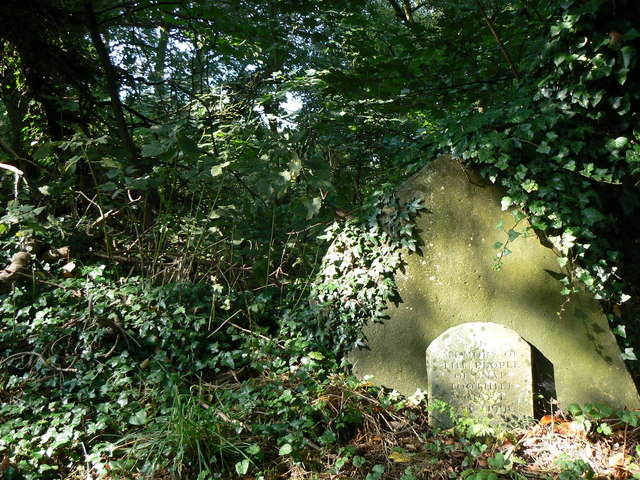
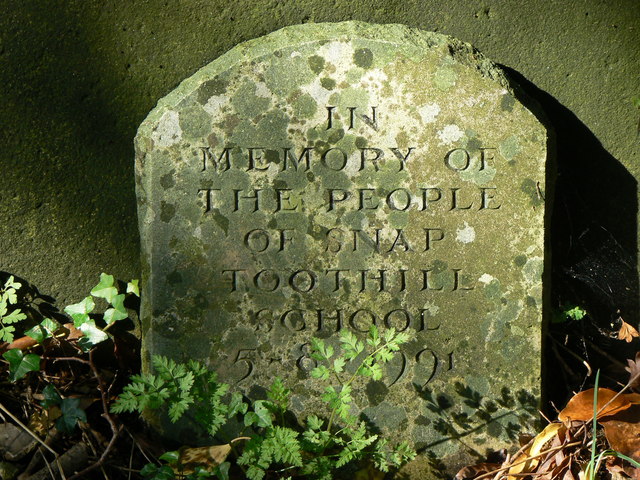
In 1991 the pupils of Toothill School, Swindon placed a stone in memory of the people of Snap. Photograph is published courtesy of Brian Robert Marshall.

The Death of Mrs Swinhoe

The re-imagined story …

I stood across the road from Park House, amongst a group of women, all of whom had been in receipt of an act of kindness performed by Mrs Swinhoe.

She wasn’t a demonstratively affectionate person, not a woman to place an arm around your shoulder, or take your hand in hers. She wasn’t one for displays of emotion, but Mrs Swinhoe was one of the kindest women I have ever met.

She was a stalwart of St Mark’s Church, a member of several committees, a fund raiser and a generous benefactor. She would be greatly missed in the railway community.

Everyone in the railway village had been in receipt of her kindness at some time yet she had never sought comfort from a stranger, except on one occasion.

I was employed as a housemaid in the doctor’s residence when the Swinhoe family lived in London Street. It was a busy household as the property served as the doctor’s consulting room and the Swinhoe family was quickly growing, three little daughters and another child on the way when I joined the establishment in 1864.

Mrs Swinhoe’s confinement proved difficult when on May 19 two little girls were born and quickly named Eliphalette and Etheldreda. On June 20 the babes were baptised by their grandfather at St Michael’s Church in Cornhill in London, but the event was quite subdued; all was not well with the smaller baby Etheldreda.

I was with Mrs Swinhoe the day her baby died. I’d never seen sorrow like that before. I was fifteen years old. I didn’t know what to do or what to say. What words of comfort can you offer to a woman who has just held her baby while it died? I put my arms about her as she sobbed and sat with her until her husband returned from the Works where he had been attending an accident. I left them to their grief.

Mrs Swinhoe is to be laid to rest in Swindon’s cemetery on Kingshill. Her little daughter was buried in the churchyard at St Mark’s, but that is closed to burials now.

It must have been a dreadful thing – to be a doctor and unable to save your child.

London Street 5 (2)

The facts …

Diana Maria Matilda Wrench was born on June 17 1836 at St Michael’s Rectory, Cornhill in the City of London the daughter of Rev. Thomas William Wrench and his wife Diana Maria. She married George Money Swinhoe, a Practitioner Surgeon, at the church where her father officiated on August 13, 1859 and by the time of the 1861 census, they were living at 4 London Street, Swindon.

The couple went on to have a large family, seven daughters and five sons survived to adulthood. Diana died after a short illness and was buried in Radnor Street Cemetery on April 25, 1894. She was the first of six members of the Swinhoe family to be buried in the large family plot numbered E8228/29/30.

Death of Mrs Swinhoe

We regret to announce the death of Mrs Swinhoe, wife of Dr G.M. Swinhoe, of Park House, New Swindon. The deceased lady had been ailing only a day or two, and died somewhat suddenly on Sunday morning. Her death will be a great loss in St Mark’s parish, where she has been such an excellent worker for many years past. The circumstances are rendered still more sad by the fact that deceased’s son Dr. G.R. Swinhoe, returned with his bride from his honeymoon trip only a day or two previously.

On Sunday at St Mark’s church (where Dr Swinhoe is vicar’s warden), the organist, Mr Geo. Burrows, played the “Dead March in Saul” at each service.

In consequence of the sad event, a concert and operetta which was to have been rendered on Monday evening in the Mechanics’ Institute, New Swindon, and in which the Misses Swinhoe were to have taken part, was postponed.

It would be altogether superfluous for us to enter into panegyrics respecting the deceased lady, the long period Dr Swinhoe has been the friend in need to the great majority of the inhabitants of New Swindon, and the “right hand” Mrs Swinhoe has been to him, are too well known and appreciated to make the telling necessary. Suffice it, that the sad intelligence was received with profound and genuine regret throughout the neighbourhood. The deceased leaves in addition to her stricken husband seven daughters and five sons to mourn their irreparable loss.

The Funeral

Took place on Wednesday morning and was of a quiet and private character. The funeral cortege left the late residence of the deceased lady, Park House, about 11.15 am. The first part of the most solemn service was read at St Mark’s Church, by the Hon and Rev Canon Ponsonby, and there was a crowded congregation, a large number being unable to gain admission.

At the grave side this number was still further increased. The first part of the service being over, the procession wended its way towards the cemetery where the Rev Canon Ponsonby read the remaining portion of the burial services. The remains were buried in a bricked grave, lined with moss, primroses and other flowers. The coffin, which was of oak, with very massive brass fittings and a large Latin cross on the lid, born the following inscription: – “Diana Maria Matilda Swinhoe, Died 22nd April, 1894, Aged 56 years.” It was conveyed in a hearse, and completely covered with beautiful wreaths.

Messrs Chandler Bros. were the undertakers, and discharged the funeral arrangements in a most satisfactory manner. The coffin was made by Mr. T. Barrett.

Extract from the Swindon Advertiser April 1894.

Swinhoe family (2)

Diana Maria Matilda Swindon aged 56 years was buried on April 25, 1894 in grave plot E8229.