Highgate Cemetery

What better way to spend a wet and windy Friday than to go on a cemetery walk.

I recently went with two new cemetery loving friends on a trip to Highgate Cemetery. For many taphophiles Highgate ranks high on the list of must visit cemeteries and I can confirm it did not disappoint.

Highgate is a cemetery of two halves, bisected by Swain’s Lane. We were met at the entrance to the older, West cemetery by our guide Martin who conducted us on a ‘highlights’ tour and a masterclass in all things cemetery focused.

We first stopped at the grave of James Selby, a coachman who won a £1,000 bet by driving his coach and horses from London to Brighton and back in under eight hours. We marvelled at the enormous Otway vault with its mosaic floor, once visible through a glass topped cover while at the grave of Baronness de Munck, Martin told us the significance of the Pelican engraving on the headstone, symbolic of sacrifice and a mother’s love, and something I had never heard of before.

I never expected we would be able to enter the Terrace Catacombs but Martin unlocked the door and led us into this twilight world of burials. Badly vandalised in the 1970s there was still much to see and learn as we listened to the story of surgeon Robert Liston described as ‘the fastest knife in the West End.’

Amongst the ornate headstones and tombs and massive mausoleums (the Beer Mausoleum is bigger than my house!) the most moving grave for me was that of Highgate’s lost girls. Ten young girls and women, inmates of the Highgate penitentiary, a reformatory for “fallen women” are buried in an unmarked grave and remained forgotten and unknown until historians Rowan Lennon and Sam Perrin researched their stories in 2014. The first of the girls buried in the grave at the cemetery’s furthest boundary was 12 year old Emma Jones in 1862. The last was Agnes Ellis, 29 who died in 1909. The Lost Girls are now included on the official tours where their stories have a new “life”.

We three had our own personal mission – to get to the bottom of a burial that had once taken place in the Egyptian Avenue but whose coffin was reputedly no longer there.

Ellen Medex was the long suffering mistress of Henry, 5th Viscount Bolingbroke whose country seat was at Lydiard Park. Apparently his intention to marry the young Belgian born woman had been thwarted by her sister and it looks like Henry stopped pressing his suit thereafter. The couple sojourned on the continent for awhile before returning to London and a life lived as Mr and Mrs Morgan. They had four children, of whom only one, a daughter Ellen Rose, survived to adulthood before Henry took up with a servant from Lydiard, Bessie Howard. When Ellen died in 1885 Henry was overcome by grief, apparently! He chose the fashionable Highgate Cemetery as his preferred burial place for his “wife” and paid £136.10.0 to have Ellen interred as the Viscountess Bolingbroke. There is, however, no evidence that Henry ever married Ellen and even the entry in the burial registers describes her as “wife” (in inverted commas).

So why did I think Ellen had been removed? Well, someone told me she had. However, Nick at Highgate confirmed that she is still most definitely there and he includes her on his guided walks, which was lovely to learn.

The other mausoleums in the Egyptian Avenue have inscriptions by the door, but of course Henry didn’t do this for Ellen. He probably wasn’t brave enough to declare her status as Viscountess Bolingbroke in so public a place when there were many who knew she wasn’t.

One visit to Highgate is definitely not enough and my new found friends and I want to return. And now we have an ambitious plan to visit the remaining six cemeteries on the “Magnificent Seven” list. Look out Kensal Green – here we come!

The Egyptian Avenue, Highgate Cemetery

View from the Egyptian Avenue, Highgate Cemetery

The Egyptian Avenue where Ellen Medex is buried as Viscountess Bolingbroke

Cemetery map of the Egyptian Avenue – Ellen Medex (Viscountess Bolingbroke) is buried on the second right.

Ellen Medex – published courtesy of the Friends of Lydiard Park
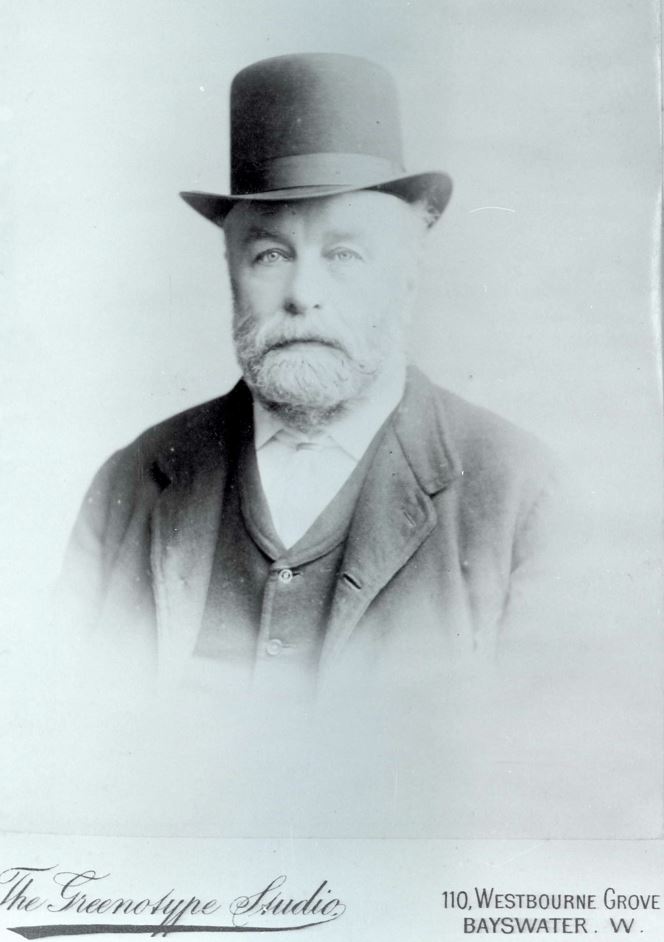
Henry, Viscount Bolingbroke – published courtesy of the Friends of Lydiard Park

Henry Simpson – overdose of laudanum

Laudanum was the 19th century go-to drug for – well, pretty much anything really. The opium tincture was used to relieve everything from diarrhoea and the common cold to heart disease. It was a pain suppressant, induced sleep and was very, very addictive.

It was also very popular in Victorian artistic circles. One of the many victims of laudanum addiction was Elizabeth Siddal (1829-1862) a talented artist in her own right but better known as the muse, mistress and eventual wife of Pre-Raphaelite artist Dante Gabriel Rossetti. Lizzie died of a suspected overdose of laudanum following the birth of her stillborn daughter.

Laudanum was readily available, cheaper than a bottle of gin and in Swindon in 1888 could be bought over the counter by a 14-year-old girl, apparently.

This is the story of Henry Simpson who also died from an overdose of laudanum taken to relieve back pain.

Henry Simpson was born in Lechlade in about 1837, the son of plasterer John Simpson and his wife Sarah. Henry married Ellen Clifford in 1857 and throughout his life worked as a slater and plasterer, eventually adding grocer to his list of occupations, so obviously a hardworking man. The couple had two children, a daughter Lydia and a son William. In 1861 the family were living in Kempsford. By 1871 they had moved to Poulton in Wiltshire and by 1881 they had arrived in Swindon and were living at 21 Oriel Street, described on the census returns of that year as a Grocer Shop.

Death Through an Over-dose of Laudanum at New Swindon

Yesterday (Friday) Mr W.E.N. Browne (Coroner for North Wilts) held enquiry at the “Whale” Inn, Princes-street, New Swindon, touching the death of Henry Simpson, plasterer, who was found dead in bed on Thursday morning at his residence in Oriel-street. Mr. J. Maylott was chosen foreman of the jury.

After viewing the body, the first witness called was Richard James Page, who stated that he had lodged with deceased for 10 years. Deceased was at work on Wednesday last, but went home in the afternoon, complaining of pains in his back. He had been suffering all the week. On the previous Saturday someone recommended deceased to take a dose of laudanum to ease the pain. Deceased obtained a bottle, and on Sunday evening he took 30 drops in some water. Witness counted the drops. Deceased then went to bed, and got up as usual on Monday morning. He took about the same quantity of laudanum again on Monday night. Witness did not see the bottle again until Thursday. It was then empty, but was quite full when deceased bought it.

Minnie Browning, 14, a young girl residing in Oriel-street, proved going to Mr Smith, chemist, of New Swindon, and obtaining a bottle of laudanum and some opodeldoc, for which she paid 1s, and told the chemist it was for Mr. Simpson.

Hannah Browning gave evidence, stating that she was called to deceased’s house on Thursday morning about 11 o’clock, and between twelve and one she was asked to go and call deceased, as he had not got up. She did so but received no answer. She went half an hour afterwards and went into the room, and saw deceased in bed. She felt his hand and found it quite warm, but stiff. She then sent for some one, and she felt sure he was dead.

Dr Arnold, MB, FRCS, LRCP, stated that he was called to see deceased about three o’clock on Thursday afternoon. He found him dead, lying in the position of natural sleep. He examined the body of deceased, but found no marks of violence. In his opinion deceased had taken an over-dose of laudanum. The bottle produced would hold about eight drachms. Two drachms would be sufficient to kill a man who was not used to taking it.

The jury returned a verdict that deceased came by his death through taking an overdose of laudanum.

The Swindon Advertiser, Saturday, July 21, 1888.

From the evidence given at the inquest by Richard Page it was stated that Henry was suffering from back pain, causing him to take to his bed. Perhaps today the verdict arrived at by the jury might have been a more empathetic ‘accidental overdose.’

Henry was buried in grave plot B1575 on July 23, 1888. This was most probably a public grave at the time of his death but was subsequently purchased in 1948 for the burial of Edward Richard Green and his wife Emma Selina who died in 1952.

Administration of Henry’s will was granted to Ellen and his personal effects were valued at £147 6s 9d. Ellen moved to Chester after Henry’s death where she lived with her daughter Lydia and son-in-law Charles Arthur White. She died at their home on June 14, 1890 and was buried in Overleigh Old Cemetery, Chester.

For those of you interested in the story of Elizabeth Siddal you can read more here. This is one of the many portraits Rossetti painted of her.

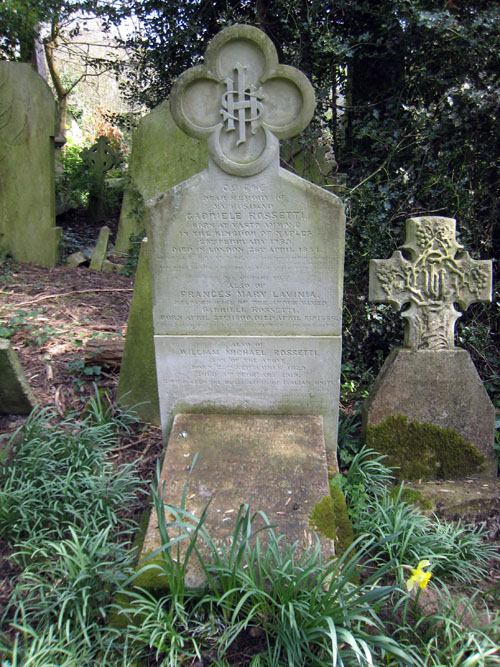
Elizabeth was buried in the Rossetti family plot in Highgate Cemetery.

Sheldon K. Goodman and the Cemetery Club

Have I ever told you about Sheldon K. Goodman and the Cemetery Club? I feel sure I must have mentioned him at some point.

Sheldon established the Cemetery Club website in May 2013 sharing his belief that cemeteries are not only beautiful places but an important historical repository, as he calls them ‘museums of people.’

A City of Wesminster Tour Guide, Sheldon has also worked with the National Achives, the BBC, Pride in London and the National Maritime Museum and he has visted most of the cemeteries on my wish list and some I’d never even heard of before.

When the Covid crisis shut us all down Sheldon transferred to online presentations, developing the short video pieces he has long been sharing on social media to full length talks and this week I joined his virtual tour of Highgate Cemetery. This is one cemetery I have long wanted to visit, but for various reasons have never managed to get to.

Sheldon took his audience on a virtual walk through this spectacular cemetery, introducing us to residents old and more recently arrived. With videos and supplementary images and information, I can well appreciate just how many hours of work go into producing one of these virtual walks and talks – and that’s without the palaver of ‘zooming.’

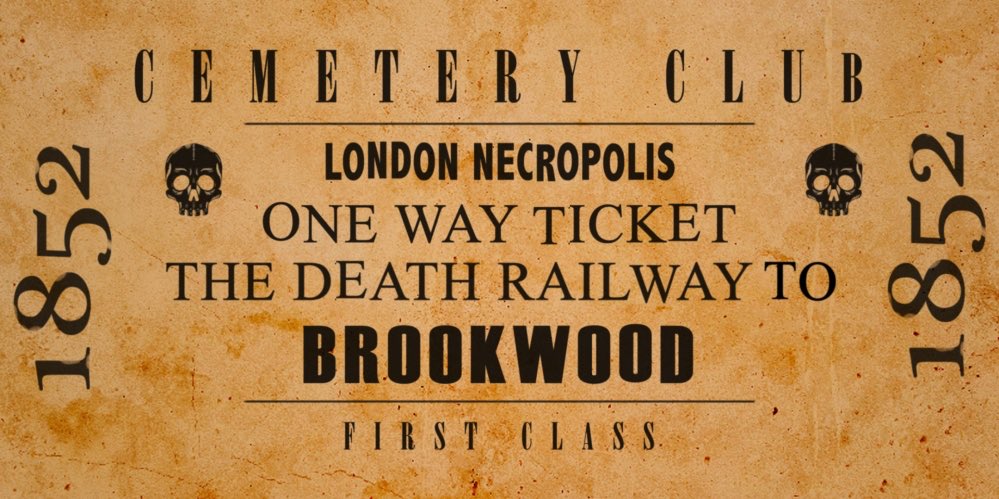
Now that Covid restrictions have been relaxed Sheldon is getting back into ‘live’ cemetery walks and has a busy programme planned. One of these days I will get to see him proper, but for the time being I shall continue to follow him online and I am busy buying tickets for the next two virtual cemetery visits – Myths & Monsters Saturday September 18 at 7 pm and Brookwood on Saturday October 2nd 7pm. Visit the Cemetery Club website for further details.