Joseph Wilkinson – a link with Swindon’s Past

Sometimes an obituary is written so evocatively that there is little I could possibly add. This is the story of Joseph Wilkinson who moved to Swindon in the 1870s and worked in the new Carriage and Wagon Works under Joseph Armstrong.

Death of Mr Joseph Wilkinson

A Highworth Octogenarian

Link with Swindon’s Past

By all the older generation of Swindonians, and especially by those who have been connected with the GWR Works, the news will be received with unfeigned regret that Mr Joseph Wilkinson, formerly a foreman over the Wagon Works, has passed away at Highworth, at the ripe age of 83 years.

Mr Wilkinson was an interesting link with Swindon’s past. Born at Marshe (Yorkshire), in 1828 he migrated at an early age to Chester where he followed his occupation as a coach builder. Thirty-five years ago he came to Swindon with the late Mr. Holden, and took up the position of foreman over the new wagon works, under Mr. Armstrong. Mr Wilkinson held the foremanship continuously for many years. Until 13 years ago he enjoyed capital health, even for his advanced age, and then, acting under medical advice, he retired at the age of 70 years. It is interesting to note that Mr. Wilkinson is believed to be the first foreman who received a pension under the superannuation scheme, which was initiated shortly before his retirement.

Upon his retirement the old gentleman went to live at Highworth, where he was liked and respected by all with whom he came in contact. Since this time Mr Wilkinson’s health had been gradually failing. He had been ailing off and on every since; and a couple of months ago he was taken ill with heart disease. Dr. Powell and Dr Lewty did all that medical skill could devise but inspite of their attentions Mr Wilkinson passed away on Saturday evening.

While he was in Swindon, Mr. Wilkinson took an active interest in the affairs of the Faringdon Street Wesley Church, where he was an assistant class leader but since his removal to Highworth failing health prevented him from participating in this branch of public service. His first wife predeceased him by 28 years, and it was while in Swindon that Mr Wilkinson married his second wife. Thirteen years ago Mr. Wilkinson’s second wife also died; but a family of one son and three daughters are left to mourn their loss.

The Swindon Advertiser, Friday, May 19, 1911.
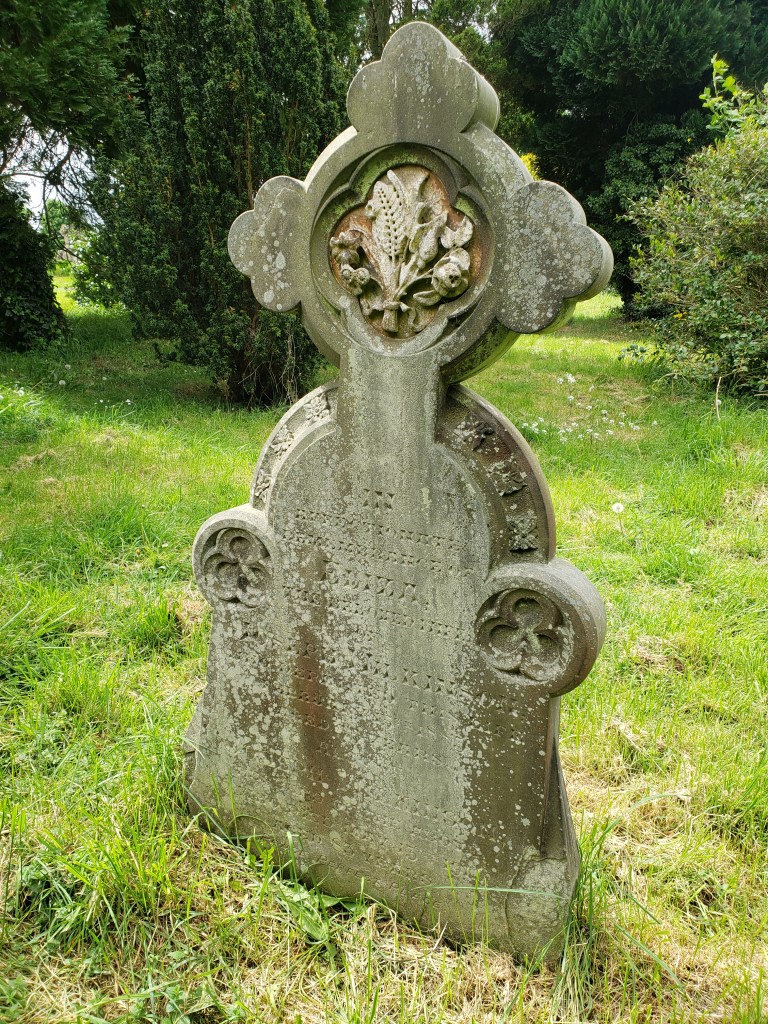
Joseph Wilkinson was buried on May 17, 1911 in grave plot A641 where he joined his first wife Eliza who died in 1883

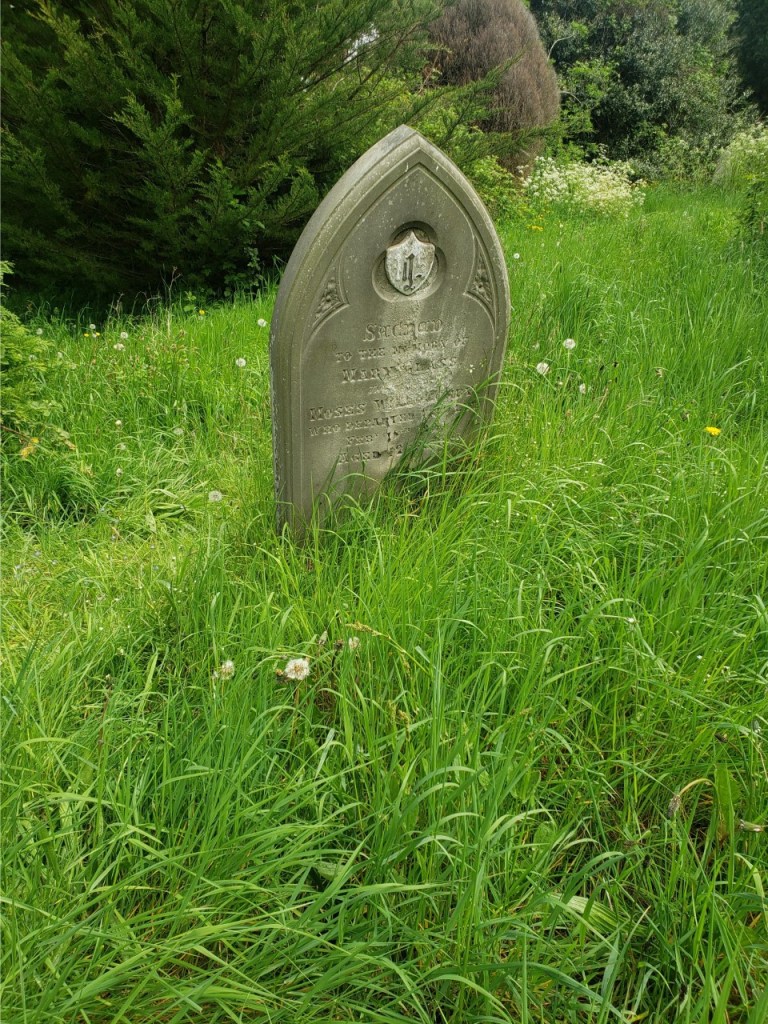
Moses Willoughby and the gossips

The re-imagined story …

“You remember Moses Willoughby?”

“Do I?”

“Yes, used to live in King Street, before his wife died.”

“No, I don’t remember him.”

“Yes you do – we always thought she was a lot older than him. Turned out there was only two years in it. We talked about it.”

“Did we?”

“He married again just a few months after she died. Don’t you remember?”

“No, I can’t say I do.”

“He moved up to Gorse Hill. We all reckoned his new wife had a bob or two.”

“Oh yes, I remember now. She was older than him.”

“No, that was his dead wife. His last wife was much younger than him. Give me strength – I think you’re losing your marbles.”

“No, I do remember him now. Moses Willoughby. Used to live in King Street. Moved to Gorse Hill.”

“Yes, that’s him. Well he’s dead.”

Early 20th century photograph of Cricklade Road published courtesy of Mr. T. Midwinter and Local Studies, Swindon Central Library.

The facts …

Thanks to the numerous genealogical resources available online it is now possible to piece together the history of those buried in Radnor Street Cemetery, even when the inscription on the headstone has deteriorated.

Moses Willoughby was born on October 22, 1818 and baptised in Highworth. He was the son of Charles and Ann Willoughby and grew up in Eastrop.

He married his first wife Ann Lay in Highworth on November 21, 1840. Their son John was baptised in Highworth on February 6, 1842.

Ann died in 1847. On the 1851 census Moses, 28 was working as an agricultural labourer and living at Bailey’s Piece, Highworth with his ten year old son John.

In 1855 he married for a second time. His bride was Mary Glass and the couple married in the parish church at Purton. They had a daughter Emily Kate baptised at Highworth on June 22, 1857. However, at the time of the census in 1861 there is no mention of Emily Kate, nor John, although he could well have left home/married by then.

By 1871 the couple had moved to Swindon and were living in Cetus Buildings on the canal side where Moses continued to work as a farm labourer. Moses declared that he was 46 and Mary 48.

At the time of the 1881 census Moses was employed as a factory labourer, almost certainly in the railway works. He states that he is 60 and Mary is 62.

Mary died at their home 3 King Street in February 1890, she was 72 years old. The funeral took place on February 19 when Mary was interred in plot A790.

On July 16, 1890 Moses married for the third time. His wife was Mary Ann Haskins, a 49 year old spinster. At the time of the 1891 census the couple were living at 255 Cricklade Road, Gorse Hill. Moses was still working as a General Labourer in the GWR Works and they had two lodgers, both labourers in the Works.

Moses died on March 9, 1892. He left effects valued at £84 0s 7d to his widow Mary Ann Willoughby. He was buried three days later in Radnor Street Cemetery in plot A790, which he shares with his second wife.

Attempts to trace John Willoughby and his half sister Emily Kate have so far been unsuccessful.