The story of the broken headstone

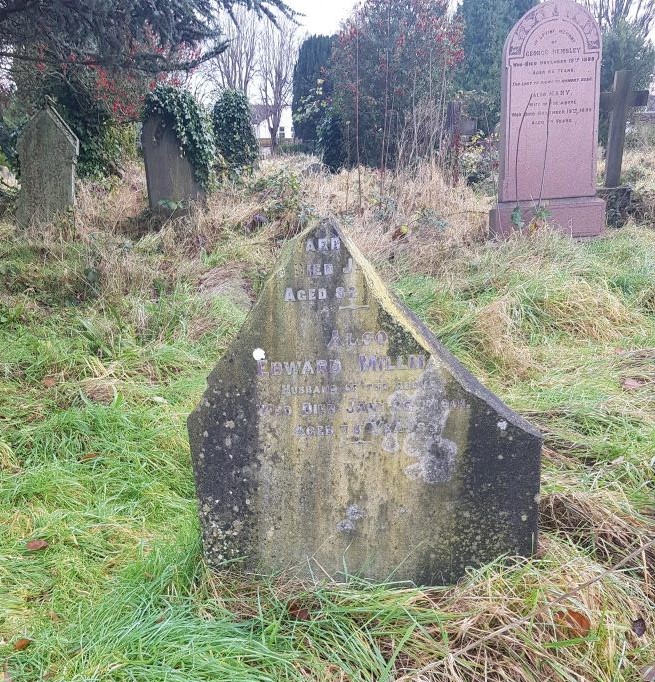
I’ve had this broken headstone on my to-do list for a very long time. I thought it might prove something of a challenge. I had long wondered who Frederick Millman’s lost wife was and once I discovered her, she pieced together a large Radnor Street Cemetery family history.
Delia Spry was born on December 25, 1805 in Ninfield, Sussex and was baptised in the parish church there on March 26, 1806. In 1829 she married Richard Veness at the Church of St Peter the Great, Chichester.
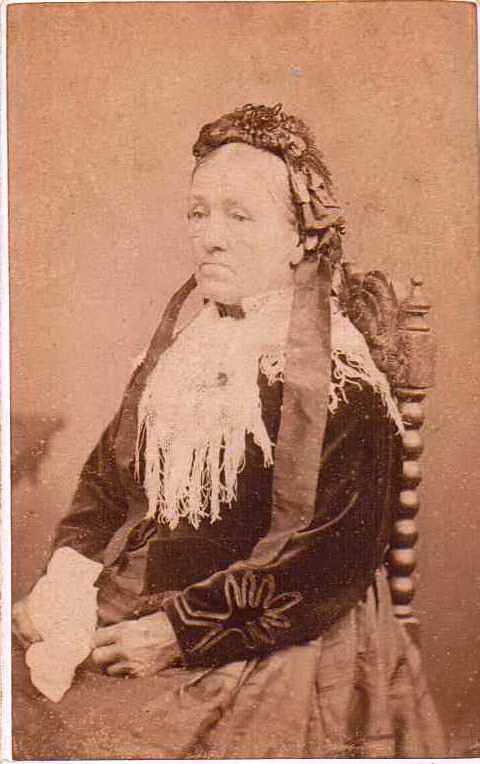
Delia Millman formerly Veness born Spry

I discovered Delia on the 1841 census returns, the first complete census available online. She is living in Hartlebury, Worcestershire, a widow with 5 young children – Maria 10, Jane 9, Thomas 7, Alfred 5 and 3 year old Louisa.

Needs must and it would not be long before she married again. Her second husband was Edward Millman, a bricklayer, and in 1851 the family were living in Wolverhampton. Delia’s two sons by her first marriage have taken their stepfather’s name and Delia has three children by her second marriage – Edward 6, Elizabeth 4 and 2 year old Mary.

Thomas Veness

By 1881 Thomas Veness, married with four children – Thomas, Alfred, Harriet and Reginald, had arrived in Swindon and the family were living at 30 Sheppard Street. You can read their story (especially that of their daughter political activist Harriet) here.

The death occurred at Worcester, on May 21st, of Mr. Thos. Veness, a retired foreman from the Locomotive Department at Swindon, at the ripe age of 87. Mr. Veness was one of the founders of the Swindon branch of the GWR Temperance Union, and as a member and chairman of the branch Committee rendered great service in the early days of the Union. He was an abstainer for over 60 years and an earnest worker. He was for many years connected with the Band of Hope movement, the Church of England Temperance Society, and the Good Templars. After the formation of a branch of the GWR Union in Swindon he gave himself whole-heartedly to forwarding the work and influence amongst the railway staff.

Great Western Railway Magazine August 1920

By 1881 Delia and Edward had returned to Bexhill but they would soon make there way to Swindon. Delia died at her home, 72 Bridge Street and was buried on January 6, 1887 in grave plot E8430 – the headstone broken and her name missing. Edward died 14 years later, at his daughter Mary’s home, 83 Victoria Road. He was buried with Delia on January 30, 1901.
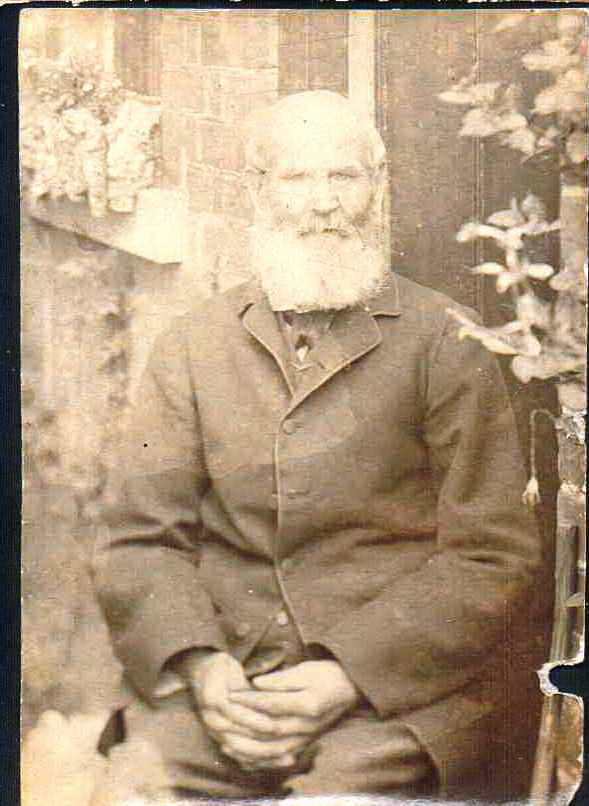
Edward Millman

Elizabeth Millman had also made her way to Swindon by 1881. She had married Frederick Benjamin Hook, another bricklayer, and in the census of that year was living in Upper Stratton with Frederick and her family of six children. You can read the sad story of Ben Lawson Hook who died in an accident in the Works here.

Elizabeth Hook nee Millman

Elizabeth died in 1892 and is buried in grave plot B1711 with her husband and her 16 year old daughter Nora who died in 1909.

And finally, (or is there more to discover) there is Mary Millman, Delia’s youngest daughter born in 1848. After working in domestic service as a nurse she married builder Henry William Bennett and by the mid-1870s they were also living in Swindon. (It was at Mary’s home that her father Edward died in 1901).
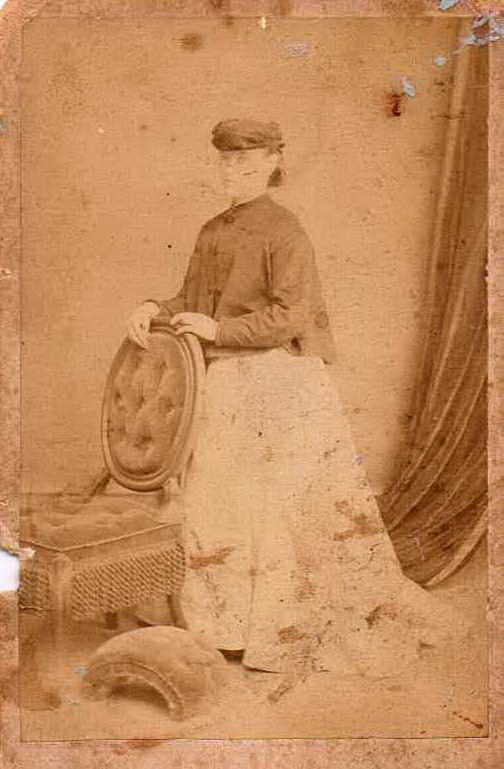
Mary Bennett nee Millman

Mary died in 1922 and is buried in grave plot C3672 with her husband Henry William, her son Aleck and daughter-in-law Sarah Annie.

My thanks go to family historians Ellen Magill and S.C. Hatt who have generously shared so much of their family history and photographs on Ancestry and Local Studies, Swindon Central Library enabling me to tell all these Swindon stories.

Martha Hale – a small life

The re-imagined story …

I bought Martha’s little oak gate leg table that always stood in her hall. I remember a vase of seasonal flowers always stood there; daffodils in the spring, sweet peas in the summer, dahlias and chrysanthemums in the autumn and evergreens in the winter.

It would break her heart to see her home being picked over like this, but what else could he do. Martha’s youngest son Owen took over the farm after she died but now he was retiring and moving away. He was taking just a few personal possessions with him.

His six cows stood mournfully lowing in the stalls as the auctioneer sold off the livestock while the furniture gathered across generations of the Philmore family was examined by neighbours who barely remembered them.

The ten-acre farm on Hook Street had been home to the Philmore family for more than four generations and a hundred years. Martha had been baptised and married in St Mary’s Church and in turn had brought her babies there to be baptised. Her parents were buried in the churchyard and her husband and daughter next to them.

This image has an empty alt attribute; its file name is charles-hale-3.jpg

I sat by Martha’s bedside in the bedroom beneath the eaves of the thatched roof; the room where she had been born. Her life had been a small one, intimately interwoven with farm and church, family and friends. She had barely moved out of the parish throughout her life, but in death she was to be separated from all this. There were no more burial spaces in the churchyard, when Martha died, she was buried alone in Swindon Cemetery.

I never went to the funeral. It was just too sad, I couldn’t bear it. I offered instead to get a tea ready for the mourners. They would need something to revive their spirits, Swindon Cemetery was a bleak place in January. I put a small pot of snowdrops on the hall table, just as Martha would have done.

This image has an empty alt attribute; its file name is martha-hale-lydiard-tregoze.jpg

The facts …

Once part of the Midgehall estate, Creeches, the ten-acre holding close to the Old School House, belonged to the Earls of Clarendon until 1860 when the Clarendon properties at Lydiard Tregoze were sold to Henry Meux, head of the Meux brewery. In 1906 Lady Bolingbroke bought the farm for £995 9s 8d.

Creeches was included in the Lydiard Park Estate sale of 1930.  The farm was described as a very desirable small holding of rich meadow land, the house was built of stone with a thatched roof, six rooms and usual offices.  The farm buildings included a cowstall and yard, stable and cart shed.  The property was let on a Michaelmas Tenancy to Mr A.H. Lopes at a rent of £45 a year.

With no interested buyer, the farm was retained by the St John family until after the death of Lady Bolingbroke in 1940 when what remained of the estate went on the market.  A copy of the sale catalogue bears a pencilled note that the property sold for £1,275 although other sources say it was bought by Amy Woolford for £1,405.

Martha was baptised at St Mary’s on June 9, 1816. She married Charles Hale at St Mary’s on October 18, 1836. The couple had six children, Thomas, Ann, Mary, Charles, Jane and Owen.

After her marriage to Charles Hale the family lived first at Toothill Cottages and then in a cottage next to the Sun Inn at Lydiard Millicent before returning to Creeches to look after Martha’s elderly parents.

By the time Martha died in 1890 the churchyard at Lydiard Tregoze was closed, and the burial ground at Hook not yet opened. Martha was buried at Radnor Street Cemetery in Swindon. Her gravestone is exactly the same design as the one on her husband and daughter’s grave at St Mary’s.

The spelling of the  name of the 10-acre farm on Hook Street, close to the Old School House, varied across the 19th century cemetery. In 1805 it was known as Cruises, in 1828 as Cruches and by 1888 it appears in records as Creeches.

Creeches Farm pictured in the late 19th century published courtesy of Lydiard Park.