A busy day in the Coroner’s Court

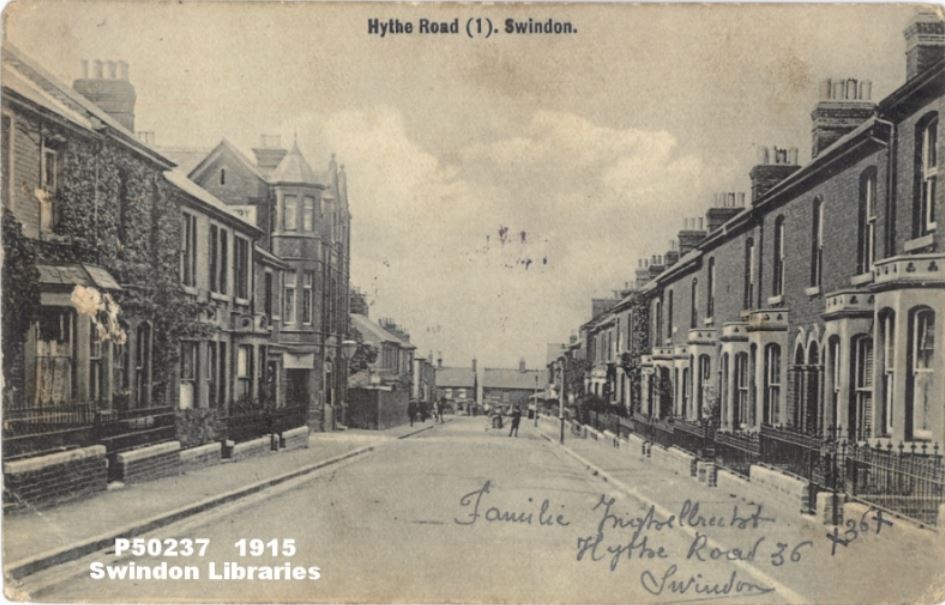
Hythe Road 1915 published courtesy of Swindon Local Studies

Friday January 3, 1908 proved to be a busy day for North Wilts Coroner Mr A. L. Forrester – Inquests in Swindon – Five on one day – A Record for the Borough. Three of the inquests took place at the Frome Hotel, Hythe Road. The first was described as ‘an extraordinary case’ and involved the sudden death of Mrs Ann Smith, aged 72 and some ‘remarkable evidence’ given by Eliza Adams during which she traded insults with the attending doctor, Dr Hirsch.

The second inquest was that of Charles Joseph Birchell, aged 25, a groom. Evidence was given by Frederick Goddard, 17, of Newport Street Swindon, who said ‘last Friday he was leaving his house, when he heard a pony gallop by. He looked along the house, and saw Burchell fall from the pony’s back. He ran to the spot and found Burchell unconscious. He picked him up and carried him into his (witness’s) house. Dr. Reid was sent for, and he on arrival ordered his removal to the Victoria Hospital. The pony did not stop, but galloped on up the street. Deceased lived at Prospect Villa, Wroughton Road.’

Dr J.C. Reid said on Friday last he was called to see deceased, who was suffering from concussion and laceration of the brain due to an accident. Burchell died at the Victoria Hospital on Wednesday evening as the result of secondary hemorrhage of the brain, owing to the shock caused by the accident.

The jury returned a verdict of accidental death.

Charles Joseph Birchell was buried in grave plot B2095, a public grave, on January 6, 1908, with three other unrelated persons.

The third inquest was into the sudden death of Charles Hillier, employed as a coachman by Captain T. Hooper Deacon, JP, of Kingshill House.

Hillier was waiting to convey his employer home after a New Year’s Eve party in Overton when it transpired that Hillier had fallen from the Brougham and died instantly.

A post mortem examination revealed that Hillier’s heart was “twice its ordinary size” and that he had died due to “valvular disease.”
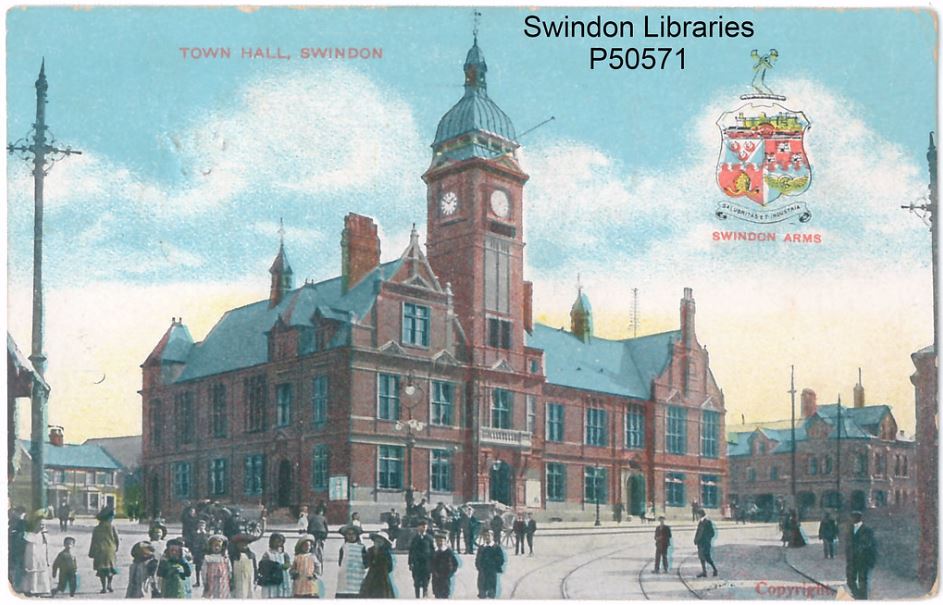
Image published courtesy of Swindon Local Studies

Coroner A.L. Forrester now headed off to the Committee Room at the Town Hall and the inquest of John Mason, aged 72.

A former railway labourer, John had suffered “a stroke of paralysis” some seven years prior to his death. Dr. Waters was called to John’s home in Byron Street. He pronounced “the cause of death was in his opinion, heart failure brought on by paralysis.”

John was buried on January 7, 1908 in grave A2470, a privately purchased family grave.

The final inquest on this busy day was that of Sarah Birch aged 83 who died peacefully in her sleep at her daughter’s home 46 Eastcott Hill. A verdict of “heart failure” was given.

No doubt Mr Forrester was pleased to have concluded the day’s business and returned to his home!
The Cemetery – Why Were the Gates Locked?

Following the verdict of the jury of ‘Suicide from drowning, while temporarily insane’ upon Sarah Richens, the Coroner’s attention turned to the pressing matter of the discourteously way in which he and the jury had been treated at the cemetery.

At the close of the inquest the coroner made some comments on how the jury and himself had been treated. When they arrived at the cemetery gates to go and view the body, about 4.45, they found the gates locked at the Ashford Road entrance. The police constable who was with them displayed some agility by climbing over the high iron gates and going down to the caretaker’s house and obtaining the keys.

Sergt. Everett informed the Coroner and jury that the caretaker of the cemetery was warned to have the gates open, as the inquest would be held at 4.30 p.m.

The Coroner asked the representatives of the Press to take notice of the facts, as the District Council ought to know that the Coroner and jury had been treated discourteously by having the gates locked against them.

A Juryman: I think they might also provide a light in the mortuary.

The Coroner: Yes, I think so too. We had no light whatever beyond a lighted match which one of the jurymen held.

The enquiry then closed.

The Swindon Advertiser, Friday, November 17, 1899.

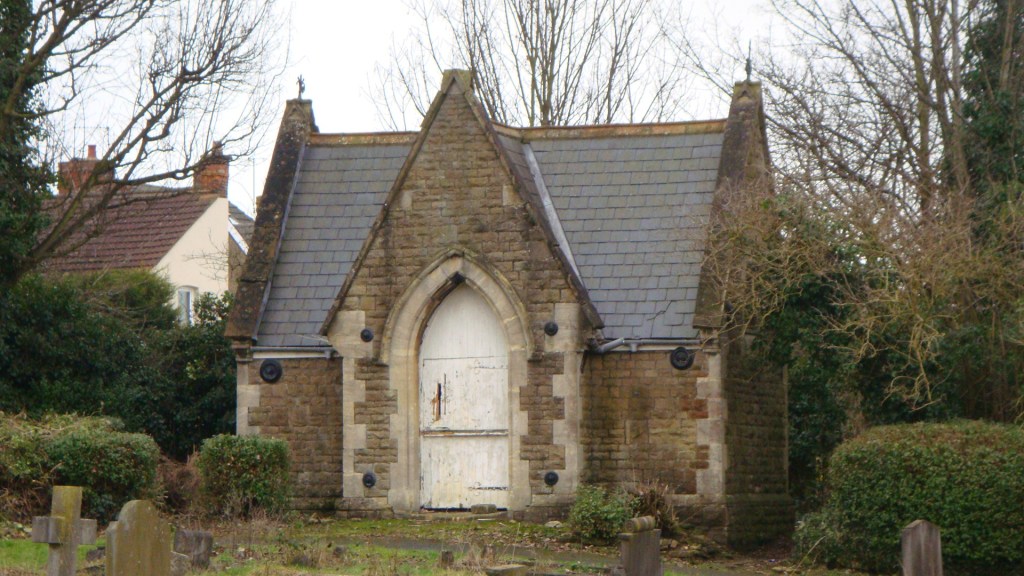
The mortuary building, Chapel and Radnor Street Cemetery caretakers lodge were designed by popular local architect W.H. Read.

Charles Robert Thompson – a carpenter’s suicide

Below you will read the awful story of Charles Robert Thompson. A story of a broken marriage, a runaway wife and a tragic suicide. It makes for dreadful reading. And in the middle of all this are two girls – the couple’s twelve year old daughter, Mabel Annie Thompson and a young servant girl, Beatrice Ferris.

Mabel was called as a witness at the inquest where she gave evidence about the events that had led up to her mother’s departure and her father’s state of mind and Beatrice told how she found the body of her employer.

It is impossible to imagine how these two girls were affected by the events of that terrible time and whether they ever truly recovered. There would have been no talking therapies available to them then nor probably any other form of help.

Mabel was born in Cirencester on January 11, 1891. In 1901 the family were living at 1 Stafford Street, although Charles’ name does not appear on the census as living with Emily and their three children. Was the marriage already in crisis?

In 1915 Mabel married George Woodward, a butcher with a shop at 107 Cricklade Road, Gorse Hill. At the time of her marriage she was living at Swindon House, The Square, Old Town. In 1939 Mabel was living at 220 Ferndale Road with her husband, three children and her father-in-law. She died in the June quarter of 1972, aged 81. She is not buried in Radnor Street cemetery.

A summer view across the cemetery

A Carpenter’s Suicide

Deserted by his Wife

A Pathetic Story

A further inquest was conducted by Mr W.E. Nicolson Browne at the Ship Hotel, Swindon this afternoon, touching the death of Charles Robert Thompson, carpenter in the employ of the GWR Co., residing at No. 12 Cambria Place, Swindon, who was found with his throat cut on Saturday morning.

Mabel Thompson, aged 12, daughter of the deceased, who gave her evidence admirably, said her father was 39. Her mother went away nine weeks ago with a Joe Barratt, and nothing had been heard of her. Joe Barratt was a lodger at deceased’s house, and was employed in the factory.

The Coroner: Was your father cut up about your mother going away?

Witness: Yes, sir. He mentioned it every day, and went to Cirencester and Glo’ster to try and find her.

Witness further said that Barratt was introduced as a lodger by her mother. One night her father had repeatedly to ask her mother and Joe Barratt to go to bed. They said they would go when they thought they would. A bill had recently arrived for her father who said on receiving it, he could not face it.

Beatrice Ferris, servant at deceased’s house, said she had been with deceased for six weeks. He had not in her presence or to her knowledge stated or hinted that he intended to take his life. He never drank to any extent. On Friday she bought him some brandy.

He frequently exclaimed, “Oh my poor head.” On Thursday he expressed a wish to be let alone when she went to rouse him she could not wake him. A bottle (produced) was found near him by his daughter Mabel. He woke eventually and went to bed. There was no disturbance during the night. On Saturday morning she saw a light in the w.c. She called to ask who was there, and receiving no reply, she pushed the door open and found Mr Thompson dead, with his throat cut. There was a chair there.

Hubert Knew, said he was living in deceased’s house at the time of the death. On Saturday morning he got up before six o’clock. He heard Mr Thompson shout from his room. “Who’s about?” He (witness) replied: “It’s only me,” and Mr Thompson said. “All right.” Deceased had appeared very much depressed lately. He knew that deceased and his wife had had a few words at times. Mrs Thompson had been away nine weeks.

Dr H. Brown, assistant to Dr Swinhoe, said he was called at 7.30 on Saturday morning to the deceased. He found the man dead with his throat cut, and a razor beside him. Death was due to haemorrhage, arising from the wound in the throat.

At this point a letter, which the deceased had left was handed to the Coroner. On the envelope was written: “My purse is on the shelf with all I have.” On looking at the letter enclosed in the envelope the Coroner said that there was no doubt the man had himself cut his throat, and he did not think it necessary that the letter should be read.

The jury returned a verdict of suicide during temporary insanity.

Swindon Advertiser Monday November 23, 1903

Charles Robert Thompson was buried on November 27, 1903 in grave plot C1395. He is buried with his wife Emily who died just three years later in November 1906. Also in the same grave are William S. Stone who died in 1929 and Charlotte Rose Wearing who died in 1933.