Gorse Hill Memorial

The following article was published in Swindon Heritage Magazine in the Summer 2015 edition. Swindon Heritage was co founded by Graham Carter, Mark Sutton and myself in 2013. During a five year period we produced 20 editions of the magazine plus a Battle of Britain 75th anniversary commemorative issue in 2015.

Sadly, Mark died in 2022, but his work to remember the Swindon men who served in the First World War continues at Radnor Street Cemetery.

A memorial to 19 Swindon men who died during the First World War might also have been lost forever – but for the diligence of Gorse Hill resident Paul Jevder.

Paul, who lives in St Paul’s Road, put out an appeal for the impressive marble memorial to be given an appropriate new home after he found it under a pile of rubbish on his property.

He had been clearing the ground in preparation for some building work when he made the discovery.

Swindon Heritage co-founder Mark Sutton was the first caller to answer Paul’s appeal, and dozens of other people also phoned, some looking for more information, but many recommending that Paul get in contact with Mark.

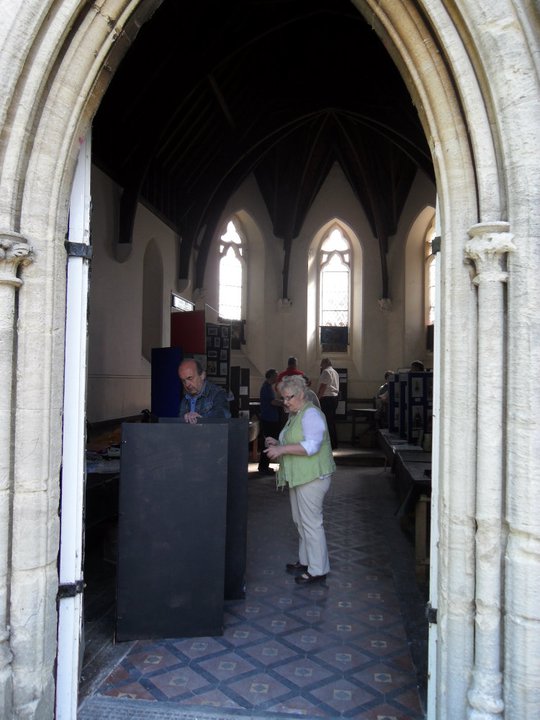
Within hours the memorial had been loaded into a van and moved to the chapel at Radnor Street Cemetery, which is already the home of several other memorials to the town’s war dead, including another from Gorse Hill. That one commemorates members of the working men’s club, although none of the names are duplicated.

It seems Gorse Hill folk were particularly keen to remember the area’s heroes because St Barnabas Church also has its own war memorial, made of wood, inside the church.

The newly found memorial is dedicated to the memory of former members of a ‘sabbath school’ who died in the war – and this was almost certainly attached to the former Wesleyan Chapel in Cricklade Road, because that building backs on to Paul’s property.

The chapel, along with associated land, has been earmarked for development into flats, and it is thought the memorial, which is slightly chipped but otherwise in good condition, may have become displaced during work to prepare for that.

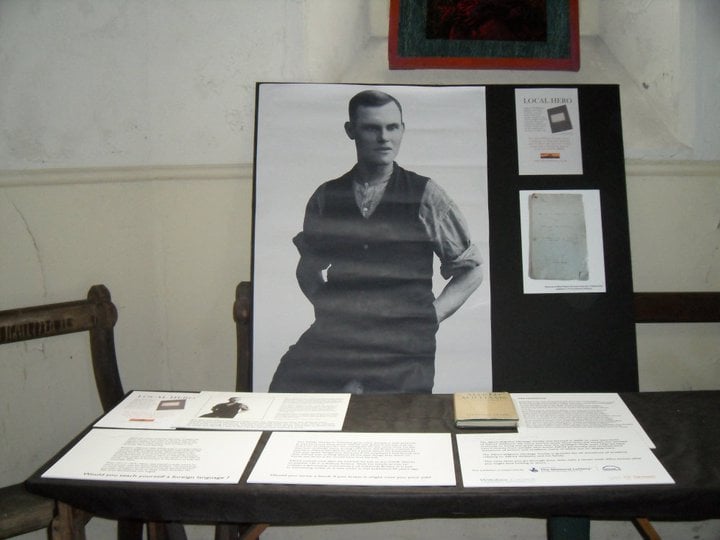
Thanks to his extensive research into Swindon’s military history, all the names listed on the memorial are familiar to Mark Sutton, who also owns medals and photographs associated with many of them including the ‘dead man’s penny’ (officially called a memorial plaque) that was issued to the family of Walter Thatcher after his death.

Walter, who lived at 4 King Edward Terrace in Gorse Hill, joined the Wiltshire Yeomanry in 1915, aged just 18, and ended up on the Western Front.

As with most of the Yeomanry, he was absorbed into the 6th Wiltshire Regiment, and was sadly killed on the Bapaume-Cambrai Road on March 23, 1918, during the big German offensives of that year.

He has no known grave, but is remembered on the Arras Memorial.

Two of Walter’s brothers also served.

Mark’s researches over the years also traced a photograph of another of those on the Gorse Hill memorial, Augustus Strange, who lived at 199 Cricklade Road, a stone’s throw from where the memorial was found.

Serving with the Royal Engineers, Augustus died two weeks before the end of the war, on October 29, 1918.

“It was nice to be able to tell Paul about some of the men listed,” said Mark, “including one, Sidney Curtis, who lived in the house opposite Paul’s.

“We’re really grateful to him for making sure it has been recovered and seeing it went to a proper home.

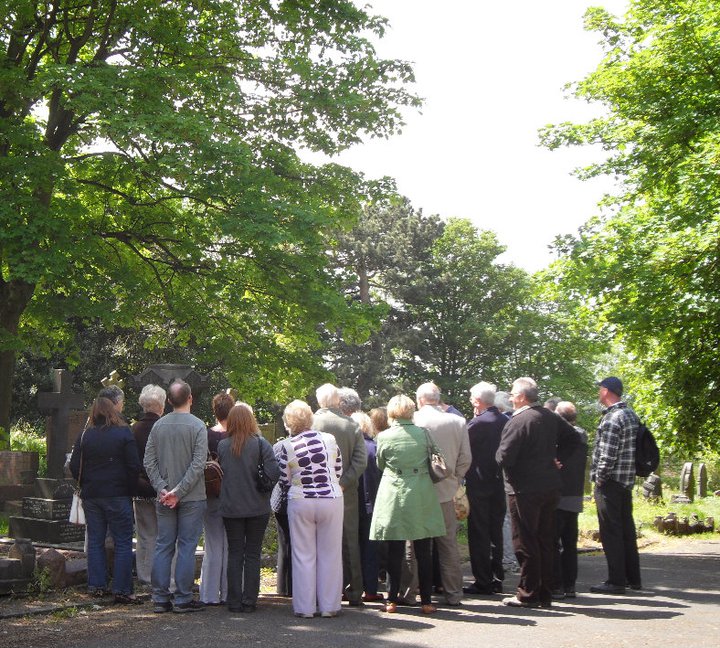
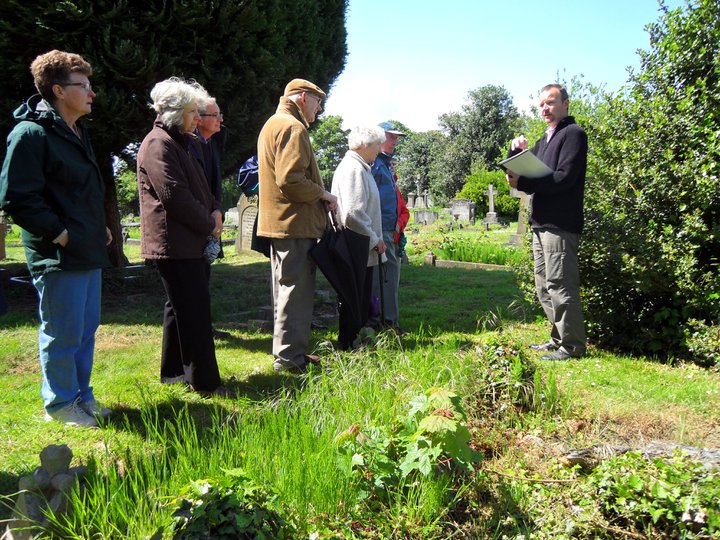
“It will now be safe at in Radnor Street, and anybody will be able to come and see it from time to time as the cemetery chapel is sometimes open for events, and during this summer is the meeting place for guided walks we are running on the second Sunday of every month.”

And Paul, who lived in Cyprus as a child and whose family are Turkish Cypriots, will have understood the relevance of a war memorial, having witnessed, at first hand, the bitter division of the island in 1974.

Swindon Heritage Summer 2015.

#TellThemofUs

Radnor Street Cemetery event – May 2011

I have spent this week scrolling through the Radnor Street Cemetery archives in search of stories to tell on our next guided cemetery walk. And then up popped a memory on Facebook from May 2011.

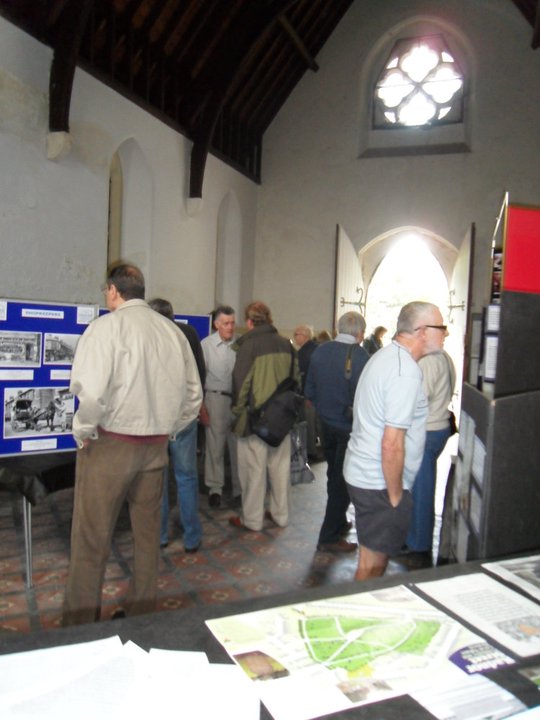
Mark and I had long established a programme of cemetery walks when I suggested holding a local history exhibition in the cemetery chapel. We fixed a date, May 21 and 22, and invited the local history groups who supported our cemetery walks to bring along a display.

I look back now and I’m amazed at how supportive and enthusiastic everyone was and how hard they worked across the two days.

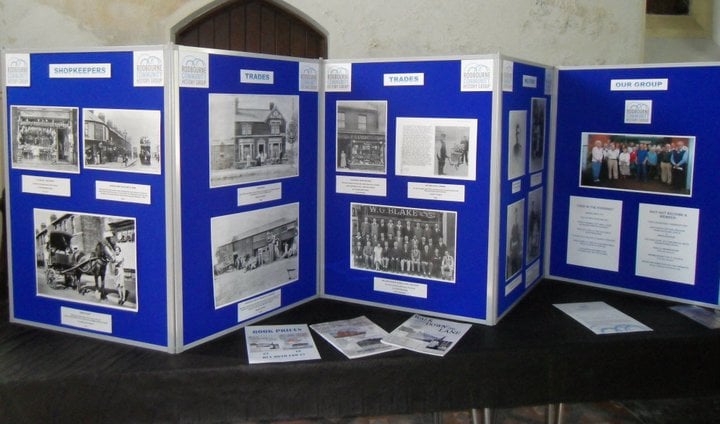
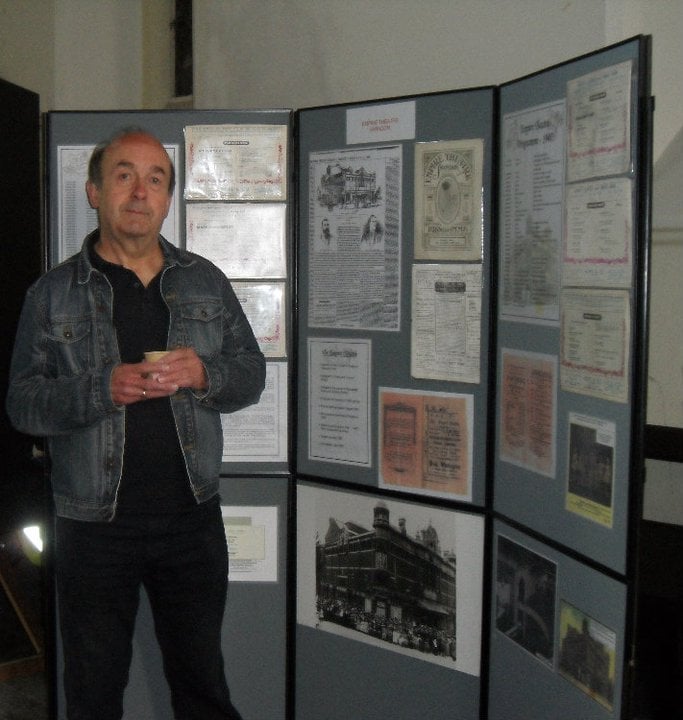
Members of the Swindon Society, the Rodbourne Community History Group, staff from Swindon Central Library Local Studies and Graham and Julie from the Alfred Williams Heritage Society all lugged their display boards, books and pamphlets up the steep cemetery incline to the chapel. Roger brought his Empire Theatre display and artist Andy Preston brought his ethereal artworks of the Radnor Street Cemetery angels. Mark and I conducted two guided walks across the two days.

Together we all shared our love of the cemetery and the fascinating history of Swindon and the people who made it a town of which to be proud. That weekend we met old friends and made new ones. We heard familiar stories retold and learned new ones. And we laughed – a lot!

As I look at the photos of that amazing weekend I am sad to see the faces of those we have lost in recent years. Bob, slight of stature but bold and brave, who we tried (unsuccessfully) to persuade to climb the old bell tower on a recce; and Mark, who told the stories of his First World War heroes, something those who heard him will never forget.

Join Andy and myself on Sunday June 1, 2025 for another guided cemetery walk. Meet at the chapel 1.45 pm for a 2 pm start.

Setting up

Alfred Williams Heritage Society

Artist Andy Preston

Radnor Street Cemetery display

Rodbourne Community History Group

Roger and the Empire Theatre display

The Swindon Society display

Setting up

the Dream Team

Our poster for the 2011 weekend event

Christ Church – The Old Lady on the Hill

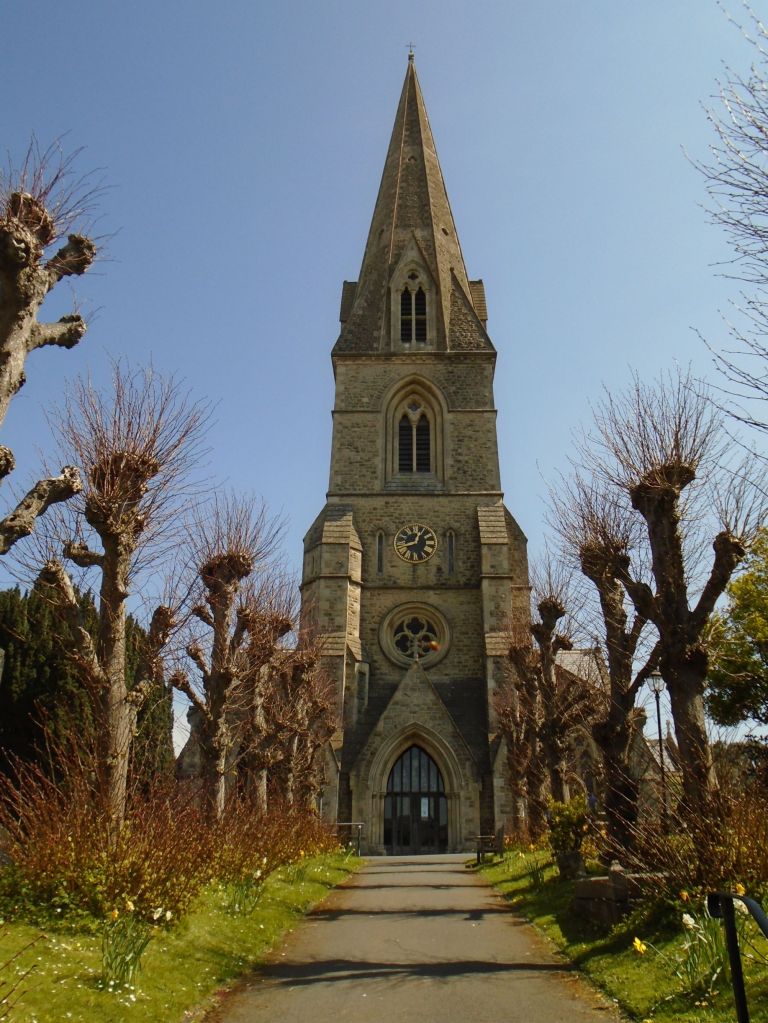
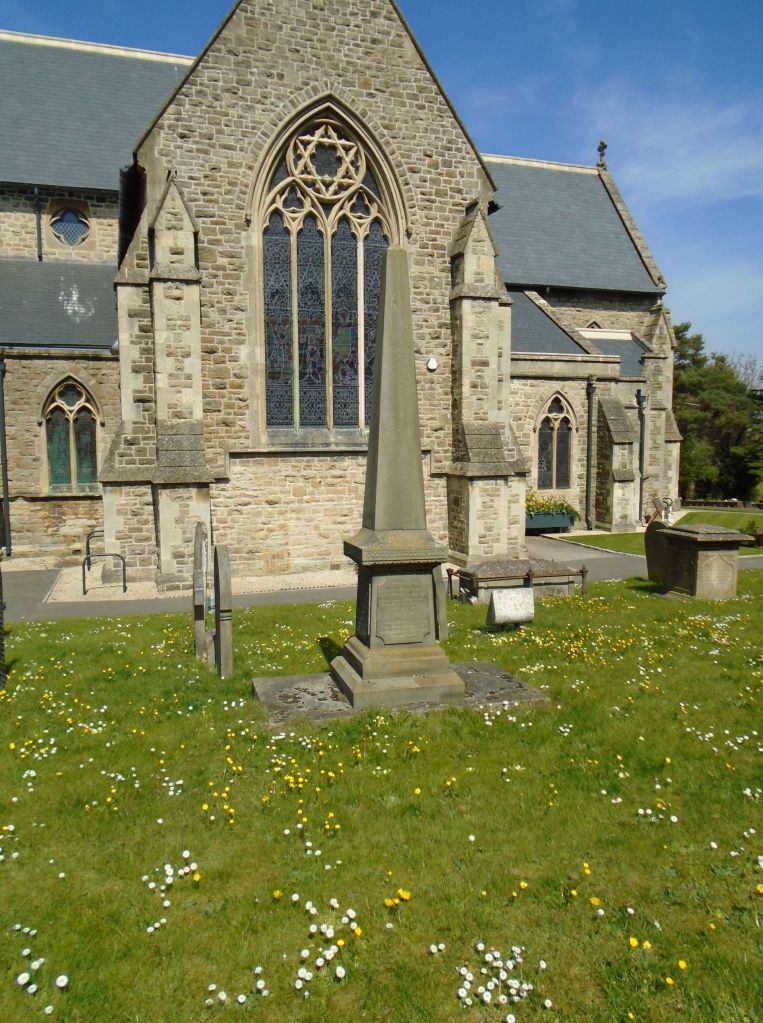
In previous years Andy and I have conducted the occasional guided churchyard walk at Christ Church. Built in 1851 the churchyard is the final resting place of many of Swindon’s Victorian entrepreneurs and, of course, the ordinary, working class people as well. Our much loved and sadly missed Radnor Street Cemetery colleague Mark Sutton rests here.

By the 1840s the medieval parish church of Holy Rood, close to the Goddard family home at The Lawn was proving inadequate to cater for the needs of the rapidly growing industrial Swindon.

A church had stood on the site since the end of the 12th century, possibly longer, but with the arrival in 1847 of an energetic young clergyman Rev. H.G. Baily came the impetus to build a new church.

Fashionable architect Gilbert Scott received the commission to design the new church hot on the heels of his success at St. Mark’s in the Railway Village.

The new church was built at a cost of £8,000, funding was originally sought through the Church Rate, a tax imposed on all householders whether or not they attended Church of England services. Unpopular, especially among non-conformists, this was eventually abandoned and the debt remained outstanding until 1884.

The consecration ceremony at Christ Church took place on November 7 1851 officiated by the Rt. Rev. Dr. Ollivant, Bishop of Llandaff, a mere 17 months after the foundation stone was laid on land at the top of Cricklade Street donated by Ambrose Goddard.

Pew listings for the newly opened church record that Ambrose Lethbridge Goddard paid for the first two pews on the south side of the Nave to seat twelve family members and another nine sittings in the South Transept for his servants.

The Goddard family are remembered in many of the fixtures and fittings in the church. In 1891 the reredos (panelling behind the altar) was presented by Pleydell and Jessie Goddard in memory of their brother Ambrose Ayshford Goddard. In 1906 the brother and sister dedicated the pulpit to the memory of their parents while the previous year Edward Hesketh Goddard presented the font in memory of his wife.

Despite the grandeur of the building, the people of Swindon preferred their order of service to be plain and simple. While Rev. J.M.G. Ponsonby battled to maintain unpopular High Church ritual at St. Mark’s, at Christ Church there was an absence of all pomp. Documents reveal that there was no surpliced choir, that altar lights were never used and that the preacher dressed in a black gown.

Builder Thomas Turner and his wife Mary. The Turner home is now the site of Queen’s Park.

The Toomer family memorial. The Toomer family home was the former Swindon Museum and Art Gallery in Bath Road.

This is the New family memorial. Swindon school teacher Edith Bessie New moved to London and joined the Women’s Social and Political Union (WSPU) becoming an active, militant Suffragette, continuing a personal campaign for women’s rights throughout her lifetime. She is buried in the cemetery at her last home Polperro, Cornwall.

The Morris family memorial. William Morris was the founder of the Swindon Advertiser.

The Airspeed Oxford propeller unveiled

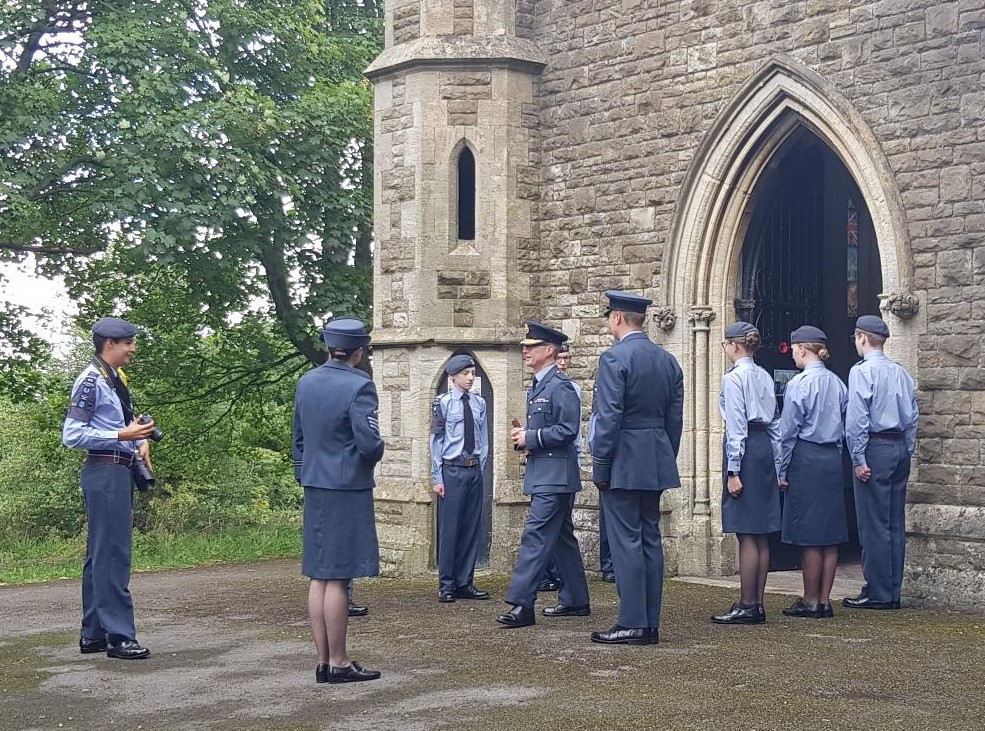
The rain clouds parted and the sun made a plucky appearance during our guided walk yesterday when we were delighted to welcome Air Commodore Tony Keeling OBE, Commandant Royal Air Force Air Cadets, to Radnor Street Cemetery.

Following the closure of the RAFA Club in Belle Vue Road the propeller mounted on the front of the building faced an uncertain future. Then a group of concerned Swindonians, among them Carole and David Bent, Neil Robinson, Toby Robson and Graham Carter, stepped in to rescue it.

At Sunday’s event Air Commodore Keeling cut the ribbon and led the assembled visitors into the chapel to view the propeller, now mounted above the door. Cemetery volunteer Kevin, a member of the Eyes On Hands On team, gave an informative talk about the history of the Airspeed Oxford to a packed chapel, as you can see from Andy’s photographs. Then, accompanied by fellow officers and air cadets, Air Commodore Keeling joined us on our walk.

Guest speaker, Paul Gentleman, gave an account of the career of Wing Commander John Starr who is remembered on his brother’s (Squadron Leader Harold Starr) grave. Paul and his wife Caroline along with Noel Beauchamp have been researching the life and times of the two Starr brothers for several years. Paul, Caroline and Noel, in association with Green Rook and Swindon Heritage, organised the Swindon Remembers event to commemorate the Battle of Britain 75th anniversary held in the cemetery in 2015.

Our visitors at Sunday’s event donated generously to the memorial plaque for Mark Sutton. This will be unveiled at the Remembrance Day Service, an event Mark established many years ago.

Here are some photos of the day captured by Andy and myself.

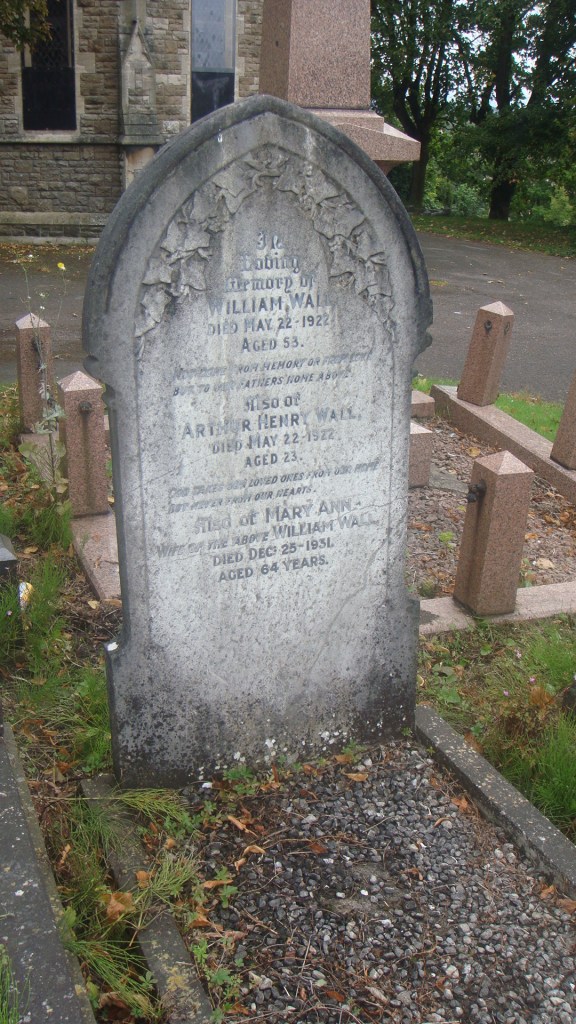
William and Arthur Henry Wall – died on the same day

The newspaper article provides a pretty comprehensive account of William’s service. His military records reveal that he enlisted in the 4th Wilts on September 14, 1914 aged 46 and served at home until January 2, 1916. On January 3, 1916, having transferred to the 22nd Wessex & Welsh Btn the Rifle Brigade, he was sent to the Western Front where he served for 325 days. On November 24, 1916, he was posted to Salonika where he served for 1 year and 215 days before being posted home on June 27, 1918, having previously transferred to the Royal Engineers.

William was discharged on August 10, 1918 as being no longer physically fit for War Service. He was 49 years and 11 months old and suffering from valvular disease of the heart (VDH).

He was awarded a weekly pension of 27 shillings for four weeks after which it dropped to just over 13 shillings, to be renewed after 48 weeks.

William had previously worked for more than twenty years as a Rivetter’s Holder Up in the GWR Works, a physically demanding job that he was now no longer strong enough to do.

William died on May 22, 1922 just hours before his son Arthur also died.

When Arthur Henry Wall enlisted at the Devizes recruitment office he stated that he was 19 years old and worked as a boilermaker. In fact he was only 16 years old and two years below the minimum age for enlistment.

He served a period of 140 days from January 12, 1915 to May 31, 1915 at home but on June 1, 1916 was posted to France, aged 17. However, on July 10 Arthur’s true age was detected and he was sent back to England as ‘underage and physically unfit for service.’

He spent the next year posted in England but on June 28, 1916 he returned to France and served more than 300 days. By now serving with the Bedfordshires, Arthur was gassed on May 12, 1918 and ten days later returned to England.

On November 23, 1918, he was discharged suffering from Defective Vision, Dyspnoea (a symptom of aortic insufficiency) and headache.

He was awarded a pension of 11 shillings a week from November 24, 1918 to be reviewed in 26 weeks’ time. In 1920, by now a married man, Arthur wrote to the Record Officer of the Bedfordshire Regiment asking if he could apply for further money under the Army Order 325/19 but was informed that only soldiers serving from the date of the pay increase on September 13, 1919 were entitled.

Like his father, Arthur also died of heart disease, a direct result of his military service.

United in Death

Father and Son Buried at the Same Time

The burial of a father and a son who died on the same day took place at Radnor Street Cemetery, Swindon. The deceased were Mr William Wall, 35 Linslade Street, Swindon, and his son, Mr Arthur Henry Wall, 36 Jennings Street. Both had served in the war, and their death was directly attributable to the hardships endured on active service. The father, who was 53 years of age, served in the Army for 12 years, and during the war he was in Egypt, Greece, Serbia and Italy – first with the Wilts Regiment then the Rifle Brigade and was later attached to the Royal Engineers. In August, 1918 he was discharged as unfit for further service. His death occurred on May 22nd, just a few hours before his son passed away.

The latter was 23 years of age. When only 16 he joined the Wilts Regiment, and was later transferred to the Bedfords, and then to the 1st Herts. He saw service in France and Belgium, and was badly gassed in May, 1918. In November of the same year he was discharged.

It is a pathetic fact that although he did not know his father was so ill he had a sort of premonition that they would die at the same time, and expressed a wish that they might be buried together.

Wiltshire Times and Trowbridge Advertiser June 17, 1922.

Father and son were buried in plot E8206 where Mary Ann, William’s wife and Arthur’s mother, joined them following her death in 1931.

If you are wondering why they do not have a Commonwealth War Graves Commission headstone it is because their deaths occurred after August 31, 1921 the date on which the First World War officially ended.

First published on October 9, 2021.

Charles Haggard – Prisoner of War

Charles Haggard - Copy

The re-imagined story…

‘He woke up gently, sliding smoothly into a new day.  It wasn’t usually like this.  Sometimes he woke up with a jolt, ready to jump out of bed, as if he could.  Sometimes he suddenly found himself awake, his heart beating rapidly, his breath coming in gasps.  Sometimes he just lay there, eyes open, awake, absent.  But today felt different.  Today he turned over in bed and snuggled down beneath the blankets.

The bedroom was cold.  He’d known colder.  He’d known bone aching cold when every joint was immobilised, every muscle mortified.  But he liked this cold.  It reminded him of childhood.  Ice on the inside of the window; a house full of noise, children getting ready for school, his father already at work.

“Charlie are you up yet?” he was always the last one, reluctant to leave his bed.

Today his mother tapped softly on the bedroom door; checking if he was awake, checking if he was alive.  He understood her dilemma.  Should she wake him or should she let him sleep on?

“Morning Ma,” he called.

The door opened.

“Cuppa tea boy.”

Nearly 37 years old but he would always be her boy.  When he was a child he had to share her, but now she was his alone; making up for lost time.

His father hadn’t recognised him when he opened the door of 60 Stafford Street.  Four years as a prisoner of war had altered him immeasurably.  But as the cold January air swept around him and into the house she knew it was her boy returned.  She had never given up hope.

Today he felt a little better, a little stronger.  Today he would take a slow walk into town.  He would call in at the Town Hall and sign the register of returning soldiers.  He hoped Miss Handley might be there.  He would so like to see her, say thank you for the food parcels that had kept the prisoners of war alive’.

The facts …

Charles Haggard was born April 30, 1882 at the Old Red Lion Inn in Minety where his father Samuel was the innkeeper.  His parents were in their early 20s and already had four children, George, Alice, Kate and Thomas.

By 1901 the family had moved to 60 Stafford Street, Swindon and on the census returns for that year 18-year-old Charles described himself as a Steam Engine Tender Maker, Fitter & Turner – of course he still had two years left to serve of his apprenticeship.

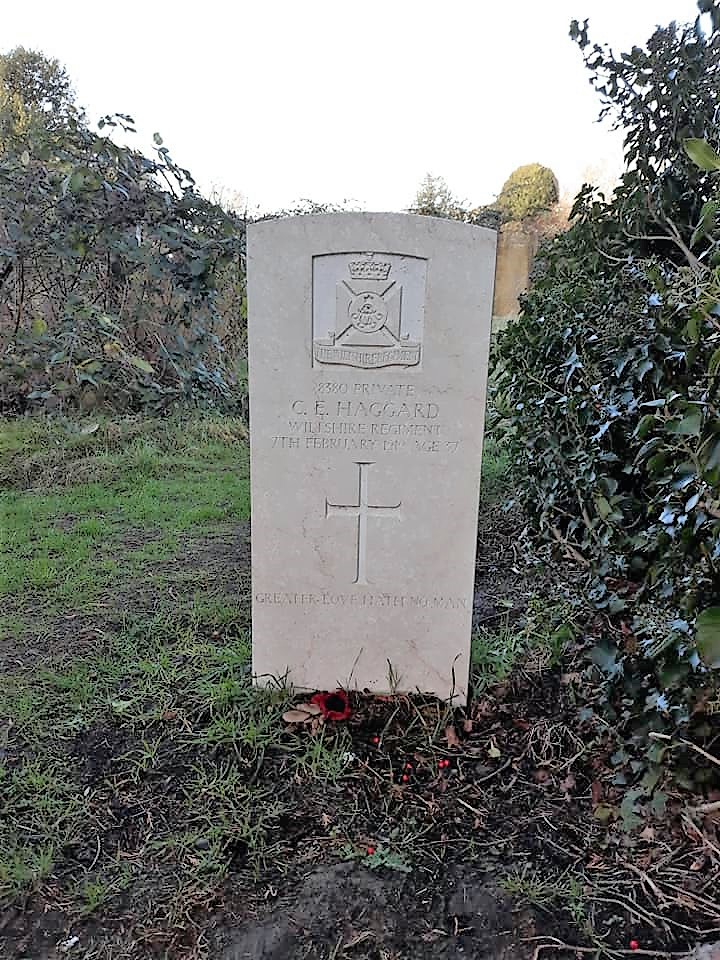
By 1911 he had left a life ‘inside’ (which is how everyone referred to working in the railway factory) and joined the army where he served as a Private in the 1st Wiltshire Regiment.  Charles was taken prisoner on October 24, 1914 at the Battle of Mons and was held prisoner at Krossen-on-Order for the duration of the war.

On February 7, 1919 Charles spent the day in Shrivenham visiting friends. He arrived back in Swindon sometime between 9 and 10 pm where he met his father in Manchester Road.

At the inquest Charles’s father said his son seemed very cheerful as they began the walk home to Stafford Street.

When they reached Deacon Street Charles called out “Wait a minute, dad,” and went to catch hold of the palisading, but fell backwards. His father knew he was dead.

Mr A.L.  Forrester, Coroner for North Wilts, held an inquest at St Saviour’s Schools, Ashford Road, Swindon where Dr Beatty testified that he had made a post mortem examination of the body and found athroma of the valves of the heart.  The cause of death was aortic disease of the heart, a condition worsened by starvation and exposure during his time as a prisoner of war.  Charles had been home less than three weeks.

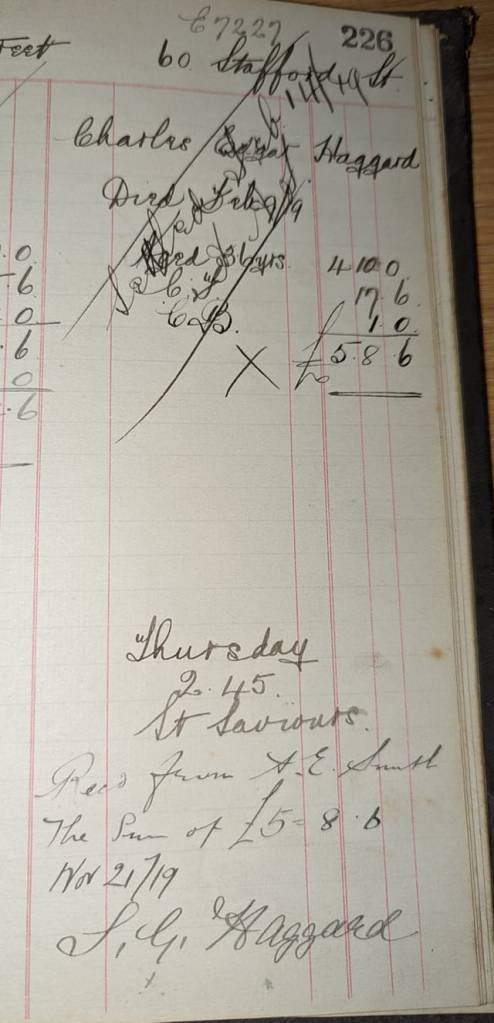
He is buried in plot E7227 with his brothers George and Thomas.

Image of funeral account provided by A.E. Smith & Son, Funeral Directors

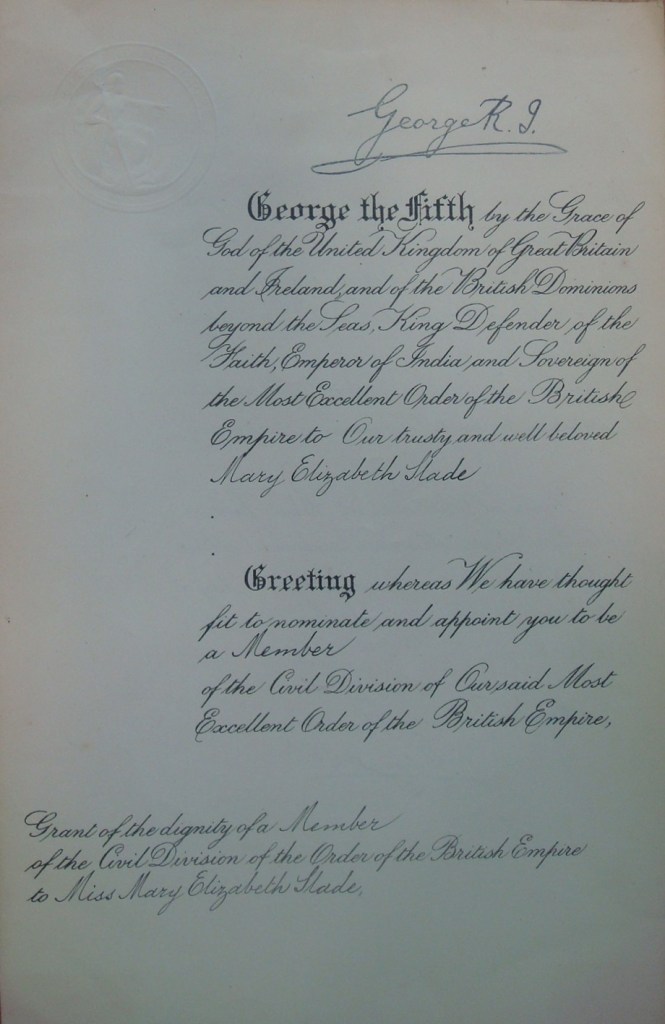
Mary E. Slade MBE

I had long wanted to find the grave of Mary E. Slade who died in 1960. I eventually discovered she was buried in the churchyard at Christ Church, but where …

The Swindon Committee for the Provision of Comforts for the Wiltshire Regiment was formed in 1914.  More than thirty years later Mary Slade and Kate Handley would still be supporting the soldiers who had survived the horrors of the Great War and the families of those who hadn’t.

Mary Elizabeth Slade was born in Bradford upon Avon in 1872, the daughter of woollen weavers Frank and Susan Slade.  Mary and her brother George grew up in Trowbridge but by 1899 Mary had moved to Swindon and a teaching position at King William Street School.

At the outbreak of war Mary headed the team of mainly women volunteers who were based at the Town Hall.  Their work was much more than despatching a few cigarettes and a pair of socks to the Tommies on the Front Line and soon became a matter of life and death as the plight of the prisoners of war was revealed.

“When letters began to arrive from the men themselves begging for bread, it was soon realised that they were in dire need, and in imminent risk of dying from starvation, exposure and disease,” W. D. Bavin wrote in his seminal book Swindon’s War Record published in 1922.

The provisions the prisoners received daily was a slice of dry bread for breakfast and tea and a bowl of cabbage soup for dinner.

“Had it not been for the parcels received out there from Great Britain we should have starved,” said returning serviceman T. Saddler.

The team of volunteers co-ordinated supplies and materials with the support of local shopkeepers, schools and hard pressed Swindon families.

In the beginning the committee spent £2 a week on groceries to be sent to Gottingen and other camps where a large number of men from the Wiltshire Regiment had been interned following their capture in 1914. By October 1915 the committee was sending parcels to 660 men, including 332 at Gottingen and 152 at Munster.  And at the end of July 1916 they had despatched 1,365 parcels of groceries, 1,419 of bread comprising 4,741 loaves, 38 parcels of clothing and 15 of books.

As the men were moved from prison camps on labour details, the committee adopted a system of sending parcels individually addressed.  Each prisoner received a parcel once every seven weeks containing seven shillings worth of food.  More than 3,750 individual parcels were despatched in the five months to the end of November 1916.

But their work did not end with the armistice on November 11, 1918.  Sadly, the soldiers did not return to a land fit for heroes as promised, but to unemployment and poverty.  Mary Slade continued to fund raise for these Swindon families through to the end of the Second World War.

On July 25, 1919 Mary Slade and Kate Handley represented the Swindon Prisoners of War Committee at a Buckingham Palace Garden Party and in 1920 Mary was awarded the MBE.

Mary Slade died suddenly on January 31, 1960 at her home, 63 Avenue Road.  She was 87 years old.  The previous evening she had been a guest at the choir boy’s party at Christ Church.

Yesterday Noel and I visited the churchyard at Christ Church to pay our respects at the grave of our friend Mark Sutton. As we passed the Rose Garden on our way out I looked down and there was a plaque dedicated to Mary E. Slade. It was through Mark’s lifelong study of the Swindon men who served in the First World War that I first heard the story of Mary E. Slade.

Mary Elizabeth Slade

Mary Slade and Kate Handley

Cyril Gordon Webb – Tell Them of Us

How terrifying must it have been to be the parents of five adult sons on the eve of war in 1914?

James George Webb and his wife Bertha lived a comfortable life at 117 Bath Road where in 1911 they stated on the census returns that they had been married for 25 years. They answered the questions– how many children born alive 5; children still living 5; children who have died nil. Not every family in this period was so fortunate.

Four of James and Bertha’s sons still lived at home with them in 1911. Their eldest son Vere was employed as a draughtsman in the Loco, Carr & Wagon Dept at the Wolverhampton railway works.

Then in 1914 second son Algernon Ewart Webb enlisted in the Army Service Corps, eight months before the outbreak of war. However, his military service was brief as he was found to be medically unfit when mobilization took place on August 6, 1914.

How relieved his parents must have been to welcome him home. Algernon and three of his brothers went on to live long lives. It would be their youngest son Cyril Gordon Webb who went away to war. 

A former student at the North Wilts Technical College in Victoria Road, Cyril is remembered on the college’s stained-glass window war memorial. The window, restored and renovated by stained glass window craftsman Richard Thorne, was moved to Swindon College at the North Star campus in 2010.

Pte C.G. Webb of the 52nd Battalion Bedfordshire Regiment died on June 7, 1918 at his home 37 Okus Road. His cause of death was Pulmonary Tuberculosis contracted during his military service.

Cyril’s father James died in October that same year, a few months after his son. Bertha died in 1934. They are both buried with their boy in Plot D402.

#TellThemofUs
#MarkSutton

Tell Them of Us – Pte. R.A. Cook – promoted for gallantry

Continuing a series remembering Swindon’s sons who served in the First and Second World Wars.
Reginald Arthur Cook was born in Swindon on September 8, 1896 the son of William and Selina Cook. Reginald entered the employment of the GWR shortly after his 14th birthday and stayed with the company until his retirement. His only absence was during the First World War when he served on the Western Front and was promoted for an act of gallantry.

Swindon Soldier Promoted for Gallantry

Pte. R.A. Cook, the only son of Mr. W. Cook, Cemetery Superintendent, Radnor Street, Swindon, has been promoted to the rank of lance-corporal for gallant conduct.

Major-General H.D.E. Parsons, Director of Ordnance Services, British Armies in France, has written to Pte. Cook, dated October 19th, as follows: “Your name has been brought to my notice by your Commanding Officer for ‘gallant conduct in snatching an enemy stick-grenade, that had become ignited, from another man, and throwing it into a shell hole some ten yards away, thus saving the man’s life at grave risk of your own. The report reflects credit on yourself and the Army Ordnance Corps.”

Lce. Copl. Cook is 21 years of age, and is a native of Swindon. On leaving school he entered the GWR Works as a clerk. He joined the Army on October 6th, 1915, and proceeded to Woolwich for training, but after being there three weeks he was transferred to France, where he has been ever since. He is now home on leave, and will return to France on December 21st.

North Wilts Herald, Friday, December 14, 1917.

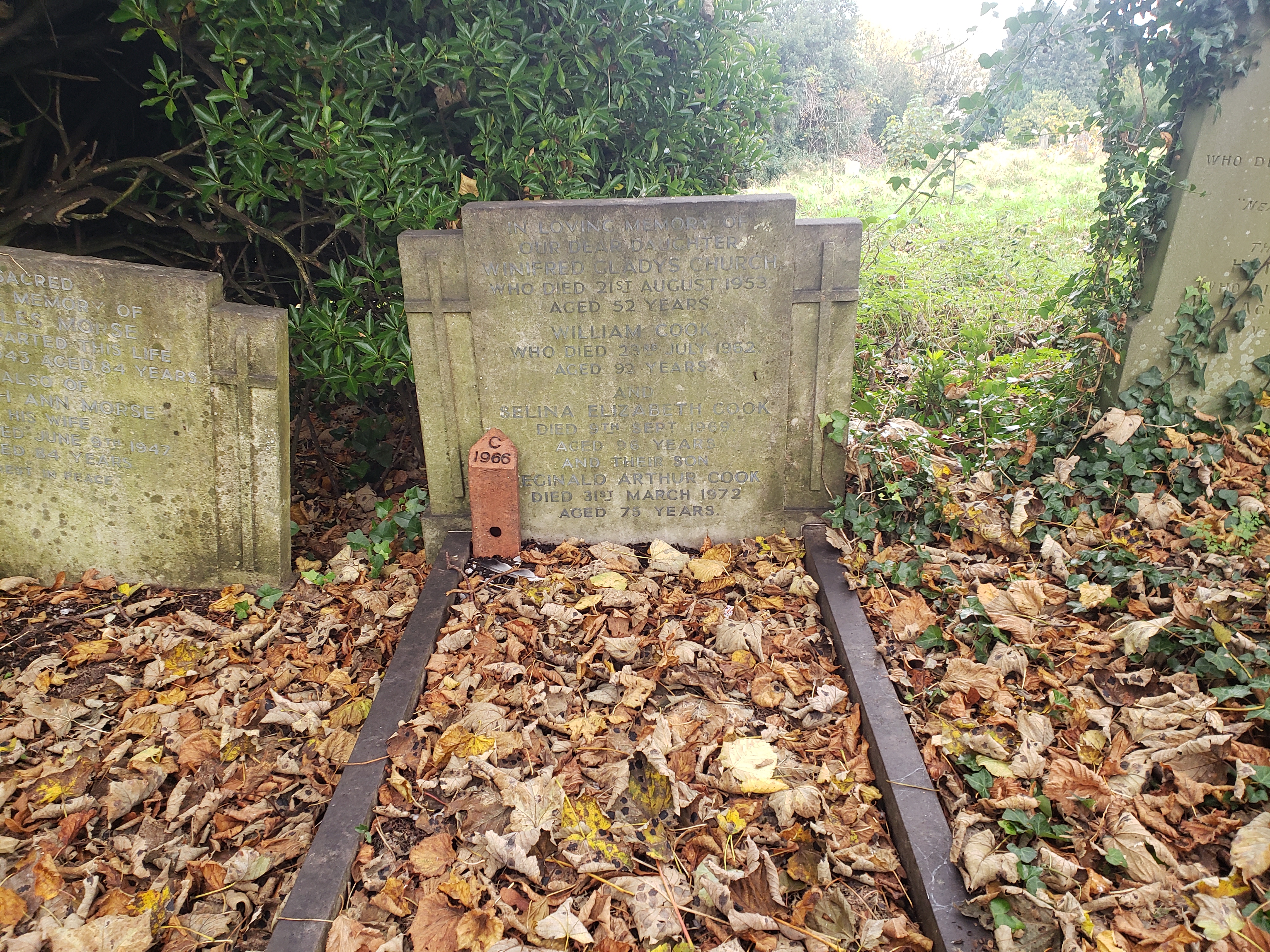
Reginald returned home to Swindon at the end of the war and lived with his parents at 63 Kent Road where he died on March 31, 1972. Reginald never married and was buried with his parents and his only sister Winifred Gladys, in the cemetery where his father once worked as Cemetery Superintendent.

Pte Percy Walter Dyer and his brother Pte Frank Edward Dyer – Tell Them of Us

With a fresh complexion, brown hair and brown eyes, Percy Walter Dyer weighed 129 lbs (9st 3lbs) and stood 5ft 5ins tall when he enlisted in the army. This poignant description of 19 year old Percy was written more than 110 years ago when his ambition was to serve with the Wiltshire Regiment.

Percy was born on April 13, 1888 in Lea, a small village 1½ miles east of Malmesbury. He was the son of John and Sarah Dyer and one of 11 children.

By 1901 the family were living at 141 Beatrice Street, Gorse Hill. Still living at home were Percy’s elder brothers Charles, Frank and Lewis who all worked as general labourers. His sisters Alice and Edith both worked as laundry assistants while Kate was employed in one of the towns several clothing factories. Younger siblings George, Ernest and Florence were still of school age but at 13 Percy stood on the threshold of adulthood.

When he filled in his attestation papers in Devizes on August 13, 1907 he was already serving in the Militia. What was his driving force – patriotism, or did he see a career in the army as an opportunity to travel, to escape.

As a serving soldier with seven years’ experience Percy was sent to France with the British Expeditionary Force (BEF) when war broke out in 1914.

During action at Armentieres on December 14, 1915 Percy received a gun shot wound to his right elbow. Although he survived, the injury caused permanent damage and limited the movement of his arm. In 1917 Percy was declared physically unfit for military service and was transferred to Avonmouth to work in an ammunitions factory.

A medical examination made in May 1918 declared that the injury to his arm rendered him 30% disabled and limited his prospects of employment on the open labour market. But this was not the extent of his poor physical condition. Percy was also declared 100% disabled by tuberculosis with ‘Sanatorium treatment’ recommended. But it was too late. Percy died on September 22, 1918. He was 30 years old and had spent eleven years in the army, three of those fighting in France and Flanders.

Sarah buried her son in Radnor Street Cemetery on September 25. Was there any consolation for her in having her boy back home? This was not the first of her sons to die as a result of the war but her elder son Frank had no known grave.

The military service records of Frank Edward Dyer do not survive, destroyed when an incendiary bomb hit the War Office Record Store in September 1940 during the Second World War. We do not know if Frank had been a volunteer when war broke out or whether he had been ‘called up’ following the introduction of conscription in 1916. Frank’s name is recorded on the Tyne Cot Memorial in Belgium, which bears the names of almost 35,000 officers and men whose graves are not known. The memorial was unveiled in 1927 – it is unlikely Sarah was ever able to visit it.

Percy was buried on September 25, 1918 in grave plot B2756. He was buried with his younger brother Ernest who died in 1911 and the boys’ father John who died just weeks after Percy joined the army. In 1933 Sarah Ann Dyer, the boys’ mother, joined them.