Swindon and District History Network

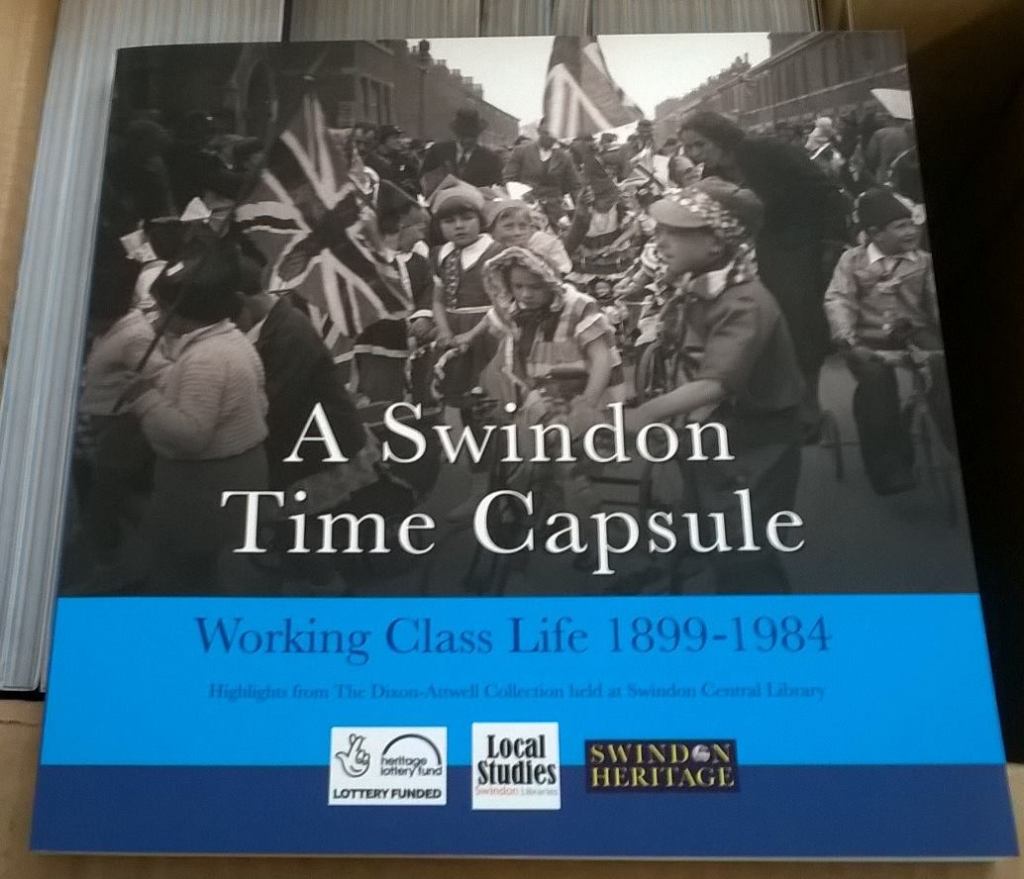
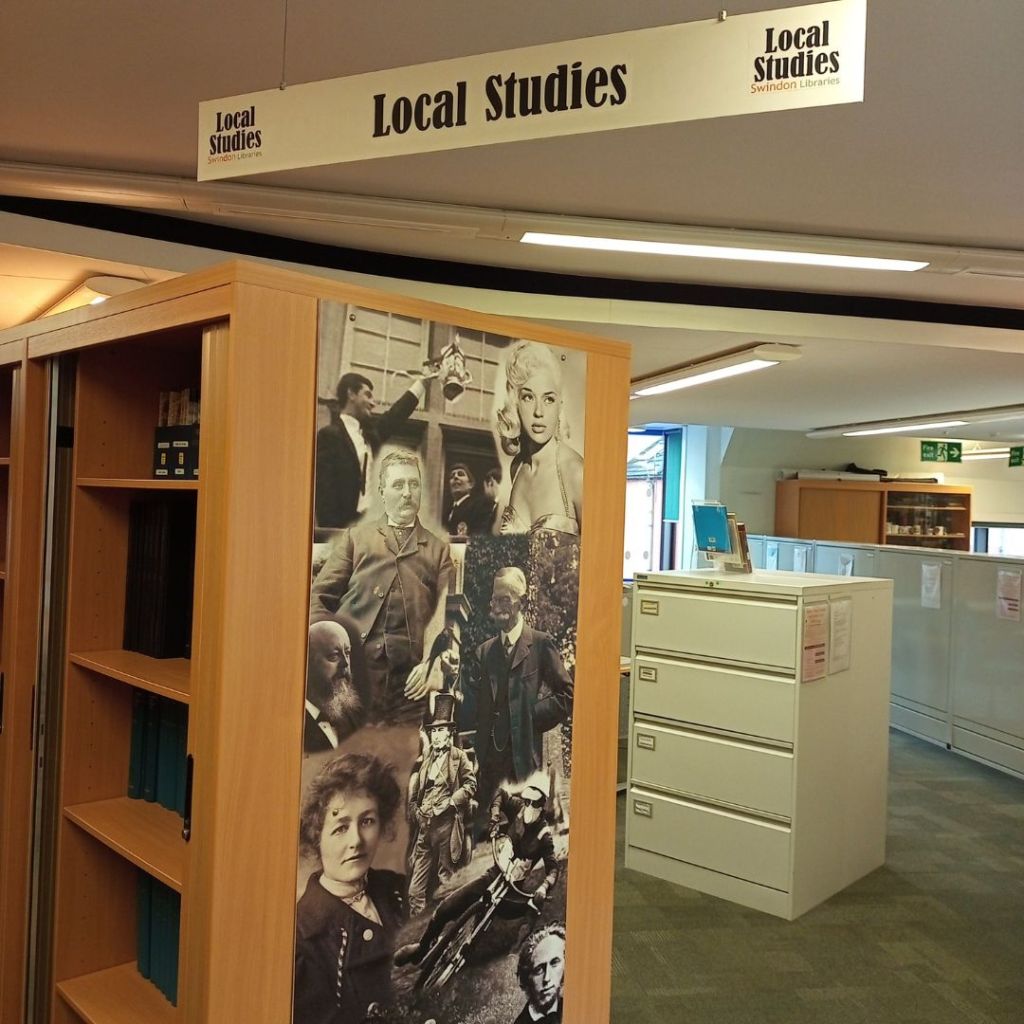
Last evening I attended the 50th meeting of the Swindon and District History Network. The Network was formed as an initiative by staff in Local Studies at Swindon Central Library to bring together all the various history societies, writers and researchers who regularly used the resources there, to share and support their work. More than thirteen years later the Network continues to thrive and this week saw new and existing members squeeze into the Reading Room in Central Library to celebrate and share our projects.

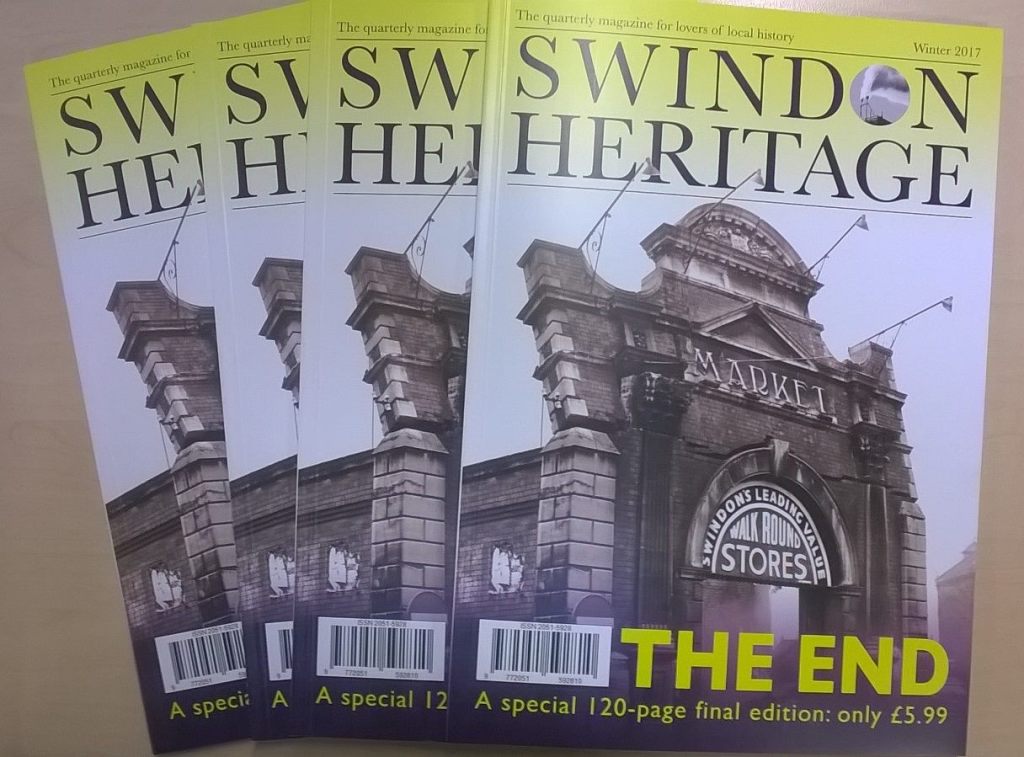
The Network has been hugely supportive to me as both an individual and as a member of the Swindon Heritage magazine team (published 2013-2017). As one of the original members of the Network, I took the opportunity to thank those societies who opened their archives, contributed articles and supported the magazine across five busy years of publication. I spoke about Mark Sutton, military and local historian, author and co-founder of Swindon Heritage who sadly died last year and is greatly missed on the local history scene in Swindon.

This coming weekend – September 9 and 10 – sees Swindon’s history on display during the Heritage Open Day events (8-17 September) when local history groups show Swindonians what a fascinating history their town has. I will be at the Heritage Apple Day event with the Friends of Lydiard Park in the Walled Garden at Lydiard House on Sunday, September 10 – 11-4 pm.

Our next guided cemetery walk takes place on Sunday September 17. Meet at the Chapel in Radnor Street Cemetery for 2 pm.

Local history is alive and busy in 21st century Swindon – come and join us.

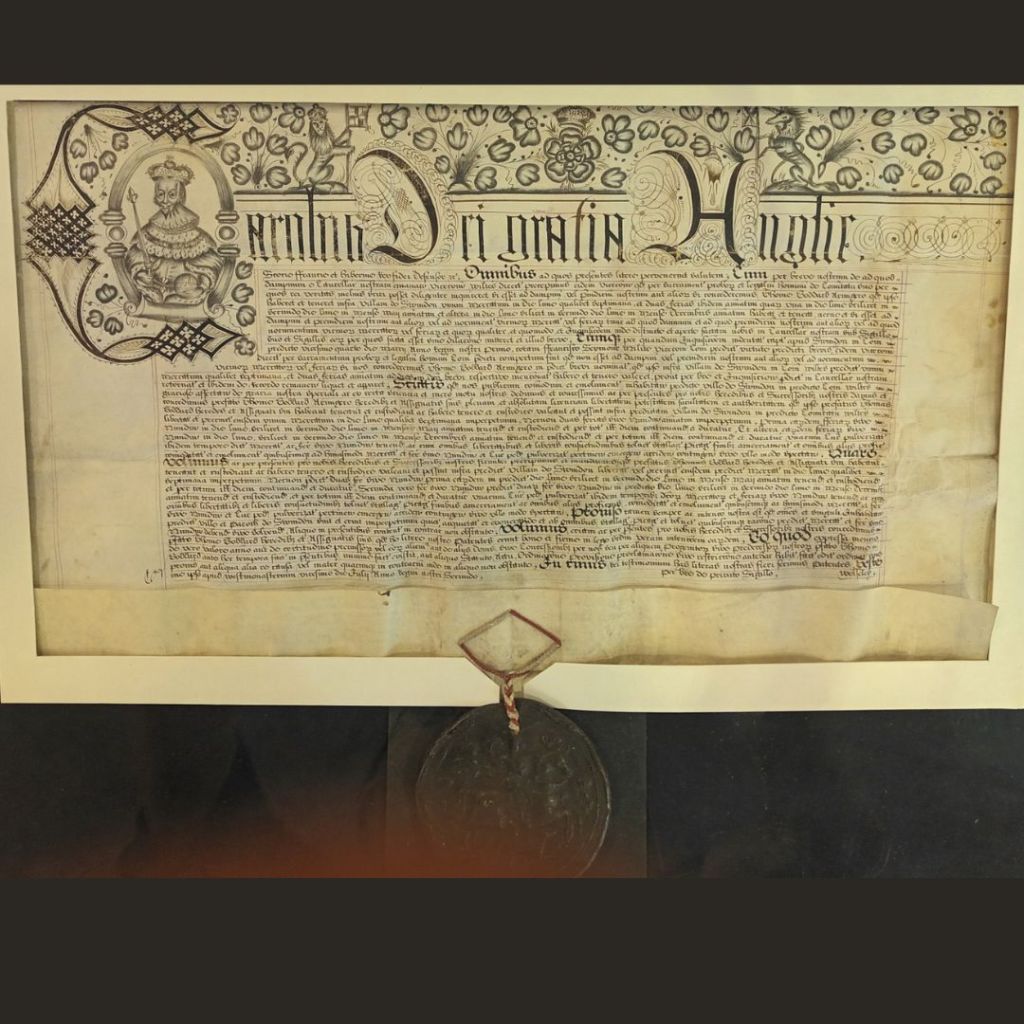
Swindon’s Market and Fair Charter 1626 on display in Central Library, ground floor.
Mary Ann Ball – a mother’s story

For so many women wartime losses came at an age when they would have expected, or at least hoped, that their life was entering a more peaceful phase; when the worry of raising a family was past.

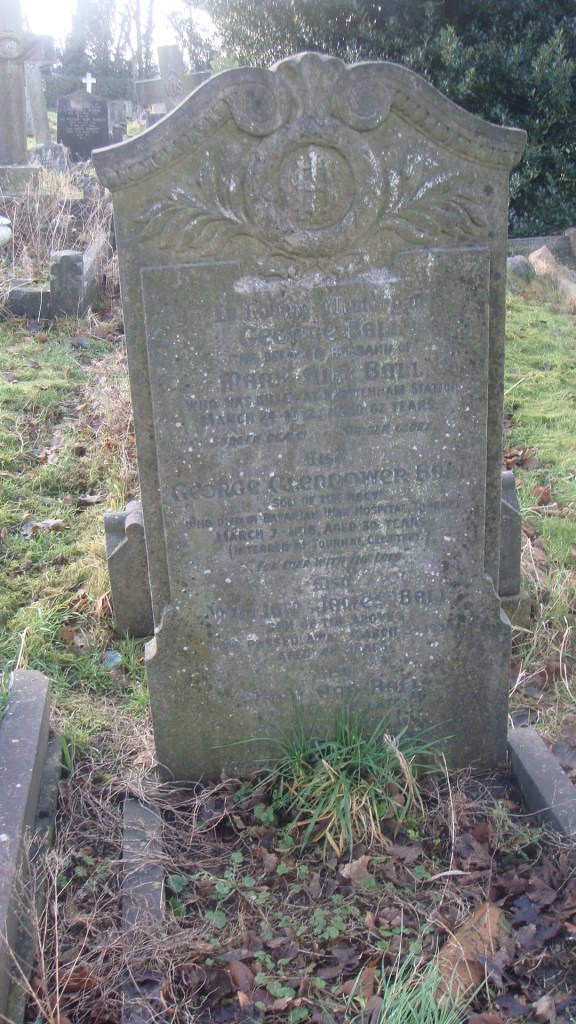
Mary Ann faced some tough challenges during her lifetime. She was 61 years old when her second son, George Glendower Ball, died in 1918 during the First World War. George Glendower Ball was rejected for military service twice before successfully enlisting with the Norfolk Regiment. 33800 Private George Glendower Ball died in the Bavarian War Hospital, Tournai on March 7, 1918, his 30th birthday. He is buried in the Tournai Communal Cemetery.

Photograph of George Glendower Ball published courtesy of Duncan and Mandy Ball.

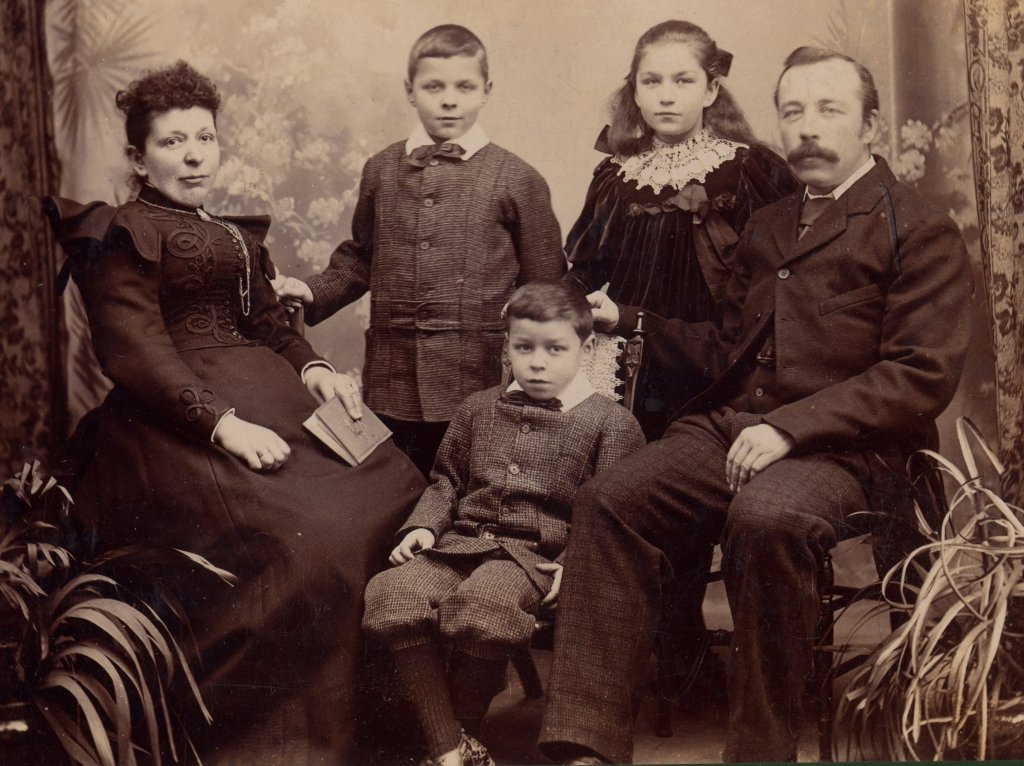
Born in Bristol in 1857 Mary Ann married George Ball in 1885 and by 1891 the couple were running the Temperance Hotel on Station Road. The census returns of that year record their four young children William 5, Millicent 4, Glendower 3 and Samuel just three months old. What the stark facts and figures of subsequent census returns are unable to convey are the tragic circumstances surrounding their eldest son. William had contracted measles at the age of two, which left him disabled; he never appeared in any family photographs.

This photograph of Mary Ann and her family is published courtesy of Duncan and Mandy Ball.

In 1922, when Mary Ann was 65, her husband George was killed in a railway accident when he was struck down while crossing the line at Shrivenham station. Then two years later her disabled son William died aged 48. Mary Ann died just a few months later.

Mary Ann is one of the extraordinary ordinary people buried in Radnor Street Cemetery.

The parents and their son are buried together in grave plot D1305. Their son George Glendower Ball is mentioned on their headstone.

Air Mechanic 1st Grade Charles Henry Wiltshire

This is the last resting place of Charles Henry Wiltshire, one of 104 war graves here in Radnor Street Cemetery.

Charles was born in 1897, the youngest of ten children. His father William was an engine driver and in 1901 the family lived at 32 Regent Circus. In 1911 the family were living at 57 Eastcott Hill. On the census of that year Mary Ann declared that the couple had been married 32 years and 2 of their 10 children had previously died. She could hardly have anticipated the war that was to follow and the loss of yet another child.

Charles’s service records date from May 1, 1916 when he enlisted as an 18 year old. At the time of his death he was an Air Mechanic First Class in the Royal Naval Air Service.

Charles was invalided out of the Royal Naval Air Service on September 1, 1917. His service records state that he was suffering from tuberculosis caused by his military service. He died on October 16, 1918 at the family home, 39 Commercial Road. He was buried on October 22 in grave plot A2459 and later awarded an official Commonwealth War Graves headstone. He is buried with his father William who had died in 1913 and escaped the fear of seeing his young son in service during war time.

Charles’s mother, Mary Ann, was buried with her husband and son following her death in 1927. The last person to be buried in this grave was Winifred Jessie Wiltshire, William and Mary Ann’s daughter, who died in 1948 following yet another world war.

The story of Charles Wiltshire was remembered at our recent special event at the cemetery.

You may like to read:

The Airspeed Oxford propeller unveiled

#TellThemofUs

#MarkSutton

Tenders for work

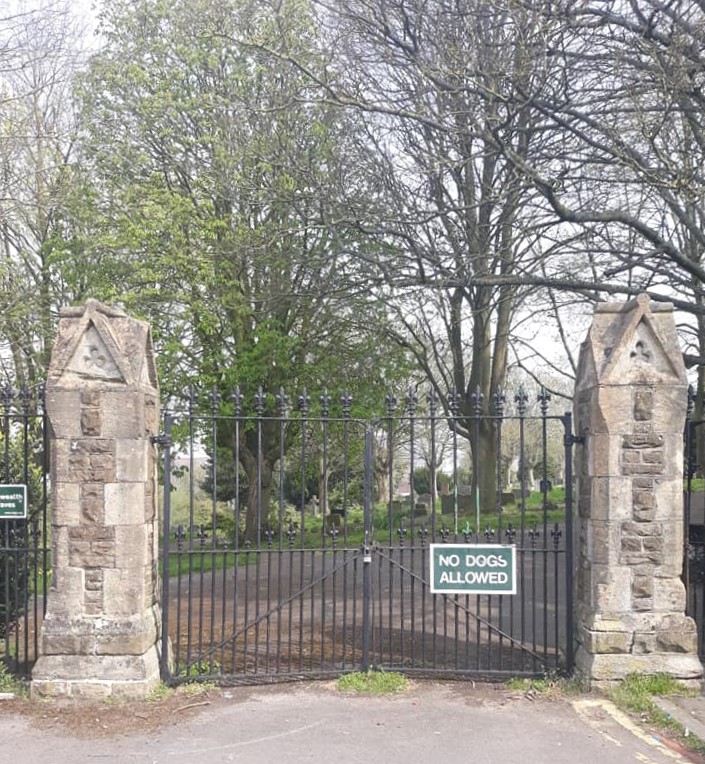
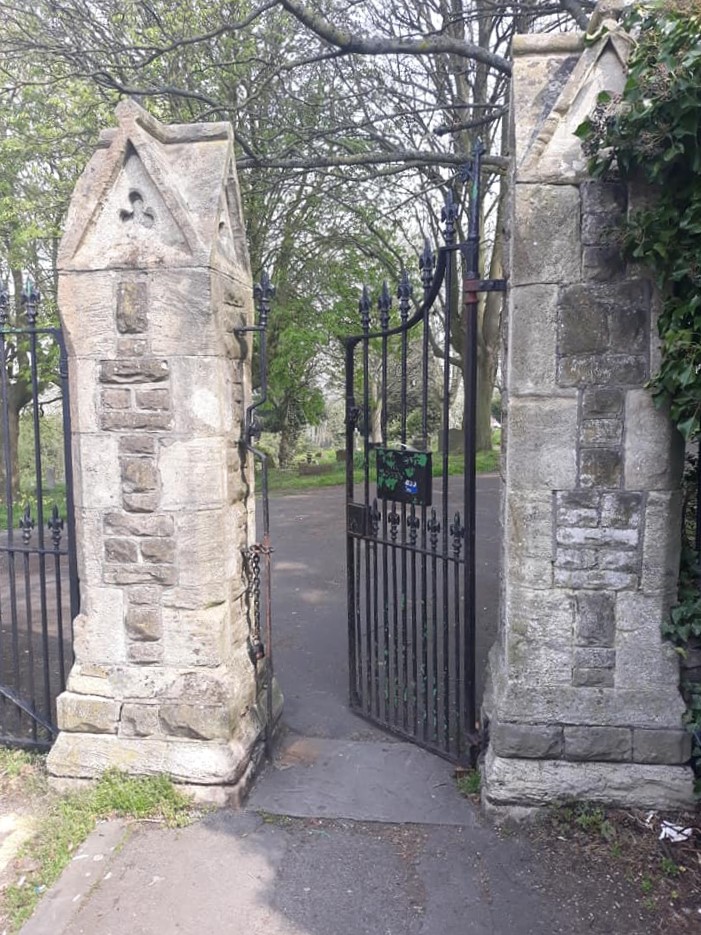
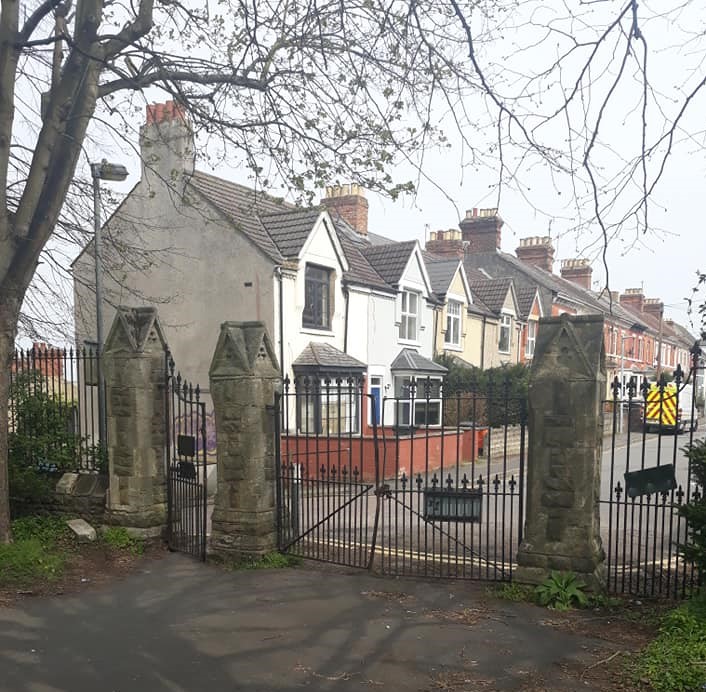
It was always Mark’s dream to see the cemetery gates and railings painted black with the fleur de lis finials burnished in gold. Custodian of the military history of the cemetery, Mark was a painter and decorator by trade and the state of the cemetery railings was a source of professional frustration for him. Today the gates and railings reveal a motley coat of green and black paint, which came first is difficult to work out.

In 1885, just four years after the cemetery had opened, it would seem the railings were already in need of maintenance.

The Swindon Burial Board are desirous of receiving tenders for the following work:- Clean and Paint, with two coats of good oil paint, the whole of the iron fencing around the Cemetery; Paint twelve seats with three coats of good oil paint; Size and Varnish the outside of the chapel door.

For further Particulars, apply to the Caretaker, The Cemetery Lodge.

Tenders to be sent to me the undersigned, on or before the 11th day of May, 1885.

The Board do not bind themselves to accept the lowest or any Tender.

H.F. Townsend

42, Cricklade Street, Swindon, 22nd April, 1885.

The North Wilts Herald, Friday, April, 24, 1885.

Kent Road gate

Clifton Street gate

Clifton Street gate

Radnor Street gate

Dixon Street gate

#TellThemofUs

#MarkSutton

Sergeant Thomas Fletcher of the New Brunswick Regiment

Thomas Fletcher was born in Stratton St Margaret on February 2, 1885, the son of George and Martha Fletcher. On August 2, 1899 he began a 6 and a half year Blacksmithing apprenticeship in the Works.

By 1901 George and Martha had moved to 85 Redcliffe Street in Rodbourne. Here George worked as a carpenter in the Works and Thomas was employed as blacksmith, although not yet out of his apprenticeship.

The last time we see Thomas in Swindon is on the 1911 census when he is 26 years old and living with his parents in Redcliffe Street. When his father completed the census returns that year he stated that he and Martha had been married for 35 years and that they had 6 children, all of whom were still living. Sadly, that would all change.

Mark Sutton continues to be the most knowledgeable historian of Swindon’s sons who served in the First World War and wrote a book entitled Tell Them of Us. If you went to one of Mark’s talks or followed one of his walks here at Radnor Street Cemetery you left feeling you had met the men he talked about, that he had known them himself – and of course Mark has been able to fill in the details of what happened to Thomas Fletcher. He writes:

“He had served an apprenticeship in the Loco and Carriage Dept GWR before leaving for Canada in 1912. He worked then for the Canadian Pacific Railway Company Workshops at Montreal. He joined the army in November 1914.”

Tell Them of Us.

Sergeant Thomas Fletcher was killed in action on August 28, 1918 during fighting to retake the village of Cherisy. He was 33 years old. He is buried in the Sun Quarry Cemetery, Cherisy, France.

Mark made frequent visits to the Western Front battlefield cemeteries, visiting the graves of the Swindon men buried there. I wonder if he ever visited Thomas Fletcher? I bet he did.

Thomas’s father George died in 1923 and is buried in Radnor Street Cemetery in grave plot C1880 with his wife Martha who died in 1937 and their youngest daughter Catherine Shakespeare who died in 1954.

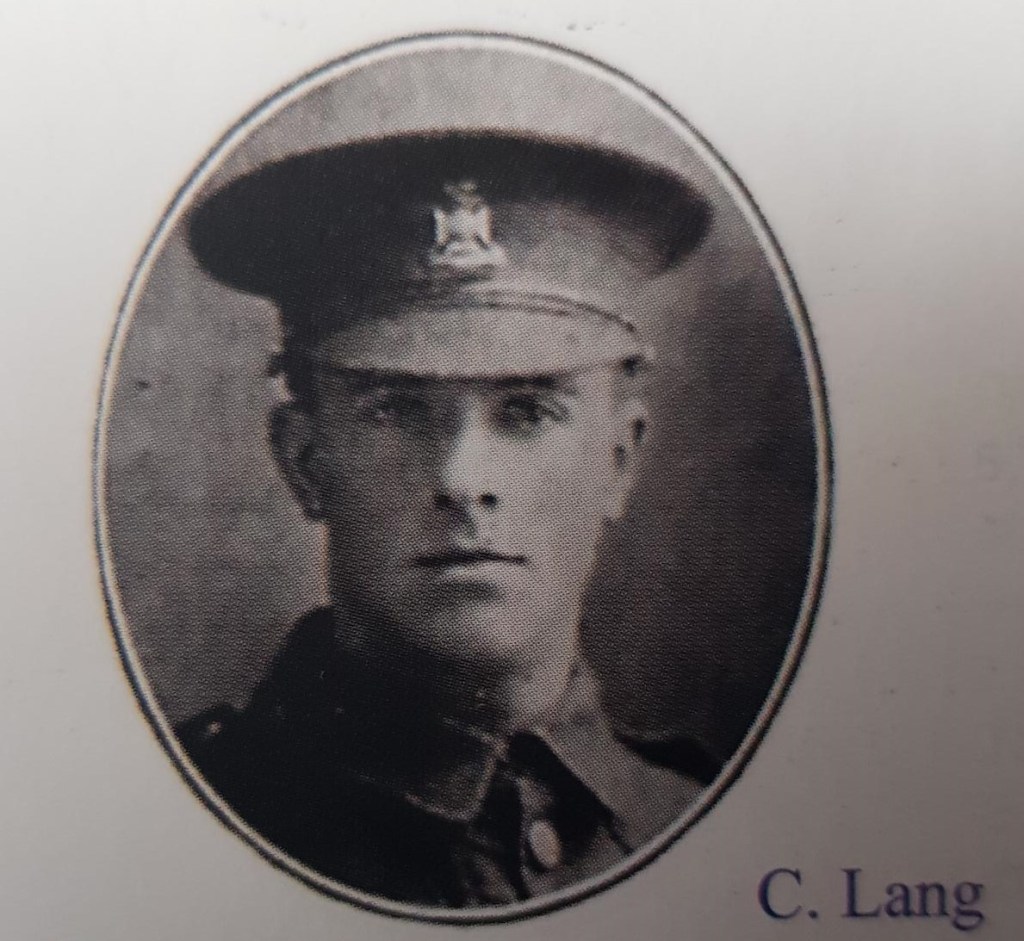
Cecil Arthur Lang and his family

February 1915 – Coach bodymaker Francis Richard Lang had two sons serving in the war and he was sick with worry. At work his foreman showed him a letter he had received from his son at the front; all was well with him. But this good news was of no consolation to Francis. The distraught father left for work as normal that final day but was not seen again until his body was found at Coate Water. He had taken his own life. A razor and empty case and a pocket knife were found in his clothes.

And so, Mercy, his wife, was left alone to worry about her boys until the inevitable happened.

Cecil Arthur Lang was born on March 19, 1882 and baptised at Holy Trinity Church, Dalston, East London, one of 11 children born to Francis Richard and Mercy Caroline Lang. By 1892 the family had moved to Swindon and in 1911 the census of that year states that along with their father, five sons worked in the railway factory. Eldest son, also named Francis Richard, was a Railway Coach Bodymaker, Leonard, Arthur and Walter were Carriage Fitters & Turners while Cecil, aged 21, was a Coach Bodymaker. The census reveals that of Francis and Mercy’s 11 children, 3 had already died. A heavy loss for parents and one that was going to increase.

Cecil Lang 26, was killed in action on June 16, 1915. He is remembered on the Menin Gate in Ypres. On his parents’ memorial in Radnor Street Cemetery, he is reported as ‘missing’. Some families could never accept that their loved ones had been killed, but continued to hope they might be found and eventually return home.

On our recent guided walk, cemetery volunteer Jon explained that in addition to the official Commonwealth War Graves, the volunteers also tend to family graves that include an inscription to a fallen serviceman. It may not be possible to restore this monument with its tall standing stone cross, but the volunteers will maintain the grave.

Mercy died on May 19, 1927 and is buried here with her husband in grave plot B3293.

We will remember them.

#TellThemofUs #MarkSutton

Pte. William Henry Thomas – art student

What did the future have in store for William Henry Thomas? It could have been so different. His mother Amy died in 1903. She at least was spared the horror of the First World War. The last time Henry saw his son he was an art student.

William Henry Thomas was born in 1888, the only son of Henry William and Amy Thomas and baptised at St Paul’s Church on March 25. He grew up at The Eagle Hotel where his father was licensed victualler. The Eagle stood on the corner of Regent Street and College Street and was demolished during the redevelopment of the area.

Read more about the Eagle here.

A Swindon Soldier’s Death

The distressing news is to hand of the death – killed in action on May 25th – of Pte. William Henry Thomas, of the H.A.C. He was the only son of Mr H.W. Thomas, of 63 Bath Road, Swindon, and was 29 years of age. Previous to joining the Army, about 18 months ago, Pte. Thomas had been studying art in London. He had been at the front since November last.

North Wilts Herald, Friday, June 1, 1917.

Until 9 April 1917, the Allied front line ran practically through the village of St. Laurent-Blangy. The trench (known to the Germans as Mindel Trench and called in 1918 McLaren Trench) was taken by the 9th (Scottish) Division on 9 April 1917, and the cemetery was made by the side of the trench after the battle. It was used by fighting units and field ambulances until September 1918, and was at times called Stirling Camp and St. Laurent-Blangy Forward Cemetery. Mindel Trench British Cemetery contains 191 burials of the First World War, nine of which are unidentified. The cemetery was designed by N A Rew.

From the Commonwealth War Graves website.

Thomas W.H. William Henry

Private 5116 A Company 1st Battalion

Honourable Artillery Company

Died of Wounds 25 May 1917 29 years old

Son of H.W. and Amy Thomas of 63 Bath Road

C24 Midel Trench British Cemetery St Laurent Blangy

One of the bells in Christ Church was bought by his father in memory of him in 1923.

Tell Them of Us by Mark Sutton

Ernest Abraham Rivers and a home fit for heroes – Tell Them of Us

And then there were those who came back – to a home fit for heroes.

Ernest Abraham Rivers was born in 1882 the second youngest child of James and Elizabeth Rivers’ large family. Ernest worked as a bricklayer and builder and married Eliza Painter on August 5, 1903. Eliza was born in 1882, the middle child of John Painter and his wife Hannah. Ernest and Eliza went on to have their own large family; their eldest son George Rivers (sometimes known as Painter) was born on October 13 1902, ten months before they married.

The family lived at 23 Prospect Hill when the 1911 census reveals they had five children, George 8, Raymond 7, Lancelot 5, Avis 3 and six months old Edna. They would go on to have another four children – Eileen born in 1913, Myrtle in 1915, Winifred in 1916 and Eric who was born in the summer of 1918.

On August 4, 1914 Britain declared war on Germany and at the end of 1915 Ernest joined the Royal Engineers leaving a wife and seven children behind in Swindon. Unfortunately, his service records are incomplete but it seems unlikely that he ever saw service overseas. Following his attestation he was sent to the army reserve before being mobilised to the Royal Engineers Depot W. Lancs. It was here that he served for 1 year 108 days before being discharged as no longer physically fit for War Service, suffering from a prolapse rectum, apparently a pre-existing condition that dated back to 1913.

Ernest returned to Swindon and his job as a bricklayer but in 1918 tragedy hit the family with the death of Eliza aged just 37. She left behind nine children including a baby just a few months old.  There was no money for a private grave plot and Eliza was buried on November 13 in a public grave in Radnor Street Cemetery with four other unrelated people.

In 1939 war loomed large again. Ernest was living at 23 Prospect Hill with his two unmarried daughters. He had never remarried. That same year, youngest son Eric married Emily F. Gadd but sadly they would not have a happy ever after ending either. Gunner Eric Rivers, a member of the Field Rgt Royal Artillery, was killed on February 21, 1945. He was buried in Jonkerbos War Cemetery, Nijmegen Part 2, Belgium.

Ernest Abraham Rivers died in February 1951 aged 68. His last address was 23 Prospect Hill, the home he had shared with Eliza all those years ago. He was buried on February 24, 1951 in a public grave plot B1940, with four other unrelated people.

We continue to gather around the Cross of Sacrifice in Radnor Street Cemetery each Remembrance Day to remember those who sacrificed their lives in two world wars and those who died in more recent conflicts. And we remember those who returned but whose lives were never the same again – Tell Them of Us.

The Richman brothers – Tell Them of Us

The re-imagined story …

The late Autumn sunshine glances across the cemetery. Everyone says how unseasonably warm it is this year. The Scouts who stood around the Cross of Sacrifice on Remembrance Day struggled in their uniforms. One little chap fainted. He hit the ground with such a thud. Never seen that happen before. November is usually a bleak month; the weather bitter, the memories more so.

I’ve walked past this grave so many times over the years, but do you know what, I can’t remember what once stood atop the memorial. Perhaps they placed an angel here after Isabel died. I wonder if her father ever got to meet his little daughter. Most probably it would have been a cross though, I think. What happened to it? Did it topple over during a winter storm?

The cemetery volunteers will be around in a little while. I see them most Thursdays. They do a fantastic job keeping the war graves clear. And not only the official ones but the monuments like this one, too. Today the distinctive feature about the dilapidated memorial is the inscription:

In Loving Memory of Private Alfred George Richman 5th Wilts Rgt Husband of F.E. Richman Died in Mesopotamia Feb 19, 1917 Aged 32.

Private Archibald David Richman Machine Gun Corps Died in France Feb 4th 1918 Aged 21 sons of D. & S.J. Richman.

I remember the Richman family like it was only yesterday. But can I remember what stood on the top of this monument? Perhaps it will come to me later.

The facts …

When David Richman completed the 1911 census returns he recorded that he and his wife Sarah Jane had been married 28 years. They had five children, all of whom were living. By the time of the next census in 1921 they had lost two sons.

In 1911 Alfred George Richman lived at 18 Plymouth Street. He was 26 years old and worked as a branch manager in a grocery store. He had been married to Frances Edith just under a year. They would go on to have three children, Kenneth and Raymond and little Isabel who was born in 1916 and died in 1917. In 1911 Archibald David was just 14 years old. He lived with his parents and his elder brother and younger sister at 10 St Margarets Road, working as a grocery apprentice alongside his father. Another elder brother Frank was also married. He worked as a railway clerk in the GWR Works and was married to Annie Mary. They lived at 86 Kent Road with their baby daughter Phyllis Irene.

Archibald David Richman is buried in the Hazebrouck Communal Cemetery, one of 877 Commonwealth burials of the First World War (17 of them unidentified).

Alfred George Richman is buried in Amara War Cemetery in modern day Iraq where his name is recorded on Panel No. 39 XXVII E.

Those buried in grave C1575E are Fanny Withey, Sarah Jane Richman’s sister. She died in January 1910 and her burial took place in Radnor Street Cemetery on January 31, 1910. Isabel Annie Richman is buried in the same plot. She was buried on March 14, 1917 the daughter of Alfred George and Frances Edith Richman. She was just 15 months old.

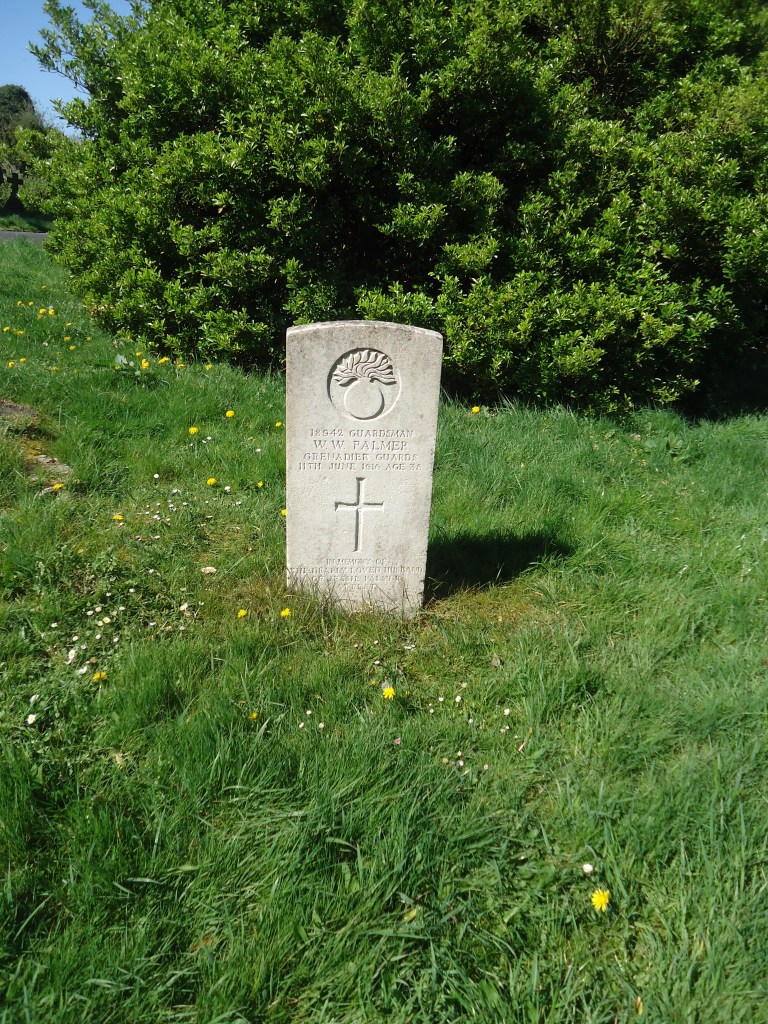
Walter William Palmer – Tell Them of Us

Walter William Palmer was born in 1878, the son of Stephen Palmer, a general labourer, and his wife Selena, and he grew up at 70 Gooch Street.

He first enlisted with the Coldstream Guards, later transferring to the Grenadier Guards, on September 4, 1894 as an 18 year old when he gave his occupation as an engine cleaner. His height is recorded as 5ft 11¼ inches.

His military records remain largely intact and we can learn all about his service and his medical history.

He served for 12 years and along with periods at home he served in Gibraltar, Egypt and South Africa. He was awarded the Queen’s Soudan Medal for service in the Soudan Campaign 1896-1897 and the Khedives Sudan Medal with Khartoum clasp for action in the Mahdist War in Sudan in 1897. He also received the South Africa Medal with Cape Colony clasp for service in the Second Boer War 1902.

He married Jessie Duprey at St. Mark’s Church on December 21, 1901 and they had one son, Frederick Walter Palmer. On the 1911 census Walter, Jessie and their 7-year-old son were living at 24 Deburgh Street, Rodbourne. Walter was employed as a boilerman in the GWR Works.

As a former soldier Walter was called up as a reservist at the outbreak of the Great War. He enlisted with his old regiment on September 12, 1914 and left for France as part of the Expeditionary Force on November 11.

His medical record is long and detailed. He was treated for a wound to his leg, which is described as an accident but by February 1916 his medical records reveal that he was suffering from Tubercle of lung (tuberculosis). His appearance was described as very wasted and that he was a tired and depressed looking man who was always hungry and thirsty. He was so ill that not only was he declared unfit for military service it was thought he would be unable to get any kind of job. He was discharged with a pension of 25/- (£1.25) a week with an additional 2/6 (12½p) as he had a child to support.

He was home for less than three months when he died. He was 38 years old. His cause of death was attributable to his military service as recognised by the Commonwealth War Graves Commission and he was entitled to an official headstone.  

#TellThemofUs

#MarkSutton