Sapper William Arman – Tell Them of Us

When Alice Fairclough married Thomas Arman in 1896 the couple joined together two families. Alice had two children by her first husband William Fairclough – William and Mary while Thomas had five children by his first wife Elizabeth Jane Webb – Elizabeth, William Thomas, Alfred Richard, Mabel Alice and Rose Mary.
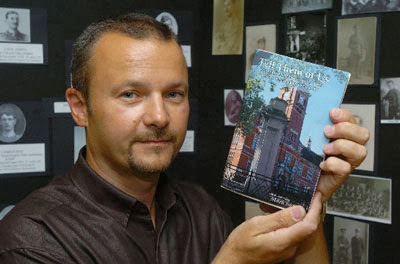
In his definitive book ‘Tell Them of Us’ about the Swindon men who served in the Great War, Mark Sutton records that Sapper W. Arman served with ‘B’ Coy 6th Batn Royal Berkshire Regiment, attached to the Royal Engineers.

Mark reproduces a letter written by William Arman in France dated September 1915, to his father and stepmother at 15 Lowestoft Street, Swindon.

‘Dear Father and Mother,

I am writing you a few lines hoping you are in the best of health. It is grand weather out here at present, though rather cold nights and mornings. We have been in action. Last Wednesday night, our battalion, the Royal Berks had it pretty warm for a lot of the Germans started shelling us in all directions for about an hour. The Germans, thinking we were all done in, started to advance towards our trenches in massed formation. They came within 20 yards of our trenches and they had it hot from our rifles, machine guns and artillery. You ought to have seen them falling down like chaff before the wind. There were not many that escaped. It was like hell for a short time. We had a few casualties, but the Germans lost nearly a battalion of men. We called them the Saxons. They were half German and half English. They have been very quiet since that night. They thought they had a soft job on, but they were mistaken for once.

I am getting used to bully beef and biscuits now. I am getting short of a razor. I can’t get one for love or money. You ought to see my face! I have not had a shave for three weeks. We get a pay this week – 15 francs, that is about 4s 2d to a franc. If God spares me, I will send it home because I can’t spend it out here. Could you send me a razor out? It looks so bad asking everyone for the loan of a razor. It would not cost much for postage.

We are sleeping in old dug-outs what the French used to sleep in. We never have our clothes off, but always sleep in them. I have not much more to say at present. I wish you all good luck and good-bye for the present.

Remember me to *Will and tell him I wish him a safe and speedy passage across the water.’

*Will is William Fairclough, his stepbrother.

William Thomas Arman survived the war. He died in 1943 in the Bridgend district of Wales in 1943. You can read more about Alice Arman here.
Archibald Edward Knee – Tell Them of Us

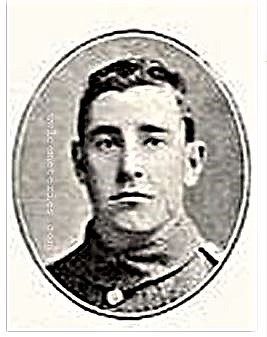
Archibald Edward Knee was born in Stroud in 1892, the son of Francis and Rose Knee. The family later moved to 123 Albion Street where Francis worked as a railway carriage painter in the GWR Works and Rose cared for their seven young children. Archibald joined his father in the GWR Works on leaving school, working as a railway carriage painter and sign writer; a job he could safely expect to hold for life.

Archibald enlisted in the Wiltshire Regiment in July 1915, when a war initially anticipated to be over by Christmas 1914 approached its first anniversary. He embarked for France on New Year’s Eve 1915, part of desperately needed reinforcements at the front.

Archibald Edward Knee

The British army began preparing for the ‘big push,’ in the Spring of 1916. It was believed this allied offensive would finish the war. The Battle of the Somme, in which more than 57,000 British soldiers were killed, wounded or reported missing during the first 24 hours of action, was yet to come.

The 1st Battalion of the Wiltshire Regiment was at Pylones, three kilometres north of the German held Vimy Ridge. The German army bombarded this section of the Western Front on May 21, firing everything at their disposal, including gas and lachrymatory (tear gas) shells.

The men of D Company were in battle by day and making running repairs to fencing and trenches throughout the night.

Lt Col W.S. Brown recorded the events of May 24 in the regimental war diary:

“In the trenches. The enemy were able to reach the Birkin Crater post with Cylinder stick bombs and some casualties were caused.

Many rifle grenades were fired at the outpost line of P73: those fired in retaliation appeared to do considerable damage. After 5 p.m. the enemy fired several heavy trench mortars at P74 and P75 and also at the head of Grange C.T. Snipers claimed three Germans. Repairs to the P line were carried out and a large amount of wire was put out along the whole front during the night of 24th/25th.”

Private F. Daniels of A Company was killed outright. Lance Corporal Knee was among 10 other casualties that night.

Archibald was taken to the 22nd General Hospital at Etaples where he received emergency treatment. He had suffered a gunshot wound to his left thigh, which in itself would probably not have proved life threatening. It was the effect of the German gas attack that proved fatal. Archibald developed gas gangrene and died at 11.20 on the morning of May 29. He is buried in the Etaples Military Cemetery.

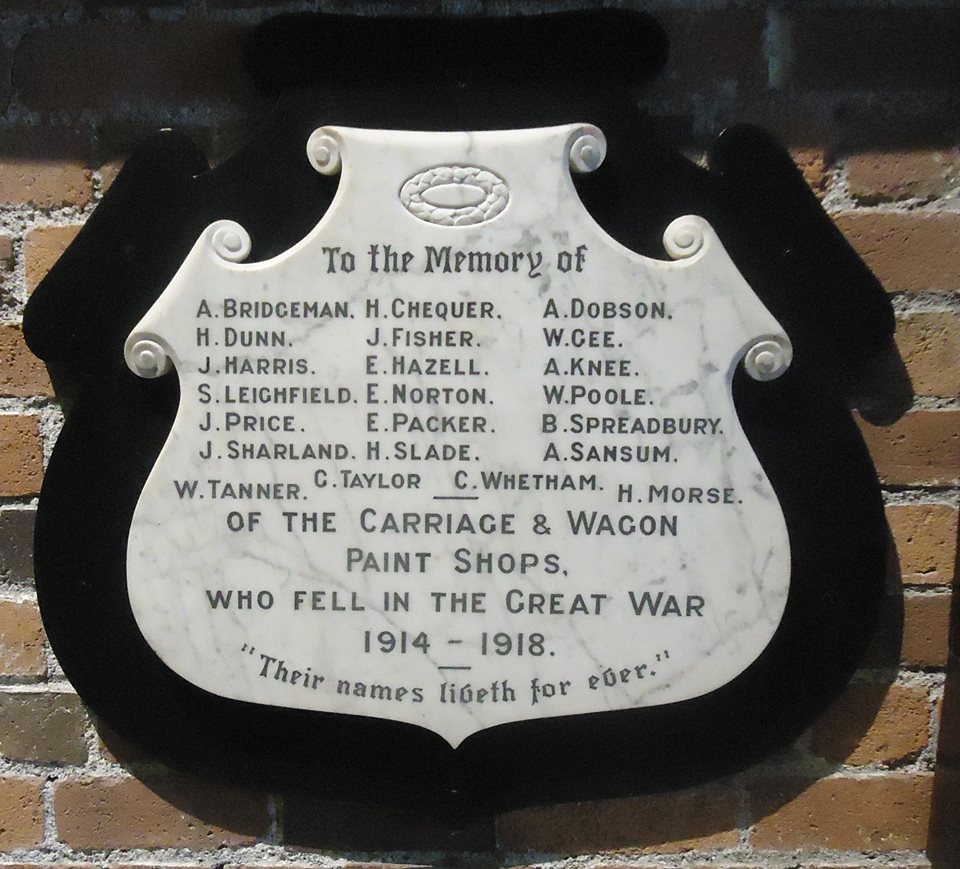
Archibald’s name appears on the memorial dedicated to the memory of those from the Carriage & Wagon Paint Shops who gave their lives in the Great War. This plaque can now be seen in the STEAM Museum.

#TellThemofUs

#MarkSutton

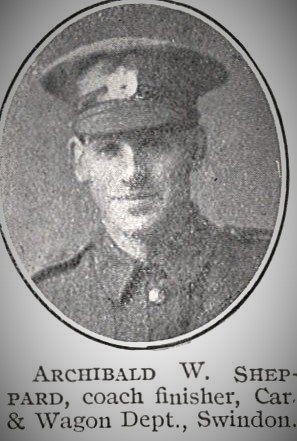
Sapper Archibald Walter Sheppard – Tell Them of Us

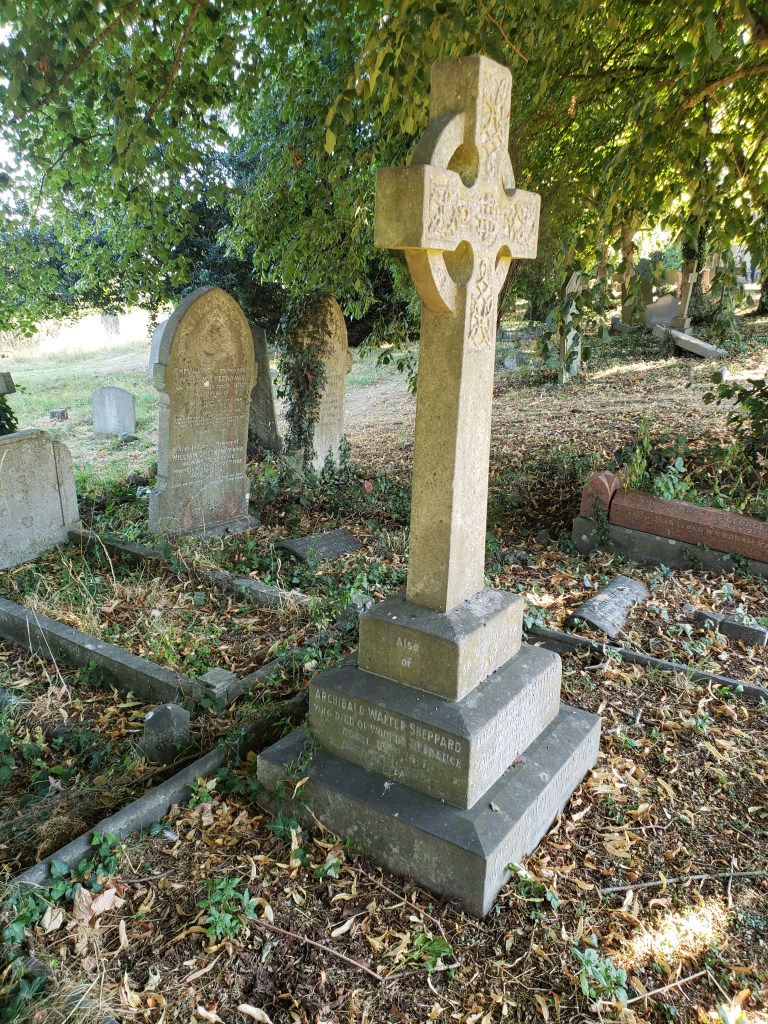
The Commonwealth War Graves headstones stand out proud across Radnor Street Cemetery, the area around them kept clear and accessible by our dedicated team of volunteers. But these are not the only war dead commemorated by Swindon families. Many family memorials carry the name of a lost loved one buried on the First World War battlefields. Were those grieving families able to visit their graves; probably not. So they came to their local cemetery and remembered them here.

Archibald Walter Sheppard was born on May 4, 1888, the youngest of William and Eliza’s seven children, and grew up in the busy family home in Clifton Street. He began work aged 14 years old as an office boy in the GWR Works and then completed a 6½ year apprenticeship in the Pattern Making Shop, receiving his certificate on May 20, 1909.

Sadly, his military records have not all survived, so we do not know when he enlisted. We do know that Sapper Archibald Sheppard was serving with the Royal Engineers 455th Field Company at the Battle of Arras in April 1917. It is believed he was wounded during fierce fighting at Monchy le Preux. He died of his wounds on April 18 at the 19th Casualty Clearing Station at the village of Agnez le Duisans and is buried in the Duisans British Cemetery Extension.

His parents William and Eliza both died in 1931. They are buried in this large double plot C1999 and C2000 with their sons William Henry who died in 1908, and Albert Leonard Sheppard who died in 1963 and his wife Ellen Gertrude who died in 1935.

And remembered on this fine memorial is the name of their youngest son Archibald who is buried in a grave far from home.