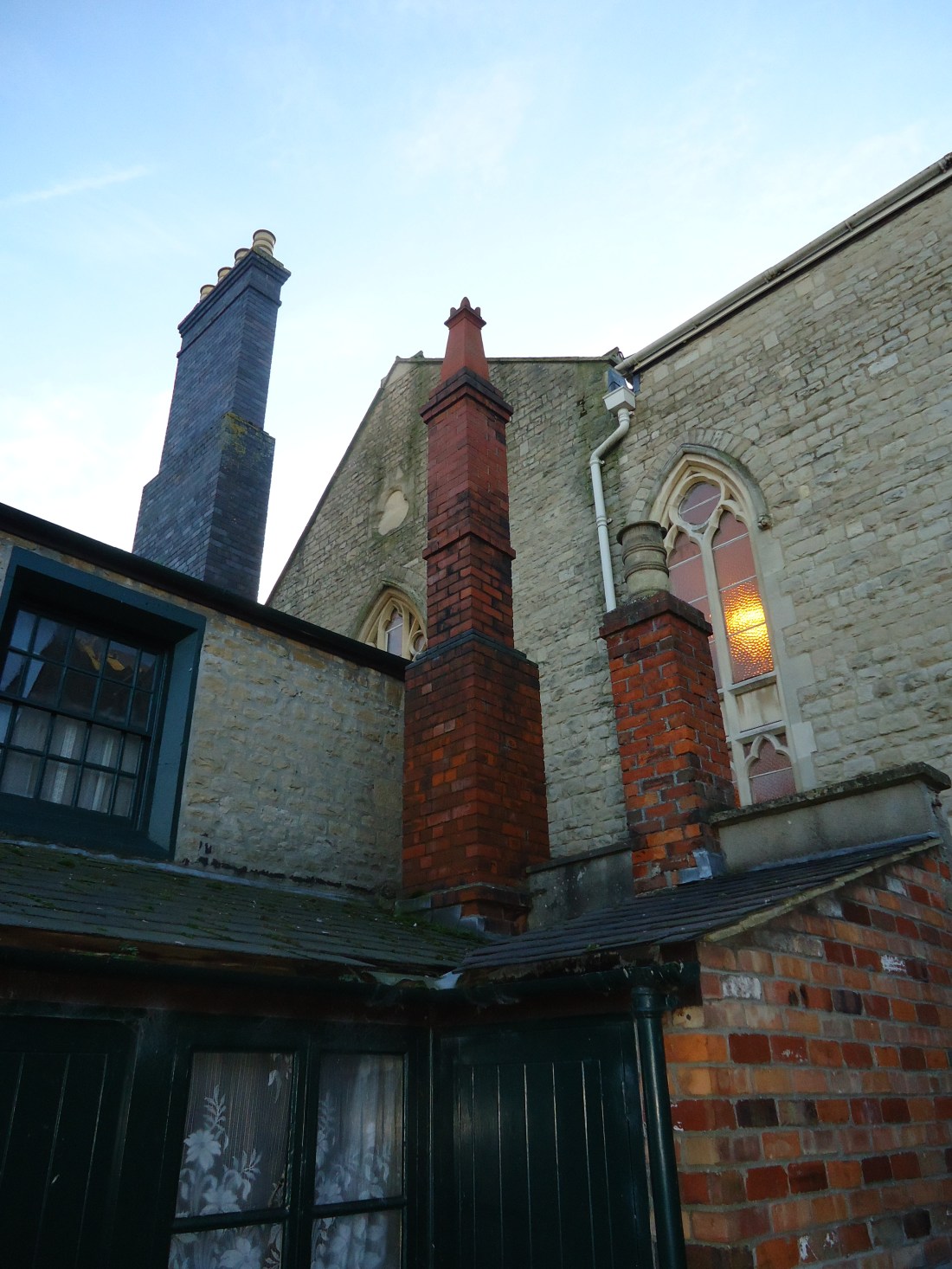
The re-imagined story …
I quite like what they’ve done to the place, especially the wallpaper in the front parlour. I could never have afforded that when we lived there.
The thing I notice most is how clean everywhere is. In my day it was a constant battle against the filth pumped out of the Works and the coal smuts from the trains. If the wind changed direction the washing would be covered in grime when I took it off the line.
I preferred our home in Box, but it was only a small village in those days. There were more opportunities for the boys in Swindon, so we moved here. It was a dirty, noisy place back in the 60s but the people were good and kind. When John died more than two hundred people lined the roads from Faringdon Street to St Mark’s.
I like to pop back to the house occasionally. It’s open to the public now, you know. Who would have thought it?
The facts …
Jane Bennet married John Hall at New Monkland, Lanarkshire in June 1840 when John was working as an engine driver with the Wishaw and Coltness Railway in Scotland.
At the time of the 1851 census the family were living in Box, Wiltshire but by the next census ten years later they were at 1 Faringdon Street.
John died on Tuesday, February 29, 1876 as the result of a grisly accident on the railways. At the inquest his son James gave the following evidence:
‘James Hall, son of deceased, said:- My father was 65 years of age last August. On Tuesday morning, about 25 minutes after two, I was at the station with him as his stoker to pilot the up rails out. We were there in case of the other engine breaking down. There were four coaches in front of our engine, which we were going to push on to the rails. Whilst waiting, the gauge lamp went out, and my father went to the front of the engine to light it by the other lamp. As he was returning along the side of the engine the signalman signalled us to come on, and I blew the whistle and started just as my father had another step to take to get back, and, in fact, had his hand on the weather board. He was walking along the side of the engine. As he was about to step on the foot plate his foot slipped and he fell, his right leg going between the outside connecting rod and the wheel. I had only moved about a yard. The rod brought him up again against the splasher, causing his leg to be jammed and the flesh torn off. The first I knew of his position was my father calling out, ”Stop Jim,” and I stopped immediately. I got down and found he was fixed inside the rod, and he was terribly torn about. It took a considerable time to get him out. He was taken to the hospital at once.’
John died from the shock about four o’clock the same day. As the report said: ‘The injuries were sufficient to kill anyone, the flesh being taken off to the bone.’
The funeral at St Mark’s took place on the following Sunday, a wet and windy dayattended by ‘a large number of the inhabitants, many engine drivers and stokers from various parts of the Great Western Railway. We understand that free passes were issued to all such drivers and stokers as desired to attend the funeral, and in this way over ninety of deceased’s fellow workmen were enabled to attend his funeral to pay their last respects to his memory,‘ according to the Swindon Advertiser.

Jane outlived her husband by ten years. She died on January 22, 1886 at the home in Faringdon Street where she had lived for more than twenty five years. She was buried in Radnor Street Cemetery in plot A1047, a public grave, with Jane Humphreys, the wife of Alfred Augustus Humphreys of 9 Bangor Terrace, Jennings Street, who had died the previous year.
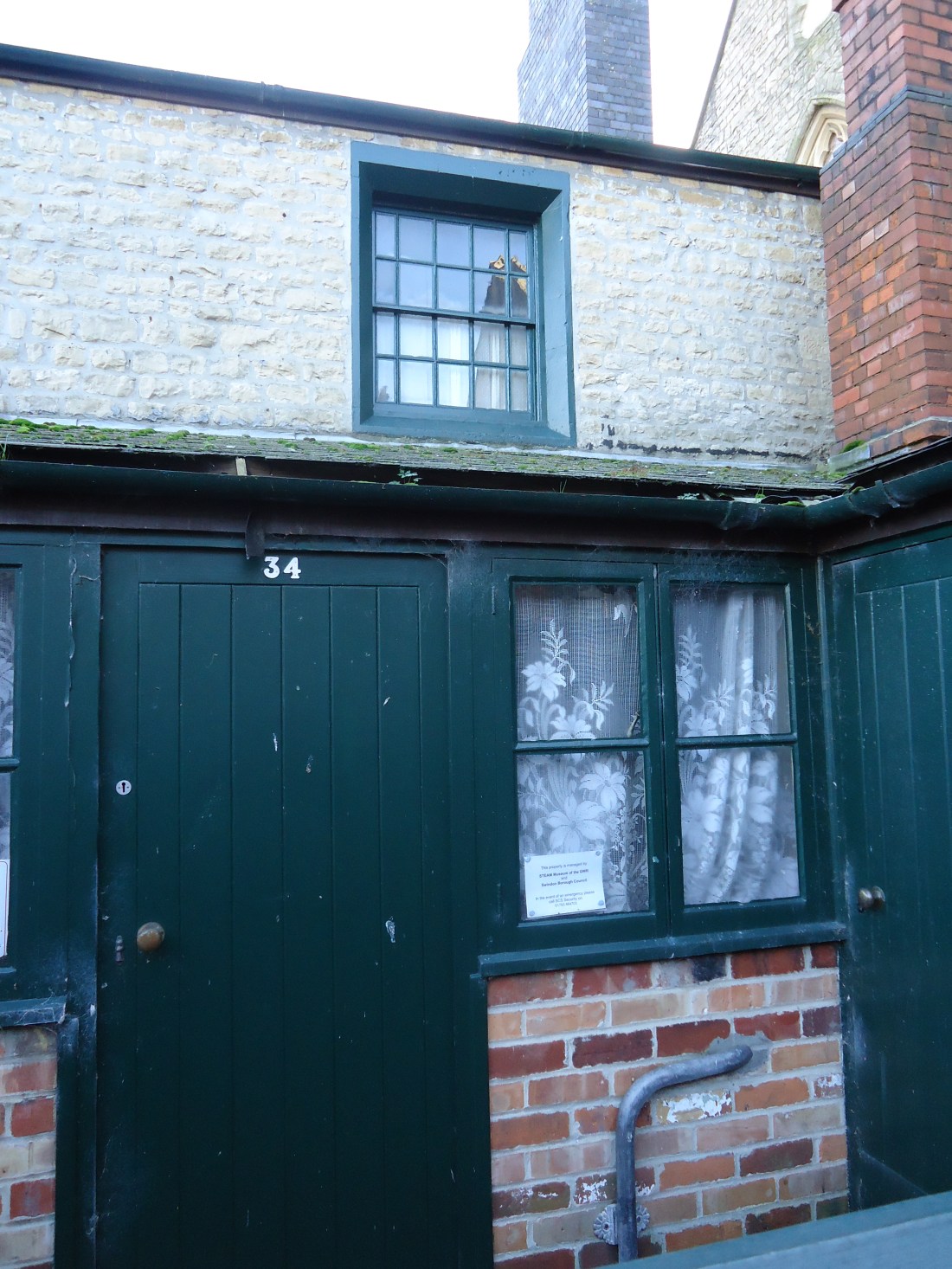
Faringdon Street was later renumbered and renamed Faringdon Road. Today the Hall’s former home is 34 Faringdon Road, the Railway Village Museum.
 Radnor Street Cemetery