Amy Edna Riddick – lifelong member of the Primitive Methodist Church

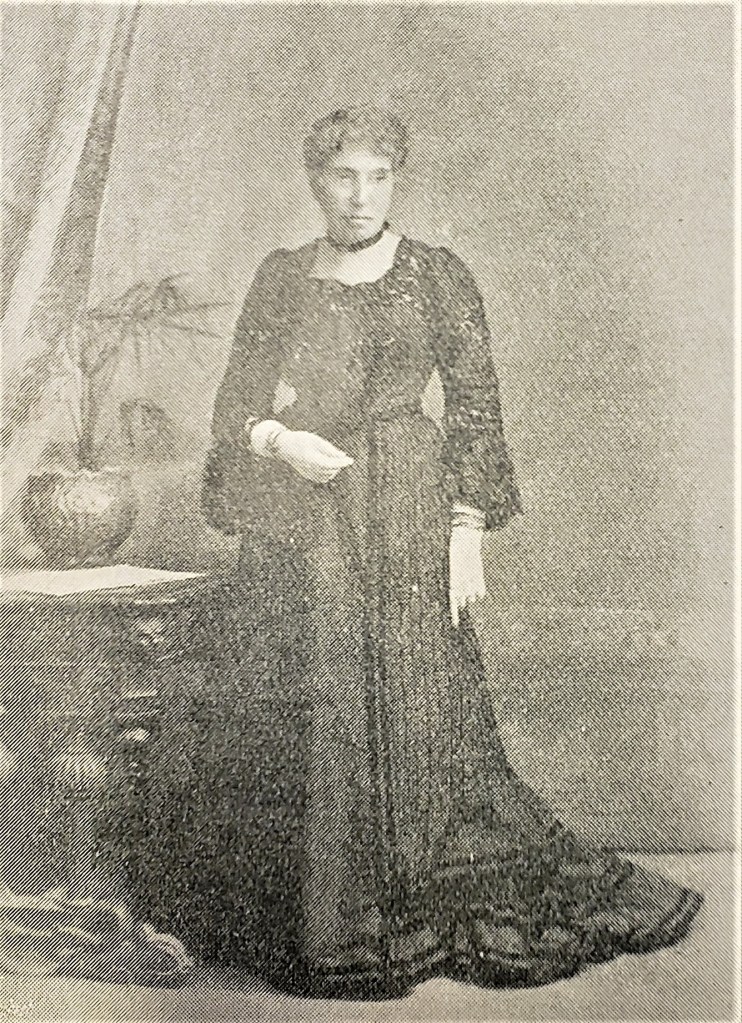
Amy Edna Riddick was a member of Primitive Methodism royalty. Born in 1852 in Stratton St Margaret, Amy was the second daughter of Charles Morse and his second wife Rebecca Lapper.

Charles Morse was a legendary figure and pioneer of Primitive Methodism in not only North Wiltshire but neighbouring Berkshire and Hampshire. He was born in Purton in 1811 and converted to Primitive Methodism as a young man. He was soon engaged in preaching at open air meetings where he was frequently arrested and escorted away in handcuffs. He became a Sunday School teacher and conducted a Bible class. He was also an organist and became both a superintendent and Circuit Steward. A local business man who ran a grocer’s and draper’s shop in the village, Charles devoted his life to the cause of Primitive Methodism, as did his family.

Amy too spent a lifetime worshipping and working for the Primitive Methodist Church, associated with the first Regent Street Church in Swindon built in 1848 (rebuilt a further two times) and then as a married woman where she worshipped at the Prospect Place Church.

As a young woman still living at home in Stratton St Margaret Amy worked as an assistant in her father’s shop, alongside her brother Levi Lapper Morse. In 1875 she married Henry Raggett, tailor and grocer and Primitive Methodist. The newly married couple lived above the family business at 29 Eastcott Hill, as Amy’s own parents had done in Stratton St. Margaret. By 1891 they were living at 35 Rolleston Street with their four children, Milinda, Beatrice, Henry and Wilfred. Living next door at No. 36 was Primitive Methodist Minister Thomas Whitehead and his family.

Sadly, the beginning of the 20th century saw three deaths in Amy’s immediate family. In 1903 her son Henry Charles Edgar died at the age of 21. The following year her husband Henry died and then in 1905 her eldest child, Milinda died aged 28.

Amy, however, continued to work at a myriad of activities within the church and was appointed the first Treasurer of the Women’s Missionary Federation formed at a meeting convened by her sister-in-law, Winifred wife of Levi Lapper Morse, on October 22, 1910. The census taken the following year records her living alone at 77 Goddard Avenue, a 58 year old widow living on ‘Private Means’.

In the March quarter 1912 Amy married again. Her second husband, Silas Riddick, was also a stalwart Primitive Methodist.

Amy died at her home on August 14, 1931. Her funeral took place at Radnor Street Cemetery on August 18 where she was buried in grave plot D158 with her first husband Henry Raggett and their two children, Henry and Milinda.

The Primitive Methodist records include numerous references to the Morse, Raggett and Riddick families. And Amy was a member of all three.

For more information about the history of Primitive Methodism visit the excellent website My Primitive Methodists.

Mrs S. Riddick

Death of a Well Known Swindon Methodist

Mrs Amy E. Riddick, of 77, Goddard Avenue, Swindon, passed away at the residence on Friday, after a long and trying illness, at the age of 79.

Mrs Riddick was the daughter of the late Mr Charles Morse, of Stratton, one of the pioneers of the Primitive Methodist Church in the district, and was the sister of the late Mr L.L. Morse, of The Croft, and of Mr E. Morse, of Blunsdon. She was twice married, her first husband being Mr. H. Raggett, who was well known in Primitive Methodist circles. He was an ardent worker in the Liberal cause, and at the time of his death was a member of the Swindon Town Council, the Wilts County Council and the Swindon and Highworth Board of Guardians. Her second husband was Mr S. Riddick, who had, previous to his second marriage, lived at Wootton Bassett. Mrs Riddick had four children by her first husband, two of whom had predeceased her. The remaining children are Mr W.L. Raggett of Bristol, and Mrs R.G. Cripps, of Swindon.

The funeral took place on Tuesday, and a service at the Prospect Place Primitive Methodist Church was conducted by the Revs. W.C. Russell and T. Sutcliffe. A large number of friends were present, Mr Arthur Button was at the organ. The Rev. W.C. Russell performed the last rites at the cemetery.

The chief mourners were Mr W.L. Raggett (son), Mrs R.G. Cripps (daughter), Mr R.G. Cripps (son-in-law), Mr Cyril Cripps (grandson), Mr W.E. Morse (nephew) Mrs W.A. Stanier and Mrs Le Sueur (nieces), Mr S. Payne (brother-in-law), Mr J. Riddick, Mr. W. Riddick, Mr F. Riddick, Mrs N. Riddick, Mrs T. Riddick, Mrs G.H. Matthews, Nurse L. Davis, and Mr W. Davis.

North Wilts Herald, Friday, August 21, 1931.

George Stanley Morse – a life cut short

The re-imagined story …

They are bringing him home tomorrow.

The grand entrance hall at The Croft is made ready with vases of white roses and arum lilies on every polished surface. The sweet scent of jasmine drifts in through the open window. His coffin will stand here until the funeral on Saturday. Friends and family are expected to call and pay their last respects.

lilies and roses

I would like to keep a vigil throughout the night. I don’t want him to lie here alone. I would like to sit next to him, rest my hand upon the coffin, speak to him. But this would not be allowed.

I would like to bear the weight of him on my shoulders as his body is borne to the graveside. I would throw myself into the open grave and lie with him through eternity. No one knows the depth of my love for him. No one knows my sorrow, there are others who have more right to mourn than I, my loss is of little consequence.

We had no future, we had no past. I loved him in silence and in secret. There is no one I can confide in, no one I can tell how much I loved him, how much I miss him, how it will always be so.

They are bringing him home tomorrow.

jasmine

The facts …

George Stanley Morse was born in Stratton St Margaret in 1880, the third child and second son of Levi Lapper Morse and his wife Winifred. In 1891 the growing Morse family lived at Granville House, Bath Road but by 1901 they had moved to The Croft, a property set in more than four acres of land with a paddock, fountain and a tennis lawn. The grounds also contained flowerbeds and terraces with ornamental trees. The magnificent house was approached by a lengthy carriage way and opened on to a spacious, domed hall.

In 1906 George Stanley Morse MRCS LRCP was house surgeon at the Metropolitan Hospital.

Inquest

A Fatal Scratch – Young Surgeon’s Sad Fate

Dr Wynn Westcott held an inquiry this week at Hackney respecting the death of George Stanley Morse, aged twenty-six, house surgeon at the Metropolitan Hospital.

Mr Levi Morse of The Croft, Swindon, MP for the Southern Division of Wilts identified the body as that of his son. He was a healthy young man, and had been at the Metropolitan Hospital about nine months. Witness heard that he had poisoned his finger while making a post mortem examination, and while he lay ill in the hospital he told witness that the affair was purely accidental.

Dr Harry Overy, pathologist at the Metropolitan Hospital, deposed that the deceased gentleman assisted at a post mortem examination on the body of a child who had died from meningitis following ear disease. He had the misfortune to prick one of his fingers, and subsequently he had a fit of shivering, and became ill. Witness saw him on the following day, and found him with a high temperature, shivering, and with some tenderness of the finger. The glands of the shoulder were also tender.

Beyond Help

He was also seen by Dr Langdon Brown and Mr Gask, a consulting surgeon, and some small operation was performed on the finger. ‘In spite of all that could be done, the temperature kept up almost to the end. Death was due to septicaemia, resulting from the prick of the finger.’

The coroner remarked that Dr Morse was held in great respect as a rising young practitioner. The case showed the dangers to which the doctors were exposed.

A Juror: Would it not be reasonable to anticipate awkward results from pricking the finger, and to take steps to render it harmless if possible?

Dr Overy: Mr Morse washed his finger and took the ordinary precautions, immediately after the accident.

The jury returned a verdict of accidental death and expressed their sympathy with the father.

Herald Saturday June 16, 1906.

Funeral of Dr Stanley Morse

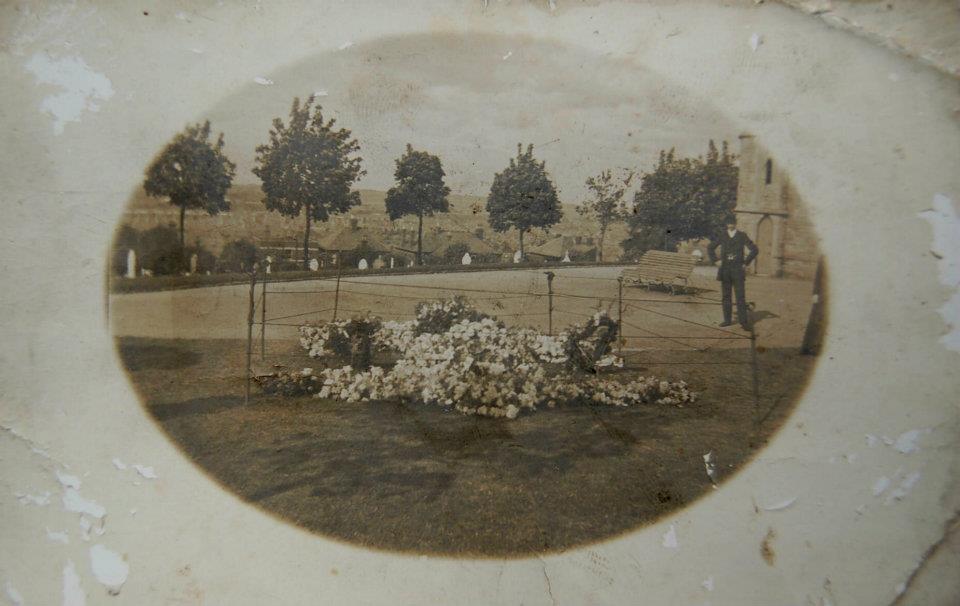
The funeral of Dr Stanley Morse, second son of Mr L.L. Morse MP for South Wiltshire, whose death under sad circumstances was reported in our last issue, took place at Swindon Cemetery on Saturday afternoon. The coffin containing the remains of the deceased was conveyed by train to Swindon on the previous Thursday and rested at The Croft until the time of the funeral. The coffin, which was of panelled oak with massive silver-plated furniture, bore the inscription:-

George Stanley Morse MRCS LRCP Died 12th June, 1906 Aged 26 years

At the foot of the coffin were engraved the words “At Rest.” The first part of the service was held at the Regent Street Primitive Methodist Church, the service being conducted by the Rev W.J.T. Scruby assisted by the Rev George Hunter. After the opening passages of the burial service had been read the hymn “Rock of Ages” was sung, and then the Rev George Hunter read the 90th Psalm. The second hymn was “Oh God, our help in ages past,” and the first part of the service closed with prayer. The congregation stood as the assistant organist, Mr Arthur Barrett, played the “Dead March” in Saul. The concluding portion of the service at the graveside was conducted by the Rev W.J.T. Scruby, in the presence of a very large number of mourners.

A large number of beautiful wreaths and crosses were sent, including tributes from the Residents of the Metropolitan Hospital and Mr Harry Overy; the Medical and Surgical Staff of the Metropolitan Hospital; the Nurses; the Committee, Metropolitan Hospital; the Matron and the Sisters, Metropolitan Hospital; and the Junior Staff and Students of St Bartholomew’s Hospital.

Extracts from The Salisbury and Winchester Journal and General Advertiser published Saturday, June 23, 1906.

George Stanley Morse is buried alone in a double plot E8181/2 in Radnor Street Cemetery. A note in the burial register states “one grave in 2 spaces.” The memorial is a broken column, symbolic of a life cut short.

George Stanley Morse (5)

George Stanley Morse (4)

You might also like to read

Mr Levi Lapper Morse – the end of an era

Winifred Morse – founder of the Women’s Missionary Federation

Regent Street Primitive Methodist Chapel

Winifred Edith Morse – founder of the Women’s Missionary Federation, Swindon branch

A comprehensive list of burial dos and don’t in Radnor Street Cemetery was published when the new burial ground opened in August 1881. The cost of a common grave was 5s (25p) but sadly, many working class families could not afford even this and there are numerous public graves in the cemetery where more than one unrelated persons are buried together. The cost rose considerably for a multi occupancy plot and a 9ft (2.7 metres) deep vault cost £4.4s (£4.20) while a brick or boarded grave for a single burial 9ft (2.7 metres) deep cost £1.1s (1.05). It is likely that the graves in the chapel area are vaults or brick lined, which would increase the cost.

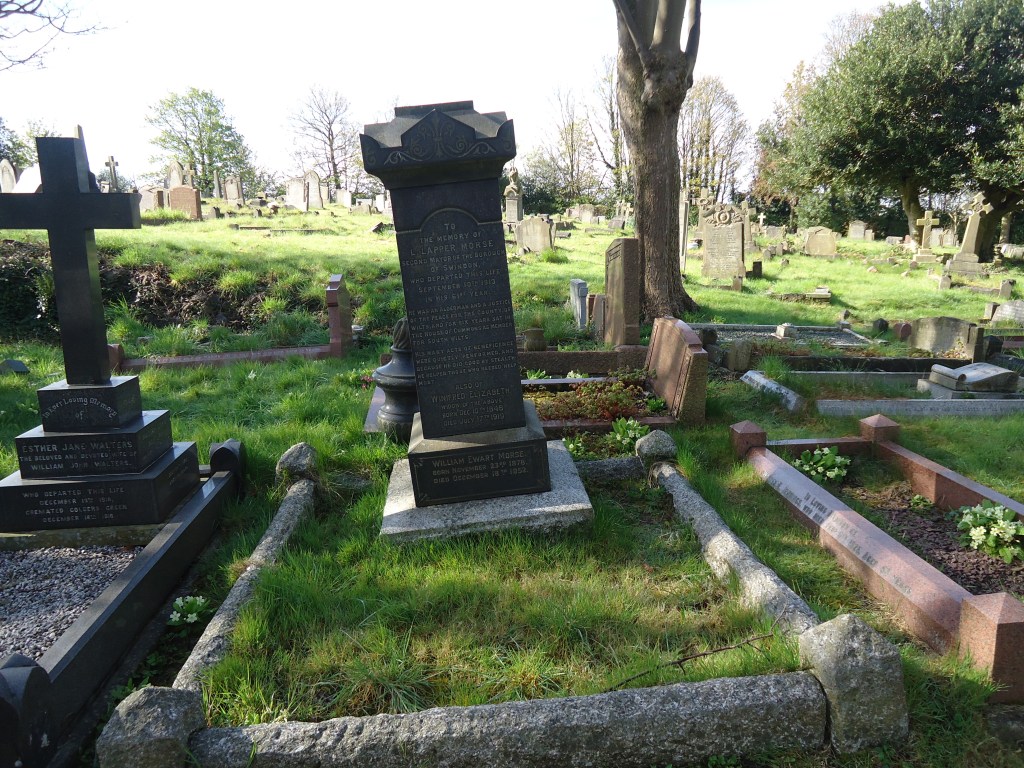
The Morse family grave is surmounted by a magnificent black, granite monument and occupies two plots, 27A and 28A in Section D.

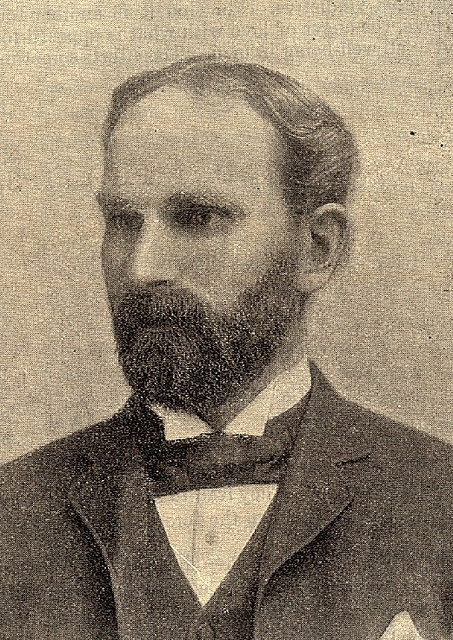
This is the last resting place of Levi Lapper Morse and as the inscription explains he was a Justice of the Peace and served as an Alderman and the second Mayor of Swindon. He was MP for South Wiltshire for six years. He was an active and energetic member of the Primitive Methodists, serving as Circuit Steward of the Swindon II circuit from its formation until his death. He was elected chair of the Brinkworth District Meeting and Vice President of Conference in 1896 and also served as District Missionary Treasurer for about nine years. He was a lay preacher, Sunday school teacher and an accomplished organist. Levi played a prominent role in both the political, commercial and religious life of Swindon and there is plenty of information available about him, but what about his wife?

Winifred Elizabeth Humphries was born on December 10, 1848 the eldest child of Farmer Isaac Humphries and his wife Elizabeth. She grew up at Cockroost Farm, Broad Hinton where her father employed five men and two boys and a 17 year old governess to teach his growing family.

Charles Morse established a family retail business in Stratton St Margaret but his son Levi went on to accomplish far greater things. Levi opened one of Swindon’s first departmental stores, which until the 1960s stood on the present site of W H Smith’s in Regent Street, Swindon.

Levi and Winifred married in 1875 and set up home above the shop in Stratton Street, Stratton St. Margaret where he described himself as a grocer and draper, employing two men, two females and two boys. Winifred’s first child Ella Elizabeth was born in 1876 with seven more to follow. Levi states on the census returns of 1911 that he and Winifred had been married 35 years and that they have eight children, six of whom are still living while two have died.

Winifred supported her husband throughout his political career, but it was within the Primitive Methodist Church that she did most of her work. Winifred had been an active member of the Primitive Methodist Church since before her marriage and as a young girl played the organ at chapel services, often walking several miles from her home on a Sunday morning. The first Primitive Methodist Church in Regent Street was built in 1849. Further structural changes saw the church become the largest of the three Primitive Methodist Churches that formed the Swindon Circuit in 1877. It was also the focal point for the missionary activities of the Primitive Methodists in Swindon in the 1880s and where Winifred was the founder of the Women’s Missionary Federation Swindon branch in 1909.

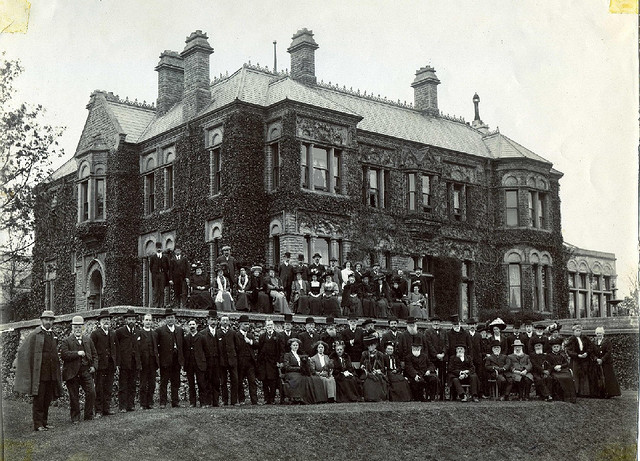
The Morse family moved into The Croft in 1896, an elegant property that stood in four acres of land with paddocks, flower beds and ornamental trees, a tennis lawn and a fountain. William Ewart Morse, the couple’s son, remained in residence until his death in 1952 after which the house fell into disrepair and was eventually demolished. Hesketh Crescent built in 1957 now stands on the site.

Winifred died on 17 July 1919 following a long illness. Her funeral took place at the Regent Street Primitive Methodist Church with which she had so long been associated. The service was conducted by Rev F.W. Harper assisted by Rev J. Dobson, an old family friend. The Rev Dobson spoke in his address of Winifred’s good works and the loss which the church had sustained by her death.

You might also like to read

Mr Levi Lapper Morse – the end of an era

Regent Street Primitive Methodist Church

Amy Edna Riddick – life long member of the Primitive Methodist Church

Mr Levi Lapper Morse – the end of an era

The re-imagined story …

The store closed the day of Mr Levi’s funeral, as a mark of respect. That kind of thing seldom happens now, but things were different in those days.

I had only just started work at Morse’s in the summer of 1913. Drapery assistants worked a long day and as a new, young apprentice I was called upon to do the more menial tasks as I learned my trade. I remember doing a lot of dusting.

Morse’s had begun as a small draper’s shop in Stratton St Margaret, opened by Mr Levi’s father Charles, more than 50 years ago. It was Mr Levi who opened the Regent Street store where he proudly announced that you could furnish your house ‘cheaply and well.’

I often wondered how much of his own stock he used to furnish his big old house at The Croft where he entertained his political friends and held the large Primitive Methodist conventions. My mum told me not to let the manager at Morse’s hear me speak like that as I would soon get my marching orders.

The Croft

The staff were gathered together when the announcement of his death was made earlier that week. Many were moved to tears. I hung my head but to be honest I didn’t know him, his days of calling into the store and overseeing the business had long passed. We opened late that day, after we dressed the store in black, trimming last used when the old Queen died.

That week in September everyone spoke about Mr Levi in hushed, reverent voices. I wondered if he was really that well liked, or whether this was just the ‘old order’ speaking; those who touched their forelock when the squire drove past in his carriage.

The end of an era, people said. At 16 you don’t really appreciate what that means. But a year later the world was at war. Nothing was ever the same again.

Levi Lapper Morse

The facts …

The remains of the late Mr Levi Lapper Morse were laid to rest at Swindon Cemetery on Saturday, when nearly 5,000 people witnessed the last rites.

The Cortege, on leaving The Croft, proceeded to the Regent Street primitive Methodist Church. It was headed by a posse of police under Inspector Winchcombe. Then followed the borough magistrates and the Mayor (Mr J.J. Shawyer). The deputy mayor (Mr G. Brooks), and the Town Clerk  (Mr R. Hilton). Most of the members of the Corporation and representatives of the principal public bodies brought up the rear of the first portion of the procession. Two carriages laden with beautiful wreaths proceeded the handbier, on which the coffin was laid.

An imposing spectacle was made by the male and female employees of Mr Morse’s business, who came immediately behind the carriages conveying the family mourners. Next were the representatives of religious bodies, and finally about 200 friends and acquaintances who had attend to pay their last tributes of respect.

Besides the family wreaths were tributes from Sir William and Lady Hartley, the members of the Swindon Primitive Methodist circuits, the North Wilts Liberal Association, Members of the second Methodist circuit quarterly meeting, the business staff etc.

Levi Lapper Morse (2)

A Friend’s Tribute

An impressive panegyric was delivered by the Rev T.M. Pinnock, who described the late alderman as ‘my faithful and true friend for 40 years.” Speaking with evident emotion, the reverend gentleman referred to Mr Morse’s generosity to the Church both locally and in the connexion generally. Without him it would have been impossible for their church in Swindon to be what it was that day. Reference was also made to Mr Morse’s unobtrusiveness and natural business talent, which latter quality he made of immense serve to the Church. “He never forsook the friends of his youth,” added the speaker, “and he died fearing God. He sought to make God’s will the rule of his conduct, God’s service the joy of his heart, and God’s glory was the aim of his life.”

Another brief but earnest tribute was given by the Rev J.D. Thompson (general committee secretary), who said the sympathy of Primitive Methodists all over the country went out to the bereaved.

During the service the hymns “O God our help in ages past” and “Rock of Ages” were sung.

A cordon of police had been drawn round the chapel, on the west side of which was the grave, lined with the deceased’s favourite flowers – red roses – and many other beautiful blooms. Large and sympathetic crowds witnessed the final rites, conducted by the Revs. J.D. Jackson and J. Dobson.

A memorial service was conducted by the Rev T. Mostyn Pinnock (formerly of Swindon), at the Regent Street Church on Sunday night.

Extracts from The Wiltshire Times Saturday published September 20 1913