Hubert John Deacon – jeweller and watchmaker

Image of Hubert John Deacon published courtesy of Deacons website

I’m sure the name Deacon will be familiar to many, but did you know Hubert John Deacon was also a leading figure in the Baptist Church, Swindon.

The jewellers at 11-13 Wood Street was founded in 1848 by George Deacon who was later joined in business by his two nephews Hubert and Joshua.

Hubert John was born in Trowbridge in 1846 and joined the business in the late 1860s, during what was a period of considerable expansion for the family firm.

In the online company history Hubert is described as an entrepreneurial figure.  He was the first President of the Swindon Chamber of Commerce in 1893 and was responsible for supplying Swindon’s first public clock on the Town Hall.  He also brought the plot of land on which Deacon Street was built and named in his honour.

By 1881 he and his wife Susan had moved in over the Wood Street shop where they lived with their six children, cousin William Nash who was a watchmaker apprentice, Ann Shackleton, a jeweller’s shopwoman and two young servant girls. The Deacon children would eventually number ten.  The youngest, a daughter was named Dorothy Decima.

Hubert was succeeded in the business by his only surviving son George. Today the family firm is in the hands of Richard Deacon and his sister Sara, the 6th generation

Image of Deacons store published courtesy of Deacons website

Death of Mr H.J. Deacon

50 Years a Resident in Swindon

Public Activities

The death took place on Thursday at Margate of Mr Hubert John Deacon, who was associated with the public life of Swindon for over half a century. Mr Deacon, who was 81 years of age, had been in delicate health for some time, and succumbed to an attack of bronchitis.

For many years Mr. Deacon carried on business as a jeweller and watchmaker in Wood Street, a business that was established by his uncle, Mr George Deacon, nearly a century ago. On the death of his uncle, Mr. Deacon succeeded to the business. His son, the late Mr. George Deacon, entered the business, but died at a comparatively early age, and it is now carried on by the widow, Mrs Mildred Grace Deacon, under the style of Deacon & Son.

The late Mr. Deacon first married Miss Lay, of Harwell, Berks, who predeceased him soon after they celebrated their golden wedding when they resided at “Grovelands”, Springfield Road. They had a family of two sons and eight daughters, and two daughters survive. Deceased married again when he went to Margate to reside.

An ardent worker for many years in connection with the Baptist Church in Swindon, Mr Deacon was a member when the old church was in existence at the corner of Bridge Street and Fleet Street. He took a prominent part in the scheme for building the Tabernacle 40 years ago, and gave liberally to the church funds. On the retirement of the late Mr. W.B. Wearing as superintendent of the Sunday School, Mr Deacon succeeded to that post, which he filled with success for many years. He was also a member of the Baptist Union of Great Britain and Ireland.

Interest in Public Work

Mr Deacon was associated with many enterprises in the town, notably the Swindon Permanent Building Society, of which he became successively vice-chairman and chairman, and witnessed a wonderful advance in that society as the town grew.

The public work and interests of the town always commanded his attention, and his greatest interest. He was for a number of years a member of the Local Boards, and afterwards of the District Councils of Old and New Swindon, and was also one of the first members of the Corporation, when Mr. G.J. Churchward was Mayor. He also devoted some years to Poor Law work as a member of the Swindon and Highworth Board of Guardians.

Of the Swindon Horticultural Society he was a great supporter, and his lovely garden and grounds at “Grovelands,” which he frequently lent for social gatherings in connection with churches in the summer months, were evidence of his love for flowers.

Mr. Deacon also interested himself greatly in the Victoria Hospital, with the establishment of which he was associated, as well as with its opening in Queen Victoria’s Jubilee year. For some years he was vice-chairman of the committee of management. He was one of the founders of the Old Swindon Traders’ Society, which was the forerunner of the Swindon Chamber of Commerce. Of the latter body Mr. Deacon was the first President. He was also a former chairman of the Swindon Plate Glass Insurance Society and for some years chairman of the Southern Laundry Company.

Bowls was his only out-door sport, though he did not play that extensively. He was a member of the Westlecott Club, and was instrumental in its formation.

In various other spheres the deceased did good work in the town.

Extracts from the North Wilts Herald, Friday, January 28, 1927.

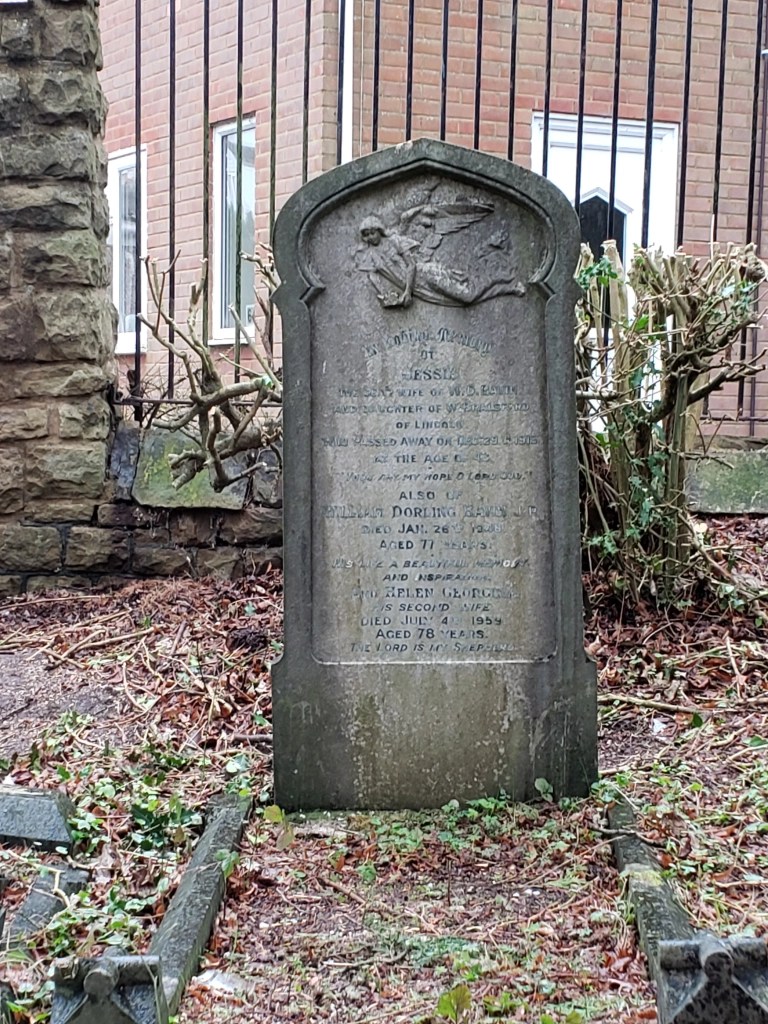
This is the last resting place of Hubert, his wife Susan, their daughters Honoria Edith and Winifred Elsie and their son also named Hubert John. Susan died in Swindon in 1920 aged 73.  Hubert died in 1927. 
Down Your Way – Old Town

The ‘fur coated women of Old Town’ received a bad press when the Swindon Advertiser interviewed local bus drivers and conductresses during the Second World War.

“They expect to be picked up and put down outside their own homes, regardless of the approved stopping places, take twice as long as the average passenger to leave the bus because they are too busily engaged in a conversation which almost monopolises the vehicle, and invariably need change from a half crown or a note,” reported the Advertiser.*

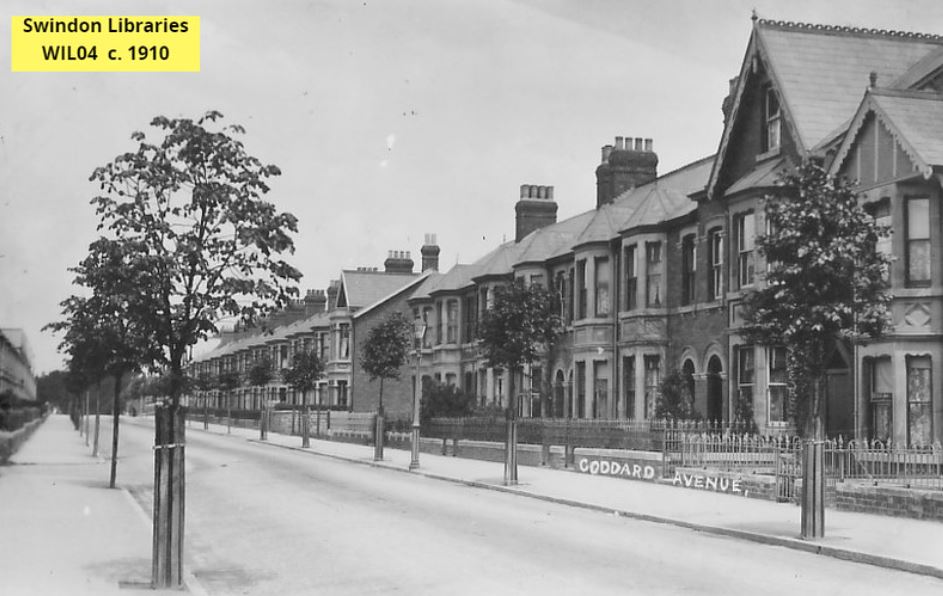
Read about some of the former residents of Goddard Avenue who were hopefully less annoying!

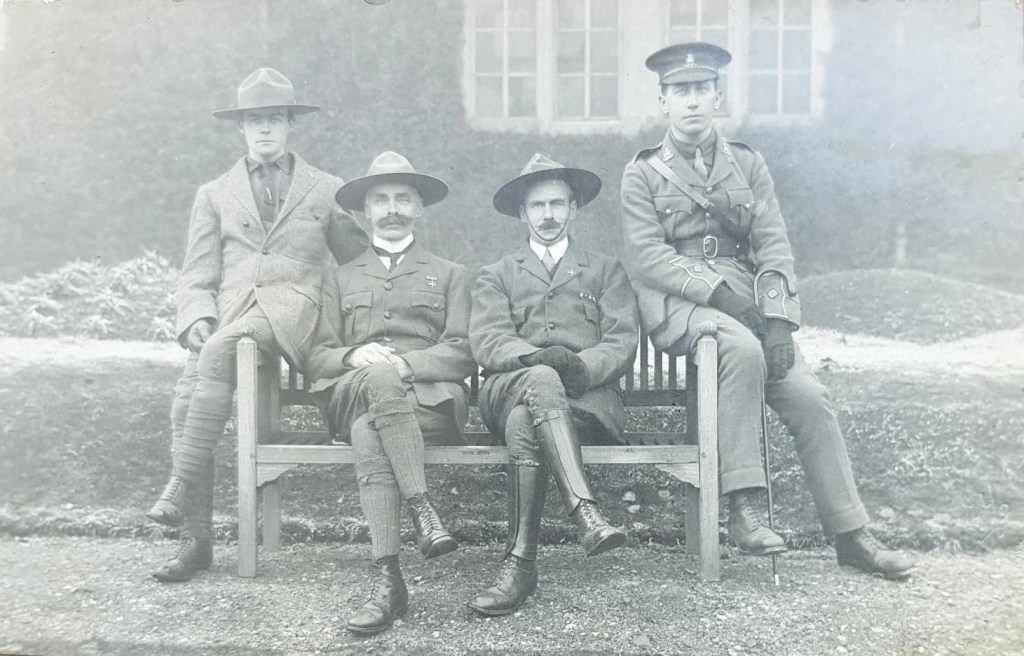
William Rowland Bird – chief chemist at GWR Works and Scout Leader

Phyllis Mary Peters – Railway Clerk

William Dorling Bavin – Swindon’s War Record

*Swindon at War was a series of articles published in 2011 sourced from the Swindon Advertiser 1939-1941 and compiled by myself.

Horder Bros – Drapers, Milliners, Mantle Makers and Costumiers

Albert Horder was born in Donhead St Mary in 1831, the son of a farmer William and his wife Sylvia. As the couple’s sixth son, Albert realised he was unlikely to inherit the 200 acre Lower Wincombe Farm, so he carved out a career for himself in the drapery business, and never looked back.

The 1861 census finds him living above his shop in the High Street, Shaftesbury with his sister Mary who acted as his housekeeper, a house servant and four assistants. In 1865 he married Mary Ellen Jeeves and the couple had four children.

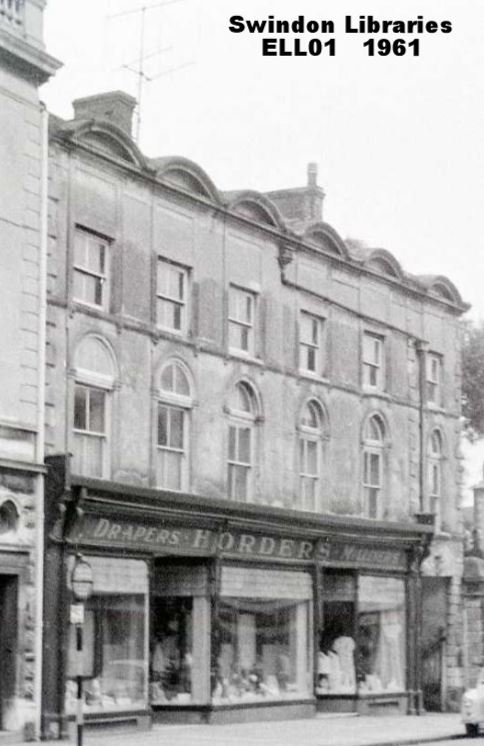
Image published courtesy of Local Studies, Swindon Central Library.

In the early 1870s Albert and Mary Ellen moved to Swindon and set up business in premises in the High Street once occupied by Thomas Strange. Business flourished and the autumn and winter fashions of 1882 included “a good assortment of Tailor-made Ulsters, Jackets, Dolmans in Plain & Broche Cloth, Velvet, Sealskin & Fur” where “an inspection was respectfully solicited.” By the 1890s Horder Bros, Drapers, Milliners, Mantle Makers and Costumiers boasted an expansive three-bay shop frontage.

Having handed over the reins to his son Edward Jeeves Horder, Albert and Mary Ellen retired to a house in Devizes Road, which they named Wincombe after the family farm.

The Horder’s store eventually closed shortly before the firm’s centenary and the building was subsequently demolished. The Pinnacle, a block of apartments, stand on the site of Albert’s drapery business, his name immortalised in the access road, Horder Mews.

Swindon

Death of a well-known resident – The death took place late on Sunday night, at his residence, Wincombe, Swindon, of Mr Albert Horder, who for many years carried on a successful drapery business in the High-street. He was an active member of the Congregational church, having been deacon at the Victoria-street Chapel for many years. Deceased, who was born at Winchcombe, Dorset, nearly 73 years ago, leaves a widow, three sons, and one daughter.

The Wiltshire Advertiser, Thursday, March 27, 1902.

Albert died aged 72 in 1902 and was buried in a large double grave plot E8032/33. He is buried with his wife Ellen, their son Edward Jeeves Horder and his wife Alice Emma.

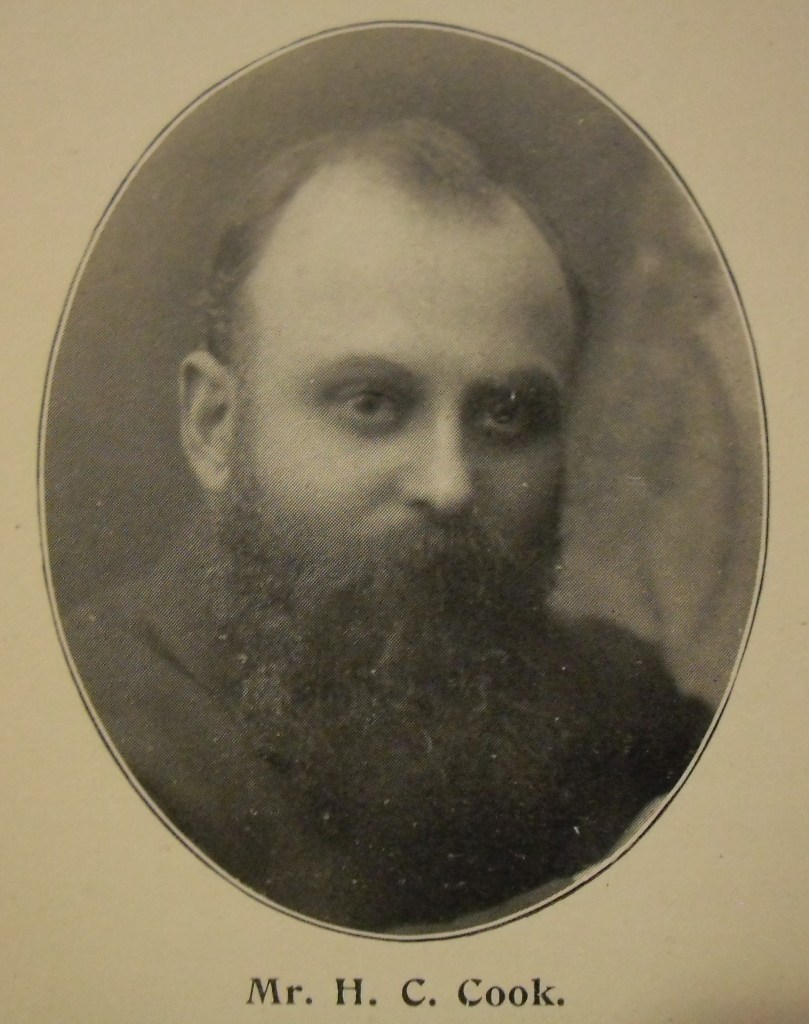
Henry Charles Cook – builder

St Margaret’s Road published courtesy of P.A. Williams and Local Studies, Swindon Central Library.

Henry Charles Cook was born in Bledington, Gloucestershire in 1860 the son of Charles Cook, a carrier, and his wife Jemima. By 1881 Henry had moved to Swindon with his mother and her second husband Thomas Smith where the family lived at 19 Prospect Hill. Henry, then aged 21, was working as a plumber and glazier. In 1882 Henry married Elizabeth Jane Carpenter and the couple went on to have three children, William, Daisy and Frederick.

Henry’s building business was soon up and running with projects in progress by 1884. He built numerous properties in Gorse Hill including houses in Florence Street, Omdurman Street and in 1907 he built property in Osbourne Terrace, a new street off Ferndale Road. But he didn’t confine himself to this area of town. In 1897 he was building in St Margaret’s Road and Goddard Avenue and in 1903 he built 23 houses in Devizes Road. During the 1920s Henry’s firm returned to Gorse Hill where they built more than 25 houses in Harcourt Road and another 9 properties just round the corner in Cobden Road.

And like so many men of his generation, Henry took an active part in the civic, political and religious life of the town.

Elizabeth died in 1925 aged 66 and was buried on June 13 in Radnor Street Cemetery plot E8273. Henry died at his home, 59 Broome Manor Lane, ten years later. He was buried with his wife on August 14, 1935.

Death of Mr H.C. Cook

Well Known Swindon Methodist

The death occurred on Saturday night, at his residence, 59, Broome Manor lane, Swindon, of Mr Henry Charles Cook, who for 50 years had been prominent in the business and civic life of Swindon. He was 75 years of age.

Mr Cook came to Swindon as a youth and was apprenticed to the decorating trade. He began in business on his own account as a very young man, later taking up building, and was in business in the town for over 60 years, for a great part of that time at his present premises in Wood Street.

Mr Cook had been an Alderman of the Borough and had served capably as chairman of the Education Committee. He was also active in Methodist circles in the town, being attached to the Regent Street church; he was Circuit Steward for many years, and was a splendid delegate to conference. He was an ex-president of the Swindon Liberal Association.

Mrs Cook died ten years ago, and there are left three children – Mr W.H. Cook, chemist, of Faringdon; Mrs J.B. Hodges, of Andover; and Mr F.C. Cook of Wood street, Swindon.

The Funeral

The funeral took place on Wednesday. The service took place at the Regent Street Methodist Church, and was conducted by the Rev. T. Allison Brown, the interment being at Radnor Street Cemetery.

The principal mourners were Mr and Mrs W.H. Cook Faringdon (son and daughter in law), Mr and Mrs J.B. Hodges, Andover (son in law and daughter), Mr S.C. Cook, Swindon, (son), Mrs Button and Mrs Cull, Swindon (sisters), Mr B.W. Cook, Faringdon, (grandson), Mr K.L.W. Cook, Swindon, (grandson), Messrs W.H. Kent, F. Tucker, W. Smith, E. Liddiard and Covey.

Messrs A.E. Smith and Son, Gordon Road, Swindon, had charge of the funeral arrangements.

Extracts published from North Wilts Herald, Friday, 16 August, 1935

Goddard Avenue published courtesy of P.A. Williams and Local Studies, Swindon Central Library.

You might also like to read

James Spackman – a well known builder and contractor

Thomas and John George – leaving their mark on Swindon