The Death of Mrs Swinhoe

The re-imagined story …

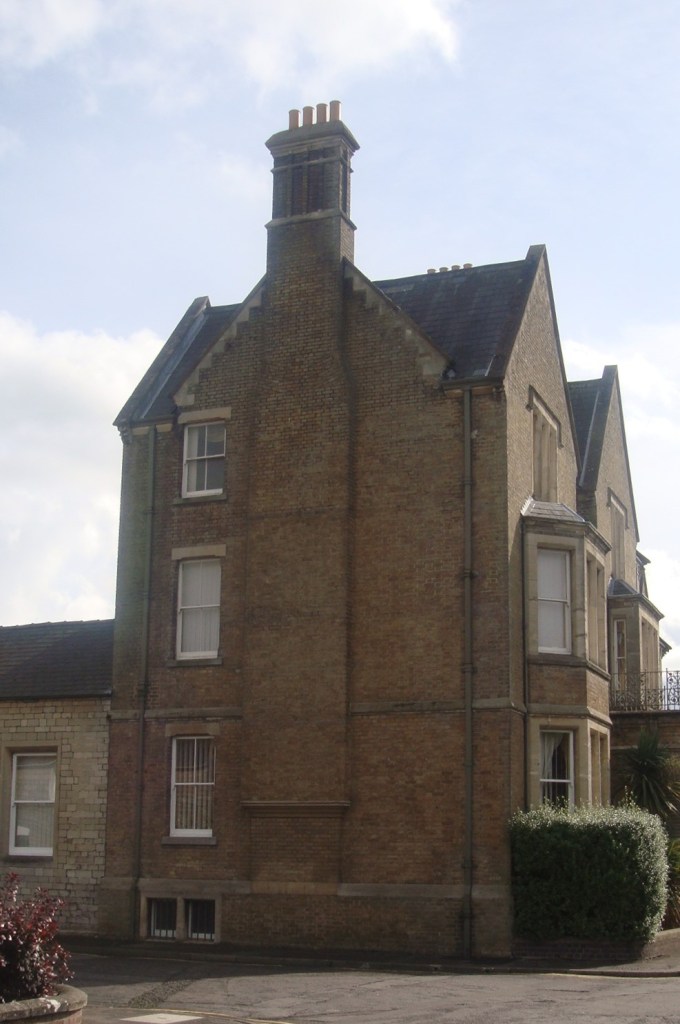
I stood across the road from Park House, amongst a group of women, all of whom had been in receipt of an act of kindness performed by Mrs Swinhoe.

She wasn’t a demonstratively affectionate person, not a woman to place an arm around your shoulder, or take your hand in hers. She wasn’t one for displays of emotion, but Mrs Swinhoe was one of the kindest women I have ever met.

She was a stalwart of St Mark’s Church, a member of several committees, a fund raiser and a generous benefactor. She would be greatly missed in the railway community.

Everyone in the railway village had been in receipt of her kindness at some time yet she had never sought comfort from a stranger, except on one occasion.

I was employed as a housemaid in the doctor’s residence when the Swinhoe family lived in London Street. It was a busy household as the property served as the doctor’s consulting room and the Swinhoe family was quickly growing, three little daughters and another child on the way when I joined the establishment in 1864.

Mrs Swinhoe’s confinement proved difficult when on May 19 two little girls were born and quickly named Eliphalette and Etheldreda. On June 20 the babes were baptised by their grandfather at St Michael’s Church in Cornhill in London, but the event was quite subdued; all was not well with the smaller baby Etheldreda.

I was with Mrs Swinhoe the day her baby died. I’d never seen sorrow like that before. I was fifteen years old. I didn’t know what to do or what to say. What words of comfort can you offer to a woman who has just held her baby while it died? I put my arms about her as she sobbed and sat with her until her husband returned from the Works where he had been attending an accident. I left them to their grief.

Mrs Swinhoe is to be laid to rest in Swindon’s cemetery on Kingshill. Her little daughter was buried in the churchyard at St Mark’s, but that is closed to burials now.

It must have been a dreadful thing – to be a doctor and unable to save your child.
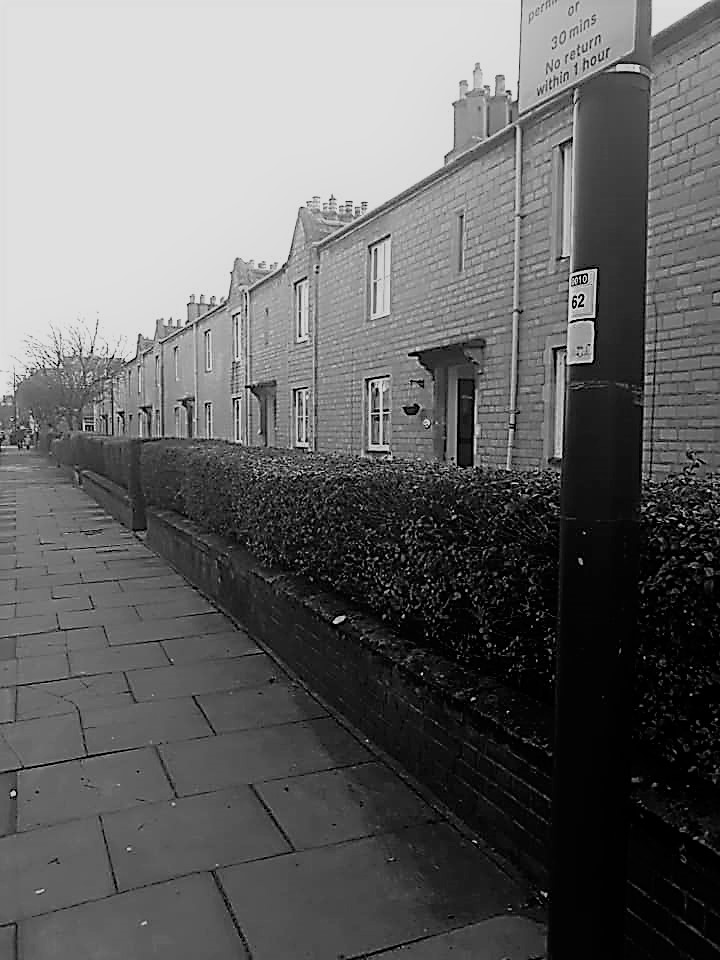
London Street 5 (2)

The facts …

Diana Maria Matilda Wrench was born on June 17 1836 at St Michael’s Rectory, Cornhill in the City of London the daughter of Rev. Thomas William Wrench and his wife Diana Maria. She married George Money Swinhoe, a Practitioner Surgeon, at the church where her father officiated on August 13, 1859 and by the time of the 1861 census, they were living at 4 London Street, Swindon.

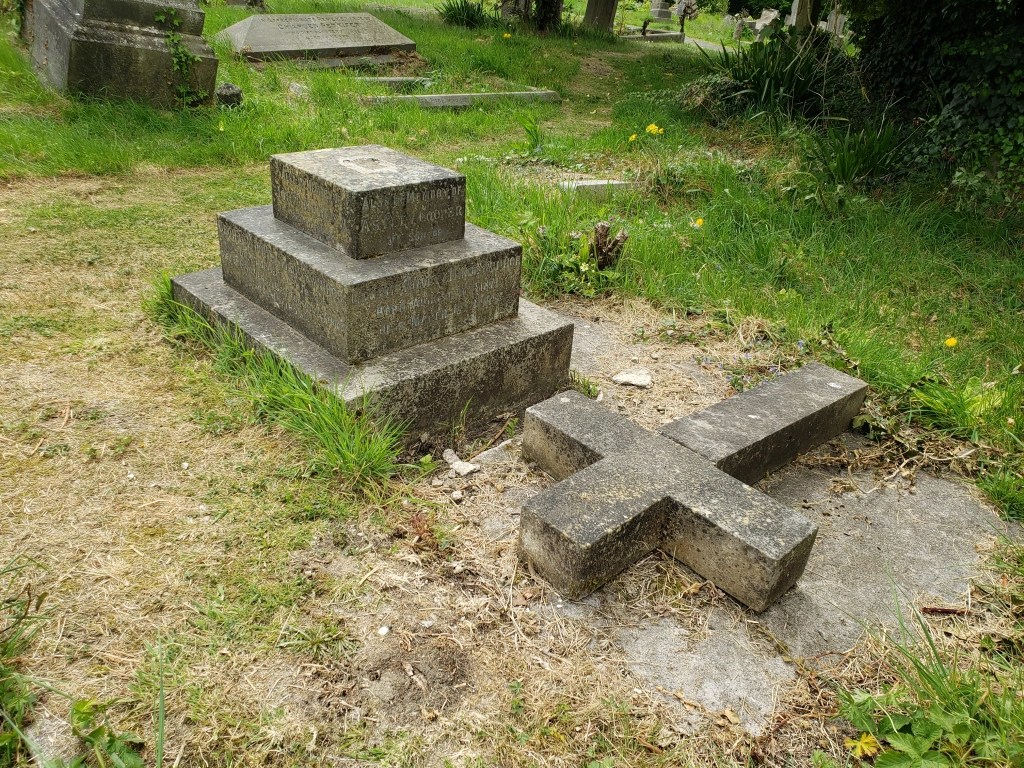
The couple went on to have a large family, seven daughters and five sons survived to adulthood. Diana died after a short illness and was buried in Radnor Street Cemetery on April 25, 1894. She was the first of six members of the Swinhoe family to be buried in the large family plot numbered E8228/29/30.

Death of Mrs Swinhoe

We regret to announce the death of Mrs Swinhoe, wife of Dr G.M. Swinhoe, of Park House, New Swindon. The deceased lady had been ailing only a day or two, and died somewhat suddenly on Sunday morning. Her death will be a great loss in St Mark’s parish, where she has been such an excellent worker for many years past. The circumstances are rendered still more sad by the fact that deceased’s son Dr. G.R. Swinhoe, returned with his bride from his honeymoon trip only a day or two previously.

On Sunday at St Mark’s church (where Dr Swinhoe is vicar’s warden), the organist, Mr Geo. Burrows, played the “Dead March in Saul” at each service.

In consequence of the sad event, a concert and operetta which was to have been rendered on Monday evening in the Mechanics’ Institute, New Swindon, and in which the Misses Swinhoe were to have taken part, was postponed.

It would be altogether superfluous for us to enter into panegyrics respecting the deceased lady, the long period Dr Swinhoe has been the friend in need to the great majority of the inhabitants of New Swindon, and the “right hand” Mrs Swinhoe has been to him, are too well known and appreciated to make the telling necessary. Suffice it, that the sad intelligence was received with profound and genuine regret throughout the neighbourhood. The deceased leaves in addition to her stricken husband seven daughters and five sons to mourn their irreparable loss.

The Funeral

Took place on Wednesday morning and was of a quiet and private character. The funeral cortege left the late residence of the deceased lady, Park House, about 11.15 am. The first part of the most solemn service was read at St Mark’s Church, by the Hon and Rev Canon Ponsonby, and there was a crowded congregation, a large number being unable to gain admission.

At the grave side this number was still further increased. The first part of the service being over, the procession wended its way towards the cemetery where the Rev Canon Ponsonby read the remaining portion of the burial services. The remains were buried in a bricked grave, lined with moss, primroses and other flowers. The coffin, which was of oak, with very massive brass fittings and a large Latin cross on the lid, born the following inscription: – “Diana Maria Matilda Swinhoe, Died 22nd April, 1894, Aged 56 years.” It was conveyed in a hearse, and completely covered with beautiful wreaths.

Messrs Chandler Bros. were the undertakers, and discharged the funeral arrangements in a most satisfactory manner. The coffin was made by Mr. T. Barrett.

Extract from the Swindon Advertiser April 1894.

Swinhoe family (2)

Diana Maria Matilda Swindon aged 56 years was buried on April 25, 1894 in grave plot E8229. 

Astley Cooper Swinhoe – a career full of promise

Astley Cooper Swinhoe was born on August 30, 1871 the 8th of George Money and Diana Swinhoe’s 12 children who survived to adulthood. He was baptised on November 17, 1871 by his grandfather, Rev Thomas William Wrench, Rector at St Michael’s, Cornhill in the City of London.

By 1901 Astley was working alongside his father and brother as a medical practitioner at Park House where he died on March 18, 1905.

Dr Astley Cooper Swinhoe

Death of Mr Astley Cooper Swinhoe

The Funeral

An Impressive Service

We deeply regret to announce the death of Mr. Astley Cooper Swinhoe, who passed away at Park House, Swindon, Saturday. The deceased gentleman, who was the third son of Dr. G.M. Swinhoe, contracted pneumonia, and this hastened his death in a painfully sudden manner.

He was well-known and highly esteemed by all classes in Swindon and the loss will be keenly felt. Deceased, who was only 33 years of age, was educated at Marlborough College, and had his medical training in London, where he was for some time in St Thomas’s Hospital. His career was full of promise.

Amid signs of mourning on every hand, the mortal remains of the late Dr Astley Cooper Swinhoe, who died last Saturday, after a short illness, at the early age of 33 years, were laid to rest in Swindon Cemetery on Wednesday morning.

It was a beautiful spring morning, and there was an immense concourse of persons assembled in the Cemetery, where the cortege arrived at a quarter past ten. The mourners left Park House at half-past nine, and proceeded to St Mark’s Church, where a large congregation had gathered. The service was simple and impressive, and was conducted by the Vicar, the Rev. A.G. Gordon Ross, and the Rector of Inkpen, the Rev. H. D. Butler, a former curate at St Mark’s, who also officiated at the graveside.

The body was enclosed in an elm shell, with unpolished oak coffin, with massive brass furniture. On the lid of the coffin was a large brass cross, at the foot of which was the following inscription:- “Astley Cooper Swinhoe, died March 18th, 1905, aged 33 years.”

The coffin was made by Mr Joseph Williams, and the funeral arrangements carried out by Messrs Chandler Bros., Swindon.

Extracts from The Swindon Advertiser, Friday, March 24, 1905.

Swinhoe Astley Cooper of Park-house New Swindon Wiltshire died 18 March 1905 Administration London 15 April to George Money Swinhoe surgeon Effects £1533 2s 2d

This image has an empty alt attribute; its file name is swinhoe-family-3.webp

Dr Astley Cooper Swinhoe was buried in grave plot E8228/29/30 which he shares with his parents and three brothers.

You may also like to read:

The Death of Mrs Swinhoe

George Money Swinhoe – Swindon doctor

Maurice Carew Swinhoe – banana planter and exporter

Dr George Rodway Swinhoe – GWR Company doctor


George Money Swinhoe – Swindon doctor

The re-imagined story …

I remember wondering why Dr Swinhoe had a sword on the top of his coffin. I kept pulling on my mother’s coat and asking – ma, ma until in exasperation she hissed at me ‘because he served in the Crimea War.’

Well, of course, I was none the wiser.

It was only years later that I learned about that bloody war where some 500,000 lost their lives due to the incompetence of commanding officers and the appalling conditions in the hospital in the converted barracks at Scutari. This was the war in which Florence Nightingale transformed nursing practices in the battlefield hospitals and back home here in England.

The Crimea War was the greatest military horror in a generation, that is until millions were sent to their death in the Great War.

Dr Swinhoe served as a medical officer in the Crimea War and I served as one in the Second World War. I didn’t get a sword though, shame about that!

Dr George Money Swinhoe

The facts …

Impressive Funeral Ceremony

Marked Expression of Public Esteem and Sympathy

The large crowds of people which followed the remains of the late Mr G.M. Swinhoe to their last resting place in the Swindon Cemetery on Saturday afternoon bore eloquent testimony to the very high and general esteem in which the deceased gentleman was held by all classes, for in these crowds were to be seen those of the very poorest circumstances mingling with those occupying important positions in connection with the public life of the town. It was a raw cold afternoon, and yet this did not deter these people from turning out in their hundreds to pay a last tribute of respect to the dead – to the memory of one who in his life time had been to so very many “a guide, philosopher, and friend.”

The solemn cortege was timed to leave the deceased gentleman’s late residence, Park House, Church Place, at two o’clock, but some time before this hour arrived, a very large number of people took up their position at a respectful distance from the house and patiently awaited the appearance of the coffin, which punctually at two o’clock, was borne out of the house. It was entirely covered with the Union Jack, and upon it, resting among a wealth of lovely flowers, was to be seen the trusty sword which the dead Crimean veteran carried with him during that eventful period in English history when he was attached to the medical staff. Within an area of but a few yards four Union Jacks could be observed flying at half mast – that at the GWR Medical Fund Hospital; that at the GWR Mechanics’ Institution; that at the Swimming Baths, and that in the Park over which Park House commands such an extensive view.

A minute or two after the hour had struck, the solemn procession moved slowly towards St Mark’s Church, where Mr Swinhoe was a regular worshipper, and where he for many years discharged the duties of Churchwarden. At the entrance to the Church the crowd was even greater than at Park House. Everyone wanted to gain admission to the sacred building, but accommodation was limited, and the police, of whom there were many on duty, firmly but gently had to stem the tide of those who sought to be present at the service. As it was, the Church was full almost to suffocation, but at no time was there any unseemly rushing, so well was the crowd controlled.

The service, conducted by the Rev. A.G.G. Ross MA Vicar of St Mark’s was of a most quiet and impressive character. As the coffin was borne into the Church, followed by the mourners, “Rock of ages” was sung as the processional hymn. Then the 90th Psalm, “Lord, Thou has been our dwelling place in all generations,” was chanted, the full Choir being present, after which Canon Ponsonby, formerly Vicar, read the Lesson from I. Cor., 15th chapter, from 20th verse. “But now is Christ risen from the dead.” The hymn, “Peace, perfect peace,” was then sung, after which, while the congregation stood, and as the funeral procession moved out of the Church, Mr E. Miles, the organist, played the “Dead March” in Saul.

All along the route to the Cemetery hundreds of people followed, and pedestrians going about their ordinary business stood and uncovered as the procession passed. At the Cemetery between three hundred and four hundred people had assembled. The grave, the same in which the remains of Mrs Swinhoe were interred some fourteen years ago, not far from the Cemetery Chapel, was within a roped enclosure outside which the people were kept back by the police, under the Deputy Chief Constable (Supt. Robinson) and Inspector Moore. The police, however, had not the slightest difficulty in controlling the crowd, no attempt being made to in any way break through the barrier.  As the funeral procession approached the grave the 130th Psalm, “Out of the depths have I cried unto Thee, O Lord,” was chanted. At the graveside the Rev. A.G.G. Ross performed the last portion of the solemn rite; then the hymn, “Now the labourer’s task is o’er,” was sung, and the impressive ceremony concluded.

The following members of the Committee of the GWR Medical fund Society acted as bearers: Messrs H. Morris (Chairman), William Humphries, W. Sansum, A Watson, B. Wheel, and Z. Peskett.

The grave is a brick one, and had been very beautifully lined with moss, snowdrops, violets primroses, crocuses, and auriculas. The remains were enclosed in an unpolished oak coffin, with a brass Latin cross down the full length of the lid, and at the foot was a brass plate bearing the following inscription: George Money Swinhoe, Died Feb 27th, 1908, Aged 77 years.

List of mourners and floral tributes …

Many of the officials connected with the Medical Fund Society carried wreaths.

In the procession of vehicles, it should be added, was to be noticed the deceased gentleman’s carriage in which he covered so many of his no doubt fatiguing rounds.

Extracts from the Swindon Advertiser, Friday March 6, 1908.

George Money Swinhoe 77 years of Park House was buried on February 29, 1908 in a large grave plot numbered E8228/29/30 which he shares with his wife and four sons.

You may also like to read:

Maurice Carew Swinhoe – banana planter and exporter

The Death of Mrs Swinhoe

Maurice Carew Swinhoe – banana planter and exporter

Dr George Money Swinhoe was the GWR surgeon at Swindon between c1861 to his death in 1908. He and his wife Diana produced a large family based first at 4 London Street and then later at Park House, which served as family home and doctor’s surgery. They had eight daughters, one of whom died in infancy, five who married and two who didn’t; of their five sons one entered the military, one trained as an engineer and two became doctors working alongside their father. Youngest child Maurice chose a somewhat different career – that of banana planter and fruit exporter working with Elder & Fyfe in Kingston, Jamaica.

Unfortunately Maurice was in Jamaica when an earthquake occurred on January 14, 1907. The first terrifying reports stated that almost all the buildings in Kingston had been destroyed and there was a great loss of life. In the following days an estimated 20,000 people were made homeless, camping out on the racecourse. One report told how ‘continual religious services are being held, in which the people join with hysterical fervour.’ While fires continued to rage in the dock area, a tsunami flooded the lower part of Kingston. The death toll quickly escalated with 1,000 declared dead, although this figure was thought to be an inaccurate and low estimation. The earthquake was described as one of the world’s deadliest recorded in history with aftershocks still being recorded up to March 22, 1907.

Maurice survived and in due course returned to England, but it would appear from the obituary published in the North Wilts Herald, Friday, September 29, 1911 that he never fully recovered from the ordeal.

A Swindonian in Jamaica

News from Mr Maurice C. Swinhoe

On Sunday a cable message was received by Dr George Money Swinhoe from his youngest son, Mr C. Maurice Swinhoe, who went out to Jamaica and settled near Kingston some five or six years ago, stating that he is safe, having, happily, escaped those terrible consequences of the recent earthquake which have been shared by so many.

It is hardly necessary to say that the message, so eagerly looked for, has afforded considerable relief to Dr. Swinhoe and the members of his family.

As stated a fortnight ago in the “Advertiser,” Mr Maurice Swinhoe went out to Jamaica some five or six years ago, and settled some three miles outside Kingston, where he threw in his lot with a partner, possessing an extensive banana plantation, as a planter. Close by the plantation is the racecourse, covering a wide stretch of turf, and, according to the reports received from the stricken area, it was upon this racecourse that the desolated people camped out. Dr. Swinhoe, however, received no news from or concerning his son, and, naturally, the absence of any intelligence gave rise to a little anxiety.

Dr Rodway Swinhoe was, perhaps, the most sanguine member of the family for when fears for the absent one’s safety were beginning to be felt, he said to an “Advertiser” reporter in the course of an interview, “I don’t think anything can have happened to my brother. You see, he picked up a little medical knowledge while out there, and no doubt he has been so busy doing what he can for the sufferers that he has not had the time or opportunity to send any word home.”

The Evening Swindon Advertiser Monday, January 28, 1907

Death of Mr M.C. Swinhoe

The death occurred on Wednesday at the residence of his sister, 11, St. Mary Abbott’s Terrace, London, W., of Mr Maurice Carew Swinhoe, [the youngest age,] was the thirteenth child of Dr. G.M. Swinhoe and was, of course, a brother of Dr. G.R. Swinhoe, of Swindon. Some years ago he went to Jamaica and was occupied as a fruit exporter, being connected with the well known firm of Elder & Fyfe at Kingston. He was in Jamaica at the time of the great earthquake, and a series of letters was published in the columns of this paper at that time vividly descriptive of the stirring phases of danger which the deceased experienced. He suffered much in consequence from nervous derangement, and returned to England, and some two years ago underwent an operation at Bournemouth. It subsequently transpired that this was of little avail, and a further operation was performed at St. Thomas’s Hospital, London. The deceased had been ill for a considerable time previous to his death.

North Wilts Herald, Friday, September 29, 1911.

The body of Maurice Carew Swinhoe was returned to Swindon where he was buried in grave E8228, a large family plot. He was 30 years old.

You might also like to read –

The Death of Mrs Swinhoe