Margaret Davies – Late of Great Hoaten

A trip away from Swindon is a good excuse to go cemetery crawling and during a visit to Pembrokeshire I managed to squeeze in a quite a few.

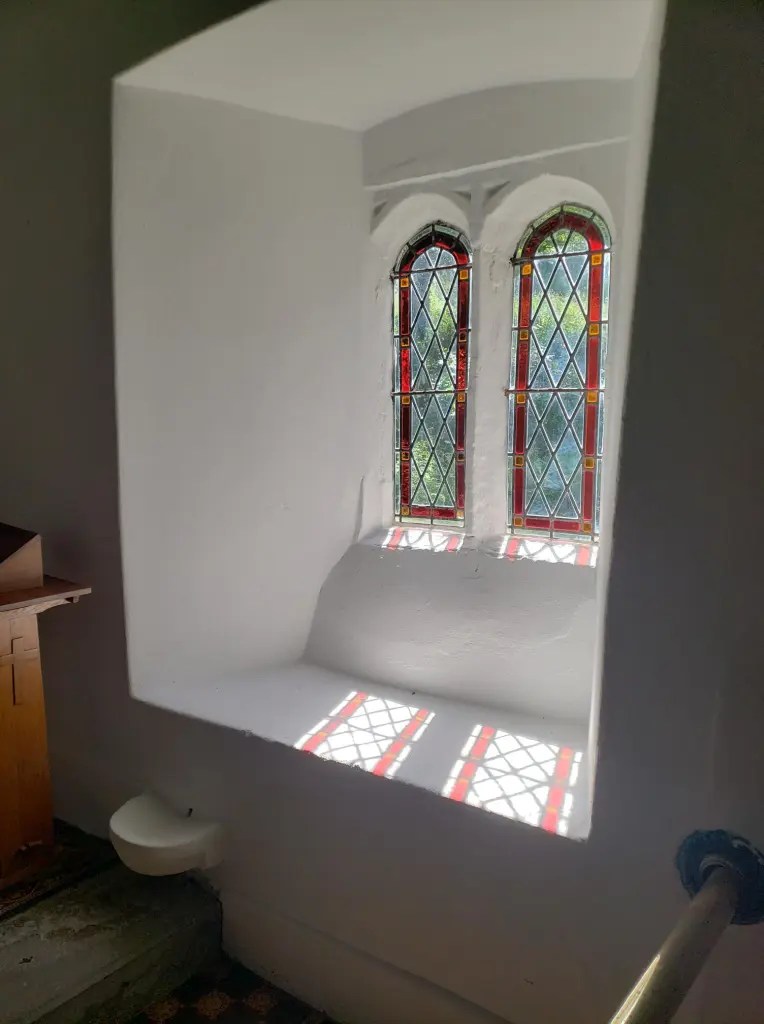
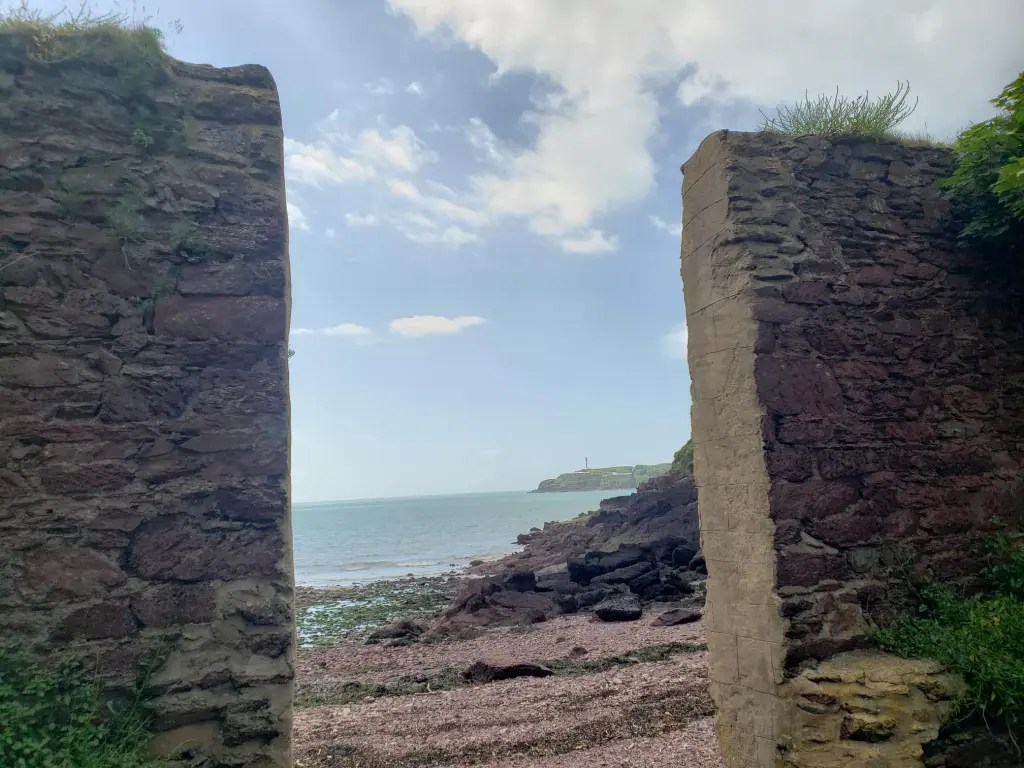
The church of St Ishmaels was founded in the mid 6th century by the son of a Cornish prince. A notice in the church tells how Ishmael and two of his brothers along with SS Teilo and Aidan founded a monastery at St. David’s. The small church has been much enlarged across the centuries. A short walk leads to Monk Haven cove, named after a monastic settlement that once existed here.

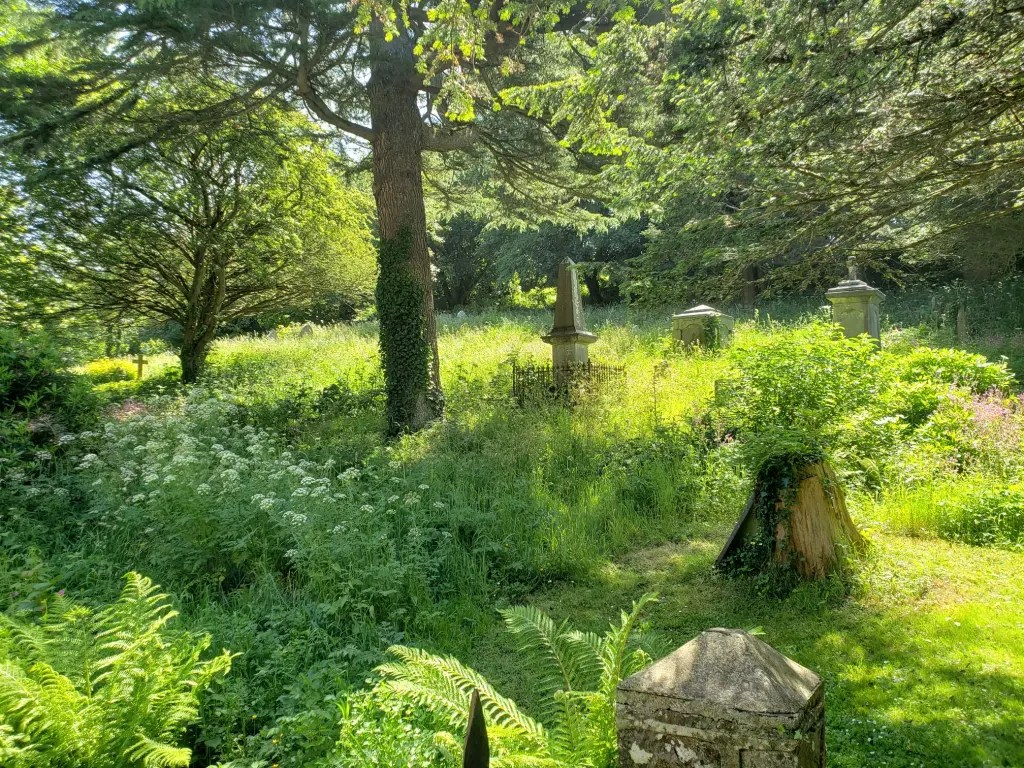
St Ishmael’s churchyard was very overgrown but it was still possible to catch a glimpse of some of the headstones. Online parish registers are available dating back to 1761 but I wasn’t able to see any memorials that old.

One that did catch my eye was a headstone dedicated to Margaret Davies who died in 1869. Someone had made sure that it was mentioned on her headstone that she was ‘Late of Great Hoaten.’ Great Hoaten Farm has been associated with the Davies family since at least 1792 and a mortgage drawn up by Joseph and Dinah Davies.

The last census on which Margaret appears is the 1861 when she was living at Little Haven and described as a retired farmer. Living with her was her 12-year-old son Thomas, the youngest of her 10 children.

Margaret was born at Penally Court Farm in about 1810, the daughter of Rev Thomas Rowe and his wife Patty (Martha) Cornock. Margaret married farmer Thomas Davies in the church of St. Ishmaels on August 17, 1829 and after several years living at Gilton Farm, Walwyn’s Castle, the family make their appearance at Great Hoaton Farm on the 1841 census. The establishment at Great Hoaton comprised approximately 140 acres and in 1841 Thomas employed four female servants, two male servants and a governess to teach his rapidly growing family.

When Margaret died in 1869 her last address is given as Bicton. Despite having such a large family, the sole executor of her will was William John, a grocer from Quay Street, Haverfordwest.

However, the Davies family connection with Great Hoaten Farm continued and in 1939 Margaret’s grandchildren were running the farm. Thomas 55 and his brother Claudy 51 along with their sisters Maud 54, who was housekeeper and Elsie 40, who worked as a dairymaid.

I’m not convinced that this headstone has not been moved. It looks as if it is leaning up against the tree rather than being in situ.

Reminds me how lucky we are to have access to so much information regarding Radnor Street Cemetery.

Set in stone

This headstone is a victim of weathering. Other deteriorating examples can be found across the cemetery, but this is the end result, when the surface cracks and eventually falls away.

It might seem that the history of those buried here is lost, but it is possible to piece together the family history.

A cemetery marker is propped up against the headstone. These should be treated with caution as many are in the wrong place, but I struck lucky with this one. Using the cemetery maps and grave plot registers I was able to trace the story of not only the people buried in this grave but those in the one next to it as well.

James and Dorah Neate

This is the last resting place of James and Dorah Neate. James was born in Box, Wiltshire and Dorah in Bruton, Somerset. They married at St James Church, Bath on October 30, 1877.

James worked as a railway engine driver and the couple moved about a fair bit. At the time of the 1891 census they were living in St Brides, Bridgend with their two sons. William 10 who had been born in Box, Wilts and Frederick 9 born in Weymouth, Somerset. By 1901 they were living at 7 Park Terrace (Faringdon Road) in Swindon. William and Frederick were both working for the GWR, William as a stoker and Frederick as a fitter. The couples’ last home was at 13 Jennings Street where James died in 1925 and Dorah in 1930.

James was buried in Radnor Street Cemetery on April 27, 1925 in plot D519. Dorah’s funeral took place on July 7, 1930 and she is buried in the same plot.

The collapsed pink granite monument next to James and Dorah’s plot is the grave of their son William.

Like his father William also became a railway engine driver. He married Elsie Maria Tyler at St Paul’s Church, Swindon on June 24, 1907. At the time of the 1911 census William and Elsie were living in Goodwick on the Pembrokeshire coast with their two-year-old daughter Kathleen Dora. They also had a son, Arthur William T. Neate, who was born in Wales in 1915.

William and Elsie eventually returned to Swindon where Kathleen died in 1931 aged 22.  William died at 30 South View Avenue, Walcot, Swindon on September 11, 1948 and Elsie died at 20 Castle View Road, Stratton St Margaret on December 13, 1968.

William, Elsie and Kathleen are buried in plot D520 next to William’s parents.

Elsie Maria Neate 4

The Tyler family photo was shared on Ancestry by Debra Tyler on February 8, 2010. Elsie is standing on the left with her arm resting on her mother’s shoulder.

Elsie Maria Neate nee Tyler

The Gwyther family – but from where?

After my walk around St. Mark’s churchyard recently I began looking for family connections between there and Radnor Street Cemetery. And If you’ve ever pursued a line of family history research beyond the bounds of a possible resolution you’ll probably empathise with me!

The closure of the churchyard at St Mark’s in 1881 was not well received by Rev Ponsonby. (You can read his letter to his parishioners published in the parish newsletter here.) And how distressing it must have been for God fearing families to be buried separately.

Having come upon this stylish headstone to Richard Gwyther who had died aged 14 in 1875 I wondered what had happened to the rest of his family.

Now a name like Gwyther piqued my interest too. In the 1860s the GWR opened a Rolling Mill at the Swindon site, which saw a great many Welsh iron workers move here. Was the Gwyther family part of this first Welsh migration? Well actually no it wasn’t.

Research revealed that the boy’s father, also named Richard, was born on April 22, 1818 not in Wales but in Bristol. Richard was a boiler maker working in the iron and steel ship building industry. He married Caroline Cooper at the church of St Mary le Port in Bristol on May 14, 1843 and for more than 25 years the family continued to live in Bristol.

I eventually found the couple in Swindon on the 1871 census when they were living in Westcott Place, four years before the death of their son Richard.

Richard and Caroline remained living at 90 Westcott Place where Richard (senior) died in 1884. He was buried in grave plot A161 where another son James later joined him. Given the stylish headstone in St. Mark’s churchyard I was surprised to discover Richard and James buried in an unmarked public grave.

In 1891 Caroline, then aged 70, was living with her married daughter at an address in Wootton Bassett in an area at the back of the church near the Rope Walk. She died in 1897 and was buried in grave plot 285 in Royal Wootton Bassett Cemetery.

I did eventually find the Welsh connection – I knew there had to be one! Richard (senior) was the son of Stephen Gwyther, a clock and watchmaker, and his wife Sarah. This couple had married at St. Paul’s, Portland Square, Bristol in 1801, but Stephen was born in 1781 in Jeffreyston/Jeffreston, a village in Pembrokeshire close to Tenby, a popular TRIP destination for Swindonians in the 19th century – but don’t get me started on that line of research!