Harriett Annie Veness – political activist

Although the Liberal dominance nationally was on the wane in the last decades of the 19th century, Swindon remained a Liberal stronghold and a hive of political activity with women playing an active role. One such woman was Harriett Annie Veness.

We might consider the term feminist to be a modern one but the word first came into usage in 1852 and Annie Veness was an exemplary role model, demanding women’s rights throughout her lifetime.

Annie was born in Macclesfield, Cheshire in 1869, daughter of Thomas Veness, a bricklayer and mason, and his wife Harriett. The family moved to Swindon in the early 1870s and appear on the 1881 census living at 30 Sheppard Street. Annie cut her proselytizing teeth supporting her parents with their work in the Church of England Temperance Society, later becoming honorary secretary of the British Women’s Temperance Society.

Annie joined the Swindon and North Wilts Women’s Liberal Association upon its foundation in 1893, becoming the first Honorary Secretary, a role she fulfilled for more than ten years. Neither did she restrict her campaign work to the Swindon district but travelled across the country canvassing in elections in her role as organizing secretary for the Women’s National Liberal Federation. She was an enthusiastic public speaker, described as giving a “spirited address” in Ebbw Vale whilst speaking for “nearly an hour” in Chelmsford

Following her mother’s death in December 1897 Annie and Thomas continued to live at 30 Sheppard Street where they employed a 15 year old domestic servant, Janet Hinder. Her three brothers Thomas, Alfred and Reginald would all emigrate to the USA.

Annie’s political campaigning appears to have come to an end in around 1908 when she resigned from the Women’s National Liberal Federation. Annie and her widowed father moved to Worcester where Annie got a job as a clerk in the Women’s Department at the Employment Exchange. At the time of the 1911 census Thomas Veness was a patient in Birmingham’s General Hospital while Annie stayed at the Cobden Hotel to be close to her father. Following a lifetime of independence, eventually and inevitably Annie was forced to accept the traditional female role as carer for her elderly father.

Thomas died on May 21, 1920. His body was returned to Swindon where he was buried with his wife in Radnor Street cemetery. After her retirement, Annie also returned to Swindon and a home at 59 Drove Road where it was recorded that she did “quiet, good work in the town in the Liberal interest and the temperance cause.” It is sad to think of the passionate, bold speaker reduced to quiet, good work.

Annie died at the Victoria Hospital on October 31, 1936, her life and death recorded in an obituary published in the Swindon Advertiser where it was commented on that “link with the days when Swindon was a strong Liberal constituency is snapped.”

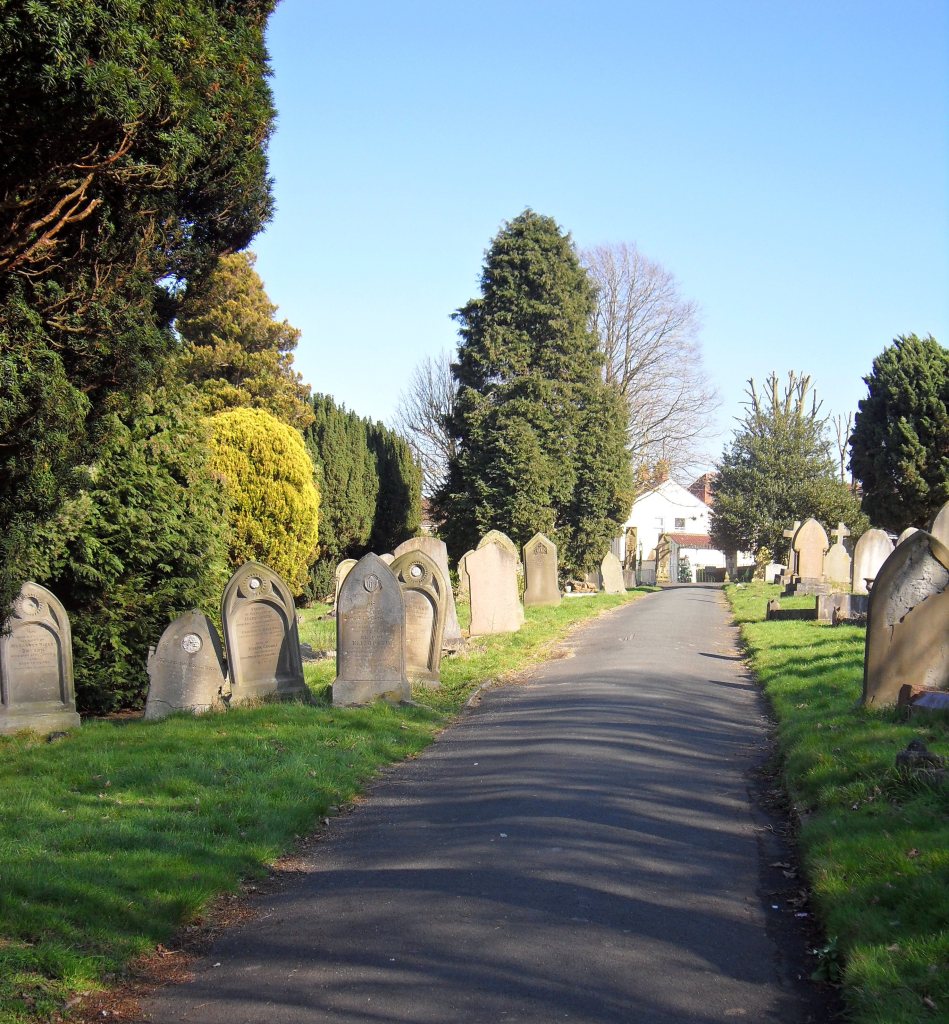
The funeral service took place on November 4 at the Baptist Tabernacle followed by interment in the cemetery. Annie was buried in plot E8097 with her parents where today a fine headstone lies flat on the family grave.

George Henry Stevens – Swindon Mayor 1928-29

Today I am publishing the first of a two part family story. George Henry Stevens devoted his life to public service – as did his eldest daughter Edith Harriett Stevens. George was described as ‘a foremost figure in trade union and Labour movements’ while Edith was a lifelong member of the Communist Party.

George was born in Mumbles, Swansea, the eldest child of Samuel and Eliza Ann Stevens. By 1851 the Stevens family had moved to Clifton where Samuel worked as a gardener.

In 1881 22 year old George was lodging at 27 Sheppard Street, Swindon with William and Mary West and working as an Engine Turner in the GWR Works.

He married Harriette Nash on March 24, 1883 and the couple went on to have six children.

Death of Mr G.H. Stevens

A Former Mayor of Swindon

Funeral Tributes

A former Mayor of Swindon, Councillor George Henry Stevens, J.P., of 62 County road, died on Saturday morning after a long illness.

His passing, at the age of 74 years, is a great loss to the town, for Mr Stevens’ record of public service was a notable one and he was a man who was swayed by the broadest sympathies and interest in all phases of the town’s administrative life.

Councillor Stevens’ devotion to his work is emphasised by the fact that he was a member of the Town Council for 18 years without a break and was honoured with the Mayoralty in the year 1928-29. His career was crowded with activity for the benefit of his fellow men.

46 Years’ Service

Born at Mumbles, Swansea, Mr Stevens came to Swindon in 1881 when 23 years of age, having served his time as a fitter and turner at Bristol. For 35 years he was a chargeman in W Shop at the GWR Works and retired in January 1928, after 46 years’ in the service of the company. For eight years he was a member of the council of the Mechanics’ Institute and for a quarter of a century was secretary of Swindon No. 3 branch of the AEU.

His first entry into the public life of the town was in 1914, when he was elected a member of the Town Council for King’s Ward. Later he represented the ratepayers of North Ward and continued to do so up to the time of his death. For seven years he held the position of chairman of the Electricity Committee and at the time of his death was a member of that committee as well as of the Works and Streets Committee, the Lighting Sub-Committee, the Staff and Stores Sub-Committee, the Finance and Law Committee, the Wages, Salaries, Superannuation and Loans Committee and the Rating and Valuation Committee.

Employed by Admiralty

During the war he served under the Ministry of Munitions for twelve months and afterwards was in the employ of the Admiralty as Labour Regulation officer for the North-Western area, stationed at Liverpool. He also served on the National Advisory Services Committee in Swindon, and was one of the first members elected on the National Health Insurance Committee for Wilts, serving in that capacity for 12 years.

Another important service he rendered was in connection with the Labour Exchanges for the South-West of England, and on that body he was the only Wiltshire representative during a period of three years.

Mr Stevens had been a member of the Ancient Order of Foresters for more than 60 years, and was one of the founders of the Swindon Brotherhood.

Trade Union Interests

He had been associated with the local Trades and Labour Council since its inception following upon a visit to Swindon of Mr. John Burns in 1885, and generally had been a foremost figure in trade union and Labour movements.

Extracts from North Wilts Herald Friday June 17, 1932.

George was buried in grave plot D1125 where he joined his wife Harriett who died in 1928 and two of their children – Stanley George who died aged 28 years in 1914 and Edna Gertrude who died in 1921 aged 25.

Read about Edith Stevens here tomorrow.