Mr J.C. Westmacott – Primitive Methodist Preacher

When John Christopher Westmacott died in 1931 the North Wilts Herald published a lengthy obituary. I visited his grave in Radnor Street Cemetery where I discovered an elegant headstone, which included an inscription dedicated to his wife who died twenty years later. When I saw that his wife included the name Morse in her name I presumed that he had married into the prominent Primitive Methodist Morse family.

Elizabeth Jane Morse Trotman was born in Stratton St. Margaret and her baptism was performed by Charles Morse. Elizabeth was the daughter of Jane Morse Austin who married Cornelius Trotman. Jane was the daughter of Robert Austin and his wife Elizabeth Morse who was the daughter of William and Elizabeth Morse of Purton, but as yet I have been unable to make that all important link with the mighty Morse family (and I bet you’re glad I’ve stopped trying!)*

John Christopher Westmacott married Elizabeth Jane Morse Trotman in 1898. The marriage was registered in the Hungerford area of Berkshire. By 1901 they were living in Kingshill before eventually moving to 133 Goddard Avenue. They had no children.

When Elizabeth died there was no fulsome obituary, just a brief death notice published in The Reading Standard on Friday March 16, 1951.

Westmacott – on March 9, 1951, at Prince of Wales Avenue, Reading, Elisabeth Jane Morse Westmacott, aged 81 years, widow of John Christopher Westmacott, formerly of Swindon, passed peacefully away. – Sadly missed.

Mr J.C. Westmacott

Death of a Swindon Local Preacher

Funeral Tributes

The funeral took place on Friday afternoon of Mr J.C. Westmacott, of 133, Goddard Avenue, Swindon.

Mr Westmacott, who was 60 years of age, was a member of an old Swindon family, and had been in the service of the GWR Company for many years. He was well known in Primitive Methodist circles, having been a local preacher for nearly 40 years. He leaves a widow, and is also survived by his widowed mother, who is now 87 years of age.

The first portion of the service was conducted at the Regent Street Primitive Methodist Church, by the Rev G. S. Hooson (supt. Minister), the Rev F.W. Harper (a former supt. minister at Regent Street Church and now at Wootton Bassett), the Rev. T. Sutcliffe, the Rev. F. Sellers, and Mr G.P. Pickard. Special hymns were sung, and the organist (Mr. A. Barrett) played the “Dead March.”

38 Years as a Preacher

The Rev. G.S. Hooson paid tribute to the good work Mr Westmacott had done as a lay preacher. He had been a faithful and loyal member of the Regent Street church and his chosen sphere of work was preaching. For 38 years he was a lay preacher, and during that period he rendered a true and complete ministry in the Methodist Church.

The interment took place in the Radnor street cemetery.

The family mourners were: Mrs J.C. Westmacott (widow), Mr. and Mrs. C.H. Westmacott, Mr and Mrs J.A. Westmacott (Stroud), Mr Wm. E. Westmacott, Mr and Mrs H.G. Westmacott (brother and sister in law), Miss F.A. Trotman (sister in law), Mr F.T. Trotman (brother in law) Mr H.C. Trotman (brother in law, of Reading), Mr R.R. Trotman (nephew, of Oxford), Miss Freda Parsons (niece), Mrs W.H. Watts, Mrs E. Austin (cousin, Highworth), Mrs T. Austin (cousin), Mr and Mrs Uzzell, Mr and Mrs Pockett, Nurse Booth.

The bearers were Messrs C. Hands, H.T. Budgell, W. Robinson, Gingell, Deaman and M. York (local preachers).

GWR Works Representatives

The representatives of the GWR Works were Messrs. F. Hyde (chief foreman), J. Bond, and B. Thorne (of J. Shop) E. Thomas (retired foreman), J. Summerhayes, R.W. Newport and F. Dennis (of the chair foundry).

Amongst the representatives of the Primitive Methodist Connexion were Messrs. W. Webb, J. Haydon. J.T. Robins, H. Martin, J.P., T. Minchin, W. Bayliss, Wheeler, Uzzell, G.H. Hunt, C.J. Iles, J.P. (Purton) H.J. Franklin, H.J. Hancock, W.T. Harding, and H. Thatcher.

The funeral arrangements were carried out by Messrs. Smith and Son, Gordon road, under the personal supervision of Mr. A.E. Smith.

North Wilts Herald, Friday, January 23, 1931.

*So, I returned to my research and managed to find the connection between Elizabeth Jane Morse Trotman and the prominent Primitive Baptist family by the name of Morse. Elizabeth traces her ancestry back three generations to William and Mary Morse of Purton. These were the parents of Charles Morse, leading figure in the Primitive Methodist Church in Swindon.

You might like to read:

Mr Levi Lapper Morse – the end of an era

Elizabeth Williams – a forceful character

Image published courtesy of Local Studies, Swindon Central Library.

Opportunities for women to serve in public office in the 19th century were few and far between but in 1894 significant changes came about. The Local Government Act of that year removed restrictive property, gender and status qualifications, enabling single and married women to vote and stand for election on the newly constituted urban rural district councils.

The local government reforms also extended to the Poor Law Board of Guardians, a bastion of male dominance, responsible for apportioning poor relief and in charge of the local Workhouse.

On January 2, 1895 the new Board of Guardians met for the first time. The Returning Officer laid before the Board his certificate of the result of the Elections of Guardians and Rural District Councillors with the names of four women among their number; Miss Elizabeth House, Mrs Elinor L. Buller, Mrs Elizabeth Williams and Mrs Maria Matthews. Three of these remarkable women are buried here in Radnor Street Cemetery.

The first four women elected to the Highworth & Swindon Poor Law Board of Guardians came from widely different backgrounds.

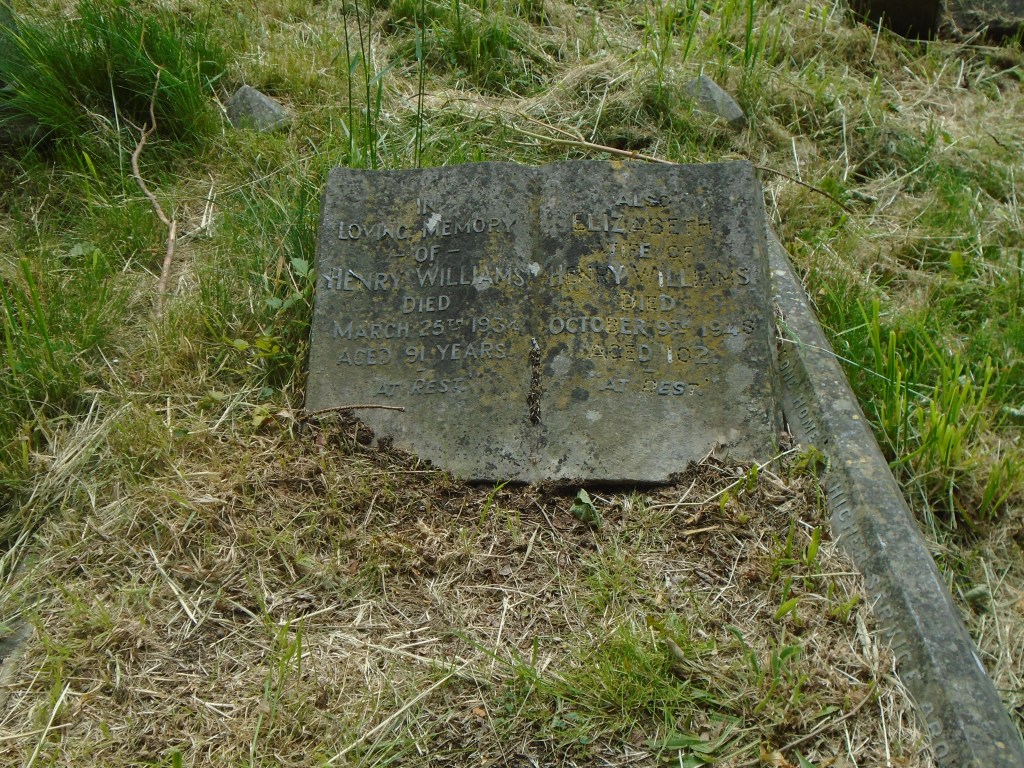
Elizabeth Williams was born in Wanborough in 1846 in a house attached to the Shepherd’s Rest public house. She was one of ten children, nine daughters and a son Henry who died aged 10. Her father Thomas Edwards, was an agricultural labourer and by the age of 15 Elizabeth was working as a general servant in Upper Stratton. Elizabeth married Henry Williams, a gas and water fitter and they had three children. The family lived at various addresses in Swindon and at the time of Elizabeth’s election to the Board of Guardians they lived at 23 Oxford Terrace, Faringdon Road.

Elizabeth served on the Ladies Workhouse Visiting and Boarding Out Committee for many years and in 1901 she was elected on to a new committee set up to address the payment of the Foster Children’s Quarterly Clothing Allowance. In 1902/3 Elizabeth also served on the Finance and House Committee where she objected to the proposal to award the Workhouse Master Mr Kilby seven guineas for his services in the preparation of Dietary Tables.

Elizabeth was a devout Primitive Methodist and strictly teetotal. Her great granddaughter Mrs Hazel Grace tells of how Elizabeth once tried to stop the male inmate’s Christmas beer allowance, a matter recorded in the Minute Book on November 20, 1901 during a discussion about the Workhouse Christmas dinner. The amendment ‘that no Beer be given but that Tea, Coffee or aerated waters be substituted,’ was proposed by local businessman Henry Raggett and seconded by Mrs Williams. However, the amendment was defeated by 16 votes to 12 and the inmates received their Christmas cheer.

In later years Elizabeth lived with her granddaughter’s family and Hazel remembered her great grandmother as a forceful character.

Elizabeth Williams died in 1948, aged 102. She is buried here, her grave marked by a headstone in the shape of an open book, symbolic of a love of learning and religious faith.

You might also like to read:

The trail blazing Maria Matthews

Charles Edward Hall of 75 Morris Street, Rodbourne.

The re-imagined story …

When I was a child I used to think Mr Hall was just an old man who tottered about in front of his house in Morris Street before turning round and going back inside. I used to wonder what the point of this all was as he went nowhere and saw nothing new. Occasionally someone would pass by and stop to talk to him, but that was about it.

How pointless, I thought as I kicked my football on the way to the Rec. Or sped past on an errand up the Lane for my mother, keen to get it done and to be off with my mates. Always in a hurry, well kids are, aren’t they? Mr Hall was just another old man who tottered about in front of his house. As children we give little thought to the old people we see shuffling about the streets, or the life they might have lived.

Now I’m an old man who totters about in front of my house. Of course, Morris Street is a bit different these days, but someone usually stops and has a few words with me. Helps pass the day. I suppose that’s what it was all about for Mr Hall.

The facts …

Swindon J.P. Dead

Mr C.E. Hall’s Services to Methodism

Former Councillor

Mr Charles Edward Hall, J.P., of 75 Morris street, Swindon, died early on Friday morning, aged 75 years.

Heart trouble had confined him to his home for the past eight years, and except for an occasional walk outside his home, Mr Hall had never been out in the town during this time. He had been bedridden for the past few months.

Many years ago Mr Hall took an active interest in the affairs of Swindon, and among other things was a town councillor. He only served for three years, however, and did not seek re-election, as the council work interfered with his church activities.

He was an ardent Methodist, and took a prominent part in the affairs of the Regent street Clifton street and Butterworth street churches. He had been a steward on the Swindon circuit, while he was twice elected president of the Swindon and district Sunday School Union.

50 Years with the GWR

He was appointed a J.P. to the Borough bench in 1912.

A native of Hook, Mr Hall came to Swindon in his youth, and worked in the Great Western Railway factory as a boilermaker. At the time of his retirement 12 years ago, he was a foreman, and had completed 50 continuous years of service. He was an enthusiastic trade unionist, and became a member of the Boilermakers’ Iron and Steel Ship Building Society in 1880.

In his younger days Mr Hall took a keen interest in politics, and was a staunch worker for the Liberal cause.

He leaves a widow and one son.

The Funeral

The funeral took place at Radnor street Cemetery on Monday afternoon. The service at the house and the committal at the grave were conducted by the Rev. Allison Brown. There were no flowers by special request.

The chief mourners included Mrs C.E. Hall (widow), Captain and Mrs. A.E. Hall, Mrs Rees, Mrs Barrett, Mrs Richardson, Mrs Winter, Mr H.W. Watkins Mr W. Watkins, Mr A.W. Head, and Mr Turk.

The funeral arrangements were carried out by Messrs. A.E. Smith and Son, 24 Gordon road, Swindon.

Magisterial Tribute

When the Swindon Borough police court magistrates met on Monday afternoon the chairman (Mr. A.W. Haynes), addressing the court, said that within the last few days the magistrates had lost a colleague in the person of Mr C.E. Hall better known as “Charlie.” He had been ill for a very long period but previous to his illness he was a regular attendant at the court.

“I have known him personally for a long period and he was very active in former days in many ways of life. He was very conscientious in everything he did and very much respected by all who met him. The Justices and their Clerk deeply sympathise with the widow and family in their bereavement,” said Mr. Haynes.

North Wilts Herald, Friday, 8 March, 1935

Charles Edward Hall was buried in Radnor Street Cemetery on March 4, 1935 in plot D951 which he shares with his first wife Emma Jane.

Photographs published courtesy of Cathy Moseley and the Hall Family Tree, Ancestry.