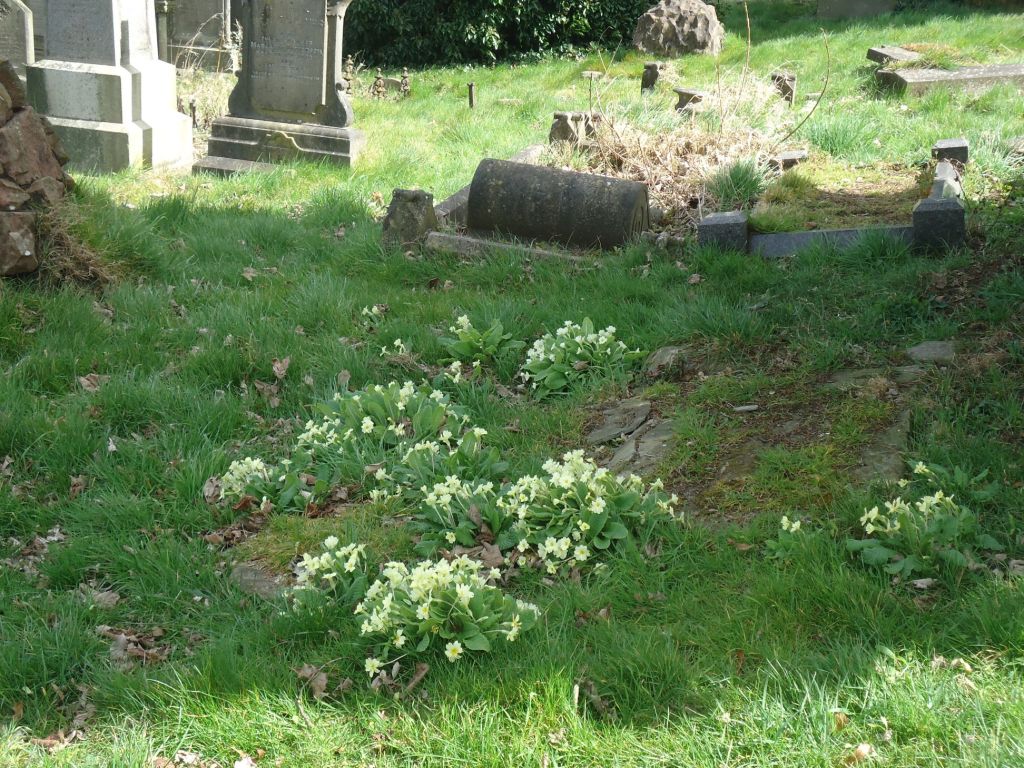
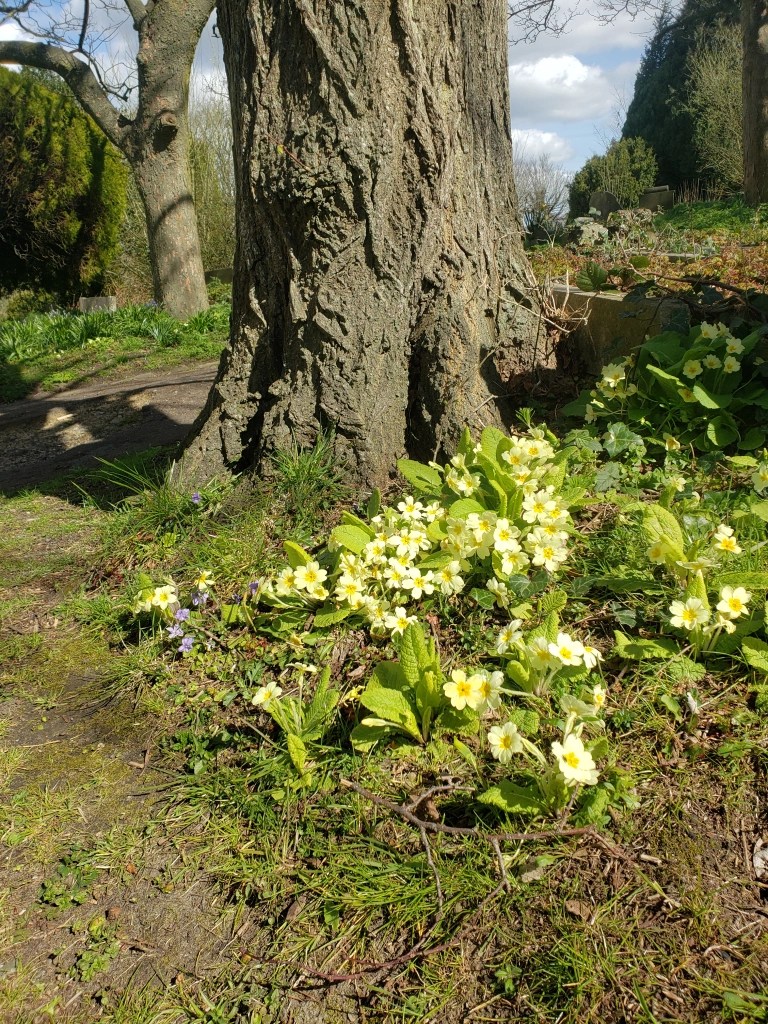
A profusion of primroses

Despite the persistent rain of recent weeks the cemetery is boasting a profusion of primroses. You may like to read again the story of James Shopland whose grave is wreathed in the cheery little spring flower, whatever the weather.

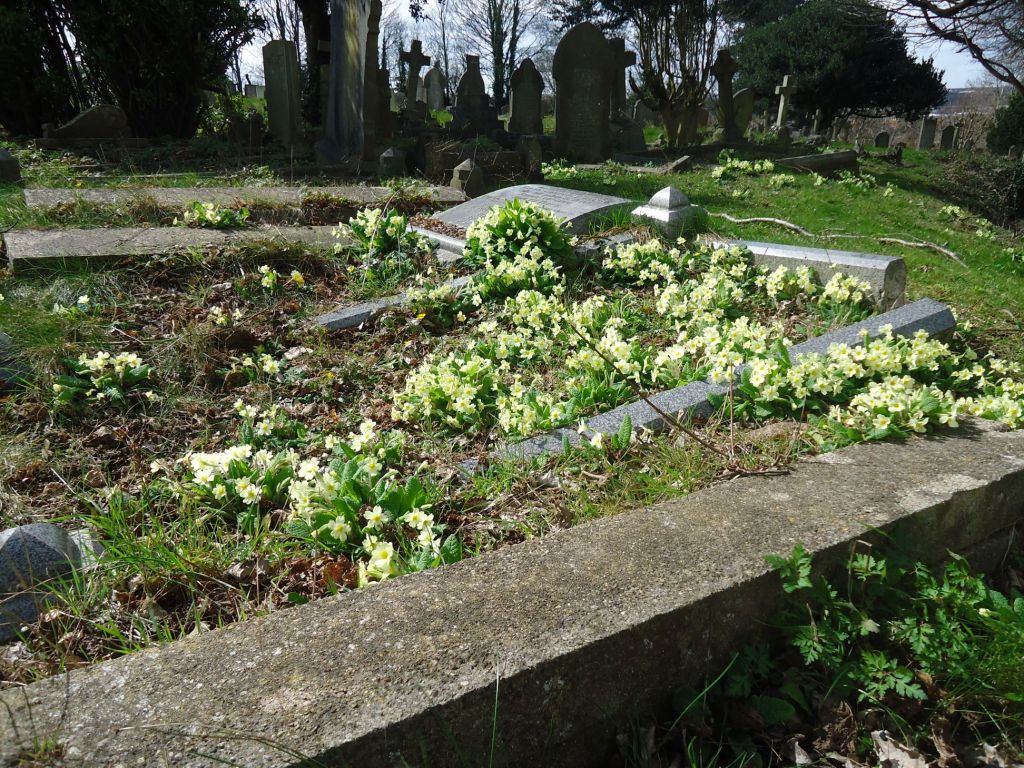
James Shopland, a civil engineer, was born in Purton in 1873, the son of James Rew Shopland, also an engineer.

By 1900 James had moved to the Southampton area and on July 6, 1900 he was at the Southampton Sewage Works, although it was pointed out at the inquest that he had nothing to do with the works, but was assisting in the rescue.

Three labourers working in the press house at the Sewage Works had attempted to free a blockage in a lime vat, firstly by ramming a rod down from the top, which was the usual way of clearing it. However, when this didn’t work, one of them went down into the ejector chamber and tried to free the pipe by undoing it. They tried to remove the cap but this wouldn’t move either, so they proceeded to remove a flange from the bottom and then the upright pipe. This immediately set off a fast flow of sludge and released a smell that rendered the men semi-conscious.

Passing workmen attempted to rescue the three men who were all lying unconscious in the sludge. As a call went out for volunteers, James Shopland arrived on the scene. A witness at the inquest described how as Mr Shopland descended the ladder he saw him put his hand to his head.

At one point someone tried to stop any more men going into the chamber, declaring that at this rate there would soon be fifty dead at the bottom.

James was brought to the surface where artificial respiration was attempted, but he was already dead. At the subsequent post mortem the cause of death was found to be due to congestion of the lungs brought about by carbolic acid gas poising.

The jury at the inquest recorded a verdict of accidental death and commended the noble endeavour made by James Shopland and four others who had attempted to rescue the men.

James was 26 years old and had been married for just a year. He is buried in plot D100 with his wife Helena (Nellie) Elizabeth Shopland. Helena moved to Bournemouth where she lived with her widowed mother-in-law, but she eventually came back to Swindon. At the time of the 1911 census she was living at 159 Goddard Avenue with her sister Violet Blanche Brown. She died just a few weeks later, on June 16, 1911. Her funeral took place on June 20 and she is buried with her husband.

First Day of Spring

In 2005 Radnor Street Cemetery was designated a Nature Reserve. A team of Rangers worked to promote the benefits to Swindon residents of having a green oasis on their doorstep. With an earlier band of volunteers they worked on a Garden of Remembrance close to the Radnor Street entrance. They plotted an area in which to grow meadow flowers. They organised events, installed bat and bird boxes and led guided walks. Then came the financial crisis of 2007-8 and subsequent cuts in council budgets and soon Swindon was relying on the work of volunteer rangers, and Radnor Street Cemetery became a casualty of those cuts.

For me, Radnor Street Cemetery is all about the people and the history of Swindon but Spring is most definitely in the air and every good cemetery guidebook (or website) has a section on flora and fauna. As a townie and non-gardener I’m probably not the best person to write this and there are many in our little band of volunteers who would make a much better job of it, but it will be selective, brief and beautifully researched. Please feel free to add your own more knowledgeable comments.

I’ll begin with the snowdrop – everyone knows the humble little Galanthus Nivalis that flowers in late winter and heralds the coming of spring. The snowdrop has inspired stories and poetry, music by Johann Straus II and Tchaikovsky and was a nickname for the US Military Police stationed in the UK during WWII.

The daffodil belongs to the Narcissus genus and is recognisable to even a horticultural ignoramus such as myself. The daffodil has migrated from North Africa and Southern Europe and was adopted by the Welsh as their national flower, although when and why seems largely unknown. The leek has a much older association with Wales, but to the best of my knowledge, we don’t have any in the Cemetery.

The Common Primrose, Primula Vulgaris, is to be found by streams, in orchards and woodland and grows in profusion in Radnor Street Cemetery. Edible, drinkable (primrose wine and tea) and the roots are considered to have an analgesic property – but don’t take my word for it. Apparently the primrose was Benjamin Disraeli’s favourite flower (Conservative Prime Minister in 1868 and 1874 to 1880).

And what about the Muscari Grape Hyacinth (are you impressed – I had to look it up?) The Wikipedia description is of a plant that produces “spikes of dense, most commonly blue, urn shaped flowers” so very appropriate for a cemetery. The Grape Hyacinth is one of the earliest garden flowers to bloom in the spring.

So that is probably the sum total of my flora and fauna knowledge. Is it too early for bluebells – probably? I’ll let you know when I see them. What else should I be looking out for? What are the names of the trees and shrubs – come on cemetery followers, help me out here.

But I do have some pretty photographs for you.