photograph published courtesy to Local Studies, Swindon Central Library.
Building on Princes Street dated from about 1876. In Roadways published in 1979, Peter Sheldon and Richard Tomkins state that the name commemorates Prince Albert Victor, Duke of Clarence, son of Queen Victoria and Prince Albert.
Demolition on the Victorian houses took place in the 1960s. Photograph taken during the 1960/70s redevelopment shows the Courts and in the distance the Police Station, since demolished as well.
Read about some of the residents below:
All photographs published courtesy of Local Studies, Swindon Central Library.
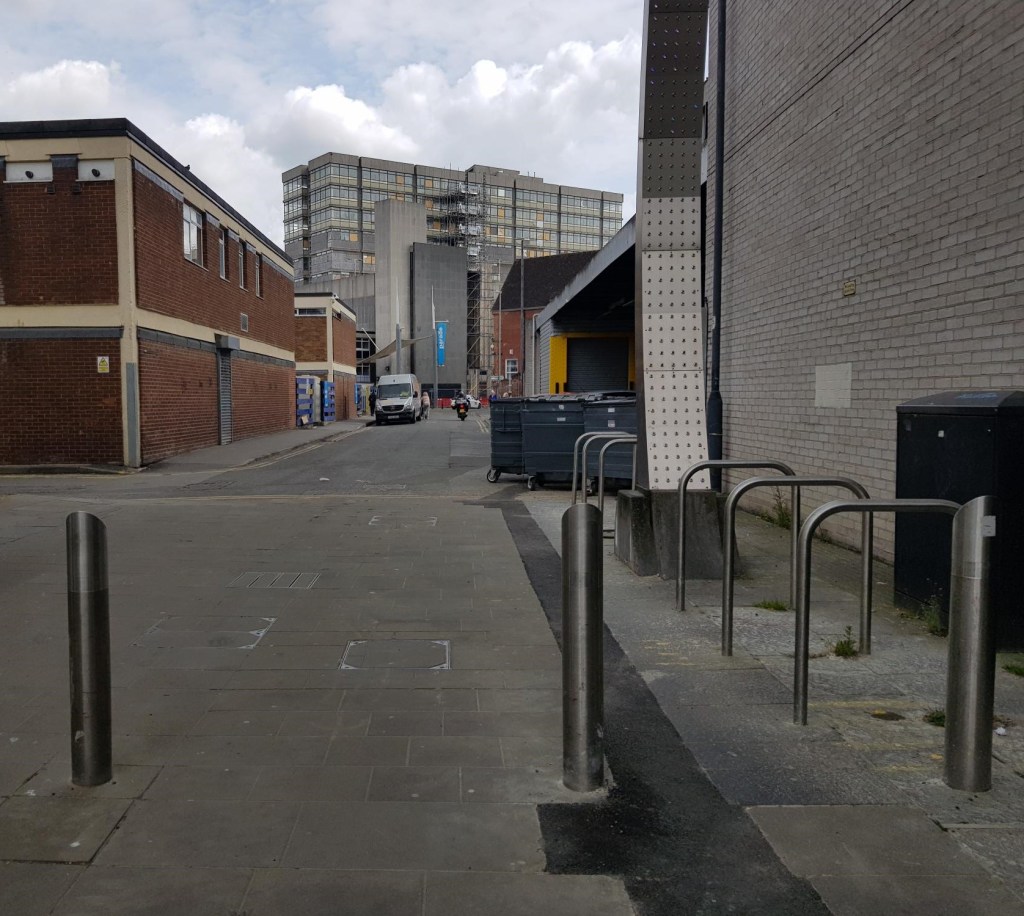
The house in College Street where Alfred Ernest Evans died is gone. The town centre street where the prestigious College Street School once stood is now no more than an access road for shops.
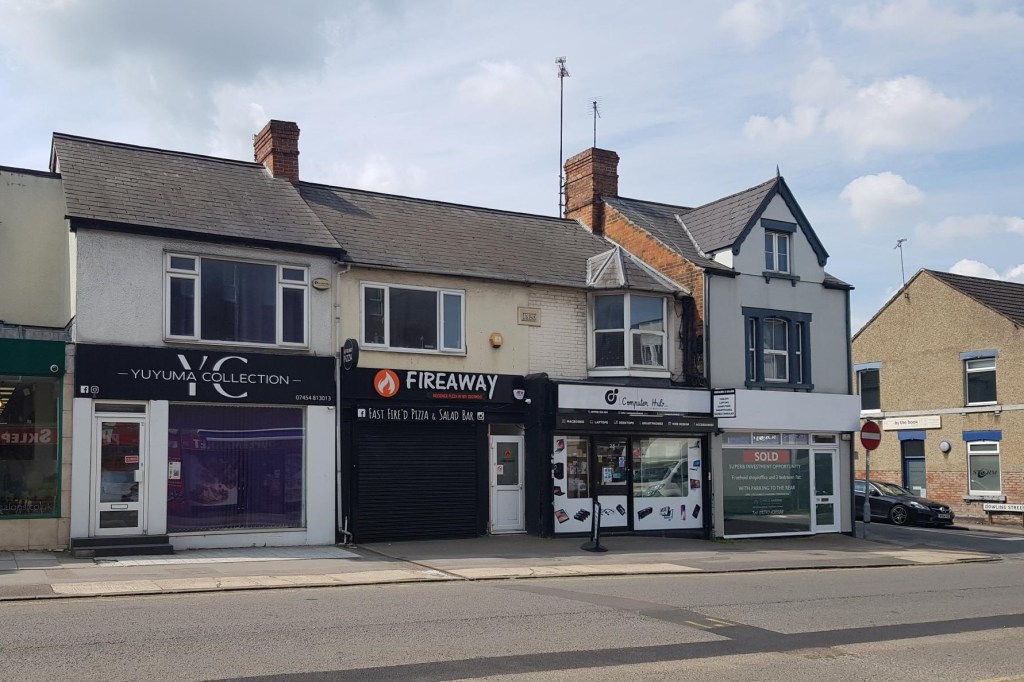
The family home at 23 Commercial Road where William and Salome lived in 1928 looks a little different these days too.
And Princes Street where Salome died in 1936 was redeveloped in the 1970s.
Image published courtesy of Local Studies, Swindon Central Library.
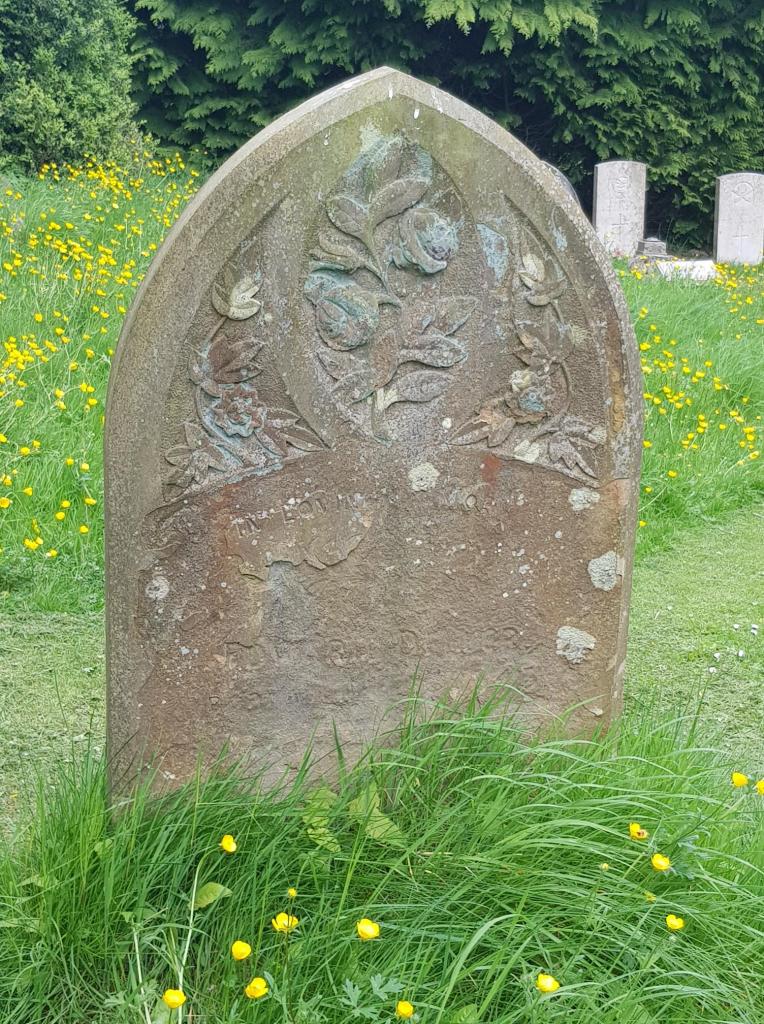
Meanwhile, the inscription on the family’s headstone has all but disappeared.
But it is still possible to piece together the details of the Evans family life.
William Evans and Salome Purnell married in the December quarter of 1879 in Paulton, Somerset. Paulton was a coal mining village where William worked in the iron foundry there. The 1881 census sees the couple living in the Paulton Engine Houses – William aged 26, an iron turner, Salome 25 and their sixth month old daughter Florence with William’s mother Sarah 69, who states that her husband is ‘in asylum’.
By 1891 the family had moved to Swindon and were living at 7 Stafford Street. At the time of the 1901 census they were living in 49 Dixon Street and by 1911 they were at College Street. Salome states that the couple had been married 31 years and that they had 6 children still living (one had already died). Still living at home were Ethel 20 a tailoress, Alfred Ernest 17 a boot repairer and 15 year old Arthur Algernon who was still at school.
Alfred Ernest Evans died in 1916 at 4 College Street. He was 22 years old. He was buried in grave plot C3360 on April 22. William George Evans, a retired fitter, died aged 73 in 1928 when he and Salome were living at 23 Commercial Road. He was buried in grave plot C3360 on August 1. Salome was living at 47 Princes Street at the time of her death in September 1936. She was buried with her son and her husband on September 17.
From this unpromising start with a disintegrating headstone and Swindon streets altered beyond recognition, town centre homes demolished and properties repurposed, it has still been possible to recover the lives of one ordinary Swindon family.
Sometimes the information on a headstone leads to a story quite different to the one you thought you might find.
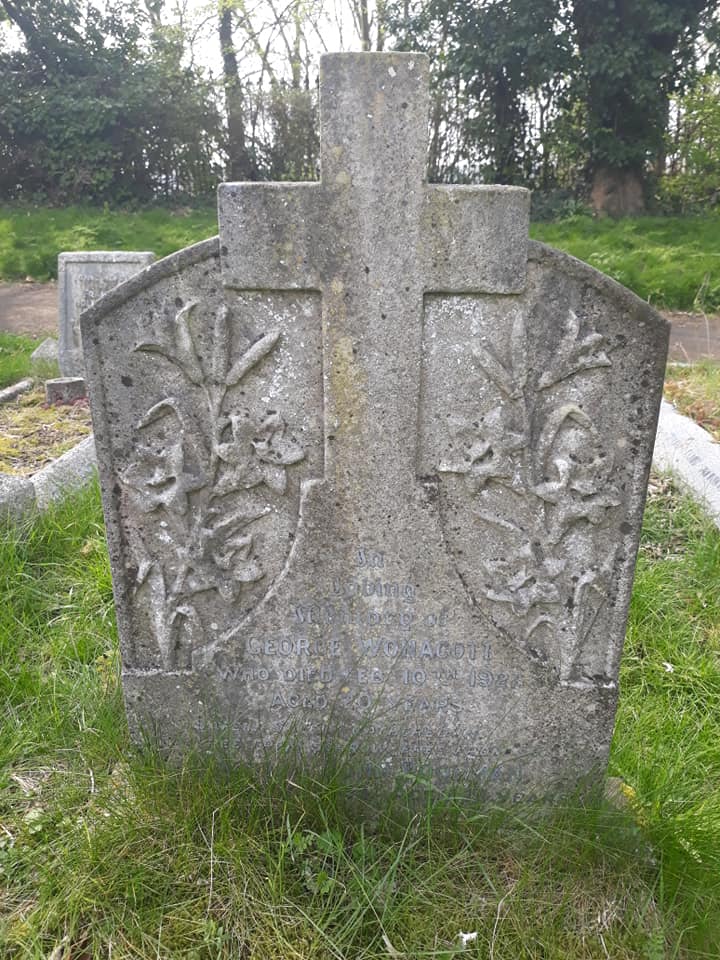
I was attracted to this stylish headstone with its central cruciform shape and Easter Lilies symbolising hope of the resurrection.
The first name recorded on the headstone is that of George Wonacott who died on February 10, 1927 aged just 20 years old. The only way to discover how he died would be to purchase the death certificate, but the cost is prohibitive on a project such as Radnor Street Cemetery with 33,000 burials.
So I turned to the available historical resources to see what I could discover but despite a search of the British Newspapers Archive I was unable to find any reports connected to young George. Next I searched the Ancestry website to find his family.
George’s mother was born Martha Lauretta Leyshon in 1878 in Burbage, a small Wiltshire village in the Vale of Pewsey. Martha was the youngest child of Evan A. Leyshon and his wife Mary. During the intervening years between the 1891 and 1901 census, the Leyshon family moved to Swansea. By 1901 Mary was widowed and living in two rooms at 30 Argyll Street, Swansea with her son William 26, a railway signalman, her 10 year old grandson Edmund Parsons and our Martha, then aged 20 who worked as a general domestic servant.
In 1905 Martha married Wallace Ackland Wonacott, a bottler, and at the time of the 1911 census they were living at 91 High Street, Swansea with their two children Dorothy 5 and four year old George.
The family moved to Swindon and a home in Princes Street but by 1920 Martha’s husband William had died. It’s difficult to imagine how Princes Street looked back in Martha’s day. Built in 1876 and named after Queen Victoria’s grandson Prince Albert Victor, Princes Street was long with shoulder to shoulder terraced housing stretching from Regent Circus to the Whale Bridge.
In the summer of 1920 Martha married the recently widowed John Poolman, a labourer in the GWR Carriage Works. The couple continued to live at 44 Princes Street where John died in January 1933.
Martha didn’t hang about and in the winter of 1933 she married for the third time. Her husband was George Higgins and the 1939 list describes him as a retired engine driver. The couple continued to live at 44 Princes Street, sharing their home with two lodgers, Alfred Andrews, a railway shop clerk and William Barnes, a general labourer in the Works.
Martha died in December 1942 and was buried with her son and second husband in plot D331. She was 64 years old. Her third husband survived her by 16 years. He died in 1958 but does not appear to be buried in Radnor Street Cemetery.
What began as a quest to discover how a young man died turned into the story of his much married mother, Martha Leyshon/Wonacott/Poolman/Higgins.



 Radnor Street Cemetery