James Sweeper was born in Marlborough in about 1824 the son of William and Harriett Sweeper. On December 8, 1845 he married Jane Gilbert at the church of St. Peter, Marlborough.
By 1851 James and Jane with their two young children Eliza 2 and 2 months old George, lived above the stables at the Queens Hotel, Swindon. He was 28 years old and employed as a post boy – a job description open to interpretation. Sometimes described as a mail carrier, a post boy was also a person who rode one of the horses pulling a carriage. The two roles could be, and frequently were, combined.
In 1861 James and Jane and their 5 children lived at the Queens Hotel Tap, Railway Station, Swindon. In 1871 James, now widowed, lived at the Queens Hotel Stable with daughter Eliza and sons George, Henry and William. However, sorting out the various town centre Queens Hotels is confusing.
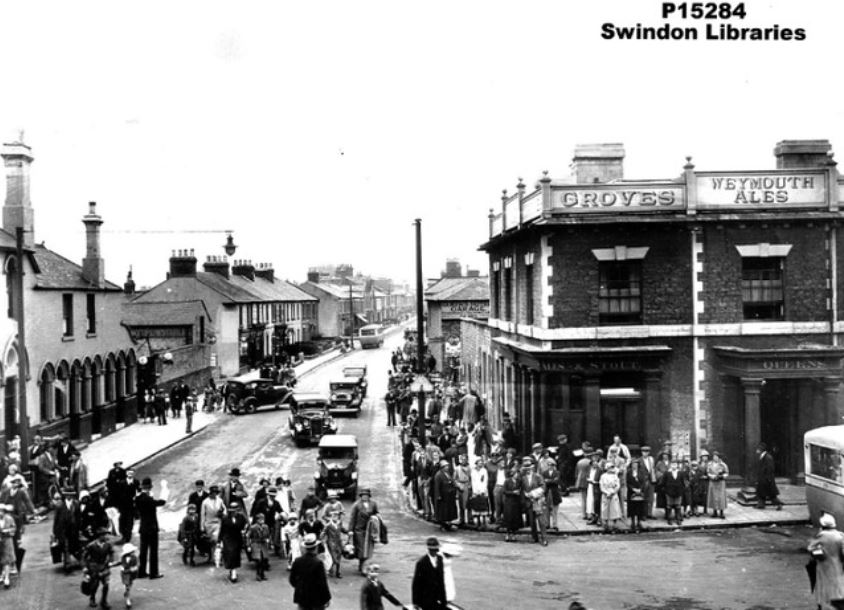
The Queen’s Tap pictured on Trip day 1934 published courtesy of Local Studies, Swindon Central Library.
Swindon Junction Station (now called Swindon Station) was built in 1841-42 by J.D. & C. Rigby. A far more impressive building in those days, it originally consisted of 2 separate 3 storey buildings straddling either side of the railway line and linked by a footbridge. These buildings contained the infamous refreshment rooms and the Queen’s Royal Hotel. Was this where James worked as a post boy and later an ostler (a man employed to look after the horses of people staying at an inn)?
The second candidate is an inn built in 1841 that once stood at the bottom of Corporation Street close to the Whitehouse Bridge. It later became known as The White House and was demolished in 2002, but in James’s day it was called the Queen’s Arms Hotel.
Finally, we have the only one left standing, the Queen’s Tap, opposite the station on the corner of Wellington Street and Station Road.
So where did James live and work between 1850-1870. My money is on the Queens Arms Hotel but then again perhaps he worked at all three hotels at various times.
Jane Sweeper died in April, 1868 aged 44 years and was buried in St. Mark’s churchyard. James married for a second time in 1875 when he was working as a horse dealer in East London. James married Lucy W. Hunt, a widow, at St Leonard’s Church, Bromley and by 1881 had returned to Swindon where they lived at 22 Holbrook Street with James’s son Harry.

It has been much easier to establish James’s last resting place here in Radnor Street Cemetery! He died in 1887 aged 65 and was buried on December 7, in grave plot E8582 with Lucy who had died earlier that same year.

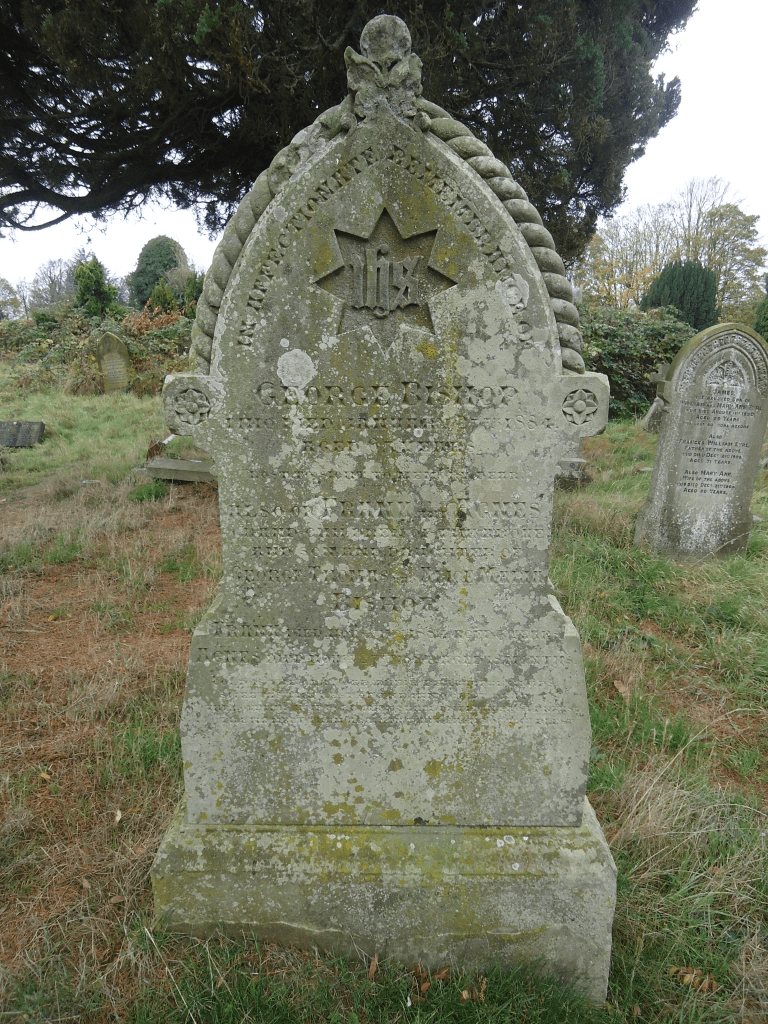
 Radnor Street Cemetery