James Shopland – a local hero

The re-imagined story …

I’ve seen them all arrive at Swindon Junction, the King and Queen in 1924, the young Princess Elizabeth in 1950, politicians, film stars, you name them, I’ve seen them. But I’ve never seen a sight like the day they brought back the body of James Shopland.

I was just a youngster then and recently employed as a station lad. My duties mostly consisted of carrying things around, everything from luggage to parcels. I wasn’t allowed too close to the passengers as they alighted from the trains; I was considered too cheeking and disrespectful. I had a lot to learn and looking back I reckon my education began that day in July 1900.

Early that morning I was told to clear out a small, seldom used room along the platform. I was to get rid of any rubbish and sweep the floor. I was to place a small table there and a couple of chairs and to make sure everything was polished.

“Who are we expecting?” I asked Fred, the head porter, “the bloomin’ Queen herself.”

I soon learned not to give him any cheek. He boxed me round the ear and gave me a good telling off. I was lucky not to lose my newly acquired job that day and for a good few weeks after that I tried to keep out of his way.

The room was to be made ready to receive the floral tributes for a funeral due to arrive that afternoon. So many wreaths and crosses, I had never seen so many. That day on July 11, 1900 I witnessed the homecoming of an unsung hero, James Shopland who died as he tried to rescue three men in an accident at the Southampton Sewage Works at Chapel.

The funeral cortege left Mr Shopland’s home in Woolston, proceeding by way of the floating bridge to the Dock station. A special carriage was attached to the 2 pm train to Swindon where Mr Shopland was to be interred at the Swindon Cemetery on Kingshill.

The coffin was carried from the train, through the station and placed in a glass-panelled car. I watched the pallbearers return to collect the flowers and counted more than 60 wreaths and crosses. Some were placed in the car, others were carried by those that followed.

I watched the long line of carriages with many more people walking behind. The procession continued along Wellington Street where blinds and curtains were drawn at the windows and people stood with bowed heads to pay their respects.

The story of James Shopland’s death had already appeared in the Swindon Advertiser, but I was just a silly, cheeky young lad. I had paid no attention. That evening, when I told my Pa about the funeral, he told me how James Shopland had died.

primroses

The facts …

James Shopland, a civil engineer, was born in Purton in 1873, the son of James Rew Shopland, also an engineer.

By 1900 James had moved to the Southampton area and on July 6, 1900 he was at the Southampton Sewage Works, although it was pointed out at the inquest that he had nothing to do with the works, but was assisting in the rescue.

Three labourers working in the press house at the Sewage Works had attempted to free a blockage in a lime vat, firstly by ramming a rod down from the top, which was the usual way of clearing it. However, when this didn’t work, one of them went down into the ejector chamber and tried to free the pipe by undoing it. They tried to remove the cap but this wouldn’t move either, so they proceeded to remove a flange from the bottom and then the upright pipe. This immediately set off a fast flow of sludge and released a smell that rendered the men semi-conscious.

Passing workmen attempted to rescue the three men who were all lying unconscious in the sludge. As a call went out for volunteers, James Shopland arrived on the scene. A witness at the inquest described how as Mr Shopland descended the ladder he saw him put his hand to his head.

At one point someone tried to stop any more men going into the chamber, declaring that at this rate there would soon be fifty dead at the bottom.

James was brought to the surface where artificial respiration was attempted, but he was already dead. At the subsequent post mortem the cause of death was found to be due to congestion of the lungs brought about by carbolic acid gas poising.

The jury at the inquest recorded a verdict of accidental death and commended the noble endeavour made by James Shopland and four others who had attempted to rescue the men.

James was 26 years old and had been married for just a year. He is buried in plot D100 with his wife Helena (Nellie) Elizabeth Shopland. Helena moved to Bournemouth where she lived with her widowed mother-in-law, but she eventually came back to Swindon. At the time of the 1911 census she was living at 159 Goddard Avenue with her sister Violet Blanche Brown. She died just a few weeks later, on June 16, 1911. Her funeral took place on June 20 and she is buried with her husband.

James Shopland D

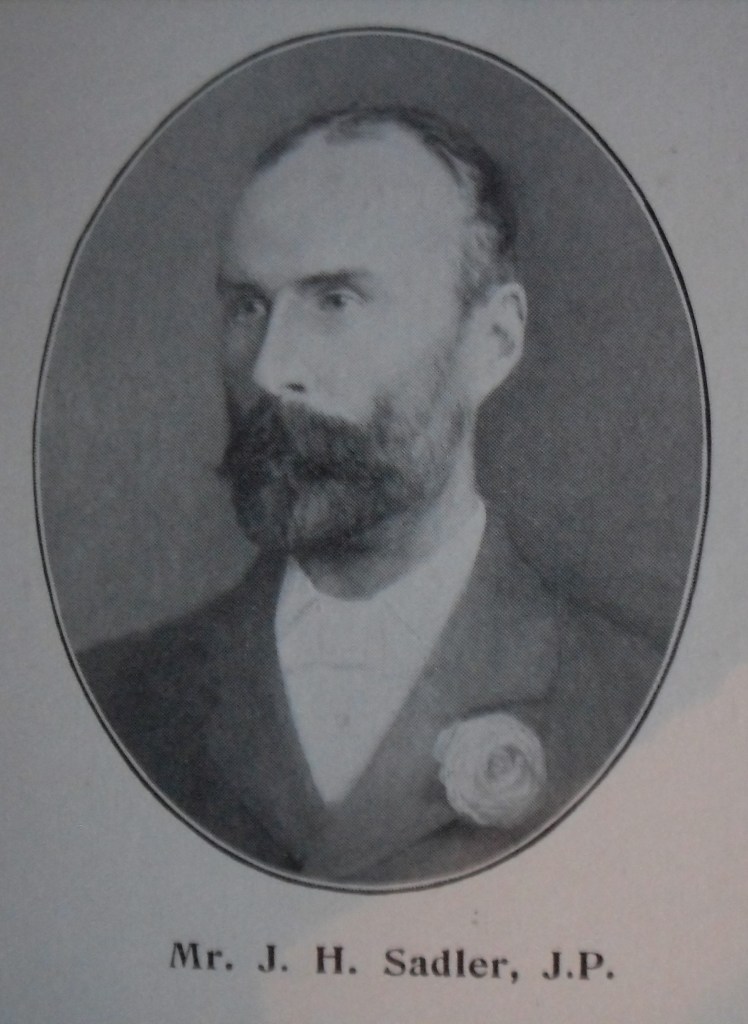
James Henry Sadler – much respected

Most of the time I am entrenched in Radnor Street Cemetery – but occasionally I venture out, sometimes to neighbouring churchyards and cemeteries. And sometimes my work with the Friends of Lydiard Park collides with Radnor Street Cemetery. I am presently transcribing the diaries of Hook farmer Elliot Woolford. On March 30, 1929 Elliot writes:

Saturday March 30, 1929

I went to James Henry Sadler Esq funeral at Lydiard Millicent this afternoon he was taken to Church on a farm wagon there was a lot followed he was much respected.

A short biography is published in the ‘Wilts Book’ discovered by Radnor Street Cemetery friend and colleague Mark Sutton.

Sadler. – James Henry Sadler, J.P., Lydiard House, near Swindon; son of the late Samuel Champernowne Sadler, J.P., F.R.C.S., of Purton Court, Wilts; born at Purton, August 17th, 1843; educated at Hoddesdon, Herts, and Royal Agricultural College, Cirencester. Landowner and agriculturist, farming some of his own property; Justice of the Peace for Wilts; member of the Wilts County Council since its formation, representing the Purton Division; Captain, Royal Wiltshire Yeomanry (retired); Chairman of the Cricklade and Wootton Bassett Board of Guardians, and Rural District Council; formerly, and for some years Chairman of the Purton and Lydiard Millicent Parish Councils, North Wilts Liberal Association, and Swindon Chamber of Agriculture. Recreations: hunting, and shooting. Married, in 1879, Ann Matilda, daughter of the late T.P.W. Butt, of Arle Court, Cheltenham.

Photograph published courtesy of Duncan and Mandy Ball.

James Kibblewhite – athlete

Another day, another churchyard…

Legend has it that amateur Victorian athlete James ‘Kibby’ Kibblewhite would race alongside the train from his home in Purton to the GWR Works in Swindon, an amazing feat, but just one of many achieved by the middle distance runner.

James Kibblewhite was born at Purton in 1866, one of agricultural labourer James and Caroline Kibblewhite’s seven children.  He began work as a Post Office Messenger boy but like his father and brothers later found employment in the Swindon railway works.  Following a full working week as a machinist in R shop, Kibby ran record breaking races at events across the country in a career that spanned eleven seasons.

In 1889 he won the Three Mile Open Handicap Race at the Stamford Bridge Ground, Fulham finishing in 14 minutes 29 3/5 seconds, 9 2/5 seconds faster than the record set by Calne born Victorian super star runner W.G. George in 1884.

“The running of J. Kibblewhite furnishes one of the most remarkable performances of the season,” reported The Times. “Quite recently he ran a very fast mile on the Paddington track, and his record for three miles on Saturday, at the annual sports of the Spartan Harriers, is fresh proof of his abilities as a runner.”

The following year ‘Kibby’ led the Spartan Harriers to victory in the Four Mile Inter Club Race at the Kennington Oval.  “He took the lead very early in the race and won by 200 yards in the fast time of 20 min 20 3-5 sec,” The Times reported.

Competing in Birmingham that same summer he ran the One Mile Race in 4 minutes 23 1/5 seconds in the Amateur Championships, beating W.J. Fowler of the Finchley Harriers.  Back at the Kennington Oval in 1891 Kibby came in first, 80 yards ahead of Spartan Harrier team mate W.J. Manktelow.  “J. Kibblewhite covered the distance in the excellent time of 26 min 14 4/5 sec, a most creditable achievement, especially when the nature of the turf is considered.”

Modern membership restrictions did not apply in the 19th century allowing Kibblewhite to compete for several different clubs and in 1892 he broke the record for the Four Miles Race at Stamford Bridge running for the Essex Beagles.  Towards the finish of the race the crowd broke into the enclosure to greet the runners as Kibby finished in 19 minutes 50 3/5 seconds with a three yard lead.

In 1894 James married Mary Bristow and the couple had four children.  Their three sons all ran competitively.

By 1895 James Kibblewhite’s running career had ended.  He sold some of his prizes, valued at more than £1,000 and with the proceeds built a home he named Spartan Cottages after his old club.

Image published courtesy of Duncan and Mandy Ball.

James Kibblewhite died in 1941 and is buried in the churchyard at St. Mary’s, Purton.  Today Kibblewhite Close in Purton is named in his honour.

With grateful thanks to Bob Townsend.

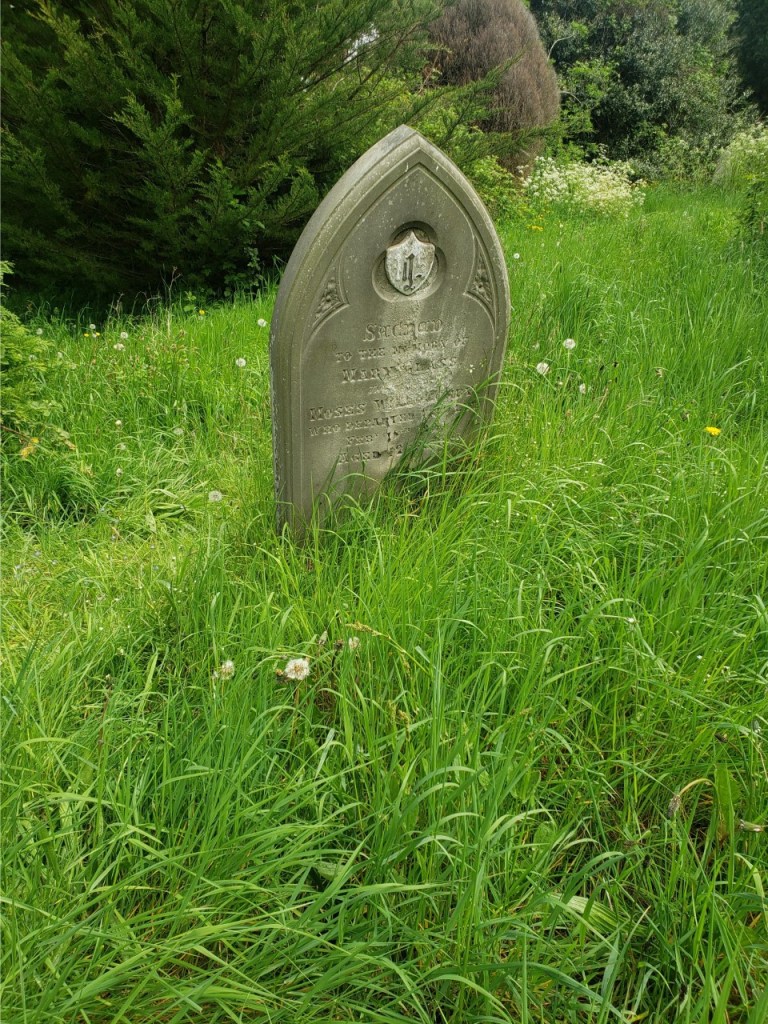
Moses Willoughby and the gossips

The re-imagined story …

“You remember Moses Willoughby?”

“Do I?”

“Yes, used to live in King Street, before his wife died.”

“No, I don’t remember him.”

“Yes you do – we always thought she was a lot older than him. Turned out there was only two years in it. We talked about it.”

“Did we?”

“He married again just a few months after she died. Don’t you remember?”

“No, I can’t say I do.”

“He moved up to Gorse Hill. We all reckoned his new wife had a bob or two.”

“Oh yes, I remember now. She was older than him.”

“No, that was his dead wife. His last wife was much younger than him. Give me strength – I think you’re losing your marbles.”

“No, I do remember him now. Moses Willoughby. Used to live in King Street. Moved to Gorse Hill.”

“Yes, that’s him. Well he’s dead.”

Early 20th century photograph of Cricklade Road published courtesy of Mr. T. Midwinter and Local Studies, Swindon Central Library.

The facts …

Thanks to the numerous genealogical resources available online it is now possible to piece together the history of those buried in Radnor Street Cemetery, even when the inscription on the headstone has deteriorated.

Moses Willoughby was born on October 22, 1818 and baptised in Highworth. He was the son of Charles and Ann Willoughby and grew up in Eastrop.

He married his first wife Ann Lay in Highworth on November 21, 1840. Their son John was baptised in Highworth on February 6, 1842.

Ann died in 1847. On the 1851 census Moses, 28 was working as an agricultural labourer and living at Bailey’s Piece, Highworth with his ten year old son John.

In 1855 he married for a second time. His bride was Mary Glass and the couple married in the parish church at Purton. They had a daughter Emily Kate baptised at Highworth on June 22, 1857. However, at the time of the census in 1861 there is no mention of Emily Kate, nor John, although he could well have left home/married by then.

By 1871 the couple had moved to Swindon and were living in Cetus Buildings on the canal side where Moses continued to work as a farm labourer. Moses declared that he was 46 and Mary 48.

At the time of the 1881 census Moses was employed as a factory labourer, almost certainly in the railway works. He states that he is 60 and Mary is 62.

Mary died at their home 3 King Street in February 1890, she was 72 years old. The funeral took place on February 19 when Mary was interred in plot A790.

On July 16, 1890 Moses married for the third time. His wife was Mary Ann Haskins, a 49 year old spinster. At the time of the 1891 census the couple were living at 255 Cricklade Road, Gorse Hill. Moses was still working as a General Labourer in the GWR Works and they had two lodgers, both labourers in the Works.

Moses died on March 9, 1892. He left effects valued at £84 0s 7d to his widow Mary Ann Willoughby. He was buried three days later in Radnor Street Cemetery in plot A790, which he shares with his second wife.

Attempts to trace John Willoughby and his half sister Emily Kate have so far been unsuccessful.

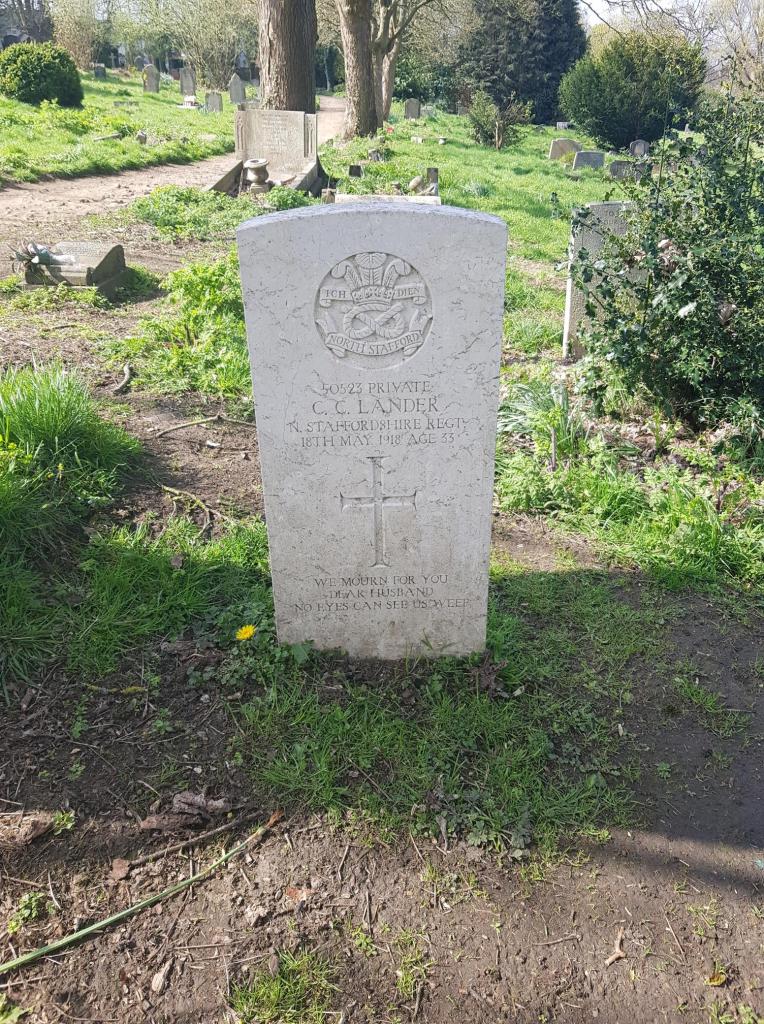
Charles Lander and a family grave

In 1914 Charles Lander was working as a cowman in Purton when the Great War broke out. Having previously served in the Army Service Corps he was on the reservist list and was immediately recalled for service. Just ten days later he was in France with the 14th Ambulance, a horse driver in the ASC with the 5th Division. He was later transferred to the North Staffordshire Regiment.

Charles Christopher Lander was born in Fairford in 1885 one of John and Agnes Lander’s three sons. He married Susan Dolman in 1907 and at the time of the 1911 census they were living with their three children and Susan’s father at a house in the High Street, Purton.

As the war raged on Charles was wounded, shot in the upper right arm during fighting on April 21, 1918. Within a week he was returned to England. He died on May 18 at the City of London Military Hospital following an operation to amputate his arm. He was 33 years old.

Susan received a pension of 37/11 (approximately £1.4) a week for herself and her five children. She was also sent her husband’s personal effects.

2 pocket wallets containing 2 packets of blades (razor)

1 pocket mirror

Purses

Safety razor & blades

Pair scissors & case

Linen bag

Buttons, pencils etc.

1 writing pad & Envelopes

3 Handkerchiefs

1 Chevron (overseas)

Cap Bade & Broach

Diary & Letters

2 Discs

2 Numerals

2 Lockets

1 Pen Knife

1 Crucifix

1 key on ring

2/- (10p) postal order No. c/53 590295

1/- (5p)

Charles was buried on May 23, 1918 in grave plot C3514.

In 1919 Susan married Frederick Arthur Hatton and raised a second family at 12 Queen Street, Swindon. In 1923 Charles and Susan’s son Douglas Napoleon Lander died and was buried with his father. Susan died in 1961 and her second husband Frederick in 1962. They were also buried in grave plot C3514.