Rev Thomas Trafford Shipman

The re-imagined story …

We gathered outside the farmhouse where father fired the traditional shots above the rooftop to ward off evil spirits. Then the little party of ladies and gentlemen consisting of father and I, Uncle Richard, Charles and Letty, Thomas Plummer and his sister Ellen then set off down the carriageway from Hook to Lydiard House and the parish church of St Mary’s.

Although barely eight o’clock in the morning our friends and neighbours came out of their cottages, throwing showers of rice and as we made the short walk children linked hands and barred our way until Uncle Richard threw them some coins.

Those family and friends who had not joined our merry parade were already seated in the box pews. The beautiful little parish church with its monuments to the St John family. The ancient font where Letty and I had been baptised and where I in turn would bring the child I carried to be christened and blessed by Rev. Shipman.

Rev. Shipman knew I was expecting a baby and he knew Will was not the father, but he made no judgement.

“You’re not the first bride and you won’t be the last who walks down this aisle carrying a child who is not the grooms,” he said. “Do you love Will?”

It seemed a strange, romantic kind of thing for a clergyman to ask. I’d expected him to tell me to repent of my sins, to look to Christ for forgiveness and guidance.

Will was a good man. I’d known him all my life, we had grown up together. He was reliable and dependable and hard working and his prospects were good. But he didn’t make the breath catch in my throat or the heat surge throughout my body.

Will promised he would look after me all the days of our life. He did not promise to transport me to unprecedented levels of physical delight, as Ambrose had. He probably wouldn’t even know what that meant. He does not use flowery language, or pay me extravagant compliments.

Ambrose St John, a cousin of Lord Bolingbroke, had whispered fancy words into my receptive ear, and played my body with his expert lovemaking. And then he had left. I was not the woman I had been before he kissed me, before he touched me, but he had not reached my heart.
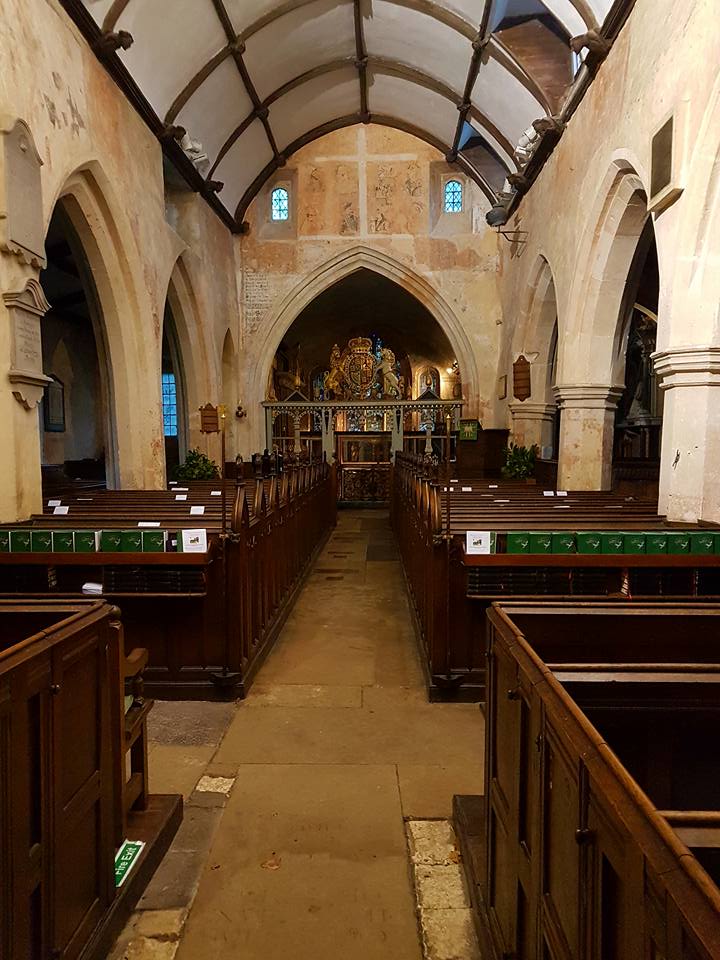
St Mary's pews 2

Will was aiting for me at the church door where Letty fussed with my sash and straightened my bonnet.

“I know,” he whispered. “And I love you.”

Rev. Shipman baptised our daughter on Michaelmas Eve. We brought two more babies to St Mary’s to be blessed by the kindly clergyman, but he would not be officiating at the baptism of our next child.

Rev. Shipman died recently following a short illness. Sadly, he will not rest at St Mary’s among the parishioners he served so well. The churchyard is closed and discussions are in progress as to where the people of Lydiard Tregoze shall bury their dead.

The funeral of Rev Thomas Trafford Shipman takes place tomorrow in St Mary’s Church with the interment at Radnor Street Cemetery in Swindon. I will be there, with my husband.

The facts …

Thomas Trafford Shipman was born in Sedgebrook, Lincolnshire in 1831, the younger son of William Shipman, a farmer, and his wife Harriet.

After studying at St Catherine’s, Cambridge he was made deacon at Carlisle in 1856 and ordained the following year. He served as a curate at Barbon, Westmorland 1856-58 and at Christ Church, Carlisle in 1858-59. He was Rector at Scaleby, Cumberland from 1859-1866 and at Nether Denton from 1866-1872 when he became Vicar at Aspatria, a position he exchanged for one at Lydiard Tregoze where he was instituted on April 1, 1879.

He married Margaret Sidney Roper-Curzon at St Mary’s, Cheltenham on October 13, 1859. Thomas was 28 and Margaret 24. The couple had four children, daughters Alice, Ethel and Mary and a son Francis Trafford Shipman. The 1881 census records Thomas and Margaret with their three daughters living at the Rectory, Lydiard Tregoze.
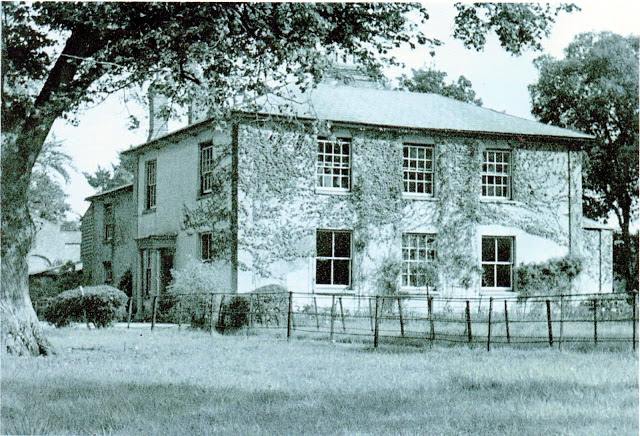
new rectory

The Rectory, Lydiard Tregoze – published courtesy of Roger Ogle

Thomas died suddenly in 1884 and is buried in Radnor Street Cemetery.

Thomas Trafford Shipman (2)

Canon Brian Carne writes in Notes on Rectors, Curates, and Patrons published in Friends of Lydiard Tregoz Report No. 38 published in 2005.

“Shipman’s death must have been sudden, because it became a legend. Right up to the 1960s it was said – at least by Mrs Large – that he appeared at the top of the rectory stairs to presage the death of the current incumbent.”

Frank Wallington and the family back home

Have you picked up your copy of Moonies, Movers and Shakers yet (available from the Library Shop, Central Library, Hobnob Press and Amazon)? If so, you will have read about Frank Wallington.

Frank Samuel Wallington was born in Gloucester in 1865, the son of Francis and Mary Ann Wallington. By 1871 the family had moved to Swindon where Francis worked as a fireman on the locos, eventually progressing to engine driver.

By 1891 Frank had completed his engine fitter’s apprenticeship in the Swindon Works and had moved to London where he boarded with his brother William in Plumstead.

He joined The Association of Wiltshiremen in London (The Moonies in London) and from 1893-1901 acted as Honorary Secretary. Frank eventually emigrated to the United States where he died in Eton, Georgia in 1936.

But other members of the family stayed in Swindon and found their final resting place in Radnor Street Cemetery.

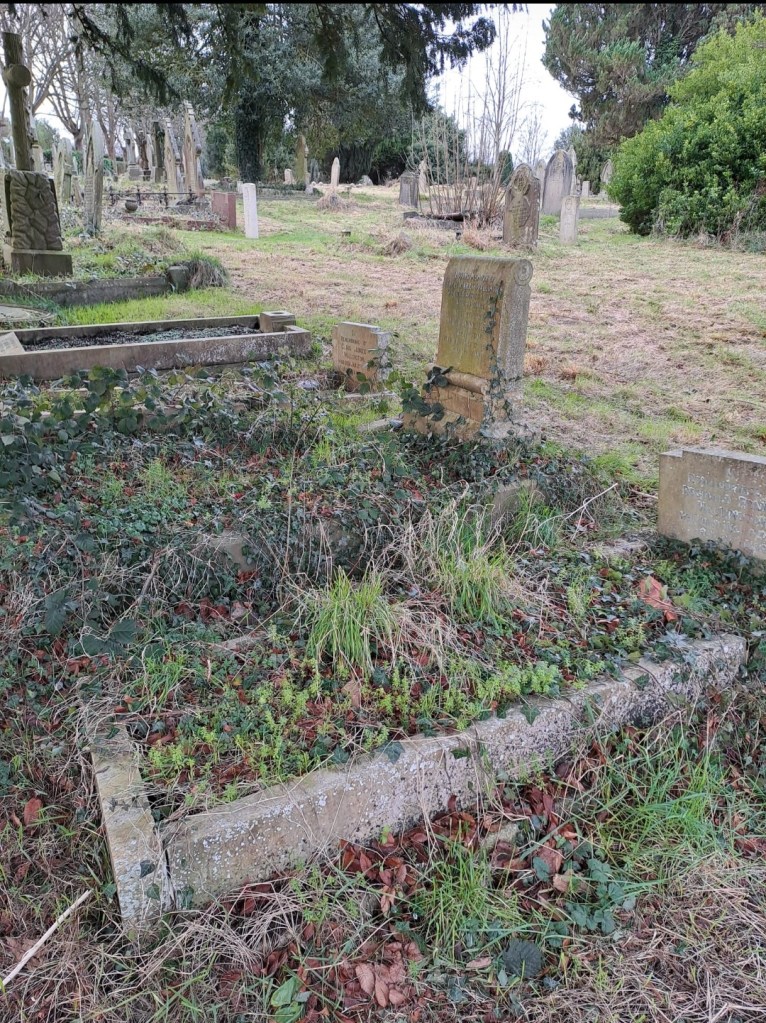
Cemetery volunteer Bex discovered the family graves and what a fantastic job she made of clearing them.

Francis Wallington died aged 49 years at his home 4 Edgeware Road in May 1884 and was buried in grave plot A287. His wife Mary Ann survived him by more than 30 years and died aged 85. She was buried with him on May 31, 1916. These are Frank Samuel Wallington’s parents.

George Harry Wallington and his wife Maud Annie Kate are buried in neighbouring plot A288. George was another of Francis and Mary Ann’s sons and brother of Frank Samuel Wallington.

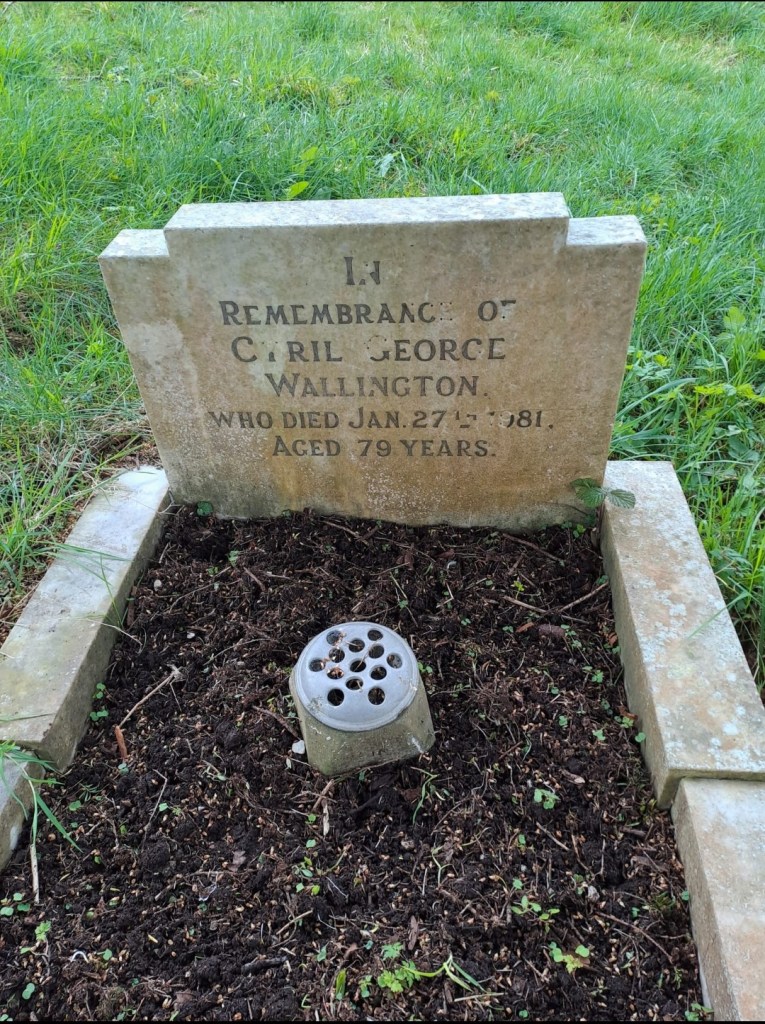
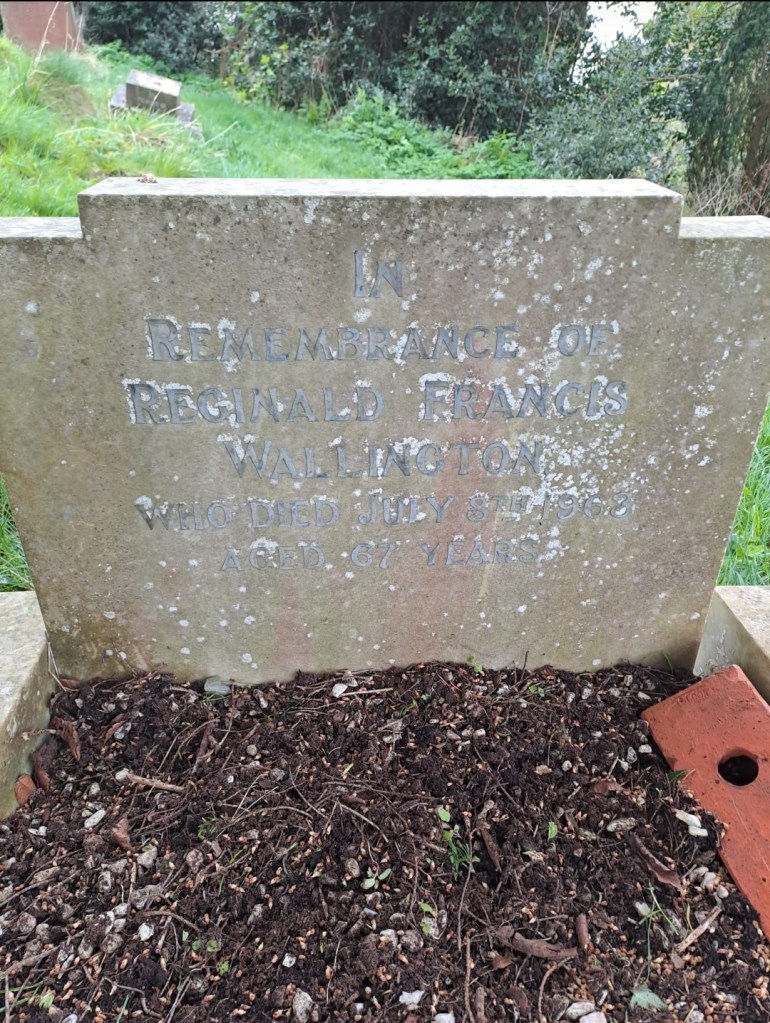
Buried next to George and Maud are their two sons, Reginald Francis Wallington who died in 1963 and Cyril George Wallington who died in 1981.

Before and after photographs of the Wallington family graves.

Poor little Freddy Whitby

The re-imagined story …

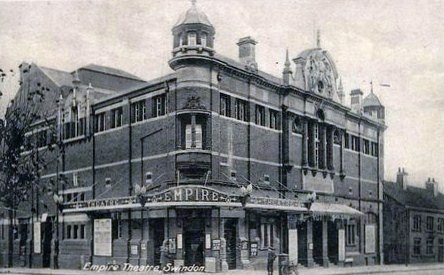
My grandfather always lingered awhile at the corner of Clarence Street opposite the site of the old Empire Theatre.  He would grip my hand tightly and recall the tale of little Freddy Whitby.

I know the story well as he never failed to mention it.  It was only much later that I fully understood; well you don’t as a child, do you? It was one of Pop’s stories, like the ones about the war, stories you heard all the time as a child and yet could only recall in fragments as an adult.  How many times have you wished you’d asked about this or that, wished you had listened more carefully?

The Empire Theatre has long gone and there are traffic lights at the busy junction now, so as I wait for the traffic to come to a halt, I too think of little Freddy Whitby.

Freddy Whitby was 10 years and 10 months old on that fateful Friday in June 1911.  He was on his way to school from his home in Swindon Road.  At the corner of Clarence Street Freddy stepped off the pavement as if to cross, but then he hesitated before breaking into a run.

A witness said when he saw the car so near him Freddy appeared scared and dazed, and knowing not what to do stood absolutely still.

The driver of the car was racehorse trainer Mr W.T. Robinson from Broome Manor who was on his way to the GWR Station to catch the nine o’clock express train to London.

Mr Robinson told the inquest how he had been blowing the whistle all down the street from the tramlines and how, realising the danger the boy was in, he slammed on his brakes.  The left headlamp clipped young Freddy, knocking him off balance and under the front wheel of the car.

Mr Finn, a butcher, was on his way to work when he too saw the accident.  He ran across the street and picked up the boy, carrying him to Dr Lavery’s surgery just around the corner in Regent Circus.

The children on their way to Clarence Street School gathered round.

“Who is it?” they asked one another, but nobody seemed to know the boy.

Complaining of pain in his stomach Freddy was transferred to the Victoria Hospital where he was subsequently operated on for an internal haemorrhage.

The operation had proved successful and Freddy was showing signs of recovery when he died suddenly on Saturday morning.  A post mortem revealed that the injuries had been slight and it was believed that Freddy had died from shock.

“I never even knew him,” Pop used to say, which always struck me as odd.  Why, half a century later, did he still grieve for the boy knocked down on the corner of Clarence Street that he never knew?

But perhaps that was why? Nobody had known Freddy Whitby.  Had he been walking to school with a group of boys, or even just one friend, that accident might never have happened? I think my Pop believed that had he been that one friend, Freddy Whitby would have lived.  Throughout his long life my Pop somehow felt responsible for the death of Freddy Whitby…’

Freddy Whitby

The facts …

At the inquest Freddy’s father described his son as being a very nervous boy who had poor eyesight and wore glasses.  The family had previously been living in Liverpool, Freddy had only been in Swindon since Tuesday of the previous week and the streets were new to him, he told the court.

The Swindon Advertiser reported that ‘the accident again calls attention to the danger of children crossing the streets on going to school when motor cars are frequently passing.’

The Deputy Chief Constable suggested that in future motorists travelling from Old Town to the GWR station should proceed by way of Drove Road to avoid the Clarence Street schools’ area.

Freddy’s funeral took place on June 14, 1911.  He is buried in plot B2238 in a grave he shares with three other children; Herbert Mark Keen who died in July 1894 aged 12 months; Oswald Hall who also died in July 1894 aged two years and an eight-week-old baby George Henry Clifford who died a month after Freddy in 1911.

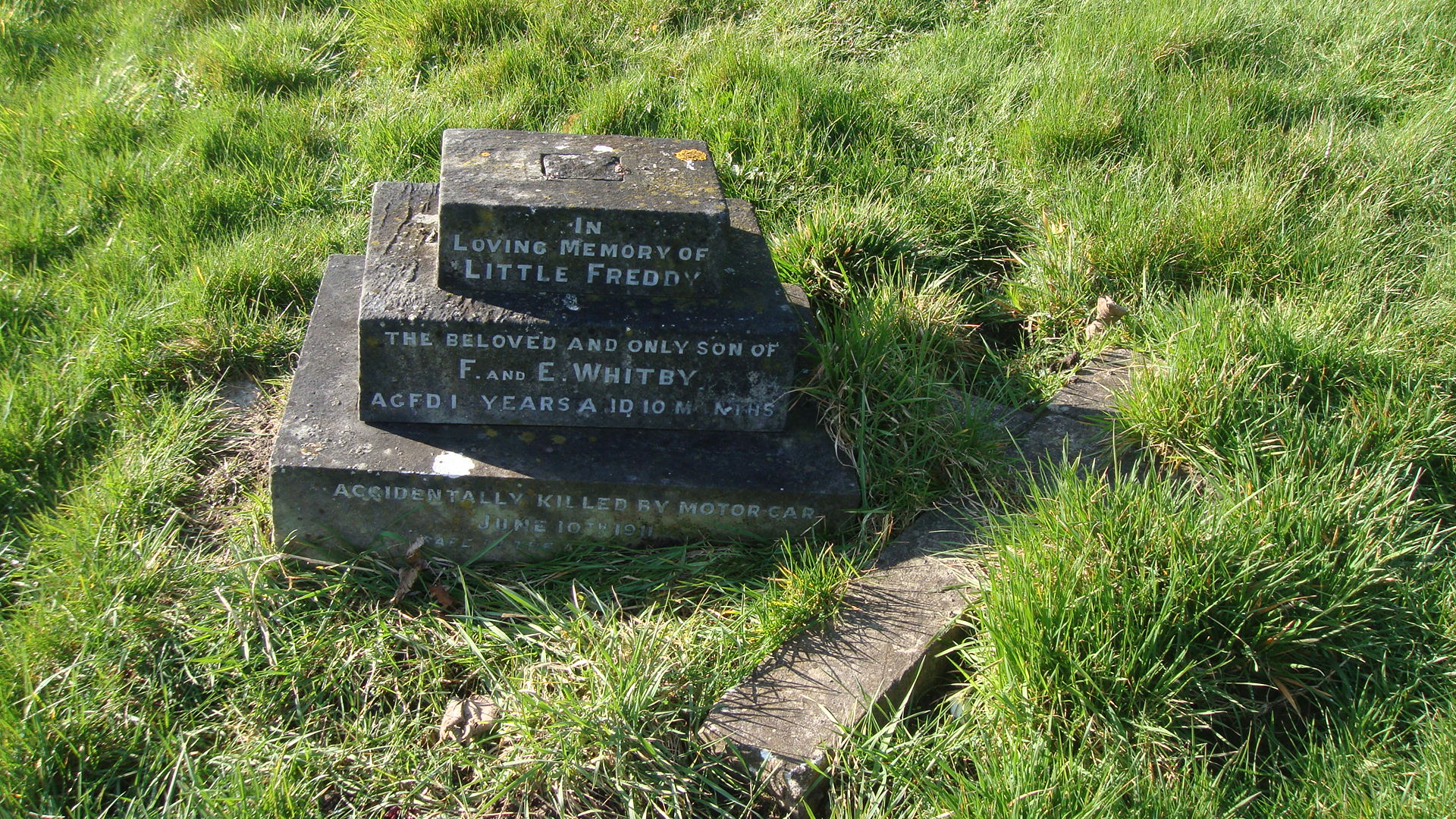
The grave is marked by a memorial to Freddy, a cross toppled off long ago and lies in the grass.  The inscription reads: In Loving Memory of Little Freddy the beloved and only son of F.  and E.  Whitby aged 10 years and 10 mths  Accidentally killed by motor car June 10th 1911.

Love’s story to you

Kingshill (43)
Kingshill Road, Swindon

The re-imagined story …

Love is the sweetest thing
What else on earth could ever bring
Such happiness to ev’rything
As Love’s old story.

How wonderful it must be to find love twice in a lifetime. In my mind’s eye I can see mother’s sardonic expression. She didn’t believe in love, or luck – she’d never had much of either in her life, but I was the eternal romantic.

Mother and I would go into town every Friday. We’d do some shopping and then we’d have afternoon tea in McIlroys. We used to meet Mrs Sessford, as she was then, at the bus stop on Kingshill Road.

Mother and Mrs Sessford were about the same age, but you would never have guessed it. Mother was, how can I put this kindly? Well let’s say she wasn’t a bundle of laughs. Mrs Sessford, on the other hand, was joyful, yes, that is the correct word to describe her. She was joyful.

Love is the strangest thing
No song of birds upon the wing
Shall in our hearts more sweetly sing
Than Love’s old story.

Mother always complained about the weather; it was either too cold or too hot. But for Mrs Sessford, the sun always shone.

Mrs Sessford lived with her father at 155 Kingshill Road where he died on August 30, 1943. Within weeks Mrs Sessford married Henry Harold Musto.

Whatever heart may desire
Whatever life may send
This is the tale that never will tire.
This is the song without end.

“They must be almost 60,” Mother tutted. “There’s something fishy about it all, you mark my words. I bet he’s after her money.”

Mother thought it ridiculous. I thought it was rather lovely, and how lucky Mrs Sessford had been, to find love twice in her lifetime. Sadly, it passed me by completely.

Love is the strongest thing
The oldest yet, the latest thing
I only hope that fate may bring
Love’s story to you.

Love is the sweetest thing written by Ray Noble and performed by Al Bowlly 1932 

The facts …

Edith Maud Steel was born on February 9, 1886, the eldest of Thomas and Letitia Steel’s three children. She grew up in Devonport where in 1908 she marred James Henry Sessford. Lieut Sessford died on September 15, 1927 at the Royal Naval Hospital in Chatham from Broncho Pneumonia and Cardiac Failure.

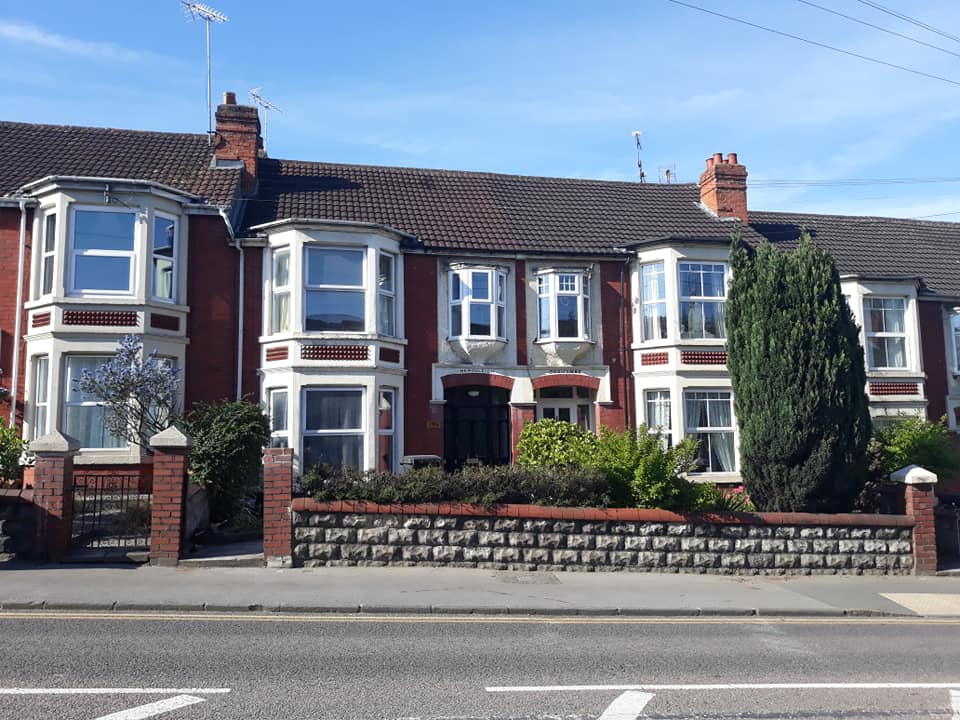
By 1939 Edith was living with her father Thomas, Chief E.R.A. Royal Navy (Retired) at 155 Kingshill Road. Thomas was 77 years old and Edith was 53.

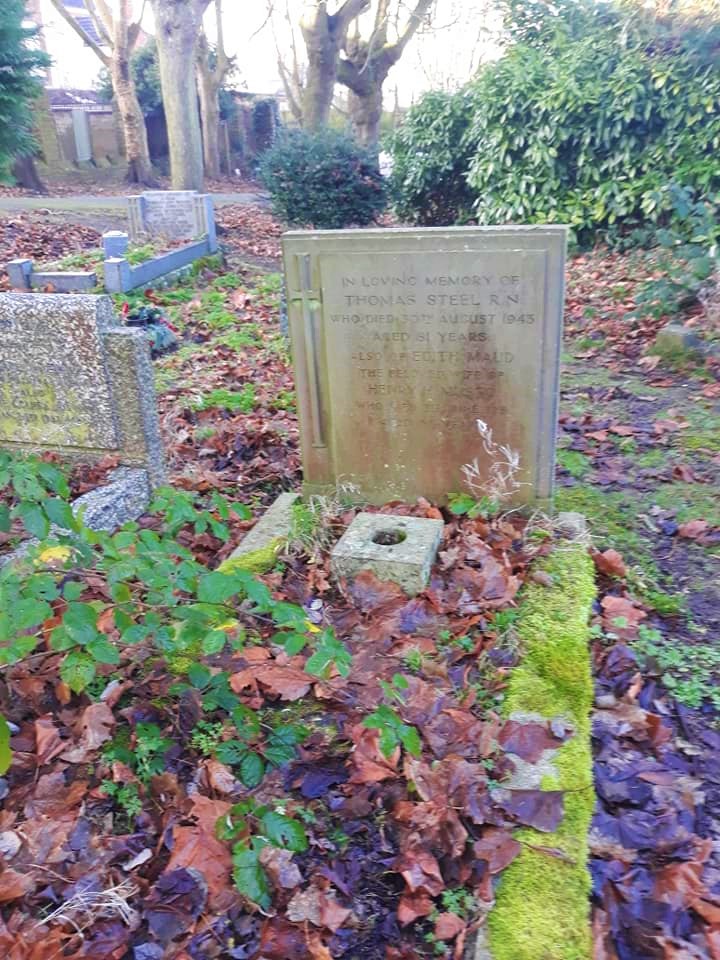
Thomas died at his home on August 30, 1943. His funeral took place in Radnor Street Cemetery on September 2 where he was buried in plot C4911.

Edith married Henry Harold Musto in the December quarter of 1943. She died in St Margaret’s Hospital, Stratton St Margaret on June 3, 1951. Her funeral took place on June 7 when she was buried with her father. They are the only two interments in plot C4911.

Henry Harold Musto died in the December Quarter of 1971. His death was registered in the Plymouth district.

Henry Harold Musto was the only child of Joseph Henry Musto and his wife Margaret. He was a railway clerk in the Works and had grown up at 146 Clifton Street.

At the time of her marriage to Thomas Steel, Edith’s mother was living at 21 Regent Street; Letitia Fanny was one of William and Jane Musto’s five children, along with brother Joseph Henry.

Edith and Henry were, therefore, first cousins.

Thomas Steel and Edith Maud Musto

Percy Albert Cook and the new Museum

Such a novelty is it to have our museum back in Swindon that I’ve already visited twice.

The Swindon Museum and Art Gallery at Apsley House closed with the advent of Covid in 2020 and never re-opened. Apparently there was (and possibly still is) a plan in the pipeline to build an all singing, all dancing building in Swindon’s ‘Cultural Quarter.’ But it was a very long pipeline; a ten year long pipeline.

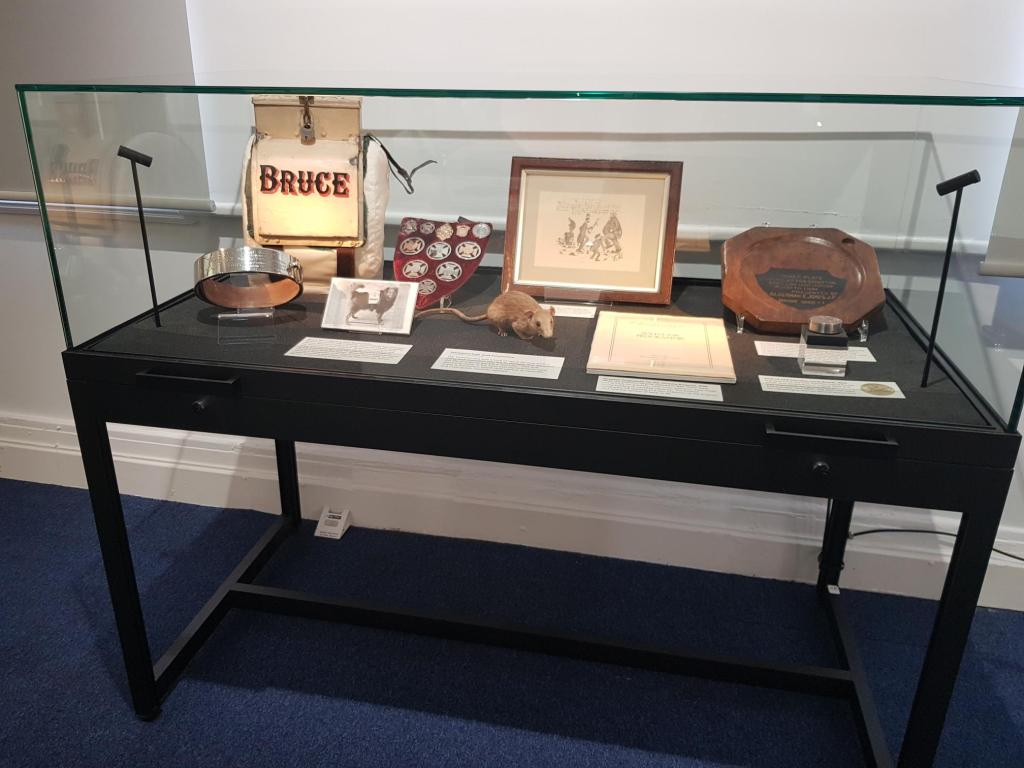
But, to cut a long story short, we now have a new museum on the first floor of the Civic Offices in Euclid Street, and what a cracker it is!

And, of course, I went round with my notebook collecting names of those people who might be buried in Radnor Street Cemetery. I already knew that Charles Herbert Henry Gore, the first curator in post in 1928 was buried in grave plot B3248.

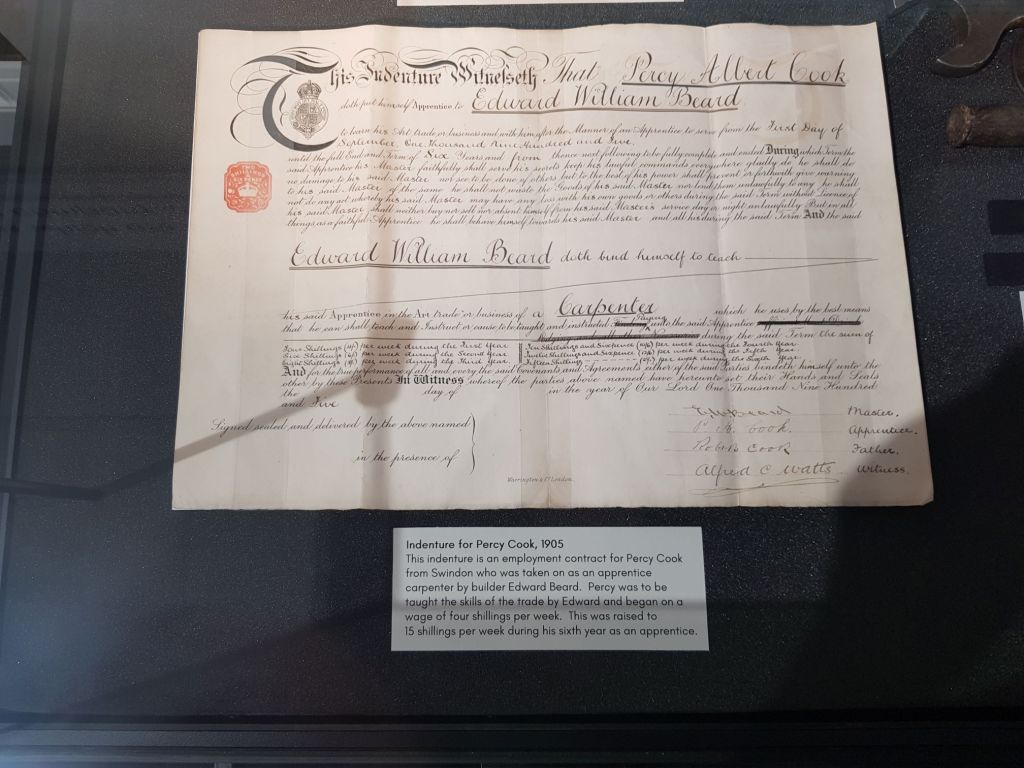
Then I came across an indenture between *Edward William Beard, builder, and 14 year old Percy Albert Cook.

Born in Fareham, Hampshire in 1891, Percy was the son of Robert Bray Cook (whose signature is on the bottom of the document) and Elizabeth Mary Cook nee Cable. The family first appear in Swindon on the 1901 census when they lived at 114 Commercial Road. Young Percy successively completed his apprenticeship and in 1920 he married Gertrude Hawkins. In 1939 the couple and their two sons were living at 13 Commercial Road where Percy describes his occupation as ‘Carpenter, Decorator and Jobbing Builder (Master).’

Gertrude died in 1963 and Percy in 1976 but unfortunately neither of them are buried in Radnor Street Cemetery.

Percy’s father Robert had worked at a variety of jobs. Perhaps this is why he wanted Percy to have a trade and a secure future. By 1911 the family were living at 13 Commercial Road, the property where Percy was living in 1939.

Robert died that same year. He is buried in an unmarked public grave, plot B2332 which he shares with his son Barlett Alfred Cable Cook who died aged 24 in 1909.

* The firm founded by Edward William Beard is still in operation and is presently working on the Health Hydro building in Milton Road.

Samuel Chappell – boot maker and Minister of the Gospel

The re-imagined story…

We always bought our shoes and boots from Mr Chappell’s shop in Bridge Street. I say ‘always’ as if it were a weekly event. Buying shoes and boots in our family was a big occasion and only done after much forethought and deliberation.

Father patched up our footwear until it was beyond repair and the new purchase was only embarked upon at the moment of absolute need, never on a whim or a fancy.

My sister always chose a dainty pair of shoes with buckles and bows. Of course these were never the ones she ended up with. I was just happy to have a pair of boots that kept my feet dry and didn’t scrunch up my toes.

My sister told me that Mr Chappell was born in America; New York, she said, but I knew that couldn’t be true. He didn’t look American and he certainly didn’t sound American. And why on earth would you leave New York and move to Swindon?

She also said he was a Minister of the Gospel and I didn’t believe that either. Why would he sell boots and shoes if he was a man of God?

Girls have some funny notions.

invoice from Chappell

The facts …

This is the final resting place of Samuel Chappell, master shoemaker, boot and leather seller and as inscribed on the headstone, 40 years a Minister of the Gospel.

Samuel was the eldest son of Eli and Ann Chappell.  His father was born in Castle Combe where he worked for many years as a tailor.

Samuel, however, was born in New York in 1847.  By the time of the 1851 census the Chappell family were back in Wiltshire and living in Hullavington where Eli was working as a Master Tailor.  Living with him were his wife Ann, 8 year old daughter Ann who was born in Castle Combe, obviously before the family’s big American adventure, and a baby son John, born in Hullavington on their return.

Samuel appears to have been raised in Castle Combe by his aunt and uncle, Susanna and William Chappell.  William was a master shoemaker and in 1861 Samuel was working as his apprentice.

The 1871 census has two entries for Samuel, one living in Stratton St Margaret with his parents and two brothers. The other entry shows him lodging with the Keylock family at 5 Albert Street in Old Swindon.

Samuel opened his own boot and leather shop at 26 Bridge Street in 1872. In 1874 he married Sarah Ann Sainsbury.  On the 1911 census Samuel and Sarah Ann are living at 68 Eastcott Hill and state that they had six children, four of whom were still living.

This photograph shows Samuel and his eldest son William outside the shop in the early 1900s.  According to a family member who kindly sent me this photograph, the shop remained open until the 1950s. 

Samuel Chappell

Samuel died at his home in Eastcott Hill and was buried in plot A2560 in Radnor Street Cemetery on January 19, 1926.  He shares the grave with his wife Sarah who died in 1916 and their youngest son Samuel, who died aged 24 in 1909 following a leg injury sustained whilst playing football. 

All of us back together again – the Alley sisters

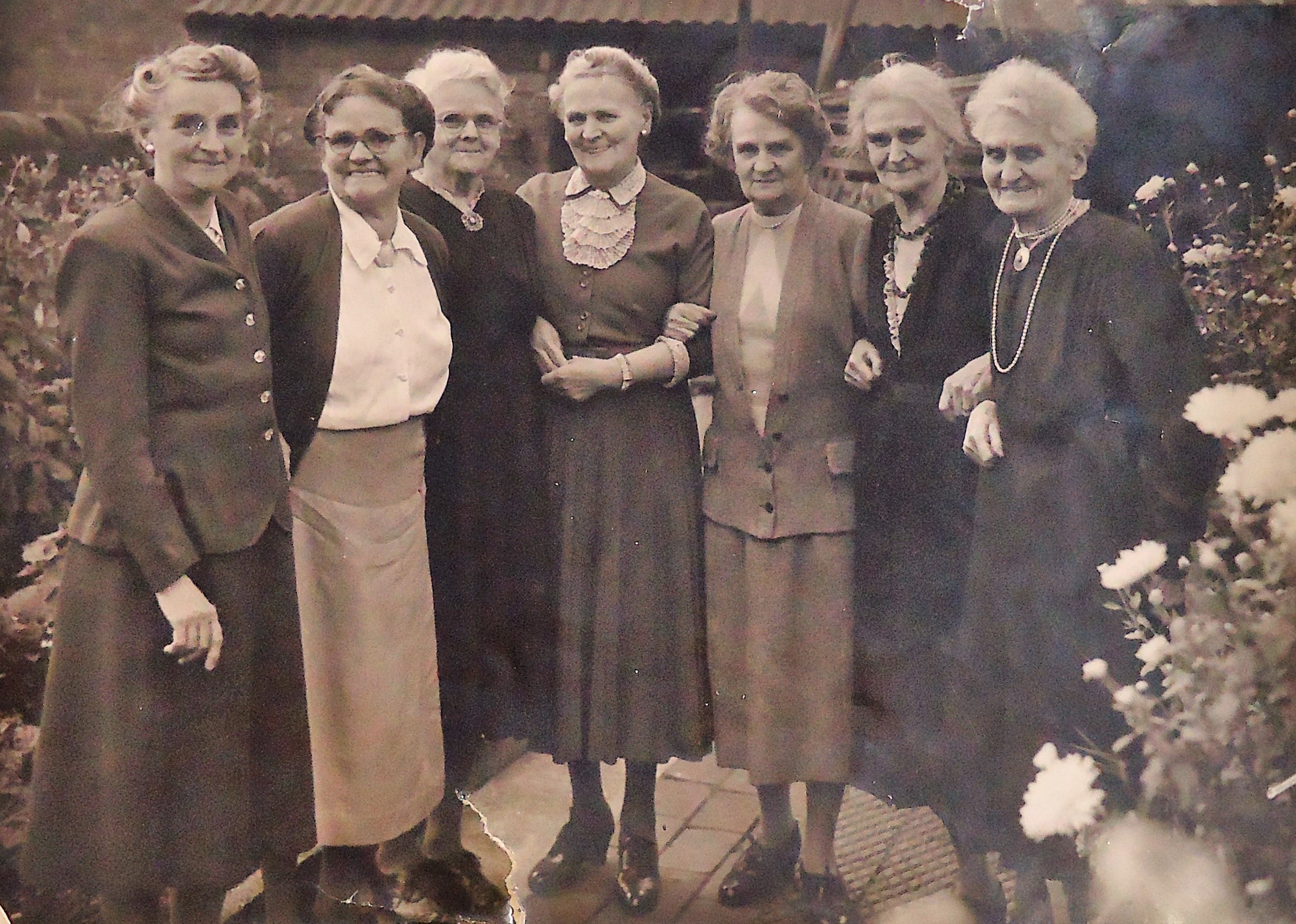
Alley sisters

The re-imagined story …

I was shown into the neat front parlour at 131 Faringdon Road where the ladies were enjoying a celebratory tea party. A trill of voices punctuated by laughter and cries of “Do you remember when …” greeted me.

The occasion was the return to Swindon of eldest sister Louisa after more than 50 years of living in Bournemouth. Today the seven sisters were enjoying tea together and had invited the Evening Advertiser to join them.

This was just the kind of human-interest story my editor liked and I had been sent to take the ladies’ photograph.

“Do you know young man we have a combined age of 517 years?”

“Oh Min, you’re exaggerating.”

“No, she’s quite right. If Louisa is 85 next month that would make Maud … “ Mabel proceeded to quote everyone’s age.

“My goodness Mabel, you’re not reckoning up in the Post Office now.”

“Where do you want us to pose, young man?” asked Ethel with a twinkle in her eye, obviously the cheekiest of the seven sisters.

The parlour was rather dark and I had caught a glimpse through the window of the pretty little back garden.

“Shall we move out into the garden?” I suggested.

“That would be perfect, let me grab my cardigan,” said Ethel.

“I hope my hair won’t be spoilt,” Eva tucked the hair grips more securely into her coiffure.

Standing at the bottom of the garden there was more chattering and giggles.

“Tallest in the middle,” former teacher Flora organised her sisters.

“Surely as the eldest Louisa should be in the middle? Would you like a chair darling? I’ll get you one from the dining room.”

I decided it was time to assert some order.

“Ladies, why don’t we form a semi-circle with the eldest at one end, down to the youngest at the other end?”

“You are a clever young man,” said Flora. “What a perfect idea. Right, Louisa you stand there, then we’ll have Maud and Mabel next. Stand next to me Min, there and Ethel and Eva on the end.”

“Lovely. Ladies, are we ready then?”

“Mummy and daddy would just love this. All of us back together again.”

The women linked arms and just as I clicked the shutter on the camera Min said something to make her sisters laugh. Ethel peeped out of place and Louisa closed her eyes.

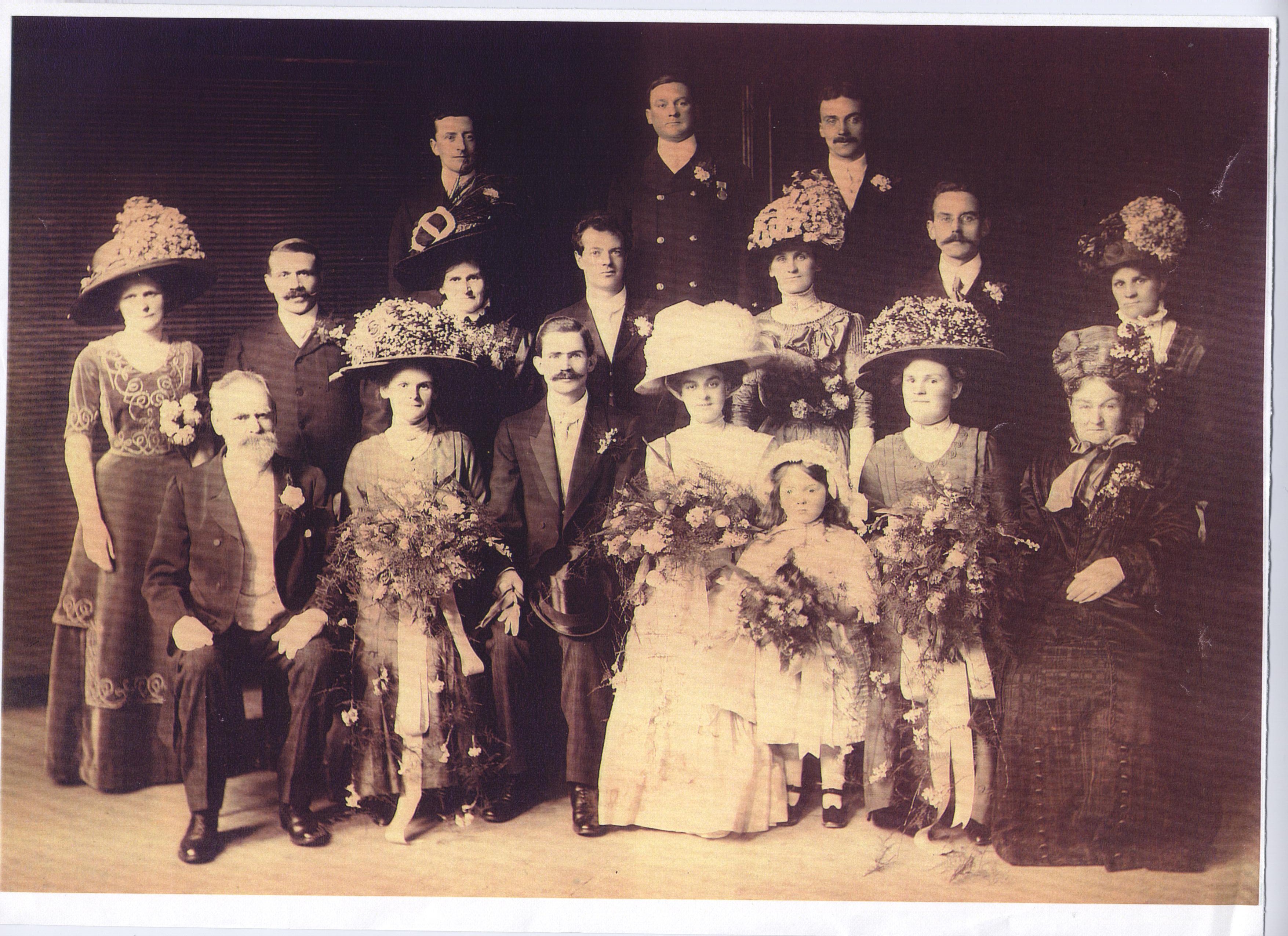
Alley wedding photo (2)

Youngest sister Eva’s wedding to George Babington in 1911. Photograph courtesy of the Alley family.

You can read more about the amazing Alley sisters in my book Struggle and Suffrage in Swindon available from Amazon

The facts …

By 1881 George Richman Alley and his wife Emma had moved to Swindon. George worked as a body maker and later a wheelwright’s foreman in the GWR Works. The couple lived first at 3 Carfax Street and then at 8 Merton Street where George died in 1925. Emma survived him by seven years. The couple are buried together in a grave in Radnor Street Cemetery, close to the Chapel.

Alley family 2

As ever my thanks go to Wendy Burrows, Kay Prosser, Di Edelman and Christine Price.

You may like to read:

The amazing Alley family

George Richman Alley and his family

Moonies, Movers & Shakers

My friends and former Swindon Heritage magazine colleagues, Graham Carter and Noel Ponting, have written and produced a stunning new book.

Their third collaborative work is called Moonies, Movers & Shakers and is a history of the charitable fraternity called the Association of Wiltshiremen in London – nicknamed The Moonies in London. The inaugural dinner of this association (an event to bring together former Swindon railwaymen who found themselves in London) was held on March 13, 1886 in Plumstead.

Among the fascinating stories Noel and Graham have discovered during their research is that of the musically talented James brothers, the sons of William James and his wife Mary Ann.

William, an engine fitter born in Brecon in about 1830, married Mary Ann Hawkins at St. Mark’s Church in 1858. The young couple lived at various addresses in New Swindon where they raised a family of 7 children, 5 sons and 2 daughters. And while the 4 surviving sons initially followed their father into apprenticeships in the railway works, the future of three of them turned out quite differently.

You can read about the musical James brothers in Moonies, Movers & Shakers available from the Library Shop, Swindon Central Library; Hobnob Press and Amazon.

William James died in November 1904 and Mary Ann in 1908. They are buried together in grave plot E7581.

You may also like to read:

William David James – a well known Swindon musician

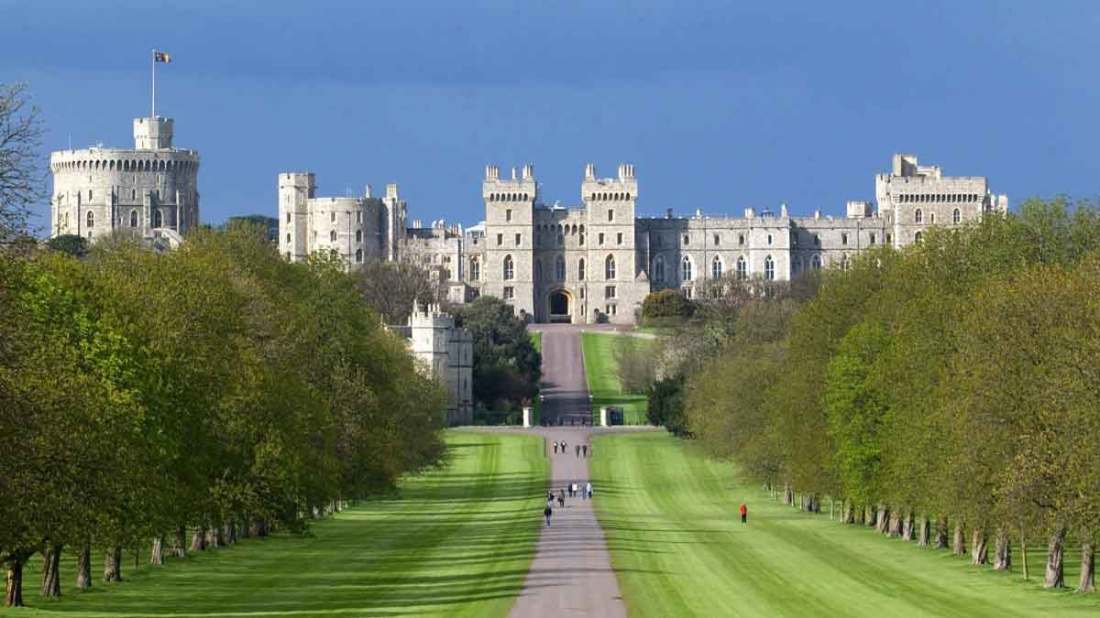
Up at the Castle

The re-imagined story …

Rosa Christelow and I started work as housemaids at Windsor Castle on the same day. Rosa was older than me and had lots of experience. I had grown up in Oakley Mere, a small village on the outskirts of Windsor, and had lots to learn. Rosa also used to say I had a lot of cheek.

People couldn’t understand how we were such good friends; we were like chalk and cheese. Perhaps that’s why.

Rosa got me out of a lot of scrapes, I can tell you. And me, well I could always make her laugh. Once I demonstrated how to dance the Charleston in a corridor outside the library where some of the young royal cousins were playing a gramophone. I nearly lost my job over that, but Rosa managed to intercede for me.

It was a wonderful life working up at the Castle. The things we saw and the people we met. Well, not met exactly. Most of the guests barely noticed us, but we would peep round corridors and over the top of stairs to watch them arrive and depart. And of course, there were occasions when the household staff were presented to the King and Queen. And Christmas – oh Christmas was a wonderful time. Hard work, but wonderful.

And sometimes the staff had the place to ourselves. What we got up to then, well I couldn’t possibly tell you.

I left in 1913 when I married Robert one of the footmen up at the Castle, but I always kept in touch with Rosa. When she retired, I visited her once or twice at the house she shared with her sister in Swindon. Her home was as neat as a pin. You could tell she had been a housemaid; little touches I noticed, ways of doing things she had taught me. I didn’t envy the little girl who came in to clean for them. I bet Rosa put her through her paces.

Goddard 2
Goddard Avenue

The facts …

Rosa Harriet Christelow was born on October 25, 1879 the third child and second daughter of John Christelow, a boilermaker, and his wife Priscilla. Rosa was baptised at St Mark’s Church on November 30, 1879 and grew up at 42 Wellington Street, the family home for more than 70 years.

In 1907 she entered the Royal Household at Windsor Castle as one of the 38 Class 3 housemaids earning £25 per annum. Rosa was later promoted to a Class 2 housemaid on £30 per year. She was still employed at Windsor Castle during the First World War and records list her there in 1924, the date at which published figures close.

At the time of the 1911 census Rosa was one of 33 housemaids, a total of 51 female servants. Royals in residence in 1911 were Princess May of Teck who was five years old and her three-year-old brother Prince Rupert of Teck. These children were Queen Victoria’s great-grandchildren.

By 1939 Rosa was living at 42 Wellington Street with her sister Rhoda where she is described as a paid domestic servant. There are gaps in what is known about Rosa’s whereabout between 1891 to 1901 and 1924 to 1939 probably due to a mis-transcription of her surname.

Rosa’s parents, John and Priscilla, are buried with two of their daughters, Laura Priscilla and Rhoda Annie, in plot D1350.

Rosa eventually moved into 125 Goddard Avenue, a home she shared with her brother Samuel. After several years working in the railway factory, Samuel Christelow travelled to Zimbabwe where he was ordained. Widowed and retired he returned to Swindon where he lived with Rosa at 125 Goddard Avenue. He died in St Margaret’s Hospital in 1972 and is buried in plot D1587.

Rosa died at St Margaret’s Hospital in 1972. She was aged 92. She is buried with her grandmother in plot B1877.

Christelow - Copy
Rosa was buried with her grandmother

Samuel James Christelow
Samuel Christelow

You may also like to read:

Archdeacon Samuel Christelow – missionary

Elderly Man Expires in the Cemetery

The re-imagined story …

I leaned back on the bench and closed my eyes, my face turned towards the sun. Bird song filled the air on this glorious summer’s day. But how could there ever be a glorious summer’s day again? All I could think about were the days so many had been robbed of, and yet here was I in my 60th year, an old woman, enjoying the bird song and the sunshine.

I often come to sit in the cemetery. There is usually someone here, tending a grave. We exchange a few words, pleasantries. Sometimes we even talk about our boys.

The guns have been silent for many months, the servicemen returned home. Even those who were prisoners of war are back, aimlessly walking the streets of Swindon. They stop and speak. Everyone knew my boy.

I wish I could have brought his body home and buried him here in the cemetery. I’ve seen photographs of the battlefield cemeteries, row upon row of crosses. My boy has no known grave.

A parent shouldn’t out live their child. Will this be a country full of old people now? Parents mourning sons.

I open my eyes, ahead of me there is an old man, walking slowly up the hill. I think I recognise him. Another old man. This world is full of old people, all the young ones are dead.

He stops and lays the flowers he holds on a grave. I watch as he appears to stumble. I stand up and begin to walk towards the Dixon Street gate. I’ve had enough now, watching other old people. I shouldn’t be here, none of us old people should be here.

DSC07141

The facts …

Elderly Man Expires in the Cemetery

The death of a well known Swindonian, Mr Donald Macdonald Andrew, a retired GWR foreman, occurred under tragic circumstances in Swindon Cemetery on Saturday last. It appears that Mr Andrew, who was 72 years of age, and resided at 142 William Street, went on Saturday morning to the Cemetery, with the intention of placing some flowers on his wife’s grave. When walking along the pathway towards the grave he was seen by Mrs Amy Haynes, wife of Ald. A.W. Haynes, ex Mayor of the Borough, to fall. She ran to his assistance, and also a gravedigger, named Sidney Iles, who was working nearby. But deceased expired in a few minutes.

The Faringdon Advertiser Saturday June 21 1919.

The Andrew family lived at 142 William Street for more than sixty years. Donald Macdonald Andrew, an engine fitter in the Works, and his wife Emily Jane had six children, a seventh had died before the 1911 census – Samuel Henry, George Edward, Ralph Macdonald, Florence K and twins Adelaide Mary and Margaret Elizabeth.

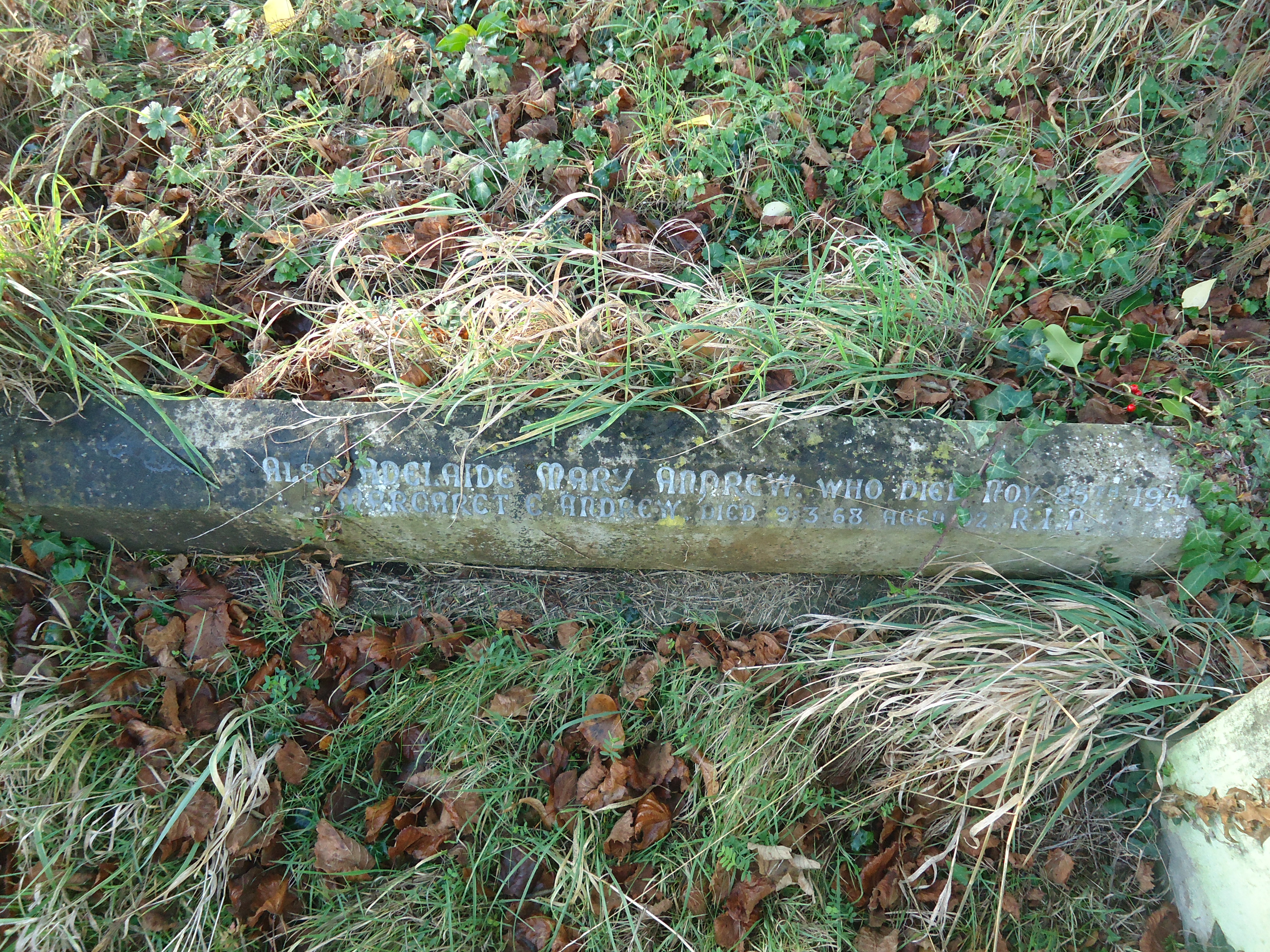
Donald’s funeral took place on June 17, 1919. He is buried in a double grave plot E8347/8 with his wife, son Ralph and daughters Adelaide and Margaret.

Adelaide Mary and Margaret Andrew