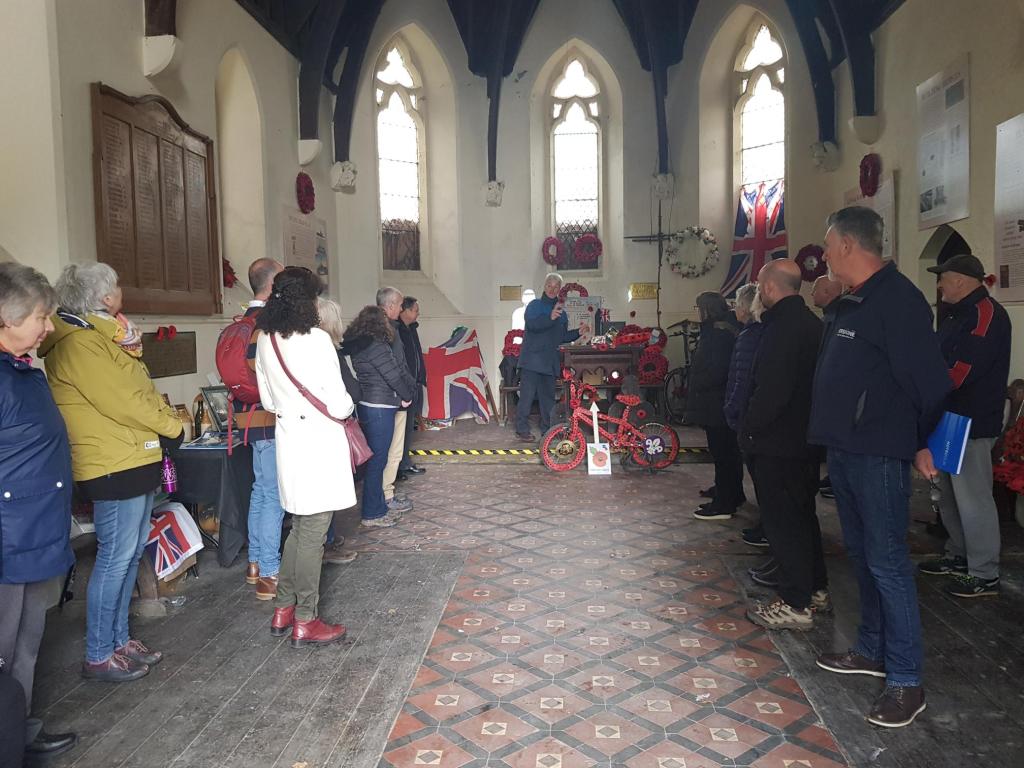
Thank you to everyone who joined us on Sunday for a guided cemetery walk. We are always so fortunate with the weather and following a morning of rain we enjoyed a dry and pleasant afternoon.
This week Andy, Kevin and I told the stories of Trooper Cecil Howard Goodman and Scout leader William Rowland Bird among others and I will (eventually) sort out the story of Olive Henry, which has left me in confusion over recent weeks.
Here are a few cemetery photographs. Our next walk is on Sunday May 26.
Image of Rodbourne Road published courtesy of Local Studies, Swindon Central Library.
It’s not very often I get the opportunity to visit a house owned by the same family for 100 years (unless they are an aristocratic family) but recently I did. One hundred years of children running up and down the narrow stairs, one hundred years of washing on the line. There was even a saucepan dating back to those days – how many meals had been dished out from that pan and eaten at the kitchen table where I looked at family photographs and letters?
At the end of the 1860s Even Swindon was still mostly farmland but with the Great Western Railway Works on the doorstep it was growing fast. Development began in the 1870s with the sale of Northaines Farm, Edwards Farm and part of Even Swindon Farm and an early speculator was Job Richardson.
Job Richardson was born in 1842 in Somerset, the son of coal miner Elijah Richardson and his wife Eleanor. By 1861 19-year-old Job was also working in the Somerset coal mines.
In 1866 Job married Henrietta Milsom in Radstock. Sadly, Henrietta died the following year, during or soon after the birth of her daughter Henrietta Milsom Richardson. She is buried in the churchyard at Radstock, most probably with the baby who died. By 1871 Job had moved to Bath, lodging in St James Parade, where he worked as a mason.
In 1872 Job married Sarah Rebecca Tanner at the parish of Widcombe, Somerset and by 1877 they had arrived in Swindon where Job bought land in Even Swindon. In 1881 Job was living at 33 Henry Street (quickly renamed Hawkins Street to avoid confusion with a street in the town centre) and working as a House & Estate Agent.
Job and Rebecca later moved to 133 Clifton Street but continued to rent out their properties in Rodbourne. Job died in 1903 and is buried in grave plot D163 with his father-in-law Henry Tanner who died earlier that same year. Rebecca sold her stake in the Rodbourne properties in 1924 and was buried with her husband and her father on January 4, 1928.
Butcher John Seward was born in Dunsford, Devon in 1835. In 1861 he was living in London when he married Mary Jane Connett at St Dunstan’s Church in the West, Fleet Street.
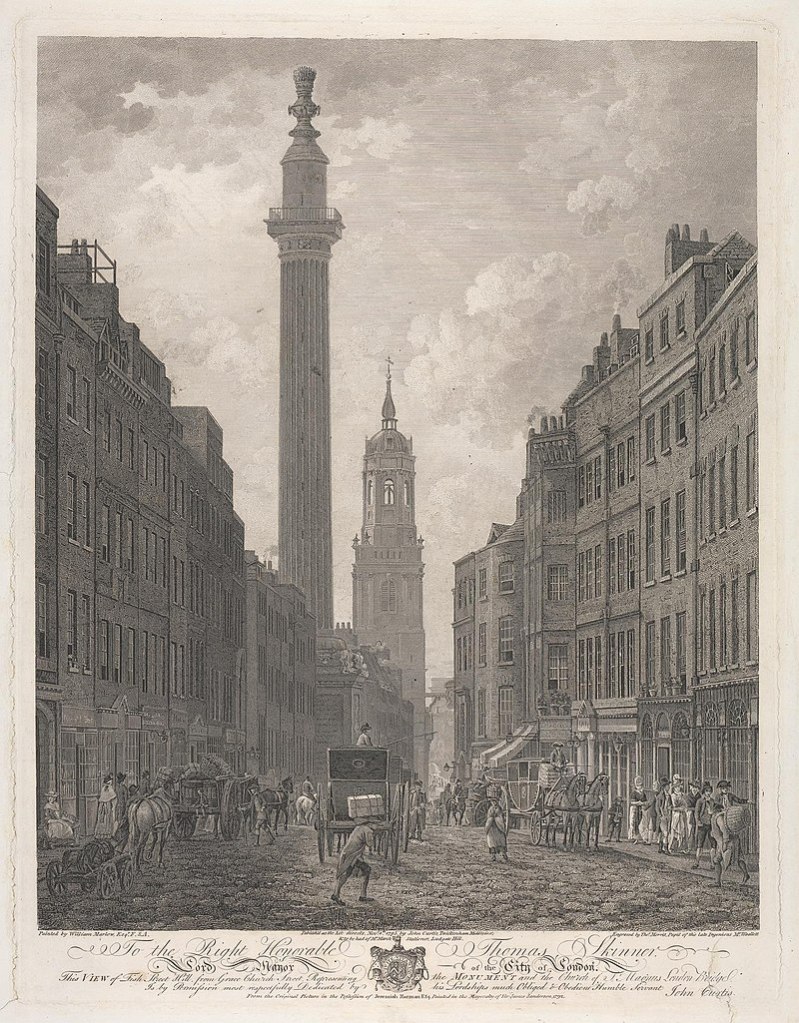
The newly weds set up home in a fishy part of London with butcher John Connett, no doubt a relative of Mary Jane. They all lived in Fish Street Hill in the parish of St Margaret New Fish Street, which runs at the back of the Monument to the Great Fire of London.
In subsequent years they lived in Haggerston Road, Hackney and Paignton Road, Tottenham. Then, after more than 30 years living and working in London, John and Mary retired to Swindon and a property in Ashford Road that they named Devonshire House.
John died in 1903 and was buried on July 25 in grave plot E8606. He was later joined by his son-in-law John P. Jackson who died in 1905 and his wife Mary Jane Seward who died in 1906.
Frederick Augustus Powell came from a large family of Primitive Methodists. Born in 1859 to Primitive Methodist Minister Edward Powell and his wife Martha, Frederick grew up first in Penzance and later in Llanguinder, Breconshire. By 1881 he was living with his uncle and aunt George and Mary Smith in Kennington, Lambeth where he describes himself as a Primitive Methodist Minister.
If Frederick served as a Primitive Methodist Minister he did so for a relatively short period. In 1882 he married Emma Ricks, a young draper’s assistant who lived in College Street, Swindon. By 1889 he had had a change of career and was living 25 Avenue Road where he worked as a commercial traveller. The 1891 census records that he and Emma had four children, Ethelwynne born in Devonport in about 1884, Garnet born in Teignmouth in about 1889 and Hilda 2 and Stanley 9 months old, both born in Swindon.
By 1901 they were living at 75 Hythe Road with two more children, Gladys and Morley, and Emma’s widowed mother Jemima Ricks. Frederick states that his occupation was Manager of a Music Shop and Secretary to a Property Company.
In 1911 the family were living at 8 The Mall. Frederick now worked as a Draper and House Furnisher. Emma states that they have been married 28 years and of their 7 children 4 were living and 3 had died.
Frederick Augustus Powell died aged 68 years at the Glenwood Nursing Home, Swindon on Tuesday November 6, 1928. He had survived four of his adult children. Edward Garnet died in 1900; Frederick Charles Stanley in 1901; Emma Ethelwynne in 1913 and Ernest Morley in 1914. The four siblings are buried together in Radnor Street Cemetery in grave plot C56.
Frederick was buried on November 8, in grave plot D262. Emma died in 1934 and was buried with her husband.
Death of Mr F.A. Powell – The death took place on Tuesday morning, at the Glenwood Nursing Home, of Mr. Frederick Augustus Powell, of 8, The Mall, at the age of 68 years. For some time Mr. Powell had not enjoyed the best of health, and on Thursday he underwent an operation. He was a native of Penzance, and came to Swindon when quite a youth. For a considerable time he was the musical instrument manager for Mr. L.L. Morse, of Regent Street. About 28 years ago he commenced business on his own account as a draper and furnisher in Commercial Road. He was a member of the Swindon Chamber of Commerce, and President of the Swindon branch of the Credit Traders’ Association. He leaves a widow and two daughters.
North Wilts Herald, Friday, November 9, 1928
Funeral of Mr F.A. Powell
The funeral of the late Mr F.A. Powell, who for many years carried on business as house furnishers, at 74 and 75 Commercial road, Swindon, took place at the Radnor street cemetery yesterday. Mr Powell, who was 68 years of age, only retired from business a short time ago. He is survived by his widow and two daughters. The service was conducted in the little chapel in the cemetery by the Rev. H. Baird Turner, Wesleyan Superintendent minister, who also officiated at the graveside.
The mourners were Miss Hilda Powell and Miss Gladys Powell (daughters), Mr A.S. Redwood (of Chippenham) Mr W.G. Selwood (who succeeds to the business) Mr H.G. Ford and Miss Woolford (representing the staff at Commercial road), Mrs W.H. Trowbridge, Messrs F. Winslow, L. Winslow, A.W. Hamilton, B. Adams, W.S. Wiltshire and H. Bristow. There were many beautiful wreaths sent, including one from the Swindon Chamber of Committee, [Commerce], of which deceased had been a member for many years.
North Wilts Herald, Friday, November 9, 1928.
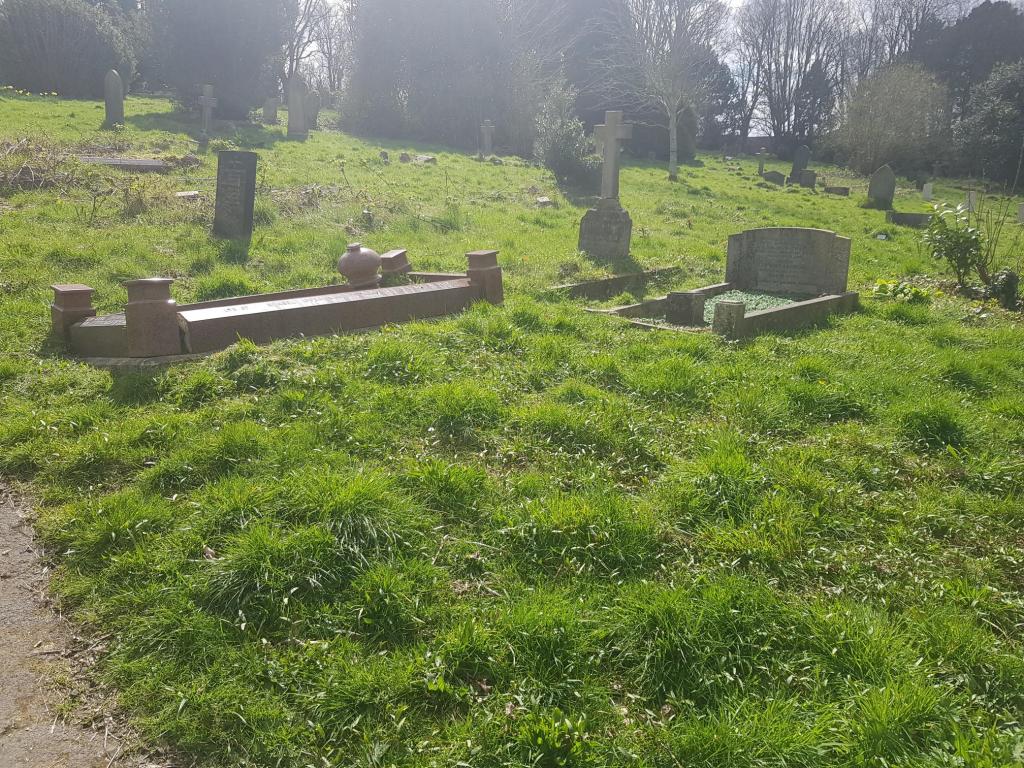
Sadly, the two Powell family graves are unmarked.
Frederick and Emma Powell are buried in this area.
During the excitement of writing and producing the first edition of Swindon Heritage, co founder Mark Sutton provided a book he thought might be of interest. I remember it was quite a large book, the binding broken and the pages loose, but I now can’t remember the title. In it were short biographies of the great and the good of Wiltshire. Mark photographed those pages with a particular reference to Swindon and saved them on a CD ROM on which he wrote ‘Details from Wilts Book.’
Here is one of those biographies …
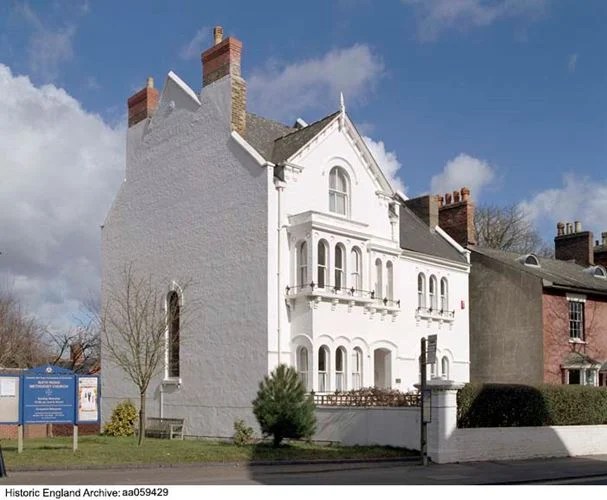
James Carson Rattray M.D., Granville Bath Road, Swindon; son of the late William Rattray of Edinburgh; born at Penicuik, Midlothian, May 1st, 1864; educated at Edinburgh University; M.B., C.M., and M.D. Edin. Member of the British Medical Association; Hon. Surgeon to the Swindon Victoria Hospital. Recreation; motoring, orchid growing, and is noted for breeding Scotch deerhounds, for which he has taken many First Prizes, Medals, and Championships.
James Carson Rattray can be found living and working as a General Medical Practitioner in Purton in 1888 aged 26. By 1901 he was living at Granville House, Bath Road where several members of the Rattray family had joined him – brother Sam, also a doctor; Pat, another brother, a dental student and sisters Bella who was his housekeeper and Mary.
James Carson Rattray died on November 19, 1906 while staying at 5 Albyn Place, Aberdeen. He was buried in North Merchiston Cemetery, Edinburgh.
After my walk around St. Mark’s churchyard recently I began looking for family connections between there and Radnor Street Cemetery. And If you’ve ever pursued a line of family history research beyond the bounds of a possible resolution you’ll probably empathise with me!
The closure of the churchyard at St Mark’s in 1881 was not well received by Rev Ponsonby. (You can read his letter to his parishioners published in the parish newsletter here.) And how distressing it must have been for God fearing families to be buried separately.
Having come upon this stylish headstone to Richard Gwyther who had died aged 14 in 1875 I wondered what had happened to the rest of his family.
Now a name like Gwyther piqued my interest too. In the 1860s the GWR opened a Rolling Mill at the Swindon site, which saw a great many Welsh iron workers move here. Was the Gwyther family part of this first Welsh migration? Well actually no it wasn’t.
Research revealed that the boy’s father, also named Richard, was born on April 22, 1818 not in Wales but in Bristol. Richard was a boiler maker working in the iron and steel ship building industry. He married Caroline Cooper at the church of St Mary le Port in Bristol on May 14, 1843 and for more than 25 years the family continued to live in Bristol.
I eventually found the couple in Swindon on the 1871 census when they were living in Westcott Place, four years before the death of their son Richard.
Richard and Caroline remained living at 90 Westcott Place where Richard (senior) died in 1884. He was buried in grave plot A161 where another son James later joined him. Given the stylish headstone in St. Mark’s churchyard I was surprised to discover Richard and James buried in an unmarked public grave.
In 1891 Caroline, then aged 70, was living with her married daughter at an address in Wootton Bassett in an area at the back of the church near the Rope Walk. She died in 1897 and was buried in grave plot 285 in Royal Wootton Bassett Cemetery.
I did eventually find the Welsh connection – I knew there had to be one! Richard (senior) was the son of Stephen Gwyther, a clock and watchmaker, and his wife Sarah. This couple had married at St. Paul’s, Portland Square, Bristol in 1801, but Stephen was born in 1781 in Jeffreyston/Jeffreston, a village in Pembrokeshire close to Tenby, a popular TRIP destination for Swindonians in the 19th century – but don’t get me started on that line of research!
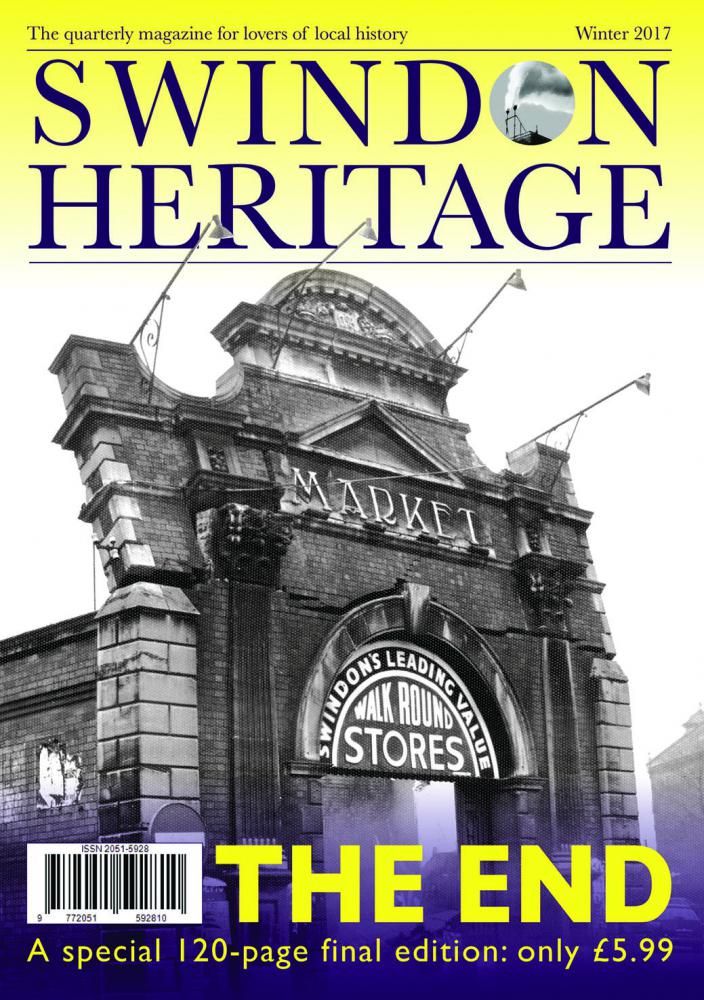
In 2013 Graham Carter, Mark Sutton and I launched Swindon Heritage with the strapline ‘the quarterly magazine for lovers of local history,’ which it was.
We bought together local historians and writers from across the Swindon district. Early contributors included Clive Carter, Historic Surveys Draughtsman at the Wiltshire Buildings Record; Mark Child, author of numerous books about Swindon including The Swindon Book and The Swindon Book Companion available from Hobnob Press and Noel Ponting, co author with Graham Carter of the Life, Times and Works of George Ewart Hobbs and A Swindon Radical: Life between the Wars with George Ewart Hobbs, also available from Hobnob Press.
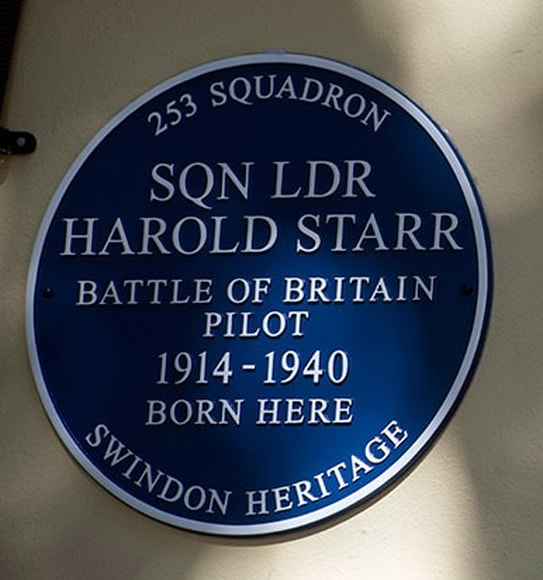
Stalwart members of the Swindon Heritage team, Andy Binks and Noel Beauchamp are today behind the Swindon Heritage Blue Plaques project. Visit the website to see where these are situated.
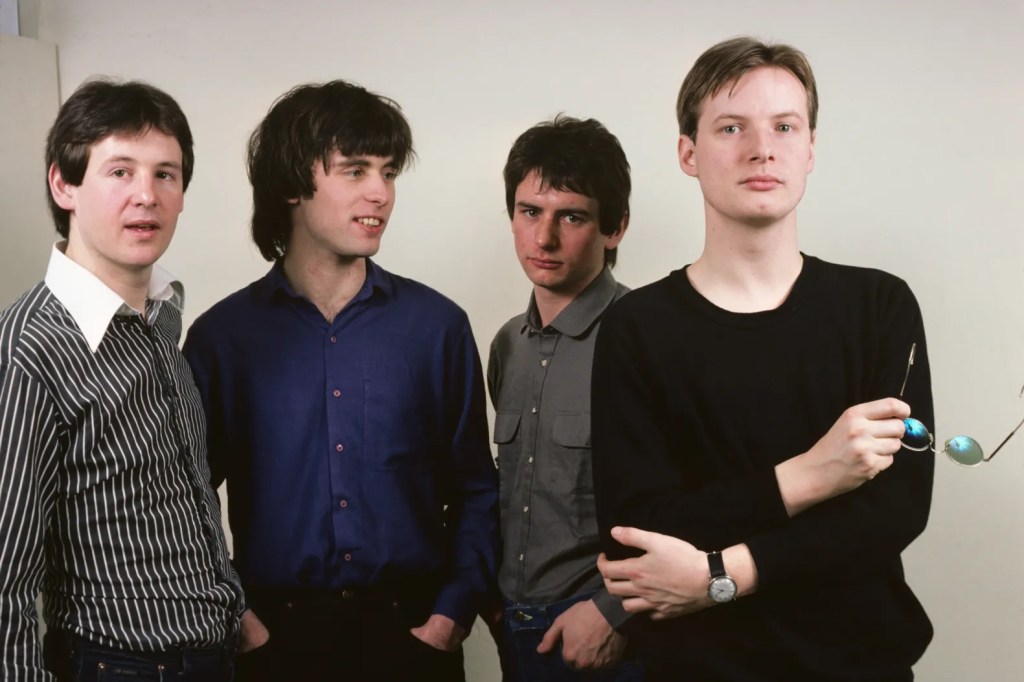
After 5 years and 21 editions Swindon Heritage went out on a high note with a long anticipated interview with Andy Partridge of XTC fame.
Back editions of Swindon Heritage magazine are available on our guided cemetery walks. Our next walk is on Sunday April 28, 2024. We meet at the chapel at 1.45 pm for a 2 pm start.
So, what do you do when you go up to the cemetery with a long list of graves to find and photograph to discover the cemetery gates are locked. Well you go to another churchyard instead!
There are few remaining headstones in the churchyard at St. Mark’s. It is unlikely there were ever many more as this was the burial place of the early residents of the railway village, most of whom were young with large families and little money.
By the end of the 1870s burial space at St Mark’s was running out and a new burial ground was urgently needed. This and the increasing demands of the large non-conformist congregations for an independent burial ground saw the establishment of Radnor Street Cemetery in 1881.
Robert Hanks was born in Bristol, the son of Thomas and Elisabeth Hanks, and baptised at St. Phillip and St Jacobs, Bristol on October 16, 1796. He married Elizabeth Phillips at St Paul’s, Portland Square, Bristol on September 10, 1820 and the couple had six surviving children.
The 1841 census finds the family living at an address at the Viaduct Foundry, Newton in Mackerfield, (Newton le Willow) Lancashire, where both Robert and his eldest son, also named Robert, are working as mechanics.
By 1851 the family had arrived in New Swindon where they lived at 13 High Street (later renamed Emlyn Square).
In 1866 Robert was killed in an accident in the Works when an iron truck on which he was working toppled over, crushing him. He was 71 years old.
It is said that after this fatal accident, Joseph Armstrong, Locomotive, Carriage and Wagon Superintendent, began a series of measures designed to improve safety in the railway factory.
Thomas George had three very different occupations during his lifetime – that of Engine Fitter and Turner; Beerhouse keeper and finally farmer!
Thomas was born in about 1848 in Pencombe, Herefordshire, the son of Timothy and Martha George. By 1871 he was living in Swindon at 43 Taunton Street lodging with George Miggens and his family and working as a Turner. The following year he married Lucena Rathbone at St John’s Church, Bedminster.
By 1881 Thomas was a beer house keeper and green grocer living at Bridge House, 34 Fleet Street with Lucena and their four sons. Lucena died in 1889 aged 42. She was buried on February 27 in grave plot E8225.
In 1890 Thomas married Mary Smith Thomson and in 1891 the couple are recorded on the census as living in Park Lane in a property called Rathbone Villa, presumably named after his first wife. Lucena’s seven sons still lived at home with Thomas and their stepmother Mary. The elder three, William, Henry and Albert were all Engine Turner apprentices.
And then in his fifties Thomas decided to try his hand at farming. As a child growing up in Herefordshire there had been periods when he had lived with both his grandfather and his uncle on farms in Yarpole and Lucton. So, at around the turn of the 20th century, Thomas moved to Kite Hill, Wanborough where he remained until his death in 1930.
Mary, his second wife, died in 1920 and was buried in grave plot E8086 with her parents George and Mary Smith Thomson and her sister Agnes Cooper Thomson.
In 1922, in his mid 70s, Thomas married again. His third wife was Catherine Burns Thomson, his second wife’s sister.
Thomas died in 1930 and was buried on November 12 in grave plot E8087. Catherine died just six months later and was buried with him.
The late Mr T. George – The funeral of Mr T. George, who died at his residence, “Blenheim,” Kite Hill, Wanborough, took place at Swindon Cemetery on Wednesday, the first part of the service being at St. Mark’s Church. The family mourners were: Mr W.T. George (New Cross, London), Mr H. George (Swindon), Mr S. George (Wanborough), Mr P. George (Clydach, Swansea), (sons), and Mr S. Mills (Swindon). (cousin)
Others present were: Messrs. A.W. Norris, G. Turner and G. Gibbs. Floral tokens were received from Mrs George (widow), Mr and Mrs W.T. George, Mr and Mrs S. George and son, Mr and Mrs P. George, Ernest and Olive George, Mr and Mrs Allen (Bristol), Mr S. Mills and family, Mr and Mrs G. Turner and Mrs Bray, Mr and Mrs H. Stratford, Mr and Mrs Cook, Mr and Mrs Norris and Mr and Mrs G. Gibbs.
The coffin was inscribed, “Thomas George, fell asleep Nov. 7th, 1930, aged 83 years.”
The deceased was an old member of the ASE, and formerly a well-known Swindonian, having being employed in the GWR Works. He was a member of the 2nd Wilts Battalion Volunteers, and was the last surviving non-commissioned officer. Subsequently he held an off-licence in Fleet Street and the Volunteer Inn. Leaving urban pursuits behind 34 years ago, he started farming at Wanborough, and continued until a short while ago. His local friends and neighbours came to regard him as a very straightforward man, who took much interest in national affairs.
North Wilts Herald, Friday, November 14, 1930
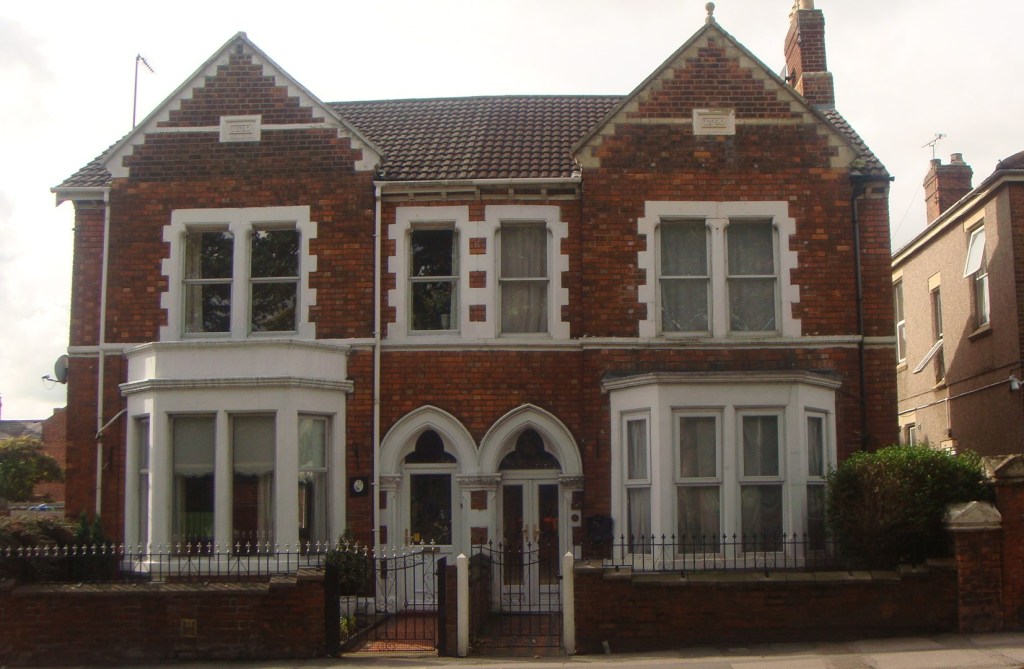
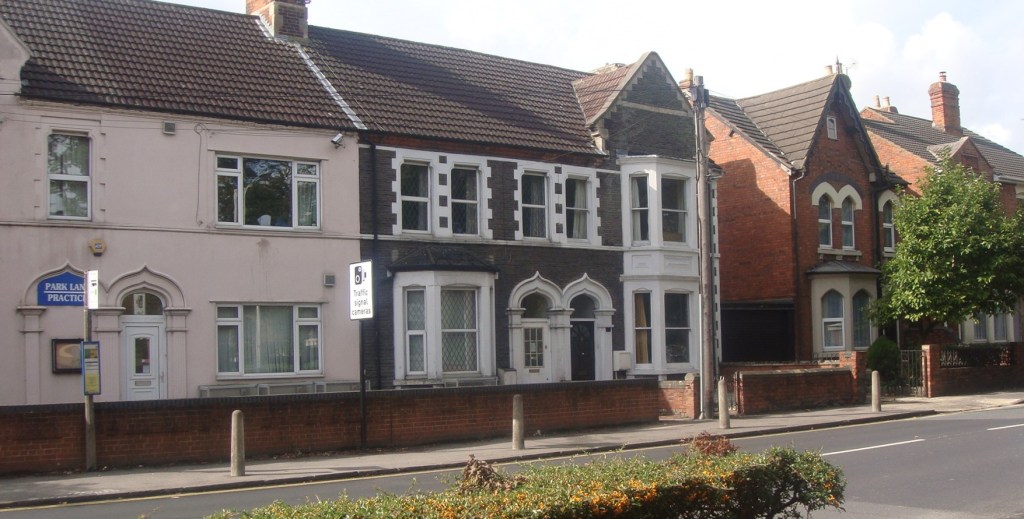
Recent views of houses in Park Lane. Could one of these be Rathbone Villa? We’d love to hear from you if it is.
Thanks to readers of the Radnor Street Cemetery blog it seems that not only have we filled in the missing details of Olive Henry’s life, but the volunteers have revealed I was looking in the wrong place for her grave.
The portable (and therein lies the problem) grave marker had been rested against the wrong grave. When further investigations were made Olive’s grave was discovered to be completely hidden and further back from the path. Here she is buried with her baby son with the details of her husband’s burial in Lisbon, Portugal also recorded.
So, at last we have the complete story and the correct grave recorded.
Death of Mrs. Olive Henry
Swindon Conservative Party’s Loss
Funeral Tributes
The funeral of Mrs Olive Henry of 7, College-street, Swindon, who died on 20 May, took place on Saturday. The interment was at Radnor Street Cemetery, following a service at the Sanford Street Congregational Church, Swindon. The Rev. A.R. Smart officiated.
Mrs Henry, who was 69 years of age, was born in Swindon, but had spent most of her life abroad. When she was 12, her brother took her to Portugal, where she lived until the death of her husband, only a year after her marriage. She then returned to Swindon, and left again after the death of her infant son, to qualify as a nurse at the Brighton and Sussex Hospital. She was then appointed Matron to the Eastern Telegraph Co., at Durban, South Africa, retiring 14 years ago and returning to live with her sister, Mrs. Gabb, in College Street Swindon.
Sincer her retirement she had taken a keen interest in the affairs of the Conservative Association, being at one time secretary and later president of the Women’s Section, King’s Ward “A.”
Extract
Many thanks to Ken Gamston who sent me this newspaper obituary this morning.











 Radnor Street Cemetery