Margaret Ridley Farr was born on February 28, 1902 in Swindon, the only child of Frank George Farr, a coach body maker in the GWR Works, and his wife Elizabeth.
Margaret was baptised at St Mark’s Church on March 31, 1902 when the family lived at 8 Westcott Place and by the time of the 1911 census the Farr family were living at 51 Exeter Street, one of the company-built houses in the Railway Village, with Elizabeth’s brother and his little daughter.
In 1916 the UK Railway Employment Records reveal that 14-year-old Margaret was working as a temporary clerk in the Loco Department, possibly employed due to staff shortages during the First World War. She left on August 2, 1919 again, possibly as military personnel began to return after the end of the war, but by March of the following year she was once more employed as a clerk in the Loco Department where she remained for five years.
In 1927 Margaret married William Alfred Preston, who worked as a coach body builder in the Carriage and Wagon Works. The couple do not appear to have had children and in 1939 they were living at 31 Westmorland Road, a leafy road just off the town centre with Queens Park at one end and Groundwell Road at the other.
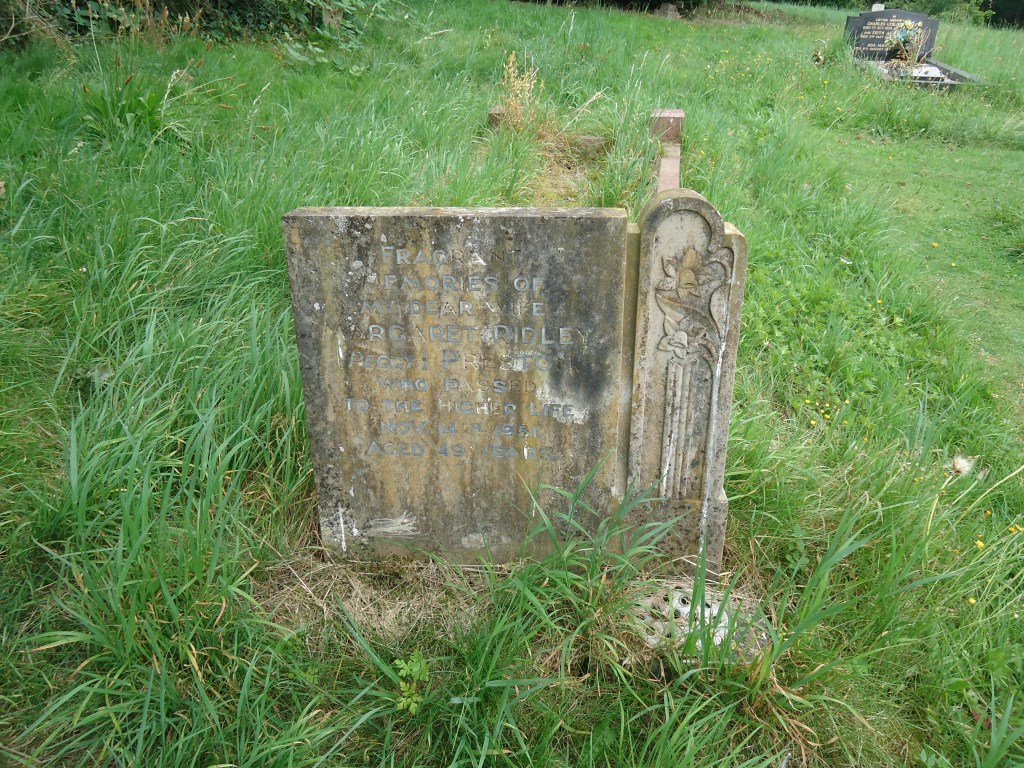
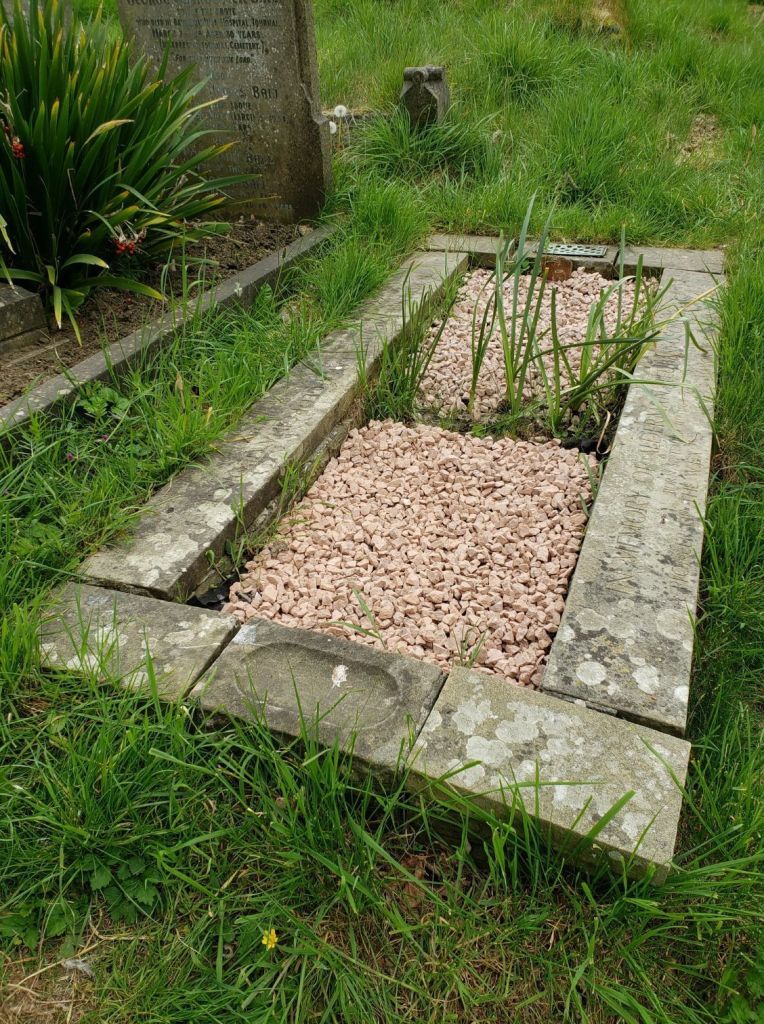
Then just when I thought I had it all nicely sorted out, Margaret’s grave presented a bit of a mystery. The cemetery burial registers reveal that Margaret died in the Victoria Hospital and that her funeral took place on November 17, when she was buried in plot C293. According to the registers this is a public plot and Margaret is buried with four other unrelated people. It is very unusual to have a headstone erected on a public grave and not something that routinely happens in Radnor Street Cemetery. And then I noticed that the neighbouring plot number C292, is that of the Preston family. The first burial in this plot took place in 1896 and was that of Ina Preston, the first wife of Alfred Ernest Preston (William Alfred’s father). His second wife (William Alfred’s mother) Maud Ellen Veal was buried in 1937 and Alfred Ernest himself in 1952. The last burial to take place was that of Irene Helen Preston (William Alfred’s sister) in 1962.
It would appear that William installed the stylish headstone with the sentimental inscription on his parents’ grave?
Fragrant Memories of my dear wife Margaret Ridley [Peggy] Preston who passed to the higher life Nov 14th 1951 Aged 49 years.
William died in 1969 and does not appear to be buried in the cemetery.
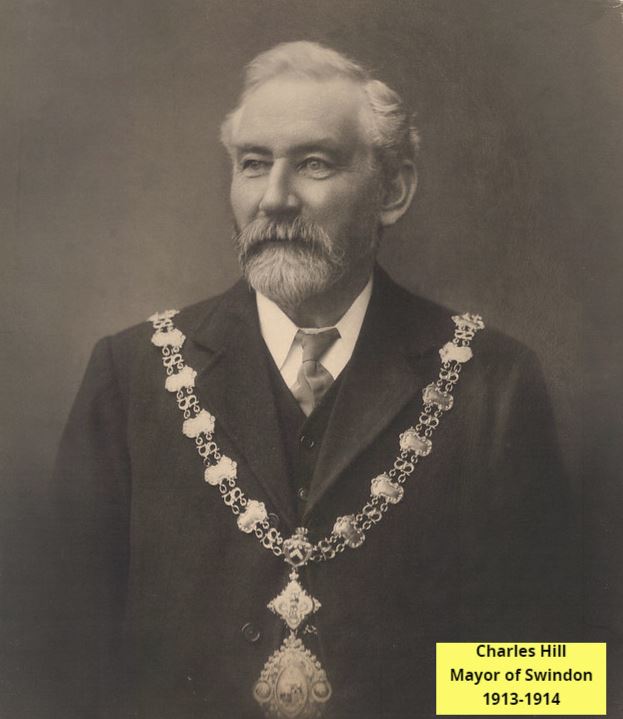
I was recently asked by a blog reader why so many of Swindon’s ‘worthies’ were members of the non-conformist faith. Charles Hill is another such example.
Referring to the obituary published in the North Wilts Herald, Rev. A. Brown said it was a fine resume of the life of Mr Hill and could have gone on for another two or three columns had there been space.
Charles Hill was born in Newton Abbot in 1853. He married Elizabeth Ann Spackman in 1878 and the couple had three children, Mabel, Elsie and Percival. The story of his life follows here:
image published courtesy of Local Studies, Swindon Central Library.
Death of Mr C. Hill, J.P.
Former Mayor of Swindon and Chairman of the Education Committee for 12 Years.
The news of the death in the early hours of Saturday of Mr Charles Hill, of 32 Victoria road, Swindon, will come as a severe shock to thousands of people in Swindon and Wiltshire who knew him so well.
The news will be the more unexpected in view of the fact that right up till Friday he was apparently in his usual health and good spirits, and as recently as Thursday was seen walking in the streets of Swindon, and, indeed, recorded his vote in the municipal elections.
It was only last month that he retired from the many public offices he held in the town.
Foot Amputated.
Mr Hill underwent a severe illness about 18 months ago and had his foot amputated, but though this entailed a temporary retirement from public duties, he returned to them zealous as ever on his recovery.
Mr Hill’s life is the romance of the orphan of a farm, who, by dint of hard work combined with good spirits and geniality, rose to become the Mayor of the town of his adoption, and a magistrate of the county in which he came to live and work.
In April, 1853, he was born near Newton Abbot, and spent his early years working as an orphan boy on a Dartmoor farm. He came to Swindon in 1872, and obtained employment as a porter on the GWR station, later going into the factory.
Then when the old broad gauge track from Swindon to South Wales was converted in 1872, he was a member of what was known as a transport.
Then he went into the R Shop, where he worked for 12 years, first as a labourer, then as a machineman, and finally as chargeman. Leaving the Works, he became a part time agent for several insurance agencies, and in 1896 he was appointed local superintendent of the Sceptre Life Insurance Society.
Service on the Council
In 1894 Mr Hill was elected as a member of the New Swindon Urban District Council and on the incorporation of the borough in 1900 he was elected a councillor. With the exception of one year – 1896 – he completed, on his retirement for the council a week or two ago, 40 years’ continuous service.
There had been 13 Mayors of the borough before Mr Hill became Mayor, and he had served under every one of them. Then in 1913-14 he became Mayor himself, during the year the great war broke out.
For many years he had also served on the Wilts County Council, and until last March, when he retired, had held an aldermanic seat on the County authority for 21 years. His work also extended to the Wilts Standing Joint Committee, and though he had severed his connection with the County Council, he still held a seat on the County Small Holdings Committee.
Work for Education
But it was his work for education which had made him best known. He was appointed to the Education committee when it was established in 1903, and served continuously since that time until he retired about a fortnight ago, being vice-chairman from 1913 to 1919, and chairman since 1922.
In that position he won the affection and respect of his colleagues, and the hearts of children in the schools. He was a familiar visitor to all the schools, and at each of them he had some quaint little story, or a knotty problem with which to amuse the children.
At the time of his death he was the principal and director of C. Hill and Co., insurance agents.
In politics Mr Hill was a progressive Liberal. He was hon. secretary of the North Wilts Liberal and Radical Association, and took part in the winning contest of 1898, 1900 to 1906.
He had been one of the pillars of Methodism and for some 40 years was superintendent of the Sunday School connected with the Regent Street Primitive Methodist Church – now the Methodist Church. He was for some time secretary of the church trustees.
The Funeral
Many public bodies were represented at the funeral service at Regent Street Methodist Church, on Wednesday afternoon.
Mr Hill requested that there should be no flowers and no mourning, and amongst his papers there was found a message asking that those who thought of sending floral tributes should send instead a donation to the Mayor’s Unemployment Distress Fund.
Extracts from North Wilts Herald, Friday, 9 November, 1934.
Charles Hill died at his home, 32 Victoria Road, aged 81 years. He was buried on November 7, 1934 in grave plot E7419 which he shares with his wife Elizabeth Ann who died in 1921 and his daughter Mabel Emma who died in 1965.
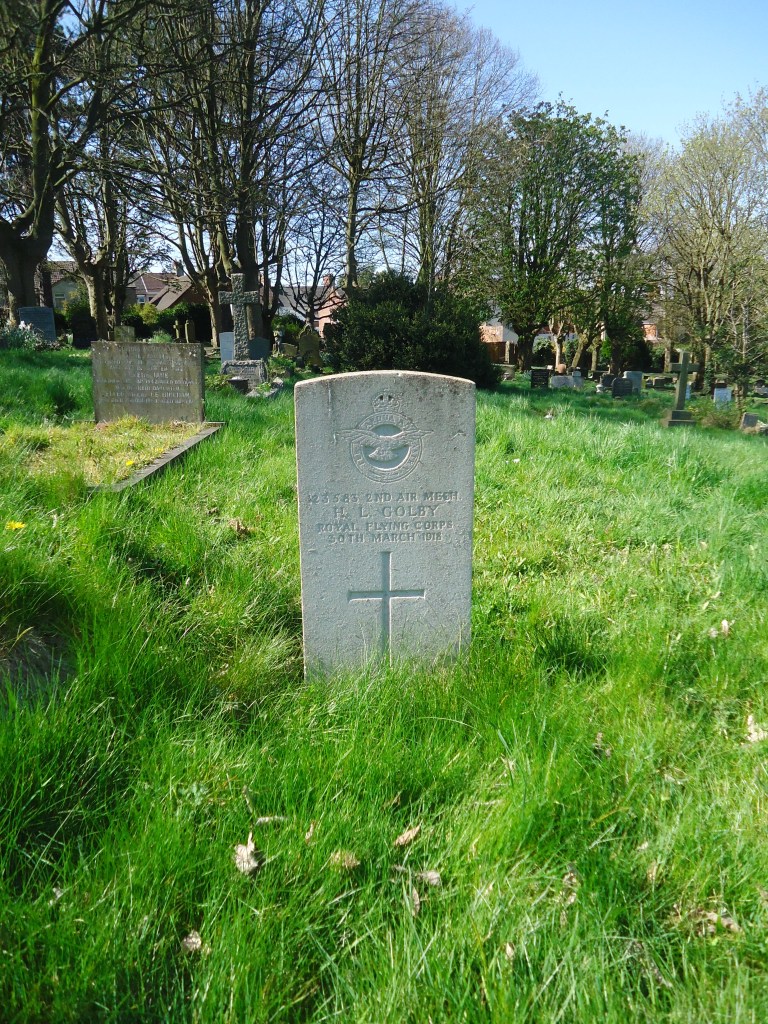
Horace Lett Golby was born on April 18, 1887 the youngest of five children. He grew up living at various addresses in Gorse Hill where his father James worked as a house painter. As a 15 year old boy he began a 6 year carpentry apprenticeship in the GWR Works.
On April 5, 1915 he married Ethel Florence Phillip at the parish church in Seend, Wiltshire, the bride’s home parish. He was 28 and she was 25. Their daughter Dorothy Mary was born on January 22, 1916 and later baptised in the church where her parents had married.
Most of Horace’s military records are lost. All we know is that he served as an Air Mechanic 2nd Class in the Royal Flying Corps, the precursor of the RAF. He died on March 30, 1918 at the Military Isolation Hospital in Aldershot. The Army Registers of Soldier’s Effects reveal he left £7 8s 6d to his widow.
We know nothing about his military service, nor about the kind of man he was. What were his hobbies, did he play football or cricket, did he like gardening? A life sacrificed in war, but still remembered 105 years later.
Horace was buried on April 3, 1918. He shares a grave with his mother Mary who died in December 1913 and his father who died in 1939.
I wonder what Fred Kiddle looked like. I imagine him as the loveable rogue Del Boy Trotter from the 1980s sitcom Only Fools and Horses, complete with medallion and sheepskin coat.
Fred had numerous jobs, including that of a ship brokers clerk, a traveller, pub landlord, shopkeeper, greengrocer but he is probably best remembered as a Turf Commission Agent – a bookies runner. Infact, we know he even had a nickname ‘Speedy.’
Fred’s great nephew David contacted me with a chapter from the Fred Kiddle story:
‘Most of Fred’s money came from bookmaking – both on course and off, with Duart House (his home) being furnished with antiques and silver ‘redeemed’ from unlucky gamblers in lieu of their debts. I understand Fred gloried in being nouveau-riche, owning many cars, from the windows of which he liked to scatter coins for local boys to run after! At the start of WWII he donated premises for the local Red Cross to use as their HQ – a wise investment, as they had preferred access to petrol, and made sure his car was never without, despite rationing.’
Now that is pure Del Boy.
Frederick Charles Kiddle was born in Gloucester in 1879 the son of Charles Kiddle, a railway foreman, and his wife Harriett. He first married Dora Henrietta Stephens in 1903. I’ve been unable to discover what happened to this marriage (or to Dora) In 1921 Fred married his second wife Ethel Maud Dunn but by that date they already had two children, Hugh born in 1914 and John in 1916. Their daughter Marcia Mary was baptised at St. Mark’s on February 13, 1922. During this period the family lived at 13 Cambria Bridge Road where Fred had a grocer’s shop.
By 1939 Fred was recorded as a Turf Commission Agent with premises at 26 Clarence Street, Gloucester and 2 College Place, Cheltenham. He died on died March 25, 1943. Probate was awarded to William Edward Kiddle (his younger brother) and William Canniford, insurance officials and Joseph Thomas Weston commission agents clerk and secretary. He left effects valued at £18,623 13s.
Fred was buried in grave plot C4878 in March 1943 where he joined his son John who had died in 1939. The inscription on the grave reads – ‘To my dear Speedy who I loved/No tongue can ever tell what we would give to have you back.’ Ethel died in 1964 and was buried in the neighbouring plot C4879. She is buried with the couple’s daughter Marcia, well known for her charitable works during the war, who died in 1994.
Clara Acton was born in 1864. She married Rueben George in 1887 and the couple had three sons, Herbert, Granville and Stanley. By 1901 they were living at 132 Goddard Avenue.
Reuben George came from humble beginnings and spent a lifetime working for the good of the poor man. He became a local politician and founder of the Swindon branch of the Workers’ Education Association. Clara was described as being deeply interested in her husband’s work for the WEA and served on the Executive Committee for a number of years. Clara supported her husband as Mayoress during his mayoral year and reference is also made to the fact that she was connected to the Co-operative Society and also served on the Education Committee for some years.
But as we remember the great and many good works both Rueben George and Clara performed, there is no mention of the son they lost during the First World War. Their eldest son Herbert Gladstone George was a Battery Sergeant Major in the Royal Field Artillery, 6th Bde and serving in Lahore in 1917 when he took his own life. His military records state that he ‘Committed Suicide on May 7, 1917 whilst temporarily insane.’
Suicide, along with soldiers shot for military offences, was frequently seen to have brought disgrace upon their families. Today we are able to bring some humanity and compassion to the situation and on November 7, 2006 the British Government granted posthumous conditional pardons to all soldiers executed in WWI for military offences. It remains unknown whether Reuben and Clara were informed of the cause of their son’s death, and if so whether they would have been able to share that knowledge with anyone. The grief was probably too great.
Reuben George died in June 1936. Clara attended her husband’s funeral at Christ Church against the advice of her doctor. Just hours after the funeral on June 10 she was admitted to the Victoria Hospital where she lay seriously ill for several days. An emergency operation to amputate her arm was undertaken but Clara died hours later. She died on June 20, 1936, just 16 days after her husband.
Former Mayoress of Swindon
A large number of mourners attended the funeral, yesterday, at the parish church, Swindon, of Mrs Clara George, a former Mayoress of the borough, who died in Swindon Hospital exactly a fortnight after her husband, Alderman Reuben George, who died in the same hospital.
Mrs George was buried in the same grave as her husband. Both were 72 years of age, and had been closely identified with the Workers’ Educational Association and other social movements in the town.
The chief mourners were deceased’s two sons, Mr Granvill George, of Manchester, and Mr Stanley George, of Swindon; also a sister (Mrs Symonds) and three brother-in-law, all from Gloucester, of which city Alderman and Mrs George were natives.
Mr A.E. Douglas Smith represented Bristol University and the WEA (Bristol Centre), and Mr A.H. Shipman represented Sir James and Lady Currie.
Letters of condolence were received from the Archbishop of York and Mr Ramsay MacDonald, also from Miss May Morris of Kelmscott, daughter of the late William Morris.
Western Daily Press and Bristol Mirror, Thursday, June 25, 1936.
Sometimes there is only so much information that can be found about the ordinary people buried in the cemetery and Catherine Jarman is one of them.
Catherine Jones and James Jarman married in 1842. The couple lived first in Panteg, Gwent before later moving to Swindon after the opening of the Rolling Mills in the 1860s.
By 1871 they were living at 21 Cambria Place next to the Greyhound pub. Living with them in 1871 was their son Josiah 21, a hooker in the Rolling Mills, and their daughters Catherine 16 and Annie, aged 9, the only one of their seven children to be born in Swindon.
James died in 1873 aged 57 and is buried in the churchyard at St. Marks. Catherine continued to live at 21 Cambria Place for the rest of her life.
Then, sometime before 1881 Catherine would appear to have married for a second time. In the census of that year she calls herself ‘Evans’ but there is no one by that name living with her and her daughter Annie at No. 21. Ten years later Catherine returns to the name Jarman on the census returns. However, in 1901 her son-in-law, Albert Smith, now recorded as the head of the household, names his mother-in-law as Catherine Evans. He states that she is married (not widowed) but her husband does not appear to be living with them at No. 21.
Her death was registered as Catherine Evans and the same name appears on the details of her will while the entry in the burial registers reads Catherine Jarman Evans.
Mr Evans remains a mystery.
Catherine was buried in grave plot D1564 on November 16, 1903. The first name mentioned on this elaborate headstone is that of her husband James Jarman, buried in St. Mark’s churchyard. She is buried with her daughter Annie and son-in-law Albert Smith.
Window bills, confectioner’s bags and sermons are just a few of the seemingly endless list of printing services produced by Robert Astill at his works in Victoria Street.
Born in Coventry in 1833, Robert Astill married Margaret Delphi Considence Hall in 1866 and by 1871 the couple were living at 18 Victoria Street with their two young children. Employed as foreman at the printing works established by auctioneer William Dore, Robert Astill later became proprietor probably after Dore’s death in 1877.
Astill’s premises occupied the large corner plot at the top of Victoria Street where Queen Victoria House now stands. With a Victoria Street frontage measuring 93ft (28.3 metres), the area was known locally as Astill’s corner. Astill had bought the property in 1885, signing a conveyance between Charles Richards Plummer and his wife Mary (most probably the former Mary Dore and daughter of Astill’s former employer, William Dore).
By the turn of the century Robert was widowed, the youngest of his eleven children, Lily Blanche, had recently emigrated to Australia where she worked as a domestic servant in the Brisbane/Gold Coast area. With the business now in the hands of his sons, Robert was preparing to retire to Zeals, a small village near Warminster.
The whole complex was placed on the market in 1903 when it was described as being ‘suitable for any Large Business or Offices with Stable, Coach House, Out Buildings, Yard and Garden ground.’
The 1903 sale catalogue describes a complicated arrangement of domestic and workplace accommodation. On the ground floor there were two entrance lobbies, one opening on to Bath Road and the other on to Victoria Street.
The Breakfast Room facing Victoria Street was used by Astill as a ‘Stationery and Fancy Shop’ while W.H. Bush used the Drawing and Reception Rooms on the Bath Road side as a ‘Hairdressing Establishment.’ The stables and use of the yard were let to Mr Greenman on a weekly tenancy.
A selling feature was made of the bressummers (strong beams supporting the superstructure of the building) thus enabling a conversion into two shops if the purchaser so desired.
With a dining room, seven bedrooms, a dressing room, WC and linen closet on the two upper floors, this building presented a serious undertaking.
A short account of the auction was reported in the Swindon Advertiser.
Sale of Property – An exceptionally large and influential gathering of property owners and speculators assembled at the Goddard Arms Hotel last (Monday) evening to witness the disposal by public auction of that very desirable corner freehold block of buildings situate in Bath Road and Victoria Street, and for many years in the occupation of the owner Mr Robert Astill. Mr T. Hooper Deacon was the auctioneer, and after a short introductory speech, the bidding was started by Mr James Hinton at £2,000, who became the new owner at £2,600. The solicitors for the vendor were Messrs Kinneir and Co.
Swindon Advertiser, Tuesday, February 17, 1903.
Kelly’s Directory of 1915 reveal that the Astill brothers still occupied the premises, then described as 103 Victoria Road after renumbering of the built up road linking former Old and New Swindon.
Margaret Delphi Considence Astill died in December 1899 and was buried in grave plot E8601 where her husband joined her on June 19, 1915. The last burial to take place in this plot was that of their daughter Ellen Victoria Astill who died in 1946 and was buried on April 12.
If there was ever a memorial on the Astill family grave here between the Thatcher and Chum family plots, it is no longer visible. We fully appreciate the financial constraints upon Swindon Borough Council – that the coffers are depleted and there is barely enough money to pay for essential services. But it is such a shame that an important heritage site such as Radnor Street Cemetery receives so little maintenance. Here lies, quite literally, the history of our town – remembering the ordinary people of Swindon.
Tunley might be another familiar name to local people. This firm of builders’ and decorators’ supplies had a town centre shop for more than a hundred years.
Albert Edward Tunley was born in 1873, the first of William and Matilda Tunley’s family to be born here in Swindon. Albert married Eliza Snell in Swindon in 1892 and by 1901 they were living at 73 Gloucester Street.
William, a plumber and decorator, opened his shop on the corner of Milford and Cheltenham Street in 1880. Although the business was established by William the shop bore the name A.E. Tunley, the initials of William’s son and later that of his grandson as well. This photo dates from around 1890.
The Tunley’s business continued to expand, as did their shop. In 1900 they applied for planning permission to build a stable and warehouse on Milford Street. Further additions were made in 1905 and 1910. By 1929 their premises stretched into Gloucester Street.
The business moved to 40-41 Fleet Street where it remained until relatively recently.
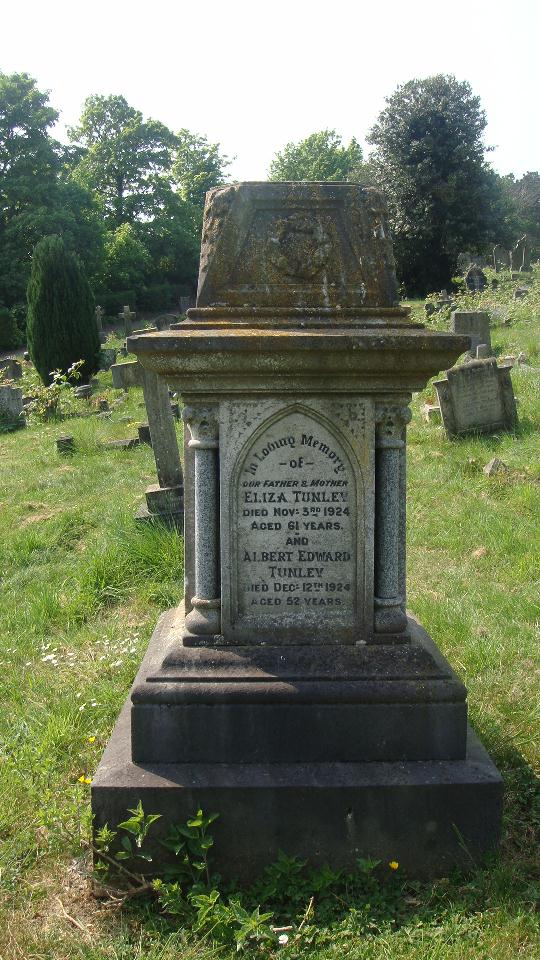
This distinctive monument is the final resting place of Albert Edward Tunley and his wife Eliza. Albert died on December 12, 1924, not at his home, 8 Wellington Street, but at 7 Mandeville Place, Manchester Square in London. His wife Eliza had died just six weeks previously.
As this unseasonal September heatwave looks set to continue for the next few days, I revisit September 1929 when Swindon was hit by a devastating water shortage.
Additional inspectors were assigned to locate cases of wilful misuse, and Mr Thompson, Borough Engineer and Water Engineer, said it was the duty of the housewife to be sparing in the use of water, adding somewhat threateningly “if she is not she will have to be taught how to be sparing.” A total ban was imposed upon the use of water in the cemetery.
Water Shortage
Alarming Situation in Swindon: Utmost Economy Needed
News regarding the position of Swindon’s water supply is of an alarming nature. During the week-end there was a most serious drop in the amount of water available.
The townspeople have already effected some economies in their usage of water; but it is now vitally necessary that the present consumption should be cut down by at least another 50 per cent.
It is therefore the immediate duty of everyone to use only half the amount of water they have been doing. For the present the use of baths should certainly be given up, and their place taken by an ordinary sponge-down with the minimum quantity of water.
Housewives can do much to help. They must look on water as a precious fluid, and cut down their usage to the least possible quantity.
Every step is being taken by the Borough Engineer and his staff to augment the supply; but the co-operation of the general public is essential.
Mr J.B.L. Thompson, the Borough Surveyor and Water Engineer, tells the North Wilts Herald that the fall in the available supplies which has taken place over the week-end is unprecedented, and has forced the Water Committee to reconsider the whole position.
Unless still more drastic economies are made, Swindon is going to be faced with a very unpleasant situation.
The use of water for certain specified purposes must, under heavy penalty, be absolutely discontinued. Leakages, however small, must be reported at once.
Warning to Wasters
The Borough Engineer has been instructed to employ further inspectors to locate cases of wilful misuse.
Official Notice
In an official notice, signed by the Town Clerk, to be distributed to householders, it is stated:
“Owing to a rapid and unprecedented decrease during the past two days in the water supplies available in the well belonging to the corporation, the attention of all consumers of water is drawn to the urgent necessity of preventing waste and of strictest economy in the use of water.”
It is further stated that water must not be used for the purpose of washing foot-pavements, yards, cars or garage floors, nor used on allotments, tennis courts, bowling green, cricket patches or gardens.
Prosecutions will be instituted where there is evidence of waste of water.
A Critical Three Months
“It will be the end of December before we can hope for the wells to recover,” said the Borough Surveyor to a North Wilts Herald representative.
“The next three months are going to be very precarious from the point of view of obtaining water sufficient to keep the town going.
“Unless people limit their consumption by at least 50 per cent, it will mean that as a last resource the town will have to be shut off from the regular supply and that we shall have to draw it from certain points.”
Meanwhile wells at Ogbourne continue to diminish, and though water is being drawn from the GWR supply at Kemble the time will come when this supply must stop.
It is the duty of the housewife to be sparing in the use of water. If she is not – to use Mr Thompson’s words – “she will have to be taught how to be sparing.”
Owing to the acute shortage, the Swindon Corporation have stopped the use of water for growing plants in the Swindon Cemetery. Water has now been banned from any kind of use in the Cemetery.
The supply in the Highworth parish at present is fairly satisfactory, this being attributed mainly to the fact that some two or three years ago the district council constructed auxiliary works at Eastrop.
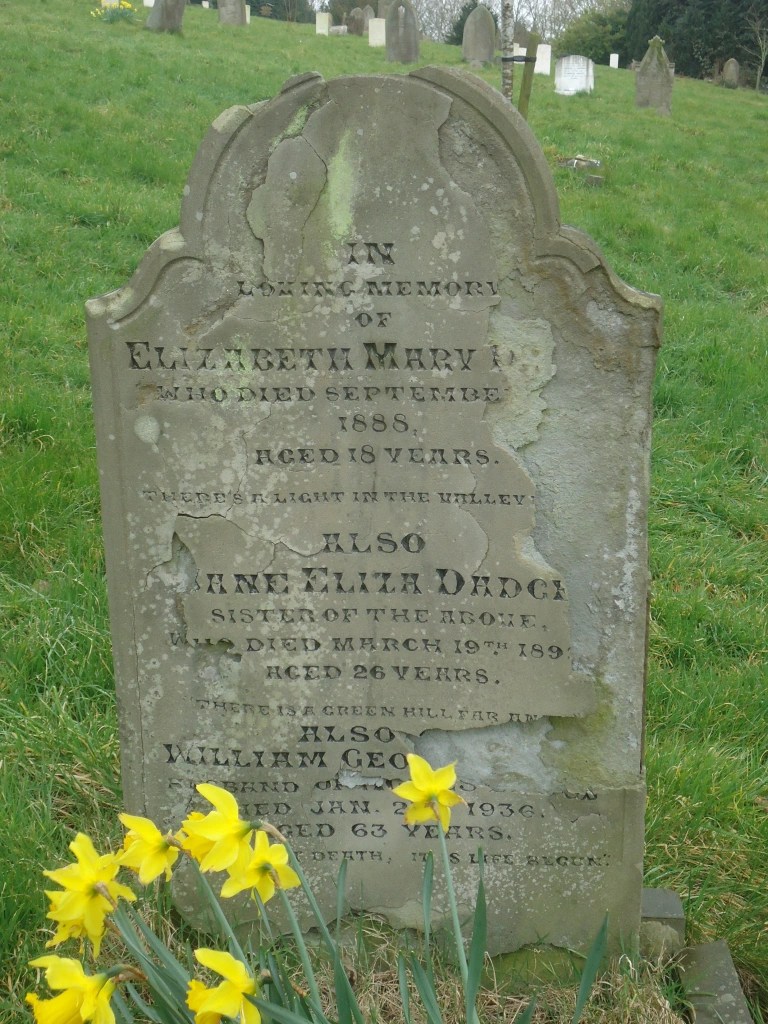
As you will see the front of the headstone with all the family details on it is gradually coming away. This is caused by frost getting into the stone and you will see many headstones like this in the cemetery. Sometimes the whole front comes away in one sheet.
Fortunately there were enough details left on this one to allow me to piece together the family history.
Elizabeth Mary Dadge was born in 1871 the daughter of William Dadge, a smith’s striker, and his wife Martha.
From 1881 to at least 1901 the family lived at No 3 Brunel Street, a town centre street that has long since vanished. For most of that time William had his brothers Albert and George lodging with the family. As young men they worked as iron dressers in the Works, then labourers until in 1901 Albert, then aged 41, was working as a storekeepers assistant. William meanwhile worked as a striker into his 60s.
Sadly, little is known about Elizabeth who died very young. As an unmarried young woman we can safely assume she didn’t die in childbirth, but without ordering her death certificate her cause of death is unknown. Next on the headstone is her sister Jane who died four years later at the age of 26, again unmarried.
The last name on the headstone is William George Dadge the girls’ brother. At 15 years old he followed his father into the railway works to begin a 6½ year boilermaker’s apprenticeship. However the UK Railway Employment Records show that he absconded in January 1888.
I can’t find him on the 1891 census records. This may be due to a transcription error. Perhaps he called himself George. That and a spelling mistake would make it very difficult to find him.
Anyway, by 1901 he is back home with his parents living at No 3 Brunel Street where he is working as a joiner. In 1905 he married Agnes Brown and by the time of the 1911 census they were living with their baby daughter Winifred on the Hursley Park estate, Winchester where William was employed as estate carpenter.
In the last years of his life William was back in Swindon living at 74 William Street. He died on January 21, 1936.
I don’t think this stone will weather many more winters, but with the use of the cemetery records and online genealogy sites, the family will not be lost.




 Radnor Street Cemetery