Swindon and District History Network

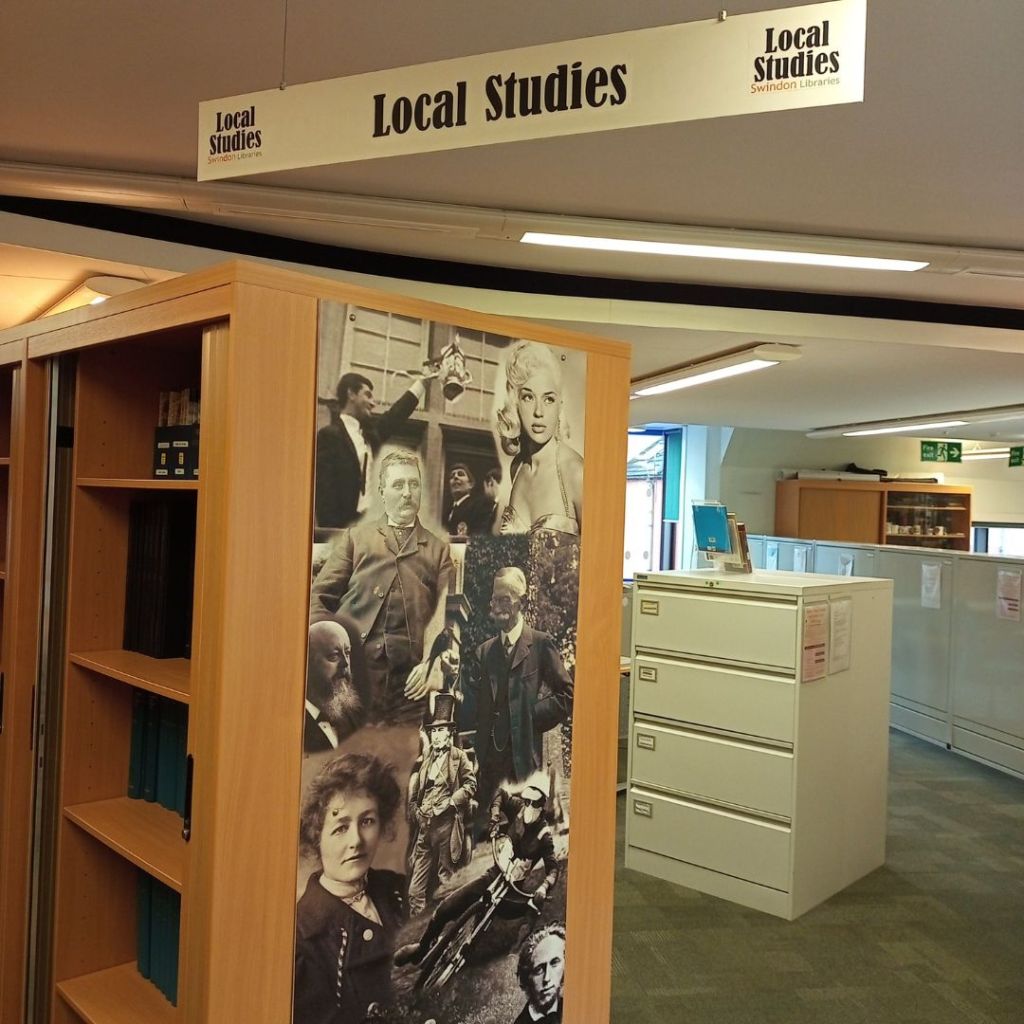
Last evening I attended the 50th meeting of the Swindon and District History Network. The Network was formed as an initiative by staff in Local Studies at Swindon Central Library to bring together all the various history societies, writers and researchers who regularly used the resources there, to share and support their work. More than thirteen years later the Network continues to thrive and this week saw new and existing members squeeze into the Reading Room in Central Library to celebrate and share our projects.

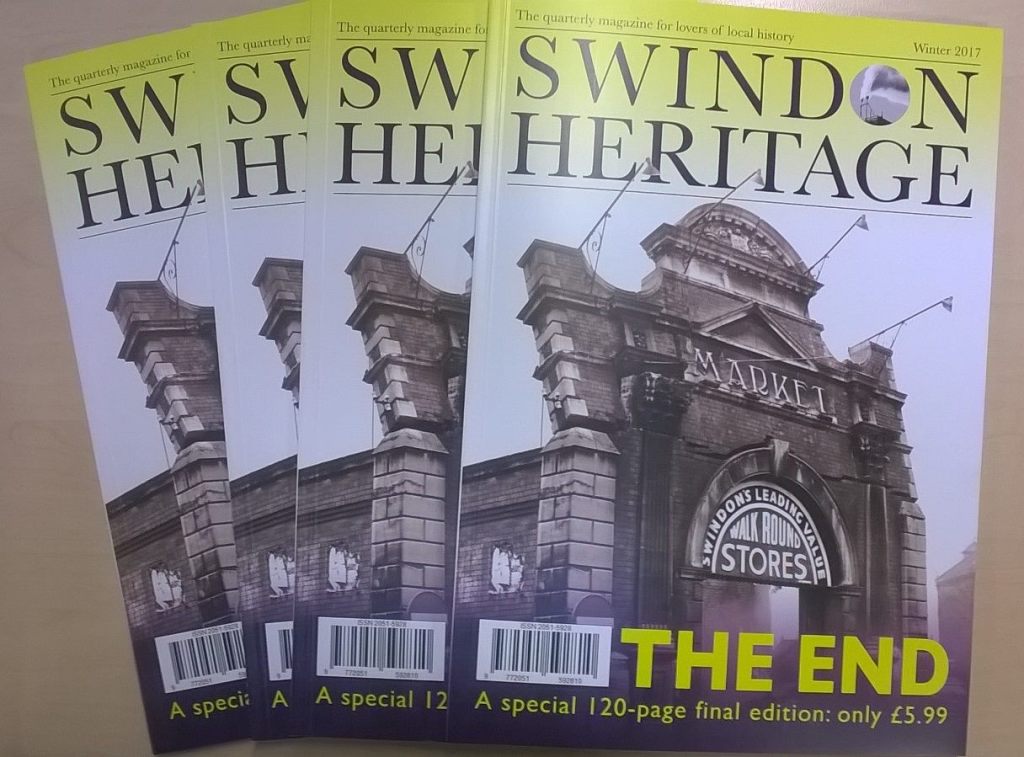
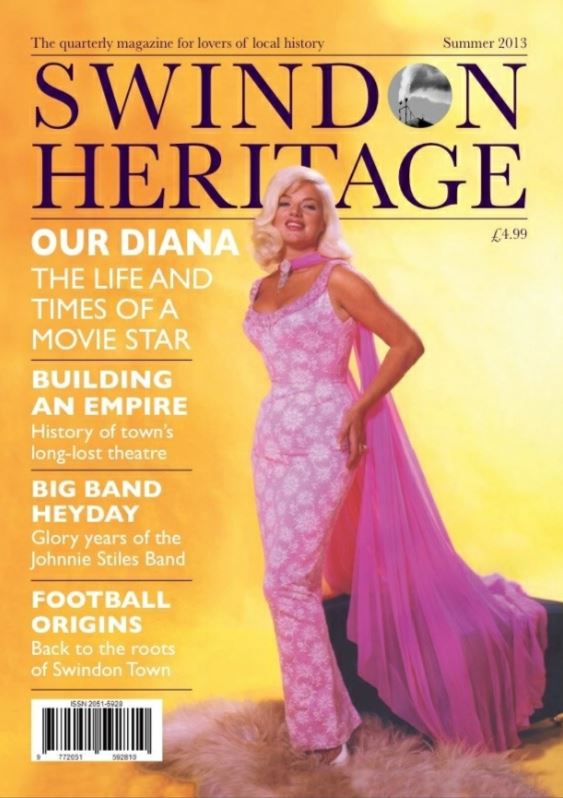
The Network has been hugely supportive to me as both an individual and as a member of the Swindon Heritage magazine team (published 2013-2017). As one of the original members of the Network, I took the opportunity to thank those societies who opened their archives, contributed articles and supported the magazine across five busy years of publication. I spoke about Mark Sutton, military and local historian, author and co-founder of Swindon Heritage who sadly died last year and is greatly missed on the local history scene in Swindon.

This coming weekend – September 9 and 10 – sees Swindon’s history on display during the Heritage Open Day events (8-17 September) when local history groups show Swindonians what a fascinating history their town has. I will be at the Heritage Apple Day event with the Friends of Lydiard Park in the Walled Garden at Lydiard House on Sunday, September 10 – 11-4 pm.

Our next guided cemetery walk takes place on Sunday September 17. Meet at the Chapel in Radnor Street Cemetery for 2 pm.

Local history is alive and busy in 21st century Swindon – come and join us.

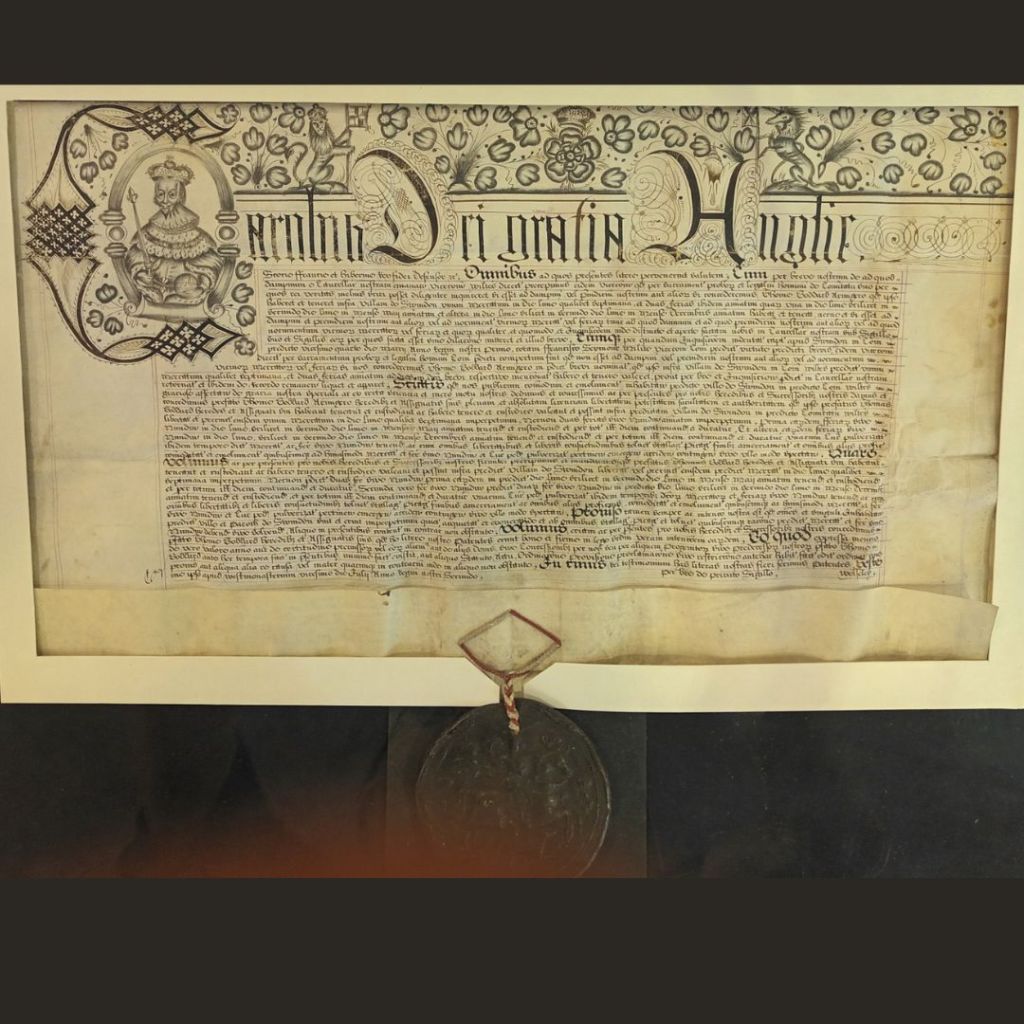
Swindon’s Market and Fair Charter 1626 on display in Central Library, ground floor.
Swindon Veterans of Industry

In the 1880s and 90s it was not unusual to find men like Robert Laxon still employed in Swindon’s GWR Works into their 80s. However, by the 1930s there was a state pension and an official retirement age. In December 1930 more than 200 men retired from the Great Western Railway Works, an event of such importance to warrant a detailed article in the first January edition of the North Wilts Herald published in 1931.

The names and address of those men forced to retire under the introduction of the 66 years age limit were recorded in appreciation of their long years employed in the Works. Men who had joined the company in the 1880s and 90s; men like Tom Solven who had completed 52½ years’ service and George Edge, of 39, Medgbury Road, 43 years a chargeman wagon builder. Chargemen in the Locomotive Department such as E.P. Cave, a fitter who lived in Pleydell Road, G.A. Hallard, turner, 70 Jennings Street and G.F. Randell, fitter, 19 William Street.

Mr William George Woodward, 43, Havelock street, retires after 50 years’ service in the GWR works, and he has spent the whole of that time in one shop – No 7 Finishing Shop, Carriage Department.

A native of Oaksey, Mr Woodward came to Swindon on 11 October, 1880, and started work as a machineman in the factory. He was made chargeman 32 years ago last July.

He has served under three Chief Mechanical Engineers, the late Major William Dean, Mr. G.J. Churchward and Mr. C.B. Collett. His first foreman was Mr. Thomas Rose. He has seen the number of employees in his particular shop grow from 50 to between 300 and 400.

Mr. Woodward has a vivid recollection of a bit of the first work he did during his initial year in Swindon. It was to help clear the line between the railway station and the transfer sheds during the great snowstorm in January, 1881. Greatly interested in Friendly Society work, Mr. Woodward has been a member of the Oddfellows Society for many years. He has been for 19 years secretary of the juvenile branch, and 17 years secretary of the Stratton St. Margaret lodge.

Last Saturday he was appointed secretary to the Widows’ Hope lodge – one of the oldest and largest in the Swindon district – to fill the vacancy caused by the death of Mr. A.C. Nethercot. He is Past Grand Master of the Swindon District, and was one of the delegates who attended the Centenary A.M.C. of the Order at Southampton in 1910.

Perhaps for many of the men it was a relief to no longer have to work. But no doubt for others it was more akin to a bereavement. What would they do with their time?

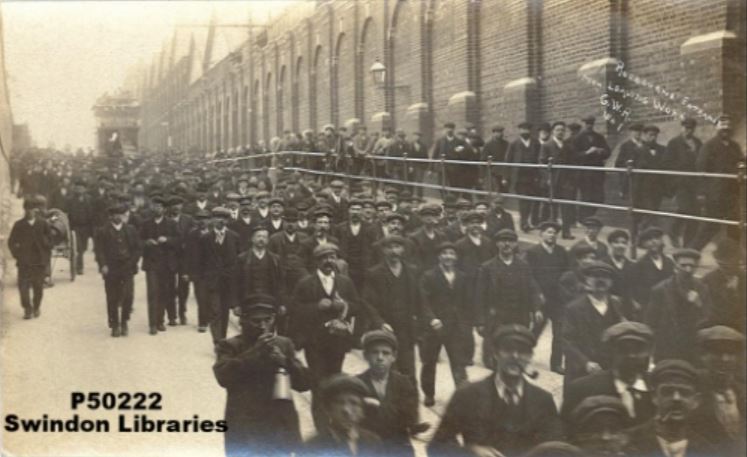
Home time – men leaving the Works. Image published courtesy of Local Studies, Swindon Central Library.

William George Woodward’s retirement was not a long one. He died in December 1939 and was buried in grave plot D573 with his father-in-law Harry Ball who died in 1928 aged 96. William’s wife Hannah died in 1960 and was buried with them both.

Tom Tindle – on the move

Today many families live at opposite ends of the country (and the world) and we tend to think of this as a modern phenomenon brought about by improved methods of transport. But people have always travelled to where there was work and Radnor Street Cemetery has many residents who came to Swindon and a job in the Great Western Railway Works.

Tom Tindle, or to give him his full name Tom Henry William Tindle, was born in York on April 18, 1855, the eldest of six children. In 1871 the family were living in Ashford in Kent, but when you look at the birth places of Tom’s siblings you can see they had also lived in Scarborough and London before settling down in Ashford, Kent.

Tom married Phillis Sarah J. Alderton, an elementary school teacher, at St George the Martyr in Southwark on April 24, 1878 when they both lived in the Old Kent Road area.

By 1881 the young couple were living in Stratton St. Margaret. Tom worked as a Coach Body Maker. He joined the Great Western Railway on May 23, 1887 as a Carriage Body Maker later becoming a foreman. By 1891 they had moved to 37 Regent Street where Phillis describes herself as a postmistress. In 1901 they lived at 10 Victoria Road with their four children. Phillis 18 and Nellie 14 were both working as pupil teachers. The boys Stuart 12 and Tom 5 were still at school. The 1911 census provides us with the additional information that Tom and Phillis had 6 children and that sadly 2 had previously died.

Tom lived in Swindon until at least 1920 when his address was 166 Victoria Road. He died in 1933 by which time he was living in Luton. The family returned the body to Swindon where he was buried with his daughter Phillis who died in 1905.

His wife Phillis out-lived him by eleven years. When she died in 1944 she was living in Bournemouth.

The Lodge family grave revealed

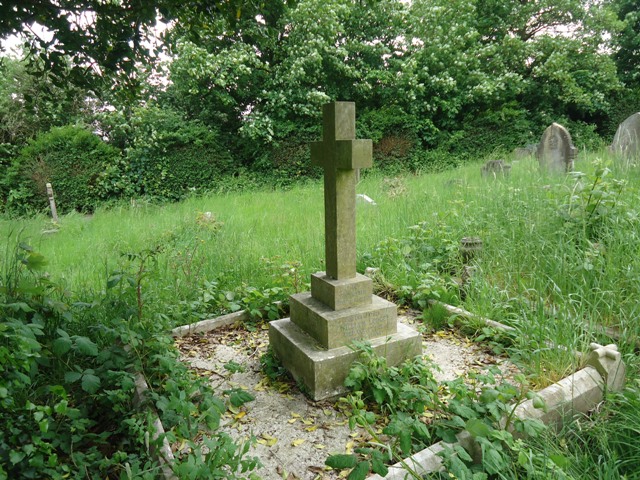
In recent years we have been fortunate to have the occasional assistance of the Community Payback Team in the cemetery. This group does some sterling work, often tackling the most overgrown sections of the cemetery. It was on one such occasion some years ago that they cleared a huge amount of shrubs and brambles and in doing so revealed several graves that had been hidden for years. Among those newly revealed graves was this magnificent memorial to the Lodge family.

William Lodge and Elmira Faville were both born in Gloucester and married in St James’ Church, there on October 13, 1867. By 1871 they had moved to London where they were sharing accommodation at 33 Desborough Lane, Paddington with James Affleck (another Swindon connection). In 1881 they were living in William Street, Swindon where William worked as an engine driver. By 1901 William was working as Railway Engine Inspector and the family lived at 36 Rolleston Street, one of the few houses that remain after the demolition work of the 1960s and now tucked away behind the doomed Regent Circus development.

So, who is buried beneath this memorial in this spacious, double plot E8482/3.

First we have Elmira who died in 1905, then Mary who died in 1917. William Lodge died in 1922 followed by another daughter, Emma who died in 1926. Eldest daughter Ellen died in 1950 and son Charles and his wife Annie are buried here, they died in 1945 and 1963 respectively.

Looking at this impressive memorial it is difficult to imagine it was once hidden by brambles. When so little maintenance is done by the local authority it would be great to see the Community Payback Team back in the cemetery.

Inkerman John Garlick

Photograph taken at the funeral of Daisy Garlick’s brother. Daisy and Inkerman are the second couple on the right.

The Battle of Inkerman took place on November 5, 1853 during the Crimean War between Russia and the UK and her allies. Inkerman later became popular as a street name, although we don’t have one here in Swindon but it is curious how battle names were chosen for the naming of children. During and immediately after the First World War children named Ypres, Verdun and Arras appear in birth registration records.

Inkerman John Garlick was born in October 1863 in Wootton Bassett, the son of John and his wife Julia. He grew up at the Pack Horse Inn, Chippenham where his parents were the publicans. He married Ada Jane Barnes in 1889 and the couple had five children. In 1891 they were living at 26 Carfax Street, with their baby son Percy and Ada’s two brothers, Ernest and Sholto Barnes. Inkerman worked as a wood sawyer. Sadly, Ada was admitted to the Wiltshire County Lunatic Asylum where she died in 1903 aged 39.

In the summer of 1904 Inkerman married Daisy Ayers and at the time of the 1911 census they were living at 69 Port Tennant Road, Swansea. Inkerman was 47 and worked as a Railway Timber Inspector. Daisy was 29. They lived with children from both his marriages – Elsie 19, Frederick 15, Arthur 13, Iris 5 and one year old Myrtle.

This stylish art deco headstone marks the grave of Daisy Garlick who died in 1938 aged 57 and was buried in grave plot C1821. Inkerman died less than three months later and was buried with her on September 5. He was 75 years old.

Jesse Singer – engine driver

I chose to research this memorial as a bit of a challenge. It is often difficult to find sufficient details to tell the story of the men buried in Radnor Street Cemetery, but for the women it is even more so. So many times the census returns make no mention of the married women’s occupation as they worked part-time, seasonal jobs. With numerous children, no modern household appliances and often a family firm to support as well, these women obviously just sat around all day doing the odd bit of embroidery!

Ellen Hill was born in Cirencester in about 1859, the daughter of John Hill, a coach builder’s labourer, and his wife Eliza. She married Jesse Thomas Singer in Melksham in 1880 and at the time of the census the following year Jesse and Ellen are lodging at 32 Oriel Street, Swindon with Horace Wall, his wife and their 7 month old baby.

Jesse worked first as a fireman and then an engine driver and the family moved around a fair bit. Their first child named Jesse after his father, was born in Swindon, the next three children were born in Trowbridge. Ellen gave birth to Arthur in Swindon in 1890 and seven months later at the time of the 1891 census they were living in Newton Abbot. Ellen had two more children during their time in Newton Abbot. Her youngest son Leonard was born in 1898 back in Swindon and in 1901 they lived at 72 Curtis Street.

Ellen died in 1915, aged 55 at her home 31 Curtis Street. She was buried on January 7 in grave plot D1615. And a year later Jesse married Elizabeth Harvey. Jesse Thomas Singer died in May 1926 at 58 Newhall Street aged 69 years. He was buried with Ellen on May 29, 1926. His second wife Elizabeth died at 116 Tydeman Street on November 28, 1936 aged 79 and was buried with Jesse and Ellen.

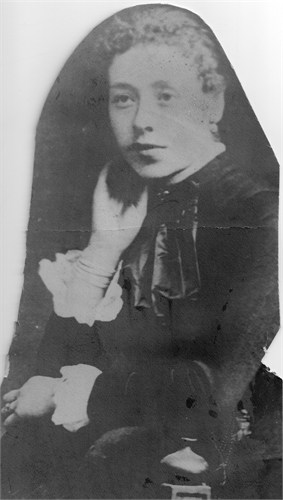
I have been extremely fortunate in being allowed access to family photos, one of Ellen as a young woman, one of her and Jesse and their youngest son Leonard and another of Jesse. Unfortunately none of Elizabeth but would you believe it, of course I find that Jesse goes one better and I have here a portrait of him painted as a young man.

Mary Ann Ball – a mother’s story

For so many women wartime losses came at an age when they would have expected, or at least hoped, that their life was entering a more peaceful phase; when the worry of raising a family was past.

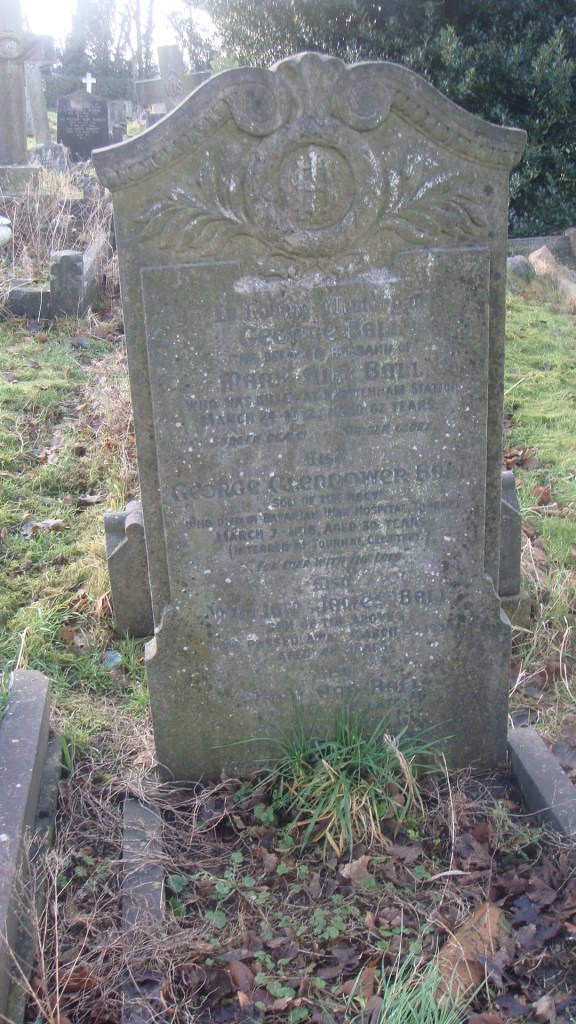
Mary Ann faced some tough challenges during her lifetime. She was 61 years old when her second son, George Glendower Ball, died in 1918 during the First World War. George Glendower Ball was rejected for military service twice before successfully enlisting with the Norfolk Regiment. 33800 Private George Glendower Ball died in the Bavarian War Hospital, Tournai on March 7, 1918, his 30th birthday. He is buried in the Tournai Communal Cemetery.

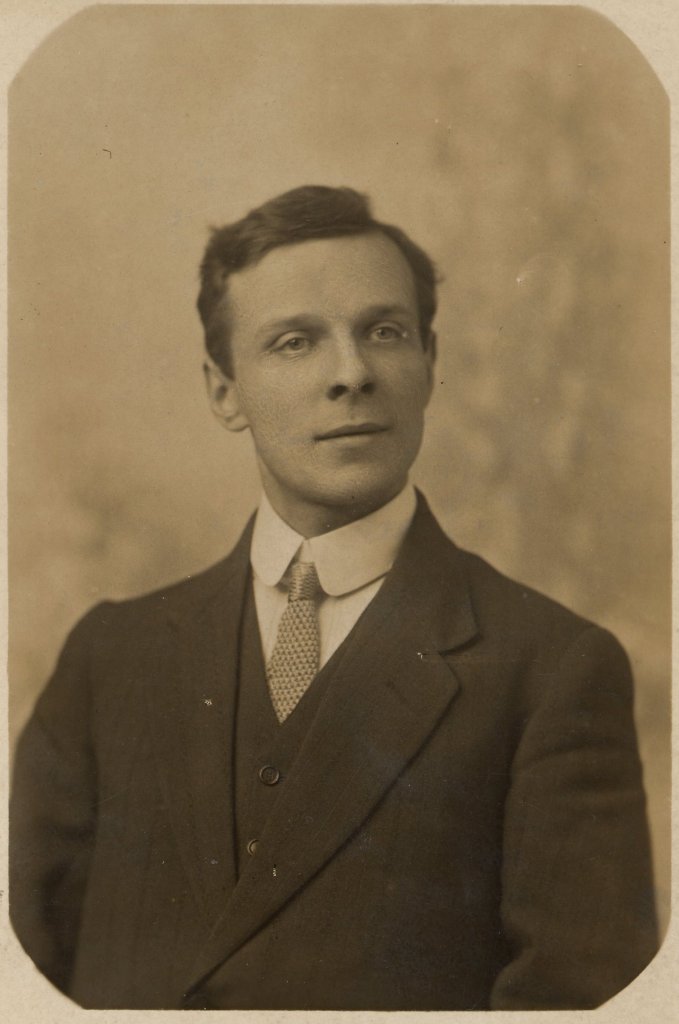
Photograph of George Glendower Ball published courtesy of Duncan and Mandy Ball.

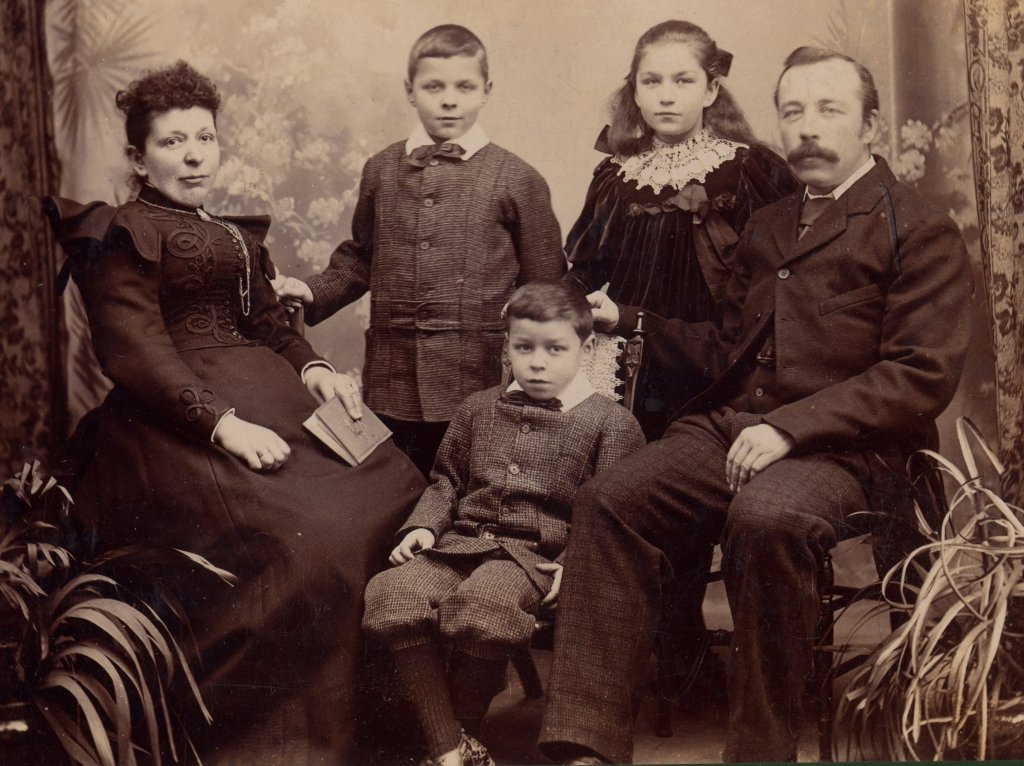
Born in Bristol in 1857 Mary Ann married George Ball in 1885 and by 1891 the couple were running the Temperance Hotel on Station Road. The census returns of that year record their four young children William 5, Millicent 4, Glendower 3 and Samuel just three months old. What the stark facts and figures of subsequent census returns are unable to convey are the tragic circumstances surrounding their eldest son. William had contracted measles at the age of two, which left him disabled; he never appeared in any family photographs.

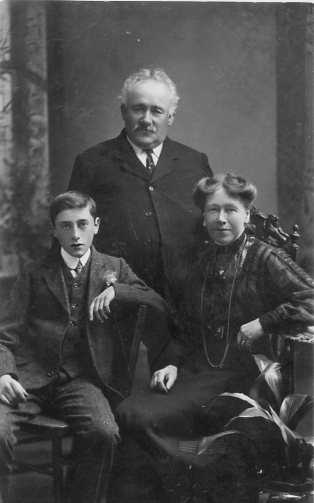
This photograph of Mary Ann and her family is published courtesy of Duncan and Mandy Ball.

In 1922, when Mary Ann was 65, her husband George was killed in a railway accident when he was struck down while crossing the line at Shrivenham station. Then two years later her disabled son William died aged 48. Mary Ann died just a few months later.

Mary Ann is one of the extraordinary ordinary people buried in Radnor Street Cemetery.

The parents and their son are buried together in grave plot D1305. Their son George Glendower Ball is mentioned on their headstone.

James Smith Protheroe – no busier man in Swindon

From local dignitaries and Victorian edifices to pageants and poets, photographer James Smith Protheroe and his partner Thomas Henry Simons captured them all.  But it could have turned out very differently.

One of tailor Thomas Protheroe’s eleven children, James was born in 1858 over the shop in Goat Street, Swansea, next door to the public library.  By 1871 13 year old James was already working alongside his father, described as ‘young tailor’ in the census of that year. 

But his artistic leanings had the support of his elder brother Thomas, an artist, who left Wales following his marriage to Emma Chapman in 1872.  Thomas moved to Bristol and by 1876 had his own photographic studio at 33 Wine Street and encouraged James with his ambitions.

Thomas remained in Bristol, while James established himself at 30 Regent Street, New Swindon.   In 1881 the Protheroe studios won a first class silver medal for oil painting at the Plymouth Art and Industrial Exhibition and proudly declared royal patronage by HRH Prince of Wales.

Image published courtesy of Local Studies, Swindon Central Library.

Towards the end of the century Prothero’s sitters included Queenstown School teacher Edith New who would shortly leave Swindon to join the Women’s Social and Political Union and the fight for Votes for Women. And in 1903 the GWR Hammerman poet Alfred Williams took his bride Mary Peck along to the Regent Street studio to pose for their wedding photograph.

By then James had taken his nephew into the business, Thomas Henry Simons, the son of his sister Elizabeth and her husband Henry, a commercial shipping clerk.  James married Fanny Jane Redman, a dress mantle maker, in 1894 and the new century saw the family photography firm based at 96 Victoria Road. 

Although the Protheroe name still headed the firm it was Thomas who increasingly took care of the day to day business as James involved himself with the public life of Swindon. 

Conductor of the Baptist Tabernacle choir, Justice of the Peace and Wiltshire County Council member, Chairman of the Swindon and Highworth Board of Guardians and member of the Swindon Victoria Hospital Committee are among just a few of the organisations on which James served.

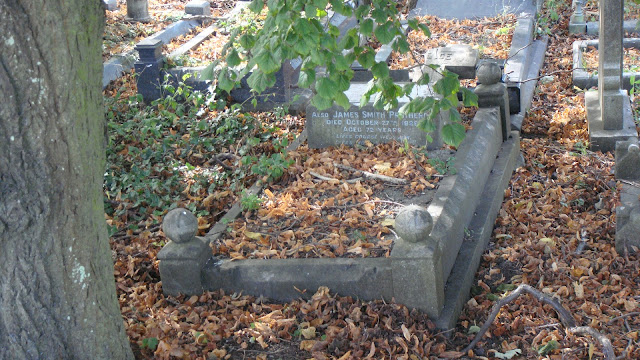
James died at Eirianfa, Newton Villas, Mumbles, overlooking Swansea Bay, in October 1929 aged 72. His body was returned to Swindon for burial in Radnor Street Cemetery.

His obituary published in the North Wilts Herald declared that ‘there was no busier man in Swindon, and few who will be more missed.’

James Smith Protheroe was buried on October 30, 1929 in plot D34A, a plot he shares with his wife Fanny who died in 1925.

Horder Bros – Drapers, Milliners, Mantle Makers and Costumiers

Albert Horder was born in Donhead St Mary in 1831, the son of a farmer William and his wife Sylvia. As the couple’s sixth son, Albert realised he was unlikely to inherit the 200 acre Lower Wincombe Farm, so he carved out a career for himself in the drapery business, and never looked back.

The 1861 census finds him living above his shop in the High Street, Shaftesbury with his sister Mary who acted as his housekeeper, a house servant and four assistants. In 1865 he married Mary Ellen Jeeves and the couple had four children.

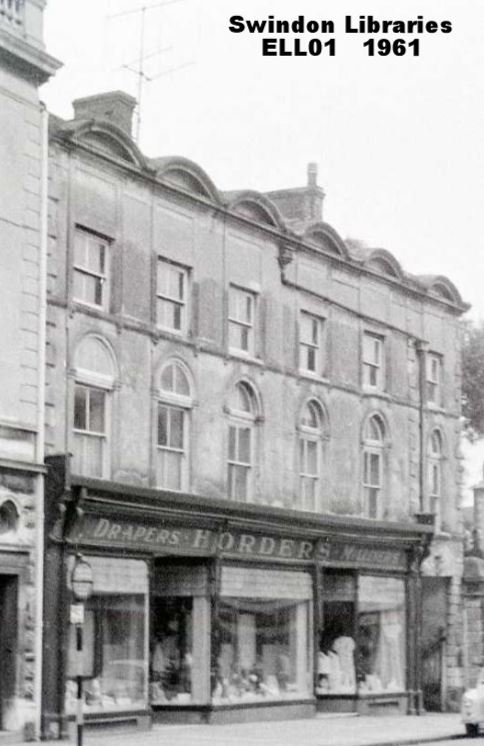
Image published courtesy of Local Studies, Swindon Central Library.

In the early 1870s Albert and Mary Ellen moved to Swindon and set up business in premises in the High Street once occupied by Thomas Strange. Business flourished and the autumn and winter fashions of 1882 included “a good assortment of Tailor-made Ulsters, Jackets, Dolmans in Plain & Broche Cloth, Velvet, Sealskin & Fur” where “an inspection was respectfully solicited.” By the 1890s Horder Bros, Drapers, Milliners, Mantle Makers and Costumiers boasted an expansive three-bay shop frontage.

Having handed over the reins to his son Edward Jeeves Horder, Albert and Mary Ellen retired to a house in Devizes Road, which they named Wincombe after the family farm.

The Horder’s store eventually closed shortly before the firm’s centenary and the building was subsequently demolished. The Pinnacle, a block of apartments, stand on the site of Albert’s drapery business, his name immortalised in the access road, Horder Mews.

Swindon

Death of a well-known resident – The death took place late on Sunday night, at his residence, Wincombe, Swindon, of Mr Albert Horder, who for many years carried on a successful drapery business in the High-street. He was an active member of the Congregational church, having been deacon at the Victoria-street Chapel for many years. Deceased, who was born at Winchcombe, Dorset, nearly 73 years ago, leaves a widow, three sons, and one daughter.

The Wiltshire Advertiser, Thursday, March 27, 1902.

Albert died aged 72 in 1902 and was buried in a large double grave plot E8032/33. He is buried with his wife Ellen, their son Edward Jeeves Horder and his wife Alice Emma.

Florence Rhoda Wilcox – midwife

Florence Rhoda Wilcox was born in Clifton, Bristol, the eldest of three daughters. Her father, Philip Weldon Roberts, was a Pattern Maker and by 1901 the family had moved to Swindon where they lived at 18 Kent Road.

Florence worked as a music teacher when in 1912 she married John Wilcox and the couple moved into number 61, Kent Road. Sadly, their marriage was a short one as John was killed during the first World War. He was serving as a First Engineer in the Merchant Navy and was drowned on May 28, 1917 when his ship was struck by an enemy submarine in the English Channel.

Back home in Swindon Florence made some life changing decisions when on August 14, 1920 she enrolled as a midwife. By the mid 1920s Florence had converted her house in Kent Road into a small maternity home, the Haven Nursing Home, where she worked alongside fellow midwife Gertrude Tucker.

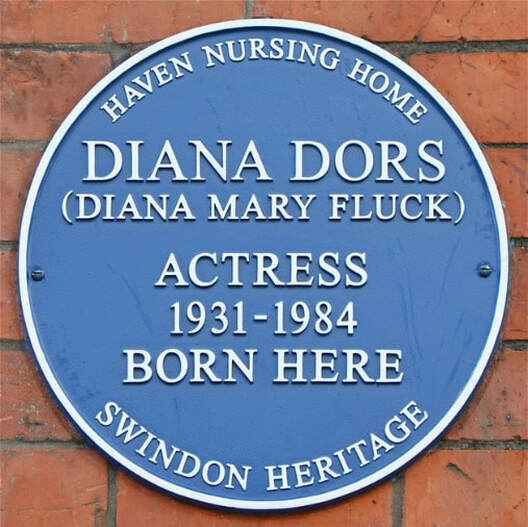
In 1931 numbers 61 and 62 served as both Nursing Home and doctor’s practise and it was on October 23 of that year that Mary Fluck was admitted for what proved to be a traumatic birth during which both mother and baby nearly died. It is likely that Florence and Gertrude were both on duty that day, assisting the doctor during this difficult confinement. The baby who made such a dramatic arrival was named Diana Mary Fluck. She later went on to change her name to Diana Dors and became a film star, Britain’s answer to Marilyn Monroe.

The nursing home remained in operation until the mid 1930s and most probably closed with the opening of the Kingshill Maternity Home.

In 2017 a Swindon Heritage blue plaque was installed on the property to mark the birthplace of Diana Dors.

Florence and Gertrude both moved to Paignton in Devon. Gertrude died aged 59 years at Waterside House, Waterside Road, Paignton and was buried on January 14, 1938 in Radnor Street Cemetery in grave plot D721. Florence died at the same address in February 1952 aged 70. She was buried with Gertrude.