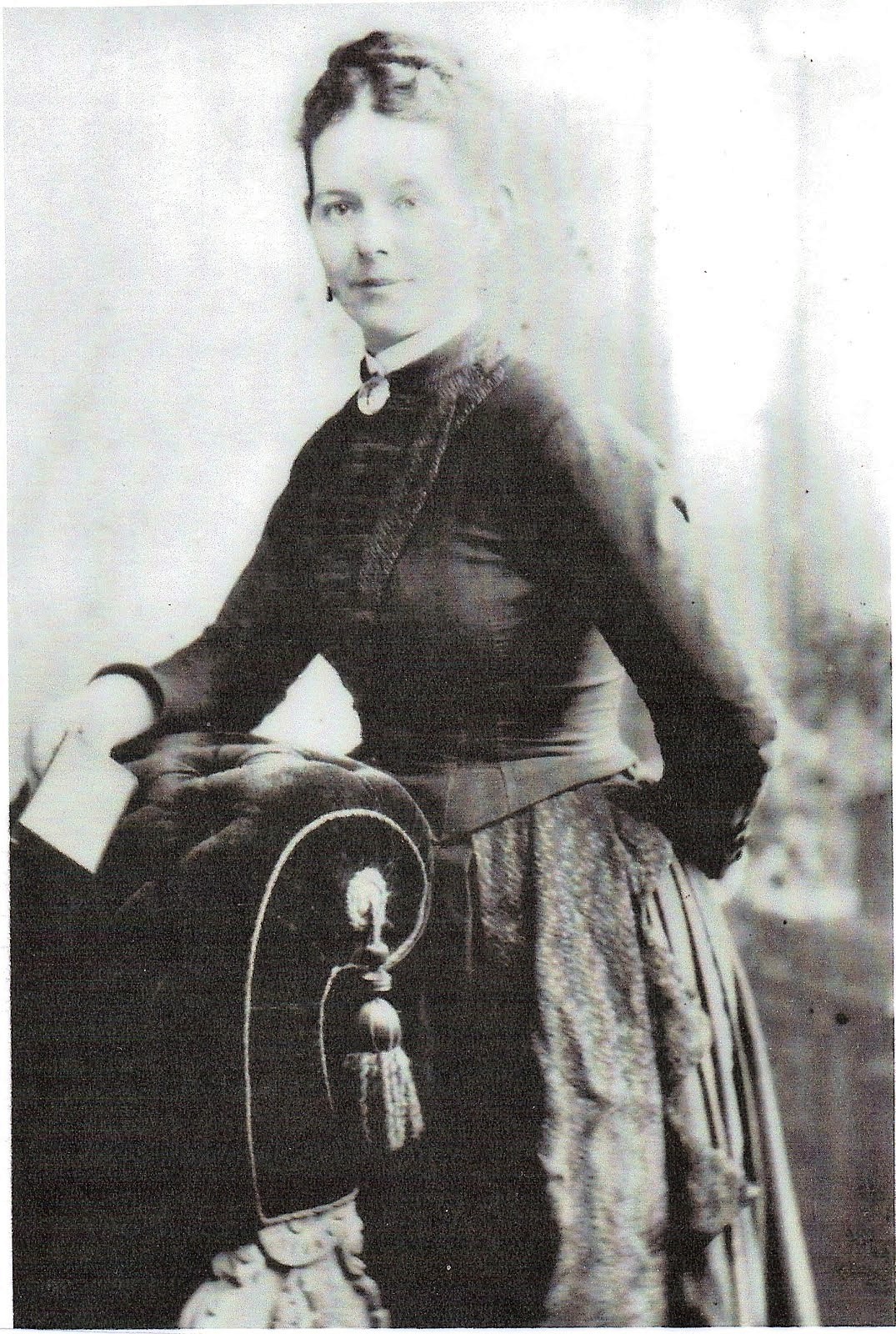
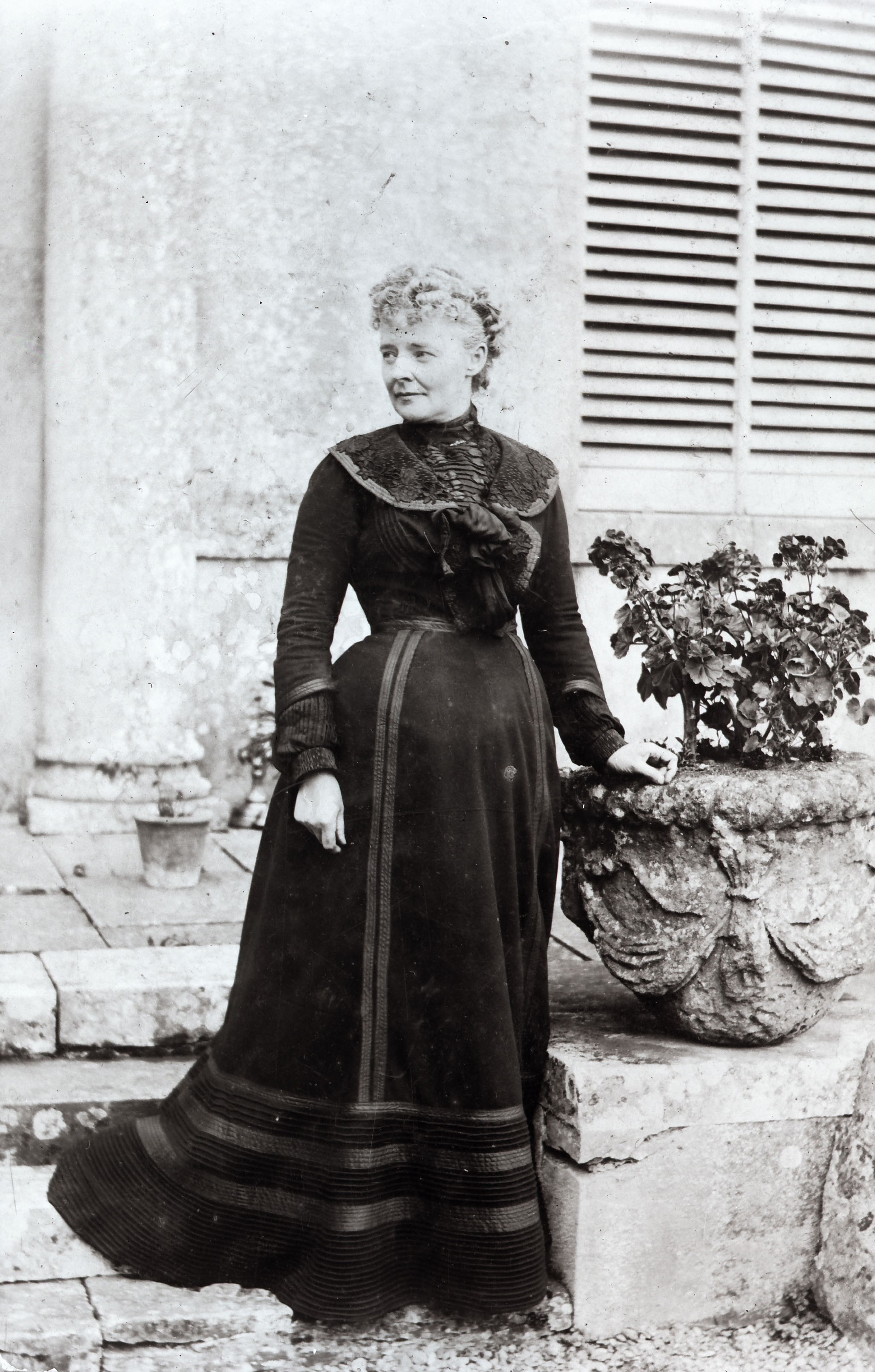
Pte. Thomas Tugby – Tell Them of Us

Sometimes the death of a soldier received a lengthy obituary in the local newspaper. One such case was that of Thomas Tugby.

Swindon Soldier’s Funeral

Man Who Was Wounded at Ypres

Great sympathy has been extended to Mrs Thomas Tugby in the loss she has sustained by the death of her husband, which resulted from wounds sustained in action. Pte. Tugby was the son of Mr. and Mrs. J. Tugby, of 9 Gooch Street, Swindon, and was only 29 years old. He joined the Army at the age of 17 and became attached to the South Wales Borderers, and on taking his discharge, some years later, he entered the employ of the GWR Company and worked in ‘V’ Shop (Loco. Dept.) of the Swindon Works. On the outbreak of hostilities, he was called up on reserve, and went to the front with his old regiment. He was a participant in the heavy fighting at Mons and on the Aisne, and was wounded at Ypres by bursting shrapnel. On Nov. 1st he arrived in England with a batch of wounded, and was sent to St. Bartholomew’s Hospital, Rochester, and hopes were entertained that he would recover from his wounds. On Wednesday last, however, his condition gave cause for anxiety, and his relatives were summoned. They were in time to see him before he died later in the day, and on Saturday his body was brought to his home in Swindon.

The remains were interred with full military honours at Swindon Cemetery on Monday afternoon. A large number of the Royal Field Artillery stationed at Swindon were present, and formed a guard of honour as the body was borne from the house in Gooch Street to St. John’s Church. The coffin was of plain oak and was covered with a Union Jack. The service at the church was impressively conducted by the Rev. W.H. Walsham How, who also officiated at the graveside. After the coffin had been lowered into the grave, the firing party fired three volleys and the “Last Post” was sounded by the buglers. The inscription on the breastplate of the coffin read:-

Pte. Thomas Tugby

Died Feb. 17th, 1915.

Aged 29.

The chief mourners were the widow, Mr. and Mrs. J. Tugby (father and mother), Mr and Mrs E. Lewis, Mrs. Lewis, Mrs Lewis (sister), Mr J. Tugby and Miss Lily Tugby, Mrs W. Turner and Mrs. J. Green (sisters) Sergt. J. Green (brother-in-law) Mr W. Turner (brother-in-law) Miss Ivy Lewis (sister-in-law), Mr. W. Lewis (brother-in-law), Messrs. J. Smith and A. Whale (representing deceased’s old shopmates), Mr C. Hill, Mrs. W. Gleed and Mrs Skeates (aunts) and Mrs W. O’Neil (cousin). Beautiful floral tributes were placed on the coffin from the widow, Mrs and Mrs Tugby, Mr and Mrs. Turner, St. Mark’s Ward of the Hospital at Rochester, Mr. and Mrs. J.A. Cooper, Mrs Dance and Mrs Gleed, ‘The family at 1 Linslade Street,’ Sergt and Mrs Green, Shopmates in ‘V’ Shop, Loco, Dept. GWR Works.

It is interesting to note that Sergt. Green was with deceased in the early days of the war. He has been invalided home, and is shortly to return to the front.

North Wilts Herald, Friday, February 26, 1915.

But after the funeral what happened to the family left behind?

His widow Alice was just 24 years old when he died. On April 22, 1916 she married for the second time. The wedding took place at St Mark’s Church, the groom was Thomas Henry Walter Archer, himself a widower.

The UK World War I Pension Ledgers and Index Cards 1914-1923 record that sadly Alice’s second husband died on September 10, 1925, also as a result of the war.

Quite what happened to Alice after this second bereavement remains difficult to discover. The impact of that terrible war can never be under estimated.
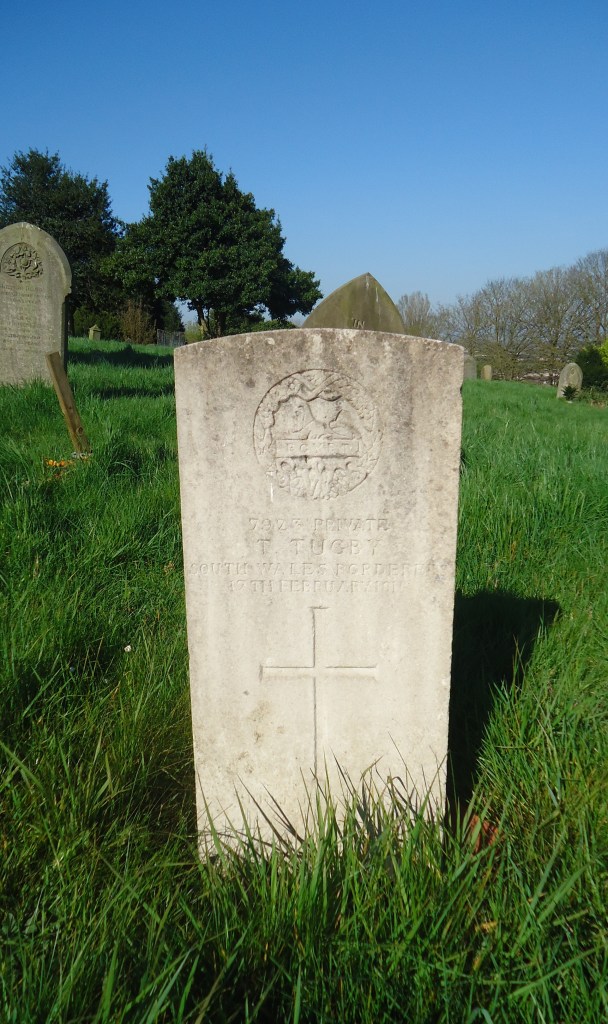
Tugby, T.

Private 7923 1st Battalion South Wales Borderers

Died 17th February 1915

Husband of A. Tugby of 9 Gooch Street

B1722 Radnor Street Cemetery

Tell Them of Us by Mark Sutton
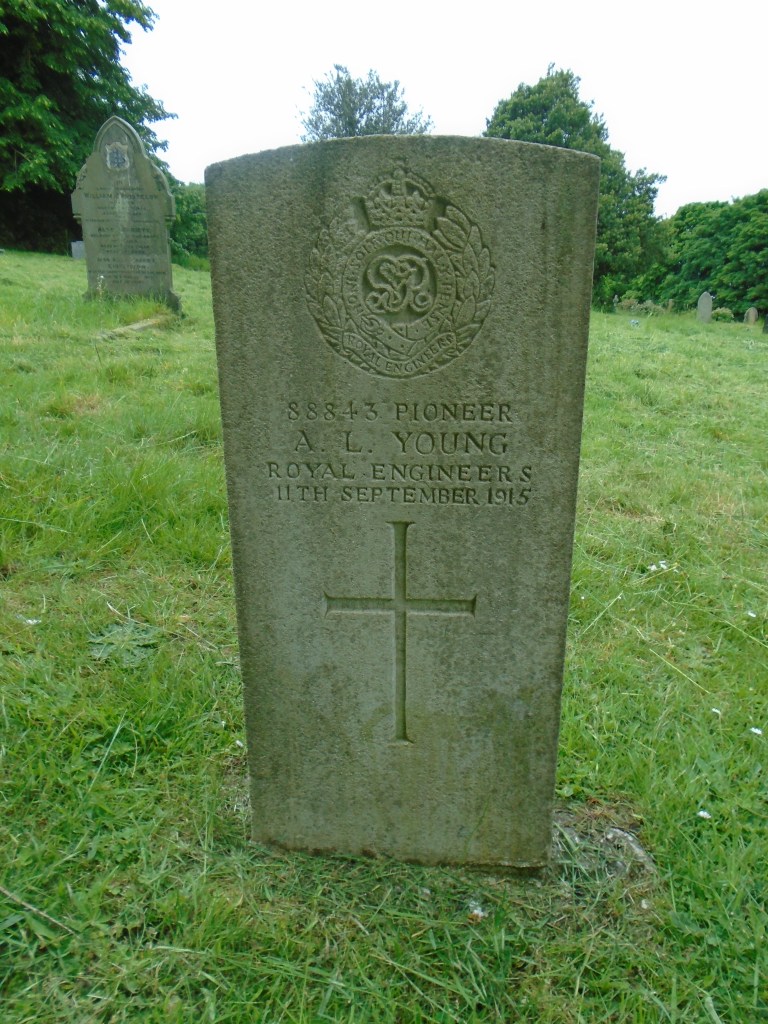
Pioneer Andrew Lowe Young

And then there are the men about whom so little can be discovered. Even the Commonwealth War Graves Commission website can provide little information about one such soldier buried in Radnor Street Cemetery.

Andrew died in the Isolation Hospital, Gorse Hill on September 11, 1915. The cemetery burial registers record that he was buried on September 14, 1915 in grave plot B1769, a public plot where he lies with two others. His headstone displays the regimental badge of the Royal Engineers and his regimental number, but there are no personal details – not his age nor a few words chosen by his family.*

Andrew Lowe Young was born in Longforgan, Perth and Kinross, Scotland in about 1890. The UK World War I Pensions Ledgers and Index Cards 1914-1923 reveal that he left a widow, Elizabeth Young and an illegitimate stepchild, John Binett Gillatley born April 25, 1905, but even this information is not enough to reveal more about the young soldier’s life and times.

Andrew enlisted at Dundee and served in the 205th (1st Dundee) Field Company, Royal Engineers, raised in March 1915 as part of Kitchener’s 5th New Army. The 35th Division included units known as “Bantams”; soldiers who were under the minimum regulation height of 5ft 3ins, so perhaps Andrew was of small statue.

We can see from the headstone that Andrew served as a Pioneer, but what is that exactly? The extensive network of trenches across the battlefields of France and Flanders were dug by infantry regiments’ own pioneer battalions, however, it would seem that Andrew probably never saw service overseas. In August 1915 the 35th Division moved to Salisbury Plain with headquarters in Marlborough. Further moves during that month were made to the training camp at Chiseldon, which may explain why Andrew ended up in Swindon’s Isolation Hospital after he took ill.

Andrew was about 26 years old when he died as a result of his military service.

*more information might be available on the death certificate but we do not have funds to purchase the certificates of everyone we research.

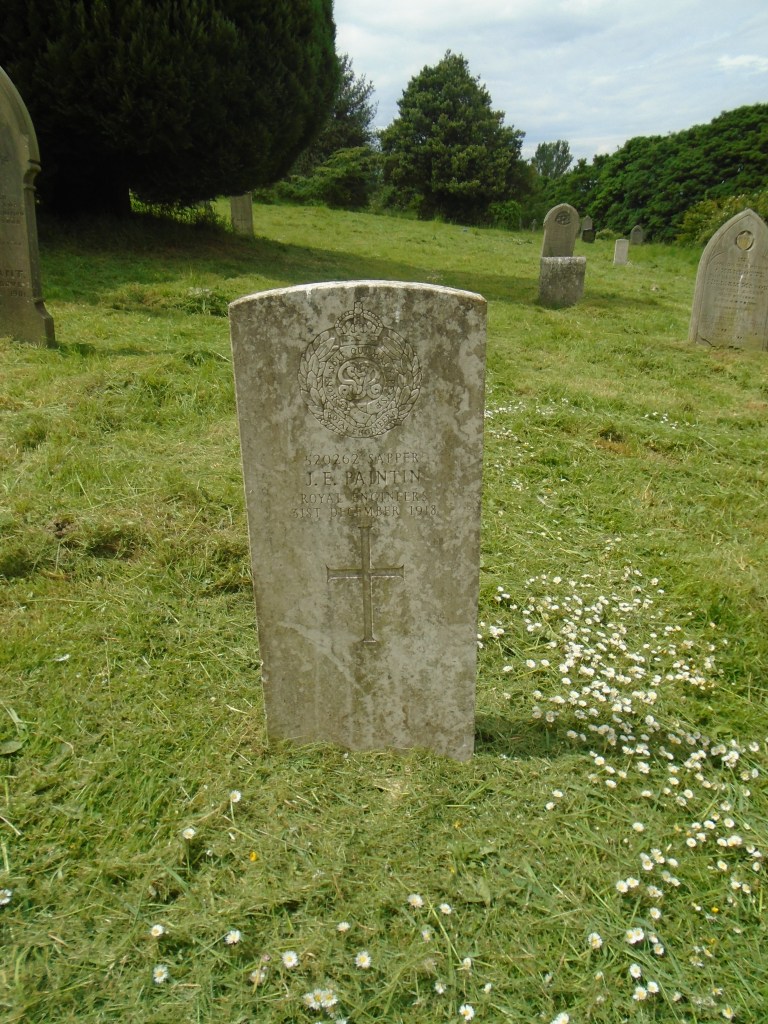
Sapper J.E. Paintin – Tell Them of Us

John Edward Paintin was born on September 6, 1883 and baptised at the ancient church of St. Aldgate, Pembroke Square, Oxford. He was the second of six children born to John Edward Paintin Snr and his wife Julia Betsey.

In the summer of 1906 John Edward jnr married Florence Alice Hazlewood. In 1911 the couple lived with their two young children (a baby had recently died) at 54 Sunningwell Road, Oxford. But by 1913 the family had moved to Swindon and were living at 84 Beatrice Street. John had arrived in Swindon not in search of a job in the GWR Works but as an attendant in the Electric Palace [cinema] in Gorse Hill. A daughter Dorothy Lorna Mary was born on May 3, 1913 and baptised on July 12 at St. Barnabas Church, Gorse Hill. A last child, Gordon, was born and died in 1917.

It is likely John was conscripted in 1916 but unfortunately his military records have not survived and we only know the briefest details about his service from the UK Army Register of Soldiers’ Effects 1901-1929. He died on December 31, 1918 at the Military Hospital, Chiseldon. The hospital was established at the training camp in June 1915 and was soon receiving casualties from the battlefields in France and Flanders. The hospital opened with six wards and 24 beds but was soon extended and supplemented with tented accommodation. By 1917 an additional hospital was built on the site, reserved for patients suffering from sexually transmitted diseases and known locally as the ‘Bad Boys’ Camp.’

John Edward Paintin was buried in Radnor Street Cemetery on January 6, 1918 in a public grave with four others. His last address is given as 15 Handel Street. He was 35 years old.

Florence Alice quickly remarried, as did many young war widows with a family to support, but she was sadly misled by her second husband. Austin Oliver Rogers was a Corporal in the South African Native Labour Corps and the couple met while he lodged with Florence awaiting demobilisation. They married on April 7, 1919 and sailed for South Africa that September. But when they arrived at Barberton in the Eastern Transvaal, Florence discovered Austin’s circumstances were not as he had described. He had promised her that he was well off and that he could provide for her and her children, giving her boys a college education. But the reality was quite different. Austin and his widowed mother lived as tenants on a small farm. The marriage broke down because Austin’s mother refused to accept Florence and her children.

Florence left the family home, placing her children in lodgings, but despite her best efforts and working two jobs her three younger children ended up in a children’s home. Florence died in 1925 in the Johannesburg General Hospital as a result of pneumonia contracted in hospital following an appendectomy.

The two sons that John barely knew both joined the military in their adopted home of South Africa. Edward James joined the SAMC Active Citizen Force later enlisting with the South African Permanent Force.

James ‘Raggy’ Powell – one of nature’s princes.

The re-imagined story …

My father loved a bargain. Our house was full of them. But sadly, everything he bought home was broken and he wasn’t what you’d call ‘handy.’ In a town full of men who could make and mend anything, usually ‘on the quiet’ in the Works, my father was the exception.

“They can see you coming,” my mother said. She was the fixer in our house.

My mother loved a bargain too and as fast as the battered and broken objects came into our house, mother got rid of them.

“Is that Raggy on his rounds,” she would call to me at play in the street. “Ask him to stop by.”

Raggy regularly came round the streets with his horse and cart, ringing his bell, buying the flotsam and jetsam of people’s lives.  He would take most items, a bit like my father, and he always gave mother a fair price. He particularly liked a painting in a broken frame she sold him. That was the only thing father was ever really angry about, that painting of the Old Parish Church.

“I was going to mend the frame and hang it in the front room.”

Mother raised her eyebrow. We both knew he would never have got the job done and the painting would have stood in his shed behind the door forever.

“And if you don’t do something with the marble maiden in the garden, I’ll see what Raggy will give me for that as well,” mother threatened. “Blooming thing gives me the creeps.”

Image published courtesy of Local Studies, Swindon Central Library.

The facts …

Little is known of the early life of James Powell who was born in Dublin in about 1850. It was previously thought he had not arrived in Swindon until the 1890s but he is found living at 15 Rolleston Street with his parents and five boarders at the time of the 1871 census. Then aged 21, James was working as a hawker, another word for an itinerate street seller. James never moved far from the town centre. In 1881 he and his first wife Theresa lived over a green grocer’s shop at No 1 Byron Street. Theresa Clancey Powell died in 1889 and she is also buried in Radnor Street Cemetery.

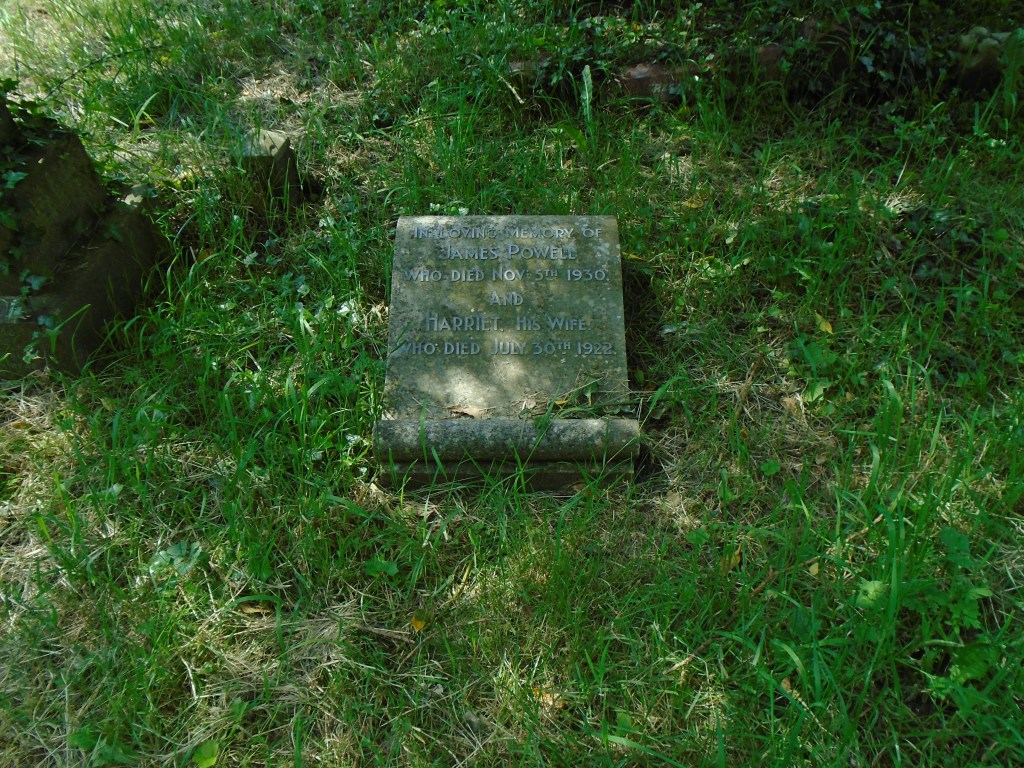
By the 1890s James had set up home in Regent Close where he worked as a Marine Store Dealer. This was the name given to a licensed broker who bought and sold used rags, timber and general waste material; a rag and bone man, an occupation that earned him the nickname Raggy. In 1891 he married his second wife Harriet Maggs, a widow with two children, and it is with her that he is buried in Radnor Street Cemetery.

James had received little education but he constantly sought to improve himself by attending lectures at the Mechanics’ Institution and he turned to that other great champion of the people, Reuben George, who taught him how to read.

Although James was uneducated he appreciated the pieces of artwork he came across on his rounds, repairing broken frames and putting the paintings in good order before donating them to Swindon’s first museum housed in a former Catholic Church called Victoria Hall in Regent Street. Paintings by local artists George Puckey, John Hood and David Gaddon, donated by James still form part of the collection once housed in the Swindon Museum and Art Gallery in Bath Road.

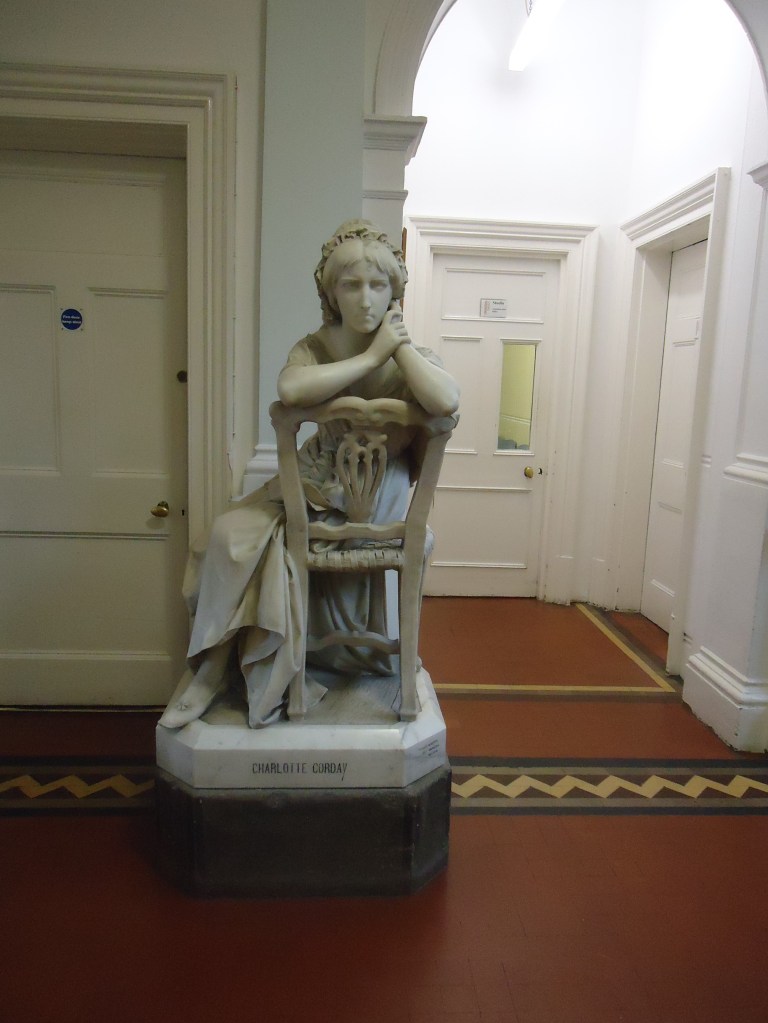
Perhaps one of the most extraordinary objects donated to the people of Swindon by James is the statue that stands in the foyer of the Town Hall. The white Carrara marble statue by Italian sculptor Pasquale Miglioretti depicts Charlotte Corday who in 1793 stabbed and murdered Jean-Paul Marat, a radical journalist during the period of the French Revolution. How James came across this work of art on his Swindon rounds remains unknown but it surely deserves a more prominent position where more people can see it.

Charlotte Corday

James stood for election following the incorporation of the Borough of Swindon in 1901 and served as a councillor for both the North and West Wards until the 1920s. One of his fellow Councillors later described him as ‘one of nature’s princes.’

He was an Alderman and also made a Freeman of the Borough in 1920 along with George Churchward, Chief Mechanical Engineer of the Great Western Railway, the first two men to be so honoured.

James owned various tracts of land, which he later gifted to the people of Swindon. A parcel of land in Savernake Street was given ‘for the benefit of scholars’ along with a plot in Gorse Hill.

James Powell was at the very heart of fund raising in Swindon during the Great War, arranging flag days and working with the Central Cinema and the Empire Theatre, organising family events. In 1917 he arranged numerous tea parties held in Town Gardens for members of The Social Club for the Wives and Mothers of Members of the Armed Forces.

Radnor Street Cemetery Walk

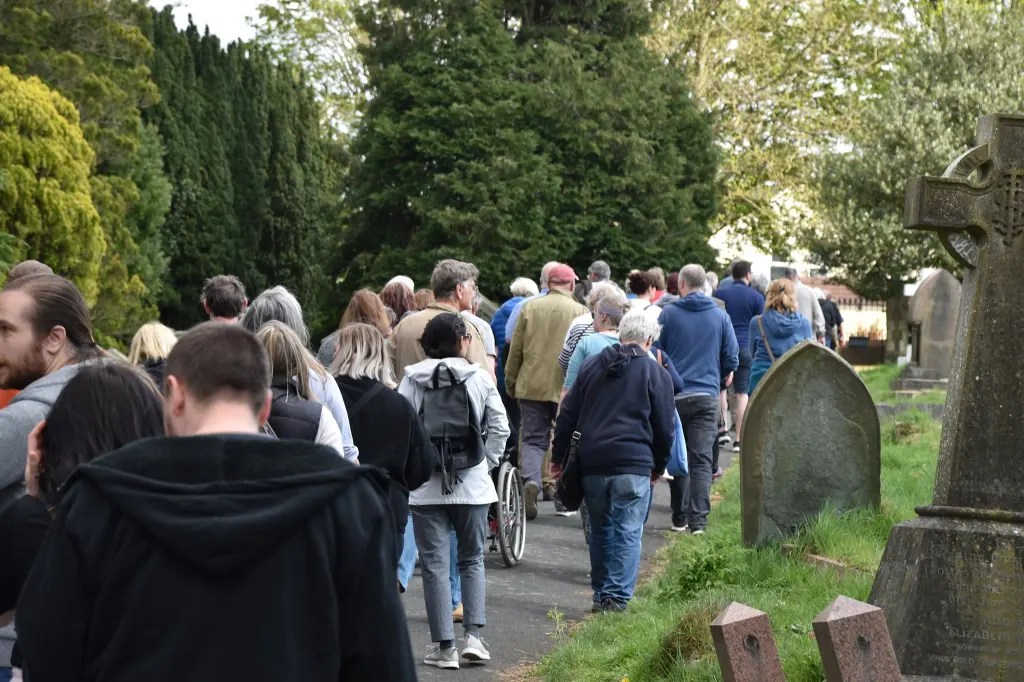
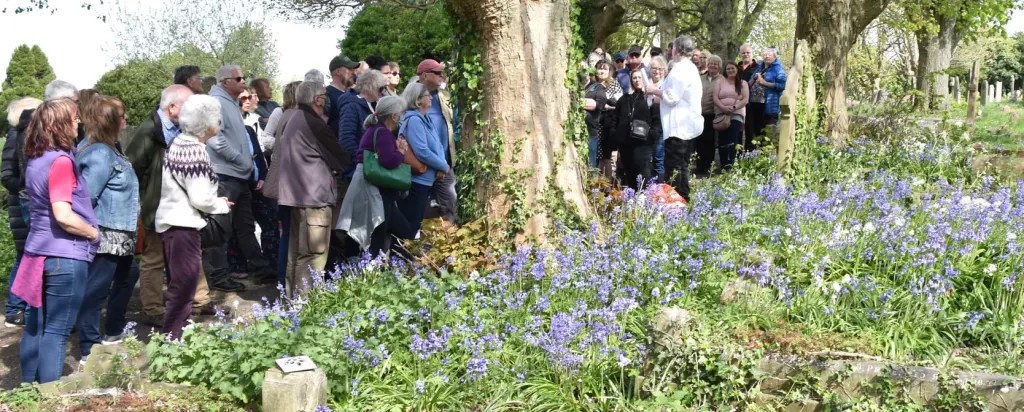
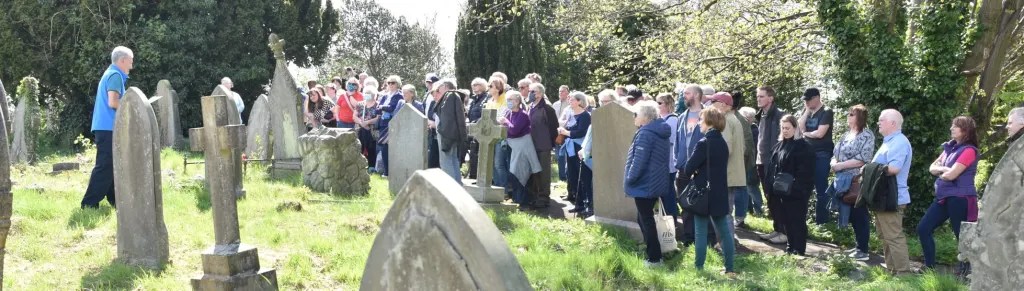
We were delighted (and somewhat overwhelmed) to welcome more than 90 visitors to the cemetery for our first guided walk in two years.

The sun shone, although there was a chill in more exposed areas, and cardigans and coats were donned at various points, but no one seemed to mind.

One local family joined us across their garden fence in Kent Road with waves and smiles, proving that a cemetery walk can include humorous interludes as well as respectful remembrances.

Our thanks to everyone who joined us and our apologies to those we didn’t get around to speaking to (or got called away mid-conversation). It was wonderful to see you all.

We will be publishing a list of dates for more walks during the summer months.

Our thanks to Royston Cartwright, Swindon history friend, for his photographs, published below.

The insurance policy

George Adams

The re-imagined story …

I still associate the Antiques Roadshow theme tune with childhood bath nights. My brother always says for him it signalled the end of the weekend and school on Monday morning; he hated school.

Our mum was a big fan of the programme but who would have thought we might have anything valuable in our council house home.

“My aunt Ethel gave this to me in case I ever had an emergency,” mum told me as she slipped the Artdeco brooch into my hand. “She found it in the lining of an evening bag she bought from the pawnbrokers in Wellington Street just before the war. She told me the stones were blue diamonds and that it was really valuable. She said old Mr Adams couldn’t have possibly known it was there, so what he didn’t know, he couldn’t grieve over. She kept it as insurance for the time she would eventually leave uncle Fred.” As it turned out she never had to leave uncle Fred as he died first.

Well if there was ever an emergency we were in the middle of one now.

After nearly thirty years of marriage mum had walked out on dad. My brother and I didn’t understand exactly why; neither of them would discuss it. Dad was still living in the council house where we had grown up, but mum had moved out. First she stayed with a friend, then she spent a few nights in a bed and breakfast. I was dreading I was probably the next stop, but now she had a plan.

She was moving to the Shetland islands. No, she’d never been there but she loved the detective programme and hero Jimmy Perez and she said it felt right – she didn’t feel the cold and she never minded the rain! My brother thought she was having a breakdown.

When the Antiques Roadshow announced they were coming to Swindon, mum asked me to take the brooch along and get it valued; she couldn’t afford to take any time off work. With hindsight it would have been easier to take it to a local jewellers, but none of us were thinking that clearly at the time.

So after a sleepless night with a teething baby, I dragged myself and the said child along to the Steam Museum where the Roadshow had set up camp. If I had had any idea how long I would  have to queue up I probably would have refused to go. The novelty of seeing Fiona Bruce and the familiar faces of the experts soon paled as the baby set off wailing again just as I made it out of the holding bay and into the inner sanctum where the experts sat at their tables.

The brooch turned out to be a piece of paste jewellery; hand cut glass on a coloured foil base.  A very pretty piece, but basically worthless.

Mum went back to dad shortly after that and no one ever spoke about the whole episode again.

The facts …

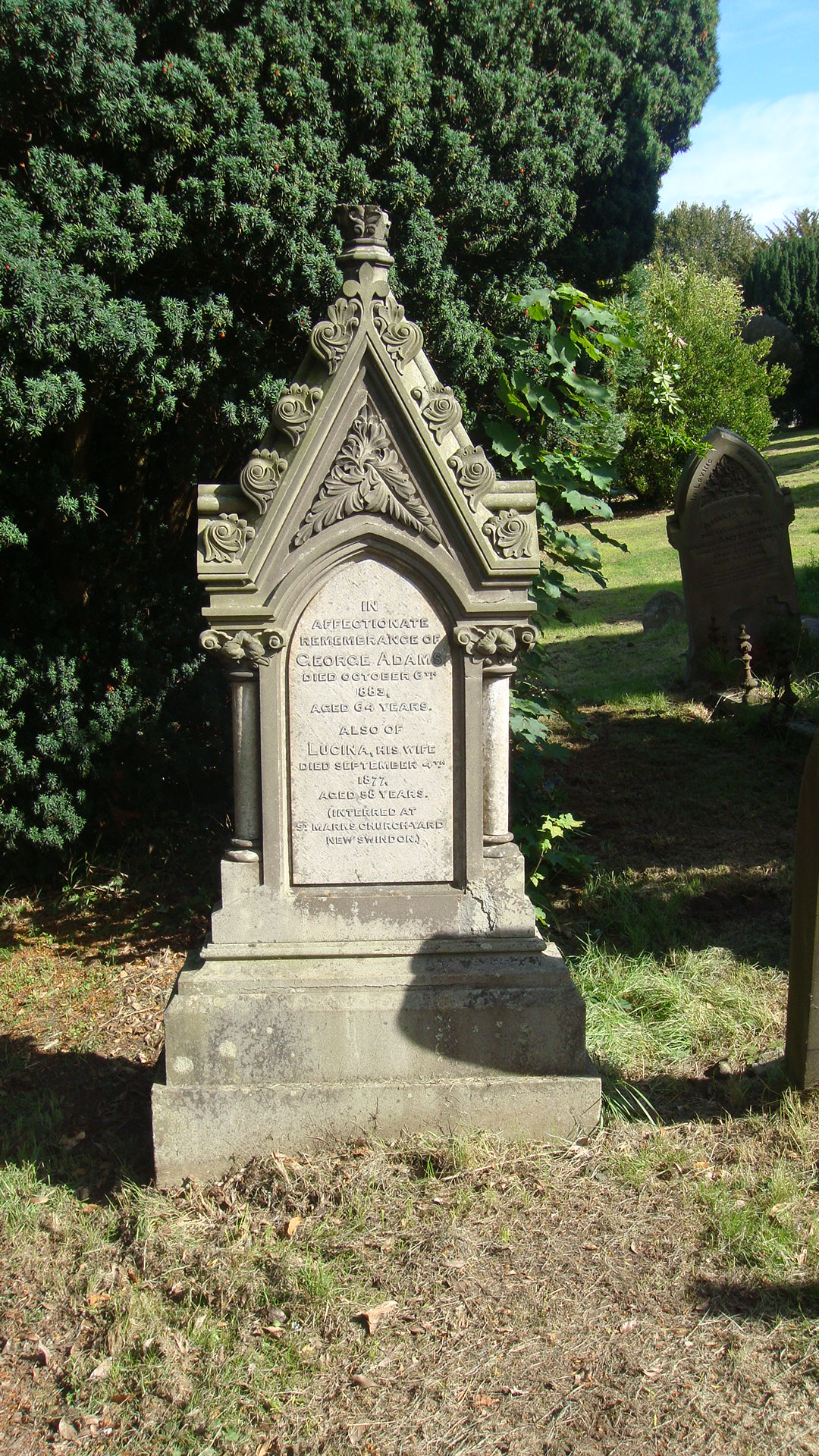
This elaborate headstone marks the last resting place of George Adams and is also a memorial to his wife Lucina. Lucina Adams died in 1877 and was buried in the churchyard at St Mark’s. By the time George died six years later the churchyard at St Mark’s was closed and he was buried in Radnor Street Cemetery.

George and Lucina moved to Swindon in the 1840s and George worked as a fitter in the GWR Works. George continued to work in the railway factory into the 1870s when he was then in his fifties, but sometime before 1881 he obviously had a change of occupation.

In the census of that year widowed George was living at 12 Wellington Street where he describes himself as a Master Pawnbroker. 

When he died in 1883 he left an estate valued at £4,429 13s 3d to his two sons Frederick Washington Adams of 10 Gloucester Terrace and Charles Ambrose Adams of 12 Wellington Street.

Charles continued to live in his father’s house and described himself as a pawnbroker/jeweller. By 1901 he had moved upmarket to Melrose House on The Sands, just up the road from his brother Frederick. Charles died in 1957 aged 98.

Remembering Mrs Stanier on Mother’s Day

The re-imagined story …

Grace Stanier (2)

I have such wonderful memories of childhood Christmas’s. I suppose most children would say the same.

With five of us in the family, we didn’t have much, not like children today. We would hang our stockings on the bedposts on Christmas Eve and try to keep awake all night to wait for Father Christmas to come, but of course we never saw him. Does any child?

And on Christmas morning we took our bulging stockings beneath the bedcovers to keep warm as we opened them. There was always a tangerine and some walnuts and some humbugs and a little toy. I remember the year my brother Bert received a real guard’s whistle and blew it until I thought my ear drums would burst. Mother told him he wasn’t to blow it again until Boxing Day.

As soon as we could read, we received a book. Sometimes a character improving story like The White Feather but one year Fred received a copy of Treasure Island and I got a copy of Little Women!

And as members of the Congregational Chapel Sunday School we always received a little gift from Mrs Stanier. The Stanier family was very involved with the Chapel. We were all a bit frightened of Mr Stanier. He was a bigwig in the factory and you had to mind your ps and qs around him.  But we were all very fond of Mrs Stanier. We used to think she was very old but of course she wasn’t. As a child you can never imagine older people as they might have been when young; vibrant and vital with loves and lives of their own. You never take account of the sorrow and the losses they may have suffered. I suppose we didn’t consider her much at all.

It was only after her funeral that mother told me she had been buried with her little daughter Grace who died when she was seven years old. Mrs Stanier had also lost two little boys, Francis John who was three years old when he died and Alfred, who was just a baby. She probably thought of those children when she wrapped up our gifts every Christmas.

The facts …

Grace Ball was born in Southport, Lancashire in 1847, the daughter of Robert Ball, a shopkeeper and farmer and his wife Ann. Grace grew up at North Moels and worked as a teacher in a small private school there.

Grace married William Henry Stanier in the Ormskirk registration district during the September quarter of 1875. By 1881 they were living at Church Place, Swindon with their three children William, Annie and Charles. The couple went on to have five more children but sadly three of these died in childhood. The couple’s last home together was at Oakfield, Bath Road.

The funeral of the late Mrs Stanier, wife of Ald. W.H. Stanier, of “Oakfield,” Bath Road, Swindon, took place on Tuesday afternoon, and evidence of keen regret and deep sympathy was everywhere apparent.

At 2.30 pm an impressive service was commenced at the Sanford Street Congregational Church, of which the deceased lady had been a prominent member. As the procession entered the building, “O Rest in the Lord” was played on the organ. The service was conducted by the Rev J. Stroud Williams (Pastor), and the Rev T. Garbutt Vinson (Pastor of the Victoria Street Congregational Church). The hymns, “Light after darkness,” and “When the day of toil is past” were sung during the service, and the Dead March in “Saul” was played as the procession slowly filed out of the building.

During the service the Rev Stroud Williams said: We little thought a few days ago when we met in this Church on a similar occasion that we should meet here to-day. Our sister, greatly beloved, has been called to her rest, after a long and painful illness. Her departure leaves a keen sense of loss and bereavement behind. We cannot estimate the loss. Hers was a bright, sunny soul. In early years she came to know Christ as her Saviour, and consecrated herself and her life to His service. In very many ways she sought to help forward His work. She was full of cheerfulness and strong hope, and that cheerfulness and hope bore her through all the years of weakness and of pain, and when the call came it did not find her unprepared. She knew in whom she believed. She knew she was going to Christ. “Blessed are they that die in the Lord.” Why should we be sorry? Our sorrow is not sin. It is manly, it is Divine. For Jesus Himself wept at the graveside. We sorrow, but not as those who have no hope of a reunion. We see only the going down into the valley, and not the climbing up the hill of God and the entrance into life. Our sister has seen the face of Christ. She knows what she longed to know. We are thankful for the memory that she has left behind, and we pray for the grace that we may follow as she followed Christ.

At the graveside the committal sentences were said by the Rev. J.S. Williams.

The inscription on the coffin was as follows: “Grace Stanier, died 10th November, 1905, aged 58 years.”

The chief mourners were Mr W.H. Stanier (husband), Messrs. W., C., and G. Stanier (sons) Misses Stanier (daughters), Mrs C. Stanier, Mr and Mrs H.A. Stanier, Miss B. Stanier, Mr T.W. Stanier (Newcastle), Mr and Mrs H. Hill, Miss Hill, Miss Morse, and Mr E. C. Riley.

Others following were: …

The following were present representing the GWR Loco and Carriage Department Staffs: Messrs. J. Lockyer, J.W. Rose, W.H. Adams, C. Godsell, W.J. Burleigh, and John Clark. The Stores Department was represented by Messrs W. Jones, J. Wood, E.H. Page. A.H. Dunn, J. Dowling, V.R. Daines, J.H. Barker, A.H. Jervis, W. Davies, W.S. Clark, C.T. Smith, W.J. Smith, A. Tyler, H. Brown, F.J. Etherington, C.A. Plaister, H.J. Edmonds, R. Brock, J. Hart, D. Sheward, A.J. Rolls, F.S. Westlake, E.A. Blackman, J.W. Smith, S.F. Adams, C.E. Barker, J.E. Lockyer, and H.L. Smith.

Councillor George Brooks was unable to be present in consequence of his having to attend to some business in London that day, in the place of Mr Stanier.

Many members of the Sanford Street Congregational Church were also present.

The funeral arrangements were carried out by Messrs Chandler Bros of Wood Street, under the personal direction of Mr J.H. Chandler.

Extracts published from The Swindon Advertiser, Friday, November 17, 1905

Mrs Stanier was buried in plot A2508/9 in a double plot where she lies with her young daughter Grace who died in October 1890 aged 7 years. On the other side of the footpath lie her two young sons, Francis John and Alfred, buried in plot A188.

You may also like to read:

Francis John and Alfred Stanier

Alice Arman and Women’s History Month

There have been an awful lot of words written about Queen Victoria, but it always come back to just how tall (or small) she was. You probably know that she was lacking in stature, something she frequently mentioned herself. It’s one of the facts of her life still talked about today. She had nine children, she was not amused and she was – how tall, 4ft 10ins, 4ft 11ins. In fact, she was probably a little over 5ft.

So what does Alice Arman have in common with Queen Victoria?

Well, she had 4 children not 9 and she didn’t become Empress of India neither was she the subject of countless books, TV series and films. Alice Arman quietly (or maybe loudly) spent a lifetime of service to the people of Swindon, which is now lost and forgotten. There does remain however this rather spectacular photograph of Alice in which she doesn’t look particularly small (or tall).

So which women of history would you like to meet during Women’s History Month. I’ve got a very long list, and I’d also rather like to have met Alice Arman.

The facts …

Alice was born in Oldham in 1857, the daughter of Jacob and Elizabeth Schofield. She married William Fairclough at the church of St Wilfrid, Standish, Lancashire on July 16, 1883. At the time of the 1891 census Alice and her first husband, William Fairclough, were living at 3 East Vermont Street in the Govan district of Glasgow with their three children, Mary, William and Alice. A fourth child, Norman was born in 1891 but died before his first birthday. The family moved to Swindon in around 1893 when William secured a job as a boilermaker in the Works.

Industrial New Swindon probably looked quite familiar to Alice who had grown up in Oldham, Lancashire where her parents ran a greengrocer’s shop. But sadly the move to Swindon didn’t herald a brave new future for the family as William died that same year.

In 1896 Alice (sometimes known as Alison) married widower Thomas Arman. The couple lived first in King Street where Thomas was employed as a carpenter in the GWR Works and Alice worked as a trouser machinist. Her son William lived with them along with Thomas’s three children by his first wife, Alfred, Mabel and Rosie. On the 1911 census Alice and Thomas Arman are living at 15 Lowestoft Street with Thomas’s daughter Rose Mary Arman and Alice’s daughter Mary Elizabeth Fairclough. Alice’s occupation is described as ‘part time student.’ I hope this is correct and not an error when the census return was filled out. I love the thought that Alice is studying at the age of 50.

In 1909 Alice was involved with the Bridge Street Men’s Adult School. An article published in the Swindon Advertiser on February 26, 1909 reporting on a recent meeting when ‘at the Social Hour at eight p.m. Mrs A. Arman read, by request, her paper entitled “From Gypsy Lane to the Workhouse” to an appreciative audience’ a subject no doubt informed by her work with the Poor Law Board of Guardians.

In 1894 the Local Government Act enabled the election of women to the Poor Law Board of Guardians for the first time. In Swindon Maria Matthews, Elizabeth Williams, Elizabeth House and Elinor Buller were the first four women to serve as Guardians. At the beginning of the 20th century Alice was also elected a member. We know she served as a Guardian for several years because an election in 1922 produced some shock results. Seven of the old members were defeated including Mrs Elizabeth Williams, the Deputy Mayor Alderman E. Jones and Mrs Alice Arman.

Alice continued with her community work after the First World War when she served as secretary of the Comrades’ Club, which met at Bridge Street.

In 1920 Alice unsuccessfully stood as one of six Labour candidates in Swindon’s local elections, however, her political colleague Mrs Ellen Anglesea Tanner won the West Ward seat for the Labour party.

Alice died at her home in Princes Street aged 68. She was buried three days before Christmas 1927 in plot C24a in Radnor Street Cemetery. She is buried alone with her first husband William Fairclough remembered on her headstone.

A special baby

The re-imagined story …

He was a bonny baby – and he was in such a hurry to get here. My pains began in the early hours of the morning and he was here before George left for work. There was barely time to send for my mother.

And he was so quick to do everything. Quick to smile – and oh what a smile that boy had – enough to melt your heart. Quick to sit up. Quick to start crawling.

“That boy is in a hurry to grow up,” said George. “Perhaps I should put his name down for the Works already.” We laughed.

Then one day he seemed different – as if someone had dimmed the light that shone from within. His cheeks developed two pink patches, but it wasn’t a bloom. I’d seen that look before.

That last night I paced the floor with him in my arms until his cry became a whimper. Then I sat in the chair by the window and looked across the darkened rooftops to the Works. I knew he’d gone.

I wondered how I could carry on. Prayers were of little comfort, but perhaps they helped Freddie on his way. In the cold December morning I wondered how the baby Jesus had survived, born in a stable in the middle of winter. I suppose he was a special baby but my Freddie was a special baby too.

We buried Freddie on December 24. I wondered if it was cold in Bethlehem that day, when Mary and Joseph were looking for somewhere to sleep, their baby already on his way. It was bitterly cold in Swindon the day we buried Freddie.

The facts …

Frederick Wm. George died on December 21, 1881 at 21 Sanford Street. He was 9 months old. He was buried on December 24 in plot number E6991, a public grave. After Christmas on December 31st he was joined by Minnie Elizabeth Purnell, a one year old infant from 19 Oriel Street. The two babies would lie together for more than 20 years until Matilda Pound, the wife of Thomas Pound from 44 Avenue Road joined them.

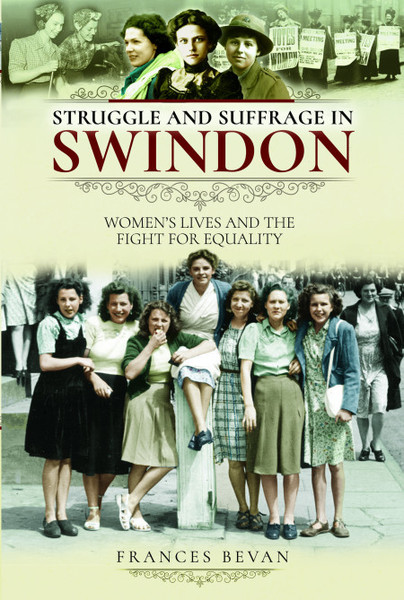
Struggle and Suffrage in Swindon

For ten years I have been a member of a small but perfectly formed team of cemetery enthusiasts. We research and write about the people in the cemetery and throughout the summer months conduct guided cemetery walks.

Our next walk on Sunday June 23 will include the launch of my recently published book – Struggle and Suffrage in Swindon – Women’s Lives and the Fight for Equality.

The cemetery opened in 1881 and closed in the 1970s. There are more than 33,000 people buried there and I think its probably a fair estimate to say that half of those are women.

The vast majority of the women buried in the cemetery were only remembered by their families, until they too passed out of living memory. Thousands of them have no headstones and no memorials.

The timeline for my book is 1850-1950, a period of incredible social and political change for women – yet it is still often difficult to find out about the lives of ordinary women.

When you are tracing your Swindon family history in the 1851 census you will most likely find your female ancestors recorded as ‘boilermaker’s wife’ or ‘carpenter’s wife’ or more often than not there will be just a blank space under occupation.

In 1851 the census enumerators were instructed not to record women’s work if it was part time, seasonal or if they worked in a family business, which pretty much rules out most of the jobs in which women were employed.

Working class women didn’t leave memoirs or books or letters. They didn’t have the time or the opportunity. These ordinary women, the ones who didn’t do anything life shattering (except raise the next generation) leave little evidence of their existence.

It is the story of these women that I like to tell, and I’ve made some extraordinary discoveries during the course of my research.

Join me at Radnor Street Cemetery on Sunday June 23 for a book launch followed by a guided cemetery walk with Andy and Noel. Meet at the Cemetery Chapel for 1.45 pm.

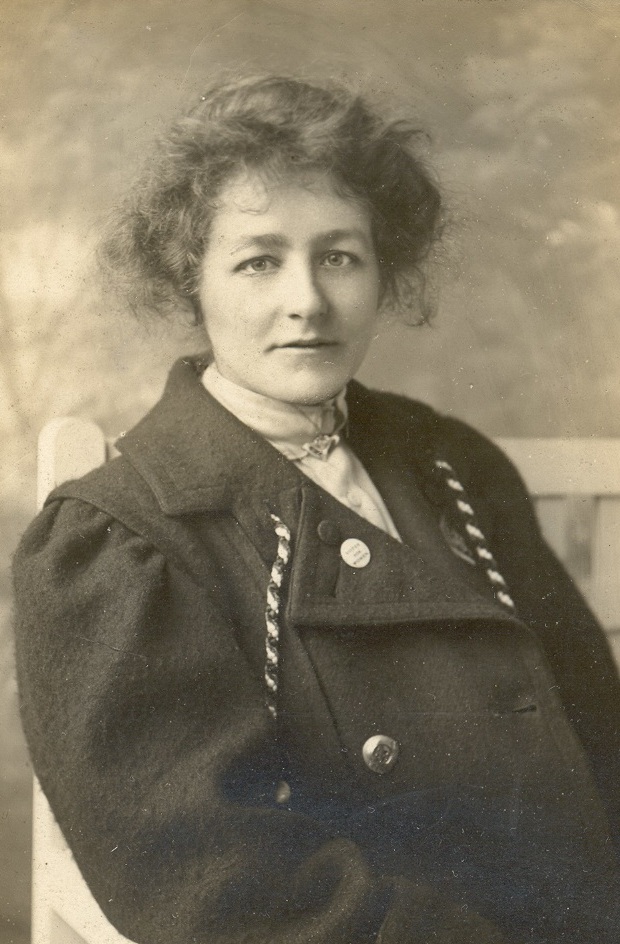
Edith New
Edith New – Swindon born Suffragette

Sheila White Compton's factory 1949
Sheila White – Factory girl

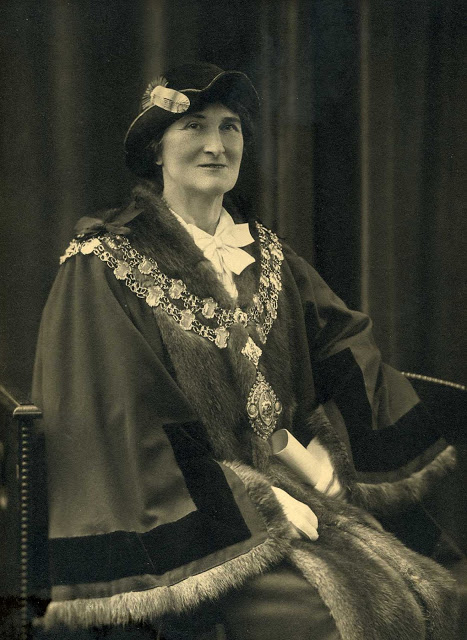
May George002
May George – Swindon’s first female Mayor

Fanny Catherine Hall
Fanny Catherine Hall – School teacher

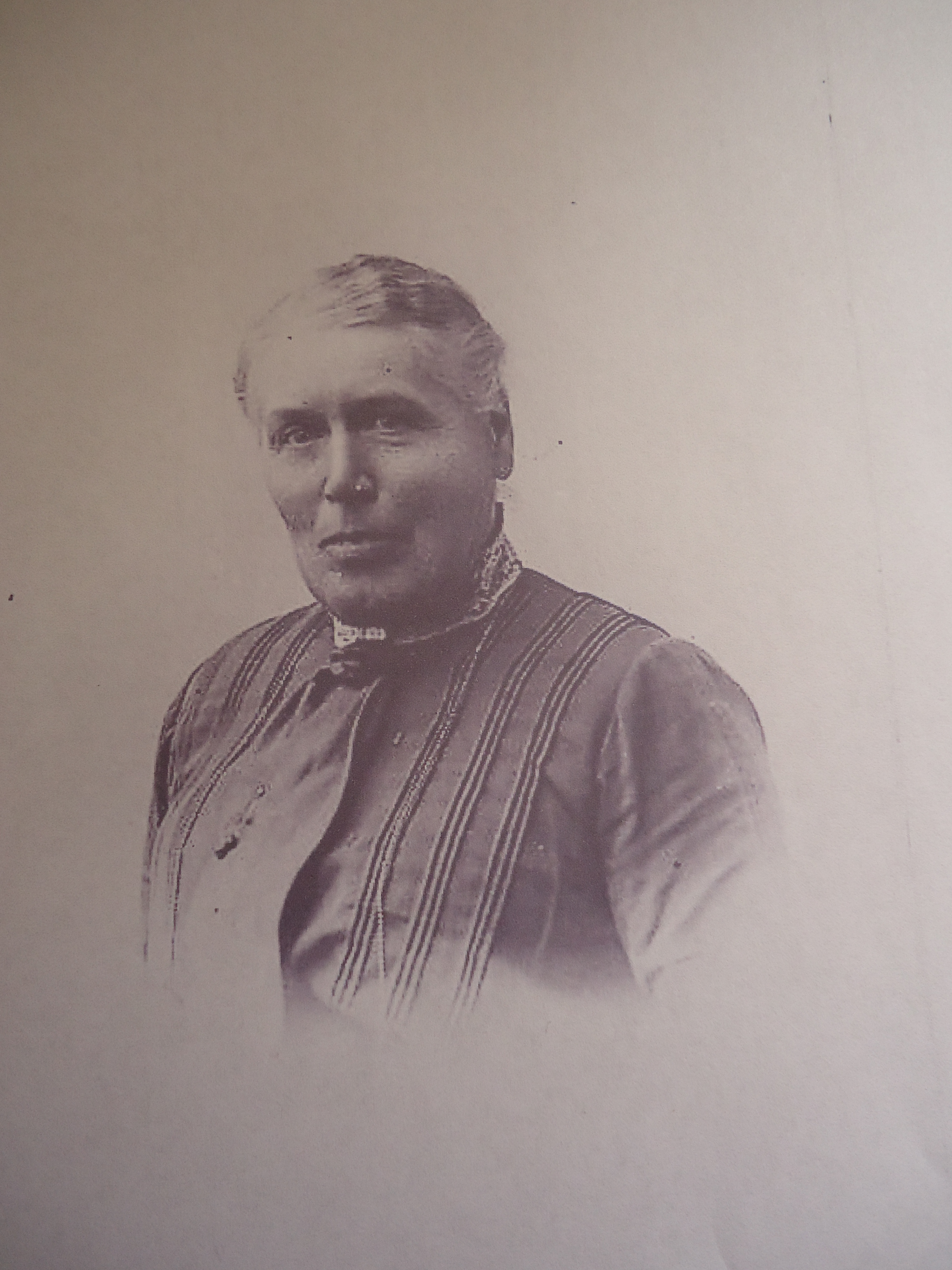
004
Jane Dicks nee Tuckey – buried in a pauper’s grave

Lady Mary - Lydiard House Collection
Lady Bolingbroke – former housemaid